





Impact of Exercise on Iron Transfer in the Body
“`html
Effects of Exercise on Iron Transfer in the Body
Ryunosuke Takahashi and Takako Fujii
Department of Sports and Medical Science, Graduate School of Medical Science, Koshukai University, Tokyo, Japan.
Published: 20 June 2025
Abstract
Although iron is found in trace amounts in the body, it plays an important role in oxygen transport and energy metabolism. Iron is therefore very important for athletes with high oxygen requirements, especially endurance athletes. Despite its importance, many athletes are diagnosed with iron deficiency. The relationship between iron regulation and exercise is complex, and it has been suggested that athletic performance may be impaired in individuals with low iron status. This review discusses the impact of exercise on iron transfer in the body.
Keywords
- Iron transfer
- Exercise
- Endurance athletes
- Iron deficiency
Introduction
Iron deficiency is one of the most common nutritional problems worldwide. It is defined as insufficient iron reaching the body’s stores or various tissues. Biological iron metabolism is a semi-closed circuit whose basic functions are the absorption, storage, and reuse of iron. However, depending on the imbalance between iron intake, storage and requirements, deficiencies can develop either rapidly or very slowly. This may be due to inadequate iron intake, certain diseases or, in women, menstrual bleeding. The rate at which iron deficiency develops in individual tissues and intracellular organelles also depends on iron recycling within cells and the hepcidin response.
Iron plays a role in many biological functions, including mitochondrial function, energy metabolism, and oxygen transport. It is essential for hemoglobin synthesis, myoglobin function, and various enzymatic reactions.
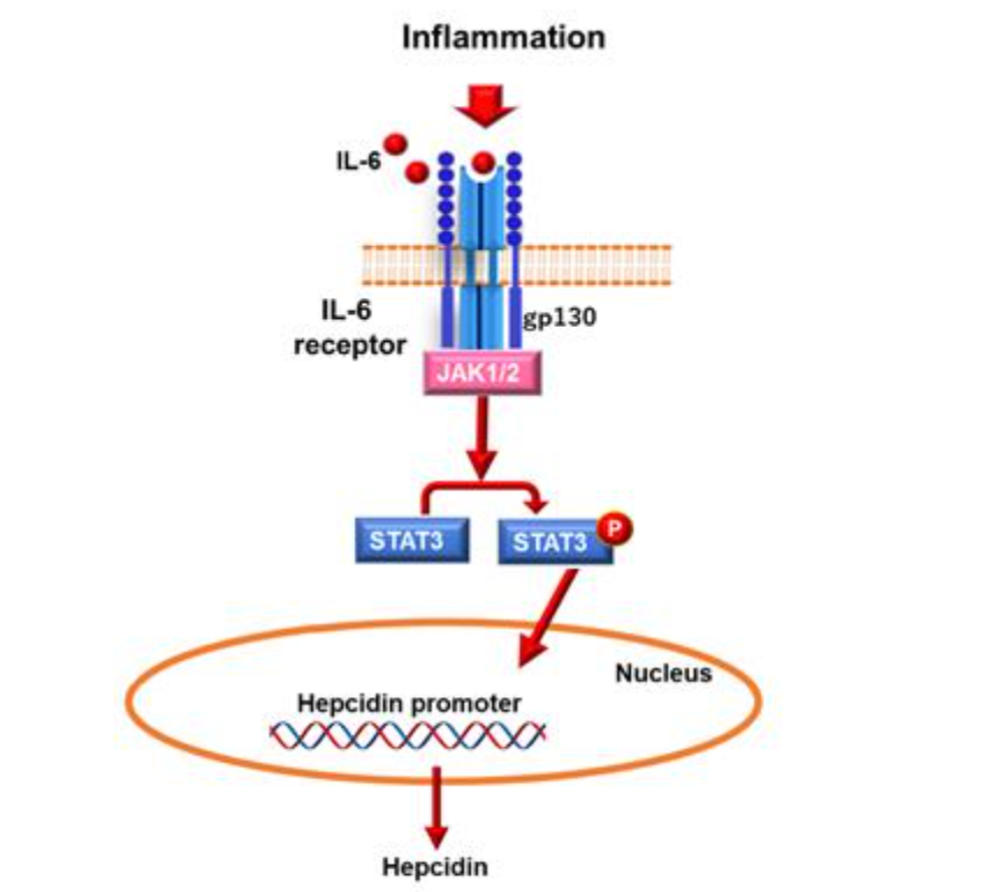
Iron is also involved in iron metabolism processes, including the regulation of hepcidin expression. Hepcidin is a key hormone that regulates iron homeostasis and is produced in the liver. It is known that hepcidin levels can be influenced by various factors, including inflammation and exercise.
1. IRON AND NUTRITION
Iron deficiency can lead to various health issues, including anemia, fatigue, and impaired physical performance. It is particularly concerning for athletes, as iron is crucial for oxygen transport and energy production during exercise.
2. EXERCISE AND IRON STATUS
Exercise has been shown to influence iron metabolism. Studies suggest that appropriate for iron-deficient athletes, providing adequate energy and carbohydrates to meet training demands may be an important part of their athletic dietary regimen.
3. INFLUENCE OF EXERCISE AND DIET TIMING ON IRON STATUS IN THE BODY
Fuji et al. investigated how meal timing affects the impact of resistance exercise on improving iron nutritional status in iron-deficient rats. Rats were subjected to resistance exercise and maintained for 3 weeks in two groups: one group received a meal immediately after exercise; the other received a meal 4 hours after exercise. The results showed an immediate increase in iron absorption after exercise, with no increase due to the second meal. Both plasma iron levels and body iron levels increased after exercise.
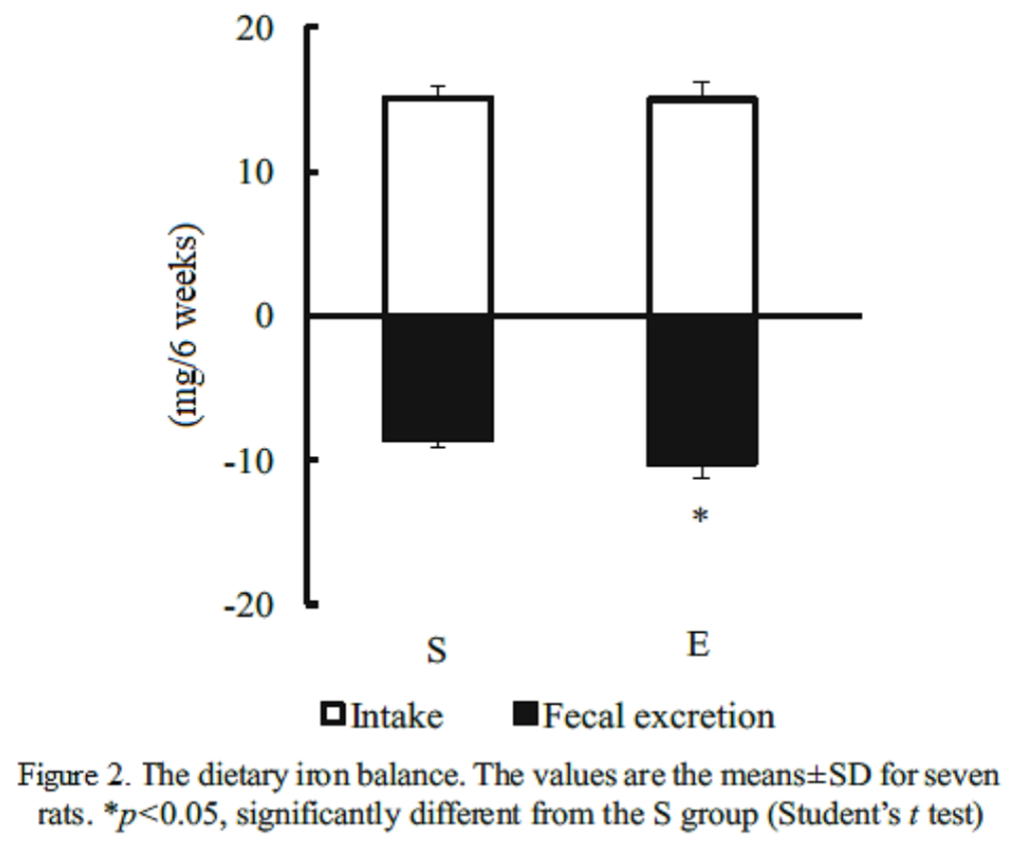
While the physiological mechanisms promoting iron absorption after exercise remain unclear, this study suggests that exercise may help to transiently enhance iron absorption, especially in individuals with low iron status.
Conclusions
In conclusion, the relationship between exercise and iron transfer is complex and multifaceted. Athletes, particularly those engaged in endurance sports, should be aware of their iron status and consider dietary strategies to optimize iron availability and utilization.
Acknowledgements
The authors contributed equally to this work.
Disclosure statement
No potential conflicts of interest were disclosed.
References
- 1. Smirnowish, N. Functional consequences of iron deficiency in athletes. J Nutr Sci Vitaminol. 1984;30(1):47-63. doi:10.3177/jnsv.30.47
- 2. Deliclaire, L. Francaux M. Recommendations for Healthy Nutrition in Female Endurance Runners: An Update. Front Nutr. 2015;2:17. Published 2015 May 24. doi:10.3389/fnut.2015.00017
- 3. Ganz, T. Nemeth E. Iron metabolism: interactions with normal and disordered erythropoiesis. Cold Spring Harb Perspect Med. 2012;2(2):a011668. doi:10.1101/cshperspect.a011668
- 4. Varga E, Pap R, Jánosa G, Sipka K, Pandur E. IL-6 Regulates Hepcidin Expression in Iron Deficiency Anemia. J Nutr Biochem. 2017;47:34-40. doi:10.1016/j.jnutbio.2017.01.014
- 5. Fuji T, Yokobori K, Kaneko H, Mita K. RGM Family Involved in the Regulation of Hepcidin Expression in Iron Deficiency. Biol Trace Elem Res. 2021;199(1):1-10. doi:10.1007/s12011-020-02493-5
- 6. Hu K, Efron PA, Zhang X, Liu LQ, Ping H. Not the KERF but the KERF: A New Approach to Iron Deficiency. Nutrients. 2021;13(5):1567. doi:10.3390/nu13051567
- 7. Sawada T, Konomi A, Yokota T. Iron deficiency in athletes: a review. Sports Med. 2016;46(3):305-319. doi:10.1007/s40279-015-0423-3
“`