


Author Center.
Everything you need to publish in the Medical Research Archives, the society’s official peer-reviewed journal.
The official journal of the European Society of Medicine.
Medical Research Archives is a fully open-access journal publishing original research, reviews, case reports, policy articles, and editorials across all areas of medicine. Since 2014, our authors have contributed over 5,000 articles, collectively read over 10 million times.
All articles are freely available with no embargo period, ensuring your work reaches the widest possible audience from day one.
Journal at a glance
- ISSN
- 2375-1924
- DOI prefix
- https://doi.org/10.18103/
- PubMed ID
- 101668511
- Access
- Fully open access, no embargo
- Review
- Double-blind peer review
- Citation style
- AMA format
- Schedule
- Monthly, plus special issues
-
 Dale AlversonUniversity of New Mexico
 -
 Charlotte Erlanson AlbertssonLund University
 -
 Peter GoadsbyNational Institute for Health Research
 -
 Rivka OfirBen Gurion University of the Negev
 -
 Rémy GuillevinUniversity of Poitiers
 -
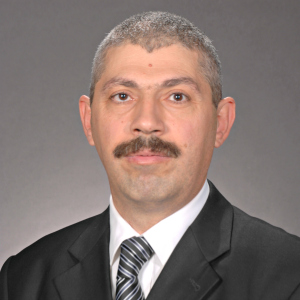 Wisam BukaitaLawrence Technological University
 -
 Ahmad SoolariWest Virginia University
 -
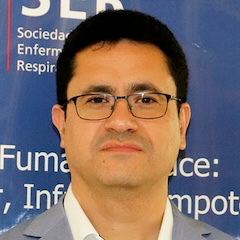 Guillermo Zepeda FloresUniversidad de Chile
A journal built around its authors.
Wide Reach
As the official journal of the European Society of Medicine, the journal reaches a large international audience.
A Global Community
The Medical Research Archives is more than a journal. It’s part of a global community that is shaping the future of medicine.
Members Publish for Free
Members of the European Society of Medicine can publish 3 articles per year free of charge. Not a member? Join now.
Efficient, Fair Peer-Review
Every submission receives comprehensive feedback through our double-blind review process. Even if your work isn’t accepted, you’ll receive a report explaining the decision and clear guidance for improvement.
An evidence-based approach to spotting a predatory journal.
Evaluating an unfamiliar journal is easy if you know what to look for. Here are 10 things to keep in mind before you submit your manuscript anywhere.
Read the listFive ways to contribute.
| Type & description | Word limit | |
|---|---|---|
| Original ResearchRead a sample | Empirical research and studies presenting innovative advances in medicine. | < 8,000words |
| ReviewsRead a sample | Literature reviews, systematic reviews, and meta-analyses. | < 8,000words |
| Policy ArticlesRead a sample | Manuscripts focusing on issues related to health policy. | < 6,000words |
| Case ReportsRead a sample | Articles reporting an unusual disease presentation, a new treatment, or an unexpected side effect. | < 4,000words |
| EditorialsRead a sample | Brief articles presenting a personal perspective in a narrative voice. | < 3,000words |
From submission to published online.
Reviewers are assigned early, often before a manuscript is even submitted, so your work moves without avoidable delay.
Up to 60 days end to end.
Copyright Information
Articles in the journal are published under a Creative Commons Attribution License (CC BY 4.0) and may be shared or distributed by anyone as long as attribution is given to the journal. Authors are not asked to transfer copyrights to the journal.
Publication Schedule
Issues of the journal are published monthly at the end of each month. There are also several special issues published each year in addition to the regular monthly issues.
The company your work will keep.

Dr. Mahua Dey
Dr. Dey is director of the surgical neuro-oncology program at UW School of Medicine and Public Health, specializing in the surgical management of brain and spinal cord tumors.

Where your work will be found.
The Medical Research Archives participates in the following indexing platforms. Availability varies by subject matter and funding source. Contact us to confirm options for your manuscript.
Articles published in the Medical Research Archives are regularly cited by researchers worldwide; the journal’s three most-cited papers have each surpassed 120 citations.
The Medical Research Archives supports the San Francisco Declaration on Research Assessment (DORA), which holds that journal-level metrics such as the impact factor should not be used as a surrogate for the quality of an individual article. The journal has therefore not applied for an impact factor.
- Keeping an Eye on Bardet-Biedl Syndrome: A Comprehensive Review of the Role of Bardet-Biedl Syndrome Genes in the Eye137citations
- Primary Central Nervous System Germ Cell Tumors: A Review and Update130citations
- Pesticides used in Thailand and toxic effects to human health121citations
Members publish for free.
Non-members are welcome to submit, or explore membership to save significantly on fees.
ESM Member
Join the society and publish free.
- Zero publication fees
- Job board & funding directory
- Mentorship & education resources
- 4,000+ member community
Non-member
Submit without joining. Pay only if your article is accepted.
- Full open-access publication
- Double-blind peer review with feedback report
Membership pays for itself. At 1,199 EUR/year (549 EUR for developing nations), a single article as a member saves you more than the cost of joining.
Already at a partner institution? Membership may already be included.
How to structure your manuscript.
Manuscripts should be organized as follows. Instructions for each element may be found in the style guide below.
Beginning section
- Title
- Authors & Affiliations (email to your editor in a separate file to ensure a blind review)
- Abstract
- Introduction
Middle section
- Methods
- Results
- Discussion
- Conclusions
Ending section
- Conflicts of Interest Statement
- Funding Statement
- Acknowledgments
- References
Other elements
- All figures, tables, and images should be numbered and inserted within the text
- Figures should appear immediately following the paragraph in which the figure is cited
- Appendices are not allowed, except for tables which span more than 1 full page
- Please do not upload figure files separately. Include them within the main text.
The style guide, at a glance.
The Medical Research Archives uses the AMA citation format. Learn more
| File format | Manuscripts may be submitted in the following formats: DOCX, DOC |
| Font | Any standard font may be used in size 12pt. |
| Headings | Sections and sub-sections should be labeled with headings. |
| Layout & spacing | Manuscript text should be in a single column and single spaced. |
| Footnotes | Footnotes are not permitted. |
| Language | Manuscripts must be submitted in English. |
| Abbreviations | Define abbreviations upon the first appearance. |
| Units | Use SI units (metric). |
Title
Titles may consist of no more than 140 characters. Avoid using acronyms within the title. The type of article should be clear after reading the title. Case reports must contain the words “case report” within the title.
Authorship
Everyone who is listed as an author should have made a substantial and direct contribution to the article, such as contributing to the conception, design, analysis, or interpretation of data. Individuals who have made only auxiliary contributions such as funding acquisition, proofreading, and technical services should be listed in the Acknowledgment section.
Abstract
Abstracts may consist of no more than 350 words.
The aim of an abstract is to summarize the objectives and results of the article. Structured abstracts (including the following elements: Background, Aims, Methods, Results, and Conclusion) are permitted but not required.
Abstracts should not contain references or excessive abbreviations.
Introduction
The introduction should:
- Provide background information that puts the manuscript into context and allows readers outside the field to understand its significance
- Clearly state the aim and scope of the article
- Define the problem addressed
- Note any relevant controversies or disagreements related to the topic
Methods
The Methods section should be sufficiently detailed to allow other researchers to replicate the work.
Results
Results should be clear and concise. Avoid mixing elements of the Discussion section with the Results.
Discussion
The Discussion section should interpret the results of the work but not repeat them. It is acceptable to divide the Discussion into subsections.
Conclusion
Conclude the article with a paragraph or two summarizing the conclusions that can be drawn from the work. Do not state any conclusions which are not supported by the results.
Conflicts of Interest Statement
All authors are required to disclose all financial relationships (including employment, grants, patent ownership, and other interests) with any entities that have an interest in the subject matter or materials discussed in the manuscript, if such relationship existed at any time in the last 24 months.
If there are no conflicts to declare, this section may read “The authors have no conflicts of interest to declare.”
Funding Statement
Please list all funding sources and grant numbers in this section. If the authors received no funding for the work discussed in the manuscript this section may be omitted.
Acknowledgements
Those who contributed to the work but do not meet the authorship criteria should be listed in the Acknowledgments section with a brief description of their contribution.
References
Ensure that your References section lists full and current bibliography details for every cited work at the time of the submission of the manuscript.
The Medical Research Archives uses the AMA citation format. Please ensure that the References section and inline quoting numbers comply with AMA style requirements. Instructions for using AMA style may be found at: owl.purdue.edu/owl/research_and_citation/ama_style
Answers before you submit.
Is the journal open access?
Yes. All articles are fully open access with no embargo period.
Can non-members submit to the journal?
Yes, submissions from non-members are welcome.
How long does peer review take?
We do our best to assign reviewers to a manuscript before it is even submitted, to reduce delays. Peer review typically takes no more than 30 days.
Do members of the society publish for free?
Yes, members of the European Society of Medicine can publish in the society’s journal free of charge (up to 3 times per year for most memberships). The only requirement is that the membership must be active prior to submission of the manuscript. See fees and membership.
Is the journal indexed in PubMed?
The journal is partially indexed in PubMed. Articles and research funded by the NIH, CDC, FDA, and 35 other organizations are eligible for PubMed indexing. See the full list of indexing platforms.
Is the journal peer-reviewed?
Yes. All articles go through a double blind peer-review process.
Three steps to submission.
Register as an author. Please do this in advance; do not wait until the manuscript is ready.
Format the manuscript according to this guide.
Upload your manuscript using your submission link, received after registering.
What our authors say.
Dr. Baruch discusses his experience with ESMED and what drew him to the society. His decades of experience in clinical medicine inform his view of what makes a medical society valuable to its members.
Watch the interviewOur editorial team answers author queries directly, from scope and formatting to fees and eligibility.
Email the editorial teamMembers publish for free.
Members of the European Society of Medicine are exempt from publication fees when publishing in the society’s journal. Join us, and become part of a global community of medical professionals.
Professional Membership
- Free publication of 3 articles per year (€11,997 value)
- Access to job board and funding directory
- Mentorship program
- Ability to post presentations
Reduced Membership
* Available for these developing nations
- Free publication of 2 articles per year (€4,000+ value)
- Access to job board and funding directory
- Mentorship program
- Ability to post presentations