






Obesity in African American Adults: Challenges and Care
Obesity among African American People in the United States: Epidemiological Patterns, Social Determinants, and Clinical Implications
ABSTRACT
Obesity represents a significant public health challenge among African American people in the United States, with disproportionate impacts across racial and ethnic groups. This comprehensive review examines the unique epidemiological patterns, social determinants, and management approaches for obesity among African American populations, with particular attention to the underlying factors contributing to observed disparities.
Keywords
- Obesity
- African American
- Social Determinants
- Epidemiology
- Health Disparities
Introduction
Obesity has reached epidemic proportions in the United States, affecting approximately 42.4% of the adult population as of 2017-2018, a dramatic increase from 13.4-15.0% in the early 1990s. However, this burden is not distributed equally across demographic groups. African American populations, particularly women, experience significantly higher rates of obesity compared to other racial and ethnic groups, regardless of socioeconomic status. This disparity represents a critical challenge for public health practitioners and healthcare providers seeking to address the obesity epidemic through evidence-based, culturally appropriate interventions.
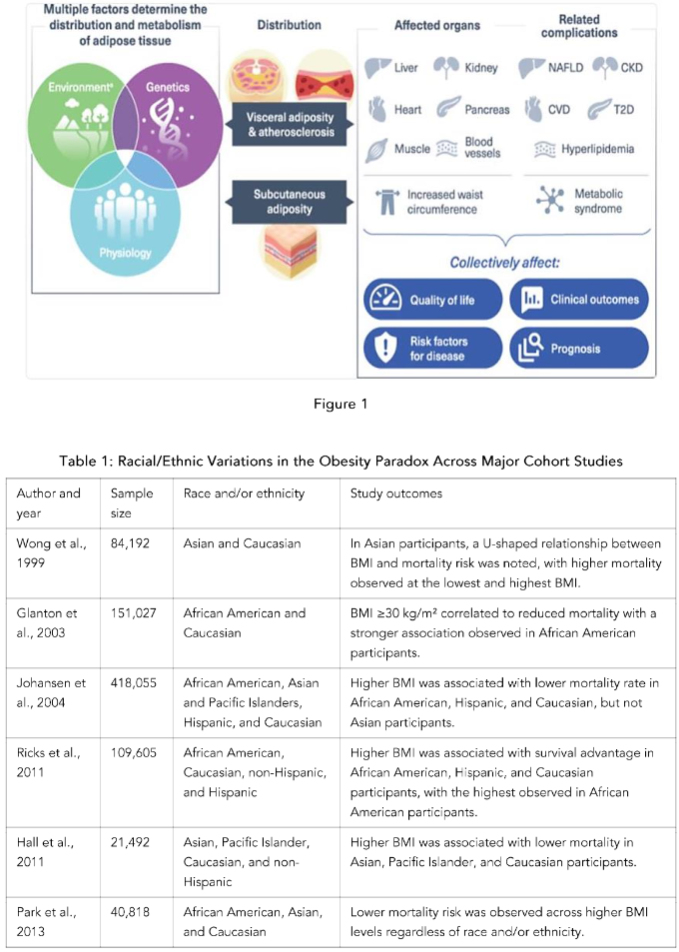
The etiology of obesity is complex and multifactorial, involving genetic predisposition, physiological mechanisms, behavioral factors, and social determinants. Research indicates that African American populations have unique experiences that influence their health behaviors and outcomes. For instance, while obesity prevalence typically decreases with higher education or income across demographic groups, African American women maintain higher BMI than White women at every level of educational attainment, with the greatest disparity observed among those with post-secondary education. Additionally, unlike obesity prevalence in other groups, African American women do not experience a significant reduction in obesity-related mortality risk with increased educational attainment.
Methodology
This review synthesizes existing literature on obesity among African American populations, focusing on epidemiological patterns, social determinants, and healthcare access. A comprehensive search of peer-reviewed articles, government reports, and health databases was conducted to identify relevant studies.
Patient-Provider Communication and Unconscious Bias
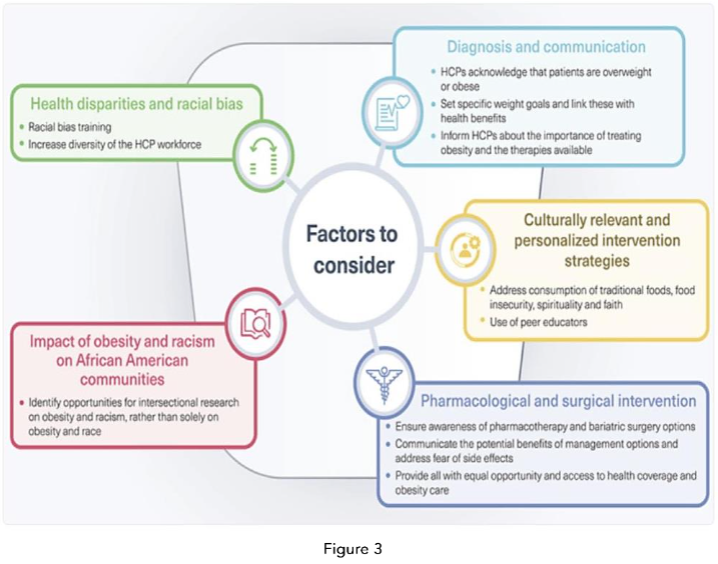
Healthcare provider bias—both unconscious and conscious—affects quality of care for African American people with obesity. Research confirms that healthcare providers demonstrate implicit bias against both African American patients and patients with obesity, potentially affecting clinical decision-making and treatment recommendations.
Body Image Perceptions and Cultural Context
Cultural perspectives on body image and weight significantly influence obesity management among African American populations. Research indicates that cultural context influences both self-perception of weight status and motivation for weight management. African American women often face societal pressures that shape their understanding of beauty and health, which can complicate efforts to achieve weight loss and maintain healthy behaviors.
Strategies for Obesity Management in African American Populations
Healthcare settings should implement strategies to reduce weight-related disparities. Supporting activities that can be implemented within existing community contexts may enhance weight management among African American patients with obesity.
Conclusion
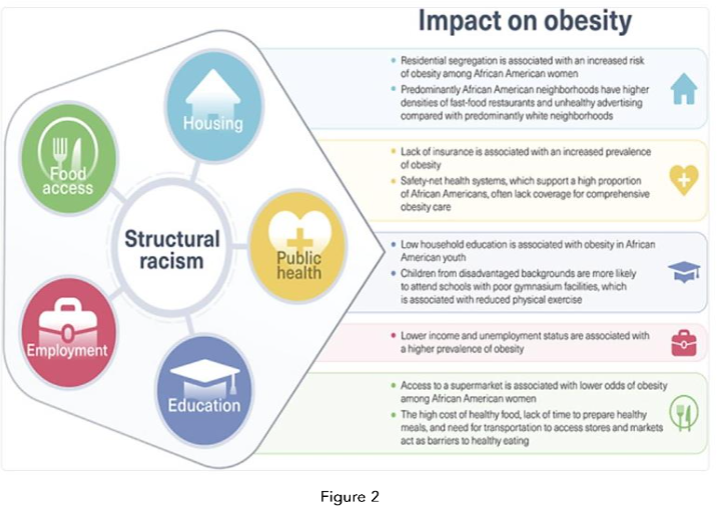
Obesity represents a complex public health challenge that disproportionately affects African American populations, particularly women, through intersecting social, structural, and systemic factors. Structural racism creates and maintains systemic barriers, including healthcare access, housing, education, and economic insecurity, which contribute to obesity risk. Future research should explore the complex interplay between structural racism, physiological mechanisms, and obesity development in African American populations. Additionally, implementation science approaches are needed to identify optimal strategies for translating existing evidence into effective interventions within diverse healthcare and community settings.
References
- Psycho-social, bidirectional prospective analysis of depression, fitness, and the Obesity Paradox: Considerations for Race and Ethnicity. PMC11366992, 2024.
- 24-hour physical activity monitoring during pregnancy and postpartum. PMC11068928, 2024.
- Health disparities and obesity: The African American perspective. PMC36697503, 2024.