






Cyberbullying and ADHD: Risk Factors in Adolescents
CYBERBULLYING AND VICTIMIZATION IN ADOLESCENTS WITH ATTENTION DEFICIT HYPERACTIVITY DISORDER
Özgür Onder Demirtaş1, Serdar Akkuş1, and Süleyman Kazlık1
- Department of Child and Adolescent Psychiatry, Health Sciences University Gazi Yaşargil Training and Research Hospital, Diyarbakır, Türkiye
OPEN ACCESS
PUBLISHED: 31 July 2025
CITATION:Demirtaş, Ö., Ö., et al., 2025. CYBERBULLYING AND VICTIMIZATION IN ADOLESCENTS WITH ATTENTION DEFICIT HYPERACTIVITY DISORDER: THE ROLE OF DIGITAL RISK FACTORS Medical Research Archives, [online] 13(7).https://doi.org/10.18103/mra.v13i7.6748
COPYRIGHT: © 2025 European Society of Medicine. This is an open-access article distributed under the terms of the Creative Commons Attribution License, which permits unrestricted use, distribution, and reproduction in any medium, provided the original author and source are credited.
DOI https://doi.org/10.18103/mra.v13i7.6748
ISSN: 2375-1924
ABSTRACT
Background: This study aims to determine the prevalence of cyberbullying and cybervictimization among adolescents diagnosed with Attention Deficit Hyperactivity Disorder. It also examines the role of digital risk factors associated with these behaviors.
Methods: A total of 107 adolescents diagnosed with ADHD were included in the study. The distribution of continuous variables was assessed using the Shapiro-Wilk test, and the Mann-Whitney U test was applied for non-normally distributed data. To identify the factors associated with cyberbullying and cybervictimization, a multivariate logistic regression analysis was performed using the Backward Rmethod. For the sake of statistical significance, a significance level of p < .05 was established as the benchmark for all analyses.
Results: The study’s sample population included 107 adolescents, with a mean age of 14.45 years (SD = 1.81). The sample consisted of 77.1% males (n = 77) and 22.9% females (n = 30). Among the participants, 52.3% (n = 56) were classified as cyberbullies, while 36.8% (n = 39) reported experiences of cybervictimization. A salient finding of the study underscores the notion that, while bivariate analyses indicated elevated scores of inattention, hyperactivity/impulsivity, and Oppositional Defiant Disorder in individuals subjected to cyberbullying in comparison to those not subjected to such victimization, these variables were deemed non-significant in the context of multivariate regression analysis.
Conclusions: The findings suggest that cyberbullying and cybervictimization are prevalent among adolescents with ADHD, and that specific digital risk factors may contribute to these behaviors.
Keywords
cyberbullying, cybervictimization, ADHD, adolescents, digital risk factors
INTRODUCTION
With the widespread use of digital technologies, cyberbullying and cybervictimization have become increasingly prevalent psychosocial issues among adolescents.¹–³ Cyberbullying is defined as deliberate and repeated harmful behavior directed at an individual through digital communication channels, which may include social media platforms, instant messaging applications, online gaming environments, email, video-sharing sites, and anonymous forums. Cybervictimization, on the other hand, refers to the experience of individuals who are targeted by these digital attacks.⁴˒⁵
The prevalence of cyberbullying and cybervictimization varies widely across different studies. A systematic review and meta-analysis including 76 longitudinal studies reported cyberbullying prevalence ranging from 5.3% to 66.2%, and cybervictimization prevalence ranging from 1.9% to 84.0.¹ Another review of 63 studies reported cyberbullying prevalence ranging from 6.0% to 46.3%, and cybervictimization prevalence between 13.99% and 57.5%.³ This variability can be attributed to differences in sample characteristics and methodological variations in the measurement tools.¹˒³˒⁵ These rates are particularly higher during adolescence and with problematic internet use.¹˒⁵–⁷
The factors associated with cyberbullying and cybervictimization are multidimensional. However, there is no clear consensus in the literature regarding which factors are consistently related. While some studies have identified problematic internet use, internet use duration, possession of personal communication devices (e.g., mobile phones and computers), externalizing disorders (such as impulsivity and Attention Deficit Hyperactivity Disorder), age, male gender, being an only child, and academic performance as risk factors for cyberbullying, other studies have reported contradictory findings.¹–³˒⁶–¹¹ The same applies to cybervictimization. Some studies have reported factors such as older age, female gender, being an only child, ownership of personal devices, problematic internet use and internalizing disorders (e.g., low self-esteem, anxiety, depressive symptoms) as risk factors for cybervictimization. However, there are also studies that report contrary findings.³–⁶˒¹²–¹⁴
The literature has also drawn attention to the associations between the purpose of internet use and both cyberbullying and cybervictimization.⁶ Behaviors such as social media interaction, online gaming, entertainment-based media consumption (e.g., video watching), and exposure to sexual content may increase the risk of both cyberbullying and cybervictimization.⁶˒⁷˒¹⁵ Furthermore, activities such as communicating with friends digitally, spending time on forums, and anonymously browsing social networks have also been shown to pose risks in this context. Furthermore, the co-occurrence of cyberbullying and cybervictimization, known as the bidirectional bully-victim profile, has been associated with greater emotional distress and adjustment difficulties.¹
Attention Deficit Hyperactivity Disorder (ADHD) is a neurodevelopmental disorder characterized by inattention, hyperactivity, and impulsivity.¹⁶ A recent and comprehensive umbrella review reported the prevalence of ADHD in children and adolescents as 8% (95% CI: 6%–10%).¹⁷ Adolescents diagnosed with ADHD may serve as both perpetrators and victims of cyberbullying due to a variety of factors, including but not limited to: low self-regulation, low self-esteem, increased problematic internet use, and excessive digital exposure.⁶˒¹⁴˒¹⁵˒¹⁸˒¹⁹ Specifically, heightened levels of hyperactivity and oppositional behaviors have been documented as risk factors for cyberbullying in adolescents diagnosed with ADHD.⁶˒¹⁴˒¹⁸ Concurrently, anxiety disorders, social phobia, and deficient social skills have been linked to an elevated risk of cybervictimization.⁵
In a study conducted on 78 adolescents diagnosed with attention deficit hyperactivity disorder, 64% of participants reported experiencing face-to-face bullying, while 23% reported exposure to cyberbullying within the past month.¹⁸ Similarly, it was reported that adolescents with ADHD experienced
higher rates of cybervictimization compared to those without the disorder (43% vs. 13%).²⁰ In another study conducted on adolescents diagnosed with attention deficit hyperactivity disorder, 35.9% reported repeated cyberbullying behavior, while 38.0% reported repeated experiences of cybervictimization.¹⁴ A salient finding of the study underscores the notion that, while bivariate analyses indicated elevated scores of inattention, hyperactivity/impulsivity, and Oppositional Defiant Disorder in individuals subjected to cyberbullying in comparison to those not subjected to such victimization, these variables were deemed non-significant in the context of multivariate regression analysis. Furthermore, no substantial correlation was identified with cybervictimization.¹⁴ These findings suggest a lack of consensus in the literature regarding ADHD.
The objective of this study is to examine the prevalence of cyberbullying and cybervictimization, as well as their associated factors, among adolescents diagnosed with ADHD who present to a clinical setting. In contrast to previous studies, this study employs a clinical-based approach that addresses both cyberbullying and cybervictimization simultaneously. It evaluates these phenomena through separate groups and incorporates psychiatric symptom burden, patterns of internet use, and online habits. In this context, the primary aim of the study is to determine the prevalence of cyberbullying and cybervictimization among adolescents with ADHD and to identify individual, psychiatric, and digital behavioral factors associated with these conditions.
Material and Methods
PARTICIPANTS AND PROCEDURE
This study was conducted at the Child and Adolescent Psychiatry Outpatient Clinics of the University of Health Sciences Gazi Yaşargil Training and Research Hospital. The sample consisted of 107 adolescents aged 12 to 18 years, all diagnosed with attention deficit hyperactivity disorder according to DSM-5 criteria.
Data were collected using four instruments. A structured interview form was administered by clinicians to obtain sociodemographic data and information about internet and media use. Adolescents completed the Revised Cyberbullying Inventory and the Internet Addiction Scale to assess cyberbullying involvement and internet use severity, respectively. Parents completed the Turgay DSM-IV-Based Rating Scale to evaluate ADHD symptoms and associated behavioral problems.
INSTRUMENTS
Interview Form: A structured form developed by the researchers was used to collect participants’ sociodemographic data and patterns of internet and electronic media use. The form included questions about daily internet usage duration, personal device ownership, and common purposes of internet use (e.g., social media, gaming, program downloading).
Turgay DSM-IV-Based Child and Adolescent Behavior Disorders Screening and Rating Scale: This 41-item scale was completed by parents to assess core symptoms of ADHD, as well as associated behavioral problems such as oppositional defiant and conduct symptoms. Each item is rated on a 4-point Likert scale, with higher scores indicating greater symptom severity.²¹˒²²
Young’s Internet Addiction Scale: This 20-item self-report scale was used to evaluate the severity of problematic internet use. Participants rated each item on a 5-point Likert scale. Based on the total score, individuals were categorized as normal users, those at risk, or those exhibiting clinically significant problematic internet use.²³˒²⁴
Revised Cyber Bullying Inventory: This 28-item self-report scale was used to assess participants’ involvement in cyberbullying and cybervictimization. It includes two 14-item subscales—cyberbully and cybervictim—rated on a 4-point Likert scale. Participants reporting behaviors occurring two or more times were classified as cyberbullies or cybervictims for group comparisons.²⁵˒²⁶
STATISTICAL ANALYSES
Data analysis was conducted using SPSS version 26.0. Categorical variables between groups were
analyzed using the Chi-square test or Fisher’s exact test where appropriate. The distribution of continuous variables was assessed using the Shapiro–Wilk test, and the Mann–Whitney U test was applied for non-normally distributed data. To identify the factors associated with cyberbullying and cybervictimization, a multivariate logistic regression analysis was performed using the Backward LR method. For the sake of statistical significance, a significance level of p < .05 was established as the benchmark for all analyses.
Results
The study’s sample population included 107 adolescents, with a mean age of 14.45 years (SD = 1.81). The sample consisted of 71.9% males (n = 77) and 28.1% females (n = 30). Among the participants, 52.3% (n = 56) were attending high school, while 47.7% (n = 51) were enrolled in middle school. When assessed according to academic achievement, 81.3% (n = 87) were classified as having good academic performance, while 18.7% (n = 20) were classified as having low academic performance. A total of 18.7% (n = 20) of the participants were only children. With respect to the subtypes of ADHD, 71.0% (n = 76) of the sample were classified as the combined type, while 29.0% (n = 31) were classified as the predominantly inattentive type. A subsequent examination of parental education levels revealed that 46.7% of mothers (n = 50) had completed primary school, while 53.3% (n = 57) had attained at least a middle school education or higher. In a similar manner, the distribution of fathers’ educational attainment levels revealed that 49.5% (n = 53) had completed primary school, while 50.5% (n = 54) had attained middle school or higher levels of education. Furthermore, 32.7% of the participants (n = 35) reported a history of psychiatric disorders in at least one of their parents. In addition, the results indicated that 60.7% (n = 65) of the participants reported having engaged in cyberbullying behavior at least once in the previous six months, and 67.3% (n = 72) reported having experienced cybervictimization at least once in the same period. The results of the Revised Cyber Bullying Inventory assessment indicated that 35.5% (n = 38) of the participants were classified as “cyberbullies” due to the presence of recurrent cyberbullying behavior, while 36.4% (n = 39) were classified as “cybervictims” due to the experience of recurrent cybervictimization.
A subsequent comparison of the groups in terms of sociodemographic and clinical characteristics, including age, gender, education level, only child status, father’s education level, and presence of psychiatric illness in parents, revealed no significant differences between the cyberbully and non-cyberbully groups, as well as the cybervictim and non-cybervictim groups (p > .05). However, a significant discrepancy was observed in academic achievement among the cybervictim group. Specifically, 28.9% of individuals who identified as cyberbully group reported low academic performance, compared to 13.0% of individuals in the non-cyberbully group (p = .043). In the context of cybervictimization, a significant association was identified between maternal education level and the occurrence of victimization. The analysis revealed that 66.7% of mothers of individuals who experienced cybervictimization had attained at least a middle school education, while this proportion was 45.6% in the group that did not experience victimization (p = .035) (Table 1).
The comparative distribution of subscale scores from the Turgay DSM-IV-Based Child and Adolescent Behavior Disorders Screening and Rating Scale is presented in Table 2. In the cyberbully group, scores for inattention (median = 17, range = 4–26; p = .005) and hyperactivity/impulsivity (median = 12, range = 2–25; p = .031) were significantly higher compared to the non-cyberbully group. Although higher median values were observed for Oppositional Defiant Disorder and Conduct Disorder scores in the cyberbully group, these differences did not reach statistical significance (p = .064 and p = .065, respectively). A subsequent comparison of the cybervictim and non-cybervictim groups revealed no statistically significant differences in any of the subscale scores (p > .05).
S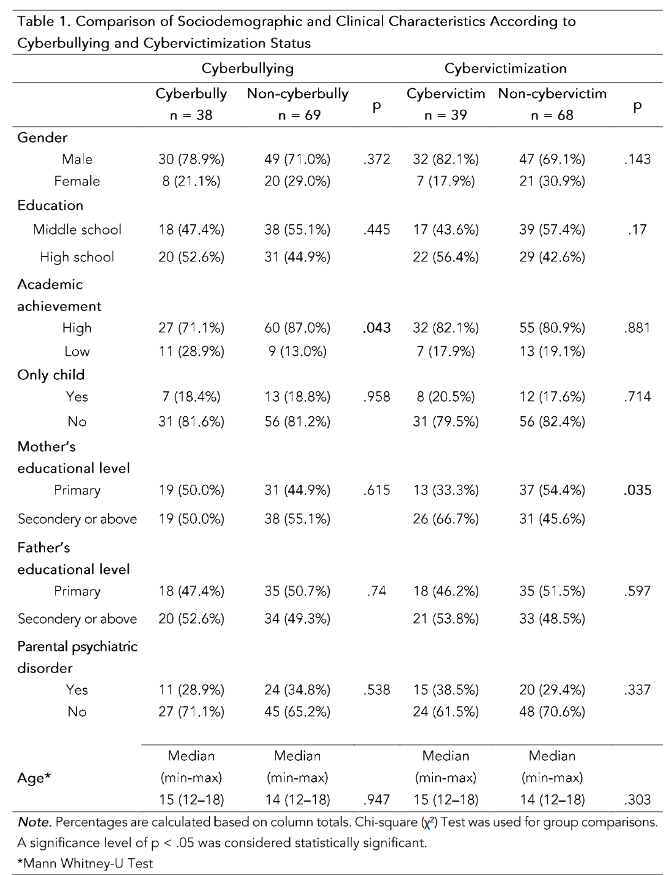
A subsequent examination of internet access and usage characteristics revealed significant differences between the cyberbully group and the non-cyberbully group. The presence of problematic internet use was significantly higher in the cyberbully group (p < .001).
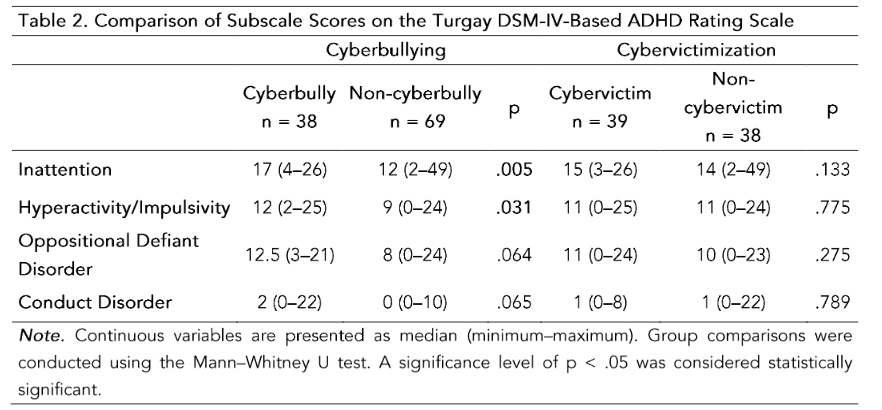 Table 2. Comparison of Subscale Scores on the Internet Usage Purposes for Two Distinct Groups
A subsequent examination of internet access and usage characteristics revealed a significant disparity in the rate of personal device ownership between the cybervictim group and the non-cybervictim group (74.4% vs. 51.5%, respectively; p = .02). However, no substantial difference was observed between the cyberbully and non-cyberbully groups (p = .178). The proportion of adolescents with daily internet use of two hours or more was significantly higher in both the cyberbully (p = .049) and cybervictim (p = .008) groups. The prevalence of problematic internet use was found to be significantly higher in both groups, with rates of 63.2% in the cyberbully group and 53.8% in the cybervictim group (p < .001 and p = .005, respectively) (See Table 3).
Table 3. Internet Access and Usage Characteristics
| Cyberbullying | Cybervictimization | |||||
|---|---|---|---|---|---|---|
| Cyberbully | Non-cyberbully | p | Cybervictim | Non-cybervictim | p | |
| n = 38 | n = 69 | n = 39 | n = 38 | |||
| Own device | ||||||
| Yes | 26 (68.4%) | 38 (55.1%) | .178 | 29 (74.4%) | 35 (51.5%) | .02 |
| No | 12 (31.6%) | 31 (44.9%) | 10 (25.6%) | 33 (48.5%) | ||
| Daily internet use | ||||||
| 2 hours or more | 17 (44.7%) | 18 (26.1%) | .049 | 19 (48.7%) | 16 (23.5%) | .008 |
| 0–2 hours | 21 (55.3%) | 51 (73.9%) | 20 (51.3%) | 52 (76.5%) | ||
| Problematic internet use | ||||||
| Yes | 24 (63.2%) | 15 (21.7%) | <0.001 | 21 (53.8%) | 18 (26.5%) | .005 |
| No | 14 (36.8%) | 54 (78.3%) | 18 (46.2%) | 50 (73.5%) |
Note. Percentages are calculated based on column totals. Chi-square (χ²) Test was used for group comparisons. A significance level of p < .05 was considered statistically significant.
Table 4 presents comparative data on internet usage purposes for two distinct groups: cyberbully and non-cyberbully, as well as cybervictim and non-cybervictim. A correlation was identified between the presence of cyberbullying behavior and elevated rates across all domains of internet utilization. However, the statistical significance of this difference was observed only in the context of email use (p = .036) and software downloading (p = .004). Conversely, individuals encountering cybervictimization exhibited elevated rates across all domains of utilization. These disparities were deemed to be statistically significant for online gaming (p = .011), online communication (p = .041), electronic mail usage (p = .022), software downloading (p = .009), access to websites containing sexual content (p = .035), and forum participation (p = .028).
Table 4. Purposes of Internet Use
| Cyberbullying | Cybervictimization | |||||
|---|---|---|---|---|---|---|
| Cyberbully | Non-cyberbully | p | Cybervictim | Non-cybervictim | p | |
| n = 38 | n = 69 | n = 39 | n = 38 | |||
| Social media | ||||||
| Yes | 34 (89.5%) | 60 (87.0%) | .768ᵃ | 34 (87.2%) | 60 (88.2%) | .872ᵃ |
| No | 4 (10.5%) | 9 (13.0%) | 5 (11.8%) | 8 (12.8%) | ||
| Online gaming | ||||||
| Yes | 32 (84.2%) | 49 (71.0%) | .128ᵃ | 35 (89.7%) | 46 (67.6%) | .011ᵇ |
| No | 6 (15.8%) | 20 (29.0%) | 4 (10.3%) | 22 (32.4%) | ||
| Chat | ||||||
| Yes | 29 (76.3%) | 46 (66.7%) | .297ᵃ | 32 (82.1%) | 43 (63.2%) | .041ᵃ |
| No | 9 (23.7%) | 23 (33.3%) | 7 (17.9%) | 25 (36.8%) | ||
| General information | ||||||
| Yes | 34 (89.5%) | 55 (79.7%) | .281ᵇ | 35 (89.7%) | 54 (79.4%) | .192ᵇ |
| No | 4 (10.5%) | 14 (20.3%) | 4 (10.3%) | 14 (20.6%) | ||
| Education | ||||||
| Yes | 31 (81.6%) | 48 (69.6%) | .176ᵃ | 32 (82.1%) | 47 (69.1%) | .143ᵃ |
| No | 7 (18.4%) | 21 (30.4%) | 7 (17.9%) | 21 (30.9%) | ||
| Newspaper/News | ||||||
| Yes | 17 (44.7%) | 33 (47.8%) | .759ᵃ | 20 (51.3%) | 30 (44.1%) | .475ᵃ |
| No | 21 (55.3%) | 36 (52.2%) | 19 (48.7%) | 38 (55.9%) | ||
| Yes | 24 (63.2%) | 29 (42.0%) | .036ᵃ | 25 (64.1%) | 28 (41.2%) | .022ᵃ |
| No | 14 (36.8%) | 40 (58.0%) | 14 (35.9%) | 40 (58.8%) | ||
| Program | ||||||
| Yes | 32 (84.2%) | 39 (56.5%) | .004ᵃ | 32 (82.1%) | 39 (57.4%) | .009ᵃ |
| No | 6 (15.8%) | 30 (43.5%) | 7 (17.9%) | 29 (42.6%) | ||
| Music | ||||||
| Yes | 32 (84.2%) | 48 (69.6%) | .095ᵃ | 33 (84.6%) | 47 (69.1%) | .076ᵃ |
| No | 6 (15.8%) | 21 (30.4%) | 6 (15.4%) | 21 (30.9%) | ||
| Making friends | ||||||
| Yes | 6 (15.8%) | 4 (5.8%) | .161ᵇ | 4 (10.3%) | 6 (8.8%) | 1ᵇ |
| No | 32 (84.2%) | 65 (94.2%) | 35 (89.7%) | 62 (91.2%) | ||
| Sexual content | ||||||
| Yes | 5 (13.2%) | 5 (7.2%) | .315ᵃ | 7 (17.9%) | 3 (4.4%) | .035ᵇ |
| No | 33 (86.8%) | 64 (92.8%) | 32 (82.1%) | 65 (95.6%) | ||
| Forum | ||||||
| Yes | 10 (26.3%) | 11 (15.9%) | .196ᵃ | 12 (30.8%) | 9 (13.2%) | .028ᵃ |
| No | 28 (73.7%) | 58 (84.1%) | 27 (69.2%) | 59 (86.8%) | ||
| Online shopping | ||||||
| Yes | 12 (31.6%) | 18 (26.1%) | .545ᵃ | 12 (30.8%) | 18 (26.5%) | .634ᵃ |
| No | 26 (68.4%) | 51 (73.9%) | 27 (69.2%) | 50 (73.5%) |
Note. ᵃ Chi-square Test. ᵇ Fisher’s Exact Test. A significance level of p < .05 was considered statistically significant.
A multivariate logistic regression model was constructed using variables found to be significant in the bivariate analyses related to cyberbullying. The model was then analyzed using the Backward LR method (see Table 5). The regression model revealed that individuals with problematic internet use exhibited a 7.4-fold increased likelihood of engaging in cyberbullying compared to those without problematic use (OR = 7.40, 95% CI: 2.81–19.48, p < .001). Furthermore, individuals who used the internet for downloading programs exhibited an approximately 4.6-fold increased likelihood of engaging in cyberbullying (OR = 4.57, 95% CI: 1.47–14.17, p = .009).
Table 5. Logistic Regression Model for Cyberbullying (Backward LR)
| Variable | B | OR (Exp(B)) | 95% CI (Lower–Upper) | p |
|---|---|---|---|---|
| Problematic internet use | 2.001 | 7.399 | 2.811–19.476 | < 0.001 |
| Program downloading | 1.52 | 4.57 | 1.474–14.172 | .009 |
| Hyperactivity/Impulsivity score | .07 | 1.073 | .99–1.163 | .087 |
Note. OR = Odds Ratio; CI = Confidence Interval. A significance level of p < .05 was considered statistically significant. Model fit: χ²(4) = 30.66, p < .001; Nagelkerke R² = .342; Classification accuracy = 74.8%; Hosmer–Lemeshow goodness-of-fit test: p = .236.
Despite the persistence of hyperactivity and impulsivity levels in the model, these outcomes did not attain statistical significance (OR = 1.073, p = .087). The model excluded academic achievement, daily internet usage duration, email use, and inattention level (p > .05). The overall significance of the constructed model was statistically confirmed (Omnibus χ²(3) = 30.66, p < .001). The model exhibited a moderate proportion of variance (Nagelkerke R² = .342), and the Hosmer–Lemeshow test, indicating adequate model fit, was not significant (p = .236). The model demonstrated an overall classification accuracy of 74.8%. To assess multicollinearity among the independent variables, a multiple linear regression analysis was conducted, examining the Variance Inflation Factor (VIF) and Tolerance values. The VIF values ranged from 1.05 to 1.63, while the Tolerance values were all above 0.61. These results suggest that multicollinearity issues were not present within the model.
A multivariate logistic regression model was constructed using variables found to be significant in the bivariate analyses related to cybervictimization. This model was similarly analyzed using the Backward LR method (see Table 6). The model was found to be statistically significant in terms of overall significance (Omnibus χ²(5) = 27.54, p < .001). The regression results indicate that individuals whose mothers have attained an education level of at least middle school are 2.6 times more likely to experience cybervictimization compared to those whose mothers have only completed primary school (OR = 2.60, 95% CI: 1.04–6.52, p = .041). The risk was found to be approximately three times higher in individuals with problematic internet use (OR = 2.98, 95% CI: 1.18–7.51, p = .021). Individuals who used the internet for downloading programs exhibited a 3.2-fold elevated risk of cybervictimization (OR = 3.17, p = .038), while those who accessed sexually explicit websites demonstrated an approximately 5.5-fold heightened risk. However, this finding did not attain conventional statistical significance (OR = 5.45, p = .052). The variable of online gaming also demonstrated borderline significance (OR = 3.44, p = .059). The statistical analysis revealed that the variables of personal device usage, daily internet usage duration, email use, chat, and forum activities were not statistically significant (p > .05). Consequently, these variables were excluded from the model.
the model. The model’s explanatory power was moderate, with a Nagelkerke R² of .311. The model demonstrated an accuracy of 71.0% in its classification of the subjects. The Hosmer–Lemeshow test yielded a non-significant result (p = .876), thereby indicating an adequate model fit to the data. To assess multicollinearity among independent variables, a multiple linear regression analysis was conducted; the VIF values ranged between 1.0 and 1.12, and Tolerance values were above 0.89 for all variables. These results suggest that multicollinearity issues were not present within the model.
Table 6. Logistic Regression Model of Cybervictimization (Backward LR)
| Variable | B | OR (Exp(B)) | 95% CI (Lower–Upper) | p |
|---|---|---|---|---|
| Mother education level | .957 | 2.604 | 1.04–6.522 | .041 |
| Problematic internet use | 1.092 | 2.98 | 1.182–7.514 | .021 |
| Online gaming | 1.236 | 3.44 | .956–12.377 | .059 |
| Program downloading | 1.153 | 3.169 | 1.065–9.432 | .038 |
| Sexual content sites | 1.696 | 5.453 | .985–30.18 | .052 |
Note. OR = Odds Ratio; CI = Confidence Interval. A significance level of p < .05 was considered statistically significant. Model fit: χ²(5) = 27.54, p < .001; Nagelkerke R² = .311; Classification accuracy = 71.0%; Hosmer–Lemeshow goodness-of-fit test: p = .876.
Discussion
In this study, 107 adolescents diagnosed with ADHD were examined for their experiences of cyberbullying and cybervictimization, as well as the accompanying sociodemographic, psychiatric, and digital behavioral characteristics. Initially, a series of variables associated with cyberbullying and cybervictimization were identified through bivariate analyses. These variables were subsequently incorporated into multivariate logistic regression analyses, employing the Backward LR method for evaluation. The findings indicated an association between both cyberbullying and cybervictimization with specific digital and familial factors, which were both shared and distinct.
A salient finding of the study is that problematic internet use functions as a robust and significant predictor for both cyberbullying and cybervictimization. The regression model indicates that individuals with problematic internet use exhibit approximately 7.4 times higher odds of engaging in cyberbullying and approximately 3 times higher odds of experiencing cybervictimization compared to those without problematic internet use. The present findings suggest that a dysfunctional relationship with online environments may be a contributing factor to both aggressive behaviours and the risk of victimization. It is hypothesised that problematic internet use fosters both aggression and vulnerability through mechanisms such as impulsivity, poor self-regulation, social isolation, loneliness, and tendencies toward uncontrolled behaviour in digital environments.⁶˒²⁷ Furthermore, problematic internet use has been demonstrated to increase the time spent in online environments, leading individuals to engage in more social interactions and thus become more visible both as perpetrators and as targets.¹² Indeed, problematic internet use has been shown to pose a bidirectional temporal risk for both cyberbullying and cybervictimization.¹
Furthermore, the utilisation of the internet for the purpose of downloading programs was found to be significantly associated with both cyberbullying and cybervictimization. Individuals exhibiting such behaviour demonstrate a 4.6-fold increased likelihood of being subjected to cyberbullying and a 3.2-fold increased likelihood of experiencing cybervictimization. To the best of our knowledge, the only study in the literature that has examined program downloading behavior in the context of
both cyberbullying and cybervictimization is referenced in the literature.¹⁴ In that study, bivariate comparisons revealed a significant increase in downloading frequency among both groups. However, in the multivariate regression analysis, this association remained statistically significant only for cyberbullying, while it approached significance for cybervictimization.
This form of digital engagement may indicate a higher level of technical competence, suggesting that individuals are not only passive consumers but also active participants in complex digital activities.⁶ Such users may function as content creators, managers, or even manipulators, employing tools like Virtual Private Networks (VPNs), software modifications, or password-cracking techniques.¹²–¹⁴ This level of engagement may render them susceptible to occupying dual roles—both as perpetrators and victims of cyberbullying.
Another significant variable identified in the cybervictimization model was maternal education level. A study revealed that adolescents whose mothers had received at least a secondary education were found to have approximately 2.6 times higher risk of experiencing cybervictimization compared to those whose mothers had only received a primary education. The extant literature does not provide a consensus regarding the relationship between parental education levels and the phenomena of cyberbullying and cybervictimization. In a meta-analysis encompassing 37 studies, it was observed that the rates of cyberbullying and cybervictimization exhibited inconsistency across studies based on parental education.²⁸ In a similar vein, a higher level of maternal education was found to be associated with an elevated risk of cybervictimization.²⁹ This phenomenon was hypothesised to be related to more permissive perceived parenting styles. The same study also reported that paternal education level was not significantly associated with cybervictimization. In this context, the findings of our study are consistent with the equivocal results in the extant literature and provide a noteworthy example suggesting that higher maternal education may be linked to an increased risk of cybervictimization in children.
Accessing sexually explicit websites and online gaming behaviors demonstrated borderline statistical significance in the cybervictimization model. In the extant literature, these two digital activities are frequently categorised as “high-risk online behaviours” and have been reported to be associated with cybervictimization at various levels.¹³–¹⁵˒³⁰ In particular, accessing sexually explicit materials has been demonstrated to expose individuals to privacy violations, social stigmatisation, and cyber exploitation, thereby increasing their vulnerability to victimization.¹³˒¹⁵ In a similar vein, online gaming environments, which are frequently distinguished by anonymity, a lack of supervision, and a competitive nature, have the potential to engender a conducive environment for social exclusion, humiliation, and digital violence.³¹ The borderline significance of both variables suggests that these associations may have been influenced by contextual factors such as the small sample size, measurement sensitivity, or the extent and manner in which individuals engage in these behaviours. This finding underscores the necessity to concentrate not solely on the existence of digital behaviours, but also on their nature, frequency, and social context.
In addition, it is interesting to note that although hyperactivity/impulsivity level was included in the cyberbullying model, it was not found to be statistically significant. This finding suggests that the influence of individual neuropsychiatric characteristics may be reduced when digital behavioural and contextual variables are controlled for. Research findings indicating an association between impulsivity and cyberbullying and cybervictimization suggest that this trait particularly contributes to digital risk behaviours among individuals with ADHD.¹⁴˒³²–³⁵ Conversely, some studies report that impulsivity does not show a significant association with these phenomena.³⁶˒³⁷ These findings suggest that its effect may be explained by other variables, such as hostility and anger intolerance. In order to enhance comprehension
of the impact of impulsivity on cyberbullying, it is evident that there is a necessity for studies that focus on individual symptoms, as well as on the manner in which these symptoms are related to interactions in the digital environment.
Notably, several variables that were statistically significant in the bivariate analyses—such as hyperactivity/impulsivity, inattention, academic achievement, and general internet usage behaviors (e.g., daily usage, email, chat, and forum participation)—did not retain significance in the multivariate models. This discrepancy suggests that the impact of these variables may be mediated or moderated by more complex digital behavioral patterns or psychosocial contexts. For instance, while impulsivity and inattention are well-established characteristics of ADHD and have been frequently associated with digital risk-taking, their predictive value may diminish when more proximal and behavior-specific variables, such as problematic internet use or specific online activities, are accounted for. Similarly, academic achievement might relate to cyberbullying or cybervictimization indirectly—through reduced self-esteem or social isolation—rather than acting as a direct predictor. These findings highlight the importance of multivariate modeling in distinguishing true risk factors from correlates and underscore the need for future studies that explore mediating and moderating variables.
Strengths and limitation
The present study is subject to several limitations. Firstly, given that the study is based on a cross-sectional design, the observed associations do not imply causality. As the findings reflect relationships at a single point in time, it was not possible to evaluate the longitudinal trajectory or the interactive cycle of cyberbullying and cybervictimization. Furthermore, the study’s sample size was restricted to individuals diagnosed with ADHD who were under clinical supervision and recruited from a specific geographical area. This may have resulted in findings with limited generalizability. The utilisation of self-report measures necessitates a degree of caution, owing to the possibility of social desirability bias and response accuracy concerns.
Conclusion
This study aimed to examine cyberbullying and cybervictimization behaviors among adolescents diagnosed with ADHD, with particular focus on the role of problematic internet use. The results highlighted problematic internet use as a robust risk factor for both perpetrating and experiencing cyberbullying. In addition, using the internet for downloading programs emerged as a significant digital risk behavior, while higher maternal education was associated with increased vulnerability to victimization.
Interestingly, general digital behaviors such as time spent online or chat participation did not independently predict involvement in cyberbullying or cybervictimization. These findings suggest that the quality and purpose of internet use play a more critical role than the quantity. As such, interventions should move beyond time-based limits and instead prioritize digital literacy and content-awareness.
Problematic internet use is on the rise globally, particularly among adolescents, as digital media becomes increasingly integrated into everyday life. This trend not only intensifies exposure to online environments but also elevates the risk for maladaptive digital behaviors and online aggression. Accordingly, there is a growing need for structured digital education and media literacy programs, especially tailored for adolescents with neurodevelopmental vulnerabilities such as ADHD. Equipping youth and families with strategies to critically evaluate, manage, and navigate digital content may reduce their susceptibility to both cyber aggression and victimization.
Ethical approval:
Ethics approval was obtained from the Ethics Committee of Health Sciences University Gazi Yaşargil Training and Research Hospital (Approval No: 461, Date: May 9, 2025).
Conflict of interests:
There are no financial, personal, or professional interests related to this article.
Funding:
This research did not receive any funding.
Acknowledgments:
This study was conducted independently by the authors. No institutional, financial, or external support was received. During the writing process, an AI-based assistant developed by OpenAI (ChatGPT 4.5) was utilized to provide language and translation support. The final content was prepared under the scientific supervision and approval of the authors.
REFERENCES
1. Camerini AL, Marciano L, Carrara A, Schulz PJ. Cyberbullying perpetration and victimization among children and adolescents: A systematic review of longitudinal studies. Telemat Inform. 2020;49:101 362. doi:10.1016/j.tele.2020.101362
2. Marciano L, Schulz PJ, Camerini AL. Cyberbullying Perpetration and Victimization in Youth: A Meta-Analysis of Longitudinal Studies. J Comput-Mediat Commun. 2020;25(2):163-181. doi:10.1093/jcmc/zmz031
3. Zhu C, Huang S, Evans R, Zhang W. Cyberbullying Among Adolescents and Children: A Comprehensive Review of the Global Situation, Risk Factors, and Preventive Measures. Front Public Health. 2021;9:634909. doi:10.3389/fpubh.2021.6 34909
4. Kumar VL, Goldstein MA. Cyberbullying and Adolescents. Curr Pediatr Rep. 2020;8(3):86-92. doi:10.1007/s40124-020-00217-6
5. Kasturiratna KTAS, Hartanto A, Chen CHY, Tong EMW, Majeed NM. Umbrella review of meta-analyses on the risk factors, protective factors, consequences and interventions of cyberbullying victimization. Nat Hum Behav. 2024;9(1):101-132. doi:10.1038/s41562-024-02011-6
6. Hoareau N. Cyberbullying, Self-control, Information, and Electronic Communication Technologies: Do Adolescents Know How to Exercise Self-control on the Internet? | Request PDF. ResearchGate. doi:10.1007/s42380-021-00099-2
7. Hussain Z, Kircaburun K, Savcı M, Griffiths MD. The role of aggression in the association of cyberbullying victimization with cyberbullying perpetration and problematic social media use among adolescents. J Concurr Disord. Published online 2023. doi:10.54127/AOJW5819
8. Álvarez-García D, Núñez Pérez JC, Dobarro González A, Rodríguez Pérez C. Risk factors associated with cybervictimization in adolescence. Int J Clin Health Psychol. 2015;15(3):226-235. doi:10.1016/j.ijchp.2015.03.002
9. Liu TL, Hsiao RC, Chou WJ, Yen CF. Perpetration of and Victimization in Cyberbullying and Traditional Bullying in Adolescents with Attention-Deficit/Hyperactivity Disorder: Roles of Impulsivity, Frustration Intolerance, and Hostility. Int J Environ Res Public Health. 2021;18(13):6872. doi:10.3390/ijerph18136872
10. Schulz PJ, Boldi MO, Van Ackere A. Adolescent Cyberbullying and Cyber Victimization: Longitudinal Study Before and During COVID-19 (Preprint). Published online December 23, 2024. doi:10.2196/preprints.70508
11. Jaskulska S, Jankowiak B, Pérez-Martínez V, et al. Bullying and Cyberbullying Victimization and Associated Factors among Adolescents in Six European Countries. Sustainability. 2022;14(21):14 063. doi:10.3390/su142114063
12. Hinduja S, Patchin JW. Bullying, cyberbullying, and suicide. Arch Suicide Res Off J Int Acad Suicide Res. 2010;14(3):206-221. doi:10.1080/13811118.2 010.494133
13. Griffith CE, Tetzlaff-Bemiller M, Hunter LY. Understanding the cyber-victimization of young people: A test of routine activities theory. Telemat Inform Rep. 2023;9:100042. doi:10.1016/j.teler.20 23.100042
14. Kök Özyürek BE, Alnak A, Coşkun M. Cyber-Victimization /Bullying Among Turkish Adolescents with Attention Deficit Hyperactivity Disorder. Deviant Behav. 2024;45(7):965-976. doi:10.1080/0163962 5.2023.2268793
15. Gini G, Marino C, Xie JY, Pfetsch J, Pozzoli T. Associations of traditional and peer cyber-victimization with adolescents’ internet Use: A latent profile analysis. Cyberpsychology J Psychosoc Res Cyberspace. 2019;13(4). doi:10.5817/CP2019-4-1
16. Biederman J, Faraone SV. Attention-deficit hyperactivity disorder. The Lancet. 2005;366 (9481):237-248. doi:10.1016/S0140-6736(05)66915-2
17. Ayano G, Tsegay L, Gizachew Y, Demelash S, Alati R. The Prevalence of Attention Deficit Hyperactivity Disorder in Children and Adolescents: An Umbrella Review of Global Evidence. Eur Psychiatry. 2024; 67(S1):S76-S76. doi:10.1192/j.eurpsy.2024.203
18. Fogleman ND, McQuade JD, Mehari KR, Becker SP. In-person victimization, cyber victimization, and polyvictimization in relation to internalizing symptoms and self-esteem in adolescents with attention-deficit/hyperactivity disorder. Child Care Health Dev. 2021;47(6):805-815. doi:10.1111/cch.12888
19. Demirtaş OO, Alnak A, Coşkun M. Lifetime depressive and current social anxiety are associated with problematic internet use in adolescents with ADHD: a cross‐sectional study. Child Adolesc Ment Health. 2021;26(3):220-227. doi:10.1111/camh.12440
20. Koot HM. Pathological Internet Use, Aggression, and Cyberbullying in Children and Adolescents With Attention Deficit Hyperactivity Disorder – Editorial Comment. Alpha Psychiatry. 2022;23(2):74-75. doi:10.5152/alphapsychiatry.20 22.2210222
21. Turgay A. Disruptive Behavior Disorders Child and Adolescent Screening and Rating Scales for Children. Integrative Therapy Institute Publication; 1994.
22. Ercan ES, Amado S, Somer O, Çikoğlu S. Development of a test battery for the assessment of attention deficit hyperactivity disorder [in Turkish]. Turk J Child Adolesc Ment Health 8132–44.
23. Young KS. Caught in the Net: How to Recognize the Signs of Internet Addiction–and a Winning Strategy for Recovery | Wiley. Wiley.com.
24. Boysan M, Kuss DJ, Barut Y, Ayköse N, Güleç M, Özdemir O. Psychometric properties of the Turkish version of the Internet Addiction Test (IAT). Addict Behav. 2017;64:247-252. doi:10.1016/j.ad dbeh.2015.09.002
25. Topcu Ç, Erdur-Baker Ö. The Revised Cyber Bullying Inventory (RCBI): validity and reliability studies. Procedia – Soc Behav Sci. 2010;5:660-664. doi:10.1016/j.sbspro.2010.07.161
26. Erdur-Baker Ö, Kavsut F. Cyber bullying: A new face of peer bullying. EURASIAN J Educ Res. 2007; 7(27). Accessed June 13, 2025.
https://avesis.metu.edu.tr/yayin/63c7cf79-ad66-404f-b9fc-0c43a8c1a6b0/cyber-bullying-a-new-face-of-peer-bullying
27. Spada MM. An overview of problematic Internet use. Addict Behav. 2014;39(1):3-6. doi:10.1016/j.a ddbeh.2013.09.007
28. Sarier Y. Turkey’s Analysis of Cyberbullying and Cyber Victimization of Students in Turkey in Terms of Demographic Variables by Meta-Analysis Method. Kastamonu Eğitim Derg. 2022;30(2):283-296. doi:10.24106/kefdergi.754228
29. Apan FG, Gündüz Ş. Determination of Cyber Victimizations According to Perceived Parental Internet Attitudes of Middle School Students. Particip Educ Res. 2023;10(4):90-110. doi:10.17275/per.23.61.10.4
30. Lam LT, Cheng Z, Liu X. Violent Online Games Exposure and Cyberbullying/Victimization Among Adolescents. Cyberpsychology Behav Soc Netw. 2013;16(3):159-165. doi:10.1089/cyber.2012.0087
31. Febrianti RW, Setiyowati E. Dampak Toxic Game Terhadap Cyber Bullying. JIK J ILMU Kesehat. 2023;7(1):70. doi:10.33757/jik.v7i1.652
32. Ildırım E, Çalıcı C, Erdoğan B. Psychological Correlates of Cyberbullying and Cyber-Victimization. Int J Hum Behav Sci. Published online December 29, 2017. doi:10.19148/ijhbs.365829
33. Kudlova K, Sleziakova A. A review of research on cybervictimization and cyberaggression in individuals with neurodevelopmental disorders with a focus on adhd. Slavon Pedagog Stud J. 2023;12 (2):73-85. doi:10.18355/PG.2023.12.2.1
34. Pabian S, Vandebosch H. (Cyber)bullying Perpetration as an Impulsive, Angry Reaction Following (Cyber)bullying Victimisation? In: Walrave M, Ponnet K, Vanderhoven E, Haers J, Segaert B, eds. Youth 2.0: Social Media and Adolescence. Springer International Publishing; 2016:193-209. doi:10.1007/978-3-319-27893-3_11
35. Zhang X, Li Y, Wang H, et al. Relationship between bullying victimization and murderous behaviors and impulsivity’s mediating role: Evidence from Chinese early adolescents. J Affect Disord. 2024;364:20-27. doi:10.1016/j.jad.2024.08.007
36. Mills L, McLoughlin LT, Driver C, et al. Social Connectedness and Impulsivity as Predictors of Cyberbullying Behaviors in Early Adolescence. J Aggress Maltreatment Trauma. 2023;32(5):726-744. doi:10.1080/10926771.2022.2164535
37. Stenseng F, Skalická V, Skaug SS, Belsky J, Wichstrøm L. Attention-deficit hyperactivity disorder symptoms and bullying victimization from childhood to adolescence – A within-person cross-lagged approach. Dev Psychopathol. Published online October 4, 2024:1-11. doi:10.1017/S0954579424 001251