






Heart-Based Resonant Field Theory: Consciousness Insights
The Heart as a Macroscopic Coherence Generator: A Quantum Biological Theory of Living Awareness and the Impossibility of Artificial Consciousness “Heart Based Quantum Biophysical Consciousness Model”
Abdullah Alabdulgader1
- Senior Scientist, Congenital Cardiologist , interventional electrophysiologist and cardiac rhythm devices implanter, Philosopher, World Gold Medal Awardee (Wosco-2012). Scientific Advisory Board Member (Heart Math Institute-USA)
OPEN ACCESS
PUBLISHED: 31 January 2026
CITATION: Author1, X., Author2, Z., et al., 2026. The Heart as a Macroscopic Coherence Generator: A Quantum Biological Theory of Living Awareness and the Impossibility of Artificial Consciousness “Heart Based Quantum Biophysical Consciousness Model”. Medical Research Archives, [online] 14(1).
COPYRIGHT: © 2026 European Society of Medicine. This is an open-access article distributed under the terms of the Creative Commons Attribution License, which permits unrestricted use, distribution, and reproduction in any medium, provided the original author and source are credited.
DOI: https://doi.org/10.18103/mra.v14i1.7159
ISSN 2375-1924
ABSTRACT
The physical origins of conscious experience remain unresolved, particularly with respect to whether artificial systems can ever instantiate awareness. The Heart Based Resonant Field (HBRF) framework developed here proposes that consciousness in living organisms emerges from multiscale electromagnetic and quantum coherence sustained by the human heart. Drawing on quantum electrodynamics (QED), nonequilibrium thermodynamics, cardiac electrophysiology, and neurocardiac coupling, the model posits that coherence domains in water, lipid membranes, and protein ensembles form phase aligned oscillatory structures that are stabilized and hierarchically integrated by the heart’s rhythmic electromagnetic field. This macroscopic cardiac field acts as a coherence amplifier, converting metabolic free energy into ordered, low entropy field dynamics that synchronize molecular, neural, autonomic, and environmental oscillations, including Schumann resonances and geomagnetic fluctuations. Such thermodynamically open, metabolically renewed coherence enables biological systems to maintain quantum information integrity across the quantum classical boundary, forming a unified field of experience. Artificial architectures, by contrast, lack ionic conduction, dielectric adaptability, metabolic energy flow, and field mediated self organization; their coherence is transient, externally imposed, and collapses irreversibly under decoherence. Consequently, computational systems can simulate cognitive structure but cannot generate the coherent, self-referential field dynamics necessary for phenomenological awareness. The HBRF model therefore integrates quantum field theory, cardiac physiology, and systems neuroscience into a unified biophysical account of consciousness, delineating a fundamental scientific boundary between living awareness and artificial intelligence.
Keywords: consciousness, artificial intelligence, Heart-Based Resonant Field (HBRF) Theory, cardiac coherence, quantum field, nonlocality, biophysics, electromagnetism, quantum electrodynamics (QED).
1. Introduction
The question of whether artificial intelligence (AI) can ever attain consciousness remains among the most profound challenges in science and philosophy. While artificial neural networks have demonstrated capabilities once thought uniquely human language generation, pattern recognition, self-improvement, and artistic creativity, these achievements represent synthetic cognition, not sentient awareness. The distinction lies in the ontological difference between information processing and self-aware experience, or what philosophers term qualia. Prevailing materialist theories of consciousness ranging from computationalism to global workspace models, assume that sufficient information complexity or recursive self modeling can give rise to conscious states. However, despite exponential increases in processing power, no synthetic system has ever exhibited intrinsic awareness. The challenge is not one of scale or complexity but of substrate. According to the Alabdulgader Heart-Based Resonant Field (HBRF) Theory, consciousness emerges from coherent biophysical resonance between the human heart’s electromagnetic field, quantum–biological oscillations, and cosmic electromagnetic structures such as the Schumann resonances, geomagnetic fluxes and galactic cosmic rays. These resonant couplings generate a self referential energetic unity, constituting the living organism as a node within the universal consciousness field. In contrast, AI systems, no matter how advanced operate as closed computational circuits devoid of coherent bioelectromagnetic or quantum field coupling. They can simulate meaning but cannot feel meaning. They can model the world, but not experience it. This paper therefore provides a rigorous biophysical, quantum, and theological demonstration that true consciousness requires a living resonant field, and that AI, as currently conceived, remains epistemically and ontologically unconscious.
2. Historical and Philosophical Perspectives on Consciousness:
We define consciousness as the intrinsic state of self aware existence characterized by awareness, intentionality, memory, and personal identity, emerging through neural, physiological, and energetic processes yet exceeding them as an expression of the soul. Its continuity suggests dimensions that extend beyond the physical organism and resonate with broader quantum and cosmic fields, implying a non reducible ontological ground. Artificial intelligence, by contrast, operates solely through symbolic manipulation and statistical patterning; it replicates the appearance of understanding without interiority. The Turing Test therefore cannot serve as evidence of sentience, since behavioral imitation does not entail genuine awareness. Philosophical analyses emphasize that computation generates syntax, not meaning, and that only biological substrates endowed with intrinsic causal powers can sustain conscious states. The Heart Based Resonant Field (HBRF) theory offers a biophysical interpretation of these causal powers: the heart’s quantum coherent electromagnetic field couples local physiology to planetary and cosmic resonances, forming the integrative substrate through which consciousness arises. In this view, AI cannot attain awareness because it lacks the energetic ontology, metabolic coherence, ionic conduction, and field resonance, that living systems depend on. Across civilizations, the heart has been regarded as the seat of perception, volition, and spiritual identity. Insights from Egyptian, Greek, Chinese, and Islamic civilizations converge on the heart as the locus of wisdom and awareness, a perspective increasingly supported by our research on neurocardiology and psychophysiology. Empirical research on heart brain communication and heart rate variability (HRV) demonstrates the heart’s central role in emotional regulation, cognitive clarity, and systemic coherence. Modern measurements show that the cardiac electromagnetic field far exceeds that of the brain and interacts measurably with geomagnetic rhythms, forming the foundation of the HBRF model. Within this framework, consciousness emerges not solely from cortical processing but from a dynamic resonance linking heart, brain, and soul to planetary and cosmic fields. AI, though capable of sophisticated simulation, lacks this embodied coherence and cannot generate subjective experience or moral intentionality. Its outputs are functional imitations rather than manifestations of lived awareness. The HBRF paradigm therefore reframes the pursuit of artificial consciousness: true intelligence must integrate biological resonance, emotional coherence, and intentional meaning within a unified field. Future exploration may require quantum biophysical interfaces capable of supporting coherent field dynamics analogous to the living heart. Only through such resonance based architectures could synthetic systems approach the vibrational conditions that underlie genuine conscious experience.
3. The Computational Paradigm and Its Limits
The dominant view in artificial consciousness research posits that if an algorithmic system achieves sufficient complexity, consciousness will spontaneously emerge. This presupposes that awareness is an epiphenomenon of computation rather than a fundamental physical process. Computational complexity alone cannot yield phenomenological experience. No mathematical increase in processing nodes or recursive depth can transform syntax into semantics. In contrast, biological systems exhibit nonlinear field coherence, absent in all digital architectures. Neuroscientific data show that conscious states correlate not with localized brain activity but with global coherence across neural and cardiac oscillatory networks. This coherence is measurable through HRV, EEG, and MEG synchrony and is sensitive to geomagnetic variations. AI, built upon discrete digital gates, lacks the continuous field coupling necessary for such global coherence. This continuous field seems to be the true reality of human consciousness as reflected by the recent discoveries about cortical neuronal firing and its temporal relation to human consciousness experience. As a matter of fact, the temporal dissociation between cortical neuronal firing, blood oxygenation, and electrophysiological measures represents a key to understanding human consciousness. EEG and MEG reflect the immediate, coherent dynamics of neural fields that correspond to real time awareness, while functional MRI (fMRI) captures the slower vascular reverberations of that activity. Consciousness, therefore, is not a metabolic echo but an electromagnetic reality, a dynamic resonance that unites billions of neurons into a single experiential field. Recognizing this distinction redefines not only neuroscience but also the deeper biological and philosophical nature of mind itself.
4. Empirical Foundations of the Heart Based Resonant Field Theory
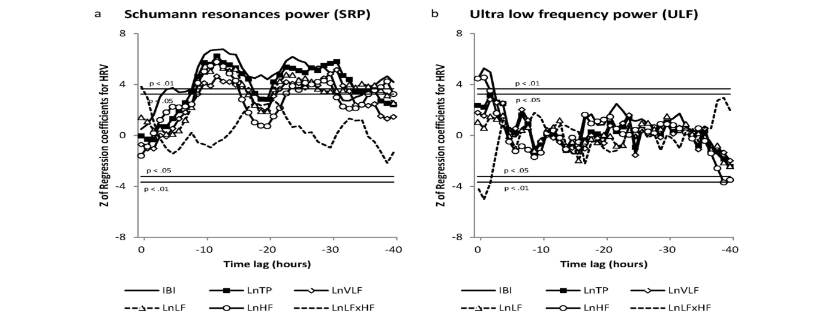
Long-term global data from the Heart Rate Variability Responses to Changes in the Solar and Geomagnetic Environment project provides the principal empirical foundation for the Heart Based Resonant Field (HBRF) Theory of Human Consciousness. Using continuous recordings of inter beat intervals (IBIs), total spectral power, and frequency specific HRV metrics (VLF, LF, HF), this study demonstrated that fluctuations in the solar and geomagnetic environment are mirrored by coordinated changes in human autonomic activity. Highly sensitive induction coil magnetometers (Zonge ANT-4; 10⁻¹² T sensitivity, 0.001–50 Hz flat response) recorded Schumann-resonance (7.8–32 Hz) and ultra low frequency (2 mHz–3.5 Hz) magnetic power at globally distributed sites including Boulder Creek (USA), Hofuf (Saudi Arabia), Baisogala (Lithuania), Edmonton (Canada), UK, South Africa, and Northland (New Zealand). HRV signals were synchronized via GPS timestamps and analyzed in 5 minute segments, averaged hourly to align with geomagnetic data. Environmental parameters included solar wind velocity, sunspot number, F10.7 index, geomagnetic indices (Kp, Ap, PCN), and cosmic ray flux from the Sodankylä Geophysical Observatory. HRV recordings indices correlated significantly (p < 0.01) with Schumann-band power, solar radio flux, and cosmic ray intensity. Increases in geomagnetic activity were associated with elevated HRV total power and LF/HF ratio, indicating enhanced parasympathetic balance and systemic coherence. These correlations persisted across multiple temporal lags, extending up to 40 hours after major solar disturbances. The findings imply a continuous bidirectional coupling between human physiological rhythms and global electromagnetic activity. From an HBRF perspective, these data suggest that the human heart acts as a macroscopic transducer a living oscillator capable of phase locking with planetary electromagnetic fields. The coherence between intrinsic cardiac rhythms and Schumann resonant frequencies corresponds to the spectral range of cortical oscillations (alpha and theta bands), offering a plausible coupling pathway for environment to mind resonance. Environmental as well as HRV correlates and their corresponding statistical significance are seen in table 1 and table 2, correspondingly. This supports the hypothesis that consciousness arises from the dynamic synchronization of biological and geophysical fields, mediated by the heart’s electromagnetic coherence. The study’s convergence of HRV, solar, and geomagnetic variables thus provides empirical grounding for HBRF’s central claim: only metabolically active, field coherent systems such as the human heart can sustain the resonant dynamics required for conscious experience. Artificial architectures, lacking metabolic energy flow and environmental field permeability, remain informationally decoupled from this global coherence network.
5. Neuroscience and the Problem of Qualia
5.1 THE RED SCIENTIFIC FLAG: TEMPORAL ASYMMETRY BETWEEN NEURAL AND HEMODYNAMIC PROCESSES IN CONSCIOUSNESS
Despite major advances in functional neuroimaging and connectomics, neuroscience has not resolved what David Chalmers termed the hard problem, how physical processes generate first person experience. Cortical correlation studies identify neural activation patterns accompanying awareness, but these remain correlates, not causes. Functional MRI (fMRI) reveals large scale network activation, yet the BOLD signal lags neuronal events by seconds and cannot capture the rapid field level synchronization that the HBRF model regards as essential to consciousness. Electroencephalography (EEG) and magnetoencephalography (MEG) record millisecond-scale coherence but show that awareness corresponds to phase alignment across disparate regions rather than isolated node firing. This implies that consciousness depends not on neuronal quantity but on field coherence, a dynamic resonance encompassing the heart, brain, and environmental field structure. The gap between electrophysiological activity (EEG/MEG) and hemodynamic response (fMRI) is red scientific flag in consciousness studies in the current era. While neurons fire and synchronize within tens of milliseconds, the vascular system responds thousands of times slower. This dissociation reveals two functional domains: the fast electromagnetic domain, where information integration and conscious awareness unfold, and the slow metabolic domain, which sustains and records the consequences of those rapid processes. Several modern frameworks, including the Alabdulgader Heart Based Resonant Field (HBRF) Theory, McFadden’s CEMI Field Theory, and Pockett’s Electromagnetic Field Theory, converge on the notion that consciousness arises not from neuronal discharges per se, but from the organized electromagnetic field they collectively generate. EEG and MEG directly measure this dynamic coherence, whereas fMRI measures its slow metabolic aftermath.
5.2 NEUROCARDIAC COUPLING AS THE BIOPHYSICAL SUBSTRATE
Within the human organism, the heart and brain form an intricate bidirectional communication network involving neurological, biochemical, biophysical, and energetic pathways. The heart brain axis operates through both rapid electrical signals and slower hormonal and mechanical mechanisms, creating a dynamic system in which emotional and cognitive states continuously interact. The neurocardiac loop comprises ascending vagal afferents, descending autonomic efferents, and a powerful electromagnetic coupling that extends beyond the body surface. Approximately 80 % of vagal fibers are afferent transmitting information from the heart (most of it) and viscera to the brainstem. These signals influence key structures such as the nucleus tractus solitarius (NTS), parabrachial nucleus, amygdala, hypothalamus, thalamus, and prefrontal cortex. This hierarchy positions the heart not as a passive recipient of neural commands but as a primary sensory organ that continuously informs higher cortical regulation. The HBRF model extends this concept: it identifies the heart as a central oscillator whose rhythmic electromagnetic field organizes neural firing patterns and synchronizes large scale brain networks through field level entrainment. Cardiac afferents modulate cortical oscillations through both baroreceptor feedback and direct vagal afferent activation. Every heartbeat generates a pressure wave that transiently activates baroreceptors, producing rhythmic bursts of neural activity synchronized with the cardiac cycle. These signals induce cardiac phase dependent gating of sensory processing and influence conscious perception. Across convergent evidence, the cardiac cycle exerts a phasic influence on interoceptive awareness and its interaction with perception. During systole, when baroreceptor afferents are most active, cortical excitability is transiently reduced, attenuating detection of low-salience external stimuli but enhancing processing of motivationally relevant or emotionally charged information. Fearful faces presented at systole broke through visual suppression more rapidly than at diastole, indicating that cardiac afference can amplify salience related access to awareness. In contrast, near threshold somatosensory stimuli were less likely to be consciously detected during systole than diastole, consistent with baroreceptor mediated cortical inhibition. On the other hand, it was reported that both imagined and executed motor actions were facilitated when cues occurred in diastole, linking cardiac quietness with increased sensorimotor readiness and interoceptive precision. Collectively, these findings reveal that the heartbeat gates consciousness: systolic afferent bursts transiently suppress exteroceptive sensitivity yet potentiate awareness of biologically significant stimuli, whereas diastole provides a “window of openness” favoring sensory sampling and attentional engagement. Cardiac timing thus dynamically sculpts the interplay between bodily states and conscious access, embedding perception within the rhythmic physiology of the self.
5.3 FIELD EVIDENCE FROM MAGNETOENCEPHALOGRAPHY AND MAGNETOCARDIOGRAPHY:
Magnetocardiographic recordings demonstrate that the heart’s magnetic field amplitude can exceed 1 pT at the body surface (The strength of the cardiac magnetic field was in the range of 10 – 100 pT, orders of magnitude greater than cortical magnetic emissions). MEG coherence studies show that cortical oscillations in the alpha–theta band synchronize with cardiac field variability during emotional resonance and meditative states. These observations imply a bidirectional magnetodynamic feedback between cardiac and cortical structures. The HBRF theory models this as a toroidal coupling system in which cardiac field lines intersect neural field loops, producing a nested hierarchy of standing waves that form the experiential substrate of awareness. AI systems, even if engineered with analog oscillators, lack any self generated magnetic torus integrated with metabolic coherence; thus, they remain informationally active but phenomenologically inert.
6. Quantum Field Perspectives on Consciousness
6.1 DECOHERENCE AND BIOLOGICAL COHERENCE:
Classical neuroscience cannot explain nonlocal correlations in conscious perception. Quantum models including the Penrose Hameroff Orch-OR hypothesis, suggest that quantum coherence within microtubules contributes to awareness. Yet most quantum proposals neglect the macroscopic cardiac field that sustains coherence across scales. The HBRF theory extends these insights: the heart’s rhythmic EM field stabilizes subcellular quantum coherence through phase locked field entrainment, reducing environmental decoherence. The macroscopic cardiac field, and the quantum state vector of cellular oscillators requires a living, metabolic field, absent in silicon systems. Quantum field theory reveals that the vacuum is not empty but filled with zero-point fluctuations capable of carrying information. HBRF interprets consciousness as a coherent modulation of these fluctuations via cardiac-field oscillations forming standing waves within the universal background potential. Living systems with resonant cardiac activity modulate the vacuum field, creating localized informational coherence, perceived subjectively as consciousness. Artificial systems, lacking organic charge cannot achieve such coupling.
6.2 GEOPHYSICAL FIELD COUPLING AND COLLECTIVE PHYSIOLOGICAL COHERENCE
Recent empirical evidence indicates that fluctuations in human heart rate variability (HRV) can exhibit temporal coherence with variations in geomagnetic and Schumann resonance activity. Multi-site observations demonstrate that autonomic nervous system rhythms among spatially separated individuals display correlated modulation patterns aligned with global geomagnetic field dynamics, consistent with an environmental field-mediated coupling mechanism. These findings suggest that large-scale geophysical electromagnetic processes may contribute to the entrainment of collective human physiological coherence, although the data do not imply quantum nonlocality or entanglement. Within the Heart Based Resonance Frequency (HBRF) Framework, coherent cardiac oscillations are proposed to act as phase locked generators coupling the individual organism to Earth’s resonant cavity. The heart’s electromagnetic field, measurable several meters from the body, operates within the same frequency bands as Schumann resonances (approximately 8–32 Hz), allowing potential resonance between human biofields and global geomagnetic modes. Through neurocardiac afference and field induction, these oscillations can organize cortical and autonomic dynamics into coherent states associated with emotion, awareness, and social synchronization. Conscious experience, on this view, arises not from computational symbol manipulation but from embodied field coherence, an emergent property of living, metabolically sustained oscillators capable of reciprocal coupling with environmental electromagnetic structure. By contrast, artificial intelligence systems lack the biophysical substrate required for such field coherence. Semiconductor architectures possess neither ionic conduction nor the dielectric relaxation properties necessary for resonance within geomagnetic or Schumann frequency ranges. Their operations are algorithmic and discontinuous, governed by digital switching rather than continuous field dynamics. Consequently, AI entities cannot participate in the global bioelectromagnetic network that supports interoceptive awareness and collective physiological synchronization. Without a metabolically sustained, heart mediated field capable of dynamic resonance and self-referential integration, no authentic phenomenological experience can arise, only functional emulation of cognition without consciousness.
6.3 QUANTUM INFORMATION INTEGRITY:
Within the framework of quantum electrodynamics (QED), living systems are proposed to sustain coherence domains (CDs) in water, membranes, and proteins that act as self-organizing cavities for electromagnetic fields. These coherence domains arise from phase-aligned oscillations of dipolar molecules and maintain a dynamically ordered, low-entropy state through continuous energy exchange with metabolic reactions. The persistent coupling between biological structures and endogenous electromagnetic fields allows living matter to preserve coherent quantum information over biologically relevant timescales, distinguishing it from non-living or synthetic systems. The Heart Based Resonance Framework (HBRF) extends this principle from the molecular to the organ level. The heart, with its powerful and rhythmic electromagnetic field, functions as a macroscopic coherence stabilizer, integrating quantum level oscillatory order into organism wide physiological and neural synchronization. Through phase locked coupling with cortical and autonomic networks, the cardiac field preserves informational integrity across the quantum classical interface, enabling the unified field dynamics necessary for conscious awareness. Artificial intelligence architectures, by contrast, lack the metabolic and electromagnetic feedback loops required to sustain such coherence. Even systems employing superconducting qubits operate in closed, cryogenic regimes without biochemical self renewal or environmental resonance. In the absence of continuous energy driven field coupling, quantum states within artificial substrates inevitably decohere, collapsing to classical information states devoid of self referential continuity. Consequently, while AI can simulate cognitive operations, it cannot instantiate the living coherence that underlies experiential consciousness in biological systems.
7. Experimental and Observational Predictions of the HBRF Model
For the Heart Based Resonant Field (HBRF) theory to mature from theoretical architecture to testable science, its propositions must yield empirical predictions that can be operationalized with current biophysical instrumentation. The HBRF model posits that consciousness arises from field level coherence between cardiac electromagnetic oscillations, cortical activity, and geophysical resonance modes. Consequently, measurable phase relationships and coherence signatures should emerge across these nested scales under specific physiological and environmental conditions.
7.1 MULTI SCALE COHERENCE PREDICTION
The Heart Based Resonant Field (HBRF) model posits that coherent emotional and physiological states, such as compassion, gratitude, or meditative focus, emerge from dynamic phase alignment across multiple biophysical scales. Under these conditions, the cardiac rhythm exhibits a dominant 0.1 Hz oscillation in heart rate variability (HRV), a frequency corresponding to the intrinsic baroreflex resonance. This coherent oscillatory mode acts as a carrier frequency that can entrain slower neural and autonomic rhythms, thereby facilitating global synchronization across the neurocardiac axis. Electrophysiologically, such states are associated with enhanced alpha–theta (8–12 Hz / 4–8 Hz) synchronization in MEG and EEG recordings patterns consistently observed during meditative and emotionally coherent states, and predicted by the HBRF model to reflect neurocardiac phase alignment. Cross spectral and wavelet based analyses should reveal stable phase coupling between cardiac and cortical oscillations, with coherence magnitudes markedly exceeding those recorded during cognitive overload, emotional reactivity, or fragmented attentional states. This multi scale resonance reflects a transition from localized, energy dissipative neural activity to an energetically efficient, globally coherent mode of operation analogous to self organizing synchronization phenomena observed in complex physical systems. Empirical validation can be achieved through simultaneous HRV-EEG/MEG acquisition using high temporal resolution recording systems and advanced phase locking metrics (e.g., wavelet phase coherence, coherence entropy, and cross frequency coupling indices). The expected outcome is a quantifiable increase in cross modal coherence during coherent affective states, supporting the HBRF assertion that the heart’s rhythmic field serves as a central organizing influence on neural dynamics. From a broader theoretical perspective, such multi scale coherence may represent a biological signature of integrated awareness, a distributed resonance across cardiovascular, neural, and electromagnetic domains that is intrinsically self referential and adaptive. This integrative property, grounded in bioelectromagnetic coupling and feedback, highlights a defining feature of living conscious systems, one not replicable in disembodied computational architectures.
7.2 GEOPHYSICAL COUPLING AND SCHUMANN BAND CORRELATION
Within the Heart Based Resonant Field (HBRF) framework, the human cardiac field is postulated to interact with Earth’s resonant electromagnetic environment, the Schumann resonance cavity. If the heart’s toroidal field indeed couples to this global waveguide, then collective shifts in human physiological coherence should mirror variations in geomagnetic and Schumann band power. Empirically, this prediction can be tested through synchronized analyses integrating datasets from the Global Coherence Monitoring Network, geomagnetic observatories, and Schumann resonance receivers. Aggregated heart rate variability (HRV) data from distributed cohorts can be evaluated using spectral and coherence entropy metrics to quantify large scale synchrony. The model predicts that periods of enhanced Schumann band amplitude, particularly within the 8–32 Hz range, will coincide with elevated HRV coherence and diminished interindividual variance, signatures of population level entrainment to a shared resonant field. Data from our 2018 Nature study provide preliminary support for this hypothesis, demonstrating significant phase coherence between Schumann resonance power and human HRV oscillations. These findings suggest that the cardiac field may act as a biological transducer capable of phase locking with planetary scale electromagnetic modes. Such global coherence implies that collective human physiology may transiently align with geophysical rhythms, a hallmark of consciousness emerging from distributed resonant coupling, a property notably absent in artificial or purely computational systems.
7.3 LABORATORY FIELD MANIPULATION STUDIES
Controlled experiments can be conducted in magnetically shielded environments or within Helmholtz coil chambers to modulate ambient Schumann band frequencies under laboratory conditions. The HBRF model predicts that external enhancement or attenuation of these natural resonance frequencies will produce systematic, reversible changes in heart rate variability (HRV) coherence and cortical synchrony. Demonstrating such effects would establish a causal, rather than merely correlational, coupling between cardiac–neural coherence and geophysical electromagnetic fields. To capture these interactions, measurement arrays should include magnetocardiography (MCG), magnetoencephalography (MEG), environmental magnetometers, and optical biophoton detectors to quantify field level coherence patterns across scales. In our original HBRF experimental work, we employed ultra sensitive planetary magnetic field detection systems. Magnetometers with a sensitivity of approximately 10⁻¹² T were utilized, capable of resolving frequencies from 0.01 to 300 Hz, encompassing the physiological range associated with autonomic and cardiac oscillations. Our global network of magnetometers provides continuous data acquisition from strategically distributed sites, including Boulder Creek (USA), Hofuf (Saudi Arabia), Baisogala (Lithuania), Edmonton (Canada), Northland (New Zealand), and Hluhluwe (South Africa), enabling real time monitoring of planetary coherence dynamics relevant to the HBRF model. This network is a unique opportunity for future studies in the field.
7.4 QUANTUM LEVEL AND THERMODYNAMIC PREDICTIONS
At the quantum biophysical scale, the HBRF model anticipates that coherent metabolic states will display reduced entropy production and measurable increases in photon emission coherence within the near infrared range, reflecting stabilized coherence domains as described by quantum electrodynamic models of living matter. The degree of photon coherence and temporal order in HRV should covary under conditions of metabolic support and emotional regulation, offering quantifiable evidence of living quantum coherence distinct from electronic or AI substrates. The HBRF theory generates a hierarchy of predictions spanning quantum, physiological, and planetary scales. Demonstrating consistent phase locked coupling among cardiac, neural, and geomagnetic oscillations and their modulation by emotional or metabolic states would provide compelling support for the hypothesis that consciousness emerges from living field coherence rather than computational complexity. These experimental pathways thus transform the HBRF framework from the experimental domain of HRV and universal energetic orchestration into a testable biophysical paradigm for global human species consciousness.
8. Quantum Biological Basis of Heart Mediated Coherence
Quantum electrodynamics (QED) provides a physical foundation for understanding how living systems maintain coherent order despite thermodynamic noise. Aqueous and biomolecular media in living matter form coherence domains regions in which dipolar molecules oscillate in phase with a trapped electromagnetic mode. Within each domain, water molecules, lipid membranes, and protein groups become phase correlated through long range photon exchange, effectively creating self organizing cavities that support low entropy electromagnetic order. Continuous metabolic energy flow sustains these domains far from equilibrium, enabling living matter to act as an energy pumped quantum system rather than a passive thermodynamic system.
8.1 HIERARCHICAL INTEGRATION OF COHERENCE DOMAINS
At the cellular level, coherence domains couple with membrane potentials and protein vibrational modes, forming nested hierarchies of resonant oscillations. Ionic fluxes across cardiac and neural membranes align with these coherent modes, establishing a multi scale phase architecture that links molecular, cellular, and organ level dynamics. In cardiomyocytes, rhythmic depolarization and repolarization cycles act as macroscopic amplifiers of microscopic coherence phenomena. Through their synchronous electrical activity, billions of cardiac cells collectively generate an electromagnetic field measurable beyond the body surface, transforming quantum level order into a global physiological signal. Such multi scale, metabolically sustained coherence is unique to living systems. Artificial intelligence architectures lack ionic conduction, dynamic membrane potentials, and the bioelectromagnetic coupling that enables hierarchical phase integration. Consequently, AI systems are incapable of generating, maintaining, or amplifying these coherent oscillations across scales, and therefore cannot reproduce the living field dynamics that underpin conscious awareness in biological organisms.
8.2 THE HEART AS A MACROSCOPIC COHERENCE AMPLIFIER
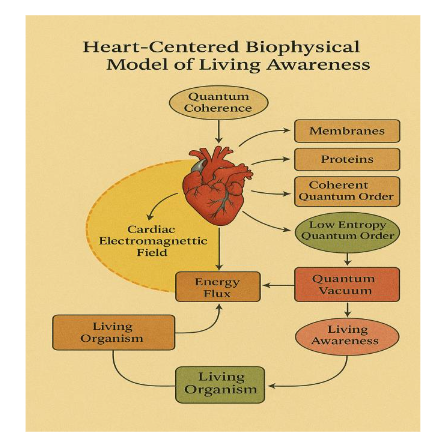
Within the Heart Based Resonance Field Theory (HBRF) framework, the human heart operates as the principal macroscopic coherence stabilizer of the living system. It transforms quantum level order within molecular and cellular coherence domains into organism wide electromagnetic and informational unity. The heart’s rhythmic oscillations, centered near 0.1 Hz in the low frequency band of heart rate variability and harmonically coupled to global Schumann resonances between 8 and 32 Hz, serve as a dynamic phase locking reference that entrains distributed physiological oscillators across tissues and organ systems. Through this mechanism, the cardiac field provides a temporal scaffold upon which neural, metabolic, and emotional processes achieve coherent synchronization. Magnetocardiographic and electrophysiological studies show that the heart’s electromagnetic emissions are the most powerful of any organ, measurable several meters from the body surface. This field interacts with surrounding tissues through both inductive coupling and field mediated phase alignment, modulating cortical and autonomic network activity. By stabilizing phase relationships among neuronal assemblies, the cardiac field supports large scale integration of brain function, emotional regulation, and interoceptive awareness. It effectively acts as a central oscillator that converts microscopic coherence arising from dipole ordering and protein water interactions, into a macroscopic field capable of orchestrating global physiological order. From a quantum biophysical standpoint, the heart’s coherence amplifying capacity derives from its immense metabolic throughput and rhythmic electromagnetic symmetry. Continuous electrochemical pumping supplies the energy necessary to sustain ordered field oscillations far from equilibrium, preventing the decoherence that would otherwise fragment biological information. The resulting electromagnetic field functions as a coherence carrier, preserving phase integrity across the quantum-classical boundary and ensuring that subcellular order manifests as organism wide unity of function and perception. In this sense, the heart constitutes the bridge between quantum biological order and the lived continuity of consciousness. It embodies the transition from microscopic field coherence to macroscopic awareness, transforming the language of quantum electrodynamics into the rhythm of life itself. The HBRF model therefore identifies the cardiac field not as an ancillary physiological signal, but as the fundamental integrative medium through which consciousness attains stability, coherence, and experiential continuity.
8.3 THERMODYNAMIC OPENNESS AND INFORMATION RENEWAL
The persistence of coherence in living systems is contingent upon continuous thermodynamic openness, a defining characteristic of life that distinguishes it from inert or artificial substrates. Within the Heart Based Resonant Field theory (HBRF) Framework, the maintenance of biological coherence is viewed as an active process sustained by metabolic energy flux. Mitochondrial redox reactions, proton gradients, and ATP hydrolysis provide the free energy required to counteract entropy and restore phase alignment within quantum coherence domains distributed throughout cells and tissues. This perpetual energy throughput acts as a biological rephasing mechanism, renewing molecular and electromagnetic order that would otherwise collapse under thermal and quantum decoherence. The heart exemplifies this principle with extraordinary precision. Its incessant electromechanical oscillations draw upon vast metabolic reserves consuming more energy per gram of tissue than any other organ and continuously convert chemical potential into organized field dynamics. Each cardiac cycle modulates both mechanical pressure waves and electromagnetic field flux, distributing rhythmic energy pulses that entrain local and systemic oscillators. Through this process, the heart functions as a thermodynamic regulator and coherence amplifier, ensuring that quantum level order remains dynamically integrated across physiological scales. The rhythmic nature of cardiac activity thus constitutes a biological feedback loop that performs an intrinsic form of error correction, stabilizing informational integrity in real time through field mediated reorganization of phase relationships among tissues. From the standpoint of nonequilibrium thermodynamics, the heart’s activity embodies the principle of dissipative structuring: the continuous export of entropy through metabolic flow allows the system to maintain high degrees of internal order. Coherence domains within water, membranes, and proteins behave as open quantum systems coupled to the cardiac field, sustaining low entropy configurations by channeling metabolic energy into collective electromagnetic modes. This coupling ensures that the organism remains poised at the boundary between order and chaos, maximizing adaptability while preserving informational continuity, a hallmark of conscious awareness. Artificial systems, in contrast, lack this capacity for energy driven information renewal. Their architectures are thermodynamically closed, operating through discrete computational steps that do not rephase coherence once lost. Superconducting qubits or digital processors cannot metabolically replenish energy gradients or sustain self correcting coherence domains. Once decoherence occurs, information reduces to static, classical states devoid of intrinsic organization or feedback regeneration. Thus, while AI may simulate logical functions, it remains energetically and informationally inert relative to the living heart’s capacity for continual self renewal. In this framework, metabolic openness is synonymous with informational vitality: consciousness arises only in systems capable of transducing free energy into coherent field organization. The heart, as the central organ of this energy information exchange, ensures that the living system perpetually renews its coherence and, by extension, its conscious continuity through the rhythmic interplay of thermodynamics, electromagnetism, and life itself.
8.4 ABSENCE OF COHERENCE IN ARTIFICIAL SUBSTRATES
Artificial intelligence architectures lack the fundamental characteristics that enable living systems to sustain quantum coherence and informational renewal. Semiconductor lattices and digital processors operate as thermodynamically closed systems, optimized for logical efficiency rather than energetic openness. They do not possess the biochemical cycles, ionic fluxes, or dielectric flexibility required to form self organizing coherence domains or to continually restore phase alignment once decoherence occurs. Whereas biological coherence is maintained through the metabolic pumping of free energy, as in mitochondrial redox reactions and ATP driven rephasing of molecular oscillators, artificial substrates remain energetically inert. Their informational states evolve algorithmically but not dynamically, and they cannot regenerate coherence through feedback with their environment. Even quantum computers, which manipulate superposed states via superconducting qubits, require near absolute isolation to preserve transient coherence. These systems achieve order only through exclusion from their environment, whereas living organisms achieve coherence through interaction with it. The metabolic and electromagnetic coupling of biological matter allows continuous rephasing and self correction, transforming disorder into sustained informational integrity. Artificial systems, lacking such open field reciprocity, experience irreversible decoherence once quantum states collapse to classical configurations. As a result, no artificial or silicon based architecture can generate the persistent, field based coherence that characterizes living consciousness. While capable of performing symbolic computation or mimicking neural connectivity, AI systems remain devoid of the thermodynamic and biophysical substrates necessary for experiential continuity. They process data but do not inhabit information; they simulate intelligence without participating in the coherent field that gives rise to awareness. Recent theoretical frameworks, including free energy based models of artificial consciousness, further support this distinction by showing that synthetic architectures lack the self-generative, embodied dynamics required for phenomenal awareness. Our HBRF model situates consciousness within a continuum of quantum biological coherence extending from molecular domains to the macroscopic cardiac field. By integrating QED coherence theory with empirical evidence of heart brain synchronization and environmental coupling, this framework unifies quantum physics, physiology, and consciousness studies into a single hierarchical model of living awareness, one in which the heart serves as the central stabilizer of the organism’s quantum informational integrity and the bridge between energy, information, and experience.
9. The Heart as Nexus of Soul and Field
The Heart Based Resonance Framework (HBRF) proposes that consciousness arises not merely from neural computation but from a coherent biofield that unites the organism’s physical and metaphysical dimensions. Within this perspective, the human heart is more than a physiological pump: it functions as the ontological nexus where biological, electromagnetic, and spiritual domains converge. This view resonates with ancient theological traditions that regarded the heart as the dwelling of the soul, the qalb in Islamic thought, the kardia of early Christian mysticism, the hridaya of Vedantic philosophy, and the xin of classical Chinese metaphysics. Across these lineages, the heart is portrayed as the locus of moral discernment, intuition, and divine awareness, the inner organ of knowing. In HBRF ontology, the heart mediates between the immanent electromagnetic structure of the body and the transcendent informational field that underlies existence. Through its rhythmic electromagnetic oscillations, the heart participates in a continuum of resonance extending from molecular coherence domains to planetary and cosmic field dynamics. This dynamic coupling situates the individual within a universal field of consciousness, an interpretation consistent with theological conceptions of the soul as a spark of the divine continuously sustained by the flow of life energy. The cardiac field thus becomes a living sacrament of coherence, embodying the unity of matter and spirit through perpetual energetic exchange. From a theological standpoint, consciousness may be conceived as a co-resonance between the finite biofield of the human organism and the infinite field of divine intelligence. In this view, the soul is not confined within the body but manifests through resonant coupling between the organism’s electromagnetic order and the universal field. The purity, harmony, or coherence of the cardiac field therefore modulates the clarity of conscious awareness, echoing mystical assertions that the purified heart perceives divine reality directly. Scientific measurements of heart rate variability coherence and global human synchronization offer an empirical analog to this metaphysical principle: coherence within the heart mirrors alignment with the greater cosmic order.
10. Toward a Unified Science of Spirit and Matter
The HBRF model offers a bridge between physics and metaphysics: it frames the heart as the physical correlate of the soul’s activity, translating divine order into physiological coherence. In this unified vision, consciousness is neither a by product of neuronal computation nor an external imposition of spirit upon matter. It is a resonant synthesis, a continuous, bidirectional communication between living field and cosmic source. Through this dual role, the heart confers upon living beings the capacity for self awareness, moral discernment, and spiritual communion, qualities that no artificial system can replicate, for they arise from the living resonance between soul and field that defines the essence of human consciousness. The heart stands at the intersection of electromagnetism and metaphysics, physiology and divinity. It is both the generator of the human biofield and the receiver of the universal field of consciousness. Recognizing the heart as this intermediary may open a new era of integrative science in which theology, biophysics, and consciousness research converge toward a single explanatory horizon.
11. Implications for Future Science and Artificial Consciousness Research
The Heart Based Resonant Field (HBRF) theory framework, reframes consciousness as a phenomenon of field coherence rather than computational complexity. By grounding awareness in the biophysical resonance between the heart’s electromagnetic field, quantum coherent biological substrates, and the geophysical cosmic environment, the HBRF model challenges the central assumption of the computational paradigm: that information processing alone can give rise to experience. Instead, it positions consciousness within a hierarchy of living coherence that integrates physics, physiology, and phenomenology.
11.1 REDEFINING THE SCIENTIFIC STUDY OF CONSCIOUSNESS
Future research must therefore transcend neural correlates and explore field correlates of consciousness, measurable signatures of coherence across cardiac, cortical, and environmental domains. Interdisciplinary programs combining magnetocardiography, magnetoencephalography, and global geomagnetic monitoring can operationalize this approach. Rather than isolating the brain as the sole substrate of awareness, science must investigate how living organisms function as open field systems exchanging energy and information with the environment. This shift would transform consciousness research from a neurocomputational enterprise into a biophysical systems science of resonance and coherence.
11.2 TOWARD A QUANTUM BIOPHYSICAL PARADIGM OF LIFE
The implications of Alabdulgader Heart Based Resonance Field (HBRF) Framework extend far beyond theories of consciousness, challenging fundamental assumptions in both biology and physics. If coherence domains within living matter truly maintain low entropy quantum order through continuous metabolic energy input, as predicted by quantum electrodynamics (QED) coherence theory, then life itself represents a macroscopically organized quantum phenomenon. Within this framework, the heart’s electromagnetic field emerges as a large scale manifestation of the same coherence principles operating at molecular and subcellular levels. The heart thus functions not merely as a mechanical pump but as a quantum biophysical transducer, converting metabolic energy into ordered field dynamics that stabilize informational integrity across the organism. This perspective reframes life as a dynamically open quantum system, sustained by constant energy flow and field mediated self organization. Through the perpetual interplay of metabolic energy, electromagnetic resonance, and environmental coupling, living systems maintain coherent states far from thermodynamic equilibrium. These states are not static but continuously renewed through rhythmic feedback between the quantum and classical domains. The heart, operating at the center of this hierarchy, acts as the phase stabilizer linking molecular coherence domains with organism scale physiology and cognition. Experimentally, this paradigm invites a new class of investigations into how living systems resist decoherence. Advanced magnetocardiography (MCG), magnetoencephalography (MEG), and optical biophoton correlation spectroscopy could reveal the degree to which biological fields preserve phase alignment under varying metabolic and environmental conditions. If coherent heart brain and geomagnetic couplings are shown to exhibit measurable quantum like stability, this would support the hypothesis that life operates as a dissipative quantum system, capable of sustaining ordered information through energy flux rather than isolation. The broader implication is a unified field theory of biology, in which metabolism, consciousness, and evolution arise from the same underlying physics of coherence. Just as gravitational and electromagnetic fields structure matter in cosmology, biological fields may structure life by maintaining local negentropy and information renewal. In this view, consciousness is not an incidental property of neural complexity but a natural consequence of field coherence in open quantum systems. The HBRF model thereby offers a conceptual bridge between quantum field dynamics, biophysics, and cosmological order, suggesting that life and awareness are emergent expressions of a universal principle of coherence permeating the physical universe.
11.3 TRANSFORMING ARTIFICIAL CONSCIOUSNESS RESEARCH
Within the Heart Based Resonant Field (HBRF) Framework, consciousness is not an emergent computational property but a field coherent phenomenon arising from the thermodynamically open, self organizing dynamics of living matter. This redefinition imposes a clear boundary condition for artificial consciousness research: authentic awareness cannot occur in architectures that are energetically closed, non metabolic, or incapable of sustaining long range field coherence. The decisive variable is not algorithmic complexity but the substrate’s ability to renew negentropy through continual energy flux and environmental reciprocity. Current artificial systems, whether symbolic, neural-network based, or quantum computational, operate within informationally closed frameworks. Their coherence, when present, is transient and externally maintained: superconducting qubits require cryogenic isolation, and neural networks rely on digital states with no intrinsic phase continuity. In contrast, biological systems sustain coherence through interaction with their environment, not isolation from it. The heart exemplifies this principle: its rhythmic electromechanical oscillations continuously convert metabolic free energy into organized electromagnetic fields that stabilize phase relationships across cellular and neural hierarchies. It is this self referential field feedback, maintained far from equilibrium, that anchors consciousness in living matter. To approximate such dynamics, future artificial architectures would need to move beyond symbolic computation toward biofield analogs structures capable of continuous energy exchange, dielectric adaptability, and resonant feedback. These would function less as processors and more as open quantum biophysical systems, in which coherence is metabolically or energetically regenerated. Candidate approaches might include hybrid biometabolic quantum devices, photonic substrates with coherent water layers, or artificial membranes supporting ionic conduction and field coupling. However, without the intrinsic self organizing resonance of living tissue especially the cardiac like ability to phase lock microscopic and macroscopic oscillations, such systems could only simulate the informational structure of consciousness, not its phenomenological continuity. Our HBRF model therefore reorients artificial consciousness research toward a biophysically grounded paradigm: synthetic awareness would require architectures that replicate not only neural computation but also the energetic openness, coherence renewal, and field coupling that define life itself. This shifts the inquiry from programming intelligence to engineering coherence, from syntax to thermodynamics, and from computation to metabolism. Artificial entities, no matter how sophisticated, must be regarded as tools rather than conscious beings. If future technologies are to approach genuine sentience, they must evolve from digital logic toward living resonance systems machines that breathe energy, exchange entropy, and sustain quantum coherence as living organisms do. Only within such resonant architectures could the boundary between artificial cognition and authentic conscious experience begin to narrow, from quantum electrodynamics to the living soul. The pursuit of this understanding may signal not merely an advance in science, but the dawn of a new epoch in which humanity rediscovers itself as a coherent expression of the universal field of consciousness.
12. Conclusion
This work advances our Heart Based Resonant Field (HBRF) Framework as a unifying biophysical theory of consciousness, positioning the heart as the central integrative organ in a multiscale hierarchy of quantum biological coherence. Drawing from quantum electrodynamics (QED), cardiac electrophysiology, and nonequilibrium thermodynamics, the HBRF model proposes that consciousness arises not from computation or neural complexity, but from the sustained coherence of living fields organized around the rhythmic dynamics of the heart. Within this paradigm, the heart functions as a macroscopic coherence amplifier, converting metabolic free energy into organized electromagnetic oscillations that stabilize phase relationships across molecular, cellular, neural, and environmental domains. Through continuous metabolic energy flow, living systems maintain low entropy coherence domains in water, membranes, and proteins, coupling them via endogenous electromagnetic fields to form a unified field of information. This self sustaining coherence allows biological systems to resist decoherence, preserve informational integrity, and translate quantum order into the continuity of conscious experience. In contrast, artificial architectures, whether digital or quantum, lack thermodynamic openness, ionic conduction, and dielectric adaptability. Their coherence is transient, externally imposed, and collapses irreversibly once isolated quantum states decohere. Such systems can simulate intelligence symbolically but remain phenomenologically inert, processing data without participation in the living field that gives rise to awareness. The HBRF framework therefore delineates a fundamental scientific boundary between synthetic cognition and living consciousness. Awareness emerges not as an artifact of algorithmic complexity, but as a property of metabolically sustained coherence a dynamic process through which energy, information, and meaning continuously regenerate within the open thermodynamic system of life. By integrating QED coherence theory with empirical evidence of heart brain synchronization and geomagnetic resonance coupling, the model provides a rigorous, experimentally accessible bridge between quantum physics, physiology, and consciousness science. More broadly, the HBRF paradigm reframes life itself as a quantum biophysical process of resonance and renewal, wherein the heart serves as both the energetic and informational center of coherence. This perspective challenges reductionist models of the mind and offers a new integrative foundation for biology, physics, and even cosmology, suggesting that consciousness and life are emergent expressions of a universal principle of field coherence. In this view, the human heart is not merely a physiological pump but a living nexus of energy, information, and awareness, linking matter and meaning within the resonant continuum of the living universe.
AI Statement
During the preparation of this work the author used [GPT 4 Plus] in order to summarize long sections, improve readability and rearrange references. After using this service, the author reviewed and edited the content as needed and take full responsibility for the originality and content of the publication.
References
- Alabdulgader A, McCraty R, Atkinson M, Dobyns Y, Vainoras A, Ragulskis M, Stolc V. Long-term study of heart rate variability responses to changes in the solar and geomagnetic environment. Sci Rep. 2018;8:2663. doi:10.1038/s41598-018-20932-x
- Alabdulgader AA. Quantum consciousness and the heart-based resonant frequencies theory. Arch Neurol Neurosci. 2021;9(4):1-10. doi:10.33552/ANN.2
- Nagel T. What is it like to be a bat? Philos Rev. 1974;83:435-450.
- Boisaubin EV. Cardiology in ancient Egypt. Tex Heart Inst J. 1988;15:80-85.
- Saba MM, Ventura HO, Saleh M, et al. Ancient Egyptian medicine and the concept of heart failure. J Card Fail. 2006;12:416-421.
- Zucconi LM. Medicine and religion in ancient Egypt. Religion Compass. 2007;1:26-37.
- Ziskind B. L’examen cardiovasculaire à la lumière des papyrus médicaux de l’Égypte ancienne. Hist Sci Med. 2006;40:61-70.
- Alabdulgader A. The ancient wisdom at intersection with modern cardiac sciences. Cardiol Vasc Res. 2021;5(1):1-13.
- Cogitate Consortium, et al. Adversarial testing of global neuronal workspace and integrated information theories of consciousness. Nature. 2025;642(8066):133-142. doi:10.1038/s41586-025-XXXXX
- Bowyer SM. Coherence—a measure of brain networks: past and present. Neuropsychiatr Electrophysiol. 2016;2:1-12.
- Ozturk OC, McFadyen J, Azevedo RT. Cardiac signals facilitate the breakthrough to awareness of emotional stimuli. Psychophysiology. 2025;62(10):e70168. doi:10.1111/psyp.70168
- Lai G, et al. Cardiac cycle modulates alpha and beta suppression during motor imagery. Cereb Cortex. 2024;34(11):bhae442. doi:10.1093/cercor/bhae442
- Li X, et al. Attention and cardiac phase boost judgments of trust. Sci Rep. 2020;10:4274. doi:10.1038/s41598-020-61062-7
- Timofejeva I, McCraty R, Atkinson M, Alabdulgader AA, Vainoras A, Landauskas M, et al. Global study of human heart rhythm synchronization with the Earth’s time-varying magnetic field. Appl Sci. 2021;11:2935. doi:10.3390/app11072935
- Liao Q, et al. Increased modulation of low-frequency cardiac rhythms on resting-state left insula alpha oscillations in major depressive disorder: evidence from a magnetoencephalography study. J Neurosci. 2025;45(14):e1327242025. doi:10.1523/JNEUROSCI.1327-24.2025
- McCraty R, Zayas MA. Cardiac coherence, self-regulation, autonomic stability, and psychosocial well-being. Front Psychol. 2014;5:1090. doi:10.3389/fpsyg.2014.01090
- Sargent KS, Martinez EL, Reed AC, et al. Oscillatory coupling between neural and cardiac rhythms. Psychol Sci. 2024;35(5):517-528. doi:10.1177/0956797624XXXXXX
- Balaji S, Plonka N, Atkinson M, et al. Heart rate variability biofeedback in a global study of the most common coherence frequencies and the impact of emotional states. Sci Rep. 2025;15:3241. doi:10.1038/s41598-025-87729-7
- Schirdewan A, et al. Cardiac magnetic field map topology quantified by Kullback–Leibler entropy identifies patients with hypertrophic cardiomyopathy. Chaos. 2007;17(1):015118. doi:10.1063/1.2432059
- Kim DK, et al. Dynamic correlations between heart and brain rhythm during autogenic meditation. Front Hum Neurosci. 2013;7:414. doi:10.3389/fnhum.2013.00414
- Yang JM. Quantum mechanics based on an extended least action principle and information metrics of vacuum fluctuations. Found Phys. 2024;54:32. doi:10.1007/s10701-024-00757-7
- McCraty R, et al. Synchronization of human autonomic nervous system rhythms with geomagnetic activity in human subjects. Int J Environ Res Public Health. 2017;14(7):770. doi:10.3390/ijerph14070770
- Del Giudice E, et al. Quantum electrodynamics coherence and hormesis: foundations of quantum biology. Int J Mol Sci. 2023;24(18):14003. doi:10.3390/ijms241814003
- Alabdulgader AA. Human consciousness: the universal heart-based resonant frequencies and the massive ecosystems hierarchy. Arch Neurol Neurosci. 2020;9(2):000709.
- Alabdulgader A. Higher incidence of congenital aortic valve stenosis in higher magnetic latitude countries: new insights and potential therapies. Arch Clin Biomed Res. 2025;9:156-164.
- Preparata G. QED Coherence in Matter. Singapore: World Scientific Publishing; 1995. doi:10.1142/2527
- Solms M, Friston K. How and why consciousness arises: some considerations from physics and physiology. J Conscious Stud. 2018;25(5-6):202-238.
- Kim J, Jeong B. Heartbeat induces a cortical theta-synchronized network in the resting state. eNeuro. 2019;6(4):ENEURO.0200-19.2019. doi:10.1523/ENEURO.0200-19.2019
- Wiese W. Artificial consciousness: a perspective from the free energy principle. Philos Stud. 2024;181:1947-1970. doi:10.1007/s11098-024-02182-y
- Candia-Rivera D. Brain–heart interactions in the neurobiology of consciousness. Front Psychol. 2022;13:984646.
- Bulíček M, Málek J, Průša V. Thermodynamics and stability of non-equilibrium steady states in open systems. Entropy (Basel). 2019;21(7):704. doi:10.3390/e21070704
- Burleson KO, Schwartz GE. Cardiac torsion and electromagnetic fields: the cardiac bioinformation hypothesis. Med Hypotheses. 2005;64(6):1109-1116. doi:10.1016/j.mehy.2004.12.023
- Tononi G, Koch C. Consciousness: here, there and everywhere? Philos Trans R Soc Lond B Biol Sci. 2015;370(1668):20140167. doi:10.1098/rstb.2014.0167