





Urban Agriculture: Enhancing Nutrition and Health Outcomes
Urban and Peri-Urban Agriculture for Improving Human Nutrition and Protecting Planetary Processes
Rattan Lal1
- CFAES Rattan Lal Center for Carbon Management and Sequestration, the Ohio State University Columbus, Ohio 43210 USA
OPEN ACCESS
PUBLISHED: 31 January 2026
CITATION: Rattan, L., Urban and Peri-Urban Agriculture for Improving Human Nutrition and Protecting Planetary Processes. [online] 14(1). https://doi.org/10.18103/mra.v14i1.7123
COPYRIGHT: © 2026 European Society of Medicine. This is an open-access article distributed under the terms of the Creative Commons Attribution License, which permits unrestricted use, distribution, and reproduction in any medium, provided the original author and source are credited.
DOI https://doi.org/10.18103/mra.v14i1.7123
ISSN 2375-1924
ABSTRACT
Almost 55% of the world population lives in cities which may increase to 70% by 2050. Among global regions experiencing rapid urbanization include Sub-Saharan Africa, South Asia, Latin America and the Caribbean and others with rapidly growing population. Thus, rapid urbanization in these regions is an important factor affecting food and nutritional insecurity on the one hand and environmental pollution on the other. Not only are these regions the primary driver of urban and peri-urban agriculture, but are also prone to water contamination and air pollution with adverse effects on human health and wellbeing. Thus, judicious planning is important to reducing risks of soil contamination, plastic pollution and issues emerging from cycling of grey and black water and using of compost from city biomass waste. A prudent strategy is to grow 10 to 20% of the food consumed in the urban centers within the city limits by practicing science-based urban and peri-urban agriculture. The ever-growing urban population is also polluting environment, degrading soil and water resources, allocating large resources to import food into the cities, while adversely affecting overall health of the Planet Earth. Modern version of urban and peri-urban agriculture include home gardens, roof top gardens, community gardens, green houses, and sky farming in multistory-glass building used to practice soil-less culture such as aquaculture, hydroponics, and aeroponics. This article also deliberates challenges to adoption of innovative and safe practices of urban and peri-urban agriculture. However, there is a strong need for conducing site or soil-specific research in regard to biophysical and socio-economic factors. The issue of land tenure is among the major barriers related to socio-economic factors and which may need pertinent policy interventions. Innovative research is needed on managing soil health, aimed at reducing risks of contamination by heavy metals (lead, arsenic mercury, chromium, uranium, arsenic etc.). Thus, growing safe and healthy food is a major issue in urban and peri-urban agriculture.
Keywords: Nutritional security, urbanization, urban agriculture, soil-less culture, urban land, tenure, soil contamination, plastic pollution.
INTRODUCTION
Global population vulnerable to under-nutrition (lack of adequate calories) and malnutrition (lack of micronutrients, protein, vitamin etc.) is growing, and has adverse effects on human health and wellbeing. The global number of undernourished people is estimated at 670 M in 2020, 698 M in 2021, 695 M in 2022, 688 M in 2023 and 673 M in 2024. Under and mal-nourishment are severe problems in mega cities with population of 10 million or more. In the historic past, urban population has increased 40-fold since 1870. Of the world population of 8.2 billion (B) in 2025, ~55% (4.5 B) lives in cities, and 2 out of 3 people (~70 % of the world population) may live in cities by 2050. Thus, the global number of megacities has increased from 2 in 1950 to 23 in 2010, 27 in 2025, and is projected to be 50 in 2050, 70 in 2075 and 83 in 2100. The problem of under and mal-nutrition in developing countries is being aggravated because of the increase in population not only of megacities but even those of smaller cities. In addition to an increase in the rate of population growth, rapid increase in urban population is also attributed to growing migration from rural to urban areas.
The rapid growth of cities in developing countries of Sub-Saharan Africa, South Asia and of the Latin America and the Caribbean regions is aggravating the risks of under-nutrition and mal-nutrition because of vulnerability of the concentrated population to food shortages. Increasing rate of population and of the urban centers are among the major drivers of the growing interest in urban and peri-urban agriculture. The COVID-19 caused a surge in hunger or undernutrition of the affected global population from 690M to 733M people worldwide. Since then, the number of people affected has declined but disruption in food supply chain due to wars and political instability has aggravated the risks of food and nutritional insecurity of the vulnerable population. Thus, interest in urban and peri-urban agriculture is increasing because of the aggravating food insecurity in growing cities. The alarming problem of under-nutrition is specially aggravating in cities of Africa. However, the complex problem of undernutrition and malnutrition in urban centers is driven by numerous factors including climate change, rapid and ad hoc growth, political unrest, wars, and poverty. Under nutrition and malnutrition in urban centers are also affected by factors including food production, processing, distribution, preparation, consumption and retention that depends on quality of water and that of the overall environment.
Rapidly growing cities are also faced with aggravating environmental pollution. Thus, integration of urban water management, especially in developing counties, has a number of implications in the context of improving the environment (e.g., air, green space). Furthermore, the problem of malnutrition is affected by technological, socio-economic, and ecological parameters. Thus, the objective of this article is to deliberate the importance of urban and peri-urban agriculture in alleviating under-nutrition and malnutrition in cities, identify constraints, and implement some policy options to reduce the risks of malnutrition. The article also describes some approaches to advance Sustainable Development Goals of The United Nations and Under-Nutrition.
This review article is based on collation and synthesis of available data referred from published reports and diverse sources including web of science, academic reports and journal articles. Key words used for the literature search included: megacities, urban population, urban agriculture, food security in cities, mal-nutrition and under nutrition, soil health, types of urban agriculture etc.
Sustainable Development Goals of The United Nations and Under-Nutrition
The strategy of edible urbanism 5.0 is pertinent to advancing Sustainable Development Goals, as well as food revolution 5.0 of feeding up to 10B people. Several Sustainable Development Goals of the United Nations have direct impact on the problem of under-nutrition and malnutrition. Some of these goals are focused on nutritional security both directly and indirectly. The Sustainable Development Goals with direct effects on nutritional security are those which moderate quantity and quality (e.g., nutrient and protein content) of food. Notable among these are Sustainable Development Goals #2 (End Hunger), and #11 (Sustainable Cities and Communities). Similarly, Sustainable Development Goals which affect human nutrition indirectly are those that impact access, human health and wellbeing, living environment etc. Some examples of these Goals with indirect effects on human nutrition are #3 (Ensure Healthy lives and Promote Well Being for All and All Ages), #6 (Clean Water and Sanitation), #13 (Climate Action), #15 (Life on Land) and #16 (Peace, Justice and Strong Institutions). Therefore, a close cooperation is essential between researchers (soil science, agronomy, animal husbandry, public health) and policy makers who manage the Goals of the United Nations. Similar cooperation is needed between scientists and private sector on the one side and public institutions on the other.
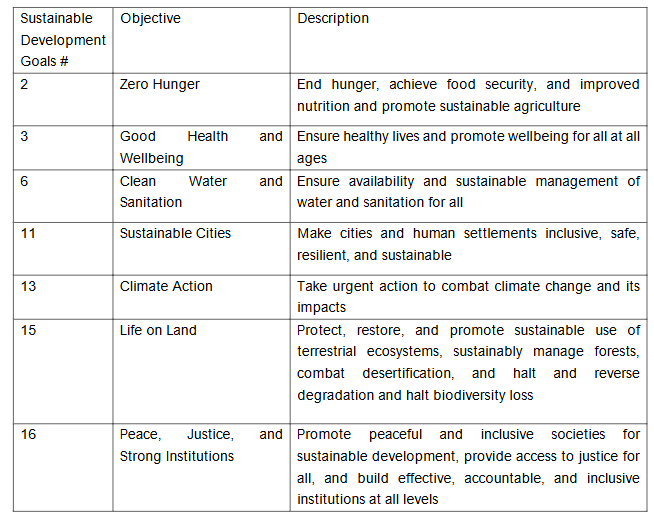
Table 1: Importance of Sustainable Development Goals of the Agenda 2030 of the United Nations in Relation to Undernutrition and Malnutrition (Adapted from U.N. 87)
| Sustainable Development Goals # | Objective | Description |
|---|---|---|
| 2 | Zero Hunger | End hunger, achieve food security, and improved nutrition and promote sustainable agriculture |
| 3 | Good Health and Wellbeing | Ensure healthy lives and promote wellbeing for all at all ages |
| 6 | Clean Water and Sanitation | Ensure availability and sustainable management of water and sanitation for all |
| 11 | Sustainable Cities | Make cities and human settlements inclusive, safe, resilient, and sustainable |
| 13 | Climate Action | Take urgent action to combat climate change and its impacts |
| 15 | Life on Land | Protect, restore, and promote sustainable use of terrestrial ecosystems, sustainably manage forests, combat desertification, and halt and reverse degradation and halt biodiversity loss |
| 16 | Peace, Justice, and Strong Institutions | Promote peaceful and inclusive societies for sustainable development, provide access to justice for all, and build effective, accountable, and inclusive institutions at all levels |
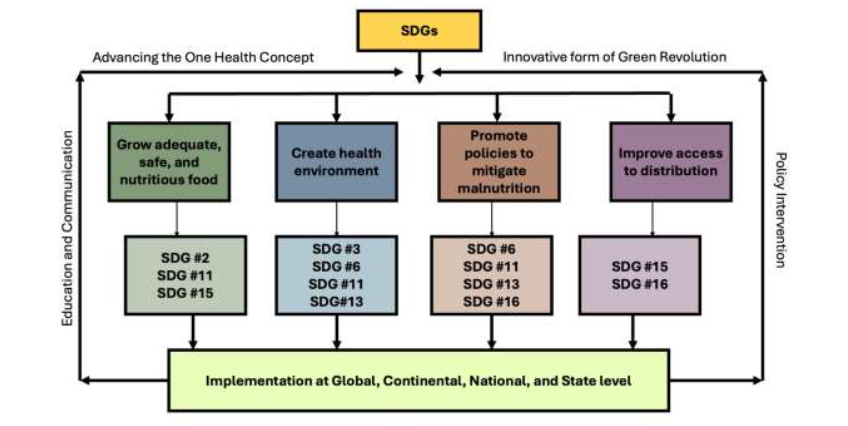
The Goal #11 is specifically focused on the need to resilient and sustainable. The perpetual food import in Sub-Saharan Africa is directly related to Goal #1 (End Poverty) because it may raise the prices of food staples. Thus, urban agriculture can contribute to the quantity and quality of food and create another income stream for urban households in rapidly urbanizing regions especially in the developing countries. However, similarly to others, Goal #2 (Zero Hunger) is also not on track to be realized by 2030 and years beyond. That being the case, farming within the city limits may be a viable option to advancing food and nutritional security especially in regions prone to chronic food shortages such as Sub-Saharan Africa, South Asia and parts of Latin America and the Caribbean. With the population projected to double in population by 2050, urban agriculture is a prudent and innovative option for achieving sustainable development while minimizing poverty through creation of another income stream.
Rapid population growth in cities demands a systematic approach to translating science of agronomy into action via urban and peri-urban agriculture. Growing urbanization is also aggravating the intercontinental food import. Thus, there is an urgent need for policy interventions to address this crisis, and advance technological options to promote food self-sufficiency by a systematic upscaling of urban and peri-urban agriculture. For example, the annual cost of food import in Sub-Saharan Africa ($43 B in 2019 and $50 B in 2025) is increasing to meet the need of growing food imports in Africa which may reach $90B to $110B per year in the near future. Food imported into rapidly growing urban centers is aggravating the vicious cycle of losing nutrient and C from agro-ecosystems thereby aggravating soil degradation on the one hand and hunger-related urban migration on the other hand. The importance of reducing urban pollution and improving living conditions can never be over-emphasized.
URBAN AND PERI-URBAN AGRICULTURE
Soil has a great and holy position worldwide because of its numerous ecosystem services such as food, feed, fiber and food for human and animal. Yet, its contamination and degradation is a worldwide issue. Therefore, providing adequate, nutritious and safe food to growing urban population is a major challenge for soil scientists, agronomists, nutritionists and city planners. Indeed, different types of urban/peri-urban agriculture are considered new and innovative approaches to traditional Green Revolution via urban/peri-urban agriculture. There is a large diversity of urban/peri-urban agriculture systems depending on the media used or operational procedure.
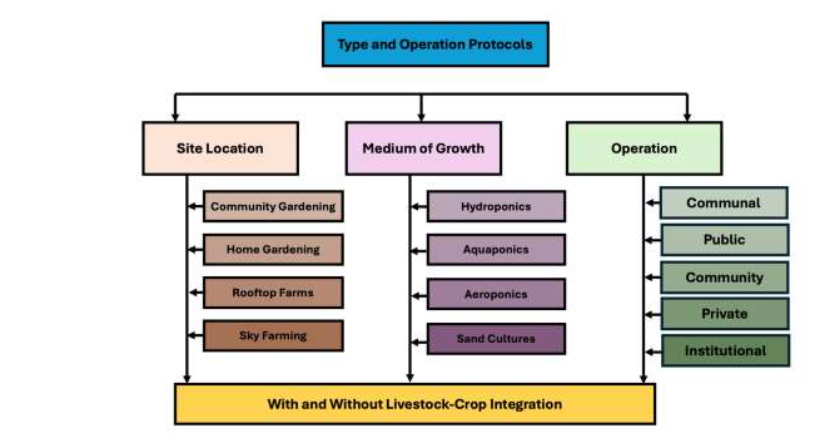
Commonly used forms of urban/peri-urban agriculture, on the basis of site and media used, are home gardens, community gardens, roof top gardens, greenhouse cultivation of vegetable under glass or plastic cover and sky farming. Sky farming is a modern innovation of urban/peri-urban agriculture which involves specially designed and multi-story green-houses which can optimize use of solar radiation. Both water and plant nutrients used may involve recycling of urban waste following the safety procedures to minimize health hazard(s) involved in using the urban waste products (heavy metal contamination, polluted soil and water etc.). Thus, urban/peri-urban agriculture systems of local food production within the city limits have numerous advantages discussed below.
Raising livestock is also a part of urban agriculture. It involves practices of growing crops and raising livestock within the urban centers. There is a growing interest in integrated crop-livestock systems in urban and peri-urban agriculture. A study by Quaye et al. observed that household income is negatively correlated with urban food security. Thus, integrated crop-livestock in urban agriculture settings can diversify diet and enhance income. Quaye and colleagues also observed that integrated crop-livestock increases household access to food by 84% compared to households without a farm, 48% compared to households only with crops, and 37% compared to households only with livestock. Furthermore, the integrated crop-livestock based urban agriculture enhanced the household dietary diversity by 12%, 7.6% and 16% compared to those without a farm, with only crops or with only livestock, respectively.
The use of indoor smart garden is another approach and a new form of urban agriculture. Numerous advantages of indoor small garden approach to food production include achieving environment sustainability and restoration, advancing human health and wellbeing through revolutionization of farming practices, addressing the growing demand for food production in mega-cities, and increasing access to locally produced food at low cost. Another innovative form of urban agriculture is community gardens. This involves allocation of plots within the city limit for community to grow local food. Use of community gardens is appropriate for residents of multistory apartment buildings.
Among soil-less options of urban agriculture, hydroponic gardening is an important technique. Wooten observed that hydroponic food production can yield the same amount as traditional agriculture but using up to 95% less water, 80% less land, and much lower labor costs due to automation especially in advanced hydroponic systems. Urban agriculture may be a common solution to under and overnutrition in cities. Dixon et al. observed that in many cities, thousands of positions of paid employment could be created through development of sustainable and self-sufficient food systems. Thus, urban agriculture has the health equity dimensions of urban food systems.
Vertical farming is among the innovative options of urban agriculture, and it has a short food supply chain. Vertical farming involves multi-story 3-dimensional glass structures with controlled environment and designed to maximize photosynthesis. Thus, vertical farming has lower fertilizer, and pesticide needs while also conserving water and mitigating land degradation. Innovative urban agriculture is considered a second Green Revolution. In land-scarce cities (i.e., Singapore) high rise apartment buildings can be designed to create vertical spaces for natural-light home gardening along rooftops, corridors, balconies and facades. Song et al. observed that corridor gardening was limited by light and met only 0.5% demand for vegetables, rooftop gardening with 15cm growing medium met 3% of the demand, and façade gardening 43% because of the large space available.
The farm size is variable and may range from small garden to a large farm. Urban agriculture may also include systems as greenhouses, rooftop gardens, unconstructed or vacant land, etc. Vertical farming is also getting popular. Local and reliable food, without any long-distance transport, is being obtained from innovative and modern rooftop gardens. Some productive crops for rooftop agriculture have been tomato, chard, lettuce, pepper, and eggplant. However, peri-urban agriculture farms require more water (1500 to 3500 L/kg) and land (1.5 to 3.5 m2/kg), decentralized food circulation can match rooftop farming yields and that even smaller scale systems could provide 17 to 27% of local food flows. Urban agriculture can produce 140 kg vegetable/m2/year. The rate of water consumption for roof top vegetable production has been estimated at 3.7L/m2/d. Productivity of urban agriculture (kg of food/m2) can also be more than that of conventional agriculture.
Merits of Urban and Peri-Urban Agriculture
Local production systems to feed the megacities and other growing urban centers are gaining urgency because of the necessity to provide safe and nutritious food, which is fresh, diverse and nutritionally rich. Urban agriculture provides multiple services relevant to social, educational, civic, nutritional needs etc. Furthermore, production of safe and nutritious food from diverse crops/vegetables enhances nutritional quality and diversity of food sources, and reduces the risks of mal-nutrition in urban environments where these risks are growing because of high rate of urbanization. Some merits of urban agriculture go beyond the production of food and increases its access and safety. Indeed, the social benefits of urban agriculture go beyond that of food and economics, human health, and aesthetic benefits of greener landscape. Diekmann et al. observed that home gardens, which involve more sustained engagement with other people and natural world, promote opportunities for greater learning, connection, and civic participation.
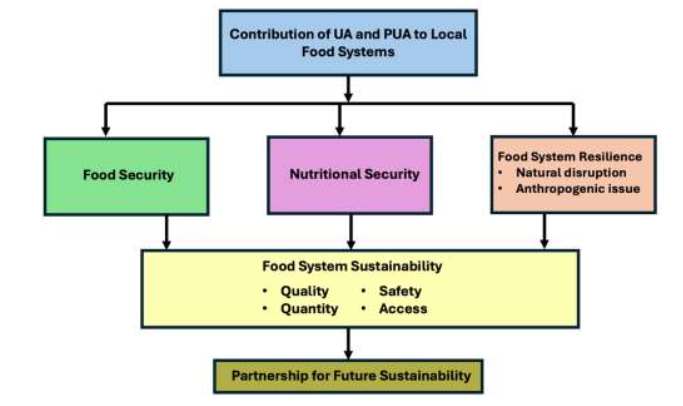
Locally grown food has low transport-related costs, and thus, lower emission of greenhouse gases compared with produce grown on traditional farms under rural conditions. In addition to reduction in transport and associated advantages, improvement due to green space is an important merit of modern urban and peri-urban agriculture approaches. The per capita arable land area (m2) is decreasing from 5600 in 1950 to 2300 in early 2000s, and is projected to be 1500 by 2050. Thus, developing non-soil media for food production is among important merits of urban agriculture/peri-urban agriculture approaches, as is discussed in the following section.
Urban and peri-urban agriculture may also have higher agronomic yield compared with that from the conventional agriculture. Payen et al. reported that differences in yields between urban versus conventional agriculture may be 17 kg/m2/cycles vs. 3.8 kg/m2/cycle. Furthermore, Payen and colleagues observed that some urban spaces and growing systems also had a significant effect on specific crop yields. For example, yields of tomatoes in hydroponic systems may be significantly more than those from soil-based systems. Acevedo-De-los-Ríos et al. observed that hydroponics systems provide the highest productivity of 12 kg/m2/year and the lowest land demand (0.8m2/kg), but also generate the highest emissions (1.5 to 3.0 kg CO2e/kg). Alves et al. also observed that social values of urban agriculture include education, food security, human health, civic engagement, social and gender equity, etc. Furthermore, Alves and colleagues also outlined some environmental functions of urban agriculture such as contribution to waste management. Ebenso et al. observed that urban agriculture can meet the challenge of feeding and providing healthy lives for its teeming population and improving quality of life in cities. City planners must allocate land area specifically designed for urban and peri-urban agriculture. In addition to home gardens, growing vegetables in soil packed in boxes and specifically located in balcony of apartment at sites which receive adequate sunlight can also be helpful during times of disruptions in urban food supply chain.
Urban agriculture can contribute to income generation, savings, capital expenditures and tax revenues. Additional income can be generated to enhance savings, improve capital expenditures, and also generate tax revenues. Among social values of urban agriculture are education, food security, human health, civic engagement, social and gender equity, etc. By creating another income stream for the family, urban agriculture can also be commercial and part of sustainable cities. Additional environmental functions of urban agriculture include a prudent and innovative waste management by recycling and converting waste into wealth. Above all, urban agriculture is a nature-based approach by improving human health and wellbeing by enhancing access to safe and nutritious food. Indeed, urban agriculture meets the challenge of feeding and providing healthy lives for its teeming population and improving quality of life in cities. It is suited to producing fresh vegetables, while reducing the cost of shipment and developing a resilience system against unexpected disruptions such as the COVID19 Pandemic. Affordability of fresh produce is another advantage. Thus, urban and peri-urban agriculture provide opportunities for sustainable development of rapidly growing cities.
In comparison to urban agriculture, peri-urban agriculture involves growing of crops and raising animals in vicinity of cities rather than within the city. In other words peri-urban agriculture is practiced in transition zone between urban and rural areas. Objectives of both urban and peri-urban agriculture are to advance food security in megacities and growing urban population and create resilient foods systems for safe, nutritious and economic food. Furthermore, produce from urban and peri-urban agriculture is often sold for additional household income. Another ecologic benefit of urban and peri-urban agriculture is to create green space, and the overall community development for human wellbeing while also connecting with nature. Additional water needs for urban and peri-urban agriculture are often met by roof harvesting of rain water.
Mitigating Climate Change Along With Other Environmental Benefits of Urban and Peri-Urban Agriculture
Benefits of sustainable urban agriculture span across environmental, social and economic dimensions. Pollard et al. observed that the present era is an age of concern for mental health and wellbeing, and that urban agriculture is important to health and wellbeing, social connection, and happiness. Thus, there is an ever-growing interest in eating healthy, consuming local food, addressing urban hunger and advancing Sustainable Development Goals. Ribeiro et al. observed that agroecological urban agriculture is a tool for health promotion through community leadership, empowerment, creation of conducive environment for health and from income generation, health and environment. Thus, urban and peri-urban agriculture have a special niche because these innovative food systems have positive impacts on advancing several Sustainable Development Goals, and reducing environmental effects. Russo and Cirella argued that the edible urbanism integrates three main principles of sustainability: food security, resilience, and social inclusion. Indeed, urban and peri-urban agriculture are also related to public health through urban planning so that green space can be demarcated from the beginning, and provisions are made to recycle black and grey water for supplemental irrigation and composting areas for converting biowaste into an amendment. Some specific benefits of urban and peri-urban agriculture are briefly outlined below.
- Addressing Malnutrition: A high rate of malnutrition (deficiency of micronutrients and protein) in Sub-Saharan Africa, South Asia and elsewhere in developing countries may be at least partly addressed by urban and peri-urban agriculture.
- Improving Human assets: One of the benefits of urban agriculture is to improve the wellbeing of the residents in megacities and growing urbanization. Rosmiza and Zainal observed that by involving and participating in community gardens, urban residents have strength in terms of human assets such as good health, and determination not giving up easily.
- Creating Healthy Environments: Urban agriculture reduces the use of energy-based inputs by use of compost and recycling of black and grey water. These inputs lead to reduction in use of chemical fertilizers and pesticides (i.e., herbicides, insecticides, nematicides and fungicides), use of water for supplemental irrigation, and reduction in transport of food over long distances. Some peri-urban agriculture systems have lower emissions of greenhouse gases per unit of produce compared with conventional agriculture and, thus, save land for nature.
- Human Health and Social Benefits: There are strong health benefits of urban and peri-urban agriculture. Home gardening is an important recreational activity, and it promotes mental and psychological wellbeing, provides outdoor physical exercise, and strengthens the connection between human and nature. Xu et al. reported that home gardening offers therapeutic benefits by fostering solid bonds via sharing of knowledge and food. Thus, urban agriculture may provide a preventative or supportive role for gardener health and wellbeing. An important merit of urban agriculture is connecting producers to consumers. Dimitri et al. reported that urban agriculture practiced in lower income population facilitated building communities. These communities donate a higher share of food from their farm and are less likely to own farmland. Furthermore, urban agriculture also leads to diet diversity and nutritional improvement. Urban home food gardens also contribute to community development, cultural reproduction, resilience at multiple scales, conserve agrobiodiversity and support urban biodiversity. It is a source of nutrition-sensitive food.
- Planetary Health Benefits of Urban Agriculture: The EAT-Lancet Commission, a global initiative to promote a healthy and sustainable diet within planetary boundaries recommending a “planetary health diet” that is rich in plant-based food (e.g., whole grains, fruits, vegetables, nuts) while reducing use of red meat, added sugars, and ultra-processed foods. The Planetary Health Diet under the auspices of the EAT-Lancet Commission, is aimed at harnessing health and environmental benefits. In the context of growing cities, advances in scientific understanding of urban and peri-urban agriculture technologies have emerged a viable option also to improve Planetary Health. Human health and demands are also related to Planetary Health because both are intricately interconnected. Indeed, urban and peri-urban agriculture are highly versatile and have both productive and aesthetic impacts. Urban agriculture addresses the issue of food desserts by enhancing access to fresh produce, empowering communities while reducing transportation costs, strengthening climate resilience, creating environmentally friendly agro-ecosystems, and leading to sustainable cities. Indeed, urban agriculture also reduces risks of urban heat islands, decreases food waste, reduces air pollution, fosters social connections, and improves physical or mental health. Properly implemented, urban and peri-urban agriculture can save land and water for nature.
Some Drawbacks and Barriers to Urban and Peri Urban Agriculture
Despite numerous benefits, urban and peri-urban agriculture can make only a limited contribution to urban food security in low-income countries because of some severe biophysical and socioeconomic limits of how much food can be grown in cities. However, urban and peri-urban agriculture also have some disservices that must be considered. Urban and peri-urban agriculture cannot meet all food demands of the growing and increasingly affluent urban population. For example, growing of grains and fruit trees cannot be upscaled within city limits. For example, a city like Kampala (Uganda) may grow up to 25% of food consumed by urban and peri-urban agriculture. In Ilorin, Nigeria, Ola reported that urban agriculture contributed 16.9% meat/fish/eggs, 4.5% of yam/cassava/potato, 0.6% of veggies and fruits, and 0.5% of grains. The urgency and necessity to grow food within and in vicinity of large and growing cities are also affecting environment, soil and water resources, allocation of large resources to import food, and the risks of pollution and degradation of overall health of Planet Earth. However, conventional agriculture, based on high use of chemicals and energy-based inputs, may also be a concern in relation to environmental pollution (e.g., soil degradation, water depletion and pollution, air contamination, loss of biodiversity and production of nutritionally-poor food due to the dilution effect of high agronomic yield). There is a need to adopt regenerative agriculture which restores the environment while producing safe and nutrient-rich food but soils under urban agriculture are also heavily polluted. Similar to contamination, urban soil degradation has severe ecological risks on human health implications, which must be addressed.
Heavy Metal Contamination
Urban soils can be contaminated with Cu, Pb, Co, Zn, Mn, Fe, Ni. In Pakistan, for example, Ali et al. observed that Cr contamination of paddy soil is a serious problem. Soil contamination is a serious problem in industrial areas. There are numerous sources of contamination and pollution of urban soils. Durdu et al. noted that urban soils may be contaminated with organochlorine pesticides and heavy metals/metalloids (Ag, As, Si, B, Ca, Cd, Cr, Cu, Fe, Hg, Mn, Ni, Mo, Pb, Se, Zn, and V) with severe impact on human health. Furthermore, humans are exposed to heavy metals and microplastics through inhalation, dermal contact, or the consumption of food grown on contaminated soils. In China, Tong et al. reported serious heavy metal contamination (As, Cd, Cr, Hg, Pb, Cu, Zn, and Ni) in 71 cities during the period of 2003 to 2019, with serious implications to human health and wellbeing. Levels of heavy metals in agricultural soils (Cr, As, Ni, Cd, Pb, Hg, Zn, and Cu) can harm crop health and yield. Angon et al. observed that exposure to heavy metals can harm brain, intestines, lungs, liver and other organs of the human body. The sources of heavy metals in soil can be natural and anthropogenic with adverse effects on soil and plant health, and on human health by entering the food chain.
Soil contamination can also happen from fertilizers and use of plastic film to conserve water and control weeds. In China, Xu et al. observed that soil contamination caused by N fertilizer manufacturing is a major concern. Chia et al. reported that impact and severity of soil microplastic can persist for a long time.
Barriers to Upscaling of Urban Agriculture
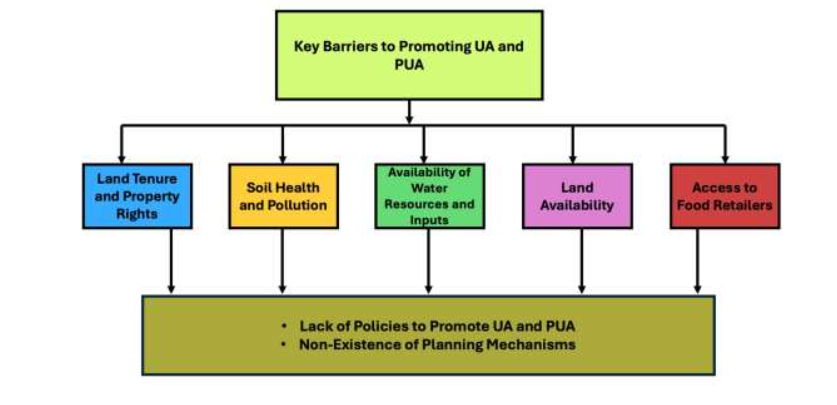
There are also barriers to upscaling and adoption of urban agriculture, especially in Sub-Saharan Africa and other developing countries. Davies et al. reported that urban agriculture is not strongly related to urban food security. Several barriers to adoption of urban agriculture (33% households in Zambia and Kenya) include settlement formality, property rights and proximity to food retailers. Land tenure may also lead to tension between urban developers and resource-rich and resource-poor households. While poverty may be the motivation in some households, entrepreneurial objectives may be in others. Thus, a lot of research is needed to fill up the knowledge gaps in relation to ecological and some human dimensional issues. Tevera observed that urban planners in secondary cities should understand and minimize these tensions. In this context, urban agriculture land-food systems may be developed in an agent-based approach.
Research Priorities
Urban agriculture is currently experiencing a significant boom, and it is practiced in terraces, balconies, abandoned plots, between the space of buildings. Indeed, urban agriculture is a smart option to address anthropogenic climate change. Despite the growing interest in urban and peri-urban agriculture, there is a scarcity of data on soil health under urban agriculture. Yet, understanding soil health in urban/peri-urban agriculture is critical to developing efficient management practices. Some researchable priorities are outlined in Table 2. Despite enthusiasm and popularity, there is a scarcity of quantitative data on perceived economic, social, environmental, soil functions, soil contamination, income generation, and human health. Soil and crop data are needed for site specific situation and across diverse urban conditions. Quantitative data are needed on alleviation of hunger and malnutrition and on environmental benefits. Research is also needed on the use of artificial intelligence in urban agriculture.
| Specific Priority | Reference |
|---|---|
| 1. Identification of management practices | Salomon et al. |
| 2. How to address urban poverty | Zivhave et al. |
| 3. Use of biotechnology | Aggarwal et al. |
| 4. Physiognomic response of crops | Gumisiriza et al. |
| 5. Sustainability and human wellbeing | Rao et al. |
| 6. Human health across different types of UA | Kirby et al. |
| 7. Quantification of benefits (ecology, economy, anthropology) | Dorofiereva et al. |
| 8. Microplastic contamination | Chia et al. |
| 9. Contamination of urban soils | Panico et al.; Meena et al. |
| 10. Quantification of the role of UA in alleviation of hunger and malnutrition | Lee-Smith |
| 11. Rainwater harvesting from roof | Hume et al. |
| 12. Impacts of extreme events | Chari et al. |
| 13. Legal issues including food safety | Ramon et al. |
| 14. Advancing SDGs of the United Nations | U.N. |
Conclusions
With rapid urbanization; especially in Sub-Saharan Africa, South Asia and Latin American and the Caribbean regions, urban and peri-urban agriculture may play an important role in alleviation of hunger and malnutrition. It also has economic benefits in reducing the cost of transportation. Indeed, it is a mechanism of advancing Sustainable Development Goals including #1 (end poverty) and #2 (zero hunger) and others. Among a wide range of urban and peri-urban agriculture, rooftop gardens and multistory glass buildings with controlled environment and soil-less media are among the most innovative options. Integration of crops with livestock is also a viable option. Aquaculture and other soil-less production systems in multistory glass building along with artificial intelligence is an innovative option. Soils of large cities have a potential to produce 10 to 20 % of safe, economic and locally produced food. However, several limitations and barriers to upscaling of urban/peri-urban agriculture must be addressed by innovative research.
Conflict of Interest:
The author has no conflicts of interest to declare.
Funding Statement:
No financial disclosure.
Acknowledgement
This article is complementary to a book chapter in Advances in Soil Science (Soil and Human Health: Food as Medicine /LalT113344, 2026) with the title Soil and Planetary Health by R. Lal.
References
1. FAO, IFAD, UNICEF, WFP and WHO. 2025. The State of Food Security and Nutrition in the World 2025 – Addressing high food price inflation for food security and nutrition. Rome.
https://doi.org/10.4060/cd6008en.
2. Li, X., Zhou, Y., Hejazi, M., Wise, M., Vernon, C., Iyer, G., & Chen, W. (2021). Global urban growth between 1870 and 2100 from integrated high resolution mapped data and urban dynamic modeling. Communications Earth & Environment, 2(1), 201.
https://doi.org/10.1038/s43247-021-00273-w
3. Ritchie, H., Samborska, V., & Roser, M. (2024). Urbanization. Our world in data.
https://ourworldindata.org/urbanization.
4. Säumel, I., Reddy, S., Wachtel, T., Schlecht, M., & Ramos-Jiliberto, R. (2022). How to feed the cities? Co-creating inclusive, healthy and sustainable city region food systems. Frontiers in Sustainable Food Systems, 6.
https://doi.org/10.3389/fsufs.2022.909899
5. Hoornweg, D., & Pope, K. (2016). Population predictions for the world’s largest cities in the 21st century. Environment & Urbanization, 29(1), 195-216. https://doi.org/10.1177/0956247816663557 (Original work published 2017)
6. Mietz, L. K., Civit, B. M., & Arena, A. P. (2024). Life cycle assessment to evaluate the sustainability of urban agriculture: opportunities and challenges. Agroecology and Sustainable Food Systems, 48(7), 983-1007.
https://doi.org/10.1080/21683565.2024.2344025.
7. Lee-Smith, D. (2014). The dynamics of urban and peri-urban agriculture. In Digging Deeper: Inside Africa’s Agricultural, Food and Nutrition Dynamics (pp. 197-216). Brill. ISBN: 978-90-04-28268-1.
8. Mietz, L. K., Civit, B. M., & Arena, A. P. (2023). Cultivating communities in Mendoza, Argentina: Exploring social aspects of urban agriculture. https:// DOI: 10.2478/environ-2023-0020.
9. Crush, J., Frayne, B., & Pendleton, W. (2012). The crisis of food insecurity in African cities. Journal of Hunger & Environmental Nutrition, 7(2-3), 271-292.
https://doi.org/10.1080/19320248.2012.702448
10. Satterthwaite, D., McGranahan, G., & Tacoli, C. (2010). Urbanization and its implications for food and farming. Philosophical transactions of the royal society B: biological sciences, 365(1554), 2809-2820.
https://doi.org/10.1098/rstb.2010.0136
11. Dinku, A. M., Mekonnen, T. C., & Adilu, G. S. (2023). Urban food systems: Factors associated with food insecurity in the urban settings evidence from Dessie and Combolcha cities, north-central Ethiopia. Heliyon, 9(3).
https://doi.org/10.1016/j.heliyon.2023.e14482
12. Russo, A., & Cirella, G. T. (2019). Edible urbanism 5.0. Palgrave communications, 5(1), 1-9.
https://doi.org/10.1057/s41599-019-0377-8.
13. U.N. 2015. Sustainable Development Goals Action Platforms. Department of Economic and Social Affairs, Sustainable Development, New York, USA. sdgs.un.org/partnership.
14. Kii, M. (2021). Projecting future populations of urban agglomerations around the world and through the 21st century. Npj Urban Sustainability, 1(1), 10.
https://doi.org/10.1038/s42949-020-00007-5
15. Lee-Smith, D. (2010). Cities feeding people: an update on urban agriculture in equatorial Africa. Environment and urbanization, 22(2), 483-499.
https://doi.org/10.1177/0956247810377383.
16. Nkrumah, B. (2019). Africa’s future: demarginalizing urban agriculture in the era of climate change.
https://doi.org/10.5555/20193345475.
17. Joy, T. H., Violet, H. I., & Richard, C. T. (2025). The case for urban agriculture: Opportunities for sustainable development. Urban Forestry & Urban Greening, 128861.
https://doi.org/10.1016/j.ufug.2025.128861.
18. Joshipura, T. (2024). Feeding African cities: Hinterland suitability and urban growth in twentieth-century sub-Saharan Africa. Economic History of Developing Regions, 39(3), 251-278.
https://doi.org/10.1080/20780389.2024.2376549.
19. Miccoli, S., Finucci, F., & Murro, R. (2016). Feeding the Cities Through Urban Agriculture The Community Esteem Value. Agriculture and Agricultural Science Procedia, 8, 128–134.
https://doi.org/10.1016/j.aaspro.2016.02.017
20. Kwanza, Kilimo. 2024. Africa’s Annual Food Imports at $50 Billion Set to Surge to $90-$110 Billion by 2025 Without Urgent Action: Exploring the Gains, Challenges, and Path to Self-Sufficiency.
https://kilimokwanza.org/africas-annual-food-imports-at-50-billion-set-to-surge-to-90-110-billion-by-2025-without-urgent-action-exploring-the-gains-challenges-and-path-to-self-sufficiency/
21. Niemczynowicz, J. (1996). Megacities from a water perspective. Water International, 21(4), 198-205.
https://doi.org/10.1080/02508069608686515
22. El-Ramady, H., Alshaal, T., Elsakhawy, T., Omara, A. E. D., Abdalla, N., & Brevik, E. C. (2018). Soils and humans. In The soils of Egypt (pp. 201-213). Cham: Springer International Publishing.
https://doi.org/10.1007/978-3-319-95516-2_12.
23. Carré, F., Caudeville, J., Bonnard, R., Bert, V., Boucard, P., Ramel, M. (2017). Soil Contamination and Human Health: A Major Challenge for Global Soil Security. In: Field, D.J., Morgan, C.L.S., McBratney, A.B. (eds) Global Soil Security. Progress in Soil Science. Springer, Cham.
https://doi.org/10.1007/978-3-319-43394-325
24. Ushimaru, S., Iwata, R., Amrullah, E. R., Utami, A. W., & Ishida, A. (2024). Which Households Raise Livestock in Urban and Peri-Urban Areas of Eight Developing Asian Countries? Agriculture, 14(3), Article 3.
https://doi.org/10.3390/agriculture14030443
25. Quaye, J., Adams, F., Mensah, A., Ullah, A., Euah, S., & Donkor, E. (2025). Crop‐Livestock Integration in Urban Agriculture: Implication for Urban Food Security in Ghana. Food and Energy Security, 14(3), e70100.
https://doi.org/10.1002/fes3.70100
26. Mihailović, B., Radosavljević, K., & Popović, V. (2023). The role of indoor smart gardens in the development of smart agriculture in urban areas. Економика пољопривреде, 70(2), 453-468.
27. Wooten, H. (2018). Growing communities, growing food: hydroponic gardening for urban audiences.
https://www.cabidigitallibrary.org/doi/epdf/10.5555/20193451619.
28. Dixon, J., Omwega, A. M., Friel, S., Burns, C., Donati, K., & Carlisle, R. (2007). The health equity dimensions of urban food systems. Journal of Urban Health, 84(Suppl 1), 118-129.
https://doi.org/10.1007/s11524-007-9176-4.
29. Song, S., Cheong, J. C., Lee, J. S., Tan, J. K., Chiam, Z., Arora, S., … & Tan, H. T. (2022). Home gardening in Singapore: A feasibility study on the utilization of the vertical space of retrofitted high-rise public housing apartment buildings to increase urban vegetable self-sufficiency. Urban Forestry & Urban Greening, 78, 127755.
https://doi.org/10.1016/j.ufug.2022.127755.
30. Oh, S., & Lu, C. (2023). Vertical farming-smart urban agriculture for enhancing resilience and sustainability in food security. The Journal of Horticultural Science and Biotechnology, 98(2), 133-140.
https://doi.org/10.1080/14620316.2022.2141666.
31. Boneta, A., Rufí-Salís, M., Ercilla-Montserrat, M., Gabarrell, X., & Rieradevall, J. (2019). Agronomic and environmental assessment of a polyculture rooftop soilless urban home garden in a mediterranean city. Frontiers in Plant Science, 10, 341.
https://doi.org/10.3389/fpls.2019.00341.
32. Armanda, D. T., Guinée, J. B., & Tukker, A. (2019). The second green revolution: Innovative urban agriculture’s contribution to food security and sustainability – A review. Global Food Security, 22, 13–24.
https://doi.org/10.1016/j.gfs.2019.08.002.
33. Diekmann, L. O., Gray, L. C., & Baker, G. A. 2020. Growing ‘good food’: Urban gardens, culturally acceptable produce and food security. Renewable Agriculture and Food Systems, 35(2), 169-181.
https://doi.org/10.1017/S1742170518000388
34. Payen, F. T., Evans, D. L., Falagán, N., Hardman, C. A., Kourmpetli, S., Liu, L., … & Davies, J. A. (2022). How much food can we grow in urban areas? Food production and crop yields of urban agriculture: a meta‐analysis. Earth’s future, 10(8), e2022EF002748.
https://doi.org/10.1029/2022EF002748.
35. Acevedo-De-los-Ríos, A., Dyson, A., Claeys, D., & Cardenas-Mamani, U. (2025). Environmental performance of urban agriculture in the global south: A comprehensive literature review and life cycle analysis approach. Environmental Impact Assessment Review, 115, 108040.
https://doi.org/10.1016/j.eiar.2025.108040
36. de Oliveira Alves, D., de Oliveira, L., & Muehl, D. D. (2024). Commercial urban agriculture for sustainable cities. Cities, 150, 105017.
https://doi.org/10.1016/j.cities.2024.105017
37. Ebenso, B., Otu, A., Giusti, A., Cousin, P., Adetimirin, V., Razafindralambo, H., … & Mounir, M. (2022). Nature-based one health approaches to urban agriculture can deliver food and nutrition security. Frontiers in Nutrition, 9, 773746.
https://doi.org/10.3389/fnut.2022.773746.
38. Lal, R. (2017). Managing urban soils for food security and adaptation to climate change. In International Congress on Soils of Urban, Industrial, Traffic, Mining and Military Areas(pp. 302-319). Cham: Springer International Publishing.
https://doi.org/10.1007/978-3-319-89602-1_35.
39. Lal, R., Brevik, E. C., Dawson, L., Field, D., Glaser, B., Hartemink, A. E., … & Sánchez, L. B. R. (2020). Managing soils for recovering from the COVID-19 pandemic. Soil Systems, 4(3), 46.
https://doi.org/10.3390/soilsystems4030046.
40. Abdelmenan, S., Worku, A., Berhane, H. Y., Berhane, Y., & Ekström, E. C. (2025). Affordability of family foods is associated with Nutritional Status of women with pre-school children in Addis Ababa, Ethiopia. Scientific Reports, 15(1), 665.
https://doi.org/10.1038/s41598-024-83064-5.
41. Dima, S. J., Ogunmokun, A. A., & Nantanga, T. (2002). The status of urban and peri-urban agriculture. Report for the FAO Integrated Support to Sustainable Development and Food Security Programme, University of Namibia, 51-76.
42. Opitz, I., Berges, R., Piorr, A., & Krikser, T. (2016). Contributing to food security in urban areas: differences between urban agriculture and peri-urban agriculture in the Global North. Agriculture and Human Values, 33(2), 341-358.
https://doi.org/10.1007/s10460-015-9610-2
43. Amos, C. C., Rahman, A., Karim, F., & Gathenya, J. M. (2018). A scoping review of roof harvested rainwater usage in urban agriculture: Australia and Kenya in focus. Journal of cleaner production, 202, 174-190.
https://doi.org/10.1016/j.jclepro.2018.08.108.
44. Kanosvamhira, T. P. (2024). Sustainable urban agriculture: Unlocking the potential of home gardens in low-income communities. The Professional Geographer, 76(5), 587-596.
https://doi.org/10.1080/00330124.2024.2355179.
45. Pollard, G., Ward, J., & Roetman, P. (2018). Typically diverse: the nature of urban agriculture in South Australia. Sustainability, 10(4), 945.
https://doi.org/10.3390/su10040945
46. Boukharta, O. F., Chico Santamarta, L., Correa Guimaraes, A., & Navas Gracia, L. M. (2025). Assessing Citizens’ Perceptions of Urban Agriculture and Its Contribution to Food Security—Worldwide Analysis and Specific Case Studies in Spain. Urban Science, 9(5), 150.
https://doi.org/10.3390/urbansci9050150.
47. Ribeiro, S. M., Bógus, C. M., & Watanabe, H. A. W. (2015). Agroecological urban agriculture from the perspective of health promotion. Saúde e Sociedade, 24, 730-743.
https://doi.org/10.1590/S0104-12902015000200026.
48. Brown, K. H., & Jameton, A. L. (2000). Public health implications of urban agriculture. Journal of public health policy, 21(1), 20-39.
https://doi.org/10.2307/3343472
49. Pantoja-Calderon, R., Garcia-Cejudo, D., & Roggema, R. (2025). Addressing the Paradox of Food and Health in Mexico: A Landscape Urbanism Approach. Land, 14(3), 506.
https://doi.org/10.3390/land14030506.
50. Rosmiza, M. Z., & Zainal, M. (2021). Exploration of human assets among community garden project participants.
https://doi.org/10.17576/geo-2021-1704-03, 2180-2491
51. Liu, Y., Chanse, V., & Chicca, F. (2025). Enhancing Post-Disaster Food Security Through Urban Agriculture in the Context of Climate Change. Land, 14(4), Article 4.
https://doi.org/10.3390/land14040799
52. Chari, F., & Ngcamu, B. S. (2022). Climate change and its impact on urban agriculture in Sub-Saharan Africa: A literature review. Environmental & Socio-Economic Studies, 10(3), 22–32.
https://doi.org/10.2478/environ-2022-0014
53. Xu, J., Lin, T., Wang, Y., Jiang, W., Li, Q., Lu, T., & Yu, H. (2024). Home food gardening in modern cities: advances, issues, and future perspectives. Frontiers in Sustainable Food Systems, 8, 1391732.
https://doi.org/10.3389/fsufs.2024.1391732.
54. Dimitri, C., Oberholtzer, L., & Pressman, A. (2016). Urban agriculture: connecting producers with consumers. British Food Journal, 118(3), 603-617.
https://doi.org/10.1108/BFJ-06-2015-0200.
55. Taylor, J. R., & Lovell, S. T. (2014). Urban home food gardens in the Global North: Research traditions and future directions. Agriculture and human values, 31(2), 285-305. DOI 10.1007/s10460-013-9475-1.
56. Gerster-Bentaya, M. (2013). Nutrition-sensitive urban agriculture. Food security, 5(5), 723-737.
https://doi.org/10.1007/s12571-013-0295-3.
57. Gunapala, R., Gangahagedara, R., Wanasinghe, W. C. S., Samaraweera, A. U., Gamage, A., Rathnayaka, C., Hameed, Z., Baki, Z. A., Madhujith, T., & Merah, O. (2025). Urban agriculture: A strategic pathway to building resilience and ensuring sustainable food security in cities. Farming System, 3(3), 100150.
https://doi.org/10.1016/j.farsys.2025.100150
58. Tabrez, Z. (2025). Sustainable cities: Enhancing food systems with urban agriculture. Discover Food, 5(1).
https://doi.org/10.1007/s44187-025-00439-x
59. Lal, R. (2022). Sustaining soil for advancing peace: World is one family. Journal of Soil and Water Conservation, 77(3), 43A-47A.
https://doi.org/10.2489/jswc.2022.0411A
60. Warren, E., Hawkesworth, S., & Knai, C. (2015). Investigating the association between urban agriculture and food security, dietary diversity, and nutritional status: A systematic literature review. Food Policy, 53, 54–66.
https://doi.org/10.1016/j.foodpol.2015.03.004
61. Ola, A. (2020). Building a food-resilient city through urban agriculture: The case of Ilorin, Nigeria. Town and Regional Planning, 77, 89-102.
http://dx.doi.org/10.18820/2415-0495/trp77i1.7.
62. Lal, R. (2021). Feeding the world and returning half of the agricultural land back to nature. Journal of Soil and Water Conservation, 76(4), 75A-78A.
https://doi.org/10.2489/jswc.2021.0607A.
63. Ayaz, H., Nawaz, R., Nasim, I., Irshad, M. A., Irfan, A., Khurshid, I., … & Bourhia, M. (2023). Comprehensive human health risk assessment of heavy metal contamination in urban soils: insights from selected metropolitan zones. Frontiers in Environmental Science, 11, 1260317.
https://doi.org/10.3389/fenvs.2023.1260317.
64. Ali, W., Zhang, H., Mao, K., Shafeeque, M., Aslam, M. W., Yang, X., & Podgorski, J. (2022). Chromium contamination in paddy soil-rice systems and associated human health risks in Pakistan. Science of the Total Environment, 826, 153910.
https://doi.org/10.1016/j.scitotenv.2022.153910.
65. Moghtaderi, T., Mahmoudi, S., Shakeri, A., & Masihabadi, M. H. (2018). Heavy metals contamination and human health risk assessment in soils of an industrial area, Bandar Abbas–South Central Iran. Human and Ecological Risk Assessment: An International Journal, 24(4), 1058-1073.
https://doi.org/10.1080/10807039.2017.1405723.
66. Durdu, B., Gurbuz, F., Koçyiğit, H., & Gurbuz, M. (2023). Urbanization-driven soil degradation; ecological risks and human health implications. Environmental Monitoring and Assessment, 195(8), 1002.
https://doi.org/10.22616/j.landarchart.2021.18.05
67. Perković, S., Paul, C., Vasić, F., & Helming, K. (2022). Human health and soil health risks from heavy metals, micro (nano) plastics, and antibiotic resistant bacteria in agricultural soils. Agronomy, 12(12), 2945.
https://doi.org/10.3390/agronomy12122945.
68. Tong, S., Li, H., Wang, L., Tudi, M., & Yang, L. (2020). Concentration, spatial distribution, contamination degree and human health risk assessment of heavy metals in urban soils across China between 2003 and 2019—a systematic review. International journal of environmental research and public health, 17(9), 3099.
https://doi.org/10.3390/ijerph17093099.
69. Angon, P. B., Islam, M. S., Das, A., Anjum, N., Poudel, A., & Suchi, S. A. (2024). Sources, effects and present perspectives of heavy metals contamination: Soil, plants and human food chain. Heliyon, 10(7). usage in urban agriculture: Australia and Kenya in focus. Journal of cleaner production, 202, 174-190.
https://doi.org/10.1016/j.heliyon.2024.e28357.
70. Chia, R.W., Lee, JY., Jang, J. et al. Soil health and microplastics: a review of the impacts of microplastic contamination on soil properties. J Soils Sediments 22, 2690–2705 (2022).
https://doi.org/10.1007/s11368-022-03254-4
71. Davies, J., Hannah, C., Guido, Z., Zimmer, A., McCann, L., Battersby, J., & Evans, T. (2021). Barriers to urban agriculture in Sub-Saharan Africa. Food Policy, 103, 101999. https://doi.org/10.1016/j.foodpol.2020.101999.
72. Tevera, D. (2022). Secondary cities and urban agriculture in sub-Saharan Africa. In Transforming urban food systems in secondary cities in Africa (pp. 133-147). Cham: Springer International Publishing.
https://doi.org/10.1007/978-3-030-93072-1_7.
73. Hemerijckx, L.-M., De Vos, K., Kaunda, J. O., & Van Rompaey, A. (2025). Future scenarios for urban agriculture and food security in sub-Saharan Africa: Modelling the urban land-food system in an agent-based approach. Computers, Environment and Urban Systems, 118, 102258.
https://doi.org/10.1016/j.compenvurbsys.2025.102258
74. Richter, F. (2013). La agricultura urbana y el cultivo de sí. Los huertos de ocio a la luz de las dinámicas neorrurales. (Urban agriculture and the growing of the self. Leisure gardening in light of new-rural dynamics).
http://hdl.handle.net/10366/123231.
75. Dubbeling, M., & De Zeeuw, H. (2011, April). Urban agriculture and climate change adaptation: ensuring food security through adaptation. In Resilient cities: Cities and adaptation to climate change-proceedings of the global forum 2010 (pp. 441-449). Dordrecht: Springer Netherlands.
https://doi.org/10.1007/978-94-007-0785-6_44.
76. Salomon, M. J., Watts-Williams, S. J., McLaughlin, M. J., & Cavagnaro, T. R. (2022). Spatiotemporal dynamics of soil health in urban agriculture. Science of the Total Environment, 805, 150224.
https://doi.org/10.1016/j.scitotenv.2021.150224.
77. Zivhave, M., & Kornienko, K. (2025, March). Urban Agriculture’s ‘Invisible’Short Food Value Chain: How Small-scale Farming Contributes to Johannesburg Food Security. In Urban Forum (Vol. 36, No. 1, pp. 91-113). Dordrecht: Springer Netherlands.
78. Aggarwal, B., Rajora, N., Raturi, G., Dhar, H., Kadam, S. B., Mundada, P. S., Shivaraj, S. M., Varshney, V., Deshmukh, R., Barvkar, V. T., Salvi, P., & Sonah, H. (2024). Biotechnology and urban agriculture: A partnership for the future sustainability. Plant Science, 338, 111903.
https://doi.org/10.1016/j.plantsci.2023.111903
79. Gumisiriza, M. S., Ndakidemi, P. A., Nampijja, Z., & Mbega, E. R. (2023). Soilless urban gardening as a post covid-19 food security salvage technology: A study on the physiognomic response of lettuce to hydroponics in Uganda. Scientific African, 20, e01643.
https://doi.org/10.1016/j.sciaf.2023.e01643
80. Rao, N., Patil, S., Singh, C., Roy, P., Pryor, C., Poonacha, P., & Genes, M. (2022). Cultivating sustainable and healthy cities: A systematic literature review of the outcomes of urban and peri-urban agriculture. Sustainable Cities and Society, 85, 104063.
https://doi.org/10.1016/j.scs.2022.104063
81. Kirby, C. K., Specht, K., Fox-Kämper, R., Hawes, J. K., Cohen, N., Caputo, S., Ilieva, R. T., Lelièvre, A., Poniży, L., Schoen, V., & Blythe, C. (2021). Differences in motivations and social impacts across urban agriculture types: Case studies in Europe and the US. Landscape and Urban Planning, 212, 104110.
https://doi.org/10.1016/j.landurbplan.2021.104110
82. Dorofieieva, K., & Vugule, K. (2021). Phenomenon of Urban Agriculture and Its Role in Shaping Sustainable Cities. Landscape Architecture and Art, 18, 49–58. https://doi.org/10.22616/j.landarchart.2021.18.05
83. Panico, S. C., Santorufo, L., Memoli, V., Esposito, F., Santini, G., Di Natale, G., … & Maisto, G. (2023). Evaluation of soil heavy metal contamination and potential human health risk inside forests, wildfire forests and urban areas. Environments, 10(8), 146.
https://doi.org/10.3390/environments10080146
84. Meena, V., Dotaniya, M. L., Saha, J. K., Das, H., & Patra, A. K. (2019). Impact of lead contamination on agroecosystem and human health. In Lead in Plants and the Environment (pp. 67-82). Cham: Springer International Publishing.
https://doi.org/10.1007/978-3-030-21638-2_4.
85. Hume, I. V., Summers, D. M., & Cavagnaro, T. R. (2022). Lawn with a side salad: Rainwater harvesting for self-sufficiency through urban agriculture. Sustainable Cities and Society, 87, 104249.
https://doi.org/10.1016/j.scs.2022.104249
86. Ramon, F., & Lull, C. (2019). Legal measures to prevent and manage soil contamination and to increase food safety for consumer health: The case of Spain. Environmental Pollution, 250, 883-891.
https://doi.org/10.1016/j.envpol.2019.04.074.
87. U.N.2015.Transforming our world: the 2030 Agenda for Sustainable Devlopment : Department of Economic and Social Affairs,New York: sdg.un.org/2030agenda