


Lauriston Taylor: Pioneer in Radiation Protection Standards
Lauriston Taylor: The Radiation Protection Man
Myrto Dimitrokali¹, Professor Dr. Maria Rentetzi¹
- Chair of Science, Technology, and Gender Studies, Friedrich-Alexander-Universität Erlangen-Nürnberg
OPEN ACCESS
PUBLISHED: 31 May 2025
CITATION: Dimitrokali, M., and Rentetzi, M., 2025. Lauriston Taylor: The Radiation Protection Man. Medical Research Archives, [online] 13(5). https://doi.org/10.18103/mra.v13i5.6453
COPYRIGHT © 2025 European Society of Medicine. This is an open-access article distributed under the terms of the Creative Commons Attribution License, which permits unrestricted use, distribution, and reproduction in any medium, provided the original author and source are credited.
DOI https://doi.org/10.18103/mra.v13i5.6453
ISSN 2375-1924
ABSTRACT
This work explores the formative years of Lauriston Taylor, a pivotal American physicist in the history of radiation protection, from the origins of his career until the shift brought about by World War II. It draws primarily on his lengthy and largely unexplored unpublished autobiography, along with archival sources and published materials. It examines Taylor’s early involvement in the field at a time when few scientists in the United States had both the formal education or experience—and perhaps even the interest—in X-rays and radium. Taylor’s work was not confined to scientific laboratories and experiments. His significant role in national and international organizations highlights how scientific expertise, institutional power, and political context intertwined in shaping radiation protection as a field. By tracing Taylor’s steps, this paper illuminates the making of radiation standards and the emergence of radiological protection as both a scientific and diplomatic enterprise.
Key words: History, 20th Century; Radiation Protection; Standardization; Science Policy; International Organizations.
Early Years
“…no individual has done more to ensure that a roentgen measured in Washington, or London, or Paris, or Madrid, —or anywhere else in the world, — is in fact the same quantity.” This is how Gordon Stewart, chairman of the International Commission of Radiological Protection, described Lauriston Taylor during the closing ceremony of the 13th International Congress of Radiology in Madrid, on October 20, 1973. It was the moment that the President of the Congress, Dr. Juan Gómez López, awarded Taylor the Gold Medal of the Royal Swedish Academy of Sciences. By that time, Taylor had already dedicated decades to radiation protection standardization.
Yet, the science of radiation protection was, from its early years, not bathed in the spotlight of glory, and thus, it was not seen as an attractive field for young physicists of the time. It was rather considered marginal. Lauriston Taylor was one of the first American physicists who, with skill, luck, and determination, dedicated his entire life to this field. Tracing his early steps not only sheds light on his personal trajectory, but also allows us to explore the early history of radiation protection across scientific, institutional, and geopolitical landscapes.
Taylor was born in 1902 in Brooklyn, New York, but grew up in Maplewood, a small rural town (now a suburb) about 25 kilometers outside of the New York City. He lived for 102 years, passing away in 2004. An impressive longevity, not only for the average person, but even more so for someone who worked with radiation during those early years. His father, Charles Taylor, had a decisive influence on his path from an early age, encouraging him to continue engaging in technical and scientific pursuits throughout his education. As a metallurgist and assayer for many years, Charles Taylor had a personal interest in various scientific fields such as physics, engineering, electricity, metallurgy, mining, geology, and botany. He maintained his own workshop at home, where little Lauriston could conduct his first experiments as early as in his fifth grade. He had already become familiar with woodworking and, together with a friend, built a telegraph line connecting their homes. This led him to gain foundational knowledge in electrical engineering and mathematics. Soon after, he began experimenting with building radio devices and components. One of the highlights of this period was the visit to Thomas Edison’s laboratory, where they had the luck of meeting him in person. Taylor wasted no time in setting up his own workshop in the attic of his family home and never stopped experimenting with new constructions and inventions throughout his life.
In 1920, Taylor started studying engineering at the Stevens Institute but two years later he switched to physics and moved at Cornell. In the meantime, in 1922, he gained his first work experience in a laboratory at the Western Electric Company in New York (later Bell Telephone Laboratory). While studying at Cornell, he worked as a research assistant in the experimental physics lab. This is where he built his first valuable scientific network.
Taylor completed his graduate studies earlier. Although he had already developed a research project on oscillator circuits—a topic suitable for a doctoral dissertation at Cornell—he chose to leave academia. Earning his degree would have required three more years of physical presence at the university, a prospect that made him worry about losing his professional edge. Following the advice of Professor Floyd K. Richtmyer, Taylor accepted a position at the National Bureau of Standards (NBS) laboratory in Washington, which had recently launched an X-ray research program under Dr. Franklin L. Hunt. The goal was for him to gain experience in a state laboratory, having already worked in both industry and academia. It was 1927, and he was only 25 years old.
Taylor’s Early Work at the National Bureau of Standards
A student of William Duane, Hunt had joined the NBS in early 1920s and was well known for his research on X-Ray spectroscopy. Thus, Taylor assumed his work would be centered on the same topic. However, after he joined the Bureau, a series of unexpected events changed the course of his career. Within a week, Hunt left to work at Bell Telephone Laboratory. Dr. Paul Foote, who was leading the Atomic Physics Section within the Bureau’s Optics Division at the time—which included Hunt’s program—left about two weeks later to become the Director of the Gulf Research Laboratory in Pittsburgh. His successor, Fred L. Mohler, would return from his vacation in four weeks to take over the leadership of the section. Taylor found himself without guidance, tasked with establishing a program that, in the end, “had nothing to do with spectroscopy but rather focused on dosimetry” as he recalled. But Taylor had neither big prior experience in the field of radiation dosimetry. To make things even more challenging, the lab was poorly equipped for the task.
His involvement with radiation protection up until that point had been limited, though it had begun during his school years when he acquired two of the first X-ray tubes available in the U.S. market. But having read about the potential dangers of radiation, Taylor never attempted to use them. In 1922, while working at Bell Telephone Laboratories, he encountered X-rays as a tool for studying materials. This experience led him to extensively study X-ray production and raised his awareness of the potential health effects of radiation. At that time, to assess the exposure levels in the laboratory, Taylor began taking measurements using photographic film, locating the source, and applying shielding methods to reduce radiation. In his first year of graduate studies at Cornell, as a research assistant to Professor Richtmyer, he focused on studying X-ray absorption in various materials and the structure of absorption boundaries. Even in that lab, he repeated the practice of detecting radiation levels using photographic film.
This early dosimetric method was developed by Edith Quimby, who, in 1923, introduced a film badge program to monitor lab workers’ radiation exposure. At the time, dental films were the standard tool for measuring radiation levels, with their darkening serving as evidence of excessive exposure. Taylor encountered Quimby’s work soon after starting his job at the National Bureau of Standards, eager to immerse himself in the emerging field. Quimby and her close collaborator, Dr. Gioacchino Failla, were among the most frequently cited researchers in the limited dosimetry literature available at the time. Dosimetry was still a niche discipline, largely overlooked by physicists of that era. The two met that same year, when as Taylor later admitted in a 1977 interview with Quimby “I found myself accidentally in this field and thought I had gotten into the wrong place until I spent two or three days talking with you and Dr. Failla. Then I knew I wanted to stay with it myself.”
Indeed, Taylor initially had a yearly contract at the Bureau. Although he originally planned to stay only until a more experienced person could be found to fill his position, he ended up remaining for 37 years, retiring in 1964. By then, he had served in various positions, including the ones as Chief of Atomic and Radiation Physics, Chief of the Radiation Physics Division, and eventually, Associate Director of the National Bureau of Standards. Moreover, his overall contributions to the field had already earned him an honorary PhD from the University of Pennsylvania in 1960.
The first program he undertook at the Bureau stemmed from a growing realization among radiologists that there was a need for an X-Ray standards program. As he explained in his Autobiography, “Beginning about 1925 the radiologists in this country began to feel the need for standards in connection with the use of high-voltage deep-therapy x-ray apparatus which was just then coming into somewhat common use. A concerted drive to have in the Bureau undertake this program was begun by the Radiological Society of North America in about 1925.”
Taylor soon discovered implementing the program would require close collaboration with professionals from the fields of radiology, medicine, and biomedical science. It was obviously a highly interdisciplinary endeavor. However, he quickly realized that approaching these experts didn’t require much effort. “I felt that there was a real and intense interest in seeing the work go forward and at all times. I felt that I had their (people who were actively behind the program) moral support in pushing things as energetically as possible. This was most encouraging and in addition it seemed to automatically open many doors to me without my having to go out and try to promote a program that the Bureau wanted to sell.”
Hence, from early on, Taylor’s network grew rapidly while he was emerging as a key figure in the nascent field of radiation protection. Bo Lindell, physicist and also a later prominent member of the ICRP, recalled, “I found Taylor in the big medical device exhibition hall. He was not difficult to find. He stood in the middle of the floor in an open area of the hall and was surrounded by a bunch of people in a way that made me think of a queen bee in her hive. There was no doubt that his personality made him the focus of attention in what was taking place.”
“A Queen Bee in Her Hive”: Assuming an International Role
In June 1928, at the age of 26, Taylor embarked on his first trip to Europe. The final goal was to attend the second International Congress of Radiology in Stockholm in August. Starting two months earlier, he had the opportunity to visit a number of European laboratories that he had only known from literature up until then. His first voyage was aboard the SS Leviathan, formerly known as the German Vaterland, the fastest and most luxurious liner on the North Atlantic at the time. The journey between America and Europe at that time was no simple feat, requiring long sea voyages and logistical challenges. But for Taylor, traveling by sea was an enjoyable and adventurous experience—one that would later be overshadowed by the speed and efficiency of air travel. Regardless, his journey into the field of radiation protection was only beginning to take on an international scope.
At that moment, Taylor was already leading the X-ray group at the National Bureau of Standards, the primary U.S. governmental agency responsible for radiation protection. He had been appointed to attend the Congress in Stockholm as a representative of the Bureau. As noted in various tributes to Taylor, throughout his career, he was involved in no fewer than 75 committees of 37 different organizations of amazing diversity. Some of them were deeply intertwined with U.S. government agencies. Beyond his long-standing leadership at the National Bureau of Standards, he had an unofficial role in the Federal Radiation Council and served on the Public Health Service’s National Advisory Committee on Radiation—positions that placed him at the heart of federal radiation policy.
Nevertheless, Taylor remained deeply engaged with the International Commission on Radiological Protection (ICRP), which was established in 1928’s International Congress of Radiology in Stockholm and of which he was a founding member. He was also involved in the International Commission on Radiation Units and Measurements (ICRU), and the U.S. National Committee on Radiation Protection (NCRP) throughout his career, shaping and sustaining their work at every stage. From 1953 to 1969, he chaired the ICRU, and from 1938 to 1950, he served as Secretary for both the ICRP and ICRU. He also chaired the NCRP from its establishment in 1928 until 1977. Remarkably, he attended all but one of their meetings until his retirement. These three committees were officially non-governmental, and their independence from national, governmental or other interests was repeatedly emphasized by their members.
Taylor’s extensive involvement in numerous committees and organizations often meant holding overlapping roles in entities with closely related mandates, though operating at different political levels. This was common among experts in the field, as many commissions and organizations shared members, but Taylor’s case was particularly illustrative. The boundaries between governmental and non-governmental roles were frequently blurred, with experts like Taylor moving seamlessly between them. He was a passionate advocate for the idea that these roles did not conflict, especially when it came to affirming the independence of international committees.
Initially, before the World War II, the ICRP and ICRU had very limited activities, with sparse meetings every three years, coinciding in time and place with the International Congresses on Radiology, under whose aegis they operated and from which they were funded. After the war, Taylor, together with Rolf Sievert, the Swedish physicist who also had a pivotal role in the history of ICRP and radiation protection in general, were the only surviving members of the two committees. Taylor was tasked with leading the committees into their postwar phase, a goal he achieved by reorganizing and renaming them to their current titles. This followed the transformation of the U.S. Advisory Committee on X-Ray and Radium Protection into the National Committee on Radiation Protection (NCRP), a model he applied to both international committees as well. Notably, Taylor chose to document the history of these two committees together in his magnum opus, Organization for Radiation Protection: The Operations of the ICRP and NCRP, 1928–1974, highlighting their intertwined evolution.
Starting in the early 1950s, the field of atomic energy grew dramatically more complex, requiring a broader and more rigorous approach to radiation protection. In response, the two international committees—ICRP and ICRU—were revived, with Taylor as a driving force. One of their greatest challenges was establishing their role and position within the evolving landscape of radiation protection. The rapid emergence of new committees and organizations, often with overlapping activities, led to intense competition on the global stage. This new atomic age, heralding peace and prosperity, called for centralized global oversight of the development and dissemination of atomic science and technology.
Conclusion
Throughout his career, Lauriston Taylor, known to his friends as Laurie, seamlessly navigated across scientific, industrial, and governmental spheres, both nationally and internationally. He didn’t just serve the regulatory institutions he was involved in; he actively shaped them, as well as the field of radiation protection itself. From designing instruments and being a prolific writer to serving on numerous regulatory committees, Taylor played a pivotal role in every stage of radiation standards development, leaving an enduring impact on the field. As Elaine Hallmark has argued “The U.S. groups [working on radiation protection] centralized their activities through the NBS because of Dr. Taylor’s leadership and the fact that NBS had the only laboratory in the U.S. with a prime focus on radiation standards and with no inter-society political and economic ties.”
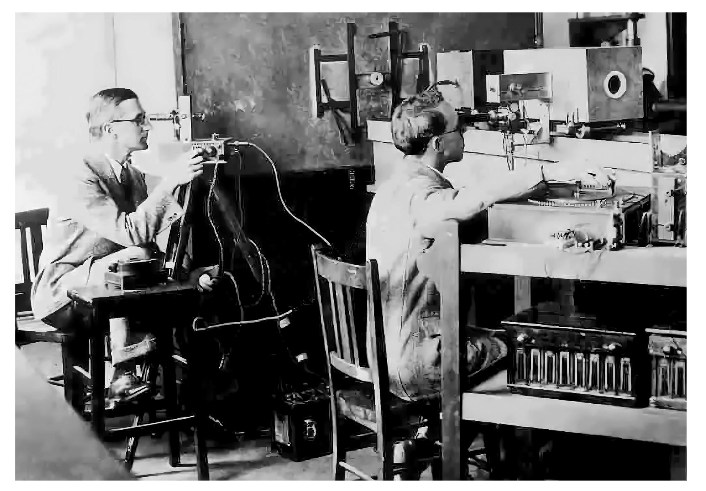
Taylor was a man who never hesitated to seize opportunities, take on responsibilities, and bring the right people together. Whether in the spotlight or behind the scenes, he remained at the forefront of both scientific and policy-making arenas for over fifty years. It is indicative that Taylor retired four times from four different positions: the National Bureau of Standards (1965), the National Academy of Sciences (1972), the ICRP & ICRU (1969), and the NCRP (1977).
While Taylor’s contributions were undeniable, his role was not without controversy, and certain aspects of his legacy continue to spark debate. Starting in the late 1960s, critics began accusing the ICRP and NCRP of prioritizing the interests of the nuclear industry. Despite the NCRP’s 1954 guidance to replace the tolerance dose by a new concept, the maximum permissible dose, and the suggestion of the existence of an “acceptable risk” at low levels of exposure, Taylor had his reservations. As he argued in “it is known that none of these assumptions is strictly correct.” Serving as an expert witness for the U.S. Department of Justice in a number of legal cases, Taylor was critical of claims about radiation injuries from small doses of radiation. In any case, the independence of both NCRP and ICRP was frequently questioned, especially as their members held overlapping roles. The alignment of their recommendations was seen as evidence of a “nuclear energy lobby” mentality, with Taylor often viewed as “the leading hat wearer of them all.” In response, Taylor typically appealed to the integrity, sincerity, and ethics of the scientists involved, arguing that these qualities would prevent them from serving questionable interests. However, this response overlooked the fact that scientific developments, throughout history, are often intertwined with social and political dynamics. Especially regarding the setting of radiation limits, historically, it was a process that integrated and interacted with questions that were not only scientific assessments but also social and political concerns.
Conflicts of interest:
The authors have no conflicts of interest to declare.
Funding:
This publication is part of the “Living with Radiation: The Role of the International Atomic Energy Agency in the History of Radiation Protection” (HRP-IAEA) project that has received funding from the European Research Council (ERC) under the European Union’s Horizon 2020 research and innovation programme (Grant agreement No770548), https://hrp-iaea.org.
Acknowledgments:
The authors gratefully acknowledge the generous and invaluable support of the Niels Bohr Library & Archives of the American Institute of Physics in the preparation of this article.
References
- Taylor LS. From the cupboards of Lauriston S. Taylor. American Institute of Physics, Niels Bohr Library & Archives, College Park, MD 20740, USA; 1985.
- Grigg ERN. Trail of the Invisible Light: From X-Strahlen to Radio(bio)logy. Charles C. Thomas Publisher Ltd; 1965.
- Radiation Martyrs. The British Journal of Radiology. 1956;29(341):273.
- Taylor LS. X-Ray Measurements and Protection 1913-1964: The Role of the National Bureau of Standards and the National Radiological Organizations. U.S. Department of Commerce, National Bureau of Standards, Special Publication 625; December 1981. Accessed March 10, 2025. https://nvlpubs.nist.gov/nistpubs/Legacy/SP/nbsspecialpublication625.pdf.
- Cf Quimby EH. A Method for the Study of Scattered and Secondary Radiation in X-Ray and Radium Laboratories. Radiology. 1926;7(3):211–217.
- Taylor LS, Sauer KG. Vignettes of Early Radiation Workers: Transcripts of the Videotape Series. Rockville, MD: U.S. Department of Health and Human Services, Public Health Service, Food and Drug Administration, Center for Devices and Radiological Health; 1984. Available at: American Institute of Physics, Niels Bohr Library & Archives, College Park, MD 20740, USA.
- Social Networks and Archival Content. Taylor Lauriston S. (Lauriston Sale): 1902-2004. Accessed March 10, 2025. http://n2t.net/ark:/99166/w6pr7x7k.
- Lindell B. The Labours of Hercules: The History of Radiation, Radioactivity, and Radiological Protection, Part III. 1950–1966. Accessed March 10, 2025. https://nsfs.org/wp-content/uploads/2020/03/Hercules_Downloadable_V1.pdf.
- Rentetzi M, Nielsen AH. Setting Radiation Protection Standards: The First Radiology Congress in 1925. Medical Research Archives. 2024;12(6). https://doi.org/10.18103/mra.v12i6.5445.
- For example: Taylor NW, Sinclair WK, Gorson R O. In Memoriam: Lauriston Taylor. Health Physics Society. Accessed March 10, 2025. https://hps.org/aboutthesociety/people/inmemoriam/LauristonTaylor.html.
- Whittemore G. Lauriston Sale Taylor – Session II. Niels Bohr Library & Archives, American Institute of Physics, College Park, MD, USA, August 16, 1990. Accessed March 10, 2025. https://www.aip.org/history-programs/niels-bohr-library/oral-histories/5153-2.
- This became even more obvious after the establishment of the International Atomic Energy Agency in 1957. See: Patil K, Rentetzi M. Too Strict or Too Lax? IAEA and the Evolution of Nuclear Safety Standards. In Negotiating Radiation Protection in the Nuclear Age, edited by Rentetzi M, Creager A, and Lindee S, University of Pittsburgh Press, 2025.
- Sekiya M, Yamasaki M. Rolf Maximilian Sievert (1896–1966): Father of Radiation Protection. Radiological Physics and Technology. 2015;9: 1–5. doi.org/10.1007/s12194-015-0330-5.
- Taylor LS. Rolf Sievert (1896–1966). Radiation Research. 1968;33(3): 681–684. Accessed April 9, 2025. http://www.jstor.org/stable/3572426.
- Taylor LS. Organization for Radiation Protection: The Operations of the ICRP and the NCRP, 1928-1974. US Department of Energy; 1979.
- Boudia S. Global Regulation: Controlling and Accepting Radioactivity Risks. History and Technology. 2007;23(4), 389–406. doi.org/10.1080/07341510701527443.
- Rentetzi M. The Politics of Radiation Protection. NTM. 2022;30: 125–135. doi.org/10.1007/s00048-022-00332-z.
- Rentetzi M. The Global Experiment: How the International Atomic Energy Agency Proved Dosimetry to Be a Techno-Diplomatic Issue. NTM. 2022;30: 167–195. doi.org/10.1007/s00048-022-00336-9.
- The International Commission on Radiological Protection at 90. Annals of the ICRP. 2018;47(3–4): 343–413. doi.org/10.1177/0146645318795909.
- Kang KW. History and Organizations for Radiological Protection. Journal of Korean Medical Science 2016;31(1): 4–5. doi.org/10.3346/jkms.2016.31.S1.S4.
- Clarke RH, Valentin J. The History of ICRP and the Evolution of Its Policies: Invited by the Commission in October 2008. Annals of the ICRP. 2009;39(1): 75–110. doi.org/10.1016/j.icrp.2009.07.009.
- Hallmark E. “Radiation Protection Standards and the Administrative Decision-Making Process.” Environmental Law. 1978;8(3): 785–825. Accessed April 9, 2025. http://www.jstor.org/stable/43265469.
- Mazuzan GT, Walker JS. Controlling the Atom: The Beginnings of Nuclear Regulation, 1946-1962. Berkeley: University of California Press; 1984.
- Walker JS. The Atomic Energy Commission and the Politics of Radiation Protection, 1967-1971. Isis. 1994;85(1): 57–78. Accessed April 9, 2025. http://www.jstor.org/stable/235896.
- Semendeferi I. Legitimating a Nuclear Critic: John Gofman, Radiation Safety, and Cancer Risks. Historical Studies in the Natural Sciences. 2008;38(2): 259–301. doi.org/10.1525/hsns.2008.38.2.259.
- Taylor LS. Judgment in Achieving Protection Against Radiation. IAEA Bulletin 1980;22(1): 15–22.
- Gorson R. Robert Gorson’s Tribute to the Life and Scientific Accomplishments of Lauriston S. Taylor on behalf of NCRP. March 31, 2005. Accessed March 10, 2025. https://ncrponline.org/news-events/2005-news-events-archive/.
- Boffey P. Radiation standards: Are the right people making decisions? Science, 1971;171(3973): 780-783.
- Taylor L. (n.d.). Interview in Archives: Clarence E. Larson Collection, Engineering and Technology History Wiki. Accessed March 10, 2025. https://ethw.org/Archives:Clarence_E._Larson_Collection.
- Walker JS. Permissible Dose: A History of Radiation Protection in the Twentieth Century. University of California Press; 2000.
“`