


Pharmacologic Management of Chronic Obstructive Pulmonary Disease
Pharmacologic Management of Chronic Obstructive Pulmonary Disease: A review of the literature
Garrett Fiscus, MD¹, Simran Umra, MD², Daniel Gerardi, MD, FCCP¹˒²˒³, Antarpreet Kaur, MD, FCCP¹˒²˒³
Abstract
Chronic obstructive pulmonary disease (COPD) is a long-term lung illness that affects both the bronchioles and distal alveoli. COPD is an extremely common outpatient global condition, which carries an immense socio-economic burden that is only to increase over the subsequent years. While preventable and treatable, it remains a leading cause of death worldwide. Optimizing pharmacologic management is central to improving patient outcomes and quality of life, yet therapeutic decisions continue to evolve as evidence expands. This review synthesizes current literature and guideline recommendations on the pharmacologic management of stable COPD patients in the outpatient setting, encompassing the role of bronchodilators, inhaled corticosteroids, anti-inflammatory agents, phosphodiesterase inhibitors, and emerging biologics. In addition, we discuss the clinical relevance and evidence surrounding the use of suppressive antibiotics, systemic corticosteroids, mucolytics, and antileukotrienes as adjunctive therapies in selected patients. Evidence from pivotal trials supports dual bronchodilator therapy (long-acting muscarinic antagonists (LAMA)/ long-acting Beta-2 agonists (LABA)) as first-line treatment for most patients, with escalation to triple therapy (LAMA/LABA/inhaled Corticosteroids (ICS)) for those with persistent symptoms or exacerbations, particularly among individuals with higher blood eosinophil counts. Chronic macrolide use, roflumilast, and novel agents such as ensifentrine and dupilumab have further expanded the therapeutic landscape, targeting inflammation and exacerbation prevention in selected phenotypes. Collectively, current data emphasize a personalized, stepwise approach to COPD management, one guided by symptom burden, exacerbation risk, and biomarker profiling, while highlighting the need for continued research into precision therapies and optimal de-escalation strategies to balance efficacy, safety, and cost-effectiveness.
Keywords
COPD, pharmacologic management, bronchodilators, inhaled corticosteroids, dual therapy, triple therapy, biologics
Introduction
Chronic obstructive pulmonary disease (COPD) is a heterogeneous syndrome, with variable clinical presentations and disease trajectories driven by distinct pathophysiological mechanisms, including chronic inflammation, oxidative stress, and an imbalance between proteases and antiproteases. The disease encompasses both chronic bronchitis, which primarily affects the bronchioles, and emphysema, which involves the distal alveoli. It is characterized by persistent airflow limitation and chronic respiratory symptoms, including breathlessness, cough, wheezing, and mucus production. The overall prevalence of COPD varies widely; however, the current global average is approximately 12%. This burden is projected to rise due to population aging, urbanization, and ongoing exposure to risk factors. Although tobacco use has been strongly linked to the development of COPD, chronic exposure to other noxious particles or chemicals from household sources and even outdoor air pollution can lead to the development of COPD. Innate non-modifiable risk factors include alpha-1-antitrypsin deficiency, poor lung development, and accelerated aging. Consequently, the clinical and socioeconomic impact of COPD is substantial, with high rates of healthcare utilization, disability, and premature mortality. Despite its preventable nature, underdiagnosis and misclassification remain common, particularly in resource-limit settings. Recent advances in understanding COPD pathogenesis and phenotypic diversity have driven a shift toward patient-centered, precision-based management that emphasizes individualized assessment of symptoms and exacerbation risk. The rationale for this review is to synthesize current evidence and guideline recommendations for the pharmacologic management of stable COPD in the outpatient setting, with a focus on optimizing quality of life, reducing exacerbations, and addressing the evolving landscape of therapeutic options.
Pharmacological Treatments
The pharmacological management of COPD is primarily aimed at improving quality of life through improved exercise tolerance, reducing symptom burden, and decreasing the severity and frequency of exacerbations. Standard treatment strategies include inhaled bronchodilators, inhaled or systemic corticosteroids, suppressive anti-inflammatory agents, and recently approved biologic therapies.
BRONCHODILATORS
Bronchodilators have long been recognized as the cornerstone of COPD treatment across all levels of disease severity.

BETA-2 AGONISTS
Beta-2 agonists improve symptoms of COPD by reducing airway resistance throughout the respiratory system via activation of beta-2 adrenergic receptors, which help relax airway smooth muscle. This relaxation occurs through a buildup of cyclic adenosine monophosphate (cAMP), which opposes bronchoconstriction. Currently, two types of inhaled beta-2 agonists are available on the market today: short-acting beta-2 agonists (SABA) and long-acting beta-2 agonists (LABA). Regular and as-needed use of SABAs has shown improvements in lung function; though longer-acting medications have been favored as they increase patient compliance. LABAs have consistently shown to reduce the symptomatic burden of COPD; however, these medications have no positive impact on mortality or decline in lung function despite their consistent usage. Despite their known clinical significance, beta-2 agonists have numerous potential side effects. Stimulation of the beta-2 receptor can result in an exaggerated sympathetic response, which has the potential to cause cardiac disturbances, peripheral tremors, hypokalemia, along with other metabolic disturbances, and mild decreases in oxygen saturations.

Antimuscarinics
Antimuscarinic medications cause bronchodilation through the inhibition of acetylcholine via the muscarinic (M2/M3) receptors within the bronchiole smooth muscles. Short-acting muscarinic antagonists (SAMAs) cause relaxation through the M2 receptor; whereas long-acting muscarinic antagonists (LAMAs) exhibit their effects through the M3 receptor, which allows for a prolonged receptor activation and effect. In comparison with long-acting beta-2 agonists (LABAs), inhaled LAMAs have a greater impact on reducing both exacerbation and hospitalization rates. Unlike beta-2 agonists, this class of medications is generally well tolerated as they have considerably fewer side effects.

Inhaled Corticosteroids
Inhaled corticosteroids (ICS) suppress airway inflammation by modulating inflammatory gene transcription in the epithelium and smooth muscle. ICS monotherapy is not recommended in COPD, as studies have not demonstrated improvements in lung function or mortality. In the TORCH trial, stable COPD patients receiving inhaled corticosteroids alone had a mortality rate of 16.0% compared with 15.2% in the placebo group. This trend was not seen in subsequent studies. However, ICS combined with long-acting bronchodilators has been shown to be beneficial in select patients. Caution should be taken in those patients who have a history of recurrent pneumonia, mycobacterial infections, or peripheral eosinophil counts less than 100 cells/microL.

The Appropriate Use of Inhalers
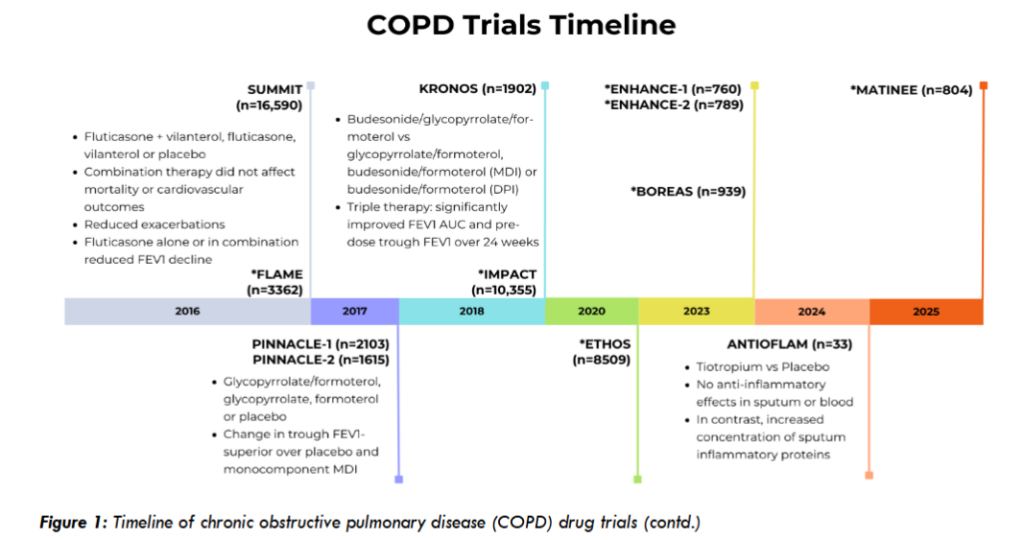
Appropriate bronchodilator use in COPD treatment remains a subject of ongoing discussion. Typically, for mild, stable disease, the use of a single inhaled bronchodilator, mainly a long-acting muscarinic antagonist (LAMA), has been implemented as first-line therapy. Yet, the addition of a second inhaled bronchodilator to maximal doses of the initial inhaler has demonstrated significant benefits with respect to peak 1-second forced expiratory volume (FEV1) response. Additionally, dual bronchodilator therapy has also been associated with reductions in exacerbation rates and symptom burden. Overall, combination therapy consistently improves FEV1, decreases exacerbations, and has a greater reduction in symptom burden in comparison to monotherapy alone with either medication. In the FLAME trial, the combination of indacaterol–glycopyrronium reduced the annual rate of COPD exacerbations by 11% compared with salmeterol–fluticasone (3.59 vs. 4.03; rate ratio 0.89; P=0.003). As a result, the latest Global Initiative for Chronic Obstructive Lung Disease (GOLD) report now recommends initial pharmacological treatment with dual bronchodilator therapy (LAMA/LABA) for most patients, regardless of exacerbation history.
Despite appropriate inhaled bronchodilator therapy, a subset of patients continues to experience frequent exacerbations and hospitalizations. As a result, a step up in therapy to triple inhaler therapies (LAMA/LABA/ICS) could be undertaken in several ways. Recent studies have demonstrated that triple therapy improves clinical outcomes, lung function, and reduces exacerbations when compared to dual bronchodilators. In large trials, triple therapy showed clear benefit: ETHOS reported a 24% reduction in annual exacerbations vs LAMA/LABA and 13% vs ICS/LABA, while IMPACT showed a 25% reduction vs LAMA/LABA and 15% vs ICS/LABA, with a 34% decrease in hospitalization risk. However, pooled post-hoc analyses of all studies with triple therapy in patients with severe obstruction and frequent exacerbations only showed a non-statistical trend towards improved mortality. But patients with two or more exacerbations in a year, typically requiring hospitalization, elevated blood eosinophil levels (>100 cells/µL), or a prior history of asthma, should be considered for ICS-containing combination therapy.

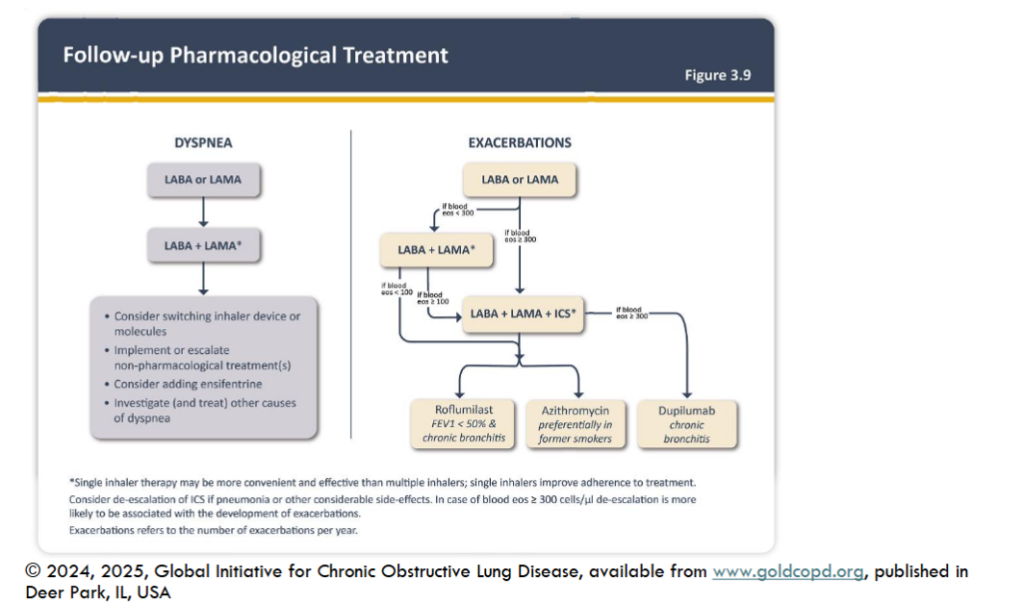
Figure 3.9 presents suggested escalation and de-escalation strategies based on available efficacy and safety data. (Adapted from GOLD 2025 statement with permission)
Chronic Suppressive Antibiotic Therapy
Previous studies in patients with COPD have demonstrated that this population exhibits persistent airway inflammation, which has been secondarily linked to chronic bacterial overgrowth. This, in turn, contributes to epithelial damage and neutrophilic production. As a result, there has been growing interest in the potential role of chronic antibiotic use to shift this paradigm. However, there have been differing opinions on the chronic use of antibiotics in the management of COPD. Older studies with prophylactic antibiotics failed to show any benefit regarding reductions in exacerbation rates, although they primarily consisted of tetracyclines and beta-lactams. As macrolides had been extensively studied, highlighting their immunomodulatory, anti-inflammatory, and antibacterial effects, multiple studies involving COPD patients were undertaken. The continuous use of macrolides, at both 250 mg and 500 mg, has been shown to significantly reduce exacerbation rates. Additionally, studies indicate that both consistent (daily) and intermittent (3x/weekly) dosing of macrolides effectively lower exacerbation frequency. Notably, in a randomized trial of daily azithromycin, the annual exacerbation rate was reduced from 1.83 to 1.48 per patient-year, and the median time to first exacerbation was extended from 174 to 266 days. Even fourth-generation fluoroquinolones, such as moxifloxacin, have demonstrated reductions in exacerbation frequency; however, due to their high side effect profile and emerging resistance patterns, their use is now solely limited to treatment rather than prophylaxis. Thus, macrolides remain the preferred option for chronic therapy. Nonetheless, chronic azithromycin use is not without risks, including cardiac arrhythmias such as QT prolongation, antibiotic resistance, and impaired hearing. Post-hoc analyses have suggested lesser potential for chronic azithromycin in former smokers. With that being said, there is no long-term data assessing chronic macrolide use over 12 months of therapy.
Phosphodiesterase Inhibitors
Cyclic-3′,5′-adenosine monophosphate (cAMP)-specific phosphodiesterase-4 (PDE-4) is expressed in multiple tissues in the body, including airway smooth muscle, which metabolizes cAMP into adenosine monophosphate (AMP). As the concentration of cAMP decreases, the result is clinically significant airway constriction. Therefore, the inhibition of PDE-4 leads to increased cAMP levels, which promote relaxation of airway smooth muscle. Roflumilast is a once daily, selective PDE-4 inhibitor, which possesses no innate bronchodilator effect. However, it has been shown to reduce the risk of exacerbations in patients with moderate to severe COPD who are already on maximized inhaler therapy, yet continue to have frequent exacerbations. Supporting this, trials demonstrated consistent improvements in lung function, with mean prebronchodilator FEV₁ increases of 49 mL and 80 mL when roflumilast was added to salmeterol and tiotropium, respectively. Many randomized controlled trials have evaluated the effects of roflumilast on lung function in patients with severe COPD. Data from previous systematic reviews concluded that roflumilast reduces the chances of exacerbations, with a modest impact on FEV1; though, there was little to no improvement noted within health-related quality of life questionnaires. Similarly, the REACT trial compared roflumilast to placebo in COPD patients on appropriate inhaler therapy and showed a 13.2% lower rate of moderate-to-severe exacerbations in the roflumilast group. However, Roflumilast use has been known to cause significant psychiatric and gastrointestinal side effects, mainly depression/anxiety, nausea, vomiting, diarrhea, and excessive weight loss, which oftentimes results in discontinuation of the medication.
Albeit newly developed, Ensifentrine is a nebulized, selective, dual phosphodiesterase 3/4 inhibitor with both bronchodilator and anti-inflammatory properties. Recently, two replicate phase III trials [ENHANCE-1 and ENHANCE-2] demonstrated that ensifentrine significantly improved lung function and reduced exacerbations in patients with stable COPD who were receiving either no maintenance therapy, long-acting beta-2 agonists (LABA) with or without inhaled corticosteroid (ICS), or long-acting muscarinic antagonist (LAMA) with or without ICS. Mean post-bronchodilator FEV₁ increased by 87 mL and 94 mL versus placebo in ENHANCE-1 and ENHANCE-2, respectively, with moderate-to-severe exacerbations reduced by 36% and 43% over 24 weeks.
Chronic Systemic Corticosteroids
Oral and intravenous corticosteroids are helpful during the inpatient management of COPD exacerbations, as studies have shown improved lung function and breathlessness, as well as reduced rates of treatment failure; however, outpatient benefits are limited to small reductions in relapse rates in symptomatic patients. Systemic corticosteroids have substantial adverse effects, including osteoporosis, increased risk of infections, weight gain, and even steroid myopathy, which can complicate bouts of respiratory distress due to significant weakness. Studies about chronic use of oral steroids are rather limited; nonetheless, these studies have failed to show meaningful improvements in exacerbation rates or prevention, and as a result, they are no longer recommended for long-term treatment due to detrimental side effects.
Mucolytics
The routine use of mucolytics has generally been disfavored, as supported by a meta-analysis of 28 studies, which demonstrated extremely heterogeneous results in regard to exacerbation rates and overall quality of life in COPD patients.
Anti-Leukotrienes
A meta-analysis of seven studies found that anti-leukotriene agents have minimal symptomatic benefits in COPD, but their overall therapeutic efficacy remains unproven due to the paucity of large, well-designed randomized trials that could identify patient subgroups most likely to benefit.
The Role for Biologics
Despite appropriate standard-of-care therapy, a small subset of COPD patients may experience frequent exacerbations. While it is known that COPD is a primarily neutrophilic inflammation, there does exist a small subset of patients that possess a considerable type-2 inflammation with eosinophilic predominance. In fact, it has been postulated that up to 40% of COPD patients express this high eosinophilic inflammation. As a result, several large randomized controlled trials have assessed the efficacy of add-on interleukin blockade (anti-IL-4, anti-IL-5, anti-IL-5 receptor, anti-IL-13) in attempts to control this inflammatory process and reduce exacerbations. Interleukin-5 (IL-5) is one of the main cytokines involved in eosinophilic differentiation, maturation, and degranulation. Several large studies have investigated the efficacy of anti-IL-5 monoclonal antibody mepolizumab and anti-IL-5 receptor-a monoclonal antibody benralizumab in patients with severe COPD with recurrent exacerbations and high serum eosinophilia. Both drugs showed modest reduction in the rate of severe exacerbations, though the effects were not always significant. Mepolizumab showed benefit primarily in patients with eosinophil counts above 150 cells/μL, whereas benralizumab reduced exacerbation rates in patients with counts above 220 cells/μL. However, there was no observed benefit in FEV1, quality of life, or the relationship between eosinophil count and treatment response. Most recently, the MATINEE trial demonstrated that mepolizumab reduced the annualized rate of moderate or severe exacerbations to 0.80 per year, compared to 1.01 per year with placebo, when added to background triple inhaled therapy among patients with COPD and an eosinophilic phenotype. In addition, studies have continued to evaluate an IL-4/13 blockade as these cytokines have been linked to additional eosinophilic migration. Dupilumab is a monoclonal antibody that blocks the action of the IL-4 receptor subunit, which is the common receptor for both interleukins 4/13. The BOREAS trial investigated the efficacy of add-on dupilumab for the treatment of COPD in patients with frequent exacerbations and high type-2 inflammation (baseline eosinophils >300 cells/μL). At the conclusion of the study, the addition of dupilumab to high-intensity inhaled therapy reduced the annualized rate of moderate-to-severe exacerbations from 1.10 to 0.78, improved prebronchodilator FEV₁ by 83 mL at week 12, and enhanced quality of life and symptom burden (St. George’s Respiratory Questionnaire (SGRQ), Evaluating Respiratory Symptoms in Chronic Obstructive Pulmonary Disease (E-RS: COPD) questionnaire), with no significant differences in adverse effects between the two groups.
| Therapy | Study (Year) | Intervention | Results |
|---|---|---|---|
| Inhaled Therapies | TORCH (2007) | Salmeterol–fluticasone vs placebo, salmeterol, or fluticasone alone | HR for death (combo vs placebo): 0.825 (95% CI, 0.681–1.002; P=0.052) |
| FLAME (2016) | Indacaterol–glycopyrronium (LABA/LAMA) vs salmeterol–fluticasone (LABA/ICS) | Annual exacerbation rate: RR 0.89 (95% CI, 0.83–0.96; P=0.003) | |
| IMPACT (2018) | Fluticasone–umeclidinium–vilanterol (triple) vs Fluticasone–vilanterol (ICS/LABA) vs umeclidinium–vilanterol (LAMA/LABA) | Rate of moderate/severe exacerbations with triple therapy compared to ICS/LABA (RR 0.85, 95% CI 0.80–0.90) and LAMA/LABA (RR 0.75, 95% CI 0.70–0.81) | |
| ETHOS (2020) | Budesonide–glycopyrrolate–formoterol (triple; 320 μg or 160 μg budesonide) vs glycopyrrolate–formoterol (LAMA/LABA) vs budesonide–formoterol (ICS/LABA) | Rate of moderate/severe exacerbations with triple therapy (320 μg) compared to LAMA/LABA (RR 0.76, 95% CI, 0.69–0.83, P<0.001) and ICS/LABA (RR 0.87, 95% CI 0.79–0.95, P=0.003) | |
| Add-on Pharmacotherapy | Daily Azithromycin (2011) | Azithromycin 250 mg daily vs placebo | Frequency of exacerbations: 1.48 vs 1.83 (P=0.01) HR: 0.73 (95% CI, 0.63–0.84, P<0.001) |
| REACT (2015) | Roflumilast 500 μg daily vs placebo (added to background ICS/LABA therapy) | Rate of moderate-to-severe exacerbations: RR 0.868 (95% CI, 0.753–1.002, P=0.0529) | |
| ENHANCE-1 (2023) | Ensifentrine vs placebo | Rate of moderate/severe exacerbations: RR 0.64 (95% CI 0.40–1.00, p=0.050) | |
| ENHANCE-2 (2023) | Ensifentrine vs placebo | RR 0.57 (95% CI 0.38–0.87, p=0.009) | |
| Biologic Therapy | BOREAS (2023) | SQ dupilumab (300 mg) every 2 weeks vs placebo | Annual exacerbation rate: RR 0.70 (95% CI, 0.58–0.86; P<0.001) |
| MATINEE (2025) | SQ mepolizumab (100 mg) vs placebo | Annual Exacerbation rate: RR 0.79 (95% CI, 0.66–0.94; P=0.01) |
Conclusion
COPD is becoming an extremely common outpatient global condition, which carries an immense socio-economic burden that is to only increase over the subsequent years. It represents a unique public health entity as it is both preventable and treatable. Once identified, pharmacologic therapies should be implemented as they’ve consistently shown to reduce symptomatic burden while improving lung function in all patients. Typical outpatient management consists of inhaled bronchodilators, inhaled corticosteroids, with suppressive anti-inflammatory medications, and now, newly approved biologic therapies reserved for more refractory cases. Future studies are needed to further refine targeted therapies in this diverse patient population in the hopes of expanding treatment approaches.
References
1. 2025 GOLD report: https://goldcopd.org/2025-gold-report/
2. Lamprecht B, McBurnie MA, Vollmer WM, et al. COPD in never smokers: results from the population-based burden of obstructive lung disease study. Chest. Apr 2011;139(4):752-763. doi:10.1378/chest.10-1253
3. Khan KS, Jawaid S, Memon UA, et al. Management of Chronic Obstructive Pulmonary Disease (COPD) Exacerbations in Hospitalized Patients From Admission to Discharge: A Comprehensive Review of Therapeutic Interventions. Cureus. Aug 2023;15(8):e43694. doi:10.7759/cureus.43694
4. Dixit D, Bridgeman MB, Andrews LB, et al. Acute exacerbations of chronic obstructive pulmonary disease: diagnosis, management, and prevention in critically ill patients. Pharmacotherapy. Jun 2015;35(6):631-48. doi:10.1002/phar.1599
5. Albert RK, Connett J, Bailey WC, et al. Azithromycin for prevention of exacerbations of COPD. N Engl J Med. Aug 25 2011;365(8):689-98. doi:10.1056/NEJMoa1104623
6. Martinez FJ, Curtis JL, Albert R. Role of macrolide therapy in chronic obstructive pulmonary disease. Int J Chron Obstruct Pulmon Dis. 2008;3(3):331-50. doi:10.2147/copd.s681
7. Matzneller P, Krasniqi S, Kinzig M, et al. Blood, tissue, and intracellular concentrations of azithromycin during and after end of therapy. Antimicrob Agents Chemother. Apr 2013;57(4):1736-42. doi:10.1128/AAC.02011-12
8. Sethi S, Murphy TF. Infection in the pathogenesis and course of chronic obstructive pulmonary disease. N Engl J Med. Nov 27 2008;359(22):2355-65. doi:10.1056/NEJMra0800353
9. Fabbri LM, Calverley PM, Izquierdo-Alonso JL, et al. Roflumilast in moderate-to-severe chronic obstructive pulmonary disease treated with longacting bronchodilators: two randomised clinical trials. Lancet. Aug 29 2009;374(9691):695-703. doi:10.1016/S0140-6736(09)61252-6
10. US Food and Drug Administration Prescribing Information for Delirasp. https://www.accessdata.fda.gov/drugsatfda_docs/label/2018/022522s009lbl.pdf
11. Calverley PM, Anderson JA, Celli B, et al. Salmeterol and fluticasone propionate and survival in chronic obstructive pulmonary disease. N Engl J Med. Feb 22 2007;356(8):775-89. doi:10.1056/NEJMoa063070
12. Vestbo J, Anderson JA, Brook RD, et al. Fluticasone furoate and vilanterol and survival in chronic obstructive pulmonary disease with heightened cardiovascular risk (SUMMIT): a double-blind randomised controlled trial. Lancet. Apr 30 2016;387(10030):1817-26. doi:10.1016/S0140-6736(16)30069-1
13. Vestbo J, Fabbri L, Papi A, et al. Inhaled corticosteroid containing combinations and mortality in COPD. Eur Respir J. Dec 2018;52(6) doi:10.1183/13993003.01230-2018
14. Han MK, Tayob N, Murray S, et al. Predictors of chronic obstructive pulmonary disease exacerbation reduction in response to daily azithromycin therapy. Am J Respir Crit Care Med. Jun 15 2014;189(12):1503-8. doi:10.1164/rccm.201402-0207OC
15. Singh D, Kolsum U, Brightling CE, et al. Eosinophilic inflammation in COPD: prevalence and clinical characteristics. Eur Respir J. Dec 2014;44(6):1697-700. doi:10.1183/09031936.00162414
16. Varricchi G, Bagnasco D, Borriello F, Heffler E, Canonica GW. Interleukin-5 pathway inhibition in the treatment of eosinophilic respiratory disorders: evidence and unmet needs. Curr Opin Allergy Clin Immunol. Apr 2016;16(2):186-200. doi:10.1097/ACI.0000000000000251
17. Donovan T, Milan SJ, Wang R, Banchoff E, Bradley P, Crossingham I. Anti-IL-5 therapies for chronic obstructive pulmonary disease. Cochrane Database Syst Rev. Dec 8 2020;12(12):CD013432. doi:10.1002/14651858.CD013432.pub2
18. Gandhi NA, Pirozzi G, Graham NMH. Commonality of the IL-4/IL-13 pathway in atopic diseases. Expert Rev Clin Immunol. May 2017;13(5):425-437. doi:10.1080/1744666X.2017.1298443
19. Le Floc’h A, Allinne J, Nagashima K, et al. Dual blockade of IL-4 and IL-13 with dupilumab, an IL-4Ralpha antibody, is required to broadly inhibit type 2 inflammation. Allergy. May 2020;75(5):1188-1204. doi:10.1111/all.14151
20. Bhatt SP, Rabe KF, Hanania NA, et al. Dupilumab for COPD with Blood Eosinophil Evidence of Type 2 Inflammation. N Engl J Med. Jun 27 2024;390(24):2274-2283. doi:10.1056/NEJMoa2401304
21. Lee JH, Kim HJ, Kim YH. The Effectiveness of Anti-leukotriene Agents in Patients with COPD: A Systemic Review and Meta-analysis. Lung. Aug 2015;193(4): 477-86. doi:10.1007/s00408-015-9743-5
22. Liu L, Wang JL, Xu XY, Feng M, Hou Y, Chen L. Leukotriene receptor antagonists do not improve lung function decline in COPD: a meta-analysis. Eur Rev Med Pharmacol Sci. Feb 2018;22(3):829-834. doi:10.26355/eurrev_201802_14319
23. Cazzola M, Calzetta L, Page C, et al. Influence of N-acetylcysteine on chronic bronchitis or COPD exacerbations: a meta-analysis. Eur Respir Rev. Sep 2015;24(137):451-61. doi:10.1183/16000617.00002215
24. Poole P, Chong J, Cates CJ. Mucolytic agents versus placebo for chronic bronchitis or chronic obstructive pulmonary disease. Cochrane Database Syst Rev. Jul 29 2015;(7):CD001287. doi:10.1002/14651858.CD001287.pub5
25. Rogliani P, Matera MG, Page C, Puxeddu E, Cazzola M, Calzetta L. Efficacy and safety profile of mucolytic/antioxidant agents in chronic obstructive pulmonary disease: a comparative analysis across erdosteine, carbocysteine, and N-acetylcysteine. Respir Res. May 27 2019;20(1):104. doi:10.1186/s12931-019-1078-y
26. Ni W, Shao X, Cai X, et al. Prophylactic use of macrolide antibiotics for the prevention of chronic obstructive pulmonary disease exacerbation: a meta-analysis. PLoS One. 2015;10(3):e0121257. doi:10.1371/journal.pone.0121257
27. Herath SC, Normansell R, Maisey S, Poole P. Prophylactic antibiotic therapy for chronic obstructive pulmonary disease (COPD). Cochrane Database Syst Rev. Oct 30 2018;10(10):CD009764. doi:10.1002/14651858.CD009764.pub3
28. Gartman EJ, Mulpuru SS, Mammen MJ, et al. Summary for Clinicians: Clinical Practice Guideline on Pharmacologic Management of Chronic Obstructive Pulmonary Disease. Ann Am Thorac Soc. Jan 2021;18(1):11-16. doi:10.1513/AnnalsATS.202007-880CME
29. Anzueto A, Barjaktarevic IZ, Siler TM, et al. Ensifentrine, a Novel Phosphodiesterase 3 and 4 Inhibitor for the Treatment of Chronic Obstructive Pulmonary Disease: Randomized, Double-Blind, Placebo-controlled, Multicenter Phase III Trials (the ENHANCE Trials). Am J Respir Crit Care Med. Aug 15 2023;208(4):406-416. doi:10.1164/rccm.202306-0944OC
30. Rabe KF, Martinez FJ, Ferguson GT, et al. Triple Inhaled Therapy at Two Glucocorticoid Doses in Moderate-to-Very-Severe COPD. N Engl J Med. Jul 2 2020;383(1):35-48. doi:10.1056/NEJMoa1916046
31. Muro S, Kawayama T, Sugiura H, et al. Benefits of budesonide/glycopyrronium/formoterol fumarate dihydrate on lung function and exacerbations of COPD: a post-hoc analysis of the KRONOS study by blood eosinophil level and exacerbation history. Respir Res. Aug 5 2024;25(1):297. doi:10.1186/s12931-024-02918-8
32. Martinez FJ, Calverley PM, Goehring UM, Brose M, Fabbri LM, Rabe KF. Effect of roflumilast on exacerbations in patients with severe chronic obstructive pulmonary disease uncontrolled by combination therapy (REACT): a multicentre randomised controlled trial. Lancet. Mar 7 2015;385(9971):857-66. doi:10.1016/S0140-6736(14)62410-7
33. Sciurba FC, Criner GJ, Christenson SA, et al. Mepolizumab to Prevent Exacerbations of COPD with an Eosinophilic Phenotype. N Engl J Med. May 1 2025;392(17):1710-1720. doi:10.1056/NEJMoa2413181
34. Singh D, Higham A, Mathioudakis AG, Beech A. Chronic Obstructive Pulmonary Disease (COPD): Developments in Pharmacological Treatments. Drugs. Jul 2025;85(7):911-930. doi:10.1007/s40265-025-02188-8