

Multi-Sector Approach to Adolescent Health in Pakistan
Applying a Multi-Sectoral Approach for Programming of Health Interventions: Comparative Analysis of Nutrition and Tobacco Control Amongst Adolescents in Pakistan
1. Introduction
Adolescent Health (AH) is being increasingly featured in global policy discourse on sustainable development. Investments in adolescent health and wellbeing are argued to transform the lives of youth around the world, generate high economic returns, and break the cyclical log jam of health issues that take root in the adolescent period¹. Evidence-based interventions for adolescents emphasize the critical role of multisectoral approaches across health and a variety of sectors². Despite global calls for more joined up working across relevant sectors, there is less known on how to effectively co-opt other sectors for programming of globally recommended adolescent health measures, with scientific focus largely on prescriptive, normative measures for implementation³. Barriers and enablers of converged programming across sectors for adolescent health interventions need to be better understood, particularly for issues such as nutrition that rely on actions to be taken by sectors in addition to health. Application of a political economy lens has been underscored for understanding the success and barriers within countries³.
Pakistan is home to an estimated 40 million adolescents⁵, approximately a quarter of the total country population. It has traditionally lagged behind other South Asian countries in access to health services⁷ and school enrolment⁸, hence limiting access to health education, counselling and referral services for adolescents. Nutrition, and Tobacco use are two of the major issues affecting adolescents in Pakistan but despite progress in national policy commitments to Nutrition and Tobacco the programming of response remains largely neglected within adolescents⁵. Fifty-six percent of adolescent girls are anaemic whereas one in eight adolescent girls and one in five adolescent boys are underweight⁹. Similarly, tobacco use is prevalent in adolescents with 15 of 13-15 years using tobacco products and 37% of 15+ males and 3% of female population¹⁰. Tobacco use has been weakly regulated due to commercial interests of tobacco industry and power centred within commerce, industry, and excise ministries rather than health¹¹. Under-nutrition and anaemia are exacerbated by teen marriages of girls, as well as wider contextual food insecurity, as well as water and sanitation issues¹². Obesity amongst adolescents is also on the rise attributed to unregulated consumption of sugary drinks, crisps and other snacks, as well as unavailability of physical space for exercise within cities⁹.
AH interventions rely on collaborative governance across health care, schools, youth and community support services for effective implementation. Moreover, even in well-established multi-sector areas, such as nutrition and tobacco control, adolescent health fails to be prioritised with attention to other traditionally prioritised population groups. In Pakistan, multi-stakeholder collaboration is fundamentally required for service delivery due to constitutional devolution of governance of social sector subjects from federal to provincial governments more than a decade ago¹³. The change in governance and financing architecture implies that effective programming of adolescent health interventions requires involvement of provincial stakeholders, introducing attention to both levels of government in as well as sectors other than health.
This paper aims to assess the political economy of multi-sector programming of nutrition and tobacco control for adolescents, based on an illustrative case study from Pakistan. The case study is part of a larger study on political drivers for adolescent health across multiple countries. In this paper multi-sector governance framework to assess i) issue framing, ii) stakeholder coalitions, iii) resourcing and iv) coordination platforms, is applied to understand challenges and opportunities for an effective multi-sector programming response. The common country setting of Pakistan provides similarity in terms of country policy and governance architecture for Nutrition and Tobacco Control, but at the same time allows differences terms of policy and programming to be examined. Lessons learnt are intended to assist country and global policy makers for effective broad-based programming of adolescent health across sectors, as well as to provide empirical evidence for researchers on the analysis of multi-sector governance.
2. Methods
STUDY DESIGN AND RESEARCH QUESTIONS:
The paper applies an exploratory study design, based on a political economy analytic approach and qualitative research methods to addresses three research questions:
• What factors inhibit or enable multi-sector programming of Adolescent Health Interventions?
• How do the Tobacco control and Nutrition policy trajectories for adolescents compare in terms of effective multisector programming of adolescent health measures?
• How do these empirical insights contribute to further the understanding of the political economy for multi-sector programming?
The study started with a desk review to identify and adapt a conceptual framework to guide data collection and analysis. This was followed by desk review of available local literature on nutrition and tobacco to provide the contextual landscape, guide tool development and help guide the key informant interviews. Document collection continued during the process of KIIs, with KIIs used to elicit more data as well as identify further key informants to be interviewed. Triangulation of desk review and KIIs was taken as the final step in the research process.
STUDY FRAMEWORK:
Recent global literature on multi-sector collaboration for health interventions was explored for identifying important thematic categories to help structure a framework to guide data collection and analysis. The framework drew on two bodies of work: i) Rasanathan et al.,⁵ framework¹⁴ on policy anchoring of multi-sector initiatives emphasising issue framing, leadership, coalitions, organizational structure as key elements shaping policy success; iii) Acosta & Fanzo’s framework¹⁵ for effective multi-sector governance emphasising dynamics related to horizontal coordination, resourcing as being critical in addition to wider policy sector. Policy analysis approach of Walt & Gilson¹⁶ was used to explore the above dimensions through exploration of context, content, process, stakeholders and cyclical inter-connections. Examination is made of contextual factors underlying the wider policy landscape and governance architecture, as well as contextual barriers and enablers underlying coordination and resourcing for multi-sector programming. The content of policy initiatives is explored with a lens on whether the articulated framing of adolescent health lends itself well to programming across multiple sectors. Stakeholders, integral to political economy analysis, are examined from the perspective of broad based or narrow stakeholder coalitions, and whether leadership for adolescent health initiatives is inclusive of sectors other than just the health sector.
The resulting political economy framework for analysing adolescent health policy implementation for nutrition and tobacco use includes:
i) Issue framing: The framing of an issue in terms of shared benefit across sectors or narrower concentration of benefits within one sector influences collaboration from other sectors. Clarity on an inclusive set of interventions that can be programmed by non-health sectors and have resonance with goals of other sectors through issue framing can enable multi-sector programming¹⁴.
ii) Leadership and stakeholder coalitions: Collaborative leadership is key for effective governance of multisectoral action and requires building leadership capacity across sectors, levels of government and cultivating champions in different sectors who can agree on common objectives¹⁴. There is no single model of collaborative leadership, varying from distributed leadership across relevant sectors to binary leadership models between two most instrumental sectors. In addition to leadership models, stakeholder coalitions bringing together diversity of representation across sectors are important for sensitization and commitment to broad-based policy measures and their implementation.
iii) Resourcing: Factors that can enable joint resourcing by sectors towards agreed multi-sector programming, as well as the availability of funding within sectors are critical for implementation¹⁵. While resourcing mechanisms may vary by country contexts, the financial resourcing of relevant activities and targets by different sector is important for programming implementation.
iv) Coordination: Horizontal coordination across sectors requires dedicated platforms for converged programming, as well as capacity and monitoring systems for such platforms to be effective¹⁰. These can vary from the use of health ministry platforms in contexts where health ministries have the predominant role, to the creation of platforms in supra ministries (such as planning, finance, economic affairs) where programming requires multiple sectors¹⁵.
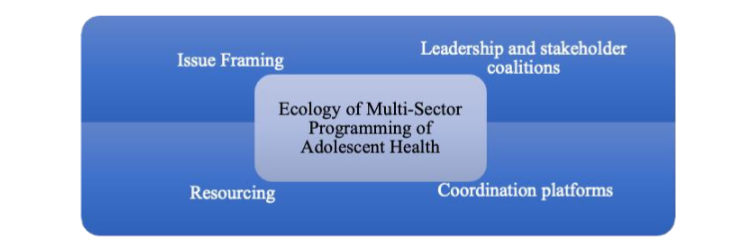
Figure 1: Conceptual framework used for political economy analysis of adolescent health multi-sectoral programming
METHODS AND DATA SOURCES: Qualitative research methods of document review and key informant interviews (KII) were used to collect data under the guidance of the conceptual framework. Document review encompassed a body of grey literature such as policy and programmatic documents, budgetary proposals, unpublished studies, policy briefs, surveys, as well as published research. Key informant interviews guided by topic guides were conducted with purposefully selected key informants across the federal capital Islamabad and each of the four provinces of Baluchistan, Khyber Pakhtunkhwa, Punjab and Sindh. A training workshop was held to guide data collectors followed by frequent meetings with data collectors to review data collected to ensure methodological compliance. A broad map of stakeholders was constructed to guide purposive sampling based on document review and expanded with snowballing of additional key informants based on information elicited during interviews. Interviews were conducted until saturation was reached. Eighty-four in-depth interviews were conducted during in 2021, that included 39 government stakeholders; 12 experts; 15 civil society organizations (CSOs); 11 development partners; 7 youth-based organizations. Interview notes were taken due to reluctance of stakeholders to audio record interviews. Ethical approval was obtained from the University of Southern Cape, the Aga Khan University Pakistan and Pakistan’s National Bio Ethics Committee. Informed consent was taken for interviews and interview notes anonymised for storage and analysis. Interview notes were checked for completeness and accuracy prior to being encrypted and stored for analysis.
ANALYSIS: Interview notes were inductively analysed into themes, which were then organised into thematic codes under the conceptual framework. Based on the thematic structure of the conceptual framework, main codes were developed comprising of issue framing, leadership, stakeholder coalition, resourcing and coordination platforms. Further coding under these main codes was developed through a grounded approach based on key challenges and opportunities identified. A team approach was used for data extraction and coding, comprising of two researchers providing undertaking initial coding followed by a senior researcher re-coding the data, with differences in coding reviewed and resolved with consensus. Data from document analysis and transcripts was triangulated, identifying commonalities, as well as probing inconsistencies. The interviews were conducted with informed written consent, personal identifiers were removed from analysis and all data was stored on an encrypted drive accessible to the research team only.
3. Results
3.1 FRAMING OF ADOLESCENT NUTRITION AND TOBACCO CONTROL MEASURES WITH THE LARGER POLICY CONTEXT
This section explores how the issue was framed within the larger policy context, looking into how and when adolescent focused measures appeared on the policy agenda for nutrition and tobacco and to what extent these were taken forward into programming.
Nutrition:
Nutrition was historically framed as a wider development and poverty agenda with leadership housed at the National Planning Commission to convene across multiple sectors. Programmed activities gained momentum in the wake of the global Scaling up Nutrition (SUN) momentum in 2011 and have traditionally focused on pregnant women and children under five years of age implemented through mother-child health programmes, school curriculums, support for child nutrition integrated into cash transfer initiatives¹². Additionally, there are interventions positioned for the general population such as food fortification and village-based Water, Sanitation and Hygiene (WASH) interventions However, adolescents have marginal inclusion confined to girls in late adolescence as part of maternal care interventions.
Despite opportune multisector positioning, adolescents have not had a constituency within nutrition until recently. Adolescent nutrition was brought to limelight only after the National Nutrition Survey of 2017-18 providing first-time measurement of nutrition in adolescents in Pakistan and reported high under-nutrition in both boys and girls, as well as rising obesity in Pakistan⁹. The findings were well advocated by the existing SUN network for expansion of the nutrition dialogue to include three new important areas – attention to children in the overlooked 10–14-year age group, expansion of scope to additionally include boys, widening of the construct to include obesity in addition to the existing focus on under-nutrition. As a result, a comprehensive Pakistan Adolescent Nutrition Strategy (PANS) was developed across sectors by National Planning Commission as well as detailed Adolescent Nutrition Supplementation Guidelines by the federal ministry of health¹⁷. PANS importantly recognised the adolescence period as the second window of opportunity to break the vicious cycle of intergenerational malnutrition proposing strategies that included sports in schools, physical activity in communities, controlling obesity with curtailment of industry promotion of sugary beverages and crisps, alongside iron-folic acid supplementation in adolescent girls (Table 1).
Nonetheless, programming has remained very limited and gravitated to existing funded workstreams of iron-folic acid supplementation to young adolescent girls and improved WASH measures for girls’ secondary schools in districts where funded nutrition projects were already underway. A re-imagined programming across a larger constituency of stakeholders from sports, physical activity, industry regulation and lifestyle counselling-communication has not taken place. With the exception of junk food restriction legislation for adolescents and children initiated by the food regulatory authority in one province there is practically little on the ground in terms of lifestyle interventions for adolescent obesity (Table 1).
Table 1. Policy Initiatives, Extent of Programming and Focusing Events: Adolescent Nutrition and Tobacco Control in Pakistan
Tobacco Control
Globally Recommended AH Interventions
- Smoke-Free Environments, Tobacco-Free Schools
- Prevention and cessation support to youth
- Monitor tobacco use & prevention measures (MPOWER)
- Age restrictions on the sale / purchase of tobacco products to underaged population
- Taxation: make cigarettes less affordable
Pakistan: Policy Initiatives
Wide range of policy initiatives
- Smoking Prohibition Act 2002 – smoking prohibited in enclosed spaces, educational institutions & sale of tobacco products near educational institutions
- Banning of Tobacco advertisement, promotion, sponsorships (all ages)
- Sale of tobacco products prohibited <18 years, display of information on restriction to minors at retail shops, restriction on sale of individual cigarettes, ban on sale of cigarette-shaped sweets/snacks
- National Action Plan drafted to curtail Tobacco Industry (TI) Interference
- Tobacco monitoring metrics approved for youth
- Tobacco Industry observers removed from Tobacco control policy forums, replaced with technical experts
Pakistan: Programming of Interventions
Programming across sectors, but weak implementation
- Law enforcement agencies: district spot on smoking prohibition & tobacco sales advertisement. Limited compliance spot pilot, sales ban to minor weakly enforced
- Media: Regulatory authority restricts tobacco advertisements on electronic media, Advocacy kits to journalists
- Awareness campaigns: National campaigns on tobacco products sale to youth – lack of sustaining beyond annual events
- Education: Incorporation of tobacco control messages in school curriculum (Punjab)
- National statistics: Tobacco use metrics for 15-24yrs integrated in Pakistan Demographic Health Survey
- Excise/taxation: Tobacco levy introduced in 2022 but revenue sharing with health ministry for Tobacco control measures not materialized
Context and Focusing events
Attention on legislations, weakly supported
Activism and advocacy by local clinicians, technical assistance by WHO support late 1990-early 2000s
Pakistan becomes signatory to the Framework Convention on Tobacco Control (2004) – tobacco control policy limelight, actions required to fulfil treaty provisions – weak focus on youth
Data from Global Youth Tobacco Survey (2013) on high levels of Tobacco use in youth, unregulated use, compliance requires actions from other sectors
Adolescent Nutrition
Globally recommended interventions
Undernutrition prevention and control
- Preventing adolescent pregnancy, poor reproductive outcomes
- Iron/ folic acid supplementation to adolescent girls, pregnant adolescents
- Providing access to safe environmental hygiene for adolescents
- Enriching diets with micronutrients for selected targeting
Promoting healthy diets in adolescents, tackling obesity
- Reducing intake of free sugars (control on beverages)
- Reduction in sodium intake (crisps, other snacks)
- Increasing potassium intake in food (healthy diets)
Promoting physical activity
- school based sports & physical activity
- adolescent communication & awareness
- cities urban planning
Pakistan: Policy Initiatives
Large cross-sectoral nutrition initiatives, but slow gravitation towards adolescents
Pakistan Adolescent Nutrition Strategy 2020-25 – comprehensive measures across health, education, social protection
Additional Undernutrition focused measures
National Adolescent Nutrition Supplementation Guidelines 2020 approved
Additional Obesity focused measures
Federal Healthy Levy Bill, 2019’ drafted for levy on sugary drinks
Pakistan: Programming of Interventions
Adolescent programming narrowly confined to girls, under-nutrition focused, health based
- iron-folic acid supplements/ counselling to adolescent girls in target districts by Nutrition Accelerated Action Plan Sindh, Stunting Program in Punjab, Baluchistan Nutrition Program
- WASH measures for girls toilets and safe water supply in schools, selected districts
Legislations passed in Sindh (2013), Khyber Pakhtunkhwa, 2021 provinces restraining underage marriage – lack of sensitisation, enforcement
Less headway in programming of obesity measures for adolescents
- Food Authority (Punjab) initiative of limiting junk food available to children /adolescents: no consultation helpline, nutrition clinics, ban on sugary drinks at educational institutions, lack of headway in other provinces
- lack of advertising controls/ industry control
- sports/school playgrounds/ community spaces
Context & Focusing events
Nutrition measures driven by first 1000 days approach, wide based support
Pakistan houses nutrition as a multi-sector subject in Planning & Development –1970s
Pakistan become signatory to global Scaling up Nutrition (SUN) with funding and technical assistance support: focus mother-child undernutrition 2011
National Nutrition Survey 2017 provides first time data on adolescent nutrition: highlights under-nutrition and obesity
“The current (nutrition) activities cover anaemia and micronutrient deficiencies but there are almost no interventions to address obesity” Government Official-15/84
Tobacco control:
Tobacco Control too has been a long-standing policy agenda in Pakistan with efforts dating back to late 1990s. Policy measures have been widely formulated across youth sub-groups in addition to the general adult population. The youth age group, categorized as persons aged 13-18 years, is a targeted recipient of Tobacco Control activities globally and in Pakistan. Pakistan’s participation in the global survey on tobacco use in youth and subsequent findings of alarmingly high tobacco use in 13-15 years population helped focus attention to programming with youth. Policy measures impacting on adolescents have included smoking prohibition and sales restrictions to 13-18 years age group, monitoring of tobacco usage within youth, as well as advertisement bans and recent successful passage of tobacco sales levy to discourage use across all age groups¹⁸. National legislation was successfully introduced in early 2000s efforts placing restrictions on sales and advertisement¹⁸. Soon after in 2005 Pakistan became signatory to the World Health Organization (WHO) Framework Convention on Tobacco Control, requiring further ratification measures.
There have been attempts at programming across several sectors but had uneven progress. Limited framing, commercial interests and lack of dedicated funding streams has constrained implementation of programming. Framing of responses led by clinical and public health advocates has largely remained focused on introduction of legislations and enforcement of regulatory compliance. Responses have focused on the banning of use of cigarettes in educational institutes, sale in the vicinity of schools, sales to under-aged population. However, the lack of emphasis on social behavioural change within adolescents, has constrained programming within youth initiatives, communication, and cultural platforms. Lack of dedicated funding has also constrained the programming of interventions with headway only seen for activities that did not require resources for implementation such as the banning of media advertisements with the support of the information ministry. Efforts for excise levy introduction impacting sales to all age group encountered a protracted legal process and resistance by industrial groups which has slowed down the process, and approval of sales levy has been granted only recently¹⁹.
3.2 MULTISECTOR PROGRAMMING OF ADOLESCENT HEALTH INTERVENTIONS: THE ROLE OF LEADERSHIP AND COALITIONS
This section explores how the leadership exerted was influenced by the framing of adolescent nutrition and tobacco control, and whether broad based coalitions evolved for effective inclusive programming.
Nutrition:
As part of the international donor support to Pakistan, a SUN secretariat was deliberatively housed at the National Planning Commission by development partners and senior bureaucracy to counter attempts at siloed programming and ensure effective convening of nutrition across sectors. Provincial nutrition secretariats were established in the Planning & Development Departments (P&DD) in the provinces. Service-related sectors (Health, WASH, Education, Food) as well as poverty focused sectors (Agriculture, Social protection), more than a hundred CSOs and close to fifty universities were brought together under a nutrition-poverty framing²⁰. The Nutrition Unit of the Planning Commission in its role as the convener of nutrition planning was provided resources to consult and launch the multisector PANS. However, the programming of PANS has only taken place in Health remained strongly focused on mother-child under-nutrition rather than obesity whereas measures for lifestyle changes and food regulation have not progressed due to little attempt to involve other sectors.
Advocacy for adolescent nutrition is led by maternity-child health clinicians, United Nations Children’s Fund (UNICEF) and WHO. Response measures have naturally gravitated towards the health ministry for leadership. The better staffed Health Ministry has been historically home to several health specific nutrition projects. It has also been long-standing competitor for leadership of nutrition. Hence the translation of PANS has been confined to micronutrient supplementation and fortification lens. Although several lifestyle measures have been included in PANS, other relevant constituencies such as youth initiatives, secondary schools, sports, food industry, media, local government have not been involved in the framing and subsequent programming of PANS. Dwindling of donor provided SUN resources has also eroded the planning commission’s coordination ability to include new constituents in the development of PANS at the national level and provincial PDDs have had almost no involvement in adolescent nutrition unlike mother-child under-nutrition where considerable bottom-up contribution was seen across provinces.
“Education, food, agriculture, sports, youth are reflected in adolescent’s health at strategy level, but its practical implementation is yet to be seen. Representation of adolescents (voices) is critically missing, if there is any, and definitely doesn’t include adolescents from rural areas” Expert-43/84
Tobacco control:
The push for Tobacco Control across the general population and youth, started in 1990s led by few local clinicians, activists, international clinical associations²¹. A National Tobacco Control Cell (TCC) was subsequently established with WHO support in the Health Ministry in 2007 for spearheading national activities. Leadership for tobacco control has been spearheaded by the national TCC²¹ supported by a small support coalition comprising the WHO, the Pakistan National Heart Association, and the International Union for Tuberculosis-Lung Disease.
The framing on medical benefits and regulatory compliance as well as the national TCCs mandate of legislation and monitoring metrics has drawn in health NGOs, clinicians, public health institutes, media regulatory body as well as varying level of participation by the education departments. Weak prioritization and interpretation of social behavioural dimensions has constrained uptake of tobacco measures by stakeholders involved with youth initiatives, social welfare and local governments. Hence while there are several CSOs working with school programmes only few are part of the Tobacco Control coalition. In parallel, the subject of youth has steadily gained policy momentum with policy makers in Pakistan. A Youth Affairs section has been created within the National Planning Commission, a specific Youth Policy has been formulated and special initiatives on sports, technical skills and livelihood have been rolled out. Although these provide an opportune platform for widening the tobacco control coalition, long standing power tussles between health and planning ministries have inhibited joint leadership.
Table 2. Leadership and Stakeholder Coalitions: Multisector Programming for Adolescent Nutrition and Tobacco Control in Pakistan
| Framing | Leadership | Coalitions | Stakeholders less involved/ not involved |
|---|---|---|---|
| Tobacco use | |||
| Focus on clinical health benefits | Leadership anchored within health sector, led by national TCC | Diverse but narrow coalition | Missing stakeholder communities |
| Strong implementation emphasis on regulatory enforcement (advertisements, sales prohibition in educational institutes) | – National Tobacco Control Cell (TCC) based in national ministry of health: active for policy measures, legislative support and coordination for national campaigns | Policy Stakeholders | Policy stakeholders |
| – Health based TC; policy guidance, coordination | – Youth affairs, Ministry of Planning, Development & Special Initiatives | ||
| – Sales levy: Excise Department Ministry of Commerce; Federal Board of Revenue (FBR) | – Secondary education | ||
| – Advertisement banning: Electronic regulatory authority for electronic / print media | Implementers | ||
| – Prohibition laws: law ministry | – Youth initiatives | ||
| – Sales & smoking: Local government/ Police (Islamabad/ Punjab); Anti-Narcotics Force (Sindh) | – Entertainment industry (glamorised smoking) | ||
| – School curriculum awareness campaigns: Education Department (Punjab) | – Private educational institutions | ||
| Technical assistance | – Health service providers (tobacco cessation services) | ||
| – World Health Organization | Technical assistance | ||
| – The union of lung disease prevention, occasional public health institutes | – Bilateral and multilateral donors supporting youth, health, social development portfolios | ||
| Civil Society | Civil Society | ||
| – Campaign for Tobacco Free Kids, few education/ child rights CSOs | – Youth platforms | ||
| – Cultural platforms | |||
| – Mental health coalitions |
| Nutrition | |||
|---|---|---|---|
| Leadership within supra-ministry that steers planning of other ministries | Diverse, broad-based coalition | Missing stakeholders communities | |
| National Ministry of Planning and Development, counterpart provincial planning and development departments | Policy Stakeholders | Policy stakeholders | |
| Nutrition Wing of the federal health ministry, lack of counterpart wings in provincial departments, nutrition projects | – Planning & Development: country coordination across ministries, under-nutrition technical guidelines, under-nutrition programmes | – Commerce industry: beverage/ food industry regulation | |
| Implementers | – Media regulatory body: food advertising | ||
| – Health Departments: all provinces | – Secondary schools | ||
| – Education departments: nutrition within curriculum/ functional school toilets for adolescent girls – uneven implementation | – Sports | ||
| – Food Authority control on sugary drinks/ crisps – confined implementation to one province | – Urban planning | ||
| Technical assistance | Implementors | ||
| – UNICEF, all major bilateral and multilateral agencies | – Food authority | ||
| Civil Society | – Private healthcare providers | ||
| – 129 NGOs, 40 universities, Pakistan Paediatrics Association | – Private educational institutions | ||
| – Municipal bodies | |||
| Technical assistance | |||
| – Bilateral and multilateral donors supporting youth, social development portfolios | |||
| Civil Society | |||
| – Youth platforms | |||
| – women and gender advocates (teen pregnancies) |
3.3 MULTI-SECTOR IMPLEMENTATION OF ADOLESCENT HEALTH INTERVENTIONS: RESOURCING AND HORIZONTAL COORDINATION
This section explores the availability of resources to support coordinated programming, institutional support and disincentives for horizontal coordination for programming adolescent tobacco and nutrition measures across sectors.
Nutrition:
The nutrition sector has benefited from horizontal coordination platforms provided by the Planning Commission, provincial P&DDs and a multisector SUN network²³. Government supported core posts for Nutrition has existed in the Planning Commission and P&DDs allowing time for facilitating and monitoring of mother-child nutrition programming. Donor supported technical support to the Planning Commission and P&DDs further helped in planning, monitoring, and advocacy across all sectors as well to catalyse investments government co-financing within relevant sectors. Leadership from provincial planning departments was instrumental in ensuring effective translation of mother-child nutrition into budgets of relevant government departments and convening across various government entities.
However, donor support for nutrition coordination has dwindled over the years and national-provincial governments have not invested in taking over the extra staffing and systems. This has made it difficult to convene, oversee and coordinate adolescent nutrition which requires dealing with a new constituency of obesity and lifestyle relevant sectors as well as under-nutrition constituencies. At the same time, the drying up of donor supported technical assistance opens window of opportunity to move to integration within parallel funding streams within youth initiatives, secondary education, sports and the newly formalised essential health care package that includes non-communicable disease services but requires sensitization, wider framing and technical skills for interpretation of interventions. Technical skills are limited to nutrition supplementation and maternity care, with perspectives tilted towards service provision rather than adolescent sensitive programming to address social drivers, gender, and behavioural change.
“Capacity within nutrition has improved over the years however there is a need to enhance capacity of adolescent nutrition programming which is not there at the moment” Development Partner-70/84
Tobacco control:
The national TCC has historically lacked funding for programming of policy responses relying on self-mobilised small-scale funds as well as intermittent support by international public health institutions and the WHO. Implementation activities have relied on projectized small scale funding provided by international academic entities to national TCCs. Activities pushed up by national TCC within selected districts, slip back again when projects ends. Some headway is seen where activities have been absorbed into existing funded streams of relevant government departments. Examples include absorption into school curricula by provincial education departments, integration of tobacco monitoring metrics within national health surveys by statistics bureau and introduction of media bans. Conversely activities requiring resources such as compliance checks on smoking prohibition and cigarette sales by local government and law enforcement agencies are extremely limited and one-off due to lack of creation of funding within these sectors²⁴. The national TCC’s practice to directly implement pilots with international grants has also created little incentive within for provincial department for resourcing tobacco control activities.
Horizontal coordination of multi-sector programming has been adhoc over the years. Stakeholders are mobilised by the national TCCs and provincial TCCs when policy advocacy is required for legislations, at the time of national campaigns or an externally funded project comes up for implementation. Despite enactment of detailed legislation there have been few efforts into developing multi-sector plans for youth focused tobacco control activities. Hence activities promoted vary considerably across the four provinces and are subject to swings in funding or policy momentum. Tobacco Control Cells are also limited by weak technical capacity to coordinate youth focused interventions and require dedicated resources to hire technical staff, provide data analytics, training, and communication activities. Federal coordination is relatively stronger led by an active national TCC with WHO support whereas provincial coordination is particularly weak with provincial TCCs present in only two provinces. Mandate, capacity, and resourcing constrain programming coordination. The expected resource flow from the Tobacco excise levy to fund tobacco control efforts has not been passed on by the finance ministry and is unlikely within the strained fiscal context of Pakistan. Legitimacy issues also hamper horizontal coordination by the TCCs. Although the health ministry and departments serve as powerful advocate of Tobacco control they have weak mandate to coordinate adolescent focused tobacco control efforts programming across the siloed organized hierarchy of different government departments.
“Actors are working wherever and whatever they think is right, without any formal coordination mechanism.” Civil Society Organizations -55/84
“Youth affair department is the best platform for coordinating all tobacco control activities. All sectors including health, sports and education should set up their activities using this platform.” Youth-based Organizations-78/84
Table 3: Coordination and Resourcing of Multisector Programming for Adolescent Nutrition and Tobacco Control in Pakistan
| Areas of Multi-Sector Coordination | Coordination | Resourcing |
|---|---|---|
| Tobacco | – Stronger federal coordination: focus on legislations | Tobacco Control Cells at all levels lack technical staff, data analytics, training, communication support |
| Weak subnational structures | Dearth of resourcing at sub-national levels | |
| – Provincial Tobacco Control Cells (TCCs) only present in two provinces, weakly active, | Projectized approach: reliance on occasional small scale foreign funded projects | |
| – Weak sub-national coordination on enforcement and compliance | Limited integration within provincial recurrent budgets: | |
| – Lack of sub-national plans across sectors | – smoking sale/ advertisement compliance: partial resourcing by law enforcement activities (two provinces) | |
| – Coordination is ad hoc driven by availability of funding, technical support | – awareness activities: small scale resourcing by education department (one province) | |
| – Limited technical capacity blunts coordination | – Tobacco cessation support: not integrated into health initiatives across public and private providers | |
| – Health department based TCCs have insufficient mandate to coordinate across other entities |
| Nutrition | Nutrition Cells at National Planning & Development Ministry and provincial counterpart planning departments provide convening platforms | Dedicated staff and funding provided to SUN secretariat at national planning ministry |
|---|---|---|
| – Metrics for tracking programming limited to mother-child under-nutrition, not developed for adolescents | Common gaps: data analytics, expenditure monitoring and technical assistance for joint planning and budgeting | |
| – Multi-sector strategy led by | Projectized approach: programmatic activities confined to donor financed projects | |
| Resourcing dependent on donor co-financing, lack of transition to recurrent funds | ||
| Technical assistance gaps for obesity |
4. Discussion
Global interventions prescribed for adolescent nutrition and tobacco control are often siloed and public health focused, requiring re-imaging within local contexts, power dynamics and coalition building across sectors, as the delivery of several of the interventions lies beyond the health sector. This paper compared multisector programming of nutrition versus tobacco control interventions in adolescents from a political economy lens. There has been recent attention to learning from the success and failure of multisectoral collaboration, and a demand for case studies for reflection and catalytic investment²⁵. Successful multi-sector governance is now recognised to be a managed process in response to a challenge or opportunity, aimed at disrupting business as usual arrangements and replacing these with intentional, innovative actions framed in a way that multiple sectors can contribute²⁶.
Our analysis found important commonalities across both nutrition and tobacco control programming, as well as differences. Adolescents have historically featured in Tobacco control efforts in Pakistan but recognition within nutrition efforts has been more recent in Pakistan and with gendered nuances over-looking the needs of boys. However weak framing of the social-behavioural aspects in national response was seen for both adolescent Nutrition as well as Tobacco Control constraining coalition development featuring new constituencies such as youth initiatives, local government, sports, education, and entertainment sectors that are necessary for lifestyle changes in adolescents. Hence measures have remained narrowly focused on the enactment of legislation for Tobacco control in youth and on nutrition supplementation efforts for adolescent childbearing age girls. Our findings lend credence to the recent global literature around the importance of framing and its influence on how solutions are represented at global and national policies²⁷. In other country settings, framing has been largely shaped by gendered perspectives over-looking the needs of adolescent boys (South Africa)²⁸, power dynamics limiting engagement with youth representation in designing solutions (India)²⁹, and by prevailing developmental threats and moral and social narratives (Kenya)³⁰.
Progression into programming for adolescent nutrition was similarly constrained for nutrition and tobacco due to lack of dedicated resourcing and capacity for horizontal coordination across sectors. Mandate was an additional challenge in the case of Tobacco Control as being based in the health ministry it had fragmented authority to program actions in other sectors¹⁸˒³¹ whereas nutrition housed in the planning commission had the mandate to coordinate and oversee across several sectors²⁰. Literature on multi-sector governance has emphasised the importance of funding availability within different sectors¹⁵˒³² as well as moving beyond short-term funding for transformative programming³³. Our findings emphasise that coordination cannot be taken for granted unless resourced with staff, systems, tools to convene, oversee, monitor across sectors, and requires modest but dedicated funding in addition to sector-specific funding for implementation activities. We also found that unlocking of existing funded streams of different government departments is instrumental in progressing response measures and is influenced by co-option by other sectors as well as exertion of convening leadership. Mandate for leadership is emphasised by political economy literature³⁴ and was seen from our findings to be particularly important for multi-sector programming. Whereas in the case of nutrition an opportune cross-sectoral platform was present but insufficiently mobilised for adolescent nutrition, whereas in the case of Tobacco control convenorship was led by the health ministry and health departments having weak legitimacy to ensure programming across other sectors.
The study scope was confined to exploring the pathway of programming and early implementation does not extend to evaluation of implementations. There may be possible exclusion of key documents and informants on account of purposive and snowball sampling, however, the rapid saturation of interview findings suggests we were unlikely to have missed a key theme in our results.
In summary, paper emphasised that the process of how multi-sector programming for adolescents is brought about within countries is equally important as the prescriptive content of globally advocated interventions. It identified key elements of a pathway to more effective programming. First, the framing of adolescent health will have a knock-on domino effect on coalition building, housing of leadership, coordination, and resourcing. Second, the distinguishing between core coalitions and wider coalitions is important, diversity within core coalitions is important and must be deliberatively managed. Third, the home for multisector programming for issues such as adolescent nutrition and tobacco control that rely on several sectors for delivery must often lie outside health ministry and should have the legitimacy to convene across sectors. Fourth, dedicated resourcing to coordinate programing across sectors is essential but not well recognised and can help unlock sustainable funding pots within various sectors.
Conclusion:
The Pakistan case study adds to contextual insights on success and failure of multisector governance for nutrition providing an analytical contrast with a similar multi-sector issue of tobacco control. We found that translation into multi-sector programming is shaped by how inclusively adolescent health has been framed to draw participation beyond the health sector, power dynamics underlying the core coalitions responsible for framing, that the choice of an organizational home can constrain resourcing and co-option across sectors stakeholders, and that horizontal coordination itself requires earmarked resources.
Conflict of Interest:
Authors confirm that there are no conflicts of interest to declare.
Funding Statement:
Asha George is supported by the South African Research Chair’s Initiative of the Department of Science and Technology and National Research Foundation of South Africa (Grant No 82769), the South African Medical Research Council and the Bill and Melinda Gates Foundation Countdown to 2030 Grant (Grant Number INV-007594). Any opinion, finding and conclusion or recommendation expressed in this material is that of the author and the NRF does not accept any liability in this regard.
Acknowledgements:
This case study is part of a larger global grant held by the University of Western Cape, South Africa on political drivers of adolescent health, supported by Countdown 2030 and funded by the Bill and Melinda Gates Foundation. The Pakistan work was led by Shehla Zaidi at the Centre of Excellence in Women and Child Health at the Aga Khan University. Advisory insights by Javid Khan, Jai Das, Zulfiqar Bhutta and data collection by senior research consultants Shahzad Ali Khan, Akhtar Rashid, Rizwana Hussein, Zareen Zahid and Razaullah Khan, Sania Khurshed and Wafa Zehra Jamal are gratefully acknowledged. Insights provided by a range of stakeholders including the National Planning Commission, Tobacco Control Cell, Nutrition support program, Provincial health and education departments and other stakeholders are gratefully acknowledged.
Author contribution:
SZ and AG framed the paper; SZ, RN, SSH analysed the data; SZ, RN, SH, ZM, AG contributed to drafting of the paper, final edits were carried out by SZ and AG, all authors reviewed the paper.
References
1. Sheehan P, Sweeny K, Rasmussen B, Wils A, Friedman HS, Mahon J, Patton GC, Sawyer SM, Howard E, Symons J, Stenberg K. Building the foundations for sustainable development: a case for global investment in the capabilities of adolescents. The Lancet. 2017 Oct 14;390(10104):1792-806. DOI:https://doi.org/10.1016/S0140-6736(17)30872-3
2. WHO 2017. Global Accelerated Action for the Health of Adolescents (AA-HA!): guidance to support country implementation. Geneva: World Health Organization; 2017. https://iris.who.int/bitstream/handle/10665/255415/9?sequence=1
3. Patton GC, Sawyer SM, Santelli JS, Ross DA, Afifi R, Allen NB, Arora M, Azzopardi P, Baldwin W, Bonell C, Kakuma R. Our future: a Lancet commission on adolescent health and wellbeing. The Lancet. 2016 Jun 11;387(10036):2423-78. DOI: https://doi.org/10.1016/S0140-6736(16)00579-1
4. George A, Jacobs T, Ved R, Jacobs T, Rasanathan K, Zaidi SA. Adolescent health in the Sustainable Development Goal era: are we aligned for multisectoral action? BMJ Glob Health. 2021 Mar;6(3):e004448. https://doi.org/10.1136/bmjgh-2020-004448
5. GoP 2023. Announcement Of Results Of 7th Population And Housing Census-2023 ‘The Digital Census.’ Pakistan Bureau of Statistics. 2023 [cited 2023 Aug 29]. Available from: https://www.pbs.gov.pk/sites/default/files/population/2023/Press%20Release.pdf
6. Global Alliance for Improved Nutrition (GAIN). Pakistan: New Adolescent Nutrition Strategy boosts engagement with all stakeholders. 2020. Available from: Pakistan: New Adolescent Nutrition Strategy boosts engagement with all stakeholders (gainhealth.org)
7. WHO 2023. UHC service coverage index – South Asia. Global Health Observatory. Geneva: World Health Organization; 2023. [cited 2023 Aug 29]. Available from: who.int/data/gho/data/themes/topics/service-coverage
8. World Bank 2022. School enrollment, primary (% gross) – South Asia. World Bank Data. 2022. [cited 2023 Aug 29]. Available from: School enrollment, primary (% gross) – South Asia | Data (worldbank.org)
9. Pakistan National Nutrition Survey 2018: Key Findings Report. UNICEF: Islamabad, Pakistan. 2018. [cited 2023 Aug 29]. Available from: Final Key Findings Report 2019.pdf (unicef.org)
10. Pakistan Global Youth Tobacco Survey (GYTS). World Health Organization; 2013. Available from: www.emro.who.int/images/stories/tfi/documents/GYTS_FS_PAK_2013.pdf?ua=1.
11. Social Policy and Development Centre (SPDC). Implications of Cigarette Taxation in Pakistan: An Exploration Through a CGE Model.2021. Available from: Social-Policy-and-Development-Centre-Karachi-ECONOMIC-IMPLICATIONS-OF-CIGARETTE-TAXATION-IN-PAKISTAN-An-Exploration-through-A-CGE-Model.pdf (researchgate.net)
12. Zaidi S, Bhutta ZA, Mohmand SK, Acosta AM. The political economy of undernutrition national report: Pakistan.2013. Available from: http://ecommons.aku.edu/pakistan_fhs_mc_chs_chs/194
13. Zaidi SA, Bigdeli M, Langlois EV, Riaz A, Orr DW, Idrees N, Bump JB. Health systems changes after decentralisation: progress, challenges and dynamics in Pakistan. BMJ global health. 2019 Jan 1;4(1):e001013. http://dx.doi.org/10.1136/bmjgh-2018-001013
14. Rasanathan K, Bennett S, Atkins V, Beschel R, Carrasquilla G, Charles J, Dasgupta R, Emerson K, Glandon D, Kanchanachitra C, Kingsley P. Governing multisectoral action for health in low-and middle-income countries. PLoS medicine. 2017 Apr 25;14(4):e1002285. https://doi.org/10.1371/journal.pmed.1002285
15. Acosta AM, Fanzo J. Fighting maternal and child malnutrition: analysing the political and institutional determinants of delivering a national multisectoral response in six countries. Brighton: Institute of Development Studies. 2012 Apr. Available from: DFID_ANG_Synthesis_April2012.pdf (publishing.service.gov.uk)
16. Government of Pakistan. Pakistan Adolescent Nutrition Strategy, Ministry of National Health Services, Coordination and Regulation. https://www.unicef.org/pakistan/media/2846/file/Pakistan%20Adolescent%20Nutrition%20Strategy.pdf
17. Walt G, Gilson L. Reforming the health sector in developing countries: the central role of policy analysis. Health policy and planning. 1994 Dec 1;9(4):353-70.https://doi.org/10.1093/heapol/9.4.353
18. Masud, H; Gill, P; Sekalala, S; Oyebode, O. Tracking progress of tobacco control in Pakistan against the MPOWER package of interventions: Challenges and opportunities. International Journal of Noncommunicable Diseases 5(1):p 16-21, Jan–Mar 2020. https://doi.org/10.4103/jncd.jncd_42_19
19. Habib SS, Najmi R, Iqbal MA, Sabir M, Zaidi S. The need for taxation to reduce tobacco affordability in Pakistan. Int J Tuberc Lung Dis. 2023 Sep 1;27(9):706-708. https://doi.org/10.5588/ijtld.23.0074 PMID: 37608485; PMCID: PMC10443786.
20. Zaidi, S., Mohmand, S.K., Hayat, N., Acosta, A.M. and Bhutta, Z.A. (2013), Nutrition Policy in the Post-devolution Context in Pakistan: An Analysis of Provincial Opportunities and Barriers†. IDS Bulletin, 44: 86-93. https://doi.org/10.1111/1759-5436.12035
21. Khan J 2008. Tobacco Control: Current Challenges for Pakistan, Pakistan Journal of Chest Medicine, 2008. https://web.archive.org/web/20170423053420id_/http://www.pjcm.net:80/index.php/pjcm/article/viewFile/185/176
22. Tobacco Control Cell (TCC). Ministry of National Health Services, Regulations and Coordination.http://www.tcc.gov.pk/about_us.php
23. Zaidi S, Bhutta Z, Hussain SS, Rasanathan K. Multisector governance for nutrition and early childhood development: overlapping agendas and differing progress in Pakistan. BMJ global health. 2018 Oct 1;3(Suppl 4):e000678. http://dx.doi.org/10.1136/bmjgh-2017-000678
24. Khan, J. A., Amir Humza Sohail, A. M., Arif Maan, M. A. (2016). Tobacco control laws in Pakistan and their implementation: A pilot study in Karachi. Journal of Pakistan Medical Association, 66(7), 875-879. https://ecommons.aku.edu/pakistan_fhs_mc_med_pulm_critcare/124
25. Pelletier DL, Frongillo EA, Gervais S, et al. Nutrition agenda setting, policy formulation and implementation: lessons from the mainstreaming nutrition initiative. Health Policy Plan. 2012;27(1): 19‐31. https://doi.org/10.1093/heapol/czr011
26. Graham WJ, Kuruvilla S, Hinton R, Veitch E, Simpson PJ. Multisectoral collaboration for health and sustainable development. BMJ. 2018 Dec 7; 363:k4868. https://doi.org/10.1093/heapol/czr011 PMID: 30530466; PMCID: PMC6282722
27. Shiffman J, Shawar YR. Framing and the formation of global health priorities. Lancet. 2022 May 21;39 9(10339):1977-1990. https://doi.org/10.1016/s0140-6736(22)00584-0. Epub 2022 May 17. PMID: 35594874.
28. Jacobs T, George A, De Jong M. Policy foundations for transformation: a gender analysis of adolescent health policy documents in South Africa. Health Policy Plan. 2021 Jun 3;36(5):684-694. https://doi.org/10.1093/heapol/czab041. PMI D: 33852727; PMCID: PMC8248976.
29. Roy K, Shinde S, Sarkar BK, Malik K, Parikh R, Patel V. India’s response to adolescent mental health: a policy review and stakeholder analysis. Soc Psychiatry Psychiatr Epidemiol. 2019 Apr;54 (4):405-414. https://doi.org/10.1007/s00127-018-1647-2. Epub 2019 Jan 3. PMID: 30607452; PMCID: PMC6443608
30. Akwara E, Idele P. The moral and social narratives of sexual and reproductive health in Kenya: a case of adolescents and young people pre- and within the MDG era. Reprod Health. 2020 May 26;17(1):75. https://doi.org/10.1186/s12978-020-00930-x. PMID: 32456657; PMCID: PMC7249422
31. Mirza Z, Munir D, Conflicting interests, institutional fragmentation and opportunity structures: an analysis of political institutions and the health taxes regime in Pakistan, BMJ Global Health 2023;8:e012045. https://doi.org/10.1136/bmjgh-2023-012045
32. Nimubona A. Health diplomacy to promote multisectoral participation in fighting against fragmentation and increasing budget for internalization of the health financing progress matrix in Burundi. Health Econ Rev. 2022 Jun 2;12(1):31. doi: 10.1186/s13561-022-00376-w. PMI D: 35653044; PMCID: PMC9161612
33. Gaihre S, Kyle J, Semple S, Smith J, Marais D, Subedi M, Morgan H. Bridging barriers to advance multisector approaches to improve food security, nutrition and population health in Nepal: transdisciplinary perspectives. BMC Public Health. 2019 Jul 18;19(1):961. doi: 10.1186/s12889-019-7204-4. PMID: 31319837; PMCID: PMC6637542.
34. Bennett S, Glandon D, Rasanathan K. Governing multisectoral action for health in low-income and middle-income countries: unpacking the problem and rising to the challenge. BMJ Glob Health. 2018 Oct 10;3(Suppl 4):e000880. doi: 10.1136/bmjgh-2018-000880. PMID: 30364411; PMCID: PMC6195144