

Golden Rice: Legal Challenges and Health Implications
Golden Rice: some considerations for Philippine pending legal decisions and expected local and global implications
Adrian Dubock1
- Member & Executive Secretary Golden Rice Humanitarian Board Switzerland ORCID: 0000-0001-9429-8423
OPEN ACCESS
PUBLISHED: 31 August 2024
CITATION: Dubock, A., 2024. Golden Rice: some considerations for Philippine pending legal decisions and expected local and global implications. Medical Research Archives, [online] 12(8). https://doi.org/10.18103/mra.v12i8.5884
COPYRIGHT: © 2024 European Society of Medicine. This is an open-access article distributed under the terms of the Creative Commons Attribution License, which permits unrestricted use, distribution, and reproduction in any medium, provided the original author and source are credited.
DOI https://doi.org/10.18103/mra.v12i8.5884
ISSN 2375-1924
ABSTRACT
Golden Rice, developed since 2000, provides beta-carotene, a vitamin A source. In 2004, transgenesis introduced genes from a bacterium and maize into rice, making Golden Rice a GMO crop. No other method could create it. Since then, development has involved only sexual reproduction between rice plants.
In 2023, nearly 900 million children suffered from vitamin A deficiency (VAD), which killed 2 million annually in the early 1990s. Rice, a staple for 50% of the world, especially in (Low-and -Middle-Income-Countries) LMICs, is mostly carbohydrate, with little micronutrient nutritional value.
Golden Rice aims to improve public health by providing vitamin A at no greater cost than white rice to resource-poor communities. It is widely recognized as a humanitarian project.
Greenpeace has long opposed GMO crops, using the issue for fundraising. Golden Rice disproves their claims, so they seek to undermine the project. Due to limited resources, Golden Rice has been introduced only in Bangladesh and the Philippines. Bangladesh’s progress is stalled without valid reason, while the Philippines has adopted Golden Rice since 2021. However, Greenpeace filed a 2022 complaint claiming environmental risks, unsupported by science.
Recent Philippine Court of Appeals decisions (April and August 2024) have halted Golden Rice adoption. The Department of Agriculture plans to appeal to the Supreme Court.
This article discusses the ongoing significance of VAD and Golden Rice and emphasizes the need for the Philippines to maintain its global leadership in scientific innovation and public health through the Golden Rice initiative. It also proposes considerations for the Department of Agriculture’s upcoming appeal.
Keywords
Golden Rice, vitamin A deficiency, genetic modification, Philippines, environmental law, public health, Greenpeace.
Methods
The author has been closely involved with the Golden Rice project since 2000 and understands Greenpeace’s negative influence on it and related international agreements.
Significant decisions, initiated by Greenpeace, by the Philippine Court of Appeals have recently blocked Golden Rice adoption, despite the Government’s policy and actions. By analysing the August 15 rulings, the author has identified perspectives that the Philippine Government has yet to advance and presents them here.
These perspectives, the author believes, could strengthen the arguments of Philippine Government departments, including the Department of Agriculture, in appealing to the Supreme Court. Overturning the Appeal Court’s decisions would allow Golden Rice adoption to resume, which is vital not only for Public Health in the Philippines but also for global efforts to achieve the UN’s Sustainable Development Goal of “Zero Hunger” through micronutrient deficiency alleviation.
Introduction and Discussion
On April 17, 2024, the Philippine Court of Appeals ruled in favour of a Greenpeace Philippines lawsuit, claiming Golden Rice poses an environmental threat and violates Filipinos’ constitutional right to a balanced ecology. This decision halted the government’s efforts to introduce Golden Rice to combat vitamin A deficiency, an initiative ongoing since 2021. The Department of Agriculture, and other Government Departments, requested reconsideration, stating it would appeal to the Supreme Court if the ruling wasn’t amended.
On August 15, 2024, the Court of Appeals upheld its April decision, rejecting the Government’s request for reconsideration. The Department of Agriculture has indicated it would appeal to the Supreme Court to continue Golden Rice adoption. This article provides considerations for the Department of Agriculture as it prepares its submission to the Supreme Court.
The UN Biodiversity Convention and the Cartagena Protocol
The United Nations Conference on Environment and Development, held in Rio de Janeiro from June 3 to 14, 1992, resulted in the adoption of 27 Principles which formed the basis of the Convention on Biological Diversity (CBD). The CBD is the international legal instrument for “the conservation of biological diversity, the sustainable use of its components and the fair and equitable sharing of the benefits arising out of the utilization of genetic resources.” The CDB came into effect on December 29, 1993, and has all the countries of the world as signatories – 196. Several key Principles from the CBD are particularly relevant to the legal case in the Philippines.
Principle 1
Human beings are at the centre of concerns for sustainable development. They are entitled to a healthy and productive life in harmony with nature.
Principle 4
In order to achieve sustainable development, environmental protection shall constitute an integral part of the development process and cannot be considered in isolation from it.
Principle 15
In order to protect the environment, the precautionary approach shall be widely applied by States according to their capabilities. Where there are threats of serious or irreversible damage, lack of full scientific certainty shall not be used as a reason for postponing cost-effective measures to prevent environmental degradation.
Despite Principles 1, 4 and 15 above, Greenpeace were influential in developing the Cartagena Protocol (‘CP’), a subsidiary agreement to the CBD, which was ratified in 2000 and came into effect in 2003. Of the 196 country signatories to the CBD only 91 countries (46%) have ratified the CP.
The Philippines ratified the CBD on October 8, 1993 and the CP on May 24, 2000. Both are international legal instruments.
Article 1 of the Cartagena Protocol states:
“In accordance with the precautionary approach contained in Principle 15 of the Rio Declaration on Environment and Development, the objective of this Protocol is to contribute to ensuring an adequate level of protection in the field of the safe transfer, handling and use of living modified organisms resulting from modern biotechnology that may have adverse effects on the conservation and sustainable use of biological diversity, taking also into account risks to human health, and specifically focusing on transboundary movements.” [emphasis added]
Thus Article 1 of the CP takes Principle 15 of the CBD and makes it paramount in the CP to all the forgoing CBD Principles, including numbers 1 and 4 quoted above. As the CP is a subsidiary agreement to the CBD, this is illogical, which is perhaps why only 46% of countries have signed the CP.
The Philippines
The CP emphasizes various protections associated with, and specifically focusing on, transboundary movements of living modified organisms from modern biotechnology. The CP mandates consideration of human health risks in related decisions.
These factors are pertinent to the Philippine Appeals Court decisions but were overlooked. Notably, there has been no transboundary movement of living modified organisms in the case of Golden Rice (= Malusog Rice) in the Philippines. These rice varieties have been bred in the Philippines by the International Rice Research Institute and the Philippines Rice Research Institute.
Despite ongoing programs to alleviate vitamin A deficiency since the early 1990s, The Philippines Government estimates that 15% of children are vitamin A deficient, a slight reduction since 2018 when nearly 17% of children aged 6–59 months suffered from vitamin A deficiency, of which children aged 12–24 months had the highest prevalence (22%) followed by children aged six to 12 months (18%).
The Court of Appeal disregarded this critical public health aspect, overlooking that Golden Rice, a public good, offers a cost-effective source of vitamin A. Golden Rice is offered at the cost of white rice by project design, the additional nutrition costs nothing to the Government, the grower, the consumer in comparison to white rice.
Vitamin A is vital for life, with deficiency impairing crucial functions such as eyesight and immune response. Severe immune impairment can lead to death from common diseases before significant eyesight issues arise. Vitamin A supplementation can reduce measles mortality by 50%. A universal source of vitamin A would prevent 23–34% of global under 5 years child mortality.
The Philippines stands as a leader in science and crop biotechnology in Asia. The population has grown from 30 million in the 1960s to 120 million today, with farmers producing 3-4 times more rice through scientific advancements. However, the nation’s progress is at risk if ideology outweighs scientific evidence.
Globally, vitamin A deficiency (VAD) remains a major public health issue, particularly in impoverished communities reliant on rice, despite over 35 years of international and Philippine efforts to combat VAD.
“In 2019, 890,000,000 children suffered from VAD in Low- and Middle-Income Countries, including 333,950,000 with severe VAD.” “Approximately one‐third of children under the age of 5 have VAD, contributing to approximately 2% of deaths in this age group.”
Substituting Golden Rice for white rice could supply 57–99% of the recommended vitamin A intake for preschool children in the Philippines, offering a sustainable solution to combat VAD, particularly when grown locally, and consumed by affected communities.
The Philippine 1987 Constitution mandates the State to: ‘Protect and promote the right to health of the people and instil health consciousness among them.’ This important constitutional provision was overlooked by the Appeal Court.
Several other Constitutional obligations were also overlooked by the Appeal Court: “Principles” section 4 includes “The Prime Duty of the Government is to serve and protect the people.” Section 5 includes “the protection of life.” Under “State Policies” Section 10 includes “social justice in all phases of national development”, Section 15 (as above):”’The State shall protect and promote the right to health of the people and instil health consciousness among them.”; and Section 17: “The State shall give priority to education, science and technology, accelerate social progress, and promote total human development.”
It appears that the Appeal Court ignored all of the above, which are fully relevant to the adoption of Golden Rice for Public Health by the Philippine Government, in promoting Greenpeace’s scientifically and factually unsupportable view that Golden Rice was contrary to: Sections 16. “The State shall protect and advance the right of the people to a balanced and healthful ecology in accord with the rhythm and harmony of nature.”
The Court also failed to consider the absence of “transboundary movements” and the ”consideration of human health risks” —both key aspects of the Precautionary Approach of the Cartagena Protocol, which are frequently cited as the ‘Precautionary Principle’ in the Appeals Courts decisions.
Golden Rice presents zero environmental risk, the Greenpeace claim appears to be selectively framed to align with the only possibly applicable Section of the Philippine Constitution. Nevertheless, the Appeal Court upheld its finding of environmental risk from Golden Rice.
However, neither Greenpeace nor any other party has articulated what such a risk might entail.
“Results from confined tests in the Philippines and Bangladesh have shown that [Golden Rice] introgression lines matched the performance of the recurrent parents for agronomic and yield performance, and the key components of grain quality. Moreover, no differences were observed in terms of pest and disease reaction. The best performing lines identified in each genetic background had significant amounts of carotenoids in the milled grains. These lines can supply 30–50% of the estimated average requirements of vitamin A.”
“The only biologically meaningful difference between [Golden Rice] and control rice was in the level of β-carotene and other provitamin A carotenoids, the compositional parameters of [Golden Rice] were within the range of natural variability of those components in conventional rice varieties with a history of safe consumption.”
Golden Rice contains beta-carotene (β-carotene), the precursor of vitamin A, in the normally white rice kernel which is food. No plants contain vitamin A. The human body organically produces vitamin A from β-carotene in a self-regulating feedback loop, so that vitamin A overdosing is impossible. Excess β-carotene is excreted. β-carotene is also included in all green leaves of all rice plants, and all green and coloured plant parts, including yellow maize.
There is zero potential for any environmental hazard from Golden Rice’s β-carotene, which is the only difference between white rice and Golden Rice.
Philippines decisions about Golden Rice are globally important
Golden Rice was developed through genetic engineering, the only feasible method available. Traditional crossbreeding of rice varieties cannot achieve the targeted levels of iron or zinc; only genetic engineering is effective. Similarly, genetic engineering is the sole approach for increasing folate in rice, which could help combat spina bifida and other neural tube defects, and vitamin B1 deficiency causes diseases of the nervous and cardiovascular systems, common where rice is the staple diet.
In the future these micronutrients could all be combined to create a golden coloured super-biofortified-Golden Rice, as a source of β-carotene, iron, zinc, folate and thiamine, all at no greater cost than white rice, including to communities which grow, mill and consume their own rice staple food.
Despite decades of efforts to address micronutrient deficiencies through supplements (including vitamin A capsules), education on breastfeeding and balanced diets, and the addition of chemical fortificants, significant challenges remain as summarised in this 2022 publication:
“We estimate that over half of preschool-aged children and two-thirds of non-pregnant women of reproductive age worldwide have micronutrient deficiencies.”
Undoubtedly, without existing interventions, the micronutrient malnutrition situation would be far worse. However, a significant issue remains: the cost of alternatives, especially supplements and chemical fortification, which raises concerns about their sustainability.
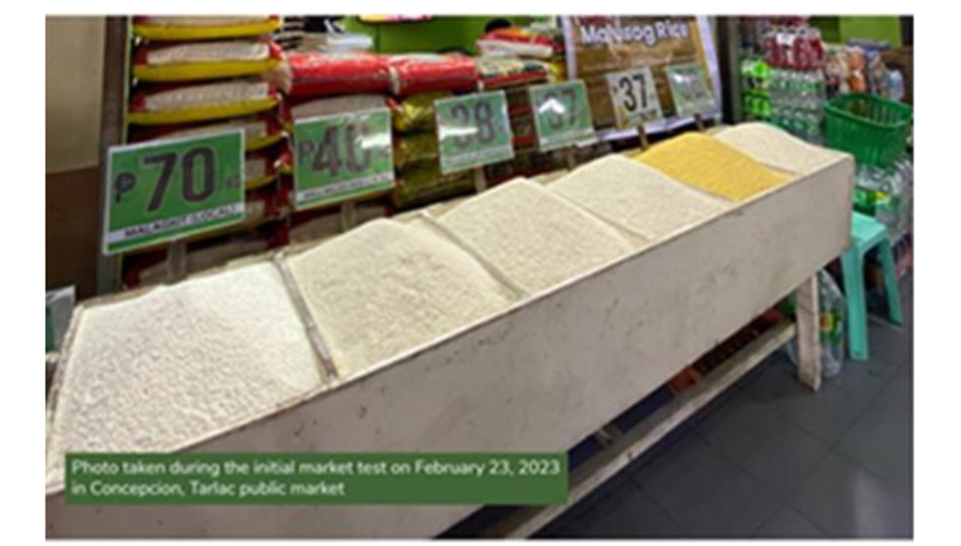
Golden Rice is designed principally for communities to grow and consume locally, with demand driven by its nutritional benefits at no additional cost—a significant departure from traditional methods. Experience from the Philippine Rice Research Institute between 2021 and April 24 (when it was halted due to the initial Appeal Court decision) demonstrated excellent acceptance by both growers and consumers.
Limited public sector resources have led to Golden Rice has been introduced only in Bangladesh and the Philippines. Bangladesh’s progress is stalled without valid reason.
The Philippines is the only country to develop, adopt, and gain valuable experience with Golden Rice. By adopting Golden Rice, known locally as Malusog Rice, to combat vitamin A deficiency, the Philippines has positioned itself as a global leader. Golden Rice decisions made in the Philippines will have global implications.
Golden Rice challenges the typical Greenpeace arguments against GMO crops, which is why Greenpeace seeks to halt its development.
If Greenpeace succeeds in stopping Golden Rice in the Philippines, it could, and probably would, severely hinder the progress of all other genetically engineered biofortification projects, in the Philippines and elsewhere. That’s one reason why the world is watching.
Conclusion
The Convention on Biological Diversity (CBD) was established to promote the sharing of genetic resources and knowledge for the global benefit of humanity. It is disappointing that the Philippine Court of Appeal has overlooked Principles 1 and 4:
CBD Principle 1:
“Human beings are at the centre of concerns for sustainable development. They are entitled to a healthy and productive life in harmony with nature.”
CBD Principle 4:
“In order to achieve sustainable development, environmental protection shall constitute an integral part of the development process and cannot be considered in isolation from it.”
Furthermore, the Philippine Appeal Court has disregarded the fact that Transboundary Movement, a crucial qualifier of the Cartagena Protocol, is irrelevant to Golden Rice in the Philippines.
Additionally, it is concerning that the Court did not consider the risks to human health, also as mandated by the Cartagena Protocol, in its decision to block the availability of Golden Rice to the Philippine population.
The Philippine Appeal Court’s decisions also overlook several very pertinent parts of the Philippine 1987 Constitution, including:
“The State shall protect and promote the right to health of the people and instil health consciousness among them.”
Finally, the Government of the Philippines is addressed in an open letter currently signed by 171 Nobel Laureates and 13,630 scientists and citizens.
“June 29th, 2016
To the Leaders of Greenpeace, the United Nations and Governments around the world
The United Nations Food & Agriculture Program has noted that global production of food, feed and fiber will need approximately to double by 2050 to meet the demands of a growing global population. Organizations opposed to modern plant breeding, with Greenpeace at their lead, have repeatedly denied these facts and opposed biotechnological innovations in agriculture. They have misrepresented their risks, benefits, and impacts, and supported the criminal destruction of approved field trials and research projects.
We urge Greenpeace and its supporters to re-examine the experience of farmers and consumers worldwide with crops and foods improved through biotechnology, recognize the findings of authoritative scientific bodies and regulatory agencies, and abandon their campaign against “GMOs” in general and Golden Rice in particular.
Scientific and regulatory agencies around the world have repeatedly and consistently found crops and foods improved through biotechnology to be as safe as, if not safer than those derived from any other method of production. There has never been a single confirmed case of a negative health outcome for humans or animals from their consumption. Their environmental impacts have been shown repeatedly to be less damaging to the environment, and a boon to global biodiversity.
Greenpeace has spearheaded opposition to Golden Rice, which has the potential to reduce or eliminate much of the death and disease caused by a vitamin A deficiency (VAD), which has the greatest impact on the poorest people in Africa and Southeast Asia.
The World Health Organization estimates that 250 million people suffer from VAD, including 40 percent of the children under five in the developing world. Based on UNICEF statistics, a total of one to two million preventable deaths occur annually as a result of VAD, because it compromises the immune system, putting babies and children at great risk. VAD itself is the leading cause of childhood blindness globally affecting 250,000 – 500,000 children each year. Half die within 12 months of losing their eyesight.
WE CALL UPON GREENPEACE to cease and desist in its campaign against Golden Rice specifically, and crops and foods improved through biotechnology in general; WE CALL UPON GOVERNMENTS OF THE WORLD to reject Greenpeace’s campaign against Golden Rice specifically, and crops and foods improved through biotechnology in general; and to do everything in their power to oppose Greenpeace’s actions and accelerate the access of farmers to all the tools of modern biology, especially seeds improved through biotechnology. Opposition based on emotion and dogma contradicted by data must be stopped. How many poor people in the world must die before we consider this a “crime against humanity”?
Sincerely,
171 Nobel Laureates and 13,630 scientists and citizens”
Conflicts of Interest.
The Author has no conflict of interest to declare.
Funding Statement
No funding for the work was received. The author is an unpaid volunteer, without grants.
References
- Potrykus I., From the concept of totipotency to biofortified cereals. Annu Rev Plant Biol. 2015;66:1-22. doi:10.1146/annurev-arplant-043014-114734. Epub 2014 Nov 24. PMID: 25423078.
- Dubock A.C. The politics of Golden Rice. GM Crops Food. 2014 Jul 3;5(3):210-22. doi:10.4161/21645698.2014.967570. PMID: 25437240; PMCID: PMC5033200.
- Dubock A.C. Prejudice, against Golden Rice, in US Academia drove unethical behaviour, with global and detrimental consequences for vitamin A deficiency alleviation. Medical Research Archives [online] 12(2) https://doi.org/10.18103/mra.v12i2.5091
- Dubock A.C., The Sustainable Development Goals are Unattainable without a change of Nutritional Strategy. (Paper in preparation.)
- Philippine Rice Research Institute, E Newsletters: October 2020 – September 2023 https://www.philrice.gov.ph/golden-rice/golden-rice-e-newsletter/
- The Appeal Court of the Philippines (August 15 2024): https://acrobat.adobe.com/id/urn:aaid:sc:US:49a148b1-3053-4a53-b40d-3bd39fa0208
- Principles of the CBD: https://www.un.org/en/development/desa/population/migration/generalassembly/docs/globalcompact/A_CONF.15
- The Convention on Biodiversity: https://www.cbd.int/doc/legal/cbd-en.pdf
- Adler, J. H., The Cartagena Protocol and Biological Diversity; Biosafe or Bio-sorry (2000). Faculty Publications. Paper 190. http://scholarlycommons.law.case.edu/faculty_publications/190
- The Cartagena Protocol https://www.cbd.int/doc/legal/cartagena-protocol-en.pdf
- https://www.cbd.int/information/parties.shtml
- https://www.cbd.int/doc/lists/cpb-ratifications.pdf
- https://www.worldbank.org/en/country/philippines/publication/-key-findings-undernutrition-in-thephilippines#:~:text=Nearly%2017%25%20of%20children%20aged,to%2012%20months%20(18%25)
- World Health Organization. Micronutrient deficiencies: Vitamin A deficiency. Published 2013. Accessed September 26, 2013. http://www.who.int/nutrition/topics/vad/en/
- Mayo-Wilson E., Imdad A., Herzer K., et al. Vitamin A supplements for preventing mortality, illness, and blindness in children aged under 5: Systematic review and meta-analysis. BMJ. 2011;343(7822):1-19. doi:10.1136/bmj.d5094
- West K.P., Klemm R.D., Sommer A., Vitamin A saves lives. Sound science, sound policy. J World Public Heal Nutr Assoc. 2010;1(5):211-229.
- Song P., Adeloye D., Li S., et al. The prevalence of vitamin A deficiency and its public health significance in children in low-and middle-income countries: A systematic review and modelling analysis. J Glob Heal. 2023;13(04084). doi:10.7189/jogh.13.04084
- Swamy B.P., Samia M., Boncodin R., et al. Compositional Analysis of Genetically Engineered GR2E “Golden Rice” in Comparison to That of Conventional Rice. J Agric Food Chem. 2019;67(28):7986-7994. doi:10.1021/acs.jafc.9b01524
- The Constitution of the Republic of the Philippines https://www.officialgazette.gov.ph/constitutions/1987-constitution/
- Swamy BPM, Marundan S, Samia M, et al. Development and characterization of GR2E Golden rice introgression lines. Sci Rep. 2021;11(1). doi:10.1038/s41598-021-82001-0
- Ingo Potrykus (2013). Genetic Modification and the Public Good. European Review, 21, pp S68-S79 doi:10.1017/S1062798713000203
- Trijatmiko KR, Duenãs C, Tsakirpaloglou N, et al. Biofortified indica rice attains iron and zinc nutrition dietary targets in the field. Sci Rep. 2016;6(September 2015):1-13. doi:10.1038/srep19792
- Storozhenko S, De Brouwer V, Volckaert M, et al. Folate fortification of rice by metabolic engineering. Nat Biotechnol. 2007;11(11):1277-1279. doi:10.1038/nbt1351
- Fitzpatrick TB, Dalvit I, Chang FH, et al. Vitamin B1 enhancement in the endosperm of rice through thiamine sequestration. Plant Biotechnol J. 2024;22(8):2330-2332. doi:10.1111/pbi.14348
- Stevens GA, Beal T, Mbuya M, et al. Micronutrient deficiencies among preschool-aged children and women of reproductive age worldwide: a pooled analysis of individual-level data from population-representative surveys. Lancet Glob Heal. 2022;10(11):e1590-e1599. doi:10.1016/S2214-109X(22)00367-9
- Lynas M. Children could die because of Greenpeace’s Golden Rice activism. 2024;(April). https://www.spectator.co.uk/article/children-could-die-because-of-greenpeaces-golden-rice-activism/
- Miller H. and Hefferon K., Greenpeace’s Cruel War on Genetically Engineered Crops Grinds On (2024). https://www.acsh.org/news/2024/08/20/greenpeaces-cruel-war-genetically-engineered-crops-grinds-48914
- Roberts R., Agre P., Alferov Z., et al. To the Leaders of Greenpeace, the United Nations and Governments around the world. (2016) https://supportprecisionagriculture.org/nobel-laureate-gmo-letter_rjr.html