

Water Quality Risks in Huncúm, Yucatán: A Health Study
Water quality in the karst coastal municipality of Huncúm, Yucatán, México. Risks to human health
1. Introduction
Toxic metal in water are a matter of great concern due to the damage to the ecosystem and human health. Various metals, such as Pb, Cd, Cr, Zn and Hg, can contaminate water due to different productive activities, threatening biodiversity and human beings. Metals can be integrated into the trophic chain, causing their bioaccumulation in humans even at low concentrations¹. Metals have diverse effects on public health, such as increasing the risk of various cancers and damage to the respiratory system, such as asthma. In addition, they are endocrine disruptors, may cause specific cardiovascular lesions, and are associated with various congenital malformations and allergies. Further, due to their neurotoxicity, they can give rise to neuronal damage, mental retardation, cognitive retardation in children, autism, and dyslexia²⁻⁵. Acute or chronic intoxication with metals can occur through water, air, and food. Toxic metal can intervene in cell disruption, inducing cases of abnormal growth, cell proliferation, disruption in damage repair processes, and cell death⁶. Among the mechanisms that are harmful to human health, metals can act as pseudo-natural elements in the body and interfere with metabolism, inducing oxidative stress by the formation of free radicals⁷.
In México, the primary sources of contamination are mining, rock erosion, waste disposal and landfills, industrial waste, fertilizers, and pesticides⁸. Groundwater contamination in karst areas results from hydrogeological characteristics and anthropogenic activities⁹. Karst soils and aquifers are highly vulnerable to groundwater contamination and distribution of pollutants, which characterize the state of Yucatán. There is an area of high hydrological importance called the Ring of Cenotes (Ring of Sinkholes), the main aquifer recharge area.¹⁰ Water quality in karst systems is one of the most worrying environmental problems today due to the associated risks to human health¹¹. Productive activities established in places with karst soils of high vulnerability to groundwater contamination are of high concern today, mainly in developing countries¹².
The municipality of Hunucmá, according to the Index of Vulnerability to the Karst Aquifer of Yucatán – IVAKY Index – (Figure 1)¹³, is of very high vulnerability, based on the geomorphopedological map, constructed with indicators such as relief, distance to groundwater from the surface, soil type and climate.
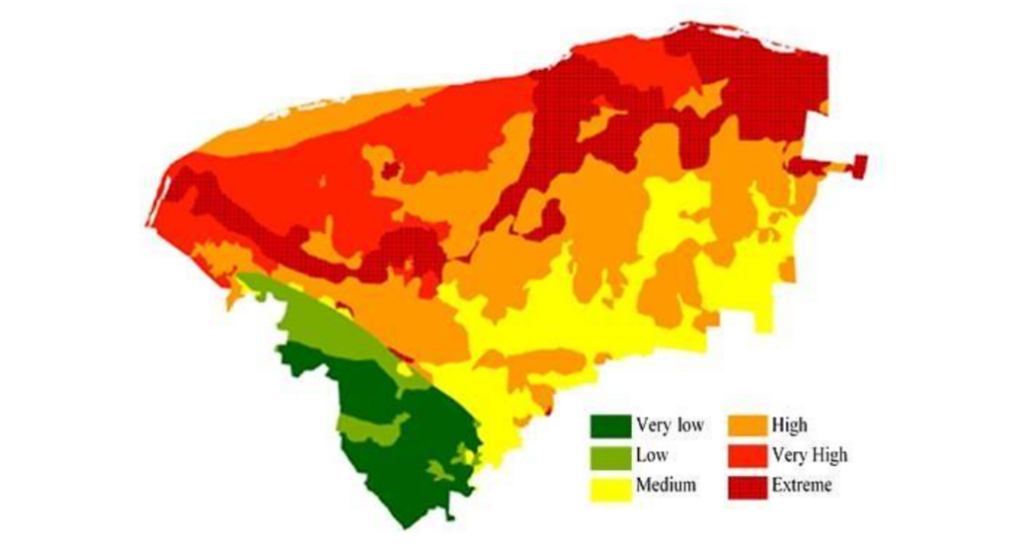
Figure 1. Contamination Vulnerability Index Map of the Yucatán Karst Aquifer¹³
Hunucmá is located near the area of influence of the Metropolitan Zone of Mérida, the capital of the state, where two-thirds of the population in the state of Yucatán is concentrated. Possible routes of contamination of the underground aquifer are related to anthropogenic activities, such as pig farms. Several such farms are located to the south of Hunucmá. This has a major influence on the subterranean flows dragging contaminants from the Ring of Cenotes (Figure 2).
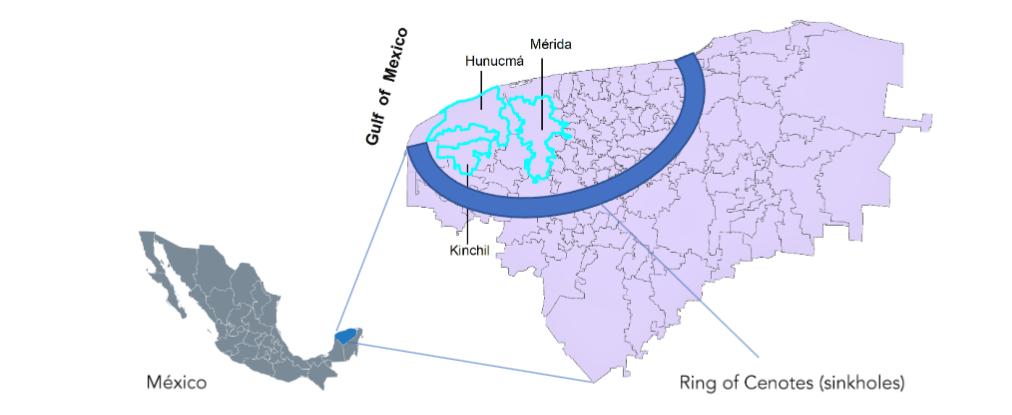
Figure 2. The municipality of Hunucmá has three main routes of contaminants through groundwater flows: the municipality of Mérida, the capital city of the state; the municipality of Kinchil, which has livestock production; and the area of the Ring of Cenotes.
Among the main productive activities in Hunucmá and its surroundings are agriculture, a large beer bottling plant, and pork and poultry production. In addition, there are abundant septic tanks for urban discharges without wastewater treatment systems and leachates from landfills. All these can affect the groundwater quality, particularly from shallow wells and drinking water distribution wells.
In intensive livestock and poultry production, metals such as Zn, Cd, Cu, As, Mn and Pb are used as additives in the feed so that chronic ingestion of meat, eggs, and milk with low concentrations of these metals can pose carcinogenic risks to humans¹⁴˒¹⁵.
In 2020, the population in Hunucmá was 35,137 inhabitants (49.7% male and 50.3% female). The economic sectors that concentrated more on industrial activities in Hunucmá were the pig farms, the Yucatecan Brewery, retail trade, and manufacturing industries of shoes, blacksmith products, and clothing. Among the leading public health statistics in the population of Hunucmá, it is reported that there are 1,251 people with physical disability, 1,147 people with visual disability, and 440 with hearing disability. By birth, there are 125 individuals with a hearing disability, 183 with a physical disability, 124 with a motor disability, 368 with a disability to communicate, and 242 with a memory disability¹⁶.
This study’s objective was to determine water quality and health risks in the municipality of Hunucmá, Yucatán, México.
2. Materials and Methods
2.1 LOCATION OF SAMPLING SITES
Sampling was carried out based on the Mexican Official Standard NOM-014-SSA1-1993 “Sanitary procedures for sampling water for human use and consumption in public and private water supply systems”, in a total of 15 selected wells (12 household wells and three municipal drinking water supply wells), (Table 1), distributed in the municipality of Hunucmá (Figure 3), which have an average depth of 8 meters for household wells and 18-20 m for drinking water wells. Samples were collected during the dry and rainy periods, specifically on April 28 and August 28, 2021, respectively. To determine the number of sampling sites, it was necessary to divide the municipality of Hunucmá into four quadrants to cover the entire municipal capital. However, given that this study was conducted during the period of the COVID-19 pandemic, sampling was by convenience.
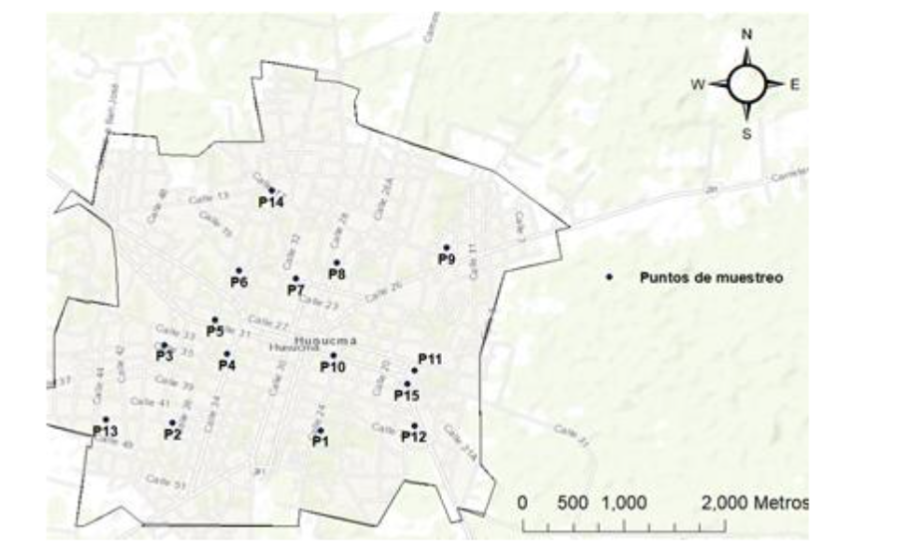
Figure 3. In the sampling area, 15 wells were selected (12 household wells (P1 to P12) and three municipal drinking water supply wells (P13 to P15), distributed in the municipality of Hunucmá.
Table 1. Geographic coordinates of the sampling points.
| Well | X | Y |
|---|---|---|
| P1 | 21.00862674 | -89.87429123 |
| P2 | 21.00930373 | -89.88748033 |
| P3 | 21.01633828 | -89.88825515 |
| P4 | 21.01554551 | -89.88265939 |
| P5 | 21.01858446 | -89.88370310 |
| P6 | 21.02302573 | -89.88158651 |
| P7 | 21.02230624 | -89.87648662 |
| P8 | 21.02375117 | -89.87284318 |
| P9 | 21.02509657 | -89.86308195 |
| P10 | 21.01535773 | -89.87314358 |
| P11 | 21.01404573 | -89.8659442 |
| P12 | 21.00905272 | -89.86597739 |
| P13 | 21.00957541 | -89.89344858 |
| P14 | 21.03022706 | -89.87868536 |
| P15 | 21.01280008 | -89.86658894 |
2.2 PREPARATION OF THE SAMPLING CONTAINERS
One of the requirements to ensure quality control was to have clean sampling containers appropriate for the analysis of toxic metals at trace concentrations. Cleaning of the 500 mL PET containers consisted of immersing them for 30 minutes in a solution of Extran ® MA 01 diluted in 10% distilled water. Subsequently, they were rinsed three times with ultrapure water type 1, with a resistivity of 18.2 MΩ-cm at 25 °C (Milli-Q®). Once rinsed, a 10% HNO3 solution was added, covered, and left to stand for 24 hours. After this time, they were rinsed with ultrapure water type 1. Finally, the water was removed, they were closed and stored until use.
2.3 SAMPLING PROCEDURE
Samples were collected from the wells using hydraulic pumps, allowing the water to flow for 3 to 5 minutes to eliminate the possible accumulation of metals in the water from the pipes. After this time, the containers were rinsed with water from the well three times, and a sample of approximately 500 ml was collected. Before closing the container, 1 ml of pure nitric acid (HNO3, Merck Suprapur®) was added to each sample. Subsequently, the containers with the samples were closed and transported to the laboratory using refrigeration at 4 °C and stored there under refrigeration at 4 ± 2°C until further analysis.
2.4 DETERMINATION OF Hg BY ATOMIC ABSORPTION SPECTROCOPY-COLD VAPOR
a) Instrumental optimization
The determination of Hg in well water samples was carried out using the EAA-VP technique. The analysis was carried out with a Thermo Electron Corporation Model M Series AtomicAbsorption Spectrometer; the equipment has a continuous flow steam system (Thermo Scientific model VP-100). The determinations were carried out by adjusting the operating conditions according to the laboratory’s internal procedure, which was previously validated¹⁷ (Table 2).
Table 2. Equipment conditions for Hg determination by EAA-VP
| Parameter | Condition |
|---|---|
| wavelength | 253.7 nm |
| measurement time | 4.0 s |
| measurement delay | 75.0 s |
| pump speed | 45 rpm |
| reducing agent | NaBH4 1.0% (m/v), in 0.5% NaOH |
| HCl concentration | 50% v/v |
b) Preparation of the calibration curve
A calibration curve in the range of 3-30 ppb of Hg was prepared as follows: from a standard solution of 1000 ppm (mg/L) of Hg (Sigma Aldrich®), a working solution of 100 ppb (µg/L) was prepared in ultrapure water type 1, and then the dilutions corresponding to the curve were made.
c) Preparation of samples for Hg analysis by EAA-VF
Volumetric flasks of 50 mL were used. Prior to gauging, each flask was rinsed with the sample to be processed. Ten mL of the sample was added, then 5 mL at 50% of HNO3 was added, shaken, and 0.5 ml of 1% potassium dichromate was added, allowing it to stand for 2 hours. Finally, 1 % of hydroxylamine was added to remove the color of the dichromate.
d) Preparation of added blanks and sampling blanks
To continue with the quality assurance of the results, blanks were prepared at concentrations of 15 and 25 ppb of Hg from a working solution of 100 ppb, prepared from a standard solution of 1000 ppm (Sigma Aldrich®).
For the sampling blank, ultrapure water type 1 was used and stored in a container in the same way as the samples. The blank was made on both sampling dates and was transported with the samples to evidence of any contamination during transport from the field to the laboratory. Additionally, a series of blanks were prepared to evaluate the limits of detection and quantification.
2.5 DETERMINATION OF Cr, Cu, Zn, As, Cd AND Pb CONCENTRATION BY THE ICP-MS TECHNIQUE
a) Instrumental optimization
The determination of metals in well water samples was carried out with a Thermo Scientific model iCAP RQ inductively coupled plasma mass spectrometer (ICP-MS), with helium-fed Collision CellTechnology (CCT).
Instrumental optimization (tuning) was performed one hour before analysis to achieve an acceptable signal, high sensitivity and reduction of isobaric interferences, molecular ions, oxides, and doubly charged groups. This was performed using a 10-ppb solution containing elements (Li, In and U) covering the low, medium, and high ranges regarding atomic mass. The tuning was performed automatically by the equipment. This tuning consists of measuring the analytical signal of Li, In, and U isotopes while iterating at different values of instrumental parameters. During the tuning, the ratio of oxide signals and double-charged species is also monitored to reduce the presence of interferences from oxides and polyatomic ions. At the end of the instrumental optimization, a performance test is performed to ensure that the analytical signal is adequate and free of interferences for the assay. The argon used for the analysis was ultra-high purity (Ar UAP, Infra®). The helium used in the CCT was BIP grade (He BIP®, Infra®). The instrumental optimization conditions are shown in Table 3.
Table 3. Instrumental conditions for ICP-MS
| Parameters | Values |
|---|---|
| Ar Auxiliary flow | 0.8 L/min |
| Ar Cool Flow | 14 L/min |
| Ar Nebulizer Flow | 1 L/min |
| Plasma Power | 1550 V |
| Spray Chamber Temperature | 2.70 °C |
| Peristaltic pump speed | 40 L/min |
| Sampling Depth | 5 mm |
| Torch Horizontal Position | -0.37 mm |
| Torch Vertical Position | -0.83 mm |
| D1 lens | -349.60 V |
| D2 lens | -158 V |
| Deflection entry lens | -35 V |
| Extraction lens potential 2 | -145.33 V |
| Focus Lens Potential | -9.50 V |
| CCT Potential bias | -21 V |
| CCT Entry Lens Potential | -86.67 V |
| CCT Exit Lens Potential | -40 V |
| CCT Focus Lens Potential | 1.80 V |
| CCT1 Flow Potential | 4.95 V |
| (CCT1 Shut-Off Valve Potential) | 1 V |
Once the instrumental optimization was completed, the analysis method was created, choosing the isotopes of each element to be analyzed (Cr50, Cu63, Zn66, As75, Cd112 and Pb208), in addition to other parameters, such as analysis time per sample, sample flow rate, and auto sampler configuration. For every 15 samples, the multi element standard of 10 µg/L was analyzed to observe the stability of the equipment.
b) Preparation of the calibration method
All the solutions for analyzing metals by ICP-MS (calibration curve solutions, samples, blanks, and sample and added blanks) were prepared gravimetrically using 10 mL centrifuge tubes. A tube was weighed for each dilution, and the necessary volumes of samples, standards or diluents were added. The mass of each dilution added was noted, and the ambient temperature was recorded for each weighing. The mass and temperature data and the density value of the dilutions were used to finally obtain the concentrations as a function of volume.
Since the ICP-MS technique is susceptible to matrix difference caused by variation in the concentration of cations of major elements, such as Ca, Mg or K, and the samples were analyzed without pretreatment, it was not possible to have an external calibration method, in this study we opted for a calibration by standard addition.
Thus, all samples were spiked at two points, 3 ppb and 10 ppb, using a certified multi-element standard (EPA 200.8 High-Purity Standards, HPS®). In addition, ICP-MS analysis requires an internal standard to reduce, as much as possible, the effect of the drift of the analytical signal of the isotopes to be analyzed. This experiment used a 10 ppb Ga solution as an internal standard, from which the Ga71 isotope was measured as an internal reference. The signal of the isotopes of the analytes Cr50, Cu63, Zn66, As75, Cd112 and Pb208 was adjusted against the signal of Ga71, generating a new analytical signal through a quotient, for example, S50Cr/SGa71.
The following formula was used to calculate the concentration of each element by the standard addition method:
Cx=b×Csm×VxCx=\frac{b\times Cs}{m\times Vx}Cx=m×Vxb×Cs
Where:
Cx is the concentration of the metal in the sample without addition.
Cs is the concentration of the metal in the standard with addition.
Vx is the volume of the sample before the addition.
m and b are the slope and the intercept of the line obtained by the standard addition method.
c) Preparation of samples for analysis of Cr, Cu, Zn, As, Cd, and Pb by ICP-MS.
Preparation of blanks and added samples
Blanks and added samples were prepared gravimetrically at 3 and 10 ppb for the metals to be analyzed from a certified 10 ppm standard (High-Purity Standards, HPS®). Additionally, a series of blanks were prepared to evaluate the limits of detection and quantification. For this purpose, the standard deviation of the signal from 10 blanks was used, for each of the two methods (EAA-VF and ICP-MS) and for each element. Then the values of the slopes of the calibration curves used (Table 4).
Statistical analysis
A descriptive analysis was used for the metal concentration values of the samples obtained during the dry and rainy seasons. As appropriate, a student t-test and Wilcoxon sign test were used for related sample comparisons. A significance level of 95% was used. Statgraphics Centurion XVI software was used.
Geographical distribution of the metal concentrations
A contamination index map was developed to identify the geographical distribution of the concentration of metals. This was obtained by calculating the average concentration value for each metal in each site and for both seasons. Then, the average concentration value for each metal was normalized with respect to the site with the highest contamination. These values were added to generate an index within the interval from 0 to 7. Lastly, the values were plotted using the ArcMap 10.4.1 software.
These values were then added to produce an index with values ranging from 0 to 7 (Figure 4).
The index considers values in the interval from 0 to 7 units, which are dimensionless, and where the larger the index value, the larger concentration of metals. The site with the highest concentration of accumulated metals was well number 8, followed by well number 10 and then by well number 4. In addition, a type of arc may be seen in the figure corresponding to a larger abundance of metals, beginning in the central area and to the west of Hunucmá (Figure 4). It may be assumed commercial activities in the central zone, which is also the oldest one, have given rise to the accumulation of metals in the soils around the sampling sites.
3. Results
The results from the statistical analyses for paired data of the metal concentration values from the 15 sampling sites suggest no statistically significant difference between the dry and the rainy season’s measurements. The only exception is for Hg (p > 0.05). (Table 5). Although metal concentrations were higher in the rainy season than in the dry season, the observed metals in rainfall can be attributed to natural and anthropogenic sources with a dilution and filtration of the groundwater (Table 6).
The metal concentration values determined from the water samples do not exceed the national standard reference values. However, metal contamination index values may be calculated to find the concentration distribution for the study area. These index values were obtained from the average value of the concentration for each metal, for each site, and for each of the two seasons. Then, the average concentration values for each metal were normalized with respect to the concentration of the most contaminated site. All these values were then added to produce an index with values ranging from 0 to 7 (Figure 4).
The highest concentrations detected were for the metals with the greatest impact on human health: 0.0014 ppm of As, 0.0005 ppm of Cd, 0.0011 ppm of Pb, and 0.0023 ppm of Hg. The highest concentrations of metals detected during the dry season were Cu, As, and Pb, and during the rainy season, Zn, Pb, As, Cu, and Hg. The international standards values for the maximum allowable water quality limits for metals are: Cd 0.003 ppm, As 0.01 ppm, Hg 0.006 ppm, Pb 0.01 ppm, Cr 0.05 ppm, and Zn 0.1 ppm (WHO, 2022)¹⁹.
Table 4. Limits of detection (LOD) and quantification (LOQ).
| Element | LOD (µg/L) | LOQ (µg/L) |
|---|---|---|
| ⁵⁰Cr | 0.035 | 0.116 |
| ⁶³Cu | 0.034 | 0.113 |
| ⁶⁶Zn | 0.487 | 1.606 |
| ⁷⁵As | 0.003 | 0.009 |
| ¹¹²Cd | 0.008 | 0.028 |
| ²⁰⁸Pb | 0.241 | 0.795 |
| Hg | 1.190 | 1.600 |
Table 5. Statistical test p-values and significance results for metal concentration values.
| Cr | Cu | Zn | As | Cd | Pb | Hg | |
|---|---|---|---|---|---|---|---|
| Student t test | — | — | 0.591 | 0.084 | — | 0.062 | 0.004 |
| Wilcoxon test | 1.000 | 0.423 | — | — | 0.267 | — | — |
| Statistical difference | No | No | No | No | No | No | Yes |
Table 6. Results of the concentrations of metals present in shallow well and drinking water wells of Hunucmá, during the dry and rainy seasons.
| Well | Cr ppm Rainy | Cr ppm Dry | Cu ppm Rainy | Cu ppm Dry | Zn ppm Rainy | Zn ppm Dry | As ppm Rainy | As ppm Dry | Cd ppm Rainy | Cd ppm Dry | Pb ppm Rainy | Pb ppm Dry | Hg ppm Rainy | Hg ppm Dry |
|---|---|---|---|---|---|---|---|---|---|---|---|---|---|---|
| P1 | 0.000284 | 0.000745 | 0.002503 | 0.001144 | 0.003368 | 0.004232 | 0.000564 | 0.000688 | *ND | 0.000053 | 0.000559 | 0.000828 | 0.000250 | 0.001270 |
| P2 | 0.000320 | 0.000591 | 0.002534 | 0.003421 | 0.000174 | 0.014765 | 0.000706 | 0.001199 | 0.000074 | 0.000007 | 0.000824 | 0.000845 | 0.000250 | 0.000340 |
| P3 | 0.000334 | 0.000392 | 0.001631 | 0.003027 | 0.005817 | 0.002807 | 0.000873 | 0.001428 | 0.000019 | 0.000055 | 0.000603 | 0.000838 | *ND | *ND |
| P4 | 0.000350 | 0.000520 | 0.000359 | 0.000638 | 0.016329 | 0.028343 | 0.000789 | 0.001041 | *ND | 0.000132 | 0.000552 | 0.000923 | 0.000083 | 0.001350 |
| P5 | 0.000296 | 0.000310 | 0.006333 | 0.000573 | 0.001432 | 0.001701 | 0.000886 | 0.000961 | 0.000179 | 0.000012 | 0.000620 | 0.000608 | 0.000250 | 0.001180 |
| P6 | 0.000412 | 0.000314 | 0.001642 | 0.000644 | 0.008343 | 0.012451 | 0.000777 | 0.000741 | 0.000074 | 0.000020 | 0.001150 | 0.000781 | 0.000250 | 0.000080 |
| P7 | 0.000337 | 0.000349 | 0.001086 | 0.001902 | 0.002007 | 0.003517 | 0.000775 | 0.000854 | 0.000051 | 0.000013 | 0.000731 | 0.000761 | 0.000333 | 0.001180 |
| P8 | 0.000398 | 0.000692 | 0.000585 | 0.000599 | 0.003391 | 0.007429 | 0.001003 | 0.000743 | 0.000055 | 0.000515 | 0.000676 | 0.000786 | 0.000167 | 0.002030 |
| P9 | 0.000412 | 0.000465 | 0.000372 | 0.000398 | 0.002706 | 0.001489 | 0.000941 | 0.000047 | 0.000042 | 0.000010 | 0.000684 | 0.000606 | 0.000083 | 0.001270 |
| P10 | 0.000440 | 0.000307 | 0.002421 | 0.004799 | 0.005097 | 0.012825 | 0.000780 | 0.000780 | 0.000023 | 0.000014 | 0.000844 | 0.000955 | *ND | 0.001950 |
| P11 | 0.000369 | 0.000359 | 0.001317 | 0.002876 | 0.004355 | 0.009499 | 0.000677 | 0.000064 | 0.000042 | 0.000014 | 0.000808 | 0.000964 | 0.000083 | 0.000250 |
| P12 | 0.000357 | 0.000337 | 0.001764 | 0.001900 | 0.009836 | 0.002652 | 0.000568 | 0.000587 | *ND | 0.000012 | 0.000806 | 0.000810 | 0.000666 | 0.002370 |
| P13 | 0.000321 | 0.000626 | 0.001157 | 0.000969 | 0.007553 | 0.005752 | 0.000628 | 0.000619 | 0.000042 | 0.000013 | 0.000895 | 0.001043 | *ND | 0.002290 |
| P14 | 0.000300 | 0.000297 | 0.000680 | 0.000906 | 0.013721 | 0.012188 | 0.000966 | 0.000882 | 0.000038 | 0.000013 | 0.000729 | 0.000696 | 0.000333 | 0.002540 |
| P15 | 0.000370 | 0.000329 | 0.000808 | 0.000575 | 0.015186 | 0.004791 | 0.000605 | 0.000625 | 0.000028 | 0.000008 | 0.000792 | 0.000678 | 0.000167 | *ND |
*ND: Not Detected; P1 to P12 = shallow house wells, P13, P14, P15 = drinking water wells
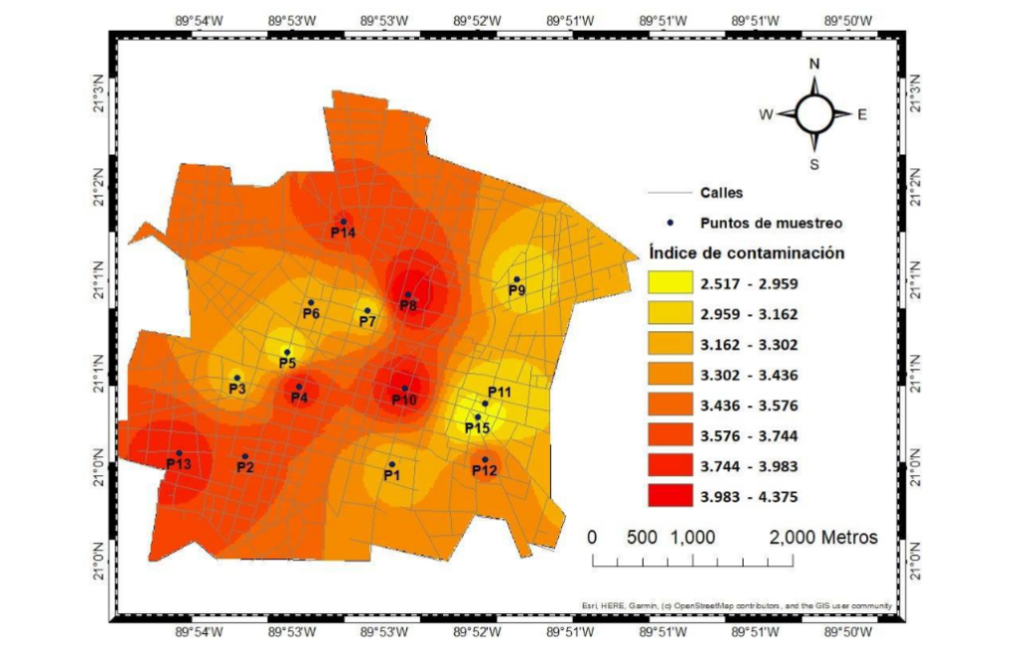
Figure 4. Metal contamination index map for Hunucmá.
In terms of physicochemical quality, 40% of the wells exceeded the permissible limit of 250 ppm of chlorides: well 1, 297 ppm; well 2, 324 ppm; well 7, 271 ppm; well 8, 255 ppm; well 9, 273 ppm; well 13 (drinking water) 315 ppm. The excessive water extraction by large companies such as the brewery, poultry and pig farms, among other productive activities, and the proximity to the coast can impact saline intrusion into the well and drinking water of Hunucmá²⁰.
High faecal coliform concentrations were found in wells of Hunucmá, with a range of 0-2,400 MPN/100 ml, including three wells for drinking water distribution with values of 0-1,110 MPN/100 ml.
These concentrations represent a high risk to human health, and the nitrate levels are very close to the maximum value of 10 mg/L allowed by the national norm (Table 7).
Table 7. Water quality parameters of nitrates and coliforms, in shallow (P1 to P12) and drinking water wells (P13 to P15) in Hunucmá, Yucatán, during the dry and rainy seasons.
| Well | N-NO₃ (mg/L) Dry | N-NO₃ (mg/L) Rainy | Fecal Coliform (MPN/100ml) Dry | Fecal Coliform (MPN/100ml) Rainy |
|---|---|---|---|---|
| P1 | 6.2 | 4.1 | 2400.0 | 1110.0 |
| P2 | 6.0 | 5.9 | 1110.0 | 0.0 |
| P3 | 7.4 | 7.8 | 2400.0 | 2400.0 |
| P4 | 7.6 | 4.9 | 23.0 | 2400.0 |
| P5 | 4.0 | 5.9 | 7.0 | 240.0 |
| P6 | 7.7 | 4.8 | 460.0 | 460.0 |
| P7 | 7.3 | 4.6 | 1110.0 | 2400.0 |
| P8 | 7.5 | 3.6 | 2400.0 | 2400.0 |
| P9 | 7.2 | 4.5 | 43.0 | 240.0 |
| P10 | 8.2 | 4.7 | 2400.0 | 1110.0 |
| P11 | 8.5 | 5.0 | 23.0 | 93.0 |
| P12 | 6.5 | 4.1 | 14.0 | 93.0 |
| P13 | 5.1 | 3.2 | 7.0 | 93.0 |
| P14 | 7.7 | 4.7 | 1110.0 | 93.0 |
| P15 | 8.5 | 5.0 | 0.0 | 0.0 |
| X̄ | 7.23 | 4.56 | 900.47 | 875.47 |
Higher nitrate concentrations were detected in the dry period, with a mean value of 7.23 mg/L in the dry and 4.56 mg/L in the rainy season. Methemoglobinemia is a disease in children known as “Blue Child Syndrome.” It is caused by the lack of ability of red blood cells to transport oxygen to the tissues of the human body and the reduction of normal haemoglobin levels. The most common cause is the presence of nitrate in groundwater and drinking water. Drinking water utilities must comply with local legislation and refer to WHO International Guidelines for Drinking Water²¹. Several studies report nitrate contamination in water and the risk of methemoglobinemia, especially in infants who drink milk prepared with contaminated water²².
Soils and the karst aquifer in Yucatán facilitate nitrate leaching. The primary sources of nitrate contamination include fertilizers used in agriculture, wastewater discharges from industry, human and animal waste. A study conducted at 23 sites in the metropolitan, agricultural, and livestock areas of wells for drinking water distribution in the state of Yucatán, Mexico, reported high nitrate concentrations, with mean values greater than 100 ppm in the agricultural area, which is well above the limit in the national legislation (10 mg/L)²³.
4. Discussion
The results of this study indicate that faecal coliform contamination is above the official Mexican standard allowable limits, and nitrates and metals are slightly below the corresponding bounds indicated in the national legislation. Wells 8, 10 and 4 had higher levels of metal concentrations and correspond to the downtown area of Hunucmá so that commercial activities may be contributing to these contaminants in the groundwater. Karst aquifers are highly vulnerable to faecal contamination since they are territories of high recharge for the aquifer²⁴, and the drag and subterranean flow of contaminants is caused by agricultural, industry, and livestock activities.
The highest metal concentrations detected in the drinking water supply wells were 0.0010 ppm for Pb, 0.0025 ppm for Hg, 0.015 ppm for Zn, and 0.0009 ppm for As, Pb, Hg, and As, were the metals with the highest concentrations during the rainy season.
Among the first studies conducted in Yucatán 19 years ago to determine metals in drinking water distribution wells²⁵, residues of arsenic, barium, cadmium, copper, iron, manganese, lead, and zinc were detected. The highest concentrations were for Cd detected in 72% of the samples analyzed, with levels between 0.021 and 0.062 mg/L, which exceeded the Mexican Official Standard (NOM, 1994). Recent studies²⁶ reported metal concentrations in the Ring of Cenotes in Yucatán, close to the area of the present study, where there is high connectivity between surface water bodies and groundwater. The detected levels of metals included 0.5 µg/L of Cd and 1.4 µg/L of Pb. The levels of metals detected in Yucatán water in various studies indicate high fragility in karst aquifers according to the IVAKY index (Aguilar-Duarte et al., 2016)²⁷, so prevention measures are necessary. Vulnerability to groundwater contamination is very high, hence the importance of assessing samples from these karst environments²⁸.
In 2020, the population of Hunucmá was 35,137. Among the main public health statistics are 1,251 people with physical disabilities, 1,147 people with visual disabilities, and 440 people with hearing disabilities.
Hearing disability by birth was reported in 125 individuals, physical disability by birth was present in 183 cases, motor disability by birth in 124 persons, disability by birth to communicate in 368 inhabitants, and disability to remember by birth in 242 individuals²⁹. Although these public health statistics may be related to various risk factors, the impact of metals can be related to congenital malformations, including prenatal exposure³⁰. Metals can affect the neurodevelopmental process, causing fetal damage that results in neurological defects, cognitive delay with learning difficulties, and behavioural abnormalities, including autism spectrum disorders³¹.
The impact of metals is associated with neurodegenerative diseases such as Alzheimer’s disease, Parkinson’s disease, congenital malformations, and attention deficit disorders. The probable correlation between metals and central nervous system diseases is mainly due to oxidative stress and the disruption of normal neurotransmitter secretion³². Considering the cases of diseases with congenital malformations in the population of Hunucmá and the results of the present study, it is advisable to continue the water monitoring and to deepen the study and understanding of the etiological relationships of these diseases in a multidisciplinary way.
A study in Thailand showed that metals pose a health risk even at low concentrations due to chronic exposure and ingestion of groundwater³³. Contaminant transport from inland to coastal municipalities can impact biodiversity, the bioaccumulation of contaminants in marine species, and human health. Coastal pollution comes from various anthropogenic sources and can be caused by urbanization, industry, agriculture, and tourism³⁴.
Considering the direction of regional groundwater flow and the risk of remote contamination in Hunucmá due to contaminant transport³⁵, there is a mega pig farm in the municipality of Kinchil in the south, the brewery in the same municipality of Hunucmá, poultry farms, and agricultural areas. In fact, to the south is the zone of influence of the Ring of Cenotes, where a study reported high concentrations of organochlorine pesticides in water: 10.84 ppm of Δ-lindane, 6.53 ppm of α-lindane, 13.61 of heptachlor³⁶. Other remote sources of pollutants through groundwater flow that can reach Hunucmá are those reported from a study in Yucatán, showing that the main sources of contaminants are from anthropogenic activities, including those from the capital city of Mérida. The risk analysis study considered various sources of contaminants for ground and surface water in the state of Yucatán based on land use information, following the method proposed by the COST Action 620 group. Among the main sources are gas stations, pig farms, untreated wastewater discharges, industrial waste, urbanization without sewage systems, poultry farms, and agrochemicals from agriculture³⁷.
A study of groundwater in an area with industrial and agricultural anthropogenic activities in northeastern China reported higher levels of metals in the rainy season than in the dry season due to the natural leaching³⁸. In the present study, the mean concentrations of faecal coliforms found in the water during the dry season were 900 MPN/100 ml and 875 MPN/100 ml in the rainy season. The highest concentration in drinking water wells ranged from 7 to1,110 MPN/100 ml in the dry season and in the rainy season from 0 – 93 MPN/100 ml. These values represent high risks to human health, especially for children under five years of age.
A study conducted during the dry and rainy seasons in 21 drinking water supply wells in 13 municipalities in the agricultural, livestock and urban areas of Yucatán reported higher faecal coliform concentrations in the livestock zone, followed by the urban and agricultural zones³⁹. Likewise, in a comprehensive study conducted in 48 tourist recreational glasses of water (cenotes) in Yucatán to measure total and faecal coliform contamination, 100% of the cenotes were contaminated. As mentioned, this is relevant since the karst system interconnects wells, cenotes, and groundwater⁴⁰. It can be inferred that faecal contamination in well water, cenotes, and groundwater in Yucatán is widespread due to the lack of sanitary infrastructure and livestock activities.
The present study found that metal, nitrate, and coliform contaminants found in household and drinking water wells represent high risks to human beings and the ecosystem. Industrial and livestock activities and the lack of water infrastructure and drinking water treatment⁴¹ pose potential health and environmental risks. Although the study is not exhaustive, these results can serve as a baseline for further research.
The precautionary principle for water conservation and human health should be applied in these cases. It is defined as: “When an activity poses threats of harm to human health or the environment, precautionary measures should be taken to prevent impacts on human health, i.e., if health risks exist and are supported by scientific evidence, then it is better to adopt preventive measures” (Alvarez et al., 2021)⁴²˒⁴³.
5. Conclusions
Groundwater and drinking water quality pose risks to public health due to bioaccumulation from chronic exposure to metals, nitrates, and high levels of coliforms. One of the drinking water wells reported more than 300 mg/L of chlorides, possibly related to saline intrusion due to productive activities. 11% of the population suffers from physical disability or central nervous system, such as communication or memory problems.
Conflict of Interest:
The authors have declared no conflict of interest.
Funding Statements:
No financial disclosures.
Acknowledgements:
We are grateful to Fernando José Álvarez Cervera, for reviewing the English manuscript and his helpful suggestions.
References
1. Pabón S.E., Benítez R., Sarria Villa R. A., Gallo J.A. (2020). Contaminación del agua por metales pesados, métodos de análisis y tecnologías de remoción. Entre Ciencia e Ingeniería 2020, 14 (27), 9-18.
2. Singh N., Kumar D., Sahu A. (2007). Arsenic in the environment: eff ects on human health and possible prevention. J Environ Biol 28(2 Suppl): 359–365.
3. Martin S., Griswold W. (2009). Human health effects of heavy metals. Environmental Science and Technology Briefs for Citizens. 2009;(15):1–6.
4. Rehman, K., Fatima, F., Waheed, I., Akash, M.S.H. (2017). Prevalence of exposure of heavy metals and their impact on health consequences. J Cell Biochem. 2018 Jan;119(1):157-184. doi: 10.1002/jcb.26234. Epub 2017 Aug 2. PMID: 2864 3849.
5. Saikat, M., Arka, J. C., Abu, M. T., Talha, B. E., Firzan N., Ameer, K., Abubakr, M. I., Mayeen, U. K., Hamid O., Fahad, A. A., Jesus, S. G. (2022). Impact of heavy metals on the environment and human health: Novel therapeutic insights to counter the toxicity, Journal of King Saud University – Science, Volume 34, Issue 3, 2022, 101865, ISSN 1018-3647, https://doi.org/10.1016/j.jksus.2022.101865.
6. Balali-Mood M., Naseri K., Tahergorabi Z., Khazdair M.R., Sadeghi M. (2021). Toxic Mechanisms of Five Heavy Metals: Mercury, Lead, Chromium, Cadmium, and Arsenic. Front Pharmacol. 2021 Apr 13;12: 643972. doi: 10.3389/fphar.202 1.643972. PMID: 33927623; PMCID: PMC8078867.
7. Jaishankar, M., Tseten T., Anbalagan N., Mathew B. B., Beeregowda K. N. (2014). Toxicity, mechanism and health effects of some heavy metals. Interdiscip Toxicol. 2014 Jun;7(2):60-72. doi: 10.2478/intox-2014-0009. Epub 2014 Nov 15. PMID: 26109881; PMCID: PMC4427717.
8. Covarrubias S.A., Peña J.J. (2017). Contaminación ambiental por metales pesados en México: Problemáticas y estrategias de fitorremediación. Int. Contam. Ambie. 2017, 33, 7-21.
9. Liu J., Wu J., Rong S., Xiong, Y., Teng, Y. (2022). Groundwater Vulnerability and Groundwater Contamination Risk in Karst Area of Southwest China. Sustainability 2022, 14, 14483. https://doi.org/10.3390/su142114483
10. Bauer Gottwein, P., Gondwe, B., Charvet, G., Marín, L., Rebolledo-Vieyra, M. and Merediz-Alonso, G. (2011). Review: The Yucatán Peninsula karst aquifer, Mexico. Hydrogeol. J., 19 (3), 507–524. doi: 10.1007/s10040-010-0699-5. Springer-Verlag.
11. Liao, H.W., Jiang, Z.C., Zhou, H., Qin, X.Q., Huang, Q.B., Zhong, L., Pu Z.G. (2022). Dissolved Heavy Metal Pollution and Assessment of a Karst Basin around a Mine, Southwest China. Int J Environ Res Public Health. 2022 Nov 1;19(21):14293. doi: 10.3390/ijerph192114293. PMID: 36361169; PMCID: PMC9654374.
12. Purushotham, D., Rashid, M., Lone, M.A. et al., (2013). Environmental impact assessment of air and heavy metal concentration in groundwater of Maheshwaram watershed, ranga reddy district, Andhra Pradesh. J Geol Soc India 81, 385–396 (2013). https://doi.org/10.1007/s12594-013-0049-z
13. Aguilar-Duarte, Y., Bautista F., Mendoza M. E., Frausto O., Ihi T., and Delgado C. (2016). Ivaky: Index of Vulnerability to Pollution of Yucatecan Karstic Aquifer.” Revista Mexicana de Ingeniería Química 15 (3): 913–933. doi:10.24275/rmiq/IA1081.
14. Hu Y., Zhang W., Chen G., Hefa Ch., Tao S. (2018). Public health risk of trace metals in fresh chicken meat products on the food markets of a major production region in southern China, Environmental Pollution, volume 234, pag. 667-676, 2018, issn = 0269-7491, doi: https://doi.org/10.1016/j.envpol.2017.12.006, https://www.sciencedirect.com/science/article/pii/S0269749117334759
15. Miclean M., Cadar O., Levei E.A., Roman R., Ozunu A., Levei L. (2019). Metal (Pb, Cu, Cd, and Zn) Transfer along Food Chain and Health Risk Assessment through Raw Milk Consumption from Free-Range Cows. Int J Environ Res Public Health. 2019 Oct 23;16(21):4064. doi: 10.3390/ijerph1621 4064. PMID: 31652702; PMCID: PMC6862208.
16. Data Mexico, 2020. Gobierno de México. Hunucmá. https://www.economia.gob.mx/datamexico/es/profile/geo/hunucma#education-and-employment
17. Omar, D.T. (2021). Desarrollo de un método analítico para determinar mercurio total en agua subterránea. Tesis de Licenciatura: Mérida, Yucatán., 2021.
18. DOF (2022). NORMA Oficial Mexicana NOM-127-SSA1-2021, Agua para uso y consumo humano. Límites permisibles de la calidad del agua. https://www.dof.gob.mx/nota_detalle.php?codigo=5650705&fecha=02/05/2022#gsc.tab=0
19. WHO (2022). Guidelines for drinking-water quality: fourth edition incorporating the first and second addenda. Geneva: World Health Organization; 2022. Licence: CC BY-NC-SA 3.0 IGO. ISBN 978-92-4-004506-4
20. Moore, W. S., Joye, S. B. (2021). Saltwater Intrusion and Submarine Groundwater Discharge: Acceleration of Biogeochemical Reactions in Changing Coastal Aquifers. Frontiers in Earth Science, Vol. 9, 2021.
https://www.frontiersin.org/articles/10.3389/feart.2021.600710. DOI=10.3389/feart.2021.600710
21. USEPA (2023). United States Environment Protection Agency. National Primary Drinking Water Regulations. https://www.epa.gov/ground-water-and-drinking-water/national-primary-drinking-water-regulations
22. Greer, F. R., Shannon M. (2005). American Academy of Pediatrics Committee on Nutrition; American Academy of Pediatrics Committee on Environmental Health. Infant methemoglobinemia: the role of dietary nitrate in food and water. Pediatrics. 2005 Sep;116(3):784-6. doi: 10.1542/peds.2005-1497. PMID: 16140723.
23. Long D. T., Pearson Amber L., Voice Thomas C., Polanco-Rodríguez Angel G., Sanchez-Rodríguez E. Cuauhtemoc, Xagoraraki Irene, Concha-Valdez Fanny G., Puc-Franco Miguel, Lopez-Cetz Rafael, Rzotkiewicz Amanda T. (2018). Influence of rainy season and land use on drinking water quality in a karst landscape, State of Yucatán, Mexico. Applied Geochemistry, Volume 98, 2018, Pages 265-277, ISSN 0883-2927,
https://doi.org/10.1016/j.apgeochem.2018.09.020. https://www.sciencedirect.com/science/article/pii/S0883292718302841
24. Vucinic, L., O’Connell, D., Teixeira, R., Coxon, C., Gill, L. (2022). Flow Cytometry and Fecal Indicator Bacteria Analyses for Fingerprinting Microbial Pollution in Karst Aquifer Systems. Water Resour Res. 2022 May;58(5): e2021WR029840. doi: 10.102 9/2021WR029840. Epub 2022 Apr 27. PMID: 35859924; PMCID: PMC9285701.
25. Pacheco Ávila, J., Cabrera Sansores A., Pérez Ceballos R. (2004). Diagnóstico de la calidad del agua subterránea en los sistemas municipales de abastecimiento en el Estado de Yucatán, México Ingeniería, vol. 8, núm. 2, mayo-agosto, 2004, pp. 165-179 Universidad Autónoma de Yucatán Mérida, México.
26. Arcega-Cabrera F., Sickman J. O., Fargher L., Herrera-Silveira, L. D., Oceguera-Vargas I., Lamas-Cosío E., Robledo-Ardila P. A. (2021). Groundwat J.er Quality in the Yucatan Peninsula: Insights from Stable Isotope and Metals Analysis. Groundwater, Volume 59, Issue 6, November/ December 2021, Pages 878-891
27. Aguilar-Duarte, Y., Bautista F., Mendoza M. E., Frausto O., Ihi T., and Delgado C. (2016). Ivaky: Index of Vulnerability to Pollution of Yucatecan Karstic Aquifer.” Revista Mexicana de Ingeniería Química 15 (3): 913–933.
doi:10.24275/rmiq/IA1081.
28. Iván, V., & Madl–Szonyi, J. (2017). State of the art of karst vulnerability assessment: overview, evaluation and outlook. Environmental Earth Science, 76(112). 1-25. https://doi.org/10.1007/s12665-017-6422-2
29. Data México, 2022. Discapacidades por tipo de actividad cotidiana en la población de Hunucmá. https://datamexico.org/es/profile/geo/hunucma#health
30. Wang, C., Pi X., Yin S., Liu, M., Tian, T., Jin, L., Liu, J., Li, Z., Wang, L., Yuan, Z., Wang, Y., Ren, A. (2022). Maternal exposure to heavy metals and risk for severe congenital heart defects in offspring. Environmental Research, Volume 212, Part C, 2022, 113432, ISSN 0013-9351, https://doi.org/10.1016/j.envres.2022.113432.
31. Gorini, F., Muratori, F. & Morales, M.A. (2014). The Role of Heavy Metal Pollution in Neurobehavioral Disorders: a Focus on Autism. Rev J Autism Dev Disord 1, 354–372 (2014). https://doi.org/10.1007/s40489-014-0028-3
32. Rehman, Q., Rehman, K., Akash, M.S.H., 2021. Heavy Metals and Neurological Disorders: From Exposure to Preventive Interventions. In: Akash, M.S.H., Rehman, K. (eds) Environmental Contaminants and Neurological Disorders. Emerging Contaminants and Associated Treatment Technologies. Springer, Cham.
https://doi.org/10.1007/978-3-030-66376-6_4
33. Wongsasuluk, P., Chotpantarat, S., Siriwong, W. et al., (2021). Human biomarkers associated with low concentrations of arsenic (As) and lead (Pb) in groundwater in agricultural areas of Thailand. Sci Rep 11, 13896 (2021). https://doi.org/10.1038/s41598-021-93337-y
34. Nunes, M., Leston, S. (2022). Coastal Pollution: An Overview. In: Leal Filho, W., Azul, A.M., Brandli, L., Lange Salvia, A., Wall, T. (eds) Life Below Water. Encyclopedia of the UN Sustainable Development Goals. Springer, Cham. https://doi.org/10.1007/978-3-319-98536-7_9
35. Bauer Gottwein, P., Gondwe, B., Charvet, G., Marín, L., Rebolledo-Vieyra, M. and Merediz-Alonso, G. (2011). Review: The Yucatán Peninsula karst aquifer, Mexico. Hydrogeol. J., 19 (3), 507–524. doi: 10.1007/s10040-010-0699-5. Springer-Verlag.
36. Polanco Rodríguez, A. G., Navarro Alberto J. A., Solorio Sánchez J. S., Mena Rejón G. J., Gómez J. M., and DelValls Casillas T. A. (2015). Contamination by Organochlorine Pesticides in the Aquifer of the Ring of Cenotes in Yucatán, México. Water and Environment Journal, 29 (1): 140–150. doi:10.1111/wej.12080.
37. González Herrera R. A., Albornoz, E. B., Sua I., Sánchez y Pinto I. A., y Osorio Rodríguez J. H. (2018). El acuífero yucateco. Análisis del riesgo de contaminación con apoyo de un Sistema de Información Geográfica. Rev. Int. Contam. Ambie. 34 (4) 667-683, 2018. DOI: 10.20937/RICA.2018.34.04.09
38. Zhai Y, Zheng F, Li D, Cao X, Teng Y. (2022). Distribution, Genesis, and Human Health Risks of Groundwater Heavy Metals Impacted by the Typical Setting of Songnen Plain of NE China. Int J Environ Res Public Health. 2022 Mar 17;19(6):3571. doi: 10.3390/ijerph19063571. PMID: 35329260; PMCID: PMC8955772.
39. Long D. T., Pearson Amber L., Voice Thomas C., Polanco-Rodríguez Angel G., Sanchez-Rodríguez E. Cuauhtemoc, Xagoraraki Irene, Concha-Valdez Fanny G., Puc-Franco Miguel, Lopez-Cetz Rafael, Rzotkiewicz Amanda T. (2018). Influence of rainy season and land use on drinking water quality in a karst landscape, State of Yucatán, Mexico. Applied Geochemistry, Volume 98, 2018, Pages 265-277, ISSN 0883-2927,
https://doi.org/10.1016/j.apgeochem.2018.09.020. https://www.sciencedirect.com/science/article/pii/S0883292718302841
40. Hoogesteijn Reul, Almira L.., Febles-Patrón, José Luis., & Nava-Galindo, Violeta Amapola. (2015), “La contaminación fecal en cenotes de interés turístico y recreacional del estado de Yucatán.” Ingeniería, Vol. 19, núm.3, pp.169-175. ISSN: 166 5-529X. https://www.redalyc.org/articulo.oa?id=46750926004
41. CNA (2021). Comision Nacional del Agua. Programa Hídrico Regional 2021-2024. Región Hidrológica Administrativa Península de Yucatán. pág. 200. https://files.conagua.gob.mx/conagua/generico/PNH/PHR_2021-2024_RHA_XII_Pen%C3%ADnsula_de_Yucat%C3%A1n.pdf
42. Álvarez E., Amado V. J., London W. M. (2021). Precautionary Principle. Oxford Bibliographies, DOI: 10.1093/OBO/9780199756797-0046.
43. Medina Carrillo Lourdes (2022). La Aplicación del Principio Precautorio en México. Editorial Tirant lo Blanch, ISBN: 09788411131254. https://editorial.tirant.com/mex/autorList/lourdes-guadalupe-medina-carrillo-590244