




Impact of GROVIVA® on Child Growth: A Clinical Study

Advancing Childhood Growth and Development: The Impact of Oral Nutritional Supplement GROVIVA® in Children Aged 2–12 Years

Dr. IPS Kochar¹*; Dr. Prashant Bachina², Dr. Lalit Verma³, Dr. Saurabh Uppal⁴; Dr. Aashay Abhay Shah⁵; Dr. Richa Arora⁶, Dr. Atul Mishra⁷

  1. Pediatric & Adolescent Endocrinologist & Diabetologist, Indraprastha Apollo Hospital, New Delhi
  2. Senior Consultant Pediatric Gastroenterologist, Rainbow Children’s Hospital, Hyderabad
  3. Associate Director – Pediatric Hepatology, Nanavati Max Institute of Liver, Intestine & Pancreas Sciences, Nanavati Max Super Speciality Hospital, Mumbai
  4. Pediatric Endocrinologist & Director, Endokidz Clinics, Jalandhar, India
  5. Pediatric Gastroenterologist & Hepatologist, PRISM Pediatric Gastro Centre, Ahmedabad, India
  6. Pediatric Endocrinologist, Child Clinic & Endocrine Centre, Delhi, India
  7. Head, Medical & Scientific Affairs, Signutra Nutra institute, Delhi, India

[email protected]

OPEN ACCESS

PUBLISHED 31 May 2026

CITATION Kochar, IPS., Bachina, P., et al., 2026. Advancing Childhood Growth and Development: The Impact of Oral Nutritional Supplement GROVIVA® in Children Aged 2–12 Years. Medical Research Archives, [online] 14(5). https://doi.org/10.18103/mra.v14i5.7366

COPYRIGHT: © 2025 European Society of Medicine. This is an open-access article distributed under the terms of the Creative Commons Attribution License, which permits unrestricted use, distribution, and reproduction in any medium, provided the original author and source are credited.

DOI https://doi.org/10.18103/mra.v14i5.7366

ISSN 2375-1924

Abstract
Background: Nutritional inadequacy remains a persistent public health concern in India, particularly among children aged 2–12 years. Despite advancements in national health metrics, high rates of stunting, wasting, and micronutrient deficiencies continue to affect this age group. Oral nutritional supplements (ONS) have emerged as effective interventions to help bridge dietary gaps, especially in low- and middle-income settings. This study aimed to assess the efficacy and safety of nutritional supplement (GROVIVA®), a scientifically developed ONS, in enhancing growth, nutritional status, and overall well-being in Indian children over a six-month period.

Methods: A total of 775 healthy children with a BMI below the 15th percentile were enrolled from six medical centers, with 720 completing the study. Participants consumed 30 g of nutritional supplement (GROVIVA®) mixed in 100 ml of milk or water twice daily alongside their regular diet. Growth metrics (height, weight, BMI), illness frequency, school absenteeism, gut health, and general well-being were evaluated at baseline, 3 months, and 6 months. Statistical analysis was conducted using t-tests and Analysis of Variance (ANOVA).

Results: Significant improvements were observed in weight (14.59 kg to 17.40 kg), height (99.22 cm to 103.29 cm), and BMI (14.48 to 15.98 kg/m²), particularly among children aged 2–7 years (P=0.0001). Illness frequency and absenteeism decreased, with 79% avoiding hospitalization. The supplement was well-tolerated, with reduced gastrointestinal complaints and no severe adverse events.

Conclusion: Nutritional supplement (GROVIVA®) effectively improved growth parameters and immune resilience in Indian children, supporting its role as a safe and beneficial nutritional intervention in at-risk pediatric populations.

Introduction

Growth is a well-established measure of nutritional status in children, particularly in their early years, and is important for physical development, cognitive function, and immunological health¹. Proper nutrition during this period has long-lasting effects, influencing not just immediate health but also future academic performance, work productivity, and overall well-being.

India faces significant health challenges, including maternal and fetal health concerns, nutritional disparities, and disease management, since poverty and malnutrition remain pressing issues despite rapid economic growth in the recent decade. About 27% of India’s population (26% in urban and 28% in rural areas) lives below the poverty line as determined by the expenditure to get an average of 2400 kcal per capita per day in rural areas and 2100 kcal in urban areas². The coexistence of poverty and poor nutrition contributes to inadequate child growth, micronutrient deficiencies, increased vulnerability to illnesses, and impaired physical and cognitive development³.

Malnutrition is a global health crisis. In the year 2022, an estimated 149 million children under the age of five were affected by stunting, 45 million were wasted, 13.6 million were severely wasted, and 37 million were classified as overweight or obese⁴˒⁵. In India, young children between 2 and 12 years of age experience high rates of stunting, wasting, and underweight, with undernutrition responsible for over 2 million deaths annually among children under five years⁶˒⁷. Furthermore, undernutrition accounts for 22% of India’s disease burden and leads to a 1.4% loss in Gross Domestic Product (GDP) due to reduced adult productivity⁶˒⁹.

Recent data from the National Family Health Survey (NFHS-5 2019-21) indicates some progress in child nutrition compared to NFHS-4 (2015-16). Stunting has declined from 38.4% to 35.5%, wasting from 21.0% to 19.3%, and underweight prevalence has reduced from 35.8% to 32.1%. However, if children’s undernutrition and growth deficiencies are not addressed early in childhood, some consequences can be irreversible, affecting their learning ability, academic performance during school years, and future productivity¹⁰˒¹¹.

Dietary patterns in India contribute to these challenges associated with undernutrition. According to the National Nutrition Monitoring Bureau (NNMB) survey (2006), Indian households consume less than the recommended intake of all food groups except cereals and millet. Indian diets, predominantly vegetarian, rely on cereals (wheat, rice, jowar, and bajra) for about 60% of their protein intake. However, cereal-based proteins are of lower biological value, leading to inadequate protein consumption in children⁸˒¹².

Evidence suggests that targeted nutritional interventions can reduce childhood stunting by 20% and improve cognitive development in children¹³. In this context, several studies conducted in developing countries have highlighted the positive impact of Oral Nutritional Supplements (ONS) in improving linear growth, physical development, and cognitive outcomes among children who are malnourished or at nutritional risk¹⁴˒¹⁵. When combined with dietary counselling, ONS has been shown to produce beneficial results in undernourished pediatric populations¹⁶˒¹⁷˒¹⁴. Although data from India remains limited, existing short- and long-term studies suggest the beneficial role of ONS as it improves growth indicators and strengthens resistance to infections among Indian children, particularly those who are malnourished or picky eaters¹⁶˒¹⁹.

Flavored nutritional supplements provide an easy and effective way to ensure adequate nutrition for children, especially those who are picky eaters. Nutritional supplement GROVIVA® is a scientifically developed supplement aimed at promoting healthy growth and development in children between the ages of 2 and 12. It features a blend of whey, casein, and soy proteins for a steady release of amino acids, probiotics to support gut health and immunity, dietary fiber to aid digestion, and docosahexaenoic acid (DHA) to support brain function, cognitive development, and vision. This study aims to evaluate the efficacy and safety of GROVIVA® in supporting growth, development, and nutritional status in children aged 2–12 years.

Methodology

STUDY DESIGN

Seven hundred seventy-five pediatric subjects participated in the study, which was conducted across six medical centers. Data was available for 720 subjects who completed the study. These subjects consumed 30 g GROVIVA® mixed with 100 ml water or milk twice daily, in the morning and evening for a duration of 6 months.

The inclusion criteria required subjects to be healthy children between 2 to 12 years of age, either male or female with Body Mass Index (BMI) below the 15th percentile. Exclusion criteria included children suffering from diarrhea, hormonal disorders, or any serious medical condition. Additionally, children who had participated in any other clinical trial were not included in the study.

PROCEDURES

The nutritional supplement used in the study consisted of 30g GROVIVA® dissolved in 100ml water or milk consumed twice daily in addition to a normal diet. The supplement contained five key signature nutrients which promote a healthy gut microbiome; and calcium, a key nutrient for bone health and development (as depicted in Table 1).

Table 1: Key nutrients

S. No. Nutrients
1 Dual Protein (combination of SUPRO™ and milk proteins)
2 Dietary fiber (blend of soluble and insoluble fiber)
3 DHA
4 Probiotics (Lactobacillus acidophilus NCFM and Bifidobacterium lactis HN019)
5 Calcium

STUDY PLAN

A total of 775 subjects consumed GROVIVA® in four daily scoops of 15 g each (two in the morning and two in the evening) along with a normal diet.

During the baseline visit, a physical examination including height, weight, and BMI measurements was conducted. Follow-up visits for three- and six months were done to check the treatment compliance.

DATA COLLECTION

At the end of the six months, data were collected, and primary clinical parameters such as weight, height, BMI, and frequency of sick days were evaluated. Secondary clinical parameters included gut health, adverse events, hunger levels, and assessments of general well-being.

ETHICAL APPROVALS

The study was performed in compliance with the principles of the Declaration of Helsinki, the Ethical Guidelines for Biomedical Research on Human Participants, Indian Council of Medical Research, New Delhi 2006, Good Clinical Practice (GCP), and in compliance with local regulatory requirements. All participants provided written informed consent. EC approval number for the study was GSER/2024/BMR-CL/013 (Good Society for Ethical Research, New Delhi). The trial was registered at CTRI using CTRI/2024/02/063252.

STATISTICAL ANALYSIS

Data were meticulously analysed for each subject, and statistical methods such as t-tests and Analysis of Variance (ANOVA) were applied to assess changes in height, weight, and BMI. All subject data were recorded using Microsoft Excel, and statistical analysis was performed using SPSS software (version 26.0).

Results

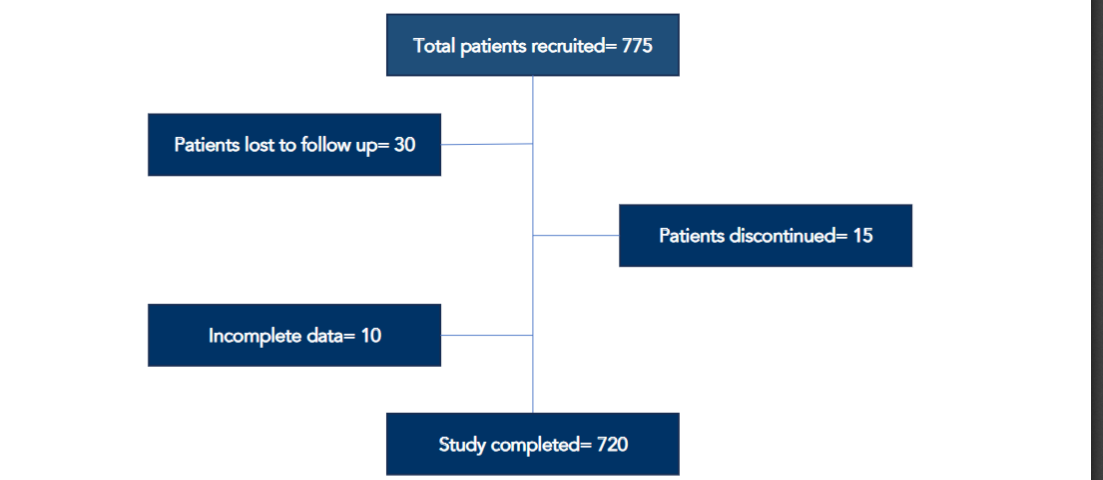
Out of the 775 subjects who participated in the study, 64.7% were male and 34.4% were female. A total of 720 subjects completed the study (Figure 1). On GROVIVA® consumption, significant changes were observed in the weight, height, and BMI of the subjects from baseline to six months. The average weight at the baseline was 14.59 kg, which increased significantly to 17.40 kg after six months (P=0.0001). Similarly, the average height increased from 99.22 cm at baseline to 103.29 cm at 6 months with a significance of P=0.0001. The BMI also increased significantly from baseline to six months, showing a difference of 1.50 (P=0.0001) (Table 3).

Figure 1: Flow chart for patient disposition

Additionally, assessments were conducted on illness frequency and its impact on day-to-day activities. Among the 720 subjects who consumed GROVIVA®, 182 (25.27%) subjects did not fall ill, 353 subjects (49.02%) reported falling ill only once, and 112 subjects (15.55%) fell ill twice during the six months. Furthermore, 315 (43.75%) subjects did not miss school or classes at all, while 255 subjects (35.41%) missed school only once during the study period. A total of 569 subjects (79%) did not require hospitalization in the last 6 months. In terms of flavor preference, the most accepted flavor was Chocolate (n=400, 55.5%), followed by Vanilla (n=233, 32.4%), Mango (n=56, 7.8%), and Strawberry (n=31, 4.3%).

Table-2 Changes in Anthropometric Measures over 6 Months (N = 720)

Parameter Time point Value (Unit) SD Average impact P value
Height Baseline 99.22 cm 16.02
3-month 100.91 cm 16.35 1.69 (1.7%) 0.047
6-month 103.29 cm 16.33 4.07 (4.1%) 0.0001
Weight Baseline 14.59 kg 4.98
3-month 16.31 kg 9.40 1.72 (11.8%) 0.0001
6-month 17.40 kg 6.49 2.81 (19.3%) 0.0001
BMI Baseline 14.48 kg/m² 2.23
3-month 15.29 kg/m² 2.23 0.81 (5.6%) 0.0001
6-month 15.98 kg/m² 2.29 1.50 (10.4%) 0.0001

Table-3 Data for Height, Weight / BMI in different age-groups 2-4 years, 5-7 years, 8-10 years & 11-12 years with their p-values months

a. Data for weight in different age-groups

AGE GROUPS Sample size (N) BASELINE 3-MONTH p-value 6-MONTH p-value
2-4 YEARS 361 11.78 13.1 0.0002 14.04 0.0085
5-7 YEARS 233 15.98 17.16 0.0004 18.65 0.0001
8-10 YEARS 101 19.05 20.74 0.0425 22.82 0.0224
11-12 YEARS 25 24.42 26.32 0.3117 29.18 0.1367

b. Data for height in different age-groups

AGE GROUPS Sample size (N) BASELINE 3-MONTH p-value 6-MONTH p-value
2-4 YEARS 361 90.66 92.35 0.0134 94.41 0.0027
5-7 YEARS 233 104.09 105.58 0.2192 108.31 0.0223
8-10 YEARS 101 111.87 113.71 0.5104 116.25 0.3707
11-12 YEARS 25 126.27 128.96 0.6618 132.34 0.591

c. Data for BMI in different age-groups

AGE GROUPS Sample size (N) BASELINE 3-MONTH p-value 6-MONTH p-value
2-4 YEARS 361 14.27 15.09 0.0001 15.85 0.0001
5-7 YEARS 233 14.63 15.44 0.0001 16.08 0.0003
8-10 YEARS 101 14.94 15.67 0.0616 16.31 0.1416
11-12 YEARS 25 14.36 15.17 0.0458 15.41 0.5174

When analysing anthropometric changes across years age groups (P = 0.0001). An increase in different age groups (Table 5), a statistically significant improvement in weight was observed in children aged 2-4, 5-7, and 8-10 years (P = 0.0001). Although children aged 11-12 years also showed an increase in weight, the effect was less pronounced (P = 0.0149). Improvements in height and BMI were most significant in the 2-4 and 5-7 years age groups. An increase in height was observed in older age groups (8-10 and 11-12 years), but it did not reach statistical significance. Similarly, while BMI improved across all age groups, the most statistically significant changes were seen in the younger cohorts (2-7 years) (P = 0.0001).

Table-4 Summary: Average Impact (all age groups)

Summary Average Impact (all age groups)
Average weight gain 2.81 kg — Significant gain in body mass
Average height gain 4.07 cm — Visible improvement in linear growth
Average BMI increase 1.49 kg/m² — Improved nutritional status

Table 5: Age-based sub-group analysis

2-4 years (p-value) 5-7 years (p-value) 8-10 years (p-value) 11-12 years (p-value)
Average weight gain 2.26 kg (19.2%) — 0.0001 2.67 kg (16.7%) — 0.0001 3.77 kg (19.8%) — 0.0001 4.76 kg (19.5%) — 0.0149
Average height gain 3.75 cm (4.1%) — 0.0001 4.22 cm (4.1%) — 0.0003 4.38 cm (3.9%) — 0.1203 6.07 cm (4.8%) — 0.3329
Average BMI increase 1.58 kg/m² (11.1%) — 0.0001 1.45 kg/m² (9.9%) — 0.0001 1.37 kg/m² (9.2%) — 0.0016 1.05 kg/m² (7.3%) — 0.0040

SAFETY

Throughout the study, GROVIVA™ was well tolerated by the subjects. No severe gastrointestinal (GI) issues were reported. Initially, 10 (1.39%) subjects reported diarrhea at the 3-month mark, but this number decreased to just 2 (0.28%) subjects by the end of six months. Similarly, 16 (2.22%) subjects experienced nausea at three months, but only 7 (0.97%) subjects reported it by six months. Constipation was reported in 17 (2.36%) subjects at three months and reduced to 12 subjects (1.67%) by the six-month mark. There were no reports of sick day leave due to GI issues.

A total of 100 subjects (13.88%) reported clinical symptoms such as fever, cough, wheezing, and difficulty in breathing within the first three months of the study. However, by the end of six months, the number of subjects experiencing these symptoms decreased to 49 (6.8%) with a significant reduction in their severity. These findings suggest that the reported symptoms were not directly related to the consumption of GROVIVA™ but improved with prolonged usage.

GROVIVA® clinical study support in growth in six months with the following  major highlights:

• Up to 19% weight gain, and 4% taller
• Clinically proven to support visible growth with optimal protein and DHA intake.
• 79% of children demonstrated enhanced immune resilience.

Discussion

ONS are increasingly recognized as key interventions to bridge dietary gaps, particularly in children at nutritional risk or those experiencing growth faltering. In India, where suboptimal feeding practices contribute to a high burden of childhood undernutrition, ONS may play an important role in promoting optimal physical growth, immune resilience, and cognitive development²⁰. Our study aimed to evaluate the impact of GROVIVA™ on the anthropometric and health-related outcomes of children aged 2 to 12 years.

Over the course of six months, the probiotics in GROVIVA™ support immune function and gut health while reducing sick days, the severity of symptoms, and unwanted effects. It contains dietary fiber, which aids digestion and reduces occurrences of constipation, diarrhea, nausea, and vomiting. Improved resilience was evident, as most children continued attending school without interruptions.

The findings of this study demonstrated statistically significant improvements in height, weight, and BMI over six months, with the most substantial gain observed in younger children (2-4 years). In our study, the children gained an average of 2.81 kg over six months, which is an 19.25% increase from their starting weight. BMI showed improvement, indicating better overall growth. The supplement provided essential proteins, calcium, and DHA, supporting optimal physical development.

A study assessed the impact of one serving of ONS in milk per day and demonstrated that preschool children receiving ONS experienced 1.7 times higher weight gain velocity and 1.04 times greater linear growth compared to the control group. Additionally, the ONS group showed improved absorption of key micronutrients such as iron, vitamin K, calcium, and magnesium. These nutrients are essential not only for physical growth but also for supporting vital physiological functions. The inclusion of macronutrients, DHA, and prebiotics in the ONS likely contributed to enhanced nutrient absorption and overall development¹⁴. These findings further support the role of ONS in promoting healthy, balanced growth in young children, during a 90-day intervention period¹⁴˒²⁰.

In our study, we observed a statistically significant mean increase of 4.07 cm in height over six months, indicating encouraging improvements in linear growth among children receiving nutritional intervention. This aligns with findings from a randomized controlled pilot study, where children receiving ONS showed a significant gain in height by 2.94 cm, compared to 2.23 cm in the control group²¹. The results from both studies suggest that ONS can positively impact height outcomes, supporting its role in promoting healthy linear growth in undernourished children. Intake of certain nutrients may be particularly crucial to promote growth, as previous studies have shown a favorable correlation between specific nutrient intake—such as calcium, dietary fibers, DHA, or protein—with linear growth and development.

In this study, a significant decline was observed in the frequency of illness and absenteeism among children during the intervention period. Nearly 1/4th of the subjects reported no episodes of illness, and most of the subjects required no hospitalization, indicating improvement in immune resilience. This may be attributed to the presence of immunomodulatory nutrients in GROVIVA®, such as DHA, calcium, and probiotics, which are known to support both innate and adaptive immune functions. These findings align with prior evidence. A meta-analysis of three studies showed that ONS interventions reduced the incidence of upper respiratory tract infections (URTIs) by 39% in undernourished children, highlighting the immune-protective potential of adequate nutritional support²⁰˒¹⁶.

The gut microbiome plays a crucial role in nutrient absorption, growth hormone regulation, and protection against harmful bacteria. Better digestion contributed to an overall improvement in growth indicators. Studies show that a well-balanced gut microbiome is linked to better weight gain and height growth in infants²³. Disruptions in gut microbiota during early life can impact growth patterns. Poor nutrition has been shown to impair immune responses and lead to intestinal dysbiosis (imbalance in gut microbiota) that further compromises immunity²²˒²³. Dysbiosis, especially in early childhood when the immune system and gut microbiota are co-developing, can cause increased intestinal permeability (leaky gut) and persistent low-grade inflammation, all of which limit nutrient absorption and utilization²³. ONS products, enriched with macro- and micronutrients along with prebiotics or probiotics, help address these issues by supporting gut health and systemic immunity²⁴.

Tolerability of GROVIVA™ was high, with minimal adverse gastrointestinal symptoms reported. GI disturbances such as diarrhea, nausea, and constipation decreased over time, possibly due to improved gut health from the supplement’s probiotic and dietary fiber components. Probiotic strains such as Lactobacillus acidophilus NCFM and Bifidobacterium lactis HN019, used in GROVIVA®, have well-documented benefits in maintaining gut flora, reducing GI infections, and enhancing nutrient absorption²⁵˒²⁶.

The GROVIVA™, having smart nutrients like protein, probiotics, and DHA, improves digestion, which is eventually linked to visible growth and stronger immunity. The high-quality proteins, probiotics, and DHA work together to support immune function and fibers, along with probiotics, also promote absorption, smoother digestion, and improved overall well-being.

The high palatability of GROVIVA®, especially in chocolate and vanilla flavors, likely contributed to consistent intake and compliance. Previous research indicates that flavored supplements improve adherence and nutrient intake, especially among picky eaters.

This study did not include a placebo or control group, which limits the ability to attribute all observed benefits solely to the supplement. Additionally, long-term outcomes beyond six months and cognitive performance metrics were not assessed. Future randomized controlled trials with extended follow-up periods and neurocognitive assessments are suggested to help strengthen the evidence base for GROVIVA®’s broader developmental benefits.

Conclusion

This six-month clinical trial demonstrated that GROVIVA®, a pediatric oral nutritional supplement (ONS), is both effective and safe in improving the nutritional and overall health status of children aged 2–12 years in India. Significant improvements such as height, weight, and BMI, confirming its role in promoting better growth outcomes. In addition, GROVIVA® was well tolerated, with no significant adverse events and a reduction in sickness frequency, reinforcing its safety for routine use in pediatric populations. Beyond growth, the formulation was associated with better digestion, improved absorption, and enhanced gut health, which are critical for sustaining long-term nutritional benefits. Collectively, these findings support the use of GROVIVA® as a reliable supplemental nutritional intervention for children experiencing growth and nutritional challenges. Further long-term and multi-demographic studies are warranted to strengthen the generalizability of these results and confirm GROVIVA®’s broad clinical utility.

Conflict of Interest Statement:

None.

Funding Statement:

This article was supported by Signutra Inc., India, and funded manuscript writing and the journal’s open-access charges.

Acknowledgements:

The author meets the International Committee of Medical Journal Editors (ICMJE) criteria for authorship for this manuscript, takes responsibility for the integrity of the work, and has given final approval for the version to be published. We want to acknowledge Dr. Atul Mishra of Signutra Inc. for the conceptualization of the study and Dr. Punit Srivastava of Mediception Science Pvt Ltd (www.mediception.com) for providing medical writing and editorial support in preparing this manuscript, which was supported by Signutra Inc.

Authorship

  1. Dr. IPS Kochar — Designing the study, carrying it out, and analysing the data
  2. Dr. Prashant Bachin — Concepts, manuscript review
  3. Dr. Lalit Verma — Concepts, manuscript review
  4. Dr. Saurabh Uppal — Concepts, manuscript review
  5. Dr. Aashay Abhay Shah — Manuscript review, data checking
  6. Dr. Richa Arora — Manuscript review
  7. Dr. Atul Mishra — Manuscript review, data checking

References

  1. Malnutrition in children [Internet]. [cited 2025 Apr 1]. Available from: https://www.who.int/data/nutrition/nlis/info/malnutrition-in-children
  2. Dietary guidelines for Indians. [cited 2025 Apr 1]. Available from: https://www.nin.res.in/downloads/DietaryGuidelinesforNINwebsite.pdf
  3. Fact sheets – Malnutrition [Internet]. [cited 2024 Nov 6]. Available from: https://www.who.int/news-room/fact-sheets/detail/malnutrition
  4. Levels and trends in child malnutrition: UNICEF/WHO/World Bank Group joint child malnutrition estimates: key findings of the 2023 edition [Internet]. [cited 2024 Nov 6]. Available from: https://www.who.int/publications/i/item/9789240073791
  5. Levels and trends in child malnutrition: UNICEF/WHO/The World Bank Group joint child malnutrition estimates: key findings of the 2021 edition [Internet]. [cited 2025 Apr 8]. Available from: https://www.who.int/publications/i/item/9789240025257
  6. Fatima S, Malkova D, Wright C, Gerasimidis K. Impact of therapeutic food compared to oral nutritional supplements on nutritional outcomes in mildly underweight healthy children in a low-medium income society. Clin Nutr. 2018 June; 37(3):858–63.
  7. Black RE, Allen LH, Bhutta ZA, Caulfield LE, de Onis M, Ezzati M, et al. Maternal and child undernutrition: global and regional exposures and health consequences. Lancet. 2008 Jan 19;371(9608):243–60.
  8. Khadilkar A, Dhongade A, Agrawal N. Impact of Oral Nutritional Supplement on Growth, Nutrient Intake and Frequency of Illness in Children aged 4-6 Years: A Randomised Controlled Study. JCDR [Internet]. 2021 [cited 2025 Apr 7]; Available from: https://jcdr.net/article_fulltext.asp?issn=0973-709x&year=2021&volume=15&issue=11&page=OC11&issn=0973-709x&id=15605
  9. Open Knowledge Repository [Internet]. [cited 2025 Apr 23]. Available from: https://openknowledge.worldbank.org/entities/publication/0a41be2a-187d-5e3b-abc8-832599a15c87
  10. “Malnutrition among Children” [Internet]. [cited 2024 Nov 6]. Available from: https://pib.gov.in/PressReleseDetail.aspx?PRID=1806601&reg=3&lang=1
  11. IIPS/India II for PS, ICF. India National Family Health Survey NFHS-4 2015-16. 2017 Dec 1 [cited 2025 Apr 7]; Available from: https://dhsprogram.com/publications/publication-fr339-dhs-final-reports.cfm
  12. Nutrition | Indian Council of Medical Research | Government of India [Internet]. [cited 2025 Apr 7]. Available from: https://www.icmr.gov.in/nutrition
  13. Evidence-based interventions for improvement of maternal and child nutrition: what can be done and at what cost? – PubMed [Internet]. [cited 2024 Nov 6]. Available from: https://pubmed.ncbi.nlm.nih.gov/23746776/
  14. Dung T. Pham. Effect of Oral Nutritional Supplementation on Growth in Vietnamese Children with Stunting. AACE Clinical Case Reports. 2021 Feb;7(1):1.
  15. Bhasin JS, Khadilkar V, Kochar IPS, Pai U, Mittal G, Sankar P. Effectiveness of Nutritional Supplement in Growth and Development of Children aged 2-12 years. Current Pediatric Research [Internet]. 2021 [cited 2025 Apr 23]; Available from: https://www.currentpediatrics.com/articles/abstract/effectiveness-of-nutritional-supplement-in-growth-and-development-of-children-aged-212-years-16161.html
  16. Akram DS, Bharmal FY, Hussain T. PediaSure in the treatment of severe malnutrition in Pakistani children. J Pak Med Assoc. 2000 Nov;50(11):377–80.
  17. Huynh DTT, Estorninos E, Capeding MR, Oliver JS, Low YL, Rosales FJ. Impact of long-term use of oral nutritional supplement on nutritional adequacy, dietary diversity, food intake and growth of Filipino preschool children. J Nutr Sci. 2016 May 13;5:e20.
  18. Ghosh AK, Kishore B, Shaikh I, Satyavrat V, Kumar A, Shah T, et al. Effect of oral nutritional supplementation on growth and recurrent upper respiratory tract infections in picky eating children at nutritional risk: a randomized, controlled trial. J Int Med Res. 2018 June;46(6):2186–201.
  19. Ghosh AK, Kishore B, Shaikh I, Satyavrat V, Kumar A, Shah T, et al. Continuation of oral nutritional supplementation supports continued growth in nutritionally at-risk children with picky eating behaviour: A post-intervention, observational follow-up study. J Int Med Res. 2018 July;46(7):2615–32.
Interested in publishing your own research?
ESMED members can publish their research for free in our peer-reviewed journal.
Learn About Membership

Call for papers

Have a manuscript to publish in the society's journal?