





Cost-Benefit Analysis of U.S. Nursing Homes: A Review
A Review of Recent Evaluations of Nursing Homes in the US using Cost-Benefit Analysis
Robert J. Brent1
- Department of Economics, Fordham University, 441 East Fordham Road, Bronx, NY 10458, USA
[email protected]
OPEN ACCESS
PUBLISHED: 31 October 2025
CITATION: Brent, RJ., 2025. A Review of Recent Evaluations of Nursing Homes in the US using Cost-Benefit Analysis. Medical Research Archives, [online] 13(10). https://doi.org/10.18103/mra.v13i10.6977
COPYRIGHT: © 2025 European Society of Medicine. This is an open-access article distributed under the terms of the Creative Commons Attribution License, which permits unrestricted use, distribution, and reproduction in any medium, provided the original author and source are credited.
DOI https://doi.org/10.18103/mra.v13i10.6977
ISSN 2375-1924
ABSTRACT
Recently, a Cost-Benefit Analysis (CBA) was carried out to ascertain whether expenditures on nursing homes are socially worthwhile. It has been well-known for a long while that nursing homes had major problems. But it was only newly discovered just how large were the social losses from these facilities. The objective of this review is to report the scale of these losses and to explain in detail how these negative net-benefits were estimated. Cost estimates were obtained from the literature. The benefit methodology involved using changed Quality Adjusted Life Years (QALYs) to quantify the effects of nursing homes, which were then valued by putting a price on the QALYs. The social welfare loss was estimated, based on a large panel data set, to amount to $1.93 trillion. This sum would be saved if people were able to reside outside nursing homes. Two major reasons for the nursing home loss of benefits were giving residents improper medications (like anti-psychotics) and neglecting to provide necessary services (like hearing aids). For those who were unable to live outside a nursing home, this review summarized an extensive report on nursing homes by the National Academies of Sciences, Engineering and Medicine. Seven recommendations for improvement were outlined. One of the suggested interventions was covered in detail. The seven recommendations can be on the agenda for medical researchers to carry out future CBAs targeting nursing home interventions using methods outlined in this review.
Keywords:
Avoiding nursing homes, CBA, QALYs, VSLY, NASEM report, Long-Term Care Ombudsman Program.
Introduction
Only recently were nursing homes (NH) in the US evaluated using Cost-Benefit Analysis (CBA). CBA expresses in monetary terms both outputs, which are called benefits (B), and inputs, which are called costs (C). Since in a CBA both inputs and outputs are measured in the same monetary units, it was possible to establish whether the net-benefits, B – C, were positive or not, and thus establish whether NH were socially worthwhile. Note that in a cost-effectiveness analysis (CEA) of NH, which was the technique used to evaluate NH prior to the recent CBAs, outputs and inputs were measured in different units. Outputs were measured in health units, usually a Quality Adjusted Life Year (QALY), when the inputs were measured in monetary terms as costs. Thus, a CEA cannot compare inputs and outputs and therefore cannot decide, unlike CBA, whether any intervention is socially worthwhile.
The result of these recent CBAs was that NHs were, on average, shown to be not at all beneficial, and that people should avoid living in one if this were at all feasible. The purpose of this review is: to explain how the CBAs reached their conclusions; to provide some explanations for why NHs were found to be so undesirable expressed in CBA terms; and to point to some possible ways that NHs can be improved.
Methods
CONSTRUCTING THE BENEFITS
Since inputs are nearly always measured in monetary terms, as costs, the main challenge to carry out a CBA is to specify how the outputs are to be measured and monetarized to construct the estimates of the benefits.
MEASURING THE OUTPUT EFFECTS
For NHs, it was necessary to utilize an output that is very comprehensive, so that all the important considerations of living in a NH were included. For Adjusted Life Year (QALY) as used in many of the CEAs. The two components of a QALY were life expectancy, the life years (LY), and the quality of a life year (QoL). A QALY is the product of the two ingredients, that is, a QALY = LY × QoL. Both parts of a QALY were estimated separately. Because dementia (D) affects both parts, NHs can have a direct effect on QALYs, but they also can have an indirect effect when the parts affect dementia symptoms. Consequently, there were four output effect categories to be estimated:
- E1: A direct effect of NHs on LYs of residents.
- E2: An indirect effect of NHs on LYs, by NHs first affecting D, and then D affecting LYs.
- E3: A direct effect of NHs on the QoL of residents.
- E4: An indirect effect of NHs on the QoL, by NHs first affecting D, and then D affecting the QoL.
To estimate the four categories, one needs to estimate: the extent to which NHs affect all three variables, the LY, the QoL, and D; and how D impacts both the LY and the QoL. How NHs determine LYs was estimated by survival analysis. The other relationships were estimated by two regression equations, with D and the QoL as the dependent variables, and NHs as the main independent variable. The Main controls involved interventions that were found socially worthwhile in a CBA by reducing D, that is, vision correction, hearing aids, and Medicare eligibility.
MEASURES OF THE KEY VARIABLES
The key variables were NHs, LYs, D and the QoL. A NH residence was specified as a dummy variable that was equal to 1 if a person lived in either a skilled nursing facility or a NH proper, and equal to 0 otherwise. Life years (mortality) was measured by life expectancy in a NH (6.42 years). The probability of dying was also measured as a dummy variable, taking the value of 1 if the person is known to be deceased, and zero otherwise. Dementia was measured by cognitive functioning not brain pathology. The instrument used to measure dementia was the Clinical Dementia Rating (CDR) scale, known as the CDR® Dementia Staging Instrument created by Washington University. The CDR had a range between 0 (no dementia) and 18 (full dementia). Lastly, the QoL was measured by the Geriatric Depression Scale (GDS), short form. Although the GDS was originally conceived to be a measure of psychological status, it has become accepted to be a valid measure of QoL, as QoL. The GDS was on a scale of 15 (all responses were unfavorable) to 1 (all responses were favorable). The GDS was rescaled (and inverted) to ensure that the QoL was in the interval 0 (a LY had no utility) to 1 (a LY had full utility).
DATA USED
The data that was used to conduct all the estimations came from the National Alzheimers Coordinating Center (NACC). The NACC has constructed a panel data set that has been operational since 2005, called the Uniform Data Set. These data consist of demographic, clinical, diagnostic, and neuropsychological information on participants with normal cognition, mild cognitive impairment, and dementia who Centers. The UDS has evolved into a panel with 118,341 visit observations, covering up to twelve visits over a thirteen-year period. With an average of around 3.15 visits per patient, there were around 37,544 participants sampled between September 2005 and March 2017. Because the data was a panel data, panel techniques were used to estimate the two regression equations. The fixed effects method was used for the D and LY regressions, and the random effects model used for the QoL regression.
VALUING THE OUTPUT EFFECTS IN MONETARY TERMS
Once it was determined how many QALYs were altered by the NH (the sum of the four effects) the next task was to convert the changed QALYs into monetary terms. The value of a QALY was given by the Value of a Statistical Life (VSL) Literature, from which the Value of a Life Year (VSLY) can be derived, equal to $500,000. The main way that a VSLY amount is derived is from labor market choices over occupations that involve different risks of survival, and different amounts of financial compensation for these different risks. For example, being a coal miner is a risky occupation. Say that a coal miner has a 1 in a 1,000 chance of dying working down a pit. If a coal miner receives a higher wage of $5,000 to compensate for the extra risk, then, accepting the job, reveals that the coalminer is valuing his or her life at $5 million. Note that the $5 million valuation is for a statistical life (an expected life lost on average) not an actual, by 10 to obtain a $500,000 valuation per year, if the person is expected to live 10 years.
The Results
Corresponding to each of the four effects there were four benefit categories, each one simply being the effect estimate times the VSLY. We will see that each effect was negative, therefore each benefit category will be negative.
ESTIMATES OF THE EFFECTS
Because both LY and the QoL contribute to QALYs, the effects are expressed in QALY units. The four effects were as follows:
- E1 = Direct LY effect = [Change in LY / Change in NH] = -2.94 QALYs.
- E2 = Indirect LY effect = [Change in LY / Change in D] [Change in D / Change in NH] = -1.044 × 0.26 = -0.2714 QALYs.
- E3 = Direct QoL effect = [Change in QoL / Change in NH] = -0.1392 QALYs.
- E4 = Indirect QoL effect = [Change in QoL / Change in D] [Change in D / Change in NH] = -0.01348 × 3.2367 = -0.0435 QALYs.
ESTIMATES OF THE BENEFITS
The four benefits were as follows:
- B1 = Direct LY benefits = $500,000 × -2.94 QALYs = -$1,479,000.
- B2 = Indirect LY benefits = $500,000 × -0.2714 QALYs = -$135,700.
- B3 = Direct QoL benefits = $500,000 × -0.1392 QALYs = -$69,600.
- B4 = Indirect QoL benefits = $500,000 × -0.0435 QALYs = -$21,750.
The total benefits were B = -$1.706 million per person. With around 1.1 million people living in NHs, the aggregate loss of benefits amounts to $1.8 trillion.
ESTIMATES OF THE COSTS
The main financer of long-term care in the US is Medicaid, which finances 62% of NH residents. Not all of this would be cost from the next best alternative perspective, because Medicaid pays less in their policy of substituting home care for institutional care. It was estimated that, for every $1,000 increase in Medicaid home care expenditures, the reduction in Medicaid nursing facilities was $351 per year among people over 65 years. Thus, costs were partially offset to the extent of 35.1%. Applying this cost saving rate to the total Medicaid NH expenditures of $170 billion produces a resulting cost sum for NHs of $59.67 billion.
ESTIMATES OF THE NET-BENEFITS
With B = -$1.8 trillion, and C = -$59.67 billion, the net-benefits were hugely negative and equal to -$1.93 trillion. This sum was for a base-line of 2000 prices. Since a dollar in the year 2000 prices is worth 1.87 dollars in year 2024 prices (using the Consumer Price Index), the negative net-benefits were equivalent to -$3.61 trillion. This amount is exceptionally large, given that the total national income (Gross Domestic Product) for 2024 in the US was approximately $29.18 trillion.
Discussion
With NHs in the US being so largely negative, it is necessary to try to understand some of the main reasons why the CBA result was so adverse. When one understands what went so wrong with NHs, one can discuss some possible remedies for policymakers.
Causes of Losses from Living in a Nursing Home
We cover two main plausible causes of why the CBAs of NHs were so negative: neglecting NH residents inappropriate medicines (keeping residents unnecessarily sedated).
ELDER ABUSE NEGLECT
The main types of elder abuse are financial, physical, emotional and neglect. We will just focus on elder abuse neglect because it is easy to understand that not spending on items that of NHs in the US are for-profit facilities. Documenting elder abuse neglect is challenging because how does one prove that somebody did not do something? For the deprivation of an activity to be judged a case of neglect, such as the wearing of a hearing aid (HA) in an NH, the behavior must pass three tests.
First, the activity must be a basic need, that is, an essential part of daily living, called an Activity of Daily Living (ADL). Listening is an important ADL. If someone fails a hearing test, then a HA must be needed in order that a person can listen.
The second test is that it must be socially worthwhile. The benefits must exceed the costs. We have seen that benefits can be measured in terms of QALYs. to be worth $248,425. The costs were only $8,498. The net benefits of HAs were therefore hugely positive and satisfied the second test.
Once an activity has been shown to be both a basic need and one that is socially worthwhile, one can be sure that any deprivation of that activity would be judged neglect if it were not to take place. For HAs, it was found in a CBA that one-sixth of the non-use of HAs in NHs was deprivation. Thus, elder abuse neglect in the form of depriving residents from having HAs when they were needed and socially worthwhile, was one confirmed cause of the NH loss of social benefits.
To obtain some idea of how much the neglect of HAs in NHs contributes to the total $1.93 trillion in the year 2000 NH loss reported earlier, we can refer to the literature. It was estimated that the foregone benefits from HA neglect were $4.4 billion. This sum was 0.44% of the total NH loss of net-benefits of $1.93 trillion. Although this neglect sum may seem small in relative terms, in absolute values it is very meaningful; and note that this result is just from one category of neglect. There are bound to be many other forms of neglect of needed ADLs other than HAs that NHs are responsible for (such as corrective lenses and dental care).
DISPENSING OF IMPROPER MEDICATIONS
Another way that NHs can save resources is by keeping residents with dementia (50% of whom live in NHs) in a sedated mode, ensuring that nursing aid services are kept to a minimum. One such category of sedentary drugs are antipsychotics (AP). Except for those with an exclusionary diagnosis, the Food and Drug Administration (FDA) declared that AP should not be prescribed for persons with dementia. Nonetheless, prescription rates for AP among those with dementia in NHs, most of which do not have an exclusionary diagnosis, vary between 20% and 50%.
The CBA framework that was used to evaluate NHs, which we explained in detail at the beginning of this review, can be used to ascertain whether it was socially beneficial to prescribe APs to those with dementia in NHs. Recall that the method involved measuring outputs in terms of QALYs and valuing this output in monetary terms using the VSLY. It is well-known that giving AP to those with dementia without an exclusionary diagnosis increases mortality. Thus, LYs must decrease. We were able to corroborate this result using the same NACC data that was used to evaluate NHs. The direct loss of LYs was 0.0217 and the indirect loss was 0.0241, making the total LY fall by 0.0458. Valuing this loss by the VSLY appropriate for those taking AP ($233,571) made the value of the mortality loss of benefits $124,306 per person.
The only issue was whether the QoL effects were both positive and could outweigh the negative mortality effects. Those who tried to justify the use of APs argued that the QoL benefits would be large, because those with dementia were people who become very agitated and prescribing the AP calms them down. We were able to test this hypothesis that the QoL benefits would be large, again using the NACC data set. But we found that the overall QoL effects were negative and small, so there would be nothing positive to contribute from the medications. The direct QoL effect was zero, as it was statistically insignificant. The indirect QoL was negative at 0.0045. Using the VSLY to value loss, the QoL loss of benefits was $5,793 per person. This made the total loss of benefits $130,099 per person. With the lifetime costs of the AP being $62,852, the net benefits of the AP were -$192,951 per person.
If it is assumed that the conservative estimate of 20% of the 1.1 million in NHs are prescribed with AP, this makes the number of persons at risk from taking the AP equal to 220,000. Since about half of nursing home residents have some form of dementia, this makes the number of dementia patients wrongly taking AP equal to 110,000. Multiplying this number by the $192,951 per person loss makes the aggregate loss $21.225 billion. This means that, on its own, the AP loss constitutes 1.1% of the total $1.93 trillion NH loss. Again, it is necessary to emphasize that this AP contribution to the total NH loss is just one example of NHs dispensing inappropriate medications. FDA-approved medications for dementia, and Beta-Blockers, were both found to have negative net-benefits in a CBA, yet they are often prescribed in NHs.
Possible Remedies
The most obvious remedy to prevent experiencing all the estimated NH weaknesses is to not reside in their QoL would not be reduced, their dementia would not increase unnecessarily, and they would not be subject to further elder abuse and given inappropriate drugs. However, it is well known that some older persons do not have the necessary medical and social help to remain at home. The relevant remedy for such persons is to improve conditions in the NHs instead of avoiding living in one.
The necessary steps that must be taken to ensure that every older person has access to affordable and good quality health care and services in older age without discrimination in NHs has been laid out in detail in a recent comprehensive report by the National Academies of Sciences, Engineering, and Medicine [The NASEM Report].
The National Academies of Sciences Engineering Report
The 604 page, National Academies of Sciences, Engineering, and Medicine Report (NASEM) was based on the findings of 2,042 research papers and reports. The seven systemic solutions they recommend based on this literature, together with examples of their implementation for each solution, were the following:
- Deliver comprehensive, person-centered, equitable care that ensures reside and safety; promotes autonomy; and manages risks. Example: State granting of licenses should ensure that all new nursing homes are constructed with single-occupancy bedrooms and private bathrooms for most or all residents.
- Ensure a well-prepared, empowered, and appropriately compensated workforce. Examples of mechanisms that should be considered include wage floors, requirements for having a minimum percentage of service rates directed to labor costs for the provision of clinical care, wage pass-through requirements, and student loan forgiveness.
- Increase the transparency and accountability of finances, operations, and ownership. Example: The U.S. Department of Health and Human Services (HHS) should collect, audit, and make publicly available detailed facility-level data on the finances, operations, and ownership of all nursing homes (e.g., through Medicare and Medicaid cost Enrollment, Chain, and Ownership System).
- Create a more rational and robust financing system. Example: HHS should require a specific percentage of nursing home Medicare and Medicaid payments to be designated to pay for direct-care services for nursing home residents, including staffing (including both the number of staff and their wages and benefits), behavioral health, and clinical care.
- Design a more effective and responsive system of quality assurance. Example: The Administration for Community Living should advocate for increased funding for the Long-Term Care Ombudsman Program.
- Expand and enhance quality measurement and continuous quality improvement. Example: Increasing the weight of staffing measures within the five-star composite rating.
- Adopt health information technology (HIT) in all nursing homes. Example: Spend on the Development and ongoing implementation of training in core HIT competencies for nursing home leadership and staff.
As these seven recommendations are in this review mentioned in general terms (though discussed fully in the NASEM report) it would be useful to examine one of the recommendations in detail to see what is involved. One specific recommendation that was highlighted, which related mainly to solution 5 on quality assurance (ensuring that products or services meet specific quality requirements and consumer expectations), was to increase funding for the Long-Term Care Ombudsman Program.
The Long-Term Care Ombudsman Program
The activity of a certified Ombudsman in the Long-Term Ombudsman Program (LTCOP) is that of an advocate for residents. Advocates do not represent their own views, but amplify those of the person they are supporting. They advocate on behalf of residents. They listen to all the concerns of the residents, but focus mainly on the concerns for which the resident gives permission to resolve by contacting, and working with, facility staff. They rise to the level of complaints requiring intervention by preventing actions or inactions that unfavorably impact quality of life. Ombudsmen investigate every angle of the concern by researching the root cause of the concern and all potential remedies. They report back to the residents to see whether the specified concern has been resolved to the resident’s satisfaction. All concerns are documented in detail in the Ombudsman monthly reporting system. There is a National Ombudsman Reporting System that unifies all state reporting of Ombudsman dealing with resident complaints.
The Long-Term Care Ombudsman program was established by the Older Americans Act of 1965. The law is reauthorized (revised) by Congress every five years and signed into law by the President. The program officially began in 1972 with President Nixon’s 1971 Elderly Nutrition Program. By the late 1970s all states were required to have an Ombudsman Program. Each state is required to have an independent state office of the Long-Term Care Ombudsman Program led by a State Ombudsman. Certified Ombudsmen are employees and volunteers who are designated as representatives of the office. In fiscal year 2017, the program overall had 1,319 full-time paid staff and 8,810 total volunteers. Expenditures on LTCOP programs totaled $106.7 million across all funding sources; the federal government provided 50 percent, states provided 43 percent, and local governments 7 percent of this funding.
EFFECTIVENESS
The NASEM Report points out that, although few impact, researchers have noted that the existence of a local LTCOP program is a significant predictor of quality of care, suggesting a positive preventative presence. The presence of an ombudsman has been associated with increased levels of complaints and deficiency citations, which suggests that ombudsmen are able to bring more issues to the attention of surveyors; additionally, ombudsman are more likely to be present at surveys of nursing homes with persistently poorer quality. Studies have found that the effectiveness of ombudsmen increases significantly with more autonomy and investment of resources, including funding; a larger number of paid staff; and minimum staffing requirements, smaller case-loads, and higher percentages of nursing facilities visited. Seventy-eight percent of volunteer ombudsmen (but only 51 percent of state ombudsmen and 66 percent of local ombudsmen), report that the majority of their relationships in nursing homes are effective. The volunteers attributed this to the ongoing presence they maintain in facilities and the positive working relationships they develop with facility staff who come to view them as a resource.
THE NEED FOR ADDITIONAL FUNDS
The reasons to think that the current LTCOP is grossly underfunded to carry out their legal mandate were: Only 23 percent of state ombudsmen report having sufficient financial resources; only 27 percent of state ombudsmen report having sufficient staff; only 15 percent of state ombudsmen report having enough volunteers; and only 56 percent of state ombudsmen report having adequate legal counsel. At least half of state ombudsmen report that a lack of resources hinders their ability to fully conduct the following activities: recruitment and retention of volunteers, development and support of resident and family council development and support, community education, legal assistance for residents, and regular nursing home visits.
SPENDING PRIORITIES
NASEM recommended that the additional finance should be spent on:
- Hiring additional paid staff and training staff and volunteers.
- Bolstering programmatic infrastructure (e.g., electronic data monitoring systems to track staff and volunteer activities and track resident and family complaints).
- Making data on state LTCOP publicly available.
- Developing summary metrics designed to document the effectiveness of the LTCOP in advocating for NH home residents.
- Eliminating cross-state variation in capacity.
- Developing plans for collaboration with other relevant state-based entities.
Conclusions
Only a CBA can determine whether any economic activity is socially worthwhile. Just recently, CBAs have been applied to evaluate NHs in the US. A detailed summary of the steps that were necessary ingredients in the CBA, and a full account of the results of each step, were the main subject matter of this review. This review is important because, although it has been well-known for a long while, anecdotally, that most NHs did not provide the 24-hour skilled nursing that was supposed to justify the existence of NHs for older adults, the health care field was not aware of the magnitude of the damage that NHs generated. NHs reduce life expectancy by 3.4 years, reduced the quality of life by 2% for every year the resident lived in the NH, and increased the symptoms of dementia by 3 points on a scale of 0 to 18. As a result, the CBA found that the loss of benefits from all those residing in NHs amounted to as much as $1.93 trillion. This estimate was based on a large national data set. This review then tried to look at just two plausible causes for this large NH loss of benefits. The focus was on NH elder abuse neglect (in terms of depriving residents of socially worthwhile HAs) and NHs prescribing inappropriate medications (AP in particular) to those with dementia. These two causes were valued based on existing CBAs. Their contribution to the NHs losses overall may seem small, but this was only because the NHs losses were so large. One should expect that there would be many reasons why NH would be so harmful. This review serves to make a start in trying to find causes for the large adverse CBA findings. In any case, the losses from just these two causes were already in the billions of dollars. As for what should be done to remedy the NH situation, the solution is obviously not to live in a NH, if that were at all feasible – see Figure 1.
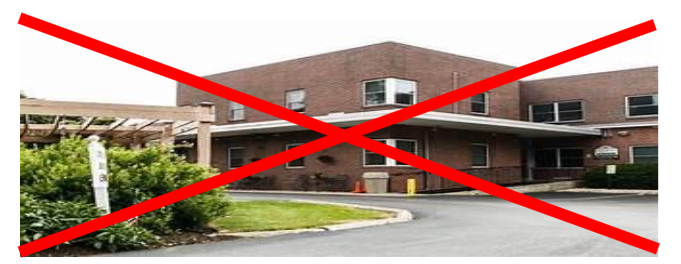
For those who have no option but to reside in a NH, a brief summary was conducted of an exceptionally large NASEM report giving recommendations for NH improvements. Unfortunately, not one of the 2,042 research publications referred to in the NASEM report, on which the recommendations were based, consisted of any kind of economic evaluation, and certainly not a CBA. Thus, the seven NASEM recommendations should be viewed by the health care field as an agenda for future CBAs of NH interventions. This suggestion is logically consistent with the NASEM report as they (in based programs as a way of advancing high-quality care. The CBAs covered in this review can be referred to as a guide. To value benefits QALYs can be used as the output, and the VSL literature can be used to value the QALY outputs in monetary terms. One intervention that was highlighted in this review for a future CBA was increasing spending on the LTCOP program.
Conflict of Interest Statement:
The author has no conflicts of interest, and no competing financial interests exist.
Funding Statement:
No funding was required.
Acknowledgements:
The NACC database is funded by NIA/NIH Grant U24 AG072122. NACC data are contributed by the NIA-funded ADRCs: P30 AG062429 (PI James Brewer, MD, PhD), P30 AG066468 (PI Oscar Lopez, MD), P30 AG062421 (PI Bradley Hyman, MD, PhD), P30 AG066509 (PI Thomas Grabowski, MD), P30 AG066514 (PI Mary Sano, PhD), P30 AG066530 (PI Helena Chui, MD), P30 AG066507 (PI Marilyn Albert, PhD), P30 AG066444 (PI John Morris, MD), P30 AG066518 (PI Jeffrey Kaye, MD), P30 AG066512 (PI Thomas Wisniewski, MD), P30 AG066462 (PI Scott Small, MD), P30 AG072979 (PI David Wolk, MD), P30 AG072972 (PI Charles DeCarli, MD), P30 AG072976 (PI Andrew Saykin, PsyD), P30 AG072975 (PI David Bennett, MD), P30 AG072978 (PI Neil Kowall, MD), P30 AG072977 (PI Robert Vassar, PhD), P30 AG066519 (PI Frank LaFerla, PhD), P30 AG062677 (PI Ronald Petersen, MD, PhD), P30 AG079280 (PI Eric Reiman, MD), P30 AG062422 (PI Gil Rabinovici, MD), P30 AG066511 (PI Allan Levey, MD, PhD), P30 AG072946 (PI Linda Van Eldik, PhD), P30 AG062715 (PI Sanjay Asthana, MD, FRCP), P30 AG072973 (PI Russell Swerdlow, MD), P30 AG066506 (PI Todd Golde, MD, PhD), P30 AG066508 (PI Stephen Strittmatter, MD, PhD), P30 AG066515 (PI Victor Henderson, MD, MS), P30 AG072947 (PI Suzanne Craft, PhD), P30 AG072931 (PI Henry Paulson, MD, PhD), P30 AG066546 (PI Sudha Seshadri, MD), P20 AG068024 (PI Erik Roberson, MD, PhD), P20 AG068053 (PI Justin Miller, PhD), P20 AG068077 (PI Gary Rosenberg, MD), P20 AG068082 (PI Angela Jefferson, PhD), P30 AG072958 (PI Heather Whitson, MD), P30 AG072959 (PI James Leverenz, MD).
References
- Brent RJ. Life Expectancy in Nursing Homes. Applied Economics, 2022; 54(16): 1877-1888. https://doi.org/10.1080/00036846.2021.1983138.
- Brent RJ. The Benefits of Not Living in Nursing Homes. Applied Economics, 2022; 54 (32): 3740-3750. https://doi.org/10.1080/00036846.2021.1983141.
- Brent RJ. Cost-Benefit Analysis Versus Cost-Effectiveness Analysis from a Societal Perspective in Healthcare. Int. J. Environ. Res. Public Health, 2023; 20, 4637. https://doi.org/10.3390/ijerph20054637.
- Brent RJ. Cost-Benefit Analysis and Health Care Evaluations (Second Edition). Edward Elgar, Cheltenham, UK, December 2014.
- Brent RJ. Advanced Introduction to Cost-Benefit Analysis. Edward Elgar, Cheltenham, UK. October, 2017.
- Brent RJ. A CBA of Corrective Lenses, Including the Benefits for Reducing the Symptoms of Dementia. Applied Economics, 2020; 52(48): 5218-5229. https://doi.org/10.1080/00036846.2020.1761533.
- Brent RJ. A CBA of Hearing Aids, Including the Benefits of Reducing the Symptoms of Dementia. Applied Economics, 2019; 51(28): 3091-3103. https://doi.org/10.1080/00036846.2018.1564123.
- Brent RJ. Estimating the Monetary Benefits of Medicare Eligibility for Reducing the Symptoms of Dementia. Applied Economics, 2018; 50(58): 6327-6340. https://doi.org/10.1080/00036846.2018.1489519.
- Brent RJ. Behavioral versus Biological Definitions of Dementia Symptoms: Recognizing that Worthwhile Interventions already Exist. OBM Geriatrics, 2019; 3(4): 2-14. https://doi.org/10.21926/obm.geriatr.1904079.
- Morris JC. The Clinical Dementia Rating (CDR). Current Version and Scoring Rules. Neurology, 1993; 43: 2412-2414.
- Vagetti GC, Barbosa Filho VC, Moreira NB, Oliveira VD, Mazzardo O, Campos WD. Association between Physical Activity and Quality of Life in the Elderly: A Systematic Review 2000-2012. Braz J Psychiatry, 2014; 36(1):76-88. https://doi.org/10.1590/1516-4446-2012-0895.
- Weintraub S, Salmon D, Mercaldo N, Ferris S, Graff. Neuropsychological Test Battery. Alzheimer Dis Assoc Disord 2009; 23: 91-101.
- Beekly DL, Ramos ER, Lee WW, Deitrich ME, Jacka Center (NACC) database: The Uniform Data Set. Alzheimer Dis Assoc Disord, 2007; 21: 249-258.
- Aldy JE, Viscusi WK. 2008. Adjusting the Value of a Statistical Life for Age and Cohort Effects. The Review of Economics and Statistics, 2008; 90(3): 573-581. https://doi.org/10.1162/rest.90.3.573.
- McCreedy E.M, Weinstein BE, Chodosh J, Blustein J. Hearing Loss: Why Does it Matter for Nursing Homes? Journal of the American Medical Directors Association, 2018; 19(4): 323-327. https://doi.org/10.1016/j.jamda.2017.12.007.
- National Academies of Sciences, Engineering, and Medicine. The National Imperative to Improve Nursing Home Quality: Honoring Our Commitment to Residents, Families, and Staff. 2022. Washington, DC: The National Academies Press. https://doi.org/10.17226/26526.
- Guo J, Konetzkab T, Manning WG. 2015. The Causal Effects of Home Care Use on Institutional Longterm Care Utilization and Expenditures. Health Economics, 24 (Suppl. 1): 4-17. https://doi.org/10.1002/hec.3155.
- US Bureau of Economic Analysis (BEA). 2025. https://www.bea.gov.
- Lachs, M, Pillemer, KA. 2015. Elder Abuse. The New England Journal of Medicine, 2025; 373: 1947-1956.
- Brent RJ. Detecting the Incidence and Benefits Foregone of Elder Abuse Neglect: The Case of Hearing Aids in Nursing Homes. Review of Economics and Finance, 2021; 19: 169-175.
- HRW (Human Rights Watch). They Want Docile: How Nursing Homes in the United States Overmedicate People with Dementia. 2018. New York: Human Rights Watch.
- Brent, RJ. An Economic Evaluation of Antipsychotic Medications given to Persons with Dementia. Applied Economics, 2024; DOI: 10.1080/00036846.2024.2339187.
- APA (American Psychiatric Association). The American Psychiatric Association Practice Guideline on the Use of Antipsychotics to Treat Agitation or Psychosis in Patients with Dementia. 2016. Arlington, Virginia: APA.
- Harris-Kojetin L, Sengupta M, Lendon JP, Rome V, Valverde R, Caffrey C. Long-term Care Providers and Services Users in the United States, 2015-2016. Vital and Health Statistics, 2019; series 3, no. 43. Washington, DC: U.S. Government Publishing Office. https://www.cdc.gov/nchs/data/series/sr_03/sr03_43-508.pdf.
- Brent RJ. FDA-Approved Medications for Dementia Are Unlike Non-Pharmacological Interventions As They Are Counterproductive. Applied Economics, 2023; 56(16): 1935-1949. https://doi.org/10.1080/00036846.2023.2178625.
- Brent RJ. A Cost-Benefit Analysis of Beta-Blockers, Including the Benefits of Reducing the Symptoms of Dementia. Applied Economics, 2024; 1-13. https://doi.org/10.1080/00036846.2024.2311078.
- Grabowski DC. Strengthening Nursing Home Policy for the Postpandemic World: How can we Improve https://www.commonwealthfund.org/publications/issue-briefs/2020/aug/strengthening-nursing-home-policy-postpandemic-world.
- IOM. 1996. Nursing Staff in Hospitals and Nursing Homes: Is it Adequate? 1996. Washington, DC. National Academy Press.
- CMS. Medicare and Medicaid Programs; Requirements for Long-term Care Facilities: Regulatory Provisions to Promote Efficiency, and Transparency. 2019. https://www.federalregister.gov/documents/2019/07/18/2019-14946/medicare-and-medicaid-programs-requirements-for-long-term-care-facilities-regulatory-provisions-to.
- Konetzka RT. 2014b. The hidden costs of rebalancing long-term care. Health Services Research, 2014; 49(3):771-777.
- ACL. Long-Term Care Ombudsman Program. 2021. https://acl.gov/programs/ProtectingRightsandPreventing-Abuse/Long-term-Care-Ombudsman-Program.
- Edelman T. Changes to Nursing Home Compare and the Five Star Quality Rating System. 2015. https://medicareadvocacy.org/changes-to-nursing-home-compare-and-the-five-star-quality-rating-system.
- MACPAC. Integrating Clinical Care through greater Use of Electronic Health Records for Behavioral Health. 2021. Chapter 4 in June 2021 report to Congress on Medicaid and CHIP. Washington, DC: Medicaid and CHIP Payment and Access Commission.
- NORC (NORC at the University of Chicago). Final Report: Process Evaluation of the Long-Term Care Ombudsman Program (LTCOP). 2019. https://acl.gov/sites/default/programs/2020-10/LTCOPProcessEvaluationFinalReport_2.pdf.
- Hunt SS. History and Role of the Long-Term Care Ombudsman Program. 2008. https://ltcombudsman.org/uploads/files/support/history-and-role.pdf.
- Estes CL, Lohrer SP, Goldberg S, Grossman BR, Nelson M, Koren MJ, Hollister B. Factors Associated with Perceived Effectiveness of Local Long-Term Care Ombudsman Programs in New York and California. Journal of Aging and Health, 2010; 22(6):772-803.
- Berish DE, Bornstein J, Bowblis JR. 2019. The Impact of Long-Term Care Ombudsman Presence on Nursing Home Survey Deficiencies. Journal of the American Medical Directors Association, 2019; 20(10):1325-1330.
- Estes CL, Zulman DM, Goldberg SC, Ogawa DD. State Long Term Care Ombudsman Programs: Factors Associated with Perceived Effectiveness. The Gerontologist, 2004; 44(1):104-115.
- Brent RJ. Cost-Benefit Analysis and Dementia: New Interventions, 2022 Cheltenham, UK: Edward Elgar.