






Edith Smaw Quimby: Pioneer in Medical Physics
Edith Smaw Quimby; A pioneering medical physicist
Dr. Sandra Klos¹, Prof. Dr. Maria Rentetzi²
- Chair of Science, Technology and Gender Studies, Friedrich-Alexander Universität Erlangen-Nürnberg.
- Science Diplomacy Fellow, Aarhus Institute for Advanced Studies, Aarhus University.
OPEN ACCESS
PUBLISHED: 30 November 2025
CITATION: Klos, S., Rentetzi, M., Edith Smnw Quimby; A pioneering medical physicist. Medical Research Archives, [online] 13(11). https://doi.org/10.18103/mra.v13i11.6971
COPYRIGHT: © 2025 European Society of Medicine. This is an open-access article distributed under the terms of the Creative Commons Attribution License, which permits unrestricted use, distribution, and reproduction in any medium, provided the original author and source are credited.
DOI: https://doi.org/10.18103/mra.v13i11.6971
ISSN 2375-1924
ABSTRACT
This paper brings into today’s spotlight one of the early pioneers in the history of radiation protection. Edith Smnw Quimby was a medical physicist avant la lettre. In the early 20th century Quimby was among the first to develop diagnostic and therapeutic uses for X-rays, radium, and radioactive isotopes. By ascertaining the extent of radiation’s ability to penetrate an object (like human skin), she enabled physicians to use the smallest possible doses of radiation on patients. Her work on early radiation protection methods in the clinic has been remarkable. In 1926 Quimby was the first to introduce a film badge program to her laboratory to measure workers’ exposure to radioactivity. This moved quickly from the lab to the clinic ensuring the safety of x-ray and radium technicians.
Based on archival research and analyzing the scientific community of her time, we argue that despite all odds, Quimby was able to carve a career for herself. In addition to her self-determination, Quimby was supported by her longtime collaborator, physicist Gioacchino Failla. Although men’s contributions to radiation science have been well-documented, the contributions of female scientists, beyond Marie Curie and Lise Meitner, are not widely recognized. Many women played crucial roles in laboratory research, data analysis, and medical applications of radiation. Yet their names rarely appear in official medical histories. Structural barriers, gender bias, and the tendency to credit male colleagues or supervisors often obscured their work. Recognizing these overlooked contributions not only restores balance to the historical record but also highlights the diverse perspectives that shaped the development of radiation science.
Keywords: Women in science, history of physics, history of medicine, medical physics, nuclear science.
Introduction
In the early decades of the twentieth century, as physics and medicine converged to form the new discipline of radiology, a handful of pioneers defined the scientific and ethical foundations of radiation use. Among them was Edith Smnw Quimby (née Hinkley; July 10, 1891 – October 11, 1982), a physicist whose meticulous research on radiation dosimetry helped transform the practice of cancer therapy and laid the groundwork for modern medical physics. Yet despite her foundational role, Quimby’s name remains largely unfamiliar outside specialized circles. Her work is embedded in systems and methods—such as the Quimby System for brachytherapy planning—that have endured long after her biography has faded from view.
This paper examines the life and legacy of Edith H. Quimby as both a scientific innovator and a case study in the historical marginalization of women in the broader development of women in radiation science. This study seeks to recover Quimby not only as a figure of historical importance, but as a lens through which to understand the structural dynamics of recognition in twentieth-century science. In doing so, it contributes to ongoing efforts to recontextualize women’s labor in the making of modern physics and medicine, and to reconsider how scientific memory assigns credit, authority, and permanence.
Women in Radiation Science
Female scientists have made important yet often overlooked contributions to radiation research, working in fields ranging from radioactivity research and nuclear physics to radiobiology and medical imaging. In a 1997 study, Marlene F. Rayner-Canham and Geoffrey W. Rayner-Canham found that between 1900 and 1910 alone, about thirty women were active researchers in the study of radioactive phenomena.¹ Many of them depended on their supervisors, mentors, and colleagues for encouragement and support in their work. Among them, Marietta Blau’s case was different, as the political climate of Red Vienna, shaped by socialist reforms, created more favorable conditions for women’s education and participation in science.² Yet, beyond Marie Curie and Lise Meitner, most of the women who advanced research on radioactivity have not been widely recognized.³
For example, Harriet Brooks (1876–1933) was a Canadian nuclear physicist and Ernest Rutherford’s graduate student at the time he was at McGill University in Canada. She received the prestigious Bryn Mawr European Fellowship to work on her doctorate and Rutherford arranged for her to spend time at the Cavendish Laboratory in Cambridge. It was there where Brooks discovered radon in 1901 and, in 1904, became the first person to observe nuclear recoil following radioactive decay.⁴ She eventually abandoned her research work when she got married in 1907. In this, Brooks was an exception since most of the pioneer women in Rayner-Canham and Rayner-Canham identified never married.
Tikvah Alper (1903–1933) was a radiobiologist and author of the seminal textbook Cellular Radiobiology.⁵ Born in South Africa in a Jewish family, Alper studied physics at the University of Cape Town and graduated in 1929. She then moved to Berlin to join Lise Meitner’s laboratory and worked there till end of 1932. By 1933 they co-authored a prize-winning paper on delta rays produced by alpha particles.⁶ Alper spent most of her career in South Africa and in 1957 she was forced to emigrate to England because of her opposition to the Apartheid.⁷
Stefanie Horovitz (1887–1942) is another important figure in radiation history. A Polish-Jewish chemist, she joined the Vienna Radium Institute in 1914 by the recommendation of Meitner.⁸ Otto Hönigschmid, already known for his meticulous work in preparing radium standards, was seeking someone skilled in chemical methods to determine the atomic weight of the inactive lead produced at the end of the uranium decay chain, then thought to also conclude thorium’s series. Although Meitner was based in Berlin, she remembered Horovitz from Vienna’s Second Chemical Institute, where she studied under Guido Goldschmiedt, one of the most known chemists in Vienna. Meitner suggested Horovitz for the role.
The task reflected a new challenge in radioelement research. Just a year earlier, Frederic Soddy had shown that all known radioelements could be fitted into the periodic table by placing more than one in the same box according to atomic number. His discovery of isotopes created the need for precise atomic weight measurements. These relied on wet chemical methods—more reliable than electrochemistry but also laborious, requiring complete separation of elements and the identification of short-lived beta emitters. Few mastered these techniques as effectively as Hönigschmid, and without Horovitz’s contribution, the project would never have moved forward.
Ida Noddack (née Tacke, 1896–1978) was a German scientist and the first person, by five years, to suggest that a fission event might involve a large atom splitting into smaller atoms.⁹ The detection of the naturally occurring rhenium (known at the time as element 75) and possibly the purely synthetic technetium (known at the time as element 43) in 1925 by Ida Noddack, Walter Noddack, and Otto Berg. Using X-ray spectroscopy, they did not only close a major gap in the periodic table but also laid the foundation for technologies that rely on materials able to withstand extreme conditions.¹⁰ However, the team’s inability to verify masurium contributed to their failure to win the Nobel Prize. Ironically, Enrico Fermi was awarded the 1938 Nobel Prize in physics “for new radioactive elements,” as Ida Noddack was correctly challenging Fermi’s conclusions.¹⁰ Refusing to accept the consensus that neutron bombardment of uranium was creating transuranium elements in Fermi’s laboratory, she suggested that smaller atomic fragments would be created, and one should first check the product mixture for all known elements. Famously, Otto Hahn initially dismissed her concept of nuclear fission and only three decades later finally admitted, “… and Ida was right after all!”¹⁰
The Austrian scientists Marietta Blau (1894–1970) and Hertha Wambacher (1903–1950) worked together at the Vienna Radium Institute in the interwar period. Together, they developed and refined the use of nuclear emulsions photographic plates that could register the tracks of charged particles. Blau’s work exemplified how medicine and clinical radiotherapy opened pathways into radiophysics. The dense cluster of institutes and hospitals in what was known during the interwar period as Vienna’s Medizinier-Viertel—a triangular land expanding from the main university building and including Vienna medical and science institutes—made possible the literal circulation of radium between the Institute for Radium Research and the hospitals within this environment. Because she positioned herself at the intersection of experimental physics and medical practice, creating out a career in radioactivity through the very connections that made Vienna a hub for both scientific and clinical innovation.⁹ Blau’s work, spanning forty-five years, resulted in over sixty-five publications related to aspects of radiation and to the improvement of her method to reproduce “stars” on photographic plates exposed to cosmic radiation. This initiated the study of nuclear fragmentation. While Wambacher became a member of the NSDAP, Blau faced persecution in Nazi-Austria. They were both nominated for the 1950 Nobel Prize in Physics by Erwin Schrödinger, but neither received the award.²,¹¹,¹²
During the Second World War, many female physicists participated in the Manhattan Project, contributing to research, experimentation, and technical development that were essential to its progress. Leona Marshall Libby (née Woods, 1919–1986), was the only woman in Enrico Fermi’s group at the University of Chicago.¹³ Katherine Way (1902–1995) focused on neutron fluxes, fission products, reactor design, and data analysis.¹⁴ Libby became a professor at New York University in 1962 and Way at Duke University in 1968. Jane Hamilton Hall (1915–1981) was a physicist by training and was placed in the radiation protection group at Hanford.¹⁵ Later, she became a member of the General Advisory Committee of the Atomic Energy Commission.
The Atomic Age saw the rise of many more female scientists, often invisible to those working alongside them. Take as an example Elizabeth Róna (1890–1991), one more of the women who worked at the Vienna Radium Institute. In 1947, a biologist at Argonne National Laboratory needed a polonium source for delicate experiments on single cells. Convinced that only Europe could provide such expertise, he asked where to find Elizabeth Róna, the world’s leading specialist. The answer came with a touch of astonishment: “She is in the next room!”¹⁶ By then, Róna had quietly settled in the US and was working at Argonne. Known as the “polonium woman,” she had mastered techniques for preparing polonium sources.¹⁶ During that period, women who made a career in the sciences frequently came from supportive environments or had encouraging colleagues or mentors.¹⁷ Yet, they did not have many role models and female colleagues to encourage them. Women like Quimby had to fight for their place after centuries of exclusion from educational institutions, which systematically limited their opportunities for success.
Edith Quimby: the medical physicist
“Well, I never thought I’d have a woman as an assistant, but I don’t mind trying it for six months.”¹⁸ This is how Edith Quimby recalled Gioacchino Failla’s reaction during recruitment for his assistant position at New York City’s Memorial Hospital for Cancer and Allied Diseases in 1919. The Italian-born physicist and pioneer in radiation biology and biophysics was trained by both William Duane and Marie Curie in Paris. By the late 1910s he was best known for his work on the role of radiation as a cause of cancer and genetic mutations. In 1919, Failla was invited by Charles Viol, an industrial chemist, to set up a radon production plant at Standard Chemical’s Radium Research Laboratory, a giant radium industry in the US. By then, Failla had already installed a modified version of Duane’s device for generating radon at Memorial Hospital in New York, establishing what was reportedly the first hospital-based radon production facility in the United States.¹⁹
As senior physicist at Memorial Hospital, Failla had ties to influential organizations such as the International and National Commission on Radiological Protection and Measurement, the US Atomic Energy Commission, and the National Academy of Science.²⁰ Despite Failla’s initial skepticism, Quimby spent the next 40 years working closely with him and thriving in a male-dominated field of science.
Quimby was born to Arthur and Harriet Hinkley in 1893, in Rockford, Illinois. Her father, originally trained as an architect, had turned to farming. Edith Hinkley, interested in science early on, was given a full tuition scholarship to major in physics and mathematics at Whitman College in Walla Walla, Washington. From there, she graduated with a bachelor’s degree in 1912. Two years later, she won a fellowship to study physics at the University of California, where she met and married Shirley L. Quimby (1893—1986), a fellow physics student. She graduated with a master’s degree but then settled briefly into married life until 1919, when her husband moved to New York City to finish his doctoral degree.
To afford the rent in New York City meant that both partners had to be employed. Thus, Quimby applied for an assistant position at the New York City Memorial Hospital for Cancer and Allied Diseases. This is where she thrived. By 1926 Quimby had introduced a film badge program to monitor lab workers’ exposure to radiation.²⁶ At the time, dental films were the usual method of measuring radiation exposure. Their darkening was perceived as proof of an undesirable amount of radiation. In 1922, George Pfahler, a prominent American radiologist, suggested that x-ray and radium workers slip a small packet of dental film into their breast pockets. After a couple of weeks, the film could be developed, and the degree of darkening would reveal how much radiation the body had absorbed. This simple trick turned the invisible threat of radiation into a visible trace. But it was Quimby who “proposed the first true film badge, incorporating a system of metallic filters to compensate for the energy dependence of the film sensitivity.”²⁷ She devised a highly practical dosimeter, an X-ray film always worn or carried by the worker, which incorporated metal filters to minimize the energy dependence of the film. The basic principle of this technique is still in use to this day, particularly in the case of nuclear accidents and terrorist attacks.
Quimby worked tirelessly on a method to determine the distribution of radiation doses in tissue from various arrangements of radiation needles.²³ Her results, published in 1932, became the standard in the United States and became known as the “Quimby Rules”. She created tables and rules that provided physicians with a method to estimate radiation dose distribution within the tissue surrounding radium needles or tubes. This was a practical method for brachytherapy, the method of (implanting radium or other isotopes directly into or near a tumor. On this basis, Quimby was the first woman awarded the Janeway Medal of the American Radium Society in 1940.
In the early days of nuclear medicine, experiments with radioactive iodine (I-131) and sodium (Na-24) were pioneering efforts, and it was again Quimby who led the way as one of the foremost authorities in the field.²⁸ In the late 1930s and 1940s, the first artificial radioisotopes were produced in cyclotrons. Quimby investigated the dosimetry and safety of these radioisotopes when used in human medical applications. She was particularly concerned with how much radiation the body absorbed when using radioisotopes for diagnostic purposes. Before Quimby’s work, physicians had to administer isotopes without a clear understanding of radiation doses absorbed by specific organs. Thus, nuclear medicine was largely an experimental field. With Quimby’s understanding of physics, however, treatments became more effective and safer.
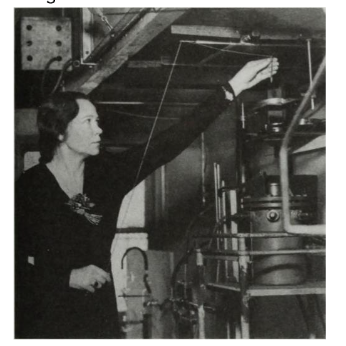
In 1941, Quimby was promoted to associate professor at Cornell University Medical College, where she stayed for one year. In 1943, with Failla, she joined the faculty at Columbia College of Physicians and Surgeons — first as an associate professor, then as a full professor of radiology. Together, they founded the Radiological Research Laboratory, where they worked with radioisotopes produced by accelerators and reactors to treat thyroid disease and diagnose brain tumors (Fig. 1).
Fig. 1: Edith Quimby (1891–1982), source: Library of Congress.
During the Second World War and while many women physicists were recruited into the Manhattan Project, Quimby’s path remained firmly in medical applications of radiation rather than weapons research. Her expertise centered on radiation dosimetry. As Andrée Dutreix, a luminary in the field of radiotherapy and the first medical physicists in France, explained, there have been three main dosimetry systems for interstitial brachytherapy: Manchester, Quimby—named
obviously by Edith Quimby—and the Paris System.
The Manchester System, devised in the 1930s and originally developed for radium, proved so effective that it was later applied to other radionuclides, with source strength expressed in milligram radium equivalents. Because of its complexity and its limits with small implants, around the same time Quimby devised a simpler method in which needles of equal strength were evenly distributed through the treatment volume—well suited to American needles. In the 1960s, the Paris System was introduced to meet the needs of after-loading implants, especially with iridium wires in larger volumes.²⁹
Quite unusual at the time, Quimby became a professor of radiology, despite not holding a doctoral degree.²⁴ It was only later on that she earned two honorary doctorates (one from Whitman College in 1940 and another from Rutgers University in 1956). She taught radiological physics while training Rossi and physicist Nobel Laureate Rosalyn Sussman Yalow (1921—2011).³⁰ Together with Solomon Berson, Yalow developed the technique of radioimmunoassay (RIA) that uses radioactive isotopes to measure tiny concentrations of hormones, vitamins, and other biological substances in the blood. Yalow was awarded the 1977 Nobel Prize in physiology or medicine, making her the second woman ever to receive the award (the first being Gerty Cori in 1947). By laying the foundations of medical physics in the United States, Quimby opened a path that others, including Rosalyn Yalow, would later follow. Her meticulous studies that correlated radiation doses and effects became the cornerstone of radiation oncology and still remain in use as the “Quimby Rules.”
While working with Failla, Quimby developed standard dosing tables for radiation treatment with radium and X-rays that came in handy in her teaching.²⁸,³¹ This way she contributed to the growth of one of the first and most recognized education programs in radiological physics in the United States.³² She was also a renowned oral examiner for the American Board of Radiology for nearly half a century.
In 1960, Quimby retired from Columbia. She had published over 70 articles and authored four books, including Physical Foundations of Radiology,³³ which is considered the first comprehensive physics textbook for radiologists. She participated in the Atomic Energy Commission and chaired a scientific committee of the National Council on Radiation Protection and Measurement. Quimby was also one of the founding members of the American Association of Physicists in Medicine, which later established a lifetime achievement award in her honor.³⁴ In her private life, she was a member of the Democratic Party and the League of Women Voters.³⁵ She died at 91 in 1982.
Conclusion: Quimby’s legacy in the history of science
Because career opportunities at the time for women were scarce in both physics and medicine. For a moment, she nearly left research altogether when she settled briefly into married life. Yet necessity drew her back, and persistence carried her forward, until she became a central figure in the birth of medical physics. Trained originally as a physicist, she entered the medical field almost by accident, joining the Radiological Research Laboratory at the Memorial Hospital for Cancer and Allied Diseases in New York in the 1910s. There, she began a lifelong effort to understand and measure the biological effects of radiation—a field so new that few could yet imagine its future importance.
Working closely with physicians but often without the recognition they received, Quimby developed precise methods for calculating radiation doses that balanced therapeutic benefit with patient safety. Her careful experiments helped establish the principles of radiation dosimetry, and her name became attached to the Quimby System, one of the earliest standardized methods for organizing the distribution of radioactive sources in cancer treatment. Today, students of radiology and
medical physics still learn about the Quimby System alongside the Manchester and Paris Systems, but they rarely learn about the person behind it.
The habit of abbreviating first names in scientific literature turning “Edith H. Quimby” into “E. H. Quimby” has long obscured her identity, erasing the fact that this pioneering researcher was a woman in an era when few women were permitted entry into scientific institutions at all. For much of her life, Quimby worked without formal recognition, yet her data and methods quietly shaped an entire medical discipline. By the mid-twentieth century, she had helped train a generation of physicists and physicians in the responsible use of radiation, influencing both clinical practice and public health policy. She received belated honors, including the Janeway Medal and the Gold Medal of the Radiological Society of North America, but her name still tends to appear in textbooks more often than in histories.
Her story is emblematic of how women’s scientific contributions are often embedded within systems and standards that outlive their names. As her 1982 obituary observed, “All too often, the creative achievements of scientific pioneers are overshadowed by further developments made by others or simply become anonymous components of accepted practice.”³⁶
Conflict of Interest:
The authors have no conflicts of interest to declare.
Author contributions:
The corresponding author, Maria Rentetzi, is responsible for the overall structure and argument of the paper, whereas the second author, Sandra Klos, did most of the biographical research on Edith Quimby.
Funding Statement:
This publication is part of the “Living with Radiation: The Role of the International Atomic Energy Agency in the History of Radiation Protection” (HRP-IAEA) project that has received funding from the European Research Council (ERC) under the European Union’s Horizon 2020 research and innovation programme (Grant agreement No770548), https://hrp-iaea.org
References
1. Rayner-Canham, M. F., Rayner-Canham, G. W. (1997). Devotion to Their Science: Pioneer Women of Radioactivity. McGill-Queen’s University Press, 12.
2. Rentetzi, M. (2004). Gender, Politics, and Radioactivity Research in Interwar Vienna: The Case of the Institute for Radium Research. ISIS, 95, 3, 359–393.
3. Martinez, N. (2017). Contributions from Women to Radiation Science. Health Physics, 112, 4, 376–383.
4. Rayner-Canham, M. F., Rayner-Canham, G. W. (1992). Harriet Books: Pioneer nuclear scientist. McGill-Queen’s University Press.
5. Alper, T. (1979). Cellular Radiobiology. Cambridge University Press.
6. Alper, T. (1932). Über die δ-Strahlen und die Beziehung zwischen Reichweite und Geschwindigkeit für langsame Elektronen. Zeitschrift für Physik, 76, 172–189.
7. Vogt, A. B. (2009). Tikvah Alper. Shalvi/Hyman Encyclopedia of Jewish Women.
https://jwa.org/encyclopedia/article/alper-tikvah
8. Rentetzi, M. (2007). Trafficking Material and Gendered Experimental Practices: Radium Research in Early 20th Century. Columbia University Press,
http://www.gutenberg-e.org/rentetzi/chapter03.html
9. Hook, E. B. (2003). Gender bias and Ida Noddack. Science, 301, 1045f.
10. Marshall, J. L., Marshall, V. R. (2013). Rediscovery of the Elements Rhenium and Technetium. The Hexagon, 84–89.
11. Byers, N., Williams, G. (2006). Out of the shadows: Contributions of twentieth-century women to physics. Cambridge University Press.
12. Sime, R. L. (2013). Marietta Blau: Pioneer of photographic nuclear emulsions and particle physics. Physics in Perspectives, 15, 3–32.
13. Sanger, S. L. (1995). Working on the bomb: An oral history of WWII Hanford. Portland State University Continuing Education Press.
14. Martin, M. et al. (1996). Katherine Way – Obituary. Physics Today, 49(12), 75.
15. Howes, R. H., Herzenberg, C. L. (1999). Their day in the sun: Women of the Manhattan Project. Temple University Press.
16. Rentetzi, M. (2019). “She is in the Next Room”: Elizabeth Róna and Polonium.
https://doi.org/10.1142/9789811206290_0025
17. Dumancic, M., Enger, S. A. (2024). Pioneering women in nuclear and radiation sciences. Radiotherapy and Oncology, 197, 1–8.
18. Taylor, L. S., Sauer, K. G. (1984). Vignettes of Early Radiation Workers, videotaped on July 11, 1977, 229–241.
19. Rentetzi, M. (2022). Seduced by Radium: How Industry Transformed Science in the American Market Place. Pittsburgh University Press, 59.
20. Hall, E. J. (2017). 100 Years of Radiation Research in the Footsteps of Failla. Radiation Research, 187, 4, 406–412.
21. Emberlin, D. (1977). Contributions of Women: Science. Dillon Press.
22. Noble, I. (1979). Contemporary Women Scientists of America. Juban Messner.
23. Oakes, E. H. (2002). International Encyclopedia of Women Scientists. Facts On File.
24. Ogilvie, M., Harvey, J., Rossiter, M. (eds.). (²2014). The Biographical Dictionary of Women in Science. Pioneering Lives from Ancient Times to the Mid-20th Century. Routledge.
25. Howes, R. H., Herzenberg, C. (2015). After the War. Women in Physics in the United States. Morgan & Claypool Publishers.
26. Quimby, E. H. (1926). A Method for the Study of Scattered and Secondary Radiation in X-Ray and Radium Laboratories. Radiology, 7, 3, 211—217.
27. National Research Council. (1989). Film Badge Dosimetry in Atmospheric Nuclear Tests. The National Academies Press.
https://doi.org/10.17226/1404, 11.
28. Jacobson, H. G., Levine, R. R. (1983). Edith Hinkley Quimby, Sc.D. Radiology, 147, 1, 290.
29. Dutreix, A. (1988). Can we compare systems for interstitial therapy? Radiotherapy and Oncology, 13, 2, 127–135,
https://doi.org/10.1016/0167-8140(88)90033-3
30. St. Germain, J., Rothenberg, L. N. (2012). Rosalyn Sussman Yalow. Physics Today, 65(5), 66f.
31. Quimby, E. H. (1944). Dosage Table for Linear Radium Sources. Radiology, 43(6), 572–577.
32. Karakatsanis, N. A., Arleo, E. K. (2022). Dr. Edith H. Quimby: A pioneering medical physicist and educator with outstanding contributions in radiation dosimetry. Clinical Imaging, 81, 118.
33. Glasser, O., Quimby, E. H., Taylor, L. S., Weatherwax, J. L. (1944). Physical Foundations of Radiology. Paul B. Hoeber.
34. This award was named after Quimby in 2011. Previously, it was known as the Achievement in Medical Physics Award. Cf. AAPM, Edith H. Quimby Lifetime Achievement Award,
https://www.aapm.org/org/history/achievement.asp
35. Howes, R. H. (2004). Quimby, Edith Hinkley. In: Notable American Women. A biographical dictionary Completing the Twentieth Century, ed. by S. Ware, S. Braukman. The Belknap Press of Harvard University Press, 532—533.
36. Rossi, H. H. (1982). Edith Hinkley Quimby. Physics Today, 35, 71f.