





Electromagnetic Therapy for Post-COVID Lung Function
The effect of electromagnetic radiation exposure using the Parkes-L device on improving the functional state of individuals with impaired bronchopulmonary function. Monitoring of changes in the functional state by the Parkes-D diagnostic complex
Igor Temnenko, M.D.1
- International A.Schweitzer’s institute (Hannover); Reabilitolog of Anatomy and Physiology Department in Cherkasy National University of B.Khmelnytsky (Ukraine), Speciality Biology – 091. [email protected]
OPEN ACCESS
PUBLISHED: 31 May 2026
CITATION: Temnenko, I., 2026. The effect of electromagnetic radiation exposure using the Parkes-L device on improving the functional state of individuals with impaired bronchopulmonary function. Monitoring of changes in the functional state by the Parkes-D diagnostic complex. Medical Research Archives, [online] 14(5). https://doi.org/10.18103/mra.v14i5.7503
COPYRIGHT: © 2026 European Society of Medicine. This is an open-access article distributed under the terms of the Creative Commons Attribution License, which permits unrestricted use, distribution, and reproduction in any medium, provided the original author and source are credited.
DOI https://doi.org/10.18103/mra.v14i5.7503
ISSN 2375-1924
ABSTRACT
The article provides a theoretical generalization and a new solution to the scientific problem. This includes defining the informational basis of the bioresonance method (BRM), assessing the functional state of the bronchopulmonary system in individuals during the post-COVID period, and studying the relationship between electrical conductivity at biologically active points using the Parkes D diagnostic device. Application of microresonance circuits, assessment and monitoring of the changes in the functional state of those individuals during bioresonance therapy are also included. The Parkes L electrodynamic device demonstrated effectiveness in correcting metabolic processes, enhancing non-specific immune protection, and improving lung metabolic function, overall pulmonary functional status, and the body’s antioxidant defense. The Parkes L therapeutic device operates by applying low-frequency electrical impulses, low-intensity infrared radiation, and electromagnetic frequencies, which stimulate skin receptors (biologically active zones) and cell membranes. The study is based on the premise that most physiological processes in a living organism are accompanied by electromagnetic fluctuations within specific frequency ranges. External exposure to electromagnetic frequencies within the same spectrum can induce resonance (bioresonance), potentially leading to the stimulation or suppression of biochemical processes. This concept is examined through the example of correcting bronchopulmonary system function during the coronavirus pandemic and supporting rehabilitation in post-COVID complications.
Keywords
bioresonance, electromagnetic radiation, bronchopulmonary function, Parkes-L device, post-COVID rehabilitation
Introduction
Recent experimental data indicate that, alongside nervous, hormonal, and immune mechanisms of body regulation, an important role is played by the homeostasis of electrical and magnetic parameters of cells, tissues, and organs — the so-called “electromagnetic homeostasis.” Modern studies confirm the involvement of electrical and magnetic phenomena in many physiological processes of the body.
At the same time, the mechanisms underlying the interaction between electromagnetic processes and cellular metabolism remain insufficiently understood. Considerable interest is focused on body structures capable of perceiving and conducting electromagnetic signals, including water, collagen, and connective tissue. The latter is characterized by increased electrical conductivity and piezoelectric properties, which ensure its participation in the formation and transmission of electromagnetic signals within the body.
An important role in the perception of electromagnetic influences is also attributed to the body’s acupuncture system. Additional evidence of tissue sensitivity to electromagnetic fields is the presence of biogenic magnetite (Fe₃O₄) in the human body, which is capable of perceiving electromagnetic signals.
Based on these mechanisms, the field of bioresonance medicine has emerged, involving the use of electromagnetic exposure for the correction of the body’s functional state. One such tool is the medical device “Parkes L,” intended for individual use and programmed according to the results of frequency-resonance testing in order to provide more targeted therapeutic effects.
The relevance of the study is due to the prevalence of functional disorders of the bronchopulmonary system following COVID-19 infection and the need to identify additional methods for their correction.
The aim of the study was to evaluate the possibilities of correcting the functional state of the bronchopulmonary system in patients after COVID-19 infection using bioresonance exposure with the medical device “Parkes L.”
Problem statement. Literature analysis.
To date, the method of bioresonance therapy (using Parkes L device), which includes the principle of reflex action of low-frequency electrical impulses, low-intensity infrared radiation, and electrical frequencies on skin receptors (biologically active zones) and cell membranes, has been criticized in scientific circles.
But scientific and practical data on the effectiveness of this method have also been provided by J. Rehabil. Electromagnetic stimulation of the conducting pathways of excitatory neurons in the spinal cord enhances signal conduction. This is evidenced by neurological and functional improvements.
Modern studies also support the potential of frequency-resonance approaches. In particular, M. A. Yakymchuk and S. I. Prylypko investigated the possibilities of using the frequency resonance method to detect Bifidobacterium and Helicobacter pylori and the effect of bioresonance on the biological environment. This study employed a hardware system developed on the basis of the National Technical University of Ukraine “Igor Sikorsky Kyiv Polytechnic Institute” in collaboration with staff from the LLC “Institute of Applied Problems of Ecology, Geophysics and Geochemistry.”
Bifidobacterium and Helicobacter pylori were detected in biological samples, and blood sterility tests were performed using standard methods at the Clinical and Diagnostic Laboratory. A frequency range of X81X39.2xx2 Hz was used to neutralize pathogenic microorganisms detected during the laboratory study. (X-closed digits that will be removed after the authors’ intellectual property rights are protected). A total of 228 stool samples were collected for analysis of Bifidobacterium. Following frequency resonance exposure, 221 samples showed concordance between the presence or absence of microorganisms, corresponding to 96.9%. 135 smear-imprint samples of Helicobacter pylori were analyzed. Concordance between the presence or absence of microorganisms was observed in 96.3% of cases.
| Name of the research | Quantity of samples | Concordance between the presence or absence of microorganisms | Concordance percentage % |
|---|---|---|---|
| Stool.Bifidobacterum | 228 | 221 | 96.9 |
| Smear-imprint samples Helicobacter pylori | 135 | 130 | 96.3 |
The study, conducted from October 2021 to January 2022, demonstrated the feasibility of verifying Bifidobacterium and Helicobacter pylori in photographic images using the frequency resonance method. The diagnostic performance of the frequency resonance method, compared with standard laboratory methods used at the Clinical and Diagnostic Laboratory, demonstrated a high level of agreement exceeding 96%.
The presented results indicate that both methods produced concordant findings with an agreement rate exceeding 96%. This suggests that the results obtained using the frequency resonance method (FRM) are consistent, and that the method may be considered reliable.
The next stage of the study investigated the effect of frequency resonance on Bifidobacterium with the aim of reducing their presence. For the experiment, 10 stool samples in which the presence of Bifidobacterium was microscopically confirmed were selected; 5 of these were exposed to FRM. Subsequently, 10 selected stool samples were cultured on Blaurock medium. After 24 hours of incubation of the samples in a thermostat (30 °C), it was found that, as a result of frequency resonance exposure, no growth of Bifidobacterium culture occurred in the treated samples.
Similar results were obtained when frequency resonance exposure was applied to sterile media inoculated with cultures of E. coli (2 samples), Enterobacter (1 sample), and Pseudomonas aeruginosa (1 sample). The results of the study are presented below:
before exposure to frequency resonance, an increase in E Coli growth was observed on blood agar in both samples; after exposure, no growth was detected; for Enterobacter, prior to bioresonance exposure (BRE), primary growth was observed after 24 hours of incubation in a thermostat on an enrichment medium (glucose broth), after BRE of the culture medium during blood testing, the developed samples lost their viability; for Pseudomonas aeruginosa, growth was observed on the primary medium before exposure, after exposure, no growth was detected.
Conclusion: Frequency-resonance exposure of the medium at frequencies specific to the tested cultures inactivated E. coli, Enterobacter, and Pseudomonas aeruginosa.
The conducted studies require further, more detailed investigation with the involvement of specialists in medicine, biology, physics, and radiophysics.
Recent experimental data, obtained by Y. S Holub, O. O. Koptielov, M. P. Bondar, indicate that, in addition to the autonomous self-regulation of the body provided by neural, hormonal, immune, and other biological processes, it is also necessary to consider the homeostasis of the electrical and magnetic parameters of its molecules, cells, organs, tissues, and systems, i.e., an “electromagnetic homeostasis.” This concept combines classical Western medical theories regarding the body’s physiological balance of functional systems with modern ideas of traditional Eastern medicine concerning the balance of “vital energy” in the body. Studies indicate that electromagnetic fields in the human body may be involved in the regulation of biochemical reactions and in the coordination of interactions between physiological systems. This is because the human body exhibits extensive bioelectrical activity, that is closely linked to metabolism. The human body is a complex biochemical system in which billions of biochemical reactions occur continuously in living cells. These reactions are associated with the generation of weak electromagnetic fields.
According to a study by Saranya B. Rajendran, Kirsty Challen, Karen L. Wright, and John G. Hardy, electrical stimulation can be used as a therapeutic method to accelerate wound healing, particularly in chronic wounds where healing is impaired due to underlying pathological conditions.
There was also another study that aimed to investigate the usefulness of transcutaneous electrical acupoint stimulation combined with the skin sympathetic response for evaluating preservation of the perigastric autonomic nerve during radical gastrectomy.
The Parkes L device operates using infrared radiation, which is electromagnetic radiation with wavelengths ranging from 760 nm to 100,000 nm. Low-level light therapy, or photobiomodulation, typically uses red and near-infrared light in the wavelength range of approximately 600–1000 nm to modulate biological activity. The therapeutic effect of infrared radiation depends on several parameters, including power density (flux density), exposure time, treatment frequency, wavelength, and waveform characteristics.
A growing body of evidence suggests that infrared radiation can exert photostimulatory and photobiomodulatory effects, particularly in neural stimulation, wound healing, and cancer treatment.
Photobiomodulation therapy is gaining recognition as an effective modality for tissue repair, particularly in skin and mucosal injuries.
Y. S Holub, O. O. Koptielov, M. P. Bondar explain in their work the concept of the electrical action potential in cells, tissues, and organs. These internal receptors, whose signals generally do not reach conscious awareness, enable the regulation of various physiological processes within the body. A receptor is a specialized sensory structure responsible for converting light, mechanical, chemical, and thermal energy from stimuli of the external and internal environment into nerve impulses. The receptors convert stimulus energy into nerve impulses. This means that they are able to convert various physical and chemical stimuli into bioelectric signals. Put differently, it is a molecule that responds to a physical or chemical stimulus by changing its conformation and propagating the signal within the cell via ion current generation. The therapeutic effect of the Parkes L device occurs according to this principle.
The acupuncture system is a functional correlate of electromagnetic fields. Acupuncture points (APs) are thought to influence very weak electrical currents along so-called meridians. APs are described as consisting of a channel and a localized region within and beneath subcutaneous tissues, with a higher collagen content. The channel is formed by epithelium and connective tissue fibers, and its opening at the skin surface represents a projection of the acupuncture point. The use of a bioresonance method with a hardware-software diagnostic system Parkes-D, which measures electrical resistance at acupuncture points based on presumed organ–point correspondence, allows a 5–7 minute screening test to be used for the assessment of the functional state of individual organs and systems.
Materials and Methods:
The study was conducted over a 30-day period and included 30 participants with chronic functional disorders of the bronchopulmonary system in the post-COVID-19 period.
The study methods included clinical observation, assessment of patient complaints, bioresonance diagnostic testing, and evaluation of functional changes in the bronchopulmonary system before and after therapy.
Diagnostic testing was performed using the Parkes D device to assess the functional state of the lungs in participants who reported poor health, including difficulty breathing, weakness, early allergic symptoms, and cough during the post-COVID-19 period.
An electrodynamic (bioresonance) device, Parkes L, was used for the correction of functional lung disorders. Based on the test results, the Parkes L device was programmed in a low-intensity infrared mode and applied to the solar plexus area for 4–8 hours daily.
Following treatment, physiological changes in the bronchopulmonary system were assessed using the Parkes D diagnostic device.
Results:
Assessment and correction of functional disorders of the bronchopulmonary system using the Parkes D diagnostic complex (bioresonance testing, BRT) were performed prior to bioresonance exposure (BRE) using the Parkes L device and after completion of therapy (30 days).
| N | Full name | Age | BRT of the lungs before BRE | BRT of the lungs after BRE | Without a marker | With a marker | Difference | Dynamics | |
|---|---|---|---|---|---|---|---|---|---|
| 1 | Pavlenko Iryna | 48 | 40 | 58 | 18 | 50 | 56 | 6 | 12 |
| 2 | Perekhrest Myhailo | 67 | 30 | 46 | 16 | 42 | 45 | 3 | 13 |
| 3 | Perekhrest Stanislav | 13 | 45 | 63 | 18 | 50 | 52 | 2 | 16 |
| 4 | Horbenko Hana | 40 | 35 | 50 | 15 | 46 | 48 | 2 | 13 |
| 5 | Kotenko Svitlana | 53 | 30 | 47 | 17 | 45 | 50 | 5 | 12 |
| 6 | Kyian Alina | 40 | 43 | 60 | 17 | 52 | 51 | 1 | 16 |
| 7 | Pavlenko Liudmyla | 55 | 45 | 56 | 11 | 48 | 52 | 4 | 7 |
| 8 | Lytvyn Olha | 64 | 30 | 47 | 17 | 46 | 49 | 3 | 14 |
| 9 | Atamanenko Natalia | 58 | 42 | 59 | 17 | 48 | 55 | 7 | 10 |
| 10 | Atamanenko Viktor | 60 | 35 | 51 | 16 | 46 | 51 | 5 | 11 |
| 11 | Poskrobesheva Lida | 59 | 26 | 48 | 22 | 39 | 46 | 7 | 15 |
| 12 | Omelian Tetiana | 45 | 37 | 49 | 12 | 45 | 48 | 3 | 9 |
| 13 | Vovk Tetiana | 53 | 41 | 58 | 17 | 50 | 53 | 3 | 14 |
| 14 | Strochak Svitlana | 31 | 48 | 63 | 15 | 55 | 56 | 1 | 14 |
| 15 | Pidhaina Larysa | 55 | 25 | 47 | 22 | 38 | 43 | 5 | 17 |
| 16 | Shutko Lida | 60 | 28 | 48 | 20 | 46 | 49 | 3 | 17 |
| 17 | Patlan Iryna | 33 | 38 | 55 | 17 | 51 | 56 | 5 | 4 |
| 18 | Maksymova Hana | 30 | 46 | 62 | 16 | 55 | 58 | 3 | 13 |
| 19 | Kyva Nadiia | 60 | 38 | 58 | 20 | 46 | 49 | 3 | 17 |
| 20 | Puhlii Valentyna | 62 | 45 | 60 | 15 | 49 | 53 | 4 | 11 |
| 21 | Chupylka Svitlana | 50 | 42 | 60 | 18 | 45 | 48 | 3 | 15 |
| 22 | Simonova Ala | 82 | 26 | 52 | 26 | 38 | 45 | 7 | 21 |
| 23 | Sobko Viktoria | 28 | 49 | 68 | 19 | 55 | 59 | 4 | 15 |
| 24 | Pochka Svitlana | 40 | 42 | 59 | 17 | 47 | 54 | 7 | 10 |
| 25 | Zubenko Valentyna | 62 | 38 | 56 | 18 | 48 | 51 | 3 | 15 |
| 26 | Poskrobesheva Yevhenia | 40 | 41 | 58 | 17 | 46 | 49 | 3 | 14 |
| 27 | Puhlii Yulia | 36 | 45 | 58 | 13 | 47 | 50 | 3 | 10 |
| 28 | Strochak Olena | 48 | 37 | 55 | 18 | 50 | 52 | 2 | 16 |
| 29 | Dumbrovska Valeria | 32 | 41 | 57 | 16 | 43 | 49 | 6 | 11 |
| 30 | Zubenko Nina | 47 | 32 | 51 | 19 | 43 | 49 | 7 | 12 |
In Table 2, the marker diagnostics module of the Parkes D device was used to obtain physiological parameters of the bronchopulmonary system and assess its functional impairments.
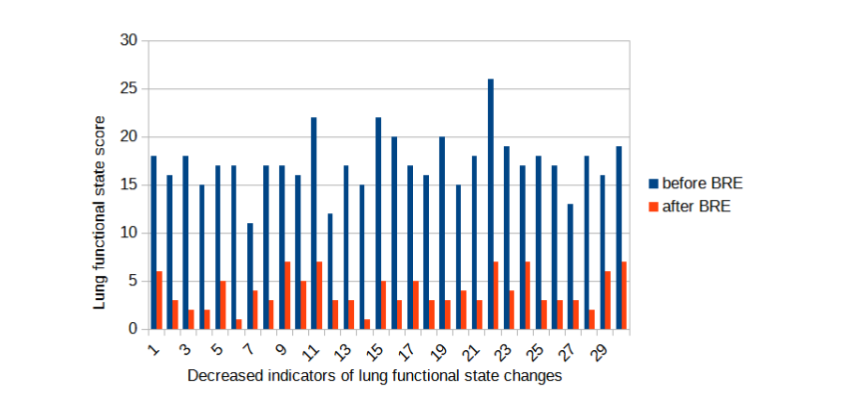
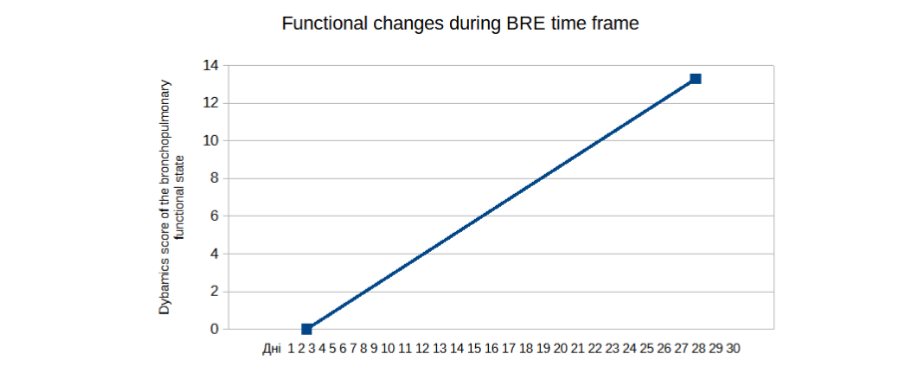
The results presented in Table 2 reflect changes in the functional state of the bronchopulmonary system identified during frequency-resonance testing. This testing involves the introduction of an information-wave component into the resonance information chain, in this case of the pulmonary system. Electrical resistance was measured at the biologically active point corresponding to the lungs. The value obtained without a marker reflects the baseline state of the organ, whereas the value obtained with a marker reflects the frequency-resonance characteristics of the lungs.
The difference value presented in the table provides information about the functional state of the organ system. Specifically, if the difference between measurements obtained with and without a marker is up to 7 units, the organ or system is considered to be in a normal physiological state; if the difference exceeds 7 units, this indicates a functional disorder of the organ and informs both the specialist and the subject.
According to the results presented in Table 2, the functional state of the lungs before BRE showed a mean marker difference of −17.3 units, indicating impaired lung function. After BRE, the mean functional state difference was −4 units. In all participants, values above 7 units were not observed, indicating that lung function was within normal physiological limits.
The results presented in Fig. 2 demonstrate that after the therapy, patients did not report symptoms such as difficulty breathing, weakness, sweating, or chronic cough. All patients showed a positive response to treatment. This may raise concerns about potential falsification of the results by the method’s proponent. However, the reliability of the diagnostic results largely depends on the competence of the specialist, which in turn affects the assessment of the therapy’s effectiveness. The role of the BRE method in this physiological disorder is also evaluated, whether as a primary or adjunctive therapy.
According to recent studies, as well as the findings obtained in the present study, the bioresonance diagnostic method has several advantages over conventional methods, including ease of use, rapid assessment, non-invasiveness, and informative diagnostic potential. However, its use in medicine is not possible without a basic understanding of how physiological systems function. This limitation defines the current challenges of bioresonance medicine.
Recent scientific data support the effectiveness of the bioresonance method in regulating metabolic processes, enhancing nonspecific immune defense, and influencing conditioned reflex activity.
This article focuses not on the general concept or broad application of the bioresonance method, but specifically on its use with the modern Parkes D and Parkes L diagnostic and therapeutic devices, which incorporate advanced scientific and technological developments. Therefore, they are recognized and registered as medical devices by the Ministry of Health of Ukraine and European organizations.
The article also includes other diagnostic methods for comparison, such as MRI, in which frequency-resonance parameters of organs are obtained.
The positive therapeutic response observed in the patients may be explained by the activation of adaptive and regulatory mechanisms of the organism described in the theory of homotoxicology. According to Reckeweg’s concept, disease progression reflects disturbances in the body’s self-regulation and detoxification processes, whereas therapy is aimed at restoring physiological excretory mechanisms and improving functional regulation. From this perspective, the observed reduction in respiratory symptoms and improvement in the functional state of the bronchopulmonary system may indicate a shift toward more favorable regulatory and adaptive processes.
This concept is further reflected in the Table of Homotoxicoses (Table 3), which describes the chronological progression of disease phases and corresponding symptoms within the framework of biological regulation. During the humoral phases, intracellular systems remain intact, and the organism preserves its ability to eliminate homotoxins through physiological excretory mechanisms such as sweating, mucus secretion, and inflammatory reactions. As pathology progresses, toxins accumulate in the extracellular matrix and connective tissue, leading to functional disturbances and increasing cellular damage. In later cellular phases, regulatory blockade develops, and the organism gradually loses its capacity for self-regulation.
A key concept of homotoxicology is vicariation, which refers to the transition of a disease from one phase or tissue to another during disease progression or therapy. Accordingly, the therapeutic goal is to stimulate the body’s defense mechanisms and promote regression toward physiological excretory phases, thereby supporting natural detoxification processes while minimizing adverse effects on other organs and systems.
| Excretion phase | Inflammation phase | Deposition phase | Impregnation phase | Degeneration phase | Dedifferentiation phase | |
|---|---|---|---|---|---|---|
| Ectoderm | Skin sweat eczema | warts | pigmentary changes | dermatoses | skin cancer | |
| Respiratory system | allergic rhinitis | tonsillitis | chronic bronchitis | bronchial asthma | pulmonary emphysema | lung cancer |
| Kidneys | urine | nephritis | concrements | nephrosis | nephrosclerosis | kidney cancer |
| Liver | bile | hepatitis | concrements | fatty dystrophy | cirrhosis | liver cancer |
Conclusion.
This article presents the physiological rationale for the use of the bioresonance method, as well as the assessment and correction of the functional state of the human bronchopulmonary system in the post-COVID-19 period. In accordance with the study aim, a theoretical generalization and a new solution to the scientific problem are presented, which consist in determining the informativeness of the bioresonance method for assessing functional state, investigating electrical conductivity in biologically active points, and applying marker-based diagnostics. The effectiveness of the bioresonance method has been demonstrated in the regulation of metabolism, nonspecific immune defense of the bronchopulmonary system, parameters of conditioned reflex activity, functional state of the oxygen transport system, and antioxidant defense in the human body.
Conflict of Interest Statement: None.
Funding Statement: None.
Acknowledgements: None.
References:
- Podchernyaeva R.J., Lopatina O.A., Mikhailova G.R., et al. Effect of exogenous frequency exposure on human … World Journal of Neuroscience. 2016. doi:10.4236/wjns.2016.63024.
- J Rehabil Med Clin Commun. 2025 Jul 9;8:42686. doi:10.2340/jrm-cc.v8.42686.
- Yakymchuk M.A., Prylypko S.I. Application of the frequency-resonance method for the diagnosis and neutralization of microorganisms, including Bifidobacterium and Helicobacter pylori [in Ukrainian]. Klinichna ta Profilaktychna Medytsyna. 2023;(1):14. doi:10.31612/2616-4868.1(23).2023.14
- Holub Yu.S., Koptielov O.O., Bondar M.P. Biorezonansna medytsyna – elektromahnitnyi eliksyr zdorovia [Bioresonance medicine – electromagnetic elixir of health]. Kyiv: Ku-KU; 2018. 512 p.
- Rajendran S.B., Challen K., Wright K.L., Hardy J.G. Electrical stimulation to enhance wound healing. J Funct Biomater. 2021 Jun 19;12(2):40. doi:10.3390/jfb12020040.
- [Article in Chinese]. Zhonghua Wei Chang Wai Ke Za Zhi. 2025 Feb 25;28(2):178–184. doi:10.3760/cma.j.cn441530-20241118-00375.
- Tsai S.-R., Hamblin M.R. Biological effects and medical applications of infrared radiation. J Photochem Photobiol B. 2017 May;170:197–207. doi:10.1016/j.jphotobiol.2017.04.014. Epub 2017 Apr 13.
- Marquiore L.F., Oliveira R.F., Ferreira L.A.Q., Gomes N.A., Souza M.M.O., Lucardians B.G., Cruvinel J.V.R., Perdigão A.L.M., Mesquita R.A., Silva T.A., Bernardes S.S., Diniz M.G., Diniz I.M.A. Oral mucosa cues for regeneration using photobiomodulation. Lasers Med Sci. 2025 Feb 17;40(1):97. doi:10.1007/s10103-025-04343-9.
- Holub Yu.S., Koptielov O.O., Bondar M.P. Biorezonansna medytsyna – elektromahnitnyi eliksyr zdorovia [Bioresonance medicine – electromagnetic elixir of health]. Kyiv: Ku-KU; 2018. 512 p.
- Bobrytska O.M. Fiziolohichne obgruntuvannia otsinky funktsionalnoho stanu orhanizmu sobak za biorezonansnoi medytsyny [Physiological substantiation of the assessment of the functional state of dogs using bioresonance medicine] (Doctoral dissertation). Lviv National University of Veterinary Medicine and Biotechnologies named after S.Z. Gzhytskyi. St. 1–2.
- Author(s). Diagnostic yield and synergistic impact of needle aspiration and forceps biopsy with electromagnetic navigation bronchoscopy for peripheral pulmonary lesions: a randomized controlled trial. Chest. 2025 Jul;168(1):236–247. doi:10.1016/j.chest.2025.02.015. Epub 2025 Feb 22.
- Author(s). Article title not provided. Ther Adv Resp Dis. 2025 Jan–Dec;19:17534666251355130. doi:10.1177/17534666251355130. Epub 2025 Jul 13.
- Author(s). Article title not provided. Transl Cancer Res. 2023 Dec 31;12(12):3471–3485. doi:10.21037/tcr-22-2534. Epub 2023 Dec 6.
- Author(s). Article title not provided. Cancer Imaging. 2023 May 31;23(1):53. doi:10.1186/s40644-023-00557-8.
- Bobrytska O.M. Fiziolohichne obgruntuvannia otsinky funktsionalnoho stanu orhanizmu sobak za biorezonansnoi medytsyny [Physiological substantiation of assessment of the functional state of dogs using bioresonance medicine] (Doctoral dissertation). Lviv: Lviv National University of Veterinary Medicine and Biotechnologies named after S.Z. Gzhytskyi; 2019. p. 31.
- Bobrytska O.M. Fiziolohichne obgruntuvannia otsinky funktsionalnoho stanu orhanizmu sobak za biorezonansnoi medytsyny [Physiological substantiation of assessment of the functional state of dogs using bioresonance medicine] (Doctoral dissertation). Lviv: Lviv National University of Veterinary Medicine and Biotechnologies named after S.Z. Gzhytskyi; 2019. p. 28.
- Bobrytska O.M. Fiziolohichne obgruntuvannia otsinky funktsionalnoho stanu orhanizmu sobak za biorezonansnoi medytsyny [Physiological substantiation of assessment of the functional state of dogs using bioresonance medicine] (Doctoral dissertation). Lviv: Lviv National University of Veterinary Medicine and Biotechnologies named after S.Z. Gzhytskyi; 2019. p. 30.
- Derper-Rekkeweg Monika. Theory of homotoxicology. Main work of Hans-Heinrich Reckeweg. Biolohichna Medytsyna. 2005;(2):4–6. Available from: https://alfamedikal.zakupka.com/uk/articles/22673-tablica-6-faz.
- Bobrytska O.M. Fiziolohichne obgruntuvannia otsinky funktsionalnoho stanu orhanizmu sobak za biorezonansnoi medytsyny [Physiological substantiation of assessment of the functional state of dogs using bioresonance medicine] (Doctoral dissertation). Lviv: Lviv National University of Veterinary Medicine and Biotechnologies named after S.Z. Gzhytskyi; 2019.