

Empowering HBCU Researchers: Writing Support Success
Empowering Underrepresented Researchers Through Effective Writing Support
Bethtrice Elliott¹, Shiva Mehravaran¹², Christine Hohmann¹²
- Center for Urban Health Disparities Research and Innovation, Morgan State University, 1700 East Cold Spring Lane, Baltimore, MD 21251, USA
- Department of Biology, Morgan State University, 1700 East Cold Spring Lane, Baltimore, MD 21251, USA
OPEN ACCESS
PUBLISHED: 31 October 2024
CITATION: Elliott, B., Mehravaran, S., et al., 2024. Empowering Underrepresented Researchers Through Effective Writing Support. Medical Research Archives, [online] 12(10).
https://doi.org/10.18103/mra.v12i10.5969
COPYRIGHT: © 2024 European Society of Medicine. This is an open-access article distributed under the terms of the Creative Commons Attribution License, which permits unrestricted use, distribution, and reproduction in any medium, provided the original author and source are credited.
DOI https://doi.org/10.18103/mra.v12i10.5969
ISSN 2375-1924
Abstract
Background: Effective writing support is crucial for enhancing research competitiveness, particularly at Historically Black Colleges and Universities (HBCUs), where faculty face significant challenges such as high teaching loads and limited research resources. These barriers often hinder research productivity, particularly in biomedical and STEM fields, which are critical for addressing health disparities. To address these challenges, Morgan State University, a midsize HBCU, implemented a series of grant-writing workshops (GWWs) and Scientific Writing Accountability Groups (SWAGs) to enhance faculty research capabilities.
Aims: The goal of this study was to assess their effectiveness in terms of increasing writing confidence among participants and increasing grant submission rates and research productivity among early-career and tenure-stream faculty. The workshops were particularly focused on helping faculty develop competitive NIH-style research proposals.
Methods: The GWWs and SWAGs provided structured, hands-on coaching for proposal and manuscript writing. The GWWs focused on teaching key grant-writing skills, such as formulating research questions, designing studies, and writing proposals. Meanwhile, the SWAGs supported ongoing writing accountability, encouraging participants to develop consistent writing habits and providing peer feedback. Participants’ progress was assessed through pre- and post-workshop surveys that measured confidence in writing tasks, as well as tracking grant submissions and funding outcomes.
Results: Since 2019, five series of GWWs and four SWAG sessions have been held, leading to significant gains in self-efficacy and productivity. Participants in the GWWs reported improved confidence in tasks such as formulating research questions, conducting literature reviews, and writing proposals. Those involved in accountability groups reported improved writing habits and progress on manuscripts, grants, and other academic projects. Overall, these programs contributed to a 78% grant submission rate among attendees, compared to 55% for non-attendees. A total of 174 proposals were submitted, resulting in over $84 million in funding.
Conclusion: The workshops and accountability groups were highly effective in enhancing faculty research productivity and grant success. These initiatives demonstrate the value of providing structured writing support at under-resourced institutions, particularly HBCUs, to build a more competitive and diverse research workforce. The success of these programs highlights the potential for similar models to be implemented at other minority-serving institutions to address health disparities and foster academic excellence.
Keywords
- Grant-writing workshops
- Scientific Writing Accountability Groups
- Underrepresented researchers
- HBCUs
- Research productivity
Introduction
A more diverse biomedical workforce is needed to increase health equity at a national and international level. In the US, many studies have documented substantial disparities in health outcomes across various demographics, in particularly among minoritized groups such as Blacks (from here on referred to as African Ancestry (AA)) and Hispanics. A plethora of factors, including limited access to health care, socioeconomic conditions, and outright discrimination, contribute to these disparities. Moreover, many in the AA population have a deep-seated distrust of doctors and the medical establishment, rooted in historical and ongoing maltreatment and discrimination.
A healthcare workforce that is more diverse and representative of populations most affected by health disparities can overcome some of the current inequities. It has been demonstrated that many patients are more comfortable with healthcare providers who share their cultural and ethnic backgrounds, and such providers often have a better understanding of their patient’s circumstances and needs, enabling them to provide more effective care. Likewise, in the biomedical research arena, diverse investigators bring different questions and issues to the table. It has only been a few decades since the medical community accepted that disease presentations and health outcomes differ substantially between males and females, and only now is the research community becoming aware of the substantial physiological differences between various ethnic and ancestral populations. The “one size fits all” model of diagnosis and treatment has revealed its dangers as we move into the era of personalized medicine. For example, if genome-wide analysis studies rely almost exclusively on data from European Americans, how do we know the best ways to treat AA and other ethnic populations? As researchers, we tend to gravitate toward questions of personal significance. Hence, a more diverse workforce brings new questions and approaches to the research enterprise. The resulting discoveries and conclusions can be game changers in addressing health equity. Lastly, diverse teams are known to work more creatively and productively.
In response to the need for diversity, the National Institutes of Health (NIH) in the US has, in recent years, recognized disparities in research participation of AA and other minoritized populations, committing substantial efforts and resources to diversify the biomedical workforce. These efforts have resulted in some gains in the number of individuals from underrepresented populations attaining doctoral degrees and moving into the workforce. However, these gains remain insufficient, and efforts must continue to attract and, importantly, retain individuals in STEM/biomedical training programs and biomedical professions, starting at the undergraduate level.
Historically Black Universities and Colleges (HBCUs) have long produced the majority of African Ancestry students who go on to earn PhD and MD degrees in the sciences, including biomedical sciences. This is not by chance. As described in several recent studies, HBCUs provide nurturing and safe environments for undergraduates of color. Faculty generally have high expectations for their students, allowing them to develop a strong science identity and self-efficacy. An essential ingredient in helping students develop a science identity and the skills that allow them to succeed in graduate training and careers is a hands-on research experience. While there are many opportunities for summer research experiences, such programs usually occur at Predominantly White Institutions. Although important, these short-term experiences do not compensate for a multi-year, intensive research experience at students’ home institutions, guided by faculty who are culturally aligned with them.
Establishing sustainable research opportunities on HBCU campuses can be challenging due to factors such as underfunding, a higher proportion of students from low-income backgrounds (many of whom are first-generation college students), and the high teaching loads of faculty. All of these factors make it difficult for faculty to find time for research and publications. Therefore, in order to substantially increase the number of undergraduates, well-prepared for post-graduate training to become clinicians and researchers, and who have the resilience to succeed, faculty research must be facilitated and increased at HBCUs and other minority-serving institutions. Mentorship to improve grant writing skills and writing productivity has emerged as an important component of this effort.
Research-intensive institutions have increasingly recognized that early-career faculty need structured support to develop their research careers. Recent literature provides many examples of successful implementation of training activities in proposal writing and manuscript preparation, even on an international level. Minority-serving institutions, such as HBCUs, have generally lacked the resources to implement such training programs. Recent NIH funding initiatives through the NIH Diversity Consortium, such as the Building Infrastructure Leading to Diversity (BUILD) and National Research Mentoring Network (NRMN) initiatives, have made it possible to assess needs and pioneer writing support programs for minority investigators, demonstrating their success. However, even these funded initiatives have had a limited reach into HBCUs and other smaller minority-serving institutions. Supported by funding through the NIH BUILD initiative, we were able to develop several hands-on, coach-led, and participant peer-mentored writing workshops at Morgan State University (MSU), focusing on the preparation of STEM and biomedical/biobehavioral proposals and manuscript preparation. These workshops were originally modeled on successful, published models of proposal preparation and Scientific Writing Accountability Groups (SWAGs) but were substantially adapted to the needs of our midsize HBCU campus, based on educational principles of active and cooperative learning, as well as participant feedback. We report here on the effectiveness and institutional outcomes of our workshop series.
Methods
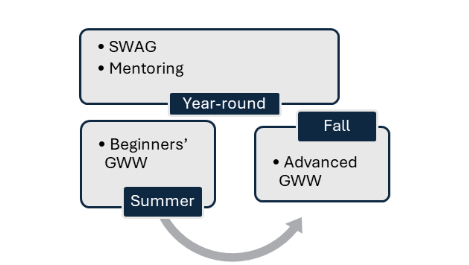
Writing support at MSU is offered through a Grant-Writing Workshop (GWW) series and Scientific Writing Accountability Groups (SWAGs), as described below (Figure 1). The GWW series are conducted jointly by a biomedical researcher with a background in molecular and behavioral neuroscience (CH) and a clinical researcher with a substantial public health background and experience in data science (SM). These complimentary backgrounds have facilitated tailored feedback for workshop participants. Both investigators have extensive experience in writing and reviewing grants. The SWAG sessions are conducted by a science writer (BE) with a background in cancer research.
The workshops and the SWAGs sessions are announced campus-wide through announcements and email notifications, with applications received via Google Forms. GWW participation focuses on tenure-stream faculty, with an emphasis on Early-Stage Investigators (ESI) and postdocs, and has a maximum enrollment of 20 participants/workshop. If there are sufficient slots available, we admit faculty at all career stages and, occasionally, staff members. For the purpose of the outcome assessments below, it is important to note that only tenure-stream faculty are eligible for grant funding at MSU. Participation in SWAGS is open to faculty at all career levels, as well as postdocs and graduate students, and does not have enrollment limits.
Beginners’ Grant-Writing Workshop I: Research Question & Study Design
This 2-month intensive hands-on workshop is designed to provide novice grant writers with little or no prior experience, and individuals who have not been funded previously, the opportunity to assemble a draft scientific research proposal. During the workshop, participants focus on composing a concise and testable research question of unique utility and significance, supporting their research question with an in-depth review of the relevant literature that emphasizes the significance and innovative aspects of the project, and constructing a rigorous study design that appropriately tests the research question. In addition to receiving feedback from the coaches, participants have the opportunity to review and critique their peers’ material in face-to-face meetings (mostly on Zoom). Instructions in this workshop are not tailored to any specific research funding agency.
Learning Objectives. Upon completion of this workshop, participants are expected to be able to:
- Develop a well-defined, testable research question focused on basic biomedical research or health disparities.
- Conduct a comprehensive literature review to support their research question.
- Articulate the overall significance and innovative aspects of their proposed research.
- Design an appropriate research methodology to address the research question.
- Identify potential federal funding sources and develop strategies for grant proposal development.
The Summer GWW is divided into weekly sessions with specific learning objectives, activities, and assignments. The detailed syllabus is available in the Supplementary Material. Below is a brief weekly outline.
Syllabus
- Week 1: Introduces participants, outlines the research proposal process, and helps them refine their research questions.
- Week 2: Focuses on conducting a thorough literature review to support the research question and identify gaps in knowledge.
- Week 3: Introduces participants to federal grant resources and specific funding agencies.
- Week 4: Aligns research aims with the overall research question and ensures they are appropriately tested.
- Week 5: Guides participants in crafting a detailed literature review that highlights the research gap and their novel approach.
- Week 6: Focuses on developing a rigorous and reproducible study design, including methods selection and justification.
- Week 7: Participants present their complete research approach, address potential challenges, and receive final feedback on their draft proposals.
Grant Writing Workshop II: Proposal Development
The second workshop of the series is a semester-long workshop designed to provide individuals with limited prior experience in grant writing and no experience in writing proposals for the National Public Health Service, for preparing an application to NIH. Over the course of the 4-month workshop, participants assemble a full scientific research proposal as they are guided step by step through the process of developing an NIH-style proposal for internal submission as a pilot or external opportunities such as R16, K, or general R21. As in the summer workshop, participants engage in nearly weekly face-to-face (mostly Zoom) meetings to critique each other’s weekly writing assignments and provide support.
Learning Objectives. By the end of this workshop, participants are expected to be able to:
- Navigate the NIH grant landscape proficiently, with a solid understanding of the NIH grant process, including key requirements and evaluation criteria.
- Craft a clear, testable, and compelling research question that drives their proposal.
- Effectively argue for the originality and importance of their proposed research, articulate innovation and significance.
- Develop concise and well-defined study aims that directly address the research question, ensuring a rigorous and focused research design.
- Compose a research plan that adheres to the NIH principles of rigor and reproducibility, outlining the methods and timelines for achieving their research goals.
- Anticipate and mitigate challenges by identifying potential drawbacks or limitations of the proposed work and proactively proposing strategies to address them.
- Master grant formatting skills and competently apply key strategies to develop a compelling NIH R21 application package.
- Effectively create a well-structured budget that aligns with the research plan and justifies requested funding.
- Develop a well-constructed NIH biosketch that effectively highlights their qualifications and expertise relevant to the proposed project.
The syllabus for this workshop, like the summer workshop, is divided into weekly sessions with specific assignments and outcomes, as outlined below. The full syllabus is available as supplementary material.
- Week 1: Introduces participants to the workshop, fosters collaboration, and lays the groundwork for developing research questions.
- Week 2: Focuses on refining research questions, emphasizing significance and innovation. Participants conduct peer reviews and receive feedback to strengthen their research concepts.
- Week 3: Participants work asynchronously on Specific Aims.
- Weeks 4 & 5: Centers on developing well-structured and impactful Specific Aims. Participants receive feedback on their drafts and begin outlining the overall research approach (study design).
- Weeks 6 & 7: Focuses on translating research concepts into actionable plans. Participants refine study designs, address potential challenges, and apply key formatting strategies to create a well-structured and rigorous research approach.
- Week 8: Guides participants to analyze and critique the elements of an effective approach section and troubleshoot alignment between Specific Aims and Approach.
- Week 9: Focuses on budget, budget justification, and preparing effective biosketches.
- Week 10: Directs participants to critically analyze Specific Aims and components of the Research Plan for Significance, Innovation, and sound Approach strategies.
- Weeks 11 – 13: Focuses on finalizing the proposal through peer review, addressing ethical considerations, and completing essential supporting documents.
Scientific Writing Accountability Groups
The GWWs are complemented by SWAGs to enhance persistence and support the completion of writing tasks. The overarching objective of SWAGs is to serve as a peer accountability group aimed at helping participants structure their writing schedules and foster mutual support in writing research manuscripts and/or grants. MSU SWAGs are 10-week-long sessions, where participants focus on achieving a set writing goal each week while writing more frequently and for shorter durations to develop a sustainable writing habit. The MSU “hybrid” SWAG model incorporates the feedback from participants’ pre-assessment forms, collected prior to attending the sessions, to tailor the writing program to better meet their needs and offers targeted writing tips in each session. Participants choose whether they want to work on the manuscripts, dissertations, or grant proposals. Interested individuals complete a registration form through Google Forms, providing their rank, type of writing project (manuscript or grant), and availability. Based on availability and the number of registrants, sessions are divided into two sections (with 4-8 members per section) to manage group size and ensure schedule compatibility. Participants are allowed to choose which section they will attend at the start of each session. They also complete a pre-assessment before the workshop and a post-assessment at its conclusion.
Scientific Writing Accountability Group Curriculum
The SWAG workshops are held once a week for 90 minutes via Zoom, over 10 weeks. Each session is structured into three main components: a 15-minute mini-group discussion, a 60-minute independent writing period, and a 15-minute debriefing session. During the mini-group discussion, participants provide updates on their writing progress, set goals for the session, and receive support and suggestions from the facilitator and peers. This segment also allows participants to exchange knowledge on writing resources and share their research projects, allowing feedback and potential collaborations on shared interests. Depending on topics prompted by participants, the facilitator occasionally allows for unstructured conversation. These moments offer opportunities for participants to engage with one another, strengthening the sense of community. The goal of such interactions is to provide an opportunity for participants to connect on a personal level, share ideas, and form friendships or collaborations beyond the structured writing activities.
Following the mini-group discussion is a focused, uninterrupted independent writing period, during which participants work on their projects in silence. Breakout rooms are available for those collaborating on the same writing project. The session concludes with a debriefing where participants share their achievements, discuss challenges, and set goals for the following week between SWAG sessions.
Scientific Writing Accountability Group Syllabus
There is no formal syllabus, per se, for SWAGs, but rather a structured approach for each of the 90-minute online sessions, aimed at sustaining participants’ writing habits. Below is a list of topics typically discussed in our hybrid model.
- Introductory Session: Introduce participants to SWAG, and discuss workshop goals, structure, and goal setting.
- Writing Tips on Literature Review, Introduction, and References: Focuses on providing guidance on evaluating existing literature, strategies for introducing research topics, and proper citation practices.
- Utilizing a Reference Manager: Focuses on efficient organization and managing citations and references in professional writing.
- Writing Tips on Materials and Methods: Focuses on clarity, detail, and logical organization to ensure procedures are easily replicable.
- Writing Tips on the Discussion Section: Focuses on interpreting and contextualizing findings.
Individual sessions with the coach can be scheduled for participants needing additional support in grammar and writing mechanics to help them remain accountable for the goals they set.
Evaluation
To evaluate the effectiveness of the workshops, we conducted pre- and post-workshop surveys to assess participants’ self-efficacy and confidence in performing the tasks we coached them on. Using a 5-point Likert scale, participants rated their confidence levels regarding the specific learning objectives outlined for the workshops. The pre-workshop survey provided a baseline measure of their initial self-efficacy, while the post-workshop survey captured any changes in their confidence after completing the training. The post-workshop surveys also included items to assess participants’ satisfaction with different aspects (e.g. logistics, duration, timing, and instructors) of the workshops. Microsoft Excel was used for data collection, management, and statistical analysis of workshop surveys. Beyond self-reported confidence, we also tracked tenure-track participants’ research productivity, including the number of grants submitted and their budgets starting one year after participation using databases retained by the university’s Office of Research Administration and the research progress reports by those who were awarded pilot funding. As noted above, this comprehensive approach allowed us to quantitatively measure the impact of the workshop on participants’ perceived ability to perform the tasks and their actual research output, providing valuable insights into the effectiveness of our coaching methods.
Results
Summer Grant-Writing Workshops
Since 2019, four Summer and five fall GWWs have been held, and have demonstrated a substantial impact on participants’ confidence and skills related to grant writing. A total of 115 individuals registered for these workshops (Table 1). Table 1 provides the breakdown of registrants by academic rank and session. The most represented registered group was Assistant Professors (39 total, with 24 registering for the Fall session and 15 for the summer session). Professors were the least represented (6 total), while other academic ranks, such as Associate Professors and Postdocs, comprised significant portions of the participants. In terms of attendance, 70 out of the 115 registrants participated in the workshop sessions, with Fall having 39 attendees and Summer having 31. The distribution of attendees across ranks showed a slight decrease from the registration figures. For instance, only 21 Assistant Professors attended (14 in the Fall, 7 in the Summer), and Professors saw a drop from 6 registered to only 4 attending.
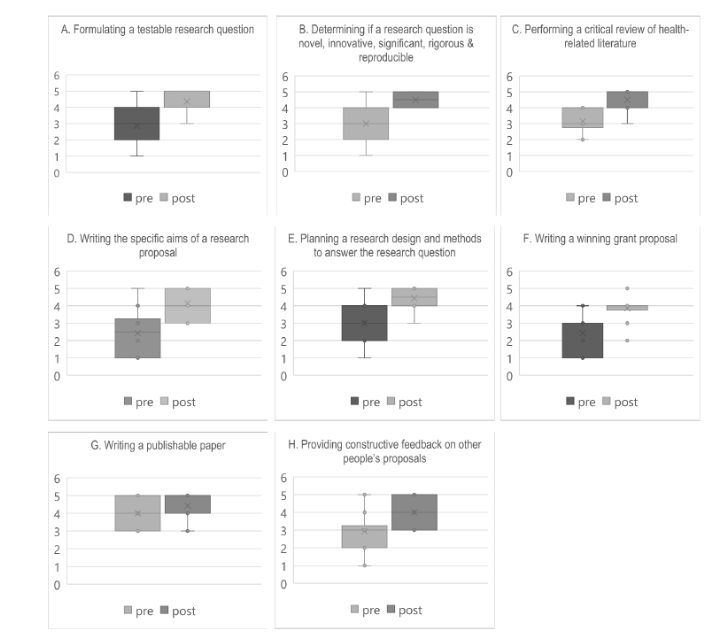
The impact of the workshops was evaluated through participants’ self-reported confidence levels in performing various grant-related tasks. Participants (n=17) rated their satisfaction with the Summer GWW at 94.8%. Pre-post survey results from the Summer GWW indicated significant increases in self-efficacy for all skills measured (paired t-test, P < 0.001), including “formulating a testable research question” (2.9 to 4.4), determining if a research question is novel, innovative, significant, rigorous & reproducible” (3.1 to 4.5), “performing a critical review of health-related literature” (3.1 to 4.5), “writing the specific aims of a research proposal” (2.6 to 4.2), “planning research design and methods to answer the research question” (3.1 to 4.5), writing a winning grant” (2.6 to 3.9), and “providing constructive feedback on other people’s proposals” (3.0 to 4.1), except for the task of writing a publishable paper (4.1 to 4.5; P = 0.28), which was not one of the workshop’s targeted learning objectives.
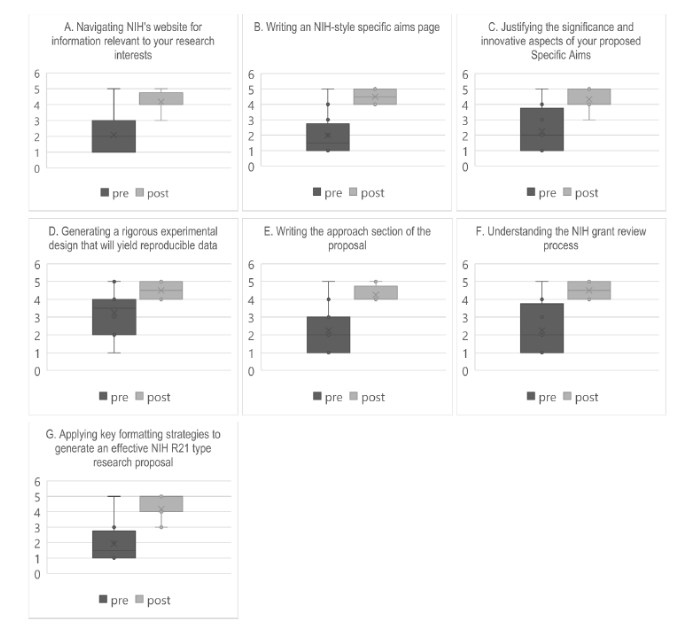
Similarly, the Fall GWW was evaluated, and participants (n=13) rated their satisfaction with the workshop at 97%. Pre-post surveys show significant gains in participants’ confidence across all grant-related tasks (paired t-test, P < 0.001), including “navigating NIH’s website for information relevant to your research interest” (2.1 to 4.2), “writing an NIH-style specific aims page” (2.0 to 4.5), “justifying the significant and innovative aspects of your proposed specific aims” (2.3 to 4.3), generating a rigorous experimental design that will yield reproducible data” (3.3 to 4.5), “writing the approach section of the proposal” (2.3 to 4.3), “understanding the NIH grant review process” (2.3 to 4.5), and “applying key formatting strategies to generate an effective NIH R21 type research proposal” (1.9 to 4.2).
Scientific Writing Accountability Groups
Since 2022, we have held four SWAGS (three Summer and one in the Spring), each consisting of two sections. Out of 74 registrants, 51 participated in these sessions. Among the participants, 31.4% were faculty members, including 8 Assistant Professors, 5 Associate Professors, and 2 Professors. Additionally, 5.9% were post-doctoral fellows, 54.9% graduate students, and 7.8% belonged to other categories, representing various departments across our university.
Of the 51 participants, 24 completed both the pre- and post-surveys. A shift was observed in participants’ writing habits and goal-setting behaviors after the workshop. The outcomes included eight new manuscripts, four revised manuscripts, four grant proposals, and two conference abstracts. Participants highlighted the value of the writing resources provided and the effectiveness of peer feedback sessions in improving writing skills. They reported several key benefits from the workshops, including improved consistency in writing, enhanced knowledge about manuscript preparation, better time management, and increased accountability. Specific gains mentioned included the ability to set and adhere to goals, a better understanding of writing mechanics, and the positive pressure to write regularly. Moreover, the majority of participants expressed a strong interest in continuing the SWAG workshops, reflecting the perceived value and impact of the program on their writing progress and professional development.
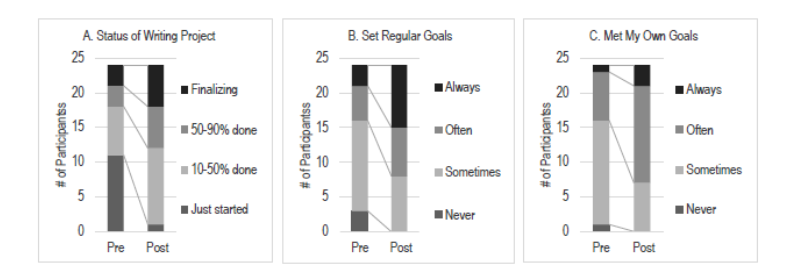
There was a marked improvement in the progress of the participants’ writing projects. Prior to the workshop, 11 (45.8%) participants reported having just started their writing projects, but this number decreased to 1 post-workshop. Overall post-workshop data indicated a substantial shift, with 75% of all participants reporting progress in their writing projects, with participants being 10-50% done increasing from 7 to 11, and those 50-90% done or finalizing their work both increased from 3 to 6 participants. Furthermore, there was a notable increase in the consistency of goal-setting behaviors such as hours spent on writing projects among participants from pre- to post-workshop. The number of participants who regularly set goals increased from 3 pre-workshop to 9 post-workshop, and those who “never” set goals dropped from 3 to 0 participants, with a majority adopting more frequent goal-setting practices. Additionally, the proportion of participants who reported often or always meeting their goals increased from 8 participants pre-workshop to 17 participants post-workshop.
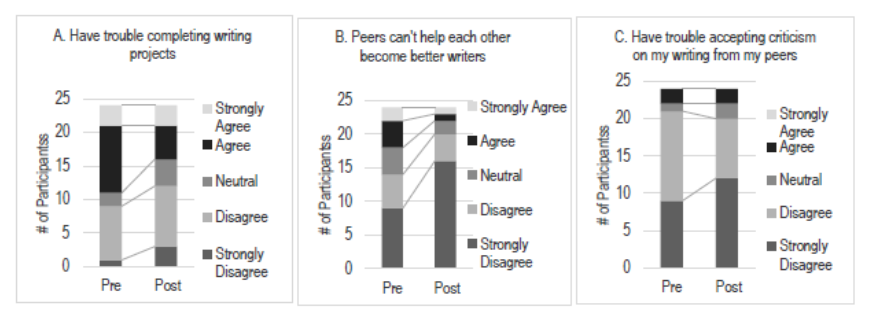
The workshop positively impacted participants’ attitudes toward writing. The number of participants who strongly disagreed or disagreed with the statement “I have trouble completing writing projects” increased from 9 participants pre-workshop to 12 participants post-workshop. Moreover, there was a notable increase in the belief that peers can help each other become better writers, with the proportion of participants strongly disagreeing with the statement “Peers can’t help each other become better writers” increasing from 9 (37.5%) to 16 (66.7%); and a reduction in the number of participants who agreed with this statement. Similarly, participants largely disagreed or strongly disagreed with the statement “I have trouble accepting criticism of my writing from my peers,” and this trend continued post-workshop, with even more participants strongly disagreeing.
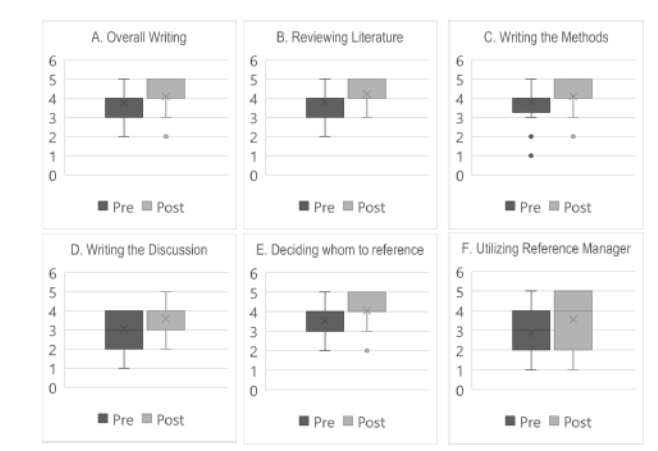
The workshop led to substantial improvements across various aspects of participants’ writing skills due to its structured approach and emphasis on providing “quick writing tips.” On average, participants reported an increase in confidence levels in their overall writing skills, including better grammar, clarity, and coherence, with ratings rising from 3.8 to 4.1 post-workshop assessments. The ability to structure writing projects also improved slightly, with average ratings increasing from 3.7 to 3.8. Participants made notable progress in reviewing and integrating literature into their writing, aided by strategies that facilitated efficient research and summarization. There were also significant gains in writing the methods sections, with participants finding the provided examples particularly helpful in clearly and thoroughly describing research procedures. Scores for this aspect increased from 3.8 to 4.1. Although data analysis was not a primary focus, some participants improved their ability to write about data analysis, with ratings increasing from 3.5 to 3.8, likely due to the workshop’s emphasis on clarity and precision in writing. Additionally, participants reported an increased ability to write the discussion section, particularly in interpreting and contextualizing their research findings. Participants also experienced a notable increase in their ability to make better decisions about whom to reference, with ratings rising from 3.5 to 4.0. Moreover, there was a substantial improvement in citation practices, as participants’ understanding of how to use reference managers improved, with ratings increasing from 2.9 to 3.5.
Suggestions to Improve Accountability Group Sessions
Participants also made several suggestions to improve the SWAG experience, and we are working to incorporate these into future sessions. They expressed a desire for more available dates for group sessions, as well as more frequent meetings, ideally twice per week, and suggested that the program should continue through the fall with two-month workshops throughout the year. Participants recommended extending the writing hours during sessions and allocating more time for writing. They also proposed the introduction of accountability partners, which could foster co-authorship opportunities by encouraging participants to share their papers. Short examples and group feedback were suggested to help participants practice and learn. Additionally, participants felt that follow-up from the facilitator on individual projects during the week, or the assignment of a “senior writing buddy” for check-ins, would enhance accountability and motivation. Despite these suggestions, they appreciated the facilitator’s availability for assistance during the week, which was considered very helpful.
Overall Outcomes
A total of 147 unique individuals registered for our writing support events. Of these, 82 registrants were tenure-track faculty at MSU, and 60 of these faculty members actually attended one or more of the events. To assess the overall, combined impact of our workshops and SWAGs on tenure-track faculty grant productivity, we used data from our institutional Office of Research Administration (ORA) to examine grant submissions, funded grants, and related dollar amounts starting one year after they received support from us for the first time. Table 5 compares the number of grant proposals submitted by and awarded to three groups of faculty members: 1) the 60 faculty who attended one or more of our GWWs or SWAGs, 2) the 22 faculty who registered for one or more of the workshops but did not participate in any of them, and 3) all other faculty at the University who submitted a proposal through MSU ORA since 2021. The third group included faculty at any rank and in all disciplines, not just those in biomedical/biobehavioral science disciplines targeted by our workshops. This group also includes a number of large institutional development and other Center grants. As shown, 47 out of 60 participants submitted 174 proposals, totaling over $84 million, after attending at least one of the workshops. In comparison, 12 of the 22 registrants who did not attend any event submitted 50 proposals, totaling about $10 million. Thus, the percentage of faculty submitting grants was significantly higher in group 1 (78%), those who participated in our workshops, compared to group 2 (55%). The average number of proposals submitted by faculty was 3.7 for attendees and 4.2 for non-attendees; however, this difference was not statistically significant.
Discussion
This paper describes the outcomes of a series of interrelated writing workshops we have conducted at Morgan State University, a midsize HBCU, and Carnegie R2-classified University, from 2019 through the present. We demonstrate that workshop participants achieved substantial, and in many instances significant gains in the relevant skill sets, as well as overall good outcomes in research productivity, particularly in grant submission and funding.
Comparisons between faculty members who participated in one or more of the workshops and those who registered but did not participate in any of the workshops show that workshop “graduates” had a substantially higher proposal submissions rate of 78% vs 55%, with a funding success rate of over 30%. Since the majority of participants in our grant writing workshops were investigators with little to no prior funding history, this is a remarkable outcome. Furthermore, a number of registrants who chose to not participate after they registered for workshops were seasoned investigators with a prior funding history, and they likely concluded that they did not need the workshop. It should also be noted that the higher funding rate in the registered, non-participants group is skewed by several individuals who submitted multiple funded proposals.
Many of our faculty investigators participated in both the workshops and, in several instances, in one or more SWAG sessions. For this reason, we chose to analyze our overall outcome data in aggregate rather than by workshop. A limitation of our analysis is that we were unable to conduct a pre/post analysis of grant success within the participant cohort. Many participants, including faculty at the associate professor level, particularly those entering at the summer workshop level, were new to the university and/or to faculty status and therefore had no measurable grant history at MSU or their previous institution.
Our participants’ proposal submission and funding rates compare favorably with recent national training efforts at improving grant submission and funding success among minority investigators and those at minority-serving institutions. A recent analysis of various workshop models reported an overall submission rate of 46% and a success rate of 32%. Submission success rates for a nationwide workshop model on which our training at MSU was originally based, NRMN STAR, revealed slightly lower submission rates among faculty participants compared to ours. Although this study did not track actual funding success, it did show high post-workshop self-confidence levels and substantial pre-post workshop improvements in participants’ self-efficacy as grant writers, using a published instrument, the Clinical Research Appraisal Inventory. None of these studies included a comparison group to assess what the submission/funding rate might have been for similar investigators without the workshop experience. Furthermore, the majority of investigators trained and assessed in these nationwide studies came from Carnegie 1 research universities and specialized research facilities, where heavy teaching loads are not a factor. Additionally, many of the workshop models pre-selected participants based on workshop readiness.
Analysis of participant responses to our pre-/post- (Before/Now) questionnaires reveal the full training success of the grant writing workshops across all participants. These assessments, unlike the grant success data, include ESI investigators beyond tenure-stream faculty, such as post-docs and instructors. Instead of choosing a published instrument, we closely aligned our pre-/post- questionnaires with specific workshop learning outcomes and demonstrated highly significant gains in participant confidence levels prior to and after completing the workshops. The one exception to this was the responses to “writing a published paper” in the summer (novice) grant workshop. Paper writing, in fact, was not among the targeted learning outcomes for that workshop and this question was included as an ‘internal control’ which, as expected, did not reach pre-post significance. This type of learning outcome-based analysis is generally not included in the assessment of grant writing workshops, where surveys tend to focus more on participants’ overall approval of their workshop experience. However, we have found analyses based on specific learning outcomes very helpful in iteratively improving our instructional strategies over the past 5 years.
We attribute the success of our grant writing training workshops to a highly interactive and flexible approach that individualizes the overall workshop experience for participants in every iteration of the sessions. While the workshops follow a clear curriculum and have specific weekly deliverables, we adjust the pace as needed for each cohort of participants and often use calibration materials from successful grant applications before participants engage in peer review. Our peer review sessions are highly collaborative rather than competitive, with faculty providing helpful suggestions to each other, ensuring that everyone’s input is heard. This has created a sense of community among participants, which has, in some cases, led to collaborations between faculty members from different academic units who had not previously been acquainted.
Analysis of pre-/post outcome surveys from SWAG sessions similarly revealed gains in many categories we assessed. These sessions do not follow a set curriculum but instead provide a platform for participants to develop productive writing habits. As shown in the results, writing productivity and goal-setting abilities improved for nearly all participants. Interestingly, participants’ appreciation for peer feedback and support, while already strong at the start of the SWAGs, increased even further by the end of the sessions. The SWAGs conducted at MSU differed from many other such workshops by allowing for more peer interaction and offering both structured and one-on-one writing assistance. As shown in the results, participants gained increased confidence in many technical aspects of their writing; although, none of these gains were statistically significant. This is likely due to the great variability in the skill level of SWAG participants, which included individuals from graduate students to full professors.
We attribute some of the effectiveness of our workshop training model to building communities of peers alongside training participants in specific writing practices, time management, and accountability. In their extensive literature review, Randsdell et al. pointed out that technical skills such as writing, along with networking and collaborating as interpersonal skills, as well as accountability and time management, rank high among personal facilitators for faculty success, particularly for ESI and minority investigators. Thus, what works for students at HBCUs and other minority-serving institutions may also extend to the research training of faculty: that is, creating a supportive and collaborative environment that makes participants feel safe and included as they acquire new skills. Recently, several other papers have described frameworks of integrated writing and writing/mentoring workshops at minority-serving institutions aimed at community building among investigators. These studies, like ours, have shown substantial gains in self-perceived skills and confidence. In contrast, more traditional approaches to SWAGs involving faculty at minority-serving institutions, which solely focused on structured writing time, were met with less success.
This perspective may be particularly meaningful in the context of training faculty to become good mentors to their students, the next generation of biomedical/biobehavioral researchers, to help diversify the workforce. Returning to the original premises raised in the introduction, we have demonstrated that the workshops described here can advance faculty research productivity through grant submissions and funding success. Funded faculty labs at a mid-size HBCU such as our institution will increase opportunities for students to receive valuable research training at home and move into research careers with the confidence provided by role models and mentorship. Simultaneously, biomedical research at minority-serving institutions is likely to prioritize health equity perspectives. However, beyond HBCUs, workshops like those described here are likely to be impactful at many types of institutions that seek to increase their research footprint, particularly those with substantial teaching commitments, and limited resources for faculty development.
Conclusion
The writing workshops described here are effective individually, but perhaps even more so in aggregate, as they build a community of scholars reaching from mid-career faculty to graduate students and will likely extend to undergraduate training. These workshops can provide investigators at under-resourced institutions, where time is a limiting factor for scholarly pursuit, with an infrastructure to advance their research and build their confidence. Once external funding becomes a reality, faculty can build self-sustaining research groups. The model we describe here is sustainable with a modest amount of external funding or institutional commitment, such as, for example, giving seasoned researchers course credit for training ESI faculty. For the past five years, our workshops have been conducted remotely, but in real-time, on Zoom, making them accessible to participants off-campus at times that can be worked around family obligations and teaching commitments. This also could allow for the possibility for institutions to collaborate across campuses.
Conflicts of Interest Statement:
The authors have no conflicts of interest to declare.
Funding Statement:
This research was supported by the National Institute of General Medical Sciences of the National Institutes of Health under linked Award Numbers RL5GM118972 & UL1GM118973 and the National Institutes of Health through the cooperative agreement NIMHD U54MD013376.
Acknowledgments:
We would like to thank Ms. Subhadra Paudel for her diligent contributions to data management.
References
- Beech BM, Ford C, Thorpe RJ, Bruce MA, Norris KC. Poverty, Racism, and the Public Health Crisis in America. Front Public Health. 2021;9:699049. doi:10.3389/fpubh.2021.699049
- Fair MA, Johnson SB. Addressing racial inequities in medicine. Science. 2021;372(6540):348-349. doi:10.1126/science.abf6738
- Williams DR, Cooper LA. Reducing Racial Inequities in Health: Using What We Already Know to Take Action. Int J Environ Res Public Health. 2019;16(4):606. doi:10.3390/ijerph16040606
- 2023 National Healthcare Quality and Disparities Report. Agency for Healthcare Research and Quality; 2023.
- Hassen N, Lofters A, Michael S, Mall A, Pinto AD, Rackal J. Implementing Anti-Racism Interventions in Healthcare Settings: A Scoping Review. Int J Environ Res Public Health. 2021;18(6):2993. doi:10.3390/ijerph18062993
- Hassen N, Lofters A, Michael S, Mall A, Pinto AD, Rackal J. Implementing Anti-Racism Interventions in Healthcare Settings: A Scoping Review. Int J Environ Res Public Health. 2021;18(6):2993. doi:10.3390/ijerph18062993
- LaVeist TA, Isaac LA, Williams KP. Mistrust of Health Care Organizations Is Associated with Underutilization of Health Services. Health Serv Res. 2009;44(6):2093-2105. doi:10.1111/j.1475-6773.2009.01017.x
- Snyder JE, Upton RD, Hassett TC, Lee H, Nouri Z, Dill M. Black Representation in the Primary Care Physician Workforce and Its Association With Population Life Expectancy and Mortality Rates in the US. JAMA Netw Open. 2023;6(4):e236687. doi:10.1001/jamanetworkopen.2023.6687
- Nguyen M, Chaudhry SI, Desai MM, Dzirasa K, Cavazos JE, Boatright D. Gender, Racial, and Ethnic and Inequities in Receipt of Multiple National Institutes of Health Research Project Grants. JAMA Netw Open. 2023;6(2):e230855. doi:10.1001/jamanetworkopen.2023.0855
- Ginther DK. Reflections on race, ethnicity, and NIH research awards. Bement W, ed. Mol Biol Cell. 2022;33(1):ae1. doi:10.1091/mbc.E21-08-0403
- Mauvais-Jarvis F, Bairey Merz N, Barnes PJ, et al. Sex and gender: modifiers of health, disease, and medicine. Lancet Lond Engl. 2020;396(10250):565-582. doi:10.1016/S0140-6736(20)31561-0
- Ober C, Loisel DA, Gilad Y. Sex-Specific Genetic Architecture of Human Disease. Nat Rev Genet. 2008;9(12):911-922. doi:10.1038/nrg2415
- Costanzo M, Caterino M, Sotgiu G, Ruoppolo M, Franconi F, Campesi I. Sex differences in the human metabolome. Biol Sex Differ. 2022;13:30. doi:10.1186/s13293-022-00440-4
- Papachristodoulou A, Abate-Shen C. Precision intervention for prostate cancer: re-evaluating who is at risk. Cancer Lett. 2022;538:215709. doi:10.1016/j.canlet.2022.215709
- Wojcik GL, Graff M, Nishimura KK, et al. Genetic analyses of diverse populations improves discovery for complex traits. Nature. 2019;570(7762):514-518. doi:10.1038/s41586-019-1310-4
- Henry NR, Hanson AC, Schulte PJ, et al. Disparities in hypoxemia detection by pulse oximetry across self-identified racial groups and associations with clinical outcomes. Crit Care Med. 2022;50(2):204-211. doi:10.1097/CCM.0000000000005394
- Dzirasa K, Thomas GE, Hathaway AC. Towards equitable brain genomics research, for us by us. Nat Neurosci. 2024;27(6):1021-1023. doi:10.1038/s41593-024-01651-1
- Khoury MJ, Bowen S, Dotson WD, et al. Health equity in the implementation of genomics and precision medicine: A public health imperative. Genet Med Off J Am Coll Med Genet. 2022;24(8):1630-1639. doi:10.1016/j.gim.2022.04.009
- Madden EB, Hindorff LA, Bonham VL, et al. Advancing Genomics to Improve Health Equity. Nat Genet. 2024;56(5):752-757. doi:10.1038/s41588-024-01711-z
- Delving Further into the Funding Gap Between White and Black Researchers – NIH Extramural Nexus. October 10, 2019. Accessed July 21, 2024. https://nexus.od.nih.gov/all/2019/10/10/delving-further-into-the-funding-gap-between-white-and-black-researchers/
- Stahl GK, Maznevski ML. Unraveling the effects of cultural diversity in teams: A retrospective of research on multicultural work groups and an agenda for future research. J Int Bus Stud. 2021;52(1):4-22. doi:10.1057/s41267-020-00389-9
- Freeman RB, Huang W. Collaboration: Strength in diversity. Nature. 2014;513(7518):305-305. doi:10.1038/513305a
- Valantine HA, Collins FS. National Institutes of Health addresses the science of diversity. Proc Natl Acad Sci U S A. 2015;112(40):12240-12242. doi:10.1073/pnas.1515612112
- NSF. Diversity and STEM: Women, Minorities, and Persons with Disabilities. National Science Foundation; 2023. Accessed September 12, 2024. https://ncses.nsf.gov/pubs/nsf23315/
- Gibbs KD, Marsteller P. Broadening Participation in the Life Sciences: Current Landscape and Future Directions. CBE Life Sci Educ. 2016;15(3):ed1. doi:10.1187/cbe.16-06-0198
- NSTC: Advancing Research Capacity at High Research Activity Historically Black Colleges and Universities. NATIONAL SCIENCE AND TECHNOLOGY COUNCIL; 2024.
- Espinosa LL, McGuire K, Jackson LM, eds. Minority Serving Institutions: America’s Underutilized Resource for Strengthening the STEM Workforce. National Academies Press; 2019. doi:10.17226/25257
- Einaudi P, Gordon J, Kang K. Baccalaureate Origins of Underrepresented Minority Research Doctorate Recipients | NSF – National Science Foundation.; 2022. Accessed September 12, 2024. https://ncses.nsf.gov/pubs/nsf22335/
- Crewe SE. Education with intent—The HBCU experience. J Hum Behav Soc Environ. Published online May 3, 2017:1-6. doi:10.1080/10911359.2017.1318622
- Shuler HD, Spencer EC, Davis JS, et al. Learning from HBCUs: How to produce Black professionals in STEMM. Cell. 2022;185(16):2841-2845. doi:10.1016/j.cell.2022.06.013
- Suitts S. Fueling Education Reform: Historically Black Colleges Are Meeting a National Science Imperative. Cell Biol Educ. 2003;2(4):205-206. doi:10.1187/cbe.03-07-0032
- White AM, DeCuir-Gunby JT, Kim S. A mixed methods exploration of the relationships between the racial identity, science identity, science self-efficacy, and science achievement of African American students at HBCUs. Contemp Educ Psychol. 2019;57:54-71. doi:10.1016/j.cedpsych.2018.11.006
- Lopatto D. Undergraduate Research Experiences Support Science Career Decisions and Active Learning. Williams P, ed. CBE—Life Sci Educ. 2007;6(4):297-306. doi:10.1187/cbe.07-06-0039
- Hernandez PR, Woodcock A, Estrada M, Schultz PW. Undergraduate Research Experiences Broaden Diversity in the Scientific Workforce. BioScience. 2018;68(3):204-211. doi:10.1093/biosci/bix163
- Byars-Winston A, Rogers J, Branchaw J, Pribbenow C, Hanke R, Pfund C. New Measures Assessing Predictors of Academic Persistence for Historically Underrepresented Racial/Ethnic Undergraduates in Science. Gibbs K, ed. CBE—Life Sci Educ. 2016;15(3):ar32. doi:10.1187/cbe.16-01-0030
- Carpi A, Ronan DM, Falconer HM, Lents NH. Cultivating minority scientists: Undergraduate research increases self-efficacy and career ambitions for underrepresented students in STEM: MENTORED UNDERGRADUATE RESEARCH AT A MSI. J Res Sci Teach. 2017;54(2):169-194. doi:10.1002/tea.21341
- Spitzer B, Aronson J. Minding and mending the gap: Social psychological interventions to reduce educational disparities. Br J Educ Psychol. 2015;85(1):1-18. doi:10.1111/bjep.12067
- Estrada M, Hernandez PR, Schultz PW. A Longitudinal Study of How Quality Mentorship and Research Experience Integrate Underrepresented Minorities into STEM Careers. CBE Life Sci Educ. 2018;17(1):ar9. doi:10.1187/cbe.17-04-0066
- Escobar M, Bell ZK, Qazi M, Kotoye CO, Arcediano F. Faculty Time Allocation at Historically Black Universities and Its Relationship to Institutional Expectations. Front Psychol. 2021;12. doi:10.3389/fpsyg.2021.734426
- Jimenez MF, Laverty TM, Bombaci SP, Wilkins K, Bennett DE, Pejchar L. Underrepresented faculty play a disproportionate role in advancing diversity and inclusion. Nat Ecol Evol. 2019;3(7):1030-1033. doi:10.1038/s41559-019-0911-5
- Gutierrez A, Guerrero LR, McCreath HE, Wallace SP. Mentoring Experiences and Publication Productivity Among Early Career Biomedical Investigators and Trainees. Ethn Dis. 2021;31(2):273-282. doi:10.18865/ed.31.2.273
- Neikirk K, Barongan T, Shao B, et al. A pilot study on our non-traditional, varied writing accountability group for historically excluded and underrepresented persons in STEMM. Heliyon. 2023;9(12):e22335. doi:10.1016/j.heliyon.2023.e22335
- Yanagihara R, Berry MJ, Carson MJ, et al. Building a Diverse Workforce and Thinkforce to Reduce Health Disparities. Int J Environ Res Public Health. 2021;18(4):1569. doi:10.3390/ijerph18041569
- Ogunsola FT, Sekoni A, Akanmu AS, et al. Achieving a robust mentoring and research capacity program in a LMIC – the BRAINS faculty development model. BMC Med Educ. 2023;23(1):522. doi:10.1186/s12909-023-04488-7
- Ianni PA, Samuels EM, Eakin BL, Champagne E, Kalpakjian CZ, Murphy SL. Evaluation of the long-term outcomes of the University of Michigan’s Practice-Oriented Research Training (PORT) program. J Clin Transl Sci. 2024;8(1):e24. doi:10.1017/cts.2023.713
- Huenneke LF, Stearns DM, Martinez JD, Laurila K. Key Strategies for Building Research Capacity of University Faculty Members. Innov High Educ. 2017;42(5):421-435. doi:10.1007/s10755-017-9394-y
- Berget RJ, Reynolds CF, Ricci EM, Quinn SC, Mawson AR, Thomas SB. A Plan to Facilitate the Early Career Development of Minority Scholars in the Health Sciences. Soc Work Public Health. 2010;25(6):572-590. doi:10.1080/19371911003748174
- Remein CD, Childs E, Beard J, Demers LB, Benjamin EJ, Wingerter SL. “Getting Started”: A Pilot Introductory Narrative Writing Session for Interprofessional Faculty in Academic Health Sciences. Adv Med Educ Pract. 2022;13:265-274. doi:10.2147/AMEP.S350246
- Hiatt RA, Carrasco YP, Paciorek AL, et al. Enhancing grant-writing expertise in BUILD institutions: Building infrastructure leading to diversity. PloS One. 2022;17(9):e0274100. doi:10.1371/journal.pone.0274100
- Weber-Main AM, Engler J, McGee R, et al. Variations of a group coaching intervention to support early-career biomedical researchers in Grant proposal development: a pragmatic, four-arm, group-randomized trial. BMC Med Educ. 2022;22:28. doi:10.1186/s12909-021-03093-w
- Jones HP, Vishwanatha JK, Krug EL, et al. The Association Between NRMN STAR Grantsmanship Self-Efficacy and Grant Submission. Ethn Dis. 2021;31(4):559-566. doi:10.18865/ed.31.4.559
- Kamangar F, Silver G, Hohmann C, et al. An entrepreneurial training model to enhance undergraduate training in biomedical research. BMC Proc. 2017;11(Suppl 12):18. doi:10.1186/s12919-017-0091-8
- Johnson DW, Johnson RT, Smith K. The State of Cooperative Learning in Postsecondary and Professional Settings. Educ Psychol Rev. 2007;19(1):15-29. doi:10.1007/s10648-006-9038-8
- McLane-Davison DR, Quinn CR, Hardy K, Smith RL. The Power of Sum: An Accountability Sistah Circle. J Soc Work Educ. 2018;54(1):18-32. doi:10.1080/10437797.2017.1336139
- Handelsman J, Elgin S, Estrada M, et al. Achieving STEM diversity: Fix the classrooms. Science. 2022;376(6597):1057-1059. doi:10.1126/science.abn9515
- Eastwood PR, Naughton MT, Calverley P, et al. How to write research papers and grants: 2011 Asian Pacific Society for Respirology Annual Scientific Meeting Postgraduate Session. Respirol Carlton Vic. 2012;17(5):792-801. doi:10.1111/j.1440-1843.2012.02175.x
- Thorpe RJJ, Beech BM, Norris KC, Heitman E, Bruce MA. Writing Accountability Groups Are a Tool for Academic Success: The Obesity Health Disparities PRIDE Program. Ethn Dis. 2020;30(2):295-304. doi:10.18865/ed.30.2.295
- Thorpe RJJ, Vishwanatha JK, Harwood EM, et al. The Impact of Grantsmanship Self-Efficacy on Early Stage Investigators of The National Research Mentoring Network Steps Toward Academic Research (NRMN STAR). Ethn Dis. 2020;30(1):75-82. doi:10.18865/ed.30.1.75