






Enhancing Food Quality Through Soil and Crop Management
Enhancing Nutritional Quality of Food by Improved Soil and Crop Management
Rattan Lal1
- CFAES Rattan Lal Center for Carbon Management and Sequestration,
OSU, Columbus, OH 43210 USA
OPEN ACCESS
PUBLISHED: 30 November 2024
CITATION: Lal, R., 2024. Enhancing Nutritional Quality of Food by Improved Soil and Crop Management. Medical Research Archives, [online] 12(11).
https://doi.org/10.18103/mra.v12i11.5849
COPYRIGHT: © 2024 European Society of Medicine. This is an open-access article distributed under the terms of the Creative Commons Attribution License, which permits unrestricted use, distribution, and reproduction in any medium, provided the original author and source are credited.
DOI https://doi.org/10.18103/mra.v12i11.5849
ISSN 2375-1924
ABSTRACT
Malnutrition, deficiency of essential micronutrients along with protein and vitamins, affects 2–3 billion people including children below the age of 5, nursing mothers and elderly population. Soil depletion and degradation, affecting 40% of agroecosystems, is one of the factors with adverse effects on nutritional quality of the food. Healthy food is obtained from plants and animals grown on healthy soils.
Thus, adoption of proven and innovative science-based options for specific soil/ecoregions and cropping/farming systems are needed to alleviate soil-related constraints and produce nutritious and safe food. Soil pollution and contamination, especially with some heavy metals (i.e., lead (Pb), mercury (Hg), and arsenic (As)), is another issue because the food may contain toxic levels of some heavy metals and/or pesticide residues.
Biofortification with micronutrients, such as for selenium (Se) in some Scandinavian countries, can also alleviate micronutrient deficiencies. Breeding of crops and animals for site-specific situations is another option to promote the “One Health Concept” which states that the health of soil, plants, animals, people, ecosystems and planetary processes is one and indivisible. Improving education and implementing policies which reward farmers to adopt modern innovations are among other options to improve diet quality.
Introduction
The Green Revolution of the 1960s enhanced agronomic productivity, reduced infant mortality, reduced rural poverty and improved human wellbeing. However, it had adverse impacts on indigenous food crops which caused widespread problems of micronutrient deficiencies such as those observed in soils of India, and globally. Whereas the calorie-inputs increased, it was accompanied by reduction in dietary diversity which had negative impacts on human health such as obesity and chronic diseases because of a shift in grain mineral density of food staples.
Indeed, diet-related diseases, aggravated by under-nutrition and malnutrition both of which are caused by soil degradation and its ramifications, are non-communicable diseases (NCDs). The latter are on the rise in developing countries with predominantly resource-poor and small land holder farmers who are unable to adopt modern innovations in agriculture. There is a long list of biophysical and human dimension factors which affect nutritional quality and safety of the diet (Figure 1).
Soil degradation is a widespread problem in the Global South because of low nutrient reserves in agricultural soils, inadequate nutrient management, and lack of site-specific plant genotype tolerant to soil-related constraints (deficiency and toxicities). The problem of soil degradation is being aggravated by changing climate, accelerating soil erosion, and increasing risks of salinization etc., which are primary factors contributing to widespread malnutrition (deficiency of micronutrients) and under nutrition (lack of enough calories).
Cakmak (2002) estimated that 60% of cultivated soils have growth-limiting problems with mineral nutrient deficiency and toxicities and 50% of world population (6.3 billion in 2002) was vulnerable to malnutrition. These problems require integration of plant nutrition research with plant genetics and molecular biology to alleviate diet-related issues. Thus, NCDs are among major global health challenges leading to high morbidity and mortality. Therefore, sustainable management and restoration of soil health is an important strategy to alleviate risks of NCDs.
Soil health refers to its capacity to sustain multiple ecosystem services (ESs), both for human well-being and nature conservancy. Soil organic matter (SOM) content, heart of soil health and essential to its capacity to sustain and enhance its capacity to support life through creation of ESs, is the basis of managing soil health.
An optimal range of SOM content in the root zone (0–30 cm depth) may be 2.5 to 3.5% for soils of temperate regions and 1.5 to 2.5% for those of the tropical ecoregions. However, degraded and depleted soils may have SOM content of less than 0.5% and often as low as 0.25% in the 0–30 cm depth.
Thus, use efficiency of inputs (e.g., improved varieties, soil amendments including fertilizers, irrigation) is low because of leakage of these inputs into the environment. Thus, protection, restoration and sustainable management of soil health is critical to meet the demands of growing and increasingly affluent human population. Adoption of improved and innovative options of management of soil health, which also transform agriculture from a problem to a part of the solution to restore the environment, is critical to alleviating the dual problem of human under-nutrition and malnutrition worldwide in general but Global South in particular.
Figure 1. Factors affecting global food and nutrition security
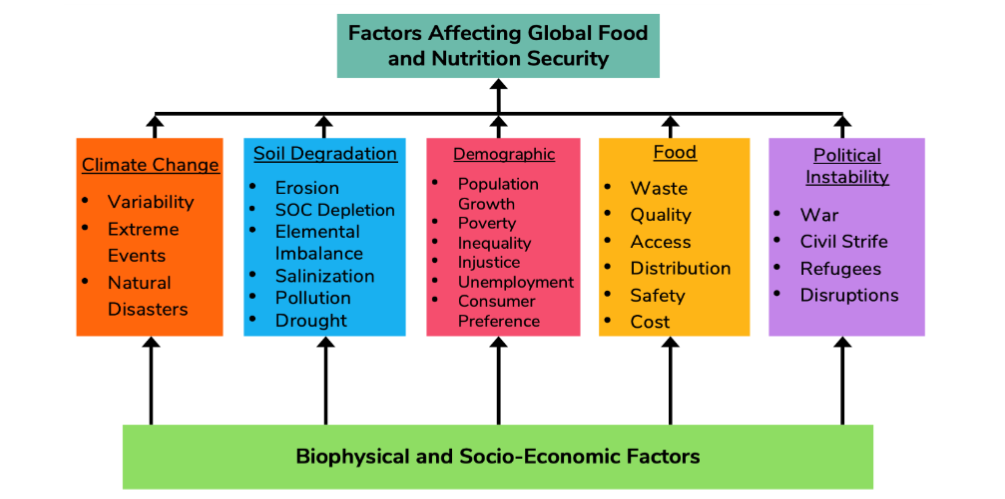
In this context, the importance of the use of the “One Health” concept cannot be over-emphasized. The One Health concept, initially proposed by Sir Albert Howard (1943), states that “health of soil, plants, animals, and people is one and indivisible.” The concept has since been expanded to also include the health of ecosystems and planetary processes.
The effect of soil health on human health was also promoted by Lady Eve Balfour (1943), a contemporary of Sir Albert Howard who was working in Central India, and when the concept of organic farming was promoted by Sir Albert Howard.
The holistic approach to management of soil health also embraces the idea of inter-connectivity proposed by John Muir (1838–1914), an American philosopher, who argued that “When we try to pick out anything by itself, we find it hitched to everything else in the universe.”
The latter implies a strong interactive effects among some key parameters such as anthropogenic climate change, loss of biodiversity, pollution and contamination, and civil strife or war and political instability (Figure 2).
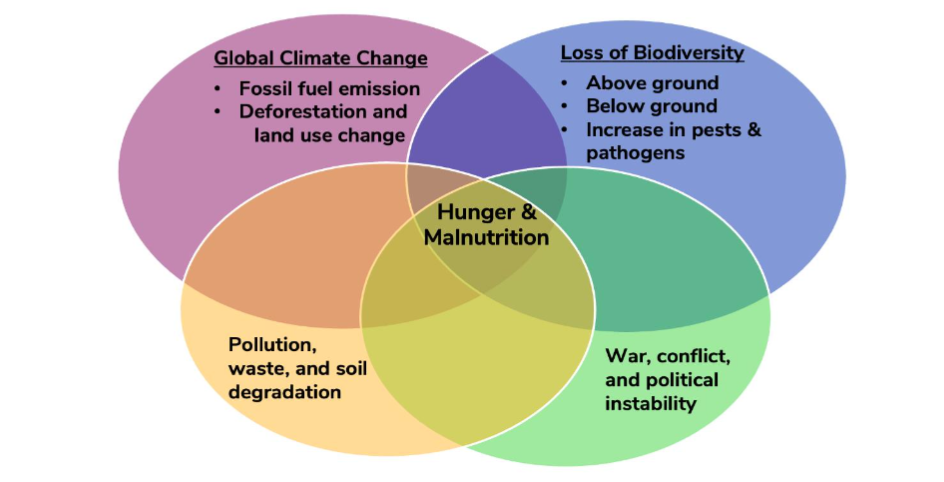
Figure 2. Key interactive factors that aggravate food and nutritional security
Objective and Methodology
Therefore, the objective of this article is to describe use of some innovative options which can restore soil health and reduce risks of malnutrition and chronic diseases. In this context, literature search was conducted of the peer reviewed journal articles (Web of Science) to explore the impact of modern innovation for restoration of soil health and improvements in nutritional quality of food. Some examples of these innovations are described below.
Regenerative Agriculture
Since the U.N. Food System Summit that ended in September 2021, the strategy of regenerative agriculture (RA) is gaining momentum. In combination with agro-ecology, RA is considered a viable pathway to advance sustainable management of soil health and agronomic productivity. However, RA is a concept, strategy, approach or a philosophy. It is not a one-size-fit-all practice. Indeed, there may be a longlist of agronomic practices which can come under the overall umbrella of RA. In this context, RA is inspired by eco-innovation, powered by non-carbon energy, driven by a circular economy and based on the premise of the re-carbonization of the terrestrial biosphere (soil and vegetation) as the bedrock of sustainable development. Simply put, RA is a soil-centric approach, based on the options of sustainable management of soil health, rather than relying primarily on the benefits of improved plant varieties grown with heavy inputs of chemical fertilizers and pesticides. System-based RA reconciles the need of producing adequate and nutritious food with the necessity of restoring the environment, and making farming a part of the solution to addressing environmental issues. Thus, RA encompasses a wide range of farming and grazing practices aimed at restoration and sustainable management of soil health through sequestration of soil organic carbon (SOC) in humid and sub-humid regions and soil inorganic carbon (SIC) or secondary/pedogenic carbonates in semi-arid and arid ecoregions. Therefore, RA would involve practices such as a system-based conservation agriculture (CA), which includes a site or soil-specific no-till farming in conjunction with crop residue mulch, cover cropping during the off-season, integrated nutrient management (INM) or soil fertility management (ISFM), complex rotations or farming systems and integration of crops with trees and livestock.13 Yet, RA also must observe the Law of Return which “states that substance we take from nature must be returned to the place from where which it was taken”.10
Soil or eco-region specific farming practices, based on RA and the Law of Return, may also be called as “Nature Positive Agriculture” or NPA. Because of its large environmental footprint (EFP), there is a strong and urgent need for identifying and implementing innovative farming practices which reconcile the need to produce adequate amount of safe food with the necessity to restore the environment. Basic principles of NPA include the followings:
- Protecting, restoring, and managing soil health,
- Strengthening above and below-ground biodiversity,
- Improving water quality and renewability,
- Adopting negative emission farming,
- Reducing input by improving efficiency of agro-chemicals via enhancement of soil health,
- Using bio-stimulants and organic amendments,
- Promoting bio-circular economy,
- Supporting the “One Health” concept,
- Using digital innovation, precision agriculture, and drip fertigation,
- Producing more from less,
- Creating a positive soil/ecosystem carbon (C) budget, and
- Using artificial intelligence, machine learning and other innovations.
The strategy is to create negative-emission (not just emission neutral) agriculture by reducing gaseous emission from farm operations and sequestering atmospheric carbon dioxide (CO₂) in land-based C sinks including soil, trees, wetlands, degraded lands
and mine lands among others. The primary goal of RA and NPA is to restore SOC stock, enhance soil health, and produce more from less. In this context, Janssens et al. (2022) suggested intensification of agricultural output (producing more from less land area) poses a serious challenge in Global South which has high population density and finite land resources.¹⁴ Thus, Janssens and colleagues suggested enhanced silicate weathering, biochar amendment and soil C sequestration as options to withdraw CO₂ from the atmosphere and to restore soil health.¹⁴ These options minimize risks of soil erosion and lead to negative emissions.¹⁴ Legume or pulse based rotations also enhance concentration of essential micronutrients in food products such as in pulses (Table 1).
Table 1. Concentration of micronutrients in pulses vs. cereal grains
(Micronutrient Content µg/g dry wt.)
| Category | Grain | Fe | Zn | Cu |
|---|---|---|---|---|
| Cereals | Rice | 20 | 14 | 2.4 |
| Wheat | 39 | 22 | 4.5 | |
| Pulses | Mung Beans | 87 | 41 | 13.0 |
| Black Gram | 139 | 36 | 7.9 | |
| Cow Peas | 67 | 45 | 6.3 |
Ramakumar et al. (2024) explored the efficiency of dietary interventions through RA in mitigating the incidence of NCDs, and observed that dietary modifications can positively impact the gut microbiome and foster a symbiotic relationship thereby making it a critical strategy in disease prevention and treatment.
Ramakumar and colleagues also observed a crucial link between soil health and plant/animal derived food quality and human wellbeing and thus offering dual benefits for human and planetary health and wellbeing.
Another study by Maitin-Shepard et al. (2024) reported the effects of nutrition and dietary patterns on human fertility optimization through changes in nutrition and environmental exposures impacting germ cell mechanisms through dietary effects.
Effects of RA diet quality are also observed through legume-based cropping systems which can increase nitrogen supply in soil through biological nitrogen (N) fixation (BNF). For example, Brezeanu et al. (2021) conducted a study to assess the impact of grain legumes cultivation on human and environmental health, and focused on a wide range of legumes in the diet such as the common bean (Phaseolus vulgaris), runner bean (Phaseolus coccineus), Indian pea (Lathyrus sativus), mung bean (Vigna radiata), pea (Pisum sativum), broad bean (Vicia faba), chickpea (Cicer arietinum), and lentil (Lens culinaris).
Brezeanu and colleagues evaluated the potential of these legume species on diet quality through intercropping schemes designed to reduce the use of inputs on food security and human health. Indeed, the usefulness of these legumes on diet quality and human health was substantial. These legume-based rotations also led to producing more and better diet from less input via adoption of RA or sustainable agricultural practices (refer also to data in Table 1 regarding the concentration of some micronutrients in pulses).
A study in Sub-Saharan Africa (SSA) conducted by Ojiewo et al. (2015) also emphasized the importance of vegetables and legumes in assuring food, nutrition, and income security. Indeed, vegetables and legumes are key sources of essential nutrients for good human health because of their high contents of phytochemicals, micronutrients (Table 1) and other essential compounds to meet the nutritional and human health needs.
Therefore, Ojiewo and colleagues argued that diversifying diets with vegetables and legumes is an effective strategy to improve nutrition and health outcomes.
Agroecology
Similarly to RA, there is also a growing interest in application of agro-ecology for transformation of the global food systems. This initiative is based on the strategy of applying basic principles of ecology to sustainable management of agroecosystems. Commoner (1971) outlined four principles in the book entitled “Closing Circle”.²² These are: 1) everything is connected to everything else (such as in the One Health concept), 2) nature knows no mercy (work with nature rather than against nature), 3) there is no way to throw away (the concept of recycling and converting waste into amendments), and 4) there is no such thing as a free lunch (minimize the ecological price or eco footprint of agro-ecosystems).²² Based on these concepts, Wezel et al. (2020) presented a literature review of the concepts, definition and principles of agroecology and its three manifestations: science, set of practices, and a social movement.²³ They outlined basic elements of agroecology, and listed 13 principles which need to be applied to agroecosystems: recycling, input reduction, soil health, animal health, biodiversity, synergy, economic diversification, co-creation of knowledge, social values and diets, fairness, connectivity, land and natural resource governance, and participation.²³ Simply put, the goal is to reduce input of agro-chemicals, strengthen recycling, and enhance biodiversity with the goal of “produce more from less”. However, rather than focusing on soil and animal health, it is important to broaden the scope and adopt the “One Health” concept of Sir Albert Howard (1943) and the strategy of managing soil health to improve diet quality and enhance human health and wellbeing.¹⁰
Similarly to agroecology is the idea of ENM. The strategy of ENM is to integrate environmental health to human health through exploring the linkages between agriculture, ecology, and human nutrition. Deckelbaum et al. (2006) argued that soil degradation and human under-nutrition are major issues in SSA, are a hindrance to economic development, and can be addressed through implementation of the concept of ENM.²⁴
Organic Farming and Diet Quality
the nutritional quality of food.²⁵ Based on this study, Rempelos and colleagues concluded that organic food consumption: 1) reduced the exposure to pesticides and beneficially improved the human immune system, 2) decreased incidence of diseases such as obesity, cancer, metabolic syndrome, eczema etc., and 3) increased interactions and trade-offs between diet and food types with regards to public health and future food security.²⁵ These authors concluded that agricultural intensification has adversely affected the nutritional quality of food and sustainability of food production systems, and organic farming can improve nutritional quality and food security.²⁵ However, the logistics of procuring adequate amounts of biofertilizers (compost, manure, BNF, recycling P and micronutrients, weed control measures) need to be critically examined. Will even a short decline of 20 to 30% in agronomic productivity by adoption of organic farming jeopardize global food security? These are some of the issues which need to be critically and objectively addressed.
An important aspect of organic farming is the use of manure and compost. This would involve integration of crops with livestock. There is a need for adequate facilities for sustainable and healthy management of livestock.
Prevalence of unsustainable agricultural practices has been often linked to soil and environmental degradation, loss of biodiversity and the overall downward spiral. Leakey’s (2017) twelve principles for the achievement of food security include perennial crops, agroforestry (based on leguminous trees which can enhance soil N reserves) and cultivating highly nutritious traditional food crops.²⁶ The use of fodder trees can also facilitate integration of crops with livestock.
Traditional Food Crops and Diet Quality
One of the limitations of the Green Revolution of 1960s is the focus on three cereals (rice, wheat and corn). While these crops produce a large quantity of carbohydrates, micronutrients and other essential contents are not adequately available in predominantly cereal-based diet. Quality of the food, depending on the quality of the soil on which it is grown, has a strong effect on human health and the quality of life. Yet plants are the main source of essential micro and macro-nutrients through plant-based diets. Thus, there is a growing emphasis on the use of traditional crops (e.g., sorghum, millet, beans and pulses, root crops and fruit trees) which have high nutritional values (See Table 1).²⁷ Shelenga et al. (2021) documented that small grains crops can be used for biofortification with essential micronutrients.²⁸ In SSA, indigenous fruit-bearing trees are considered an important source of micronutrients and other health-promoting phytochemicals which have biological and pharmacological activities that can mitigate some of the physiological effects of malnutrition.²⁹
Soil Health and Malnutrition
Among key micronutrients are Se, Zn, Fe, copper (Cu), and iodine (I),³⁰ whose deficiency in diet has serious health consequences (hidden hunger) such as child stunting, and anemia, etc. Thus, a close attention must be paid to the soil-to-human chain³¹ and soil-to-table link.³² There may be a close link between malnutrition and natural variation on the quality or health of soil. Berkhout et al. (2019) developed new soil micronutrient maps for SSA and reported significant relations between soil nutrient contents and child mortality, stunting, wasting and underweight.³³ Berkhout and colleagues also observed simultaneous increase in soil densities of Cu, manganese (Mn), and Zn by one standard deviation reduced child mortality by 4–6 per mille points.³³ They argued that agronomic fortification is a viable option to combat malnutrition in SSA.³³ Shelenga et al. (2021) argued that regular dietary consumption of fibers, antioxidants, and avanthramides stimulate immunity and prevent common diseases such as cancer and obesity and regulate the expression of cholesterol-related genes.³³ Thus, the long-term solution is restoration and sustainable management of soil health. Soil enrichment with fertilizers and amendments (manure,
compost), genetic and agronomic fortification are recommended options to alleviate micro-nutrient deficiency in human. Genetic fortification involves breeding for trace minerals in staple crops and, thus, breeding techniques can be used for increasing trace nutrient contents in food and feed. Gregorio (2002) observed some crop varieties with high content of Fe, Zn and carotene contents in their edible components.³⁴ It is also possible that use of biotechnological tools (e.g., molecular marker assisted selection) may enhance the pace and prospects of breeding of staple food crops for increasing nutritional value of the food.
Agronomic Biofortification
Deficiency of Zn and other micronutrients is a serious public health hazard across the world, and the deficiency is caused by inadequate dietary intake of essential elements. Thus, a range of approaches have been suggested in which biofortification of food staples with important micronutrients are suggested as a viable option. For example, Zn deficiency is one of the leading health problems in children and women of the developing countries. Deficiency of Zn is most prevalent among children under five in India, especially in the north-western region where wheat is the staple. More than 50% of the wheat (Triticum aestivum) around the world is grown on Zn deficient soils and produce grains with lower Zn content. However, the deficiency of micronutrients in human can be alleviated by restoring and managing soil health, and increasing bioavailability of these nutrients in food items such as cereal or pulses. In India, Kaur et al. (2023) used agronomic biofortification of mung bean (Vigna radiata) grains with Zn to alleviate its deficiency among vegetarian population.³⁵ Kaur and colleagues concluded that soil application of zinc sulphate (ZnSO₄) @ 20 kg/ha (kilogram per hectare) + its foliar spray (0.5%) at flower initiation and pod formation can improve productivity and ameliorate Zn nutrition in the form of hidden hunger.³⁵ Pal et al. (2019) recommended biofortification of chickpea (Cicer arietinum) to alleviate Zn and Fe deficiency in human population in India.³⁶ Singh and Singh observed that foliar application combined with that of urea also increased grain yield and protein content of chickpeas.³⁷ Maqbool et al. (2019) suggested Zn biofortification of maize (Zea mays), which is a major crop grown and consumed in regions having soils deficient in Zn.³⁸ Biofortification of wheat in India was reported by Singh and Singh (2019).³⁷ Both agronomic and plant breeding techniques are recommended for Zn biofortification of maize. Prom-u-thai et al. (2020) tried simultaneous biofortification of rice (Oryza sativa) with Zn, I, Fe and Se through foliar treatment of a micronutrient cocktail in five countries (Brazil, China, India, Pakistan, and Thailand).³⁹ The data from these countries showed that foliar application of the micronutrient cocktail solution was highly effective in increasing grain Zn, I, and Se content.³⁹ Thus, agronomic biofortification could be viable option to alleviation of micronutrient malnutrition (hidden hunger) in human.
There are also nature-based biofortification techniques such as those which involve intercropping including integration of crops with trees and livestock. In SSA, Ebbisa (2022) proposed cereal-legume inter-cropping as an example of nature-based biofortification that can increase the bioavailability of Zn, Fe, and P both in soil and edible parts of crops.⁴⁰ Ebbisa suggested interdisciplinary research by agronomists, plant nutritionists and agroecologists to intensify and use intercropping systems as a biofortification option for sustainable alleviation of micronutrient deficiency in SSA.⁴⁰
General Discussion
Soil and water are important components of the environment (Figure 3). Degradation of soil, along with pollution of water and contamination of air leading to loss of biodiversity, can have a significant adverse effect on uptake of essential nutrients (including 17 micronutrients) and thus lead to vulnerability and exposure to pests and pathogens with long-term effects on human health and wellbeing.⁴¹ ⁴³ Therefore, adverse human rights must also include environmental rights to healthy and safe environment for every inhabitant of the planet Earth.⁴⁴ Indeed, people are mirror image of the soil that they live on. The Anthroposphere, comprising of 8.2B people in 2024 and projected to be 9.8B by 2050 and as many as 11.4B by 2100, is bringing about a rapid transformation in the Ecosphere. However, when people are suffering and miserable, they pass on their suffering to the land, and land (soil, water, air, biodiversity) reciprocates.⁴⁵ The mutually reinforcing vicious cycle has gripped the humanity ever since the Anthropocene began with the onset of agriculture about 10,000 years ago but was intensified by the onset of Industrial Revolution.⁴⁶
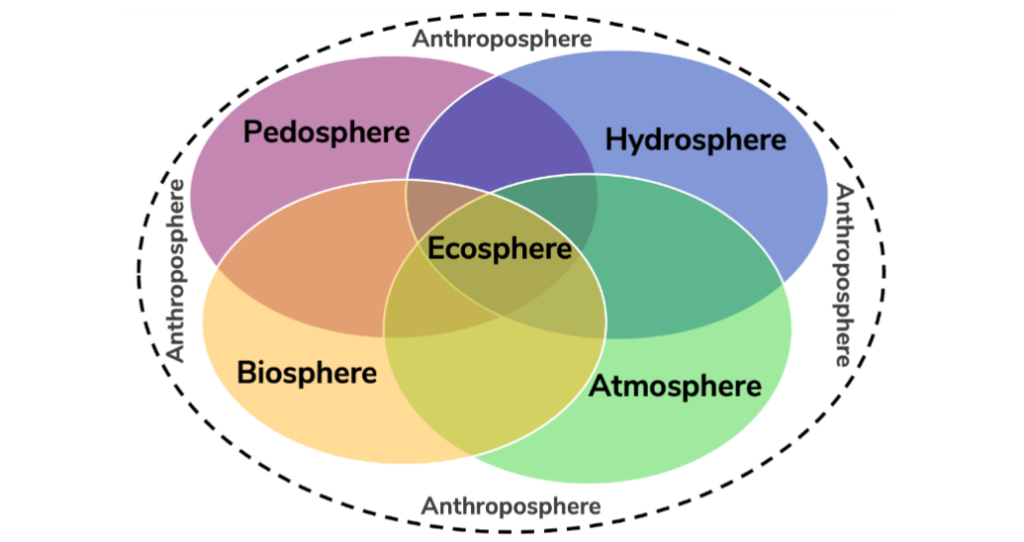
Figure 3. Degradation of ecosphere (determined by the interaction between pedosphere, hydrosphere, atmosphere, and the biosphere) on the environment of human habitat has significant adverse effects on health and wellbeing of people leading to malnutrition and a range of chronic diseases.
Whereas increase in agronomic production by The Green Revolution of 1960s increased intake of calories and reduced global hunger, there was a decrease in nutritional density in staple food grains (rice, wheat) and at the same time, decline in dietary diversity was decreased because of elimination of traditional crops (millets, pulses, roots, and tubers). The cereal-centric diet with minimal diversity aggravated malnutrition due to deficiency of Fe and Zn. A widespread adoption of high-yielding varieties caused decrease in nutrient density in staple crops. Decline in soil health, aggravated by accelerated soil erosion along with unbalanced and indiscriminate use of chemical fertilizers, aggravated deficiencies of micronutrients and proteins in food staples leading to increase in risks of obesity, diabetes, and chronic diseases.
Therefore, it is important to alleviate deficiency of micronutrients and improve nutritional quality by restoring soil health, improving SOM content, using balanced application of fertilizers along with inputs of micronutrients, including traditional crops in the rotational cycle to improve dietary diversity, and promoting complex farming systems based on integration of crops with trees and livestock.
Some examples of innovative farming systems for enhancing nutritional quality are those based on the principles of NSA. Important among these are RA (e.g., conservation agriculture), agro-ecology, organic farming, use of traditional crops, and increase in dietary diversity by enhancing consumption of vegetables, pulses, fruits, and animal products (e.g., milk, cheese). Restoration of soil health, by enhancing SOM content and reducing risks of degradation processes (e.g., accelerated soil erosion, salinization, extractive farming) is critical to improving nutritional quality of food.
World peace, being a scientific issue, must be achieved and sustained by restoring soil and environment quality, eliminating poverty, and promoting peace and harmony. Risks of war, civil strife, and political instability must be decreased through education, political dialogues, and spread of goodwill, fraternity, equality, and justice for all.
Based on examples of some innovative practices outlined above, the following sections discuss what can be done to alleviate malnutrition through adoption of improved agricultural practices.
A. Developing A Nutrition-Sensitive Agriculture
The Green Revolution of the 1960s, a global success story, saved hundreds of millions of people from starvation. During the early part of the 21st century, however, malnutrition is a major problem. Thus, agricultural revolution of the 21st century must focus on nutrient sensitive agriculture (NSA). In addition to farmers, NSA is also of a growing interest to those working in global health and nutrition. Bertie et al. (2016) proposed poultry rearing and home gardening.⁴⁷ The latter has also been suggested by Lal (2020) for minimizing risks of disruptions such as those caused by Coronavirus disease 2019 (COVID-19) Pandemic.⁴⁸
Se is an essential micronutrient for humans. However, as much as 80% of the world’s population does not consume enough Se.⁴⁹ Wheat, an important staple, is a major source of Se uptake. There has been several studies that have addressed Se content of wheat grains which may range from 0 to 8,270 microgram per kilogram (µg/kg).⁵⁰ The grain contents of Se can be improved by fertilization and other management options. Govasmark et al. (2008) observed that applying selenate after tillering increased the grain Se content.⁵⁰ Johansson (1991) observed that an additional 100 mm of precipitation during the growing season (May to August) would lead to an increase in 7.2 ng Se g⁻¹ in spring wheat grain.⁵¹ Application of Se-fortification program for wheat is a success story in Scandinavian countries.⁵² ⁵³ Alexander and Olsen (2023) reported an inverse relationship between Se status and risk of cardiovascular diseases, cancer, and all-cause mortality.⁵⁴ However, higher intake rate (>330 to 450 microgram per day (µg/day)) may lead to toxic effects on liver, peripheral nerves, skin, nails, and hair. An upper tolerable level of 255 µg Se/day has been established for human intake.⁵⁴
Several field and greenhouse experiments have been conducted on uptake of Se by food grain crops. In some Vertisols in Mediterranean regions, Lopez-Bellido et al. (2019) observed that soils deficient in Se can lead to deficiencies in livestock and human and increase risks of diseases due to clinical and subclinical deficiencies.⁵⁵ Thus, agronomic Se biofortification of wheat is a widely recommended practice.
In Sweden, Bruce (1986) also reported the adverse effects of Se deficiency on human,⁵⁶ and observed that, on average, grains and pastures contain only one-tenth of the amount of Se considered necessary for good human/livestock health.⁵⁶ Bruce also reported that average Swedish dietary intake of Se is 10–70 µg/day.⁵⁶ Furthermore, the lowest levels were found in vegan diets. Because of the strong soil health–human health nexus,⁵⁷ there has been a growing interest in soil security as the cornerstone of national security in an era of global disruptions.⁵⁸ Indeed, concerns about soil health (in relation to human and planetary health), the agricultural equipment market is expected to expand drastically to reach US $194B by 2034.⁵⁹
B. Effects of Under-Nutrition on Human Health in Relation to War and Political Instability
In addition to the short-term adverse effects of hunger or under-nutrition on human health⁶⁰ ⁶² such as malnutrition and under-nutrition during pregnancy has been shown to lead to increased risks of developing diabetes later in life.⁶³ ⁶⁴ It is widely feared that the current Russian-Ukraine war and the Palestinian-Israel war (2022–2024), similar to the adverse effects of the Vietnam War, may have long-term health consequences on the population exposed to hunger. Therefore, there exists a strong and an urgent need to improve human health and nutrition through adoption of science-based agro-ecosystems which restore soil health and produce safe and healthy food and cessation of hostility and promotion of peace and harmony. This concept is in accord with the “One Health” concept: healthy diet must come from crops and animals raised on healthy soil. Above all, incidences of wars and civil strife must be minimized through dialogue and political solutions. Indeed, peace is a scientific issue and it should be promoted and strengthened through restoration of soil health, reduction of poverty, and elimination of hunger and malnutrition.
C. Beneficial Effects of Improved Agricultural Practices on Human Nutrition and Good Health
Dysfunctional food systems, based on poor agricultural practices of growing crops and raising livestock, are the primary reason of the widespread problem of malnutrition in developing countries around the world.¹⁵ Just focusing on caloric needs is not adequate to address food and nutritional insecurity, it is important that all essential nutrients (macro and micro) are met through food grown by improved methods of growing crops, and raising animals. In addition to meeting the caloric need, the global problem of malnutrition must be addressed by achieving “nutrient security” by producing nutrient-rich staple food crops. This approach is called the NSA. Thus, improved agricultural systems are critical to addressing both hunger and malnutrition. In general, pulses (or grain legumes) contain higher concentration of micronutrients than cereal grains such as wheat and rice (Table 1).
Phytochemicals in vegetables and crops, known to protect against many human diseases (e.g., cardiovascular and some types of cancer), can be modified by environmental factors and crop management practices. Soil composition, fertilizer management, soil amendments, soil water content, etc. can affect production of phytochemicals in vegetables, fruits, and crops.⁶⁵ Concentration of health-promoting compounds can also be influenced by plant breeding techniques which lead to genetic modification. In addition, changing nutrient availability in soil by input of amendments (organic, inorganic, and microbial) can influence nutrient (macro and micro) composition of grains, vegetables, and fruits. Application of micro-nutrients S, Se, Fe, Zn can alter concentration of these elements in food. Improvement of soil structure, increase in plant available water capacity or the green water supply, soil drainage, and modification of soil temperature regimes can all affect nutrient uptake and composition, and human health.
Therefore, adoption of sustainable agricultural practices can improve human nutrition and health. It is argued that organic farming systems produce healthy food not only by reducing exposure to pesticides but also by increasing total phenolic contents in some food.⁶⁶ Montgomery et al. (2022) suggested that RA practices enhance the nutritional content of crops and livestock.⁶⁷ RA practices include CA (no-till, cover crops, diverse rotations) which enhance SOM content, soil health score and concentration of some vitamins, minerals, phytochemicals, and micronutrients. McLennon et al. (2021) also reported that RA and permaculture can improve soil health, ecosystem biodiversity, agricultural sustainability and food security.⁶⁸ Giller et al. (2021) suggested that RA is reframing of agroecology and sustainable intensification including permaculture and holistic grazing⁶⁹, and produce healthy and nutritious food.
Conclusions
Diet quality (nutritional attributes specifically with regards to concentration of micro-nutrients, protein content, vitamins etc.) of food grown depends on soil functional quality and its management for specific farming/cropping systems. Major control of soil functions, which moderate nutritional quality of the food from plants and animals, include SOM content, nutrient reserves, pH, charge properties or cation/anion exchange capacity, aeration or oxygen diffusion rate, plant available water capacity or green water supply, soil bulk density as determinant of total porosity, soil structure and pore size distribution, microbial biomass carbon, activity and species diversity of soil biota, and soil temperature regime etc. Examples of some innovative science-based options for sustainable management of soil functions include regenerative agriculture, agro-ecology, organic farming, integration of crops with trees and livestock, and other site-specific practices based on the Law of Return and principles of agro-ecology. The focus is on optimizing productivity, minimizing pollution, practicing nutrition-sensitive agriculture, producing more from less and returning some land and water back to nature. Land use along with soil and crop management practices must be based on the One Health Concept: health of soil, plants, animals, people, ecosystems and planetary processes is one and indivisible.
List of Abbreviations:
Iodine (I)
Lead (Pb)
Mercury (Hg)
Selenium (Se)
Arsenic (As)
Carbon (C)
Carbon Dioxide (CO₂)
Conservation Agriculture (CA)
Coronavirus Disease 2019 (COVID19)
Ecological Nutrient Management (ENM)
Ecosystem Services (ESs)
Environmental Footprint (EFP)
Integrated Soil Fertility Management (ISFM)
Microgram (µg)
Nature Positive Agriculture (NPA)
Non-Communicable Diseases (NCDs)
Nutrition Sensitive Agriculture (NSA)
Regenerative Agriculture (RA)
Soil Inorganic Carbon (SIC)
Soil Organic Carbon (SOC)
Soil Organic Matter (SOM)
Sub-Saharan Africa (SSA)
Conflict of Interest:
None
Acknowledgements:
None
References
1. von der Goltz J, Dar A, Fishman R, Mueller N, Barnwal P, McCord G. Health Impacts of the Green Revolution: Evidence from 600,000 births across the Developing World. JOURNAL OF HEALTH ECONOMICS. 2020;74.
doi:10.1016/j.jhealeco.2020.102373
2. Eliazer Nelson ARL, Ravichandran K, Antony U. The impact of the Green Revolution on indigenous crops of India. Journal of Ethnic Foods. 2019;6(1):8-8. doi:10.1186/s42779-019-0011-9
3. Singh M. Micronutrient Deficiencies in Crops and Soils in India. In: Micronutrient Deficiencies in Global Crop Production. ; 2008:93-125. doi:10.1007/978-1-4020-6860-7_4
4. Popkin B. The nutrition transition and obesity in the developing world. JOURNAL OF NUTRITION. 2001;131(3):871S-873S. doi:10.1093/jn/131.3.871S
5. World Health Organization. Global Report on Diabetes.; 2016.
6. Debnath S, Dey A, Khanam R, et al. Historical shifting in grain mineral density of landmark rice and wheat cultivars released over the past 50 years in India. SCIENTIFIC REPORTS. 2023; 13(1). doi:10.1038/s41598-023-48488-5
7. Cakmak I. Plant nutrition research: Priorities to meet human needs for food in sustainable ways. PLANT AND SOIL. 2002;247(1):3-24. doi:10.1023/A:1021194511492
8. Ramkumar D, Marty A, Ramkumar J, et al. Food for thought: Making the case for food produced via regenerative agriculture in the battle against non-communicable chronic diseases (NCDs). ONE HEALTH. 2024;18. doi:10.1016/j.onehlt.2024.100734
9. Lal R. Soil organic matter content and crop yield. Journal of Soil and Water Conservation. 2020;75(2):27A-32A. doi:10.2489/jswc.75.2.27A
10. Howard A. An Agricultural Testament. Oxford University Press; 1943:228.
http://journeytoforever.org/farm_library/howardAT/ATtoc.html
11. LAL R. Managing soil quality for humanity and the planet. Frontiers of Agricultural Science
and Engineering. 2020;7(3):251-251. doi:10.15302/J-FASE-2020329
12. Lady Eve Balfour. Towards a Sustainable Agriculture: The Living Soil. Faber and Faber Ltd; 1943.
13. Lal R. Integrating Animal Husbandry With Crops and Trees. Frontiers in Sustainable Food Systems. 2020;4:113-113. doi:10.3389/fsufs.2020.00113
14. Janssens I, Roobroeck D, Sardans J, et al. Negative erosion and negative emissions: Combining multiple land-based carbon dioxide removal techniques to rebuild fertile topsoils and enhance food production. FRONTIERS IN CLIMATE. 2022 ;4. doi:10.3389/fclim.2022.928403
15. Ross M. Welch, Robin D. Graham, Ismail Cakmak. Linking Agricultural Production Practices to Improving Human Nutrition and Health. Published online November 19, 2014.
https://www.fao.org/about/meetings/icn2/preparations/document-detail/en/c/224907/
16. Maitin-Shepard M, Werner E, Feig L, et al. Food, nutrition, and fertility: from soil to fork. AMERICAN JOURNAL OF CLINICAL NUTRITION. 2024;119(2):578-589. doi:10.1016/j.ajcnut.2023.12.005
17. Brezeanu C, Brezeanu P, Calara M, Ambarus S, Cristea T. THE ROLE OF FOOD LEGUME SPECIES IN THE CONTEXT OF SUSTAINABLE AGRICULTURE, FOOD SECURITY, AGROBIODIVERSITY, CONSERVATION AND HUMAN HEALTH. SCIENTIFIC PAPERS-SERIES B-HORTICULTURE. 2021;65(1):390-399.
18. Ojiewo C, Keatinge D, Hughes J, et al. The Role of Vegetables and Legumes in Assuring Food, Nutrition, and Income Security for Vulnerable Groups in Sub-Saharan Africa. WORLD MEDICAL & HEALTH POLICY. 2015;7(3):187-210. doi:10.1002/wmh3.148
19. FAO, IFAD, UNICEF, WFP, WHO. The State of Food Security and Nutrition in the World 2024: Financing to end hunger, food insecurity and malnutrition in all its forms. Published online 2024. https://www.fao.org/publications/home/fao-flagship-publications/the-state-of-food-security-and-nutrition-in-the-world/en
20. Masso C, Baijukya F, Ebanyat P, et al. Dilemma of nitrogen management for future food security in sub-Saharan Africa – a review. SOIL RESEARCH. 2017;55(5-6):425-434. doi:10.1071/SR16332
21. Drinkwater L, Snapp S. Advancing the science and practice of ecological nutrient management for smallholder farmers. FRONTIERS IN SUSTAINABLE FOOD SYSTEMS. 2022;6. doi:10.3389/fsufs.2022.921216
22. Commoner B. The Closing Circle: Nature, Man, and Technology. Knopf; 1971:326.
https://books.google.com/books?id=lpYwAAAAMAAJ
23. Wezel A, Herren B, Kerr R, Barrios E, Gonçalves A, Sinclair F. Agroecological principles and elements and their implications for transitioning to sustainable food systems. A review. AGRONOMY FOR SUSTAINABLE DEVELOPMENT. 2020;40(6). doi:10.1007/s13593-020-00646-z
24. Deckelbaum R, Palm C, Mutuo P, DeClerck F. Econutrition: Implementation models from the Millennium Villages Project in Africa. FOOD AND NUTRITION BULLETIN. 2006;27(4):335-342. doi:10.1177/156482650602700408
25. Rempelos L, Baranski M, Wang J, et al. Integrated Soil and Crop Management in Organic Agriculture: A Logical Framework to Ensure Food Quality and Human Health? AGRONOMY-BASEL. 2021;11(12). doi:10.3390/agronomy11122494
26. Leakey R, Leakey R. Twelve Principles for Better Food and More Food From Mature Perennial Agroecosystems.; 2017:387. doi:10.1016/B978-0-12-805356-0.00037-4
27. Rattan Lal. Neglected and Under-Utilized Crop Species for Food and Climate Security. Presented at: ICARDA, AgMIP, and UM6P Conference on NUS in the MENA Region; February 5, 2024; ICARDA, Rabat, Morocco.
28. Shelenga T, Kerv Y, Perchuk I, et al. The Potential of Small Grains Crops in Enhancing Biofortification Breeding Strategies for Human Health Benefit. AGRONOMY-BASEL. 2021;11(7). doi:10.3390/agronomy11071420
29. Chivandi E, Mukonowenzou N, Nyakudya T, Erlwanger K. Potential of indigenous fruit-bearing trees to curb malnutrition, improve household food security, income and community health in Sub-Saharan Africa: A review. FOOD RESEARCH INTERNATIONAL. 2015;76:980-985. doi:10.1016/j.foodres.2015.06.015
30. Lal R. Soil degradation as a reason for inadequate human nutrition. Food Security. 2009;1 (1):45-57. doi:10.1007/s12571-009-0009-z
31. Deckersi J, Steinnes E. State of the art on soil-related geo-medical issues in the world. In: Sparks D, ed. ADVANCES IN AGRONOMY, VOL 84. Vol 84.; 2004:1-35. doi:10.1016/S0065-2113(04)84001-X
32. Bridget Elworthy, Henrietta Courtauld. The Land Gardeners: Soil to Table: Recipes for Healthy Soil and Food. Thames and Hudson; 2023.
33. Berkhout ED, Malan M, Kram T. Better soils for healthier lives? An econometric assessment of the link between soil nutrients and malnutrition in Sub-Saharan Africa. PloS one. 2019;14(1):1-1. doi:10.1371/journal.pone.0210642
34. Gregorio G. Progress in breeding for trace minerals in staple crops. JOURNAL OF NUTRITION. 2002;132(3):500S-502S. doi:10.1093/jn/132.3.500S
35. Kaur L, Sharma R, Singh G, Dhaliwal S. Agronomic Biofortification of Mungbean [Vigna radiata (L.) Wilczek] Grain with Zinc to Combat Zinc Malnutrition. JOURNAL OF SOIL SCIENCE AND PLANT NUTRITION. 2023;23(4):6206-6215. doi:10.1007/s42729-023-01478-y
36. Pal V, Singh G, Dhaliwal S. Agronomic biofortification of chickpea with zinc and iron through application of zinc and urea. COMMUNICATIONS IN SOIL SCIENCE AND PLANT ANALYSIS. 2019; 50(15):1864-1877. doi:10.1080/00103624.2019.1648490
37. Singh M, Singh K. Agronomic zinc biofortification of wheat. AGROCHIMICA. 2019;63 (4):307-317. doi:10.12871/00021857201941
38. Maqbool M, Beshir A. Zinc biofortification of maize (Zea mays L.): Status and challenges. PLANT
BREEDING. 2019;138(1):1-28. doi:10.1111/pbr.12658
39. Prom-u-thai C, Rashid A, Ram H, et al. Simultaneous Biofortification of Rice With Zinc, Iodine, Iron and Selenium Through Foliar Treatment of a Micronutrient Cocktail in Five Countries. FRONTIERS IN PLANT SCIENCE. 2020;11. doi:10.3389/fpls.2020.589835
40. Ebbisa A. Mechanisms underlying cereal/ legume intercropping as nature-based biofortification: A review. Food Production, Processing and Nutrition. 2022;4(1). doi:10.1186/s43014-022-00096-y
41. McCally M. Environment and health: an overview. CANADIAN MEDICAL ASSOCIATION JOURNAL. 2000;163(5):533-535.
42. Malik A, Akhtar R, Grohmann E. Environmental Deterioration and Human Health: Natural and Anthropogenic Determinants.; 2014:421. doi:10.1007/978-94-007-7890-0
43. Wei J, Rahim S, Wang S. Role of Environmental Degradation, Institutional Quality, and Government Health Expenditures for Human Health: Evidence From Emerging Seven Countries. FRONTIERS IN PUBLIC HEALTH. 2022;10. doi:10.3389/fpubh.2022.870767
44. Russo R. Environmental Rights are a Human Right to a Healthy Environment: A Brief Review. International Journal of Life Science and Agriculture Research. 2023;02(12):476-479. doi:10.55677/ijlsar/V02I12Y2023-01
45. Lal R. Laws of sustainable soil management. Agronomy for Sustainable Development. 2008;29(1):7-9. doi:10.1051/agro:2008060
46. Crutzen PJ. Geology of mankind. Nature. 2002;415(6867):23-23. doi:10.1038/415023a
47. Berti PR, Desrochers RE, Van HP, et al. The process of developing a nutrition-sensitive agriculture intervention: a multi-site experience. FOOD SECURITY. 2016;8(6):1053-1068. doi:10.1007/s12571-016-0625-3
48. Lal R. Home gardening and urban agriculture for advancing food and nutritional security in response to the COVID-19 pandemic. Food Security. 2020; 12(4):871-876. doi:10.1007/s12571-020-01058-3
49. Wang M, Li B, Li S, Song Z, Kong F, Zhang X. Selenium in Wheat from Farming to Food. JOURNAL OF AGRICULTURAL AND FOOD CHEMISTRY. 2021; 69(51):15458-15467. doi:10.1021/acs.jafc.1c04992
50. Govasmark E, Singh BR, MacLeod JA, Grimmett MG. Selenium concentration in spring wheat and leaching water as influenced by application times of selenium and nitrogen. Journal of Plant Nutrition. 2008;31(2):193-203. doi:10.1080/01904160701853605
51. JOHNSSON L. TRENDS AND ANNUAL FLUCTUATIONS IN SELENIUM CONCENTRATIONS IN WHEAT-GRAIN. PLANT AND SOIL. 1991;138 (1):67-73. doi:10.1007/BF00011809
52. Eriksson J, Dahlin A, Sohlenius G, Söderström M, Öborn I. Spatial patterns of essential trace element concentrations in Swedish soils and crops. GEODERMA REGIONAL. 2017;10:163-174. doi:10.1016/j.geodrs.2017.07.001
53. Olof Sundström. Selenium in soil and winter wheat: analysis of soil-crop-inventory data. Published online 2018. https://stud.epsilon.slu.se/13364/
54. Alexander J, Olsen A. Selenium – a scoping review for Nordic Nutrition Recommendations 2023. FOOD & NUTRITION RESEARCH. 2023;67. doi:10.29219/fnr.v67.10320
55. López-Bellido F, Sanchez V, Rivas I, López-Bellido R, López-Bellido L. Wheat grain selenium content as affected by year and tillage system in a rainfed Mediterranean Vertisol. FIELD CROPS RESEARCH. 2019;233:41-48.
doi:10.1016/j.fcr.2019.01.006
56. BRUCE A. SWEDISH VIEWS ON SELENIUM. ANNALS OF CLINICAL RESEARCH. 1986;18(1):8-12.
57. Lal R. The Soil-Human Health-Nexus. (Lal R, ed.). Taylor & Francis; 2020.
58. Basset C. Soil security: The cornerstone of national security in an era of global disruptions. Soil Security. 2024;16:100154. doi:10.1016/j.soisec.2024.100154
59. Fact.MR. Agricultural Equipment Market Is Forecasted to Expand at a CAGR of 4.3%, Reach US$ 194.4 Billion by 2034.; 2024.
https://www.globenewswire.com/news-release/2024/09/04/2940322/0/en/Agricultural-Equipment-Market-is-Forecasted-to-Expand-at-a-CAGR-of-4-3-Reach-US-194-4-Billion-by-2034-Fact-MR-Report.html#:~:text=Rockville%2C%20MD%2C%20Sept.,4.3%25%20from%202024%20to%202034.
60. Doocy S, Walton S, West KP. Famine: Causes, consequences and responses. In: Caballero B, ed. Encyclopedia of Human Nutrition (Fourth Edition). Academic Press; 2023:411-419. doi:10.1016/B978-0-12-821848-8.00088-3
61. Dugassa B. Public Health Impacts of Famine in the Horn of Africa. American Journal of Public Health Research. 2019;7(5):171-181. doi:10.12691/ajphr-7-5-2
62. Roseboom T, de Rooij S, Painter R. The Dutch famine and its long-term consequences for adult health. Early Human Development. 2006;82 (8):485-491. doi:10.1016/j.earlhumdev.2006.07.001
63. Lumey LH, Li C, Khalangot M, Levchuk N, Wolowyna O. Fetal exposure to the Ukraine famine of 1932-1933 and adult type 2 diabetes mellitus. Science (New York, NY). 2024;385:667-671. doi:10.1126/science.adn4614
64. Klimek P, Thurner S. The lasting effects of famine. Science. 2024;385(6709):606-607.
doi:10.1126/science.adr1425
65. Martínez-Ballesta M, Lopez-Perez L, Mercedes M, López-Berenguer C, Fernández-García N, Carvajal M. Agricultural practices for enhanced human health. Phytochemistry Reviews. 2007;7: 251-260. doi:10.1007/s11101-007-9071-3
66. McCullum-Gomez C. Using sustainable agriculture to improve human nutrition and health. J Community NutritionJ Community Nutrition. 2004;618:18-25.
67. Montgomery D, Biklé A, Archuleta R, Brown P, Jordan J. Soil health and nutrient density: preliminary comparison of regenerative and conventional farming. PeerJ. 2022;10:e12848. doi:10.7717/peerj.12848
68. McLennon E, Dari B, Jha G, Sihi D, Kankarla V. Regenerative agriculture and integrative permaculture for sustainable and technology driven global food production and security. AGRONOMY JOURNAL. 2021;113(6):4541-4559. doi:10.1002/agj2.20814
69. Giller KE, Hijbeek R, Andersson JA, Sumberg J. Regenerative Agriculture: An agronomic perspective. Outlook on Agriculture. Published online March 2021:0030727021998063-0030727 021998063. doi:10.1177/0030727021998063