

Infectious Diseases, Mental Health, and Global Stability
The Association between Infectious Diseases, Mental Impairments, Violent Behavior, and Global Instability
Robert C. Bransfield, MD, DLFAPA1,2
- Hackensack Meridian School of Medicine, Nutey, NJ 07110, USA.;
- Rutgers-Robert Wood Johnson Medical School, Piscataway, NJ 08854, USA.
OPEN ACCESS
PUBLISHED: 31 January 2025
CITATION: BRANSFIELD, Robert C. The Association between Infectious Diseases, Mental Impairments, Violent Behavior, and Global Instability. Medical Research Archives, [S.l.], v. 13, n. 1, jan. 2025. Available at: <https://esmed.org/MRA/mra/article/view/6178>. Date accessed: 23 oct. 2025.
COPYRIGHT: © 2025 European Society of Medicine. This is an open-access article distributed under the terms of the Creative Commons Attribution License, which permits unrestricted use, distribution, and reproduction in any medium, provided the original author and source are credited.
DOI: https://doi.org/10.18103/mra.v13i1.6178
ISSN 2375-1924
ABSTRACT
It is necessary to better understand and prevent all contributors to violence. A 2017 hypothesis stated–if a pandemic causing mental impairments increasing the risk of violence occurred, it could contribute to global instability. The association between infectious disease, mental impairments, violence, and global instability has never been adequately researched. A review is performed to evaluate all the facets of this possible association.
A sequence of events contributes to the association between infectious diseases and global instability. Degraded environments are conducive to emerging and expanding infectious diseases. Infections can alter brain functioning by immune system mediated and other pathophysiological mechanism that can increase the risk of mental impairments contributing to mental illnesses and/or violent behavior. Parasites, particularly zoonotic and vector-borne, sometimes manipulate their host in a manner that propagates their survival (Manipulation Hypothesis). Through this, or other pathophysiology, infectious diseases can contribute to violent behavior in both animals and humans. When influential individuals or groups of influential individuals acquire infectious diseases that contribute to violent tendencies, it can have greater societal and global impact (critical mass dynamic). Infectious diseases are not equally distributed throughout the world. Countries and geographic areas with greater infections and vector-borne zoonotic disease burdens correlate with a higher prevalence of violence. In a global community, this can contribute to global instability.
Impairments from the SARS-CoV-2 pandemic are associated with an increased risk of mental impairments and violent behavior. Global violence and instability have increased following the pandemic based upon changes in the Global Peace Index.
Although the data reviewed has limitations, evidence suggests infectious diseases, including the recent SARS-CoV-2 pandemic, may contribute to mental impairments with resultant increased risk of violence and global instability. A collaborative One Health research and intervention approach can help prevent violence both regionally and globally.
Keywords: infectious diseases, mental impairments, violent behavior, global instability
Introduction
The title of a 2017 presentation by the author in Paris, France was—Could a Pandemic Causing Mental Dysfunction Contribute to Global Instability? The hypothesis was—If a pandemic occurs that causes the type of mental impairments that increase the risk this violence, it could cause global instability. At that time, it was an untested hypothesis. Since the onset of the SARS-CoV-2 pandemic, the validity of this hypothesis can now be tested. While testing this hypothesis, it is relevant to also explore whether any other infectious diseases contribute to mental impairments, violence, and global instability.
Violence has greatly impacted history, with periods of advances and declines in civilization associated with cycles of collaboration and conflict. Collaboration, compassion and empathy are a part of our functioning that allows us to collectively experience great achievements and a better quality of life. However at different times in history, and in different geographical locations, conflict, violent behavior, and a decline in quality of life are more prevalent. The stability of the world and quality of life are greatly compromised by violence. The economic impact of violence on the global economy in 2023 was $19.1 trillion. This is equivalent to 13.5 percent of global gross domestic product, or $2,380 per person.
Violence needs to be differentiated from normal aggression and competition, which are a part of our innate functioning. The interplay between compassion and collaboration vs. competition, and aggression constantly occur in both mammalian and human functioning. Extremes of competitive aggression are normally restrained by opposing social bonds and social structures that support social collaboration and cooperation. When aggression becomes violence, is it just a part of human functioning? Are humans just fundamentally violent? This is a serious concern with the development of more advanced weapons. If violence is not a fundamental part of human functioning, is it instead caused by an inadequately understood pathological process?
If violence is caused by a pathological process, a better understanding of all the contributors to violence could help to develop strategies to prevent or reduce some of the causes of violence and avoid the later consequences. A more restricted, or silo mentality, approach studies it from a limited perspective and may overlook some of the significant causes of violence. A more inclusive approach is to combine research from multiple scientific disciplines to better understand the contributors and sequences in the development of violent behavior.
When violence is studied, there are many deterrents, chronic contributors, and acute triggers for violence. Both neurological impairments and social structure impairments are particularly associated with an increased risk of conflict and violent behavior. An example of this is studies of death row inmates revealing 100% had both neurological impairments and a history of abuse.
Are we overlooking some of the explanations for the neurological impairments associated with violent behavior? It has been recognized that a number of infectious diseases contribute to the type of mental impairments that increase the risk of violence. Some parts of the world have been endemic for violence for hundreds or thousands of years. People from these regions live more peacefully in other parts of the world. If infectious diseases are associated with violent behavior on an individual level, the possibility exists that geographical areas with higher infectious disease loads may be associated with a greater risk of violent behavior. We are now living in a global community. The September 11, 2001 al-Qaeda attacks and other similar events have demonstrated violence in remote parts of the world are no longer confined there, but instead have the potential for global impact.
The most common current response to violence is a deterrent approach. This involves the determination of guilt and punishment of the offender on an individual level, or military posturing or responses on a national level. On a local level this includes law
Enforcement, court processes, penal, and correctional systems. On a global level it consists of national defensive systems, armies, and advanced weapon “defense” technology. Vast resources are consumed to deter violence and to contend with the consequences of violence.
A better understanding of violence would facilitate directing some of those resources towards prevention to deter violence at earlier stages of development. It is essential to respond to violent incidents in a manner similar to the response to plane crashes. With each episode, all the contributors and failures are to be analyzed followed by corrective, preventative actions.
Although the association between infectious diseases and mental illness has been studied to some extent, the association between infectious diseases and violence has not been adequately studied.
This article shall test the previously stated hypothesis and review other infections that may have contributed to global instability. The review shall include an evaluation of the sequences involved that may contribute to any association between infectious diseases, mental impairments, violence, and global instability.
Methods
The question to be addressed is—do some infectious diseases contribute to mental impairments, violence, and global instability?
The question is explored by reviewing a series of data that collectively address different facets of the involved sequences. Here the question is addressed by a review and evaluation of the literature from electronic databases, including PubMed and Google Scholar, for relevant information. The references discovered in searches were also reviewed for additional relevant references. In addition, references were also drawn from the library previously accumulated by the author.
The search included a review of animal and human medical literature, including infectious disease, psychoimmunology, neurochemistry, and brain physiology; historical records; and epidemiological data. Only peer-reviewed literature was included with the exception of epidemiological databases and a few historical sources. In these cases, the most scientifically sound sources of information were given priority over sources that appeared more speculative.
The series of reviews include:
-
Environmental changes and increased infectious disease
-
Zoonotic and vector-borne diseases impact upon humans
-
Parasites manipulation of the behavior of their hosts
-
Infectious diseases contributing to violent behavior in animals
-
Infectious diseases contributing to violent behavior in humans
-
Pathophysiology of an association between infectious diseases and violence
-
The behavior of influential individuals impaired by infectious diseases
-
Infections contributing to violent behavior of individuals with an impact on a greater social or global level
-
Geographical association between infectious disease burden and violence
-
Soldiers returning from conflict zones having acquired infectious disease associated with violence
-
SARS-CoV-2 pandemic resulting in mental impairments that may have contributed to violence
-
Global instability since the SARS-CoV-2 pandemic has occurred
-
Other pandemics contributed to mental impairments that may have been associated with violence
The question of a geographical association between infectious disease burden and violence is first addressed by identifying The Global Peace Index (GPI) most peaceful and least peaceful countries in 2021. These countries are then compared for infectious disease burdens with the use of the disability
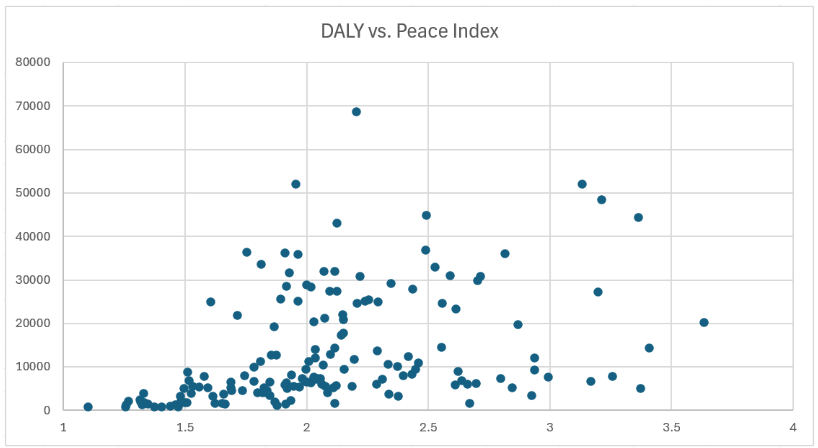
Adjusted life year (DALY), a World Health Organization metric for disability. One DALY represents the loss of the equivalent of one year of full health. DALYs for a disease or health condition are the sum of the years of life lost due to premature mortality and the years lived with a disability due to prevalent cases of the disease or health condition in a population. The most current statistics compiled for DALY rates from communicable, neonatal, maternal & nutritional diseases are available from 2021. Communicable diseases account for most of the DALY statistics. The GPI and DALY scores for all 163 countries are plotted on a scatter graph to evaluate any possible trends. Since the most recent DALY scores are for 2021, the same year, 2021, is used in ranking GPI scores.
The GPI, DALY, and latitude of the 10 countries with the most favorable GPI are compared to the 10 countries with the least favorable GPI for 2021 and analyzed.
The hypothesis proposed at the 2017 Paris meeting is tested. It stated—If a pandemic occurs that causes the type of mental impairments that increase the risk of violence, it could cause global instability. These impairments could be both emotional and cognitive. Since we have now had the SARS-CoV-2 pandemic, the validity of this hypothesis is evaluated by questioning whether research demonstrated the pandemic caused mental impairments that increased the risk of violence, and whether there was greater global instability since the epidemic began based upon the Global Peace Index (GPI).
The results of the data review are discussed, conclusions are drawn, and future directions are then discussed by addressing further research and actions needed to address the association between infectious disease, mental impairments, violence, and global stability.
Results
Environmental Changes and Increased Infectious Disease
Parasites reproduce more quickly than hosts, allowing them to evolve and adapt more rapidly to changing environments associated with reductions in biodiversity, climate changes, chemical pollution, landscape transformations and species introductions. Other human influences on the planet include domestic and wild animal encounters, deforestation, outdoor recreational activities, urbanization, agriculture impact, habitat changes, melting permafrost, technological impacts, rapid population growth, international travel, globalization, inequalities in resources, cultural and religious conflicts, political instability, conflict zones, and large population migrations.
These changes are associated with an increased risk of zoonotic diseases and the consequences of these infections. Since 2022, 44 countries have experienced a 10-fold increase in the incidence of at least one of 13 infectious diseases compared with a pre-pandemic baseline. A significant example is an increase in syphilis.
In summary, environmental changes increase infectious diseases, particularly zoonotic diseases.
Zoonotic and Vector-Borne Diseases Impact Upon Humans
Zoonotic diseases are infections that are spread between animals and people. The pathogens in these diseases may include bacteria, parasites, and viruses. COVID-19 (caused by SARS-CoV-2) is a zoonotic disease, and many pandemics, such as plague, were zoonotic diseases. Approximately 60% of emerging human pathogens and around 75% of all emerging infectious diseases are zoonotic. Human activities which increase the interaction between humans and animals increase the risk of transmission of zoonotic infections.
Vector-borne diseases are infections transmitted to humans and other animals by blood-feeding arthropods, such as mosquitoes, ticks, mites, and fleas. They often have complex life cycles with definitive hosts, intermediate hosts, arthropod vectors, and environmental reservoirs. Vector-borne diseases account for more than 17% of all infectious diseases, causing more than 700,000 deaths annually. Many vector-borne diseases are also zoonotic diseases.
In summary, zoonotic vector-borne diseases are diseases that can be transmitted between animals and humans.
and humans and are also spread by vectors such as mosquitoes, ticks, mites, and fleas. Examples include Lyme disease, West Nile virus, dengue fever, malaria, toxoplasmosis, bartonellosis, rabies, avian influenza and plague — all of which may have significant impact upon humans.
Parasites Manipulation of the Behavior of Their Hosts
Despite humans being the most cognitively advanced species, bacteria are a more dominant life form on Earth. The Manipulation Hypothesis states that a number of parasites purposefully alter the behavior of their hosts in a specific manner that increases the probability of their transmission to an uninfected host.
One example is toxoplasmosis, which can reduce the fear of cats or the speed of reaction in infected rodents. Another example is toxoplasmosis increasing sexual promiscuity. Rabies is an example of an infected host transmitting the infection to another host by increased aggressive behavior.
In most cases, humans are an incidental host to a zoonotic infection. The altered behavior that benefits parasite transmission may be maladaptive for the host with symptoms that can include excessive passivity, hypersexuality, increased aggressiveness, and/or other symptoms.
In summary, parasites sometimes manipulate the behavior of their hosts.
Infectious Diseases Contributing to Violent Behavior in Animals
Animals are in both cooperative and competitive situations. There is normal competition for territory, resources, and mating. Functional forms of aggressive behavior are a means of communication throughout the animal kingdom.
Cases of violent behavior associated with infectious diseases in animals have been reported in multiple species, including dogs, horses, chimpanzees, pigs, and multiple other animal species with rabies virus.
In summary, animal models of excessive aggression have demonstrated parasites change host behavior and cause violence in a number of species.
Infectious Diseases Contributing to Violent Behavior in Humans
Cases of excessive aggression and violence in humans have been reported associated with:
-
Bartonella infection
-
Lyme disease (Borrelia burgdorferi)
-
Encephalitis lethargica agent
-
Hepatitis E
-
Herpes simplex virus
-
Measles virus
-
Mycoplasma infection
-
Neurosyphilis
-
Parvovirus infection
-
Malaria (Plasmodium)
-
Sepsis
-
Rabies virus
-
Relapsing fever (Borrelia)
-
Streptococcus pyogenes (group A strep)
-
Toxoplasmosis (Toxoplasma gondii)
-
Syphilis (Treponema pallidum)
-
Viral encephalitis (including Western equine encephalitis and Viral encephalitis).
Infectious diseases may disrupt neurological functioning and contribute to violence through a variety of symptoms. This has been studied in greater detail with Lyme disease. Most aggression with Lyme disease was impulsive, sometimes provoked by intrusive symptoms, sensory stimulation, or frustration, and was invariably bizarre and senseless.
Post-infection clinical findings associated with increasing homicidality (compared to non-homicidal late-stage Lyme patients) included:
-
Suicidality, sudden mood swings, explosive anger, paranoia
-
Anhedonia, hypervigilance, exaggerated startle response
-
Disinhibition, nightmares, depersonalization
-
Intrusive aggressive or sexual images, dissociative episodes
-
Derealization, marital/family problems, legal problems
-
Substance abuse, depression, panic disorder, memory impairments
-
Neuropathy, cranial nerve symptoms, decreased libido.
Homicides in this group were associated with predatory aggression, poor impulse control, and psychosis.
In summary, a number of infectious diseases contribute to violence in humans and different types of violence may occur.
Pathophysiology of an Association Between Infectious Diseases and Violence
The association between infections and violence is studied with case reports, pathophysiological analyses
Studies, autopsy studies, and epidemiological studies. Intact mental functioning facilitates the maintenance of intact social structures and a peaceful resolution of competitions and conflicts. In contrast, violent behavior is the result of the interaction of multiple contributors, failed deterrents, and acute triggers, such as the post-acute effects of infectious diseases.
Some infectious diseases, in susceptible individuals, can increase the risk of violence. A significant number of these infections are zoonotic and zoonotic vector-borne diseases. Infections and the immune reactions to them have caused impairments that have been associated with three basic types of violence associated with mental impairments:
-
Predatory aggression
-
Impulse control disorders
-
Psychotic violence.
Predatory aggression may involve stalking and is seen in serial killers. Impulse control disorders are excessive responses to provocation and are the most common form of aggression. Psychotic aggression is associated with paranoia or delusions. Predatory aggression is a particular concern since it can be ruthless and well planned with a lack of empathy.
Pathophysiology: Immune and Metabolic Effects
Some of the pathophysiology is mediated by the immune system and associated with increases in proinflammatory cytokines, Interleukin 6 and Interleukin 1 beta, which have been associated with aggressive and self-destructive behavior.
The proinflammatory state associated with some acute and post-acute infectious diseases can alter tryptophan catabolism, which decreases serotonin and melatonin and increases quinolinic acid, a neurotoxin. This metabolic change has been studied with HIV/AIDS, Lyme disease, malaria, and toxoplasmosis.
It can affect brain functioning by increasing the risk of both suicide and violence and has been termed “the death formula.”
Pathophysiology: Emotional Impairments
The combined effect of the pathophysiology described and other processes can alter neural functioning. The right ventromedial prefrontal cortex plays an important role in mediating the empathic response in the healthy brain.
-
The orbital frontal cortex plays a crucial role in constraining impulsive outbursts.
-
The anterior cingulate cortex recruits other brain regions in response to conflict.
-
The amygdala is involved in the production of fear response and other negative emotions.
Injury from infectious disease or other trauma can have different effects depending on which brain region or circuit is involved. For example:
-
Brain dysfunction from infectious diseases can impair recognition of social emotions following amygdala damage.
-
Dysfunction of the prefrontal cortex, anterior cingulate, amygdala, and white matter communication from infections can contribute to disinhibition and violence.
-
Some types of injury and brain dysfunction can cause a lack of empathy, which can result in ruthless predatory behavior.
Punitive deterrents may have limited effectiveness in individuals who are impulse-prone and/or suicidal. A review of 50 homicidal late-stage Lyme disease patients demonstrated that 49 of the 50 were also suicidal.
Pathophysiology: Cognitive Impairments
Besides emotional impairments, many infections are also associated with chronic cognitive impairments. A comprehensive review of the infections that may cause cognitive impairments included:
-
Lyme disease (Borrelia)
-
Chikungunya virus
-
Coccidioidomycosis meningitis
-
COVID-19 (long COVID)
-
Dengue fever
-
Ebola virus disease
-
Epstein–Barr virus infection
-
Helminthiasis
-
Hepatitis C
-
Herpesvirus infections
-
HIV/AIDS
-
Human T-lymphotropic virus infection (HTLV)
-
Malaria
-
Murine typhus
-
Neurosyphilis
-
Varicella zoster virus infection
-
Zika virus disease.
Many of these infections are zoonotic and vector-borne diseases. The review also identified 245 million people worldwide as being cognitively impaired from long COVID, myalgic encephalomyelitis/chronic fatigue syndrome (ME/CFS), and fibromyalgia.
✅ In summary, multiple studies have shown that reduced cognitive abilities increase the risk of criminality and violence.
Studies, autopsy studies, and epidemiological studies. Intact mental functioning facilitates the maintenance of intact social structures and a peaceful resolution of competitions and conflicts. In contrast, violent behavior is the result of the interaction of multiple contributors, failed deterrents, and acute triggers, such as the post-acute effects of infectious diseases.
Some infectious diseases, in susceptible individuals, can increase the risk of violence. A significant number of these infections are zoonotic and zoonotic vector-borne diseases. Infections and the immune reactions to them have caused impairments that have been associated with three basic types of violence associated with mental impairments:
-
Predatory aggression
-
Impulse control disorders
-
Psychotic violence.
Predatory aggression may involve stalking and is seen in serial killers. Impulse control disorders are excessive responses to provocation and are the most common form of aggression. Psychotic aggression is associated with paranoia or delusions. Predatory aggression is a particular concern since it can be ruthless and well planned with a lack of empathy.
Pathophysiology: Immune and Metabolic Effects
Some of the pathophysiology is mediated by the immune system and associated with increases in proinflammatory cytokines, Interleukin 6 and Interleukin 1 beta, which have been associated with aggressive and self-destructive behavior.
The proinflammatory state associated with some acute and post-acute infectious diseases can alter tryptophan catabolism, which decreases serotonin and melatonin and increases quinolinic acid, a neurotoxin. This metabolic change has been studied with HIV/AIDS, Lyme disease, malaria, and toxoplasmosis.
It can affect brain functioning by increasing the risk of both suicide and violence and has been termed “the death formula.”
Pathophysiology: Emotional Impairments
The combined effect of the pathophysiology described and other processes can alter neural functioning. The right ventromedial prefrontal cortex plays an important role in mediating the empathic response in the healthy brain.
-
The orbital frontal cortex plays a crucial role in constraining impulsive outbursts.
-
The anterior cingulate cortex recruits other brain regions in response to conflict.
-
The amygdala is involved in the production of fear response and other negative emotions.
Injury from infectious disease or other trauma can have different effects depending on which brain region or circuit is involved. For example:
-
Brain dysfunction from infectious diseases can impair recognition of social emotions following amygdala damage.
-
Dysfunction of the prefrontal cortex, anterior cingulate, amygdala, and white matter communication from infections can contribute to disinhibition and violence.
-
Some types of injury and brain dysfunction can cause a lack of empathy, which can result in ruthless predatory behavior.
Punitive deterrents may have limited effectiveness in individuals who are impulse-prone and/or suicidal. A review of 50 homicidal late-stage Lyme disease patients demonstrated that 49 of the 50 were also suicidal.
Pathophysiology: Cognitive Impairments
Besides emotional impairments, many infections are also associated with chronic cognitive impairments. A comprehensive review of the infections that may cause cognitive impairments included:
-
Lyme disease (Borrelia)
-
Chikungunya virus
-
Coccidioidomycosis meningitis
-
COVID-19 (long COVID)
-
Dengue fever
-
Ebola virus disease
-
Epstein–Barr virus infection
-
Helminthiasis
-
Hepatitis C
-
Herpesvirus infections
-
HIV/AIDS
-
Human T-lymphotropic virus infection (HTLV)
-
Malaria
-
Murine typhus
-
Neurosyphilis
-
Varicella zoster virus infection
-
Zika virus disease.
Many of these infections are zoonotic and vector-borne diseases. The review also identified 245 million people worldwide as being cognitively impaired from long COVID, myalgic encephalomyelitis/chronic fatigue syndrome (ME/CFS), and fibromyalgia.
✅ In summary, multiple studies have shown that reduced cognitive abilities increase the risk of criminality and violence.
Pathophysiology Summary
In summarizing this section, infectious diseases, and the immune, biochemical, neurotransmitter, and neural circuit reactions to them can cause impairments that may be associated with violence. Many patients with post-acute infectious diseases have no or only mild aggressiveness tendencies. However, there are some who experience explosive anger, impulsivity, and predatory homicidal tendencies.
The Behavior of Influential Individuals Impaired by Infectious Diseases
When an infection does contribute to violent behavior in a person who influences others, there is a risk of a greater negative impact. The presence of predatory aggression in a person who influences others is a particular concern. As previously stated, a number of infections are associated with violent behavior.
The impact of infectious diseases upon the behavior of influential individuals has not been adequately studied. One exception is syphilis, which has long been recognized as potentially contributing to violent tendencies. Based upon different levels of evidence and speculation, some influential individuals were considered to have had syphilis, with a potential impact upon their behavior.
Individuals suspected to have had mental symptoms associated with syphilis in some historical publications include:
-
Ivan the Terrible
-
Henry VIII of England
-
Edward Teach (Blackbeard)
-
Pope Alexander VI
-
Emperor Charles V
-
Edward IV of England
-
Henry III of France
-
Charles VIII of France
-
Catherine the Great
-
John Wilkes Booth
-
Al Capone
-
Idi Amin Dada
-
Adolf Hitler
-
(and questionably) Vladimir Lenin.
They all had a similar pattern with a lack of empathy and ruthless behavior, followed by increasing cognitive and neurological decline in mid-life.
It has been speculated that Adolf Hitler may have also had encephalitis lethargica and that his obsessions and mannerisms may in part have been a manifestation of the residual effects of an attack acquired during the First World War.
Encephalitis lethargica has been associated with violent behavior. Other prominent residual effects include an atypical form of Parkinson’s disease, occurring weeks to decades after the acute stage. When an encephalopathic individual is in Bavaria or Austria, they may have exacerbations of mental symptoms and aggression associated with rapid barometric pressure drops related to the Foehn winds blowing from the Alps.
✅ In summary, some influential individuals may have been impaired by infectious diseases. While syphilis has received historical attention, other unidentified infectious diseases may have also impacted their behavior.
Infections Contributing to Violent Behavior of Individuals with an Impact on a Greater Social or Global Level
If impairments that increase the risk of violence occur in only a few individuals, their behavior may be restrained by the larger majority of higher-functioning individuals and an intact social structure.
Violence may be deterred in societies that embrace eight key factors:
-
Well-functioning government
-
Sound business environment
-
Acceptance of the rights of others
-
Good relations with neighbors
-
Free flow of information
-
High levels of human capital
-
Low levels of corruption
-
Equitable distribution of resources.
However, violence has also been considered to be a contagious disease. It meets the definitions of a disease and can be contagious since it can be spread from one person to another. Also, victims of violence have an increased risk of perpetrating violence on others.
✅ In summary, if highly influential individuals or a significant minority develop violent tendencies from any cause, and the numbers affected reach a critical size, a cascade of behavioral changes can occur, overturning stable social norms. This critical mass dynamic involving violent behavior can sometimes disrupt deterrents and magnify violent behaviors.
Pathophysiology Summary
In summarizing this section, infectious diseases, and the immune, biochemical, neurotransmitter, and neural circuit reactions to them can cause impairments that may be associated with violence. Many patients with post-acute infectious diseases have no or only mild aggressiveness tendencies. However, there are some who experience explosive anger, impulsivity, and predatory homicidal tendencies.
The Behavior of Influential Individuals Impaired by Infectious Diseases
When an infection does contribute to violent behavior in a person who influences others, there is a risk of a greater negative impact. The presence of predatory aggression in a person who influences others is a particular concern. As previously stated, a number of infections are associated with violent behavior.
The impact of infectious diseases upon the behavior of influential individuals has not been adequately studied. One exception is syphilis, which has long been recognized as potentially contributing to violent tendencies. Based upon different levels of evidence and speculation, some influential individuals were considered to have had syphilis, with a potential impact upon their behavior.
Individuals suspected to have had mental symptoms associated with syphilis in some historical publications include:
-
Ivan the Terrible
-
Henry VIII of England
-
Edward Teach (Blackbeard)
-
Pope Alexander VI
-
Emperor Charles V
-
Edward IV of England
-
Henry III of France
-
Charles VIII of France
-
Catherine the Great
-
John Wilkes Booth
-
Al Capone
-
Idi Amin Dada
-
Adolf Hitler
-
(and questionably) Vladimir Lenin.
They all had a similar pattern with a lack of empathy and ruthless behavior, followed by increasing cognitive and neurological decline in mid-life.
It has been speculated that Adolf Hitler may have also had encephalitis lethargica and that his obsessions and mannerisms may in part have been a manifestation of the residual effects of an attack acquired during the First World War.
Encephalitis lethargica has been associated with violent behavior. Other prominent residual effects include an atypical form of Parkinson’s disease, occurring weeks to decades after the acute stage. When an encephalopathic individual is in Bavaria or Austria, they may have exacerbations of mental symptoms and aggression associated with rapid barometric pressure drops related to the Foehn winds blowing from the Alps.
✅ In summary, some influential individuals may have been impaired by infectious diseases. While syphilis has received historical attention, other unidentified infectious diseases may have also impacted their behavior.
Infections Contributing to Violent Behavior of Individuals with an Impact on a Greater Social or Global Level
If impairments that increase the risk of violence occur in only a few individuals, their behavior may be restrained by the larger majority of higher-functioning individuals and an intact social structure.
Violence may be deterred in societies that embrace eight key factors:
-
Well-functioning government
-
Sound business environment
-
Acceptance of the rights of others
-
Good relations with neighbors
-
Free flow of information
-
High levels of human capital
-
Low levels of corruption
-
Equitable distribution of resources.
However, violence has also been considered to be a contagious disease. It meets the definitions of a disease and can be contagious since it can be spread from one person to another. Also, victims of violence have an increased risk of perpetrating violence on others.
✅ In summary, if highly influential individuals or a significant minority develop violent tendencies from any cause, and the numbers affected reach a critical size, a cascade of behavioral changes can occur, overturning stable social norms. This critical mass dynamic involving violent behavior can sometimes disrupt deterrents and magnify violent behaviors.
Geographical Association Between Infectious Disease Burden and Violence
Pathogens are not equally distributed throughout the world, and there have been changes in the prevalence of infectious diseases at different times in history. These changes may be associated with environmental changes, epidemics, and pandemics.
Human and animal parasites are more prevalent toward equatorial regions and less prevalent toward polar regions. In addition, different areas of the world and different countries have different environmental, ecosystem, sanitation, and healthcare considerations that result in infectious diseases being unequally distributed throughout the world.
It is difficult to categorize very large countries that contain many different ecosystems, such as Russia and United States.
Comparing Peacefulness and Infectious Disease Loads in Different Countries
Peace and violence are not equally distributed throughout the world. The Global Peace Index (GPI) is a composite index measuring the peacefulness of countries. It is made up of 23 quantitative and qualitative indicators, each weighted on a scale of 1–5. The lower the score, the more peaceful the country.
Based upon the GPI 2021 statistics:
-
Iceland is the most peaceful country in the world with a 1.112 GPI.
-
Afghanistan has been the least peaceful country in the world for eight of the past nine years.
A useful statistic for comparison is the national rates of communicable diseases, which also include neonatal and nutritional diseases. Disability-adjusted life year (DALY) rates for communicable, neonatal, and nutritional diseases per 100,000 people were compared with the most recent data (2021).
The majority of the higher DALY numbers are for communicable diseases rather than for neonatal and nutritional diseases. The lower the DALY score, the lower the infectious disease burden.
-
The DALY is 846 for Iceland.
-
By comparison, the DALY is 20,369 for Afghanistan.
Afghanistan has extremely poor sanitation. Local food and water sources (including ice) are heavily contaminated with pathogenic bacteria, parasites, and viruses. Risk is year-round and countrywide, including major urban areas. The climate and ecological habitat support large populations of arthropod vectors, including mosquitoes, ticks, and sand flies. Significant disease transmission is sustained countrywide.
Malaria is the major vector-borne risk. Vector-borne diseases include:
-
Crimean-Congo hemorrhagic fever
-
Malaria
-
Dengue fever
-
Yellow fever
-
Japanese encephalitis
-
African trypanosomiasis
-
Cutaneous leishmaniasis
-
Plague
-
Rift Valley fever
-
Chikungunya
-
Schistosomiasis
-
Lassa fever
-
Filariasis
-
Rocky Mountain spotted fever
-
West Nile virus
-
Epidemic typhus
-
Murine typhus
-
Leptospirosis (multiple strains, including L. icterohaemorrhagiae, L. pomona, L. bataviae).
Other infectious diseases prevalent in Afghanistan include:
-
Measles
-
Diphtheria
-
Meningitis
-
Influenza
-
Tuberculosis
-
Poliomyelitis
-
Anthrax
-
Rabies
-
Typhoid fever
-
Paratyphoid fever
-
Amoebiasis and others.
Other countries with unfavorable GPI include:
-
Yemen
-
South Sudan
-
Syria
-
Iraq — all of which also have high parasite, zoonotic disease, and infectious disease burdens.
By comparison:
-
Iceland has the most favorable GPI, high longevity, and lower health and infectious disease burdens.
-
There are no mosquitoes in Iceland.
-
Ticks are rare and Lyme disease has rarely been identified there.
-
Other countries with favorable GPI include New Zealand.
Denmark also has low parasite, zoonotic disease, and infectious disease burdens.
The peacefulness (GPI) and communicable disease rates (DALY) of all 163 countries are compared in Figure 1. There is a general trend that more peaceful countries (low GPI) have lower communicable disease rates (low DALY), and less peaceful countries have higher communicable disease rates.
| Country & GPS Rank (Highest & Lowest 10) | Global Peace Score (GPS) | Disability Adjusted Life Years (DALY) | Latitude |
|---|---|---|---|
| 1 Iceland | 1.1 | 846 | 65 N |
| 2 New Zealand | 1.253 | 949 | 35-47 S |
| 3 Denmark | 1.256 | 1,427 | 56 N |
| 4 Portugal | 1.267 | 2,143 | 30-42 N |
| Country & GPS Rank (Highest & Lowest 10) | Global Peace Score (GPS) | Disability Adjusted Life Years (DALY) | Latitude |
|---|---|---|---|
| 5 Slovenia | 1.315 | 2,520 | 45–47 N |
| 6 Austria | 1.317 | 2,000 | 47 N |
| 7 Switzerland | 1.323 | 1,421 | 47 N |
| 8 Ireland | 1.326 | 1,844 | 33 N |
| 9 Czech Republic | 1.329 | 4,071 | 48–51 N |
| 10 Canada | 1.33 | 1,915 | 42–83 N |
| 154 Russia | 2.993 | 7,666 | 41–82 N |
| 155 Central African Republic | 3.131 | 52,092 | 2–11 N |
| 156 Libya | 3.166 | 6,798 | 25 N |
| 157 Democratic Republic of Congo | 3.196 | 27,384 | 4 N–14 S |
| 158 Somalia | 3.211 | 48,505 | 10 N |
| 159 Iraq | 3.257 | 7,962 | 33 N |
| 160 South Sudan | 3.363 | 44,446 | 3–13 N |
| 161 Syria | 3.371 | 5,171 | 35 N |
| 162 Yemen | 3.407 | 14,370 | 15 N |
| 163 Afghanistan | 3.631 | 20,369 | 33 N |
The Middle East–North Africa region remained the world’s least peaceful region. It includes four of the ten least peaceful countries. All these countries in both groups, other than Ireland, have always been ranked amongst the ten most peaceful or least peaceful countries¹⁰. Historically, Sub-Sahara Africa and parts of Latin America and the Caribbean are also conflict zones¹²¹,¹²².
LYME DISEASE PREVALENCE IN A CONFLICT ZONE
In an effort to understand other possible geographical variables, it is recognized the prevalence of some infections are dependent upon regional ecosystems. An example is Lyme disease, a zoonotic vector-borne global disease that has been associated with violent behavior in some individuals³⁹,¹²³. Lyme disease is the most common vector-borne in the United States¹²⁴. A meta-analysis of 89 studies estimated there was a 14.5% global prevalence of seropositivity for Borrelia burgdorferi¹²⁵. In contrast to the 14.5% global prevalence, a study in Bosra Province, Iraq, the seropositivity of 389 psychiatric patients was 66% for Borrelia spp¹²⁶. Iraq has a history of being a conflict zone. A study of patients with neuropsychiatric Lyme disease demonstrated 1% developed homicidality after infection⁶².
GEOGRAPHICAL PATTERNS OF INFECTIOUS DISEASE, COGNITIVE IMPAIRMENTS, AND VIOLENCE
A study addressing cognitive functioning and infectious diseases put forward the hypothesis that “The worldwide distribution of cognitive ability is determined in part by variation in the intensity of infectious diseases. These correlations are robust worldwide, as well as within five of six world regions. Infectious disease remains the most powerful predictor of average national IQ”¹²⁷. The article describing the study was withdrawn due to “several critiques claiming that they contain substantial inaccuracies and biases.” However, “the authors acknowledged at least some of the claimed flaws, but they maintained that the inferences from the data were nevertheless reliable”¹²⁸. As stated previously, reduced cognitive abilities are associated with an increased risk of criminality and violence⁴⁶,⁴⁵,⁶⁶.
SUMMARY, GEOGRAPHICAL PATTERNS OF INFECTIOUS DISEASE BURDENS AND VIOLENCE
A global study linking the frequency of conflicts to the intensity of infectious disease found a causal association between infectious diseases and intrastate armed conflict and civil war, because variation in the
intensity of infectious disease occurred first, which were followed by variation in the frequency of intrastate armed conflict and civil war, rather than the opposite¹²⁹.
In summary, there is a geographical association between infectious disease burdens and violent behavior.
SOLDIERS RETURNING FROM CONFLICT ZONES HAVING ACQUIRED INFECTIOUS DISEASE ASSOCIATED WITH VIOLENCE
If violence were associated with regional infectious diseases, soldiers returning from these conflict zones may be returning with infectious diseases that may increase their risk of violent behaviors. It is important to differentiate this from the higher probability of the risk for violence caused by military service from violence caused by military training or combat-related trauma.
Soldiers returning from foreign wars often return with new and unusual infectious diseases. Some infections are often associated with compromised war zone environments and the stress of war in a foreign land. It is also possible some infections could have contributed to the wars they were in. Examples include the Plague of Athens 429 B.C., escape from Kaffa (Bubonic Plague 1347), French troops returning from Naples (Syphilis 1494/1495), and First World War (tuberculosis, typhus fever, typhoid fever, dysentery, scarlet fever, diphtheria, measles, whooping cough, smallpox, cholera, venereal diseases, particularly syphilis, encephalitis lethargica, Spanish flu)¹³⁰. The residual effect of these infections may have caused encephalopathy in some of the next generation of leaders and in millions in Europe and throughout the world, possibly contributing to World War II¹³⁰. In addition Cerebral Malaria in some Vietnam veterans,¹³¹ and Mycoplasma, a possible contributor to Gulf War Syndrome¹³²,¹³³.
The association between infections and violent behavior has been weakly demonstrated with data from some soldiers returning from areas with higher endemic diseases associated with an increased probability of aggressive tendencies.
SARS-CoV-2 PANDEMIC RESULTING IN MENTAL IMPAIRMENTS THAT MAY HAVE CONTRIBUTED TO VIOLENCE
The pandemic was a possible contributor to an increase in cognitive impairments,¹³⁴,¹³⁵,¹³⁶,¹³⁷,¹³⁸,¹³⁹,¹⁴⁰ mental disorders,¹⁴¹,¹⁴² and substance abuse¹⁴³,¹⁴⁴. Collectively these impairments are associated with an increased risk of violence, and other studies have demonstrated an increase in violence associated with the SARS-CoV-2 pandemic,¹⁴⁵,¹⁴⁶ including gun violence,¹⁴⁷ violence against children,¹⁴⁸ domestic violence,¹⁴⁹ and elder abuse¹⁵⁰.
In summary, the SARS-CoV-2 pandemic result in mental impairments that may have contributed to violence.
GLOBAL INSTABILITY SINCE THE SARS-CoV-2 PANDEMIC HAS OCCURRED
Based upon GPI data, conflict deaths are at the highest level in the century contributing to a decrease in world peace. “Deaths from internal conflict, neighboring countries relations, and external conflicts fought all recorded significant deteriorations, with the total number of conflict-related deaths increasing by 96 per cent”¹⁵¹.
Although the conflict in Ukraine was the primary driver of this increase, increases in conflict were also seen in many other countries, particularly in Sub-Saharan Africa and the Asia Pacific area. Even excluding the violence occurring in Ukraine, there has been an increase in the level of conflict since 2019. Conflict-related deaths rose by 45 per cent in the year prior to Russia’s invasion of Ukraine, with over 100,000 total deaths in 2021 being recorded¹⁵¹. The war in Ukraine had a significant impact on global peacefulness, with Ukraine and Russia having the largest and fifth largest deteriorations in GPI respectively¹⁵¹.
In summary, there is more global instability since the SARS-CoV-2 pandemic.
OTHER PANDEMICS CONTRIBUTED TO MENTAL IMPAIRMENTS THAT MAY HAVE BEEN ASSOCIATED WITH VIOLENCE
Other pandemics include the Antonin Plague (165–180), Plague of Justinian (541–542), Japanese Smallpox Epidemic (735–737), Black Death (1347–1351), Smallpox (1520), 17th Century Great Plagues (1700), Cholera 6 Outbreaks (1817–1923), The Third Plague (1855), Yellow Fever (Late 1800s), Russian Flu (1899–1890), Spanish Flu (1918–1919), Asian Flu (1957–1958), Hong Kong Flu (1968–1970), HIV/AIDS (1981–Present), SARS (2002–2003), Swine Flu (2009–2010), MERS (2012–Present), and (2014–2016) Ebola¹⁵².
Besides extensive death and disability, plagues have contributed to collapses of empires, social disruptions, infrastructure disruptions, boarder disruptions, decline of trade, shortages of food and other essentials, economic decline, migration, civil war and genocide¹⁵³,¹⁵⁴.
The development of violent behavior was recognized with the COVID-19 and Spanish Flu pandemics¹⁵⁵,¹⁵⁶,¹⁵⁷. HIV/AIDS is associated with psychiatric and cognitive impairments¹⁵⁹ and sexual violence¹⁶⁰,¹⁶¹. Some pandemics did split societies with accusations and violence¹⁶².
There are few studies addressing the association between pandemics and scapegoating and persecution of minority groups, including migrants¹⁶³. However epidemics did not inevitably give rise to violence and hatred. Sometimes they did the opposite, as seen with epidemics of unknown causes in antiquity, the Great Influenza of 1918–19 and yellow fever across numerous cities and regions in America and Europe. These epidemics unified communities, overcoming previous social, political, religious, racial and ethnic conflicts.
In summary, some other pandemics may have contributed to mental impairments that may have been associated with violence.
Discussion
The concept that microbes can alter free will and contribute to violent behavior and lead to global instability is an opinion that has been expressed,¹⁶⁴,¹⁶⁵ but is not broadly recognized. To evaluate whether the SARS-CoV-2 pandemic or other infectious diseases contribute to violent behavior and global instability, a series of reviews combining information from different scientific fields were addressed, which collectively evaluate the sequence that is relevant to this question.The first review addressed environmental decline with a One Health approach. This is a collaborative strategy that aims to optimize the health of people, animals, plants and the environment¹⁶⁶. Since parasites adapt more rapidly than hosts to rapidly changing environments, recent environmental changes have increased infectious disease and the associated consequences. Zoonotic diseases and zoonotic vector-borne diseases are emerging infectious diseases associated with environmental change. Some are emerging diseases, but many of them have been present for millennia with awareness of their full pathophysiological effects.These parasites, particularly zoonotic parasites, sometimes have a capacity to manipulate their host in a manner that propagates their survival (Manipulation Hypothesis). The infectious diseases caused by these parasites can sometimes contribute to aggressiveness and violent behavior in both animals and humans. Although we see ourselves as the dominant species on this planet, we are not. Microbes can have a significant impact upon our free will by impacting behavior, sometimes causing pathological behavior, including violence.The pathophysiology explaining this association is mostly immune mediated that results in brain circuit dysfunction which cause a number of emotional and cognitive impairments. These impairments increase the risk of violent behavior in different individuals, including violence associated with diminished impulse control, predatory behavior, and psychosis.If a small number of individuals develop impairments that contribute to violence, their behavior may havelimited impact or be restrained by the majority of higher functioning individuals and an intact social structure. However, when an influential individual, a group of influential individuals, and/or an excessive number of individuals develop violent tendencies, it can have a greater societal and global community impact as a result of violence as an infectious disease and critical mass dynamics¹⁰³,¹⁰⁵.As previously reviewed, infectious diseases and the consequences of infectious diseases are not equally distributed throughout the world. Countries and geographical areas with greater infectious disease burdens and more vector-borne zoonotic diseases are generally more likely to have a higher prevalence of aggressiveness and violence. In one study, when the prevalence of infection fluctuates, the increases of violence follows the increases in infection which supports a causal association¹²⁹. Higher latitude countries and higher altitude countries generally have less infectious disease load and are more peaceful than lower latitude countries with greater infectious disease loads. There are exceptions. Singapore is an equatorial country with a favorable GPI and low infectious disease load, and Russia is a higher latitude country with a lower GPI and greater infectious disease load¹⁰,¹¹. Clearly other variables need to be analyzed when considering national and regional risks of violence.This study did not review which infectious diseases may be associated with the risk of violence in different geographical regions.An association was demonstrated between infectious diseases, lower latitude countries and regions and violent behavior. It is therefore necessary to research which infections may be contributory, particularly in these higher risk areas. There are obstacles researching this question. There may be a significant delay between the infection and the development of violent behavior³,¹²⁹. In addition, some of the countries involved have limited public health surveillance capabilities, and some of the pathogens involved may have not yet been identified. Cerebral malaria is one infectious disease that is more prevalent in equatorial areas that is associated with violent behavior¹⁶⁷,¹⁶⁸,¹⁶⁹,¹⁷⁰,¹⁷¹,¹⁷². Relapsing Fever is more common in Mexico, Central and South America, the Mediterranean, Central Asia, and throughout much of Africa¹⁷³,¹⁷⁴. Relapsing Fever Borrelia was found in an autopsy of a patient who committed assaults, homicide and suicide²⁴. Many other infections need to be considered on a regional basis²,¹⁷⁵,¹⁷⁶,¹⁷⁷.The association between infections and violent behavior has been weakly demonstrated with data from some soldiers returning from areas with higher endemic diseases associated with an increased probability of aggressive tendencies¹³⁰,¹³³. This offers some limited additional support for the position that violent tendencies may have an environmental contributor.The 2017 hypothesis stated: “if a pandemic causing mental impairments increases the risk of violence, then it could contribute to global instability.” The SARS-CoV-2 pandemic has resulted in some mental impairments in that may have contributed to an increased risk of violence. Global instability has increased since the SARS-CoV-2 pandemic². Some pandemics in history may have also contributed to mental impairments associated with violence.Although not possible to conclude with certainty, based on the information available, there is the suggestion that some infectious diseases contribute to mental impairments, violence and global instability as illustrated by: Figure 2.

Conclusion
Although the data reviewed has limitations, there is evidence to suggest that infectious diseases, including the recent pandemic, may contribute to mental impairments with resultant increased risk of violence and global instability. Sometimes infectious diseases compromise free will.Each of the sections summarized would benefit from more detailed studies. There would be benefit identifying which infectious may be associated with violent behavior in each geographical area. Collaborative research efforts are needed between psychiatrists, infectious disease physicians, public health officers, government officials and others with a One Health approach that recognizes the interactions of the multiple systems involved. There is a need for relevant surveillance, education, public awareness, prevention, and treatment.Greater attention to hygiene, infection control, prevention, education, diagnosis, treatment of infectious diseases, recognizing the association between infectious disease and violence, and mental health care can help prevent violence on both a regional and global level. Improved infection control may be more effective towards improving global stability than military approaches. Any failures of corrective interventions may have very serious ramifications.When future epidemics occur, more attention is needed to reduce the potential adverse mental and behavioral effects.
Conflicts of Interest Statement:
The author has provided expert testimony in criminal cases concerning infectious diseases and violence.Funding Statement:
This study received no specific grants from public, commercial, or not-for-profit funding agencies. Funding for publication costs were supported by Project Lyme.Acknowledgements:
Dr. Kenneth Friedman, Dr. Rosalie Greenberg, and Dr. Leona Gilbert are recognized for providing peer review prior to submission, and Douglas Bransfield for technical assistance.References
1. Bransfield RC. A Pandemic Causing Mental Dysfunction Contribute to Global Instability? Paper presented at: International Lyme and Associated Diseases 7th European Conference; May 10, 2017; Paris, France.
2. Institute for Economics & Peace. Global Peace Index: Global peace deteriorates as violence costs world $19.1 trillion in 2023. 11 June 2024 Available online: Global Peace Index (Accessed 25 October 2024).
3. Thompson A. Plants Are the World’s Dominant Life-Form. Scientific American. 1 August 2018. Available online: Scientific American (Accessed 25 October 2024).
4. Ihara F, Nishimura M, Muroi Y, et al. Toxoplasma gondii infection in mice impairs long-term Memory Consolidation through Dysfunction of the Cortex and Amygdala. Infect Immun. 2016;84(8):2618-170. doi:10.1128/IAI.00124-16.
5. Alvarado-Echeverría I, et al. The Possible Infectious Origins of Myalgic Encephalomyelitis/Chronic Fatigue Syndrome. Frontiers in Public Health. 2022;10:1-12. doi:10.3389/fpubh.2022.832017.
6. Heath NM, Chesney SA, Gerhard JT, et al. Interpersonal violence, PTSD, and inflammation: potential psychogenic pathways to higher C-reactive protein levels. Cytokine. 2013;63(2):112-178.
7. Bransfield RC, Acliem DM, Cook MJ, Java A. A Clinical Diagnostic System for Late-Stage Neuropsychiatric Lyme Borreliosis Based upon an Analysis of 100 Patients. Healthcare (Basel). 2020;8(1):113. doi:10.3390/healthcare8010113.
8. Morton RS. Did Catherine the Great of Russia have syphilis? Genitourin Med. 1991;67(6):498.
9. Staff. What happened to John Wilkes Booth to assassinate Abraham Lincoln? 2018. Available online: Wayne State University (Accessed 24 October 2024).
10. Mikutta CA, Perivleas C, Zhou H, Federeski A, Miller T. The Impact of Foehn Wind on Mental Distress among Patients in a Swiss Psychiatric Hospital. Int J Environ Res Public Health. 2021;18:10381. doi:10.3390/ijerph18103181.
11. Greer F, Kaniz K, Zykowski M, von Mathey F, Bierbhaler P, Muthers S, Matarakis A, Lefrking R, Rubner-Wagner S. The influence of benign winds on the incidence of severe injuries in southern Bavaria – an analysis of the TraumaRegister DGU®. BMC Musculoskelet Disord. 2021;21:568. doi:10.1186/s12891-021-04230-9.
12. Forum on Global Violence Prevention. Board on Global Health. Institute of Medicine (US) Forum on Global Violence Prevention. Strategies: Preventing Violence in the Global Context. Washington (DC): National Academies Press (US); 2012.
13. Zaneli M, Roux A, Gavaert M, et al. King Charles VII of France’s Death: From an Unsubstantiated Traumatic Brain Injury to More Realistic Hypotheses. World Neurosurg. 2021;156:60-67. doi:10.1016/j.wneu.2021.07.056.
14. Fiedorowicz JG, Enichlour C, Hatz BT, et al. Endemic Infectious Disease and Mental Health. Clin Infect Dis. 2012;54:8-17. doi:10.1093/cid/cir101.
15. Takii E, Bransfield RC, Sharma A. Neuropsychiatric Manifestations in Patients with a Primary Psychiatric Disorder and Lyme Disease. Psychiatrists. 2021;181(1):125-131. Australia’s Psychiatry. 2021;181(1):125-131.
16. Friedmann KU, Ruhoy IS, Fennell PA. The Possible Infectious Origins of Myalgic Encephalomyelitis/Chronic Fatigue Syndrome. Front Public Health. 2022;10:1-12. doi:10.3389/fpubh.2022.832017.
17. Laddis E, Daryshite EL, Bakery ND, Falpeo R, Tucker E. Long-term Behavioral Problems in Children With Severe Malaria. Pediatrics. 2016;138(5):e20161695. doi:10.1542/peds.2016-1695.
18. Zhao S, Martin EM, Reuken PA, et al. Long COVID is associated with severe cognitive suffering: a multicenter cross-sectional study. eClinicalMedicine. 2024;28:103840. doi:10.1016/j.eclinm.2024.103840.
19. Iddo R, Kakonoza-Miyase A, Zseba K, Bangiran R, Opoko R, Lubovska SK, Semurda G, Mikanova M, John CC, Ngaluya J. Cerebral malaria is more prevalent in equatorial areas that are associated with violent behavior. Acta Trop. 2021;219:105. doi:10.1016/j.actatropica.2021.105.
20. Sanz R. “TRACKING THE CHRONOLOGY OF EPIDEMICS AND PANDEMICS”. Journal of Natural Remedies. 2022;21(1):100-105.