


Lifestylopathy: A Holistic Approach to Personalized Health
Lifestylopathy as Personalized Medicine: A Holistic Approach to Health
Jawad Alzeer, PhD1
- College of Medicine and Health Sciences, Palestine Polytechnic University, Hebron, Palestine.
OPEN ACCESS
PUBLISHED: 31 January 2025
CITATION: Alzeer, J., 2025. Lifestylopathy as Personalized Medicine: A Holistic Approach to Health. Medical Research Archives, [online] 13(1). https://doi.org/10.18103/mra.v13i1.6209
COPYRIGHT: © 2025 European Society of Medicine. This is an open-access article distributed under the terms of the Creative Commons Attribution License, which permits unrestricted use, distribution, and reproduction in any medium, provided the original author and source are credited.
DOI https://doi.org/10.18103/mra.v13i1.6209
ISSN 2375-1924
ABSTRACT
This article looks at Lifestylopathy, a holistic approach to healthcare that combines traditional healing methods with personalized medicine and recognizes the physical, emotional, psychological and spiritual dimensions of health. Unlike conventional medicine, which focuses primarily on symptom management, Lifestylopathy emphasizes identifying and addressing root causes of complex conditions by adapting interventions to individuals’ lifestyles, values, and specific health needs. The methods explored include balancing metabolic processes, such as anabolic and catabolic pathways, maintaining homeostasis, and optimizing the dynamic interplay between entropy and potential energy. The study also examines the role of neurotransmitter balance and lifestyle adjustments in enhancing mental health. By employing a synergistic approach that combines therapeutic interventions, placebo effects, and lifestyle alignment, Lifestylopathy offers a comprehensive framework for disease prevention, holistic recovery, and long-term wellness. This integrative methodology bridges modern and traditional practices, providing actionable insights into achieving sustained health and well-being.
Keyword: Personalized medicine, Holistic, Energy, Personality, Psychology, Quantum mechanics
Introduction
Humans have an extraordinary ability to recognize challenges and devise innovative solutions, which has propelled advancements across fields such as medicine, life sciences, and technology. In healthcare, human efforts to tackle challenges have led to potential treatments using drugs, surgery, and radiation that primarily focus on managing or alleviating symptoms rather than addressing the underlying causes of disease. Consequently, while effective for many, these approaches often fall short of achieving full recovery, particularly in complex conditions such as cancer, Alzheimer’s, and autoimmune disorders.
Over centuries, traditional healing practices have offered a rich array of preventive and therapeutic approaches, complementing modern medicine. These culturally rooted practices include natural remedies, herbal medicines, minerals, and plant-based treatments, along with spiritual and energy-based techniques, all of which play a vital role in supporting human health. Even with advances in medical science, these approaches remain valuable, especially for complex conditions where conventional treatments may not yield complete recovery.
Evidence-based approaches in healthcare provide a reliable foundation for diagnosis and treatment. However, this empirical focus can sometimes neglect the emotional, psychological, and spiritual dimensions of health, which are crucial for holistic wellbeing. Logical thinking and analogical reasoning play important roles in healthcare, especially when standard solutions fall short. Integrating rationality with holistic perspectives enables a more comprehensive and personalized approach that addresses both the physical symptoms of disease and the emotional and spiritual factors influencing health.
In personalized medicine, treatments are personalized on the basis of individual characteristics in order to improve efficacy and reduce side effects. This approach can be further enhanced by considering lifestyle factors, such as diet and exercise, recognizing their significant impact on health and disease risk. By integrating modern science with traditional healing, Lifestylopathy embodies this holistic approach, combining lifestyle modifications, preventive care, and patient-centered approaches. This synergistic model addresses conventional medicine’s limitations, fostering a deeper understanding of health and paving the way for sustainable, patient-centered healthcare that honors the individual as a whole.
Lifestyle
Human existence requires balancing our unique traits, free will, and deep-thinking abilities. To thrive, we need a framework that aligns with these traits while promoting consistency and wise choices. Establishing guidelines or adopting a structured system in life can help us distinguish between actions that enhance health and those that may cause harm. These self-imposed guidelines, often reflected in lifestyle choices, serve as a personal buffer system, aligning behaviors with principles that foster health and personal growth.
Lifestyle encompasses the careful choices individuals make to address health needs or adhere to core beliefs. Society is filled with people who follow diverse lifestyles and dietary practices. For instance, some individuals follow dietary restrictions like halal or kosher, while others may be sensitive to gluten, lactose, or animal products, adopting vegetarian or vegan diets. This diversity highlights the need to tailor decisions to individual needs and values, emphasizing the importance of personalization in decision-making. A well-rounded lifestyle extends beyond influencing personal habits; it also serves as a guiding force for our thoughts and reactions to external challenges.
A lifestyle enriched with knowledge and wisdom supports individuals in navigating challenges, solving problems, and managing stressors, both mental and physical. Such an approach enables individuals to maintain balance in the face of various difficulties. When lifestyle choices align with individuals’ health, personal values, and beliefs, they create synergy, enhancing creativity, growth, and harmony within individuals, communities, and societies. This alignment promotes sustainable development by fostering resilience and adaptability, not only enhancing personal health but also contributing to collective progress. The interplay between personal values and decision-making processes is crucial, as it informs how individuals approach their health and lifestyle choices, ultimately impacting their overall wellbeing and societal contributions.
Entropy and potential energy
Lifestylopathy, a concept integrating principles of potential energy and entropy, provides a framework for disease prevention and healing. Entropy reflects a system’s intrinsic tendency toward disorganization, often resulting in greater molecular randomness and increased thermal energy within the system. Conversely, potential energy, stored within the chemical bonds that connect atoms, represents a system’s capacity for growth and productivity, embodying a natural resistance to structural collapse and disorder. The interplay between these two concepts is critical in understanding biological processes and their implications for health.
Chemical reactions are fundamental to understanding biological processes, as they influence both entropy and potential energy within a system. In an exothermic reaction, energy is released in the form of heat, often leading to a shift from well-ordered reactants to less ordered products, thereby increasing entropy. For example, in cellular respiration, glucose, a highly organized molecule with a well-defined structure, breaks down into carbon dioxide and water, releasing energy. This breakdown results in a decrease in molecular order and an increase in the randomness of the system. The released heat not only disperses into the surroundings, adding to environmental entropy, but also manifests through changes in the molecular structure, such as alterations in constitution (the types of bonds present), configuration (the spatial arrangement of atoms), or conformation (the overall 3D shape of the molecule). Increased molecular movement, including vibrations, rotations, and translations, also reflects this rise in entropy.
In contrast, an endothermic reaction absorbs energy, typically in the form of heat, resulting in a transition from less organized reactants to more structured products, thus decreasing entropy. Photosynthesis is a classic example, where light energy is absorbed to convert carbon dioxide and water into glucose, a more complex and organized molecule. This absorbed energy helps form stable molecular bonds and organized arrangements, leading to a reduction in the system’s overall entropy.
Order and disorder in biological systems can be observed at both structural and functional levels. In terms of order, molecular integrity ensures precise composition and defined shapes essential for biological function. However, structural disorder disrupts this order, leading to altered molecular composition and distorted shapes. Similarly, functional order involves the organized distribution of electrons and efficient energy transfer necessary for proper cellular activity and physiological homeostasis. Functional disorder, in contrast, disrupts these processes, causing inefficiencies in energy transfer and electron flow, ultimately impairing cellular and systemic function.
Potential energy and entropy are fundamentally interconnected, with an increase in potential energy typically leading to a decrease in entropy, and vice versa. Entropy, which arises spontaneously, represents the natural tendency toward disorder and reduces the energy available for building and maintaining complex structures. In contrast, potential energy, which requires external input to be enriched, drives the organization and stability of biological systems. By limiting entropy and enhancing potential energy, biological systems can sustain order and functionality, from molecular processes to the stability of entire organisms. In the context of health, Lifestylopathy aims to improve health by fostering conditions that increase potential energy and decrease entropy, effectively countering the natural progression towards disorder.
Anabolic and Catabolic Processes
In personalized medicine, understanding entropy and potential energy sheds light on the metabolic balance between anabolic (building) and catabolic (breaking down) processes, both of which are essential for maintaining life. These processes represent a delicate balance between order and disorder, each contributing to our overall health and metabolic function. The concept of entropy, which quantifies disorder, is crucial in understanding how metabolic pathways operate under varying conditions, including those influenced by age and health status. Potential energy, on the other hand, is associated with the stored energy in complex molecules, which is vital for anabolic processes that create structures necessary for life.
Anabolic processes involve creating complex molecules, such as proteins from amino acids. These reactions require an energy input, typically from ATP, and reduce entropy as they build highly organized, functional structures. Anabolic processes produce molecules that are highly structured and information-rich, characterized by precise constitution, configuration, and conformation. These molecules carry significant potential energy, making them essential for the body’s growth, repair, and maintenance. In contrast, catabolic processes break down complex molecules, such as the oxidation of glucose, generating simpler molecules like water and carbon dioxide. This breakdown releases energy in the form of ATP and heat, increasing entropy in the system. ATP produced from catabolism fuels anabolic processes, while the heat helps maintain body temperature. The simpler molecules resulting from catabolism either leave the body as waste or become the building blocks for new anabolic reactions, thus fueling a cycle of energy transformation and utilization.
In the context of personalized medicine, managing these processes can optimize health outcomes by tailoring interventions to each individual’s metabolic needs and life stage. As we age, our metabolism naturally transitions from an anabolic-dominant phase, focused on growth, to one where catabolic processes become more prominent. This shift, characteristic of aging, leads to a gradual decline in structural integrity, functional capacity, and potential energy within the body, while entropy gradually accumulates. However, through lifestyle interventions aimed at enriching potential energy, such as tailored nutrition, exercise, and other regenerative practices, we can support anabolic processes and enhance self-healing mechanisms, slowing down the impact of aging. Thus, personalized strategies that consider the interaction between entropy and potential energy may optimize health and promote longevity.
Neurotransmitters
The role of neurotransmitters, chemical messengers that facilitate communication within the nervous system, is essential for maintaining mental and physical health. These neurotransmitters can be excitatory, such as glutamate, which increases neural activity, or inhibitory, such as gamma-aminobutyric acid (GABA), which decreases neural activity and promotes stability. Balancing these excitatory and inhibitory neurotransmitters is key to mental health, as it modulates both potential energy and entropy within the brain.
Prolonged exposure to excitatory neurotransmitters, often triggered by stress or prolonged fear and worry, can lead to excessive neuronal activity. This overactivity can create a chaotic state within the nervous system, often manifesting in anxiety symptoms such as hyperactivity, restless thoughts, and sleep disorders. In the context of Lifestylopathy, this dispersion of energy is seen as a disturbance of the natural order of the body, which can lead to increased disorder and thus to entropy.
Conversely, prolonged exposure to inhibitory neurotransmitters, often linked to depression, suppresses the brain’s electrical activity and reduces the body’s potential energy, leading to a decline in both mental and physical functions. This suppression disrupts the body’s ability to maintain order and efficiency, causing biological processes to slow down and become less effective. As the brain’s capacity to process information and respond diminishes, internal organization deteriorates, resulting in an overall state of disorder. Depression, characterized by persistent feelings of despair, fatigue, and inactivity, further accelerates this breakdown by lowering energy levels and inhibiting motivation, leaving the body in a passive state where it struggles to sustain its structural and functional integrity.
In Lifestylopathy, maintaining neurotransmitter balance is vital for mental health and overall wellness. A balanced state supports efficient brain function, effective bodily responses, and mental clarity. By managing neurotransmitter levels and thus controlling entropy and potential energy, Lifestylopathy seeks to prevent conditions like anxiety and depression, enhance self-healing, and sustain the body’s natural order for optimal health and vitality.
Duality and homeostasis
In Lifestylopathy, duality and homeostasis are essential concepts that contribute to achieving and maintaining optimal health. Duality refers to the presence of two contrasting yet interdependent forces within a system, a principle found in various scientific fields. Similar to the yin-yang concept in traditional Chinese medicine, duality in Lifestylopathy highlights the need for balance between opposing forces to create harmony in the body. Just as acids and bases interact in chemistry to create a buffer and stabilize pH levels, many opposing elements in the body work together to maintain balance and achieve harmony. This interplay is crucial as it reflects the dynamic nature of health, where various physiological processes must work in concert to ensure stability and functionality.
This duality manifests in several physiological processes, such as the balance between potential energy and entropy, anabolic and catabolic reactions, and excitatory and inhibitory neurotransmitters. In each case, the objective is not to eliminate one side of the duality but rather to find a harmonious balance between the two. This balanced interaction supports health by promoting a stable internal environment, allowing each system in the body to function optimally.
Homeostasis, the body’s ability to maintain stable internal conditions despite external fluctuations, is a cornerstone of Lifestylopathy. This stability is achieved through the cooperation of various systems, including the nervous, endocrine, and immune systems, which regulate essential processes such as temperature, blood pressure, and chemical levels. When homeostasis is disrupted, health can suffer, highlighting the need for ongoing internal balance. For example, blood pH is tightly regulated through a buffering system involving bicarbonate and carbonic acid, demonstrating the body’s remarkable capacity for self-regulation. Bicarbonate acts as a base, while carbonic acid functions as a weak acid; together, they balance fluctuations in blood pH. A rise in pH can lead to alkalosis, while a drop can result in acidosis, both of which can have serious health consequences.
In Lifestylopathy, duality involves a dynamic balance between physical and non-physical dimensions, integrating tangible aspects, such as bodily health and physiological processes, with intangible factors like mental states, beliefs, and emotional wellbeing. This comprehensive approach supports a holistic framework for addressing the full spectrum of human health and wellness. The physical balance reflects the physical aspect of duality in the body. For example, the equilibrium between anabolic and catabolic processes enables the body to efficiently manage resources, ensuring growth, repair, and proper function without excessive tissue breakdown or uncontrolled growth. Similarly, the balance between excitatory and inhibitory neurotransmitters is crucial for mental health, with each type contributing to different facets of brain function.
Additionally, the interplay between potential energy, which fuels vitality, and entropy, which provides adaptability and flexibility, underscores the harmonious balance necessary for optimal health. Personal balance reflects the non-physical aspect of duality in the body, involving the establishment of lifestyle boundaries and values that guide our choices, set goals, and align actions with intentions. This alignment creates a harmonious framework that supports physical, mental, and emotional wellbeing, fostering a connection between our inner and outer worlds. By enhancing potential energy, reducing stress, and strengthening our ability to face challenges, this balance optimizes our health. Lifestyle becomes a powerful tool for shaping experiences, maximizing cause-and-effect information, and enriching the relationship between concepts and behaviors. Achieving this balance not only boosts immune function and mental clarity but also promotes overall vitality.
Personality
In Lifestylopathy, the development of the human mind and consciousness is understood as a lifelong process, beginning in childhood and continuously shaped by evolving personality traits. Unlike a fixed trait, human personality can be classified into three general types based on the relationship between personal concepts (core beliefs) and behaviors. The first type, known as a stable personality, displays close alignment between concept and behavior. Individuals with this personality type act in accordance with their principles or core beliefs, resulting in predictability and internal coherence. As their concepts and beliefs evolve, their behaviors shift in alignment, reflecting a harmonious integration of thought and action. The second type includes individuals who exercise free will without a consistent connection between their actions and their underlying beliefs. This can lead to seemingly unpredictable behavior. Such individuals are often characterized as “lost or underdeveloped,” either actively seeking a suitable moral framework or remaining adrift without a clear alignment between their actions and stable principles or values. The third type, referred to as the hypocritical personality, demonstrates a disconnect between internal beliefs, concepts, and outward actions. While they are aware of what is right and wrong, they choose behaviors based on external circumstances or personal interest, rather than aligning with their internal beliefs.
To effectively address and support this diversity in personality types, a personalized approach to character development is essential. Recognizing that personality is shaped by key elements; mentality, psyche, and values, can allow for tailored guidance that encourages the alignment of concepts and behavior, fostering integrity, personal growth, and health. These elements collectively influence how individuals respond to challenges, pursue goals, and find meaning, supporting the development of a cohesive and adaptable personality. Mentality refers to the cognitive ability to make reasoned decisions and accurate judgments based on a clear understanding of reality. It emphasizes the importance of a thoughtful and rational approach to life, often guided by trusted sources or higher principles. This structured way of thinking serves as a mental guide, helping individuals to make well-informed choices and align their behaviors with meaningful goals. A well-developed mentality provides a strong foundation for navigating life’s complexities, allowing for clarity, personal growth, and the building of potential amid challenges.
The psyche encompasses the internal drives and motivations that guide us through life, balancing fundamental needs and deeper desires. Organic needs like sleep, food, and water, along with instincts for survival, procreation, and appreciation, are crucial. The survival instinct encourages us to avoid danger and seek beneficial experiences, while the procreation instinct drives the desire to preserve humanity through family and relationships. The appreciation instinct motivates us to seek support and, at times, turn to a higher power to overcome challenges. Beyond these survival needs, the psyche also pursues emotional fulfillment and a sense of purpose, found in meaningful relationships, goals, or spiritual connections. These internal motivations are vital for mental health, fostering resilience, emotional stability, and a deeper sense of wellbeing.
Values serve as guiding principles, shaping our actions and giving meaning to our behavior, forming the foundation of our personality and impacting both mental and physical health. Material values, like wealth and success, provide physical pleasure and satisfaction, while non-material values, such as moral integrity, confidence, and spiritual fulfillment, offer deeper happiness through a sense of certainty and tranquility. Many people focus primarily on material values, equating their self-worth with their possessions, while neglecting non-material values. Lifestylopathy emphasizes that an overemphasis on material values can create imbalance, leading to psychological stress and physical health problems. By cultivating a balanced lifestyle that values both material success and deeper, non-material principles, individuals can enhance emotional stability and wellbeing. This holistic approach fosters resilience against stress, promoting overall health and a sense of lasting fulfillment.
Human Psychology
In Lifestylopathy, the balance between entropy (disorder) and potential energy (order) is key to understanding human traits and behavior. Human behavior reflects underlying traits, and when driven by balanced and well-aligned values, it boosts potential energy, promoting mental clarity, stability, and better decision-making. Conversely, negative behaviors and imbalanced lifestyle choices can increase entropy, leading to internal disorder. This rise in mental and emotional chaos can result in heightened stress, anxiety, depression, and even physical health problems. The dispersion or suppression of potential energy highlights the dangers of internal instability, emphasizing the need to develop traits and habits that foster a stable and harmonious internal state.
Lifestylopathy underscores the critical role of conscious decision-making in fostering constructive traits while reducing destructive ones. This perspective resonates with the quantum mechanical principle of superposition and wave function collapse, wherein the act of observation (analogous to conscious choice) can significantly influence the outcomes within a quantum system. The psychological consequences of deliberately selecting constructive traits are substantial. The concept of superposition in quantum mechanics, where a system exists in multiple possible states until observed, can be likened to human decision-making. In this analogy, individuals navigate a range of potential choices, remaining in a state of superposition until a decision is made. Each human trait can be viewed as having two opposing facets in superposition, varying in intensity; for instance, the trait of honesty manifests in two contrasting forms: constructive (honesty) and destructive (dishonesty). When a person consciously chooses to nurture honesty, they effectively collapse the wave function of that trait, transitioning it from a potential to an actual state, thereby prompting honest behavior. Conversely, neglecting to cultivate honesty can lead to a spontaneous collapse towards dishonesty, fostering destructive traits that may increase stress, anxiety, and interpersonal discord. In contrast, intentionally developing constructive traits is linked to improved mental health, greater life satisfaction, and more harmonious relationships.
By understanding the diverse spectrum of human traits and the factors that influence their development, individuals can take control of their personal growth and healthcare strategies. Lifestylopathy combines insights from psychology and traditional medicine, advocating for a holistic approach to health. This framework empowers individuals to actively shape their lives, aligning personal development with fundamental principles to foster both mental and physical wellness.
Personalized Medicine
In Lifestylopathy, personalized medicine is grounded in the principle of synergy, aiming to foster holistic healing by addressing the diverse needs of individuals beyond just managing symptoms. This approach sees patients as distinct individuals with unique lifestyles, beliefs, and preferences. By promoting strong connections between patients and healthcare providers, Lifestylopathy strives to create favorable circumstances that support healing on a deeper level, transcending traditional disease-centered methods. The integration of personalized care with a focus on the individual’s lifestyle aligns with the principles of person-centered medicine, which emphasizes the importance of understanding the whole person rather than merely treating specific ailments.
Lifestylopathy promotes a cooperative and personalized treatment strategy by integrating each patient’s cultural and personal values into their care plan and involving them actively in the decision-making process. This approach helps patients feel valued and respected, fostering a relationship of trust and mutual respect with healthcare providers. Building trust can enhance positive expectations, potentially triggering a placebo effect. Although relying solely on placebos is controversial, evidence suggests that combining the placebo effect with active medical treatments can improve therapeutic outcomes, particularly when the patient-provider trust is strong. The psychological mechanisms underlying these effects highlight the significance of patient expectations and the therapeutic alliance in achieving better health outcomes.
The compatibility between a patient’s lifestyle and prescribed medical treatments is crucial for effective personalized medicine, as it involves tailoring medications to align with the patient’s unique way of life, thereby creating a seamless fit that improves both treatment efficacy and patient acceptance. By associating medications with specific aspects of a patient’s lifestyle, healthcare providers can establish meaningful connections that resonate with the individual. When a drug is perceived as compatible by the patient’s system, the brain signals the body to accept it, allowing the medication to remain in circulation longer. This extended presence can enhance the drug’s therapeutic effects, improve its overall efficacy, and reduce the likelihood of the body rejecting it.
Lifestylopathy represents a transformative approach that merges medicine and lifestyle, placing the individual at the heart of their health development. This comprehensive model transcends mere symptom treatment by emphasizing holistic care for the entire person and encouraging active involvement in the healing process. By fostering synergy among therapeutic, placebo, and lifestyle factors, Lifestylopathy cultivates a supportive environment that empowers patients, facilitates personalized treatment plans, and promotes a holistic pathway to health and wellness.
Lifestylopathy
Lifestylopathy aims to address the growing global health crisis by promoting overall well-being through a holistic approach. It seeks to balance order and disorder in the body, focusing on preventive care, immune system enhancement, and comprehensive recovery from diseases like cancer and Alzheimer’s. By integrating insights from physics, chemistry, medicine, and human sciences, Lifestylopathy offers a holistic healthcare framework that promotes human health and well-being. Its primary goal is to enhance overall well-being and disease prevention by balancing bodily order and disorder, boosting the immune system, and achieving comprehensive recovery from chronic diseases. This approach emphasizes preventive care and the maintenance of equilibrium in biological processes for long-term wellness.
Lifestylopathy emphasizes the importance of understanding the body’s metabolic functions, particularly the balance between anabolism (the buildup of tissues) and catabolism (the breakdown of tissues). In younger individuals, anabolic processes are typically more dominant, facilitating growth and effective tissue repair. However, as individuals age, catabolic processes tend to increase, leading to greater tissue breakdown and a diminished capacity for regeneration. This shift is closely related to the concept of entropy, which originates from thermodynamics and quantifies disorder within a system. According to the second law of thermodynamics, entropy naturally increases over time, causing systems to transition from order to disorder. Nevertheless, biological systems, including the human body, exhibit counterbalancing forces that resist this entropic trend, thereby maintaining order and functionality over time.
In the context of Lifestylopathy, these counterforces are linked to potential energy, which is crucial for vital bodily processes such as growth, repair, and regeneration. To mitigate the effects of aging and catabolic processes, it is vital to support anabolic activities by enhancing the body’s potential energy. Lifestylopathy identifies four primary sources of potential energy that collectively contribute to maintaining balance and vitality: Chemical Potential Energy, which is derived from essential nutrients; Elastic (Physical) Potential Energy, generated through physical activity and exercise; Action (Mental) Potential Energy, stemming from positive expression and emotional health; and Voluntary (Spiritual) Potential Energy, which is associated with values and a sense of purpose.
Human life is intrinsically linked to voluntary actions, and by fostering these constructive traits, individuals can increase their potential energy. Conversely, neglecting voluntary activation can lead to the dominance of involuntary traits, resulting in increased entropy and a diminished capacity for healthy living. Lifestylopathy aims to integrate these energy sources to counterbalance entropy and optimize health, highlighting the significance of duality, recognizing the opposing forces of growth and decay that necessitate careful balance. Achieving homeostasis, or the body’s internal equilibrium, requires optimal levels of potential energy; fluctuations can lead to anxiety or depression, affecting the immune system.
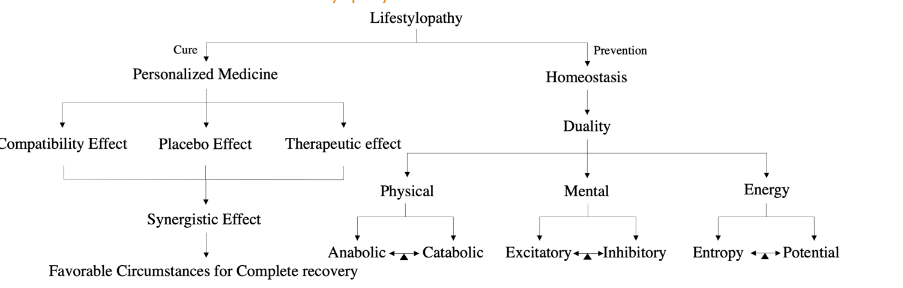
Lifestylopathy also emphasizes the importance of fulfilling organic needs and instincts in an organized manner, as addressing these needs enhances individual potential and overall health. In contrast, neglecting these needs can lead to entropy accumulation, undermining wellbeing. This holistic approach not only aids in effective energy management but also fortifies the body’s defenses, enabling individuals to remain in an optimal “fight mode,” which prepares them to confront life’s challenges. Disruptions in energy balance can push individuals toward “fright” mode, characterized by anxiety, or “flight” mode, leading to depression and emotional withdrawal. By identifying and addressing these distractions, Lifestylopathy seeks to restore balance, empowering individuals to navigate life’s complexities with resilience and strength while underscoring the interconnectedness of various health aspects for a more harmonious existence.
Furthermore, Lifestylopathy underscores the significance of personalized medicine by tailoring treatments to align with each individual’s unique lifestyle, beliefs, and health requirements. This customized approach fosters a powerful synergy among the placebo effect, therapeutic action, and lifestyle compatibility, all of which work together to facilitate comprehensive recovery. The placebo effect, rooted in the patient’s positive expectations, enhances the therapeutic impact of medications, providing additional support. Moreover, treatments that align with an individual’s lifestyle tend to remain active in the body for a longer duration, optimizing their therapeutic benefits.
Complete recovery involves both physical and non-physical aspects of health, with therapeutic drugs addressing the physical dimension, while a balanced personality is essential for the non-physical aspect. Achieving full recovery necessitates activating the immune system, which can be stimulated by engaging the “fight mode,” reflecting a balanced personality. Self-healing, combined with appropriate medication that aligns with the patient’s lifestyle, creates the favorable conditions essential for complete recovery. Optimal potential energy is necessary to activate the fight mode effectively, reinforced by positive expression and supportive information. Together, these elements facilitate effective recovery and lay the groundwork for longevity and sustained health. By understanding the connections between individual lifestyle choices and health outcomes, Lifestylopathy provides a holistic framework for enhancing personal health and fostering a deeper sense of vitality.
Conclusion
Lifestylopathy offers a comprehensive framework for personalized medicine by integrating modern scientific understanding with traditional healing practices. It emphasizes the synergistic interplay of lifestyle modifications, preventive care, and patient-centered approaches to address the biological, psychological, social, and spiritual dimensions of health. The core concept revolves around the balance between entropy (disorder) and potential energy (order), illustrated through the body’s metabolic processes, neurotransmitter balance, and the duality of opposing forces within a system. By maximizing potential energy (derived from chemical, physical, mental, and spiritual sources) and minimizing entropy, Lifestylopathy aims to improve overall health, resilience, and longevity. This holistic approach is further enhanced by aligning treatments with individual lifestyles and beliefs, thereby leveraging the placebo effect and optimizing therapeutic outcomes. The framework considers the impact of personality types on health and wellbeing, emphasizing the importance of conscious decision-making and the development of constructive traits. In essence, Lifestylopathy promotes a patient-empowered, integrated approach to healthcare that prioritizes holistic health and personalized recovery.
Conflicts of interests: None
Funding statement: The authors have no funding to report.
References
- Caldeira S, Romeiro J, Martins H, Casaleiro T. The therapeutic dimension of research about spirituality: particularities of cancer, mental health and infertility. Nurs Forum. 2019;54(4):488-491. https://doi.org/10.1111/nuf.12356
- Rêgo F, Pereira I, Rêgo G, Nunes R. The psychological and spiritual dimensions of palliative care: a descriptive systematic review. Neuropsychiatry. 2018;8(2). https://doi.org/10.4172/neuropsychiatry.1000370
- Lundberg E. Deconstructing spiritual care: discursive underpinnings within palliative care research. Nurs Inq. 2024;31(3). https://doi.org/10.1111/nin.12622
- Zhang G. The impact of spiritual care on the psychological health and quality of life of adults with heart failure: a systematic review of randomized trials. Front Med. 2024;11. https://doi.org/10.3389/fmed.2024.1334920
- Vieten C, Lukoff D. Spiritual and religious competencies in psychology. Am Psychol. 2022;77(1):26-38. https://doi.org/10.1037/amp0000821
- Hogden A, Aoun S, Silbert P. Palliative care in neurology: integrating a palliative approach to amyotrophic lateral sclerosis care. EMJ Neurol. 2018;68-76. https://doi.org/10.33590/emjneurol/10310407
- Alzeer J, Benmerabet H. Recognizing limitations: overcoming challenges in enhancing health and preventing disease. Eur J Gen Med. 2023;1-7. https://doi.org/10.31487/j.ejgm.2023.01.01
- Samancı O. Decision-making skill: how to make better decisions?. TAY J. 2023;7(2):668-683. https://doi.org/10.29329/tayjournal.2023.543.14
- Mesárošová M, Bavožár J. An investigation of the relationship between MBTI personality types and decision-making competence. New Trends Issues Proc Humanit Soc Sci. 2017;2(6):51-56. https://doi.org/10.18844/prosoc.v2i6.1430
- Truglio-Londrigan M, Slyer J. Shared decision-making for nursing practice: an integrative review. Open Nurs J. 2018;12(1):1-14. https://doi.org/10.2174/1874434601812010001
- Hallquist M, Wright A, Molenaar P. Problems with centrality measures in psychopathology symptom networks: why network psychometrics cannot escape psychometric theory. Multivar Behav Res. 2019;56(2):199-223. https://doi.org/10.1080/00273171.2019.1640103
- Moug S, Henderson N, Tiernan J, Bisset C, Ferguson E, Harji D, et al. The colorectal surgeon’s personality may influence the rectal anastomotic decision. Colorectal Dis. 2018;20(11):970-980. https://doi.org/10.1111/codi.14293
- Bisset C, Dames N, Oliphant R, Alasadi A, Anderson D, Parson S, et al. Exploring shared surgical decision-making from the patient’s perspective: is the personality of the surgeon important?. Colorectal Dis. 2020;22(12):2214-2221. https://doi.org/10.1111/codi.15237
- Gerber J, Wheeler L, Suls J. A social comparison theory meta-analysis 60+ years on. Psychol Bull. 2018;144(2):177-197. https://doi.org/10.1037/bul0000127
- Alzeer J. Exploring the dynamics of nucleophilic substitution reactions: understanding the role of entropy and potential energy in SN1 and SN2 pathways. Am J Med Chem. 2023;1-4. https://doi.org/10.31487/j.ajmc.2023.01.02
- D’Anna M. A direct entropic approach to the thermal balance of spontaneous chemical reactions. Entropy. 2024;26(6):450. https://doi.org/10.3390/e26060450
- Fuchs H, D’Anna M, Corni F. Entropy and the experience of heat. Entropy. 2022;24(5):646. https://doi.org/10.3390/e24050646
- Kleidon A. What limits photosynthesis? identifying the thermodynamic constraints of the terrestrial biosphere within the earth system. Biochim Biophys Acta Bioenerg. 2021;1862(1):148303. https://doi.org/10.1016/j.bbabio.2020.148303
- Alzeer J. Entropy and potential energy as a key role of halalopathy in disease prevention and cure. Longhua Chin Med. 2020;3:20-20. https://doi.org/10.21037/lcm-20-40
- Alzeer J. Directionality of chemical reaction and spontaneity of biological process in the context of entropy. Int J Regen Med. 2022;1-7. https://doi.org/10.31487/j.rgm.2022.02.06
- Alzeer J. The role of buffers in establishing a balance of homeostasis and maintaining health. Am J Med Chem. 2023;1-6. https://doi.org/10.31487/j.ajmc.2023.01.01
- Alzeer J. Halalopathy: improving potential energy and minimizing entropy offer an integrative approach for more effective treatment. MCMS. 2022. https://doi.org/10.55162/mcms.02.027
- Alzeer J. Beyond disorder: a new perspective on entropy in chemistry. Am J Med Chemos. 2024;5:1-5. https://doi.org/10.31487/j.AJMC.2024.01.02
- Alzeer J. Halalopathy: role of entropy in the aging process. Am J Biomed Sci Res. 2022;16(2):147-154. https://doi.org/10.31487/j.ajmc.2023.01.02
- Alzeer J. Halalopathy: revival of miraculous cure and creation of favorable circumstances for cancer therapy. MCMS. 2022. https://doi.org/10.55162/mcms.02.021
- Kitazoe Y, Kishino H, Tanisawa K, Udaka K, Tanaka M. Renormalized basal metabolic rate describes the human aging process and longevity. Aging Cell. 2019;18(4). https://doi.org/10.1111/acel.12968
- Funk M, Zhou J, Boutros M. Ageing, metabolism, and the intestine. EMBO Rep. 2020;21(7). https://doi.org/10.15252/embr.202050047
- Almutairi S. The effect of oral GABA on the nervous system: potential for therapeutic intervention. Nutraceuticals. 2024;4(2):241-259. https://doi.org/10.3390/nutraceuticals4020015
- Alzeer J. Lifestylopathy: unlocking potential by embracing duality and homeostasis for improved healthcare. Int J Regen Med. 2023;1-6. https://doi.org/10.31487/j.rgm.2023.02.02
- Ridho S. Ramadan fasting: effect on anxiety using the DASS-42 scoring system. Malays J Med Health Sci. 2024;20(1):186-190. https://doi.org/10.47836/mjmhs.20.1.24
- Alzeer J. Halalopathy: anxiety and depression from logic and energetic perspectives. Am J Biomed Sci Res. 2022;16:378-384.
- Alzeer J. Lifestylopathy: a holistic approach to healthcare. J Altern Med Ther. 2024;1(1):1-4. https://doi.org/10.59462/jamt.1.1.101
- Duman R, Sanacora G, Krystal J. Altered connectivity in depression: GABA and glutamate neurotransmitter deficits and reversal by novel treatments. Neuron. 2019;102(1):75-90. https://doi.org/10.1016/j.neuron.2019.03.013
- Billman G. Homeostasis: the underappreciated and far too often ignored central organizing principle of physiology. Front Physiol. 2020;11. https://doi.org/10.3389/fphys.2020.00200
- Alzeer J, Al-Razem F. Hypotheses: implementation of Le Chatelier’s principle as a potential integrative method to prevent and or cure coronavirus. J Public Health Emerg. 2021;5:17. http://dx.doi.org/10.21037/jphe-20-132
- Raneva V, Kiyoki Y. A mental health database creation method with neuroscience-inspired search functions. 2020. https://doi.org/10.3233/faia200838
- Zheng D, Liwinski T, Elinav E. Interaction between microbiota and immunity in health and disease. Cell Res. 2020;30(6):492-506. https://doi.org/10.1038/s41422-020-0332-7
- McAlpine D, McCreedy E, Alang S. The meaning and predictive value of self-rated mental health among persons with a mental health problem. J Health Soc Behav. 2018;59(2):200-214. https://doi.org/10.1177/0022146518755485
- Wan J, Le Y, Wang G, Xia N, Liu X. Carrot or stick? The impact of paternalistic leadership on the behavioral integration of top management teams in megaprojects. Int J Manag Proj Bus. 2020;13(5):937-960. https://doi.org/10.1108/ijmpb-12-2019-0302
- Rotenberg K. Trusting others who vary in consistency between their personal standards and behavior: differences by age, gender, and honesty trust beliefs. Soc Dev. 2023;33(2). https://doi.org/10.1111/sode.12717
- Guo G. Perceived donation behavior and cooperation intention: the mediating role of motivation attribution and perceived hypocrisy. J Educ Humanit Soc Sci. 2023;8:1310-1317. https://doi.org/10.54097/ehss.v8i.4477
- O’Connor K, Effron D, Lucas B. Moral cleansing as hypocrisy: when private acts of charity make you feel better than you deserve. J Pers Soc Psychol. 2020;119(3):540-559. https://doi.org/10.1037/pspa0000195
- Jordan J, Sommers R, Bloom P, Rand D. Why do we hate hypocrites? evidence for a theory of false signaling. Psychol Sci. 2017;28(3):356-368. https://doi.org/10.1177/0956797616685771
- Choi H. Feeling one thing and doing another: how expressions of guilt and shame influence hypocrisy judgment. Behav Sci. 2022;12(12):504. https://doi.org/10.3390/bs12120504
- Alzeer J, Benmerabet H. The development of human personality: a comprehensive overview. Psychol Disord Res. 2023;1-8. https://doi.org/10.31487/j.pdr.2023.01.01
- Masicampo E, Luebber F, Baumeister R. The influence of conscious thought is best observed over time. Psychol Conscious Theory Res Pract. 2020;7(1):87-102. https://doi.org/10.1037/cns0000205
- Hassin R. Yes it can. Perspect Psychol Sci. 2013;8(2):195-207. https://doi.org/10.1177/1745691612460684
- Nordgren L, Bos M, Dijksterhuis A. The best of both worlds: integrating conscious and unconscious thought best solves complex decisions. J Exp Soc Psychol. 2011;47(2):509-511. https://doi.org/10.1016/j.jesp.2010.12.007
- Alzeer J, Benmerabet H. Exploring the intersection of quantum mechanics and human psychology. Psychol Dis Res. 2024;7(1):1-6. https://doi.org/10.31487/j.pdr.2024.01.
- Alzeer J. Halalopathic: a new concept in medicine. J Mol Genet Med. 2018;12(2). https://doi.org/10.4172/1747-0862.1000353
- Alzeer J. Halalopathy: integrating halal pharmaceuticals for holistic healing. J Halal Qual Certif. 2023;9(1):13-19.
- Alzeer J. Integrating medicine with lifestyle for personalized and holistic healthcare. J Public Health Emerg. 2023;7:33. https://doi.org/10.21037/jphe23-71
- Alzeer J. Holistic approach to personalized medicine: a focus on halalopathy. Halalsphere. 2024;4(2):22-28. https://doi.org/10.31436/hs.v4i2.97
- Lindheimer J, Szabó A, Raglin J, Beedie C. Advancing the understanding of placebo effects in psychological outcomes of exercise: lessons learned and future directions. Eur J Sport Sci. 2019;20(3):326-337.
- Alzeer J. Halalopathy: a science of trust in medicine. J Integr Med. 2019;17(3):150-154. https://doi.org/10.1016/j.joim.2019.03.005
- Shinkafi T, Ali S. Personalized care: prevention of lifestyle diseases. 2020. https://doi.org/10.5772/intechopen.92001
- Schleidgen S, Klingler C, Bertram T, Rogowski W, Marckmann G. What is personalized medicine: sharpening a vague term based on a systematic literature review. BMC Med Ethics. 2013;14(1). https://doi.org/10.1186/1472-6939-14-55
- Chen L. Chemical potential and Gibbs free energy. MRS Bull. 2019;44(7):520-523. https://doi.org/10.1557/mrs.2019.162
- Onabola C, Andrews N, Gislason M, Harder H, Parkes M. Exploring cross-sectoral implications of the sustainable development goals: towards a framework for integrating health equity perspectives with the land-water-energy nexus. Public Health Rev. 2022;43. https://doi.org/10.3389/phrs.2022.1604362
- Alzeer J. Halalopathy: stimulation of the immune system through enrichment of potential energy. Int J Regen Med. 2022;1-5. https://doi.org/10.31487/j.rgm.2022.01.02
- Alzeer J. Permissible medicine and rationalization of halal pharma. Halalsphere. 2021;1(1):43-52. https://doi.org/10.31436/hs.v1i1.18
- Alzeer J. Harnessing the power of choice: how to thrive in a universe of entropy. Am J Med Chem. 2024;5(1):2-6. https://doi.org/10.31487/j.AJMC.2024.01.02