Methotrexate in Proliferative Vitreoretinopathy Treatment

Methotrexate as an Adjunctive Therapy for Proliferative Vitreoretinopathy
Adrian Babel MS MD1 & David Almeida2, MD MBA PhD

  1. Erie Retina Research, Erie, PA, USA
  2. The Centers for Advanced Surgical Exploration (CASE), Erie PA, USA

OPEN ACCESS

PUBLISHED: 30 June 2025

CITATION: Babel, A. and Almeida, D., 2025. Methotrexate as an Adjunctive Therapy for Proliferative Vitreoretinopathy: A Critical Review of Evidence with Emphasis on Intra-Silicone Oil Administration Strategies. Medical Research Archives, [online] 13(6).https://doi.org/10.18103/mra.v13i7.6695

COPYRIGHT: © 2025 European Society of Medicine. This is an open-access article distributed under the terms of the Creative Commons Attribution License, which permits unrestricted use, distribution, and reproduction in any medium, provided the original author and source are credited.

DOI https://doi.org/10.18103/mra.v1 3i7.6695

ISSN 2375-1924

ABSTRACT

Background: Proliferative vitreoretinopathy remains the leading cause of surgical failure following rhegmatogenous retinal detachment repair, imposing a significant clinical burden due to recurrent detachments and poor visual outcomes. Despite surgical advances, effective adjunctive therapies are lacking. Methotrexate, a folate antagonist with established anti-proliferative, anti-inflammatory, and anti-fibrotic properties, has emerged as a promising candidate. Recent interest has focused on administering methotrexate within silicone oil tamponade, aiming for sustained delivery during the critical proliferative vitreoretinopathy development window.

Objective: To critically synthesize the current evidence regarding the efficacy, safety, and pharmacological rationale of intravitreal methotrexate for proliferative vitreoretinopathy prevention and treatment, with a specific focus on the potential and challenges of intra-silicone oil administration routes.

Methods: A narrative review was conducted using the provided research materials, including preclinical studies, case series, retrospective analyses, and clinical trials that investigated various methotrexate regimens for proliferative vitreoretinopathy. Emphasis was placed on studies evaluating or comparing intra-silicone oil methotrexate delivery.

Results: Methotrexate demonstrates a strong preclinical rationale, targeting key proliferative vitreoretinopathy pathways distinct from those of previously unsuccessful agents, such as corticosteroids or 5-fluorouracil. Intra-silicone oil administration offers theoretical advantages, including sustained release (depot effect), targeted delivery, potential safety benefits over gas or aqueous injections, and synergy with silicone oil tamponade. However, clinical evidence remains inconclusive. While numerous case series report high anatomical success rates (often >70–80%), rigorous randomized controlled trials have yielded mixed results regarding primary retinal reattachment. Notably, some randomized control trials suggest that methotrexate may modulate proliferative vitreoretinopathy severity, significantly reducing the recurrence of limited proliferative vitreoretinopathy or macula-off re-detachments, even if overall re-attachment rates are not significantly improved. The safety profile appears generally favorable, with transient corneal epitheliopathy being the most common adverse event; however, the incidence varies widely. Intra-silicone oil-specific safety data are currently limited but encouraging, despite theoretical pharmacokinetic concerns (hydrophilic drug in a hydrophobic medium). Significant limitations pervade the literature, including methodological weaknesses, heterogeneity in protocols and populations, and short follow-up durations.

Conclusion: Intravitreal methotrexate, particularly via intra-silicone oil administration, represents a potentially valuable but currently unproven adjunctive strategy for the management of proliferative vitreoretinopathy. Its pleiotropic effects and theoretical advantages of sustained intra-silicone oil delivery warrant further investigation. However, its status remains firmly investigational pending results from large-scale, well-designed randomized control trials addressing optimal dosing, delivery route (including definitive intra-silicone oil pharmacokinetics), long-term safety, and efficacy in preventing clinically significant proliferative vitreoretinopathy recurrence.

Introduction: The Unmet Need in PVR Management

Proliferative vitreoretinopathy (PVR) represents a formidable clinical challenge and remains the most common cause of surgical failure following the repair of rhegmatogenous retinal detachment (RRD).¹–³ Characterized by vitreous, epiretinal, and subretinal cellular membrane formation and contraction, PVR precipitates recurrent tractional retinal detachment, intraretinal fibrosis, fixed retinal folds, and ultimately, suboptimal visual outcomes.¹–³ This condition affects approximately 5% to 10% of all RRD repairs and classically manifests between 30 and 90 days postoperatively.¹,⁴ Indeed, data suggest 77% of cases emerge within the first month, escalating to 95% within 45 days to 3 months, highlighting a critical postoperative period for potential therapeutic intervention.¹,²

Despite significant refinements in vitreoretinal surgical techniques—including pars plana vitrectomy (PPV), scleral buckling, and micro-incisional instrumentation—the management of established PVR remains difficult.³,⁴ Anatomical success rates following PVR surgery are variable (reported range 43%–85%), and functional recovery is frequently limited.¹,² Adjunctive pharmacologic agents such as corticosteroids, 5-fluorouracil (5-FU), and daunorubicin have been investigated for the prevention of PVR, though results have been inconsistent.¹–⁴ This persistent clinical burden underscores the urgent need for effective adjunctive therapies targeting the underlying pathophysiology.¹,²,⁴

Methotrexate (MTX), a folate antagonist with well-established anti-proliferative, anti-inflammatory, and anti-fibrotic properties, has emerged as a promising candidate for PVR prevention and treatment.⁴–⁷ It is generally well-tolerated, intravitreally and systemically, and has established intraocular applications in conditions like primary lymphoma and uveitis, providing a strong clinical precedent.⁶–¹⁰ A growing area of recent investigation involves the administration of MTX directly within silicone oil (SO) tamponade (intra-SO) during surgery, a common adjunct in complex retinal detachments that may reduce the incidence and burden of PVR.¹,⁵–⁹ This specific strategy proposes potential advantages, notably sustained drug delivery, but concurrently presents unique pharmacokinetic questions and safety considerations.⁴,⁵,⁸–¹¹

This narrative review aims to critically synthesize the current consensus regarding MTX use in PVR, focusing specifically on the rationale, evidence, and challenges associated with intra-SO administration, based exclusively on the available literature.

Methods

This narrative literature review was synthesized using the provided research materials, including preclinical studies, case series, retrospective analyses, and clinical trials that investigated various MTX regimens for PVR from 2015–2025. Emphasis was placed on studies evaluating or comparing intra-SO MTX delivery.

Included: Studies involving animal models or in vitro analyses exploring MTX’s pharmacology or depot effects in SO-filled eyes. Clinical reports such as case series, retrospective studies, or randomized controlled trials (RCTs) examining pharmacological treatments for adjunctive PVR therapy, particularly those involving SO tamponade and MTX. Trials evaluating comparative outcomes between delivery modalities (e.g., aqueous vs. intra-SO).

Excluded: Studies solely investigating other drugs (e.g., steroids, 5-FU, DAU) for other ocular pathologies. Publications outside the specified timeframe or those lacking clear relevance to MTX in PVR with intra-SO delivery.

Pathophysiology of Proliferative Vitreoretinopathy: A Complex Wound Healing Response

Proliferative vitreoretinopathy is a multifactorial process resulting in aberrant wound healing, most often triggered by RRD.¹–⁴ Retinal breaks and detachment disrupt the blood-retinal barrier (BRB),

allowing inflammatory cells and mediators to access the epiretinal, subretinal, and vitreous spaces.¹,³,⁴ Concurrently, detachment-induced ischemia and hypoxia in the outer retina contribute to photoreceptor apoptosis, which in turn amplifies inflammation and ultimately leads to intraretinal fibrosis.¹–⁴

Blood-retinal barrier disruption from RRD permits a complex microenvironmental cascade involving retinal pigment epithelial (RPE) cells, glial cells, inflammatory cells, and fibroblasts.¹–⁴ RPE cells are widely considered pivotal players in PVR pathogenesis.¹–⁴ Migrating through retinal breaks following BRB disruption, RPE cells undergo epithelial-mesenchymal transition (EMT)—a transformation conferring a migratory, proliferative, apoptosis-resistant, fibroblast-like phenotype capable of metalloprotease production and excessive extracellular matrix (ECM) deposition.¹,⁴

Glial cells (Müller cells, astrocytes) also contribute significantly through pro-inflammatory cytokine upregulation and reactive gliosis, which increase retinal stiffness and contraction.¹,⁴ Inflammatory cells (macrophages, lymphocytes) are recruited by chemotactic signals to infiltrate the local microenvironment, where they secrete enzymes and growth factors and deposit immunoglobulins and complement, all of which amplify the inflammatory processes characteristic of PVR.¹–⁴ Circulating fibrocytes and myofibroblasts further contribute to membrane formation, a portion of which are postulated to differentiate from RPE cells, whose contractile properties drive membrane contraction and retinal traction.¹–⁴,⁸

This complex cellular activity is modulated by a milieu of cytokines and growth factors released following BRB disruption, including PDGF, VEGF, TGF-β, EGF, TNF-α, FGFs, interleukins (IL-1, -6, -8, -10), HGF, CSF, and IGF-1.¹–⁴ These mediators collectively drive cell proliferation, migration, differentiation, extracellular matrix (ECM) production (e.g., fibronectin, type I collagen), and contraction.¹–⁴

Clinical risk factors for PVR often reflect triggers for increased inflammation, BRB disruption, or RPE cell dispersion, including pre-existing PVR, large/multiple breaks, extensive detachment, vitreous hemorrhage, choroidal detachment, aphakia, multiple prior surgeries, trauma, chronic detachment, uveitis, cryopexy, hypotony, high vitreous protein, and potentially smoking.¹–⁴,⁶,⁸

The intricate pathophysiology—integrating inflammation, RPE cell EMT, proliferation, and fibrosis—suggests that targeting a single pathway is likely insufficient.¹,²,⁴ The multifaceted nature of PVR provides a strong rationale for investigating agents like MTX, which have pleiotropic effects.⁴ Furthermore, the centrality of RPE cell migration, proliferation, and transformation highlights these processes as critical therapeutic targets.⁴,⁵

Pharmacological Rationale: Why Methotrexate for PVR?

Methotrexate’s therapeutic efficacy in PVR stems from its multifaceted pharmacological actions that directly counteract and prevent key pathophysiological events.⁴,⁵,⁸,⁹,¹² As a folate antagonist, MTX primarily acts by inhibiting dihydrofolate reductase (DHFR), a crucial enzyme in the biosynthesis of DNA and RNA building blocks: purines and pyrimidines.⁴,⁸,⁹ A MTX metabolite, MTX polyglutamate, also inhibits inosine monophosphate synthase (aka aminoimidazole carboxamide ribonucleotide [AICAR] transformylase), which impacts intracellular adenosine concentrations.⁴,⁵,⁸,¹² Methotrexate additionally blocks thymidylate synthase, an enzyme implicated in de novo pyrimidine synthesis.⁴

Anti-proliferative Effects: By way of its inhibitory effects on DHFR and thymidylate synthase, MTX prevents the proliferation of PVR effector cells like RPE and glial cells.⁴,⁸ In vitro studies support this claim by suggesting MTX prevents multiplication and upregulates apoptosis of the cells found in PVR membranes.⁴,⁹,¹¹,¹² Importantly, comparative in vitro data indicate that MTX has efficacy and safety advantages over other anti-proliferative agents, such as 5-fluorouracil (5-FU).¹⁴,¹¹–¹³

Methotrexate demonstrated selective inhibition of RPE cell proliferation while preserving photoreceptor viability, whereas 5-FU exhibited photoreceptor toxicity at concentrations effective against RPE cells.²,¹²,¹³ Of note, MTX has been shown to have no significant impact on the migration of RPE cells.⁴,¹² This RPE cell selectivity makes MTX an appealing therapy for preserving vision in patients with PVR.¹²

Anti-inflammatory Effects: Methotrexate exhibits potent anti-inflammatory properties that operate through mechanisms distinct from those of corticosteroids.⁴,¹²,¹⁴ A key mechanistic pathway involves inhibition of AICAR transformylase by MTX polyglutamate within RPE and glial cells, which increases intracellular AICAR levels and ultimately results in increased intracellular and extracellular adenosine concentrations.⁴,⁵,⁷,⁸,¹² Methotrexate also inhibits the proinflammatory JAK-STAT signaling pathway, which is a known inflammatory component of PVR.⁵,¹² Adenosine acts as an anti-inflammatory mediator by interacting with various inflammatory cells, resulting in inhibition of neutrophil adhesion, macrophage giant cell formation, leukocyte recruitment, and lymphocyte activity.⁴,⁵,⁷,⁸,¹² By inhibiting the activity of inflammatory cells, adenosine effectively decreases the production of proinflammatory cytokines and reactive oxygen species.⁴,⁵ Adenosine also inhibits T-lymphocyte activation and survival while upregulating T-regulatory cell survival, which intrinsically decreases T-cell activation.⁴,⁵ Methotrexate’s unique adenosine-mediated pathway offers an advantage over corticosteroids, whose broad anti-inflammatory effects have yielded inconsistent clinical efficacy in PVR trials.¹,⁴,⁸,⁹,¹² This mechanistic difference might explain MTX’s potential where steroids have faltered, particularly in higher-grade (greater than grade B) PVR cases.¹–⁴,¹⁴

Anti-fibrotic Effects: Methotrexate is known to have anti-fibrotic properties, evidenced by its role in treating fibrotic conditions (e.g., keloids) and further supported by studies showing that MTX-treated fibroblasts secrete less type I collagen.⁴,⁸–¹⁰,¹² This property of MTX targets ECM deposition and membrane formation, a key pathophysiological component of recurrent RRDs in individuals with PVR.¹–⁴ Furthermore, in vitro assays using PVR membrane fragments demonstrated that MTX significantly reduced contractile PVR band formation, an effect not replicated by dexamethasone or daunorubicin.¹⁶

Collectively, MTX’s unique ability to simultaneously inhibit aberrant cell proliferation, suppress numerous inflammatory pathways, and reduce fibrosis with minimal adverse effects positions it as an attractive candidate for intervening in the complex, multifaceted pathophysiology of PVR.⁴,⁵,⁸,¹¹

Intra-SO Methotrexate Administration: Rationale, Pharmacokinetics, and Unanswered Questions

Delivering MTX directly into SO tamponade during and after RRD surgery represents a targeted strategy for managing PVR, currently under active investigation, with potential advantages over standard intravitreal MTX administration.¹,²,⁴,⁵,⁷,⁸,¹¹,¹²,¹⁶,¹⁷,¹⁸ While driven by compelling theoretical rationale, this approach is mitigated by significant pharmacokinetic uncertainties, which form the central focus of this manuscript.²,⁴,⁵,⁸,¹²,¹⁶–¹⁸ This section integrates the logic suggested by conceptual frameworks of intra-SO MTX delivery.

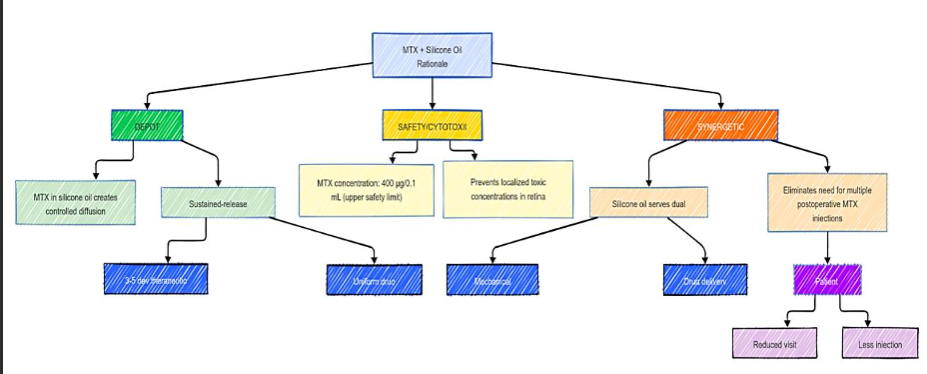
Rationale for Intra-SO Delivery (Figure 1):

Depot Effect and Sustained Delivery: A primary reason for intra-SO administration is to leverage the SO bubble as a drug reservoir, hypothetically achieving sustained MTX release within the vitreous cavity.⁴,¹² This concept is based on creating a controlled diffusion system from the SO. Given the relatively short estimated half-life of MTX in

non-vitrectomized, non-SO-filled eyes (~10.4 hours to potentially 3–5 days), a single aqueous injection is unlikely to provide therapeutic coverage throughout the critical 30–90 day PVR development window.¹,⁴,⁷,¹²,¹⁶ Short-interval serial injections are thus typically deemed necessary.²,⁴,¹² Injecting MTX into SO aims to enable sustained release, potentially maintaining therapeutic concentrations for an extended duration (approaching the 75-day window) compared to aqueous injections, thereby reducing the frequency of injections.⁴,¹²

Potential Safety Advantages: Intra-SO administration of non-aerosolized MTX might mitigate risks associated with intravitreal and intra-gas routes.²,⁴,¹²,¹⁸,¹⁹ Injecting aqueous, hydrophilic MTX into a gas bubble could cause potentially toxic concentrations in dependent retinal areas due to gravity pooling.¹⁹ Additionally, intravitreal or intra-gas aqueous MTX injections in the presence of open retinal breaks carry a risk of subretinal migration, which may result in poor chorioretinal healing.¹⁹ Intra-SO injection circumvents these specific issues by containing the aqueous MTX within the viscous SO, potentially preventing localized toxic concentrations in the retina and allowing for effective doses (e.g., up to 400 µg/0.1 mL has been considered) while maintaining safety.²,⁴,¹²,¹⁹ Moreover, the reduced dosing frequency associated with intra-SO MTX, compared to other delivery modalities, may lower the incidence of adverse events such as keratopathy, infectious complications, and bleeding.²,⁴ Indeed, a case series using serial intra-SO MTX reported only mild, non-limiting corneal epitheliopathy, suggesting good tolerability, while others report no adverse events.¹,²,⁴,²⁰

Synergistic and Practical Benefits: Intra-SO MTX inherently combines the dual mechanical tamponade effect of SO with the pharmacological action of MTX.⁴,¹²,¹⁹ Furthermore, by potentially extending the duration of action, intra-SO delivery could reduce the number of postoperative MTX injections, decreasing treatment burden, patient visits, and the cumulative risks associated with repeated procedures (leading to reduced visits and fewer injections).²,⁴,¹²,¹⁹


Figure 2: Intra-SO MTX Rationale Schematic
Figure 1: Intra-SO MTX Rationale Schematic

PHARMACOKINETIC CHALLENGES AND UNCERTAINTIES:

Despite the compelling rationale for intra-SO MTX, the behavior of MTX within SO-filled eyes is poorly understood and potentially unpredictable.⁸,¹²,¹⁹ Methotrexate is hydrophilic, whereas SO is hydrophobic.¹⁹ This fundamental mismatch raises critical questions:

Will MTX partition unfavorably, concentrating in the residual aqueous layer at the SO–retina interface, potentially leading to localized retinal toxicity despite the barrier effect of the main SO bubble?⁸,¹⁹ The theoretical risk of localized retinal MTX toxicity following intra-SO injection arises from the fluid dynamics of a hydrophilic, low-viscosity drug suspended in a viscous, hydrophobic medium, which impedes homogenization and results in uneven distribution across the retinal surface.¹⁹

Will MTX become sequestered within the oil phase with poor and unpredictable release kinetics?⁸,¹²,¹⁹ These questions are difficult to answer because specific pharmacokinetic data for MTX in SO-filled human eyes are lacking.¹² While reduced clearance compared to non-SO-filled eyes is anticipated, and preclinical data for other drugs (e.g., anti-VEGF agents) suggest potentially comparable half-lives in SO, this cannot be extrapolated to MTX without empirical validation.⁴,¹²,²¹,²² Therefore, the presumed sustained release and predictable depot effect of intra-SO MTX remain largely theoretical assumptions requiring rigorous investigation.¹⁹,²²

COMPARISON WITH OTHER ADMINISTRATION METHODS:

The exploration of intra-SO MTX occurs alongside other strategies:

Intraoperative Infusion: Methotrexate added to balanced salt saline infusion (e.g., 40 mg/500 mL or 75–80 mg/1000 mL) provides a perioperative loading dose but likely has a transient effect due to washout and MTX’s short half-life without a depot.⁴,²¹,²³,²⁴

Serial Aqueous Injections: Repeated intravitreal injections (e.g., 400 µg) into fluid-filled eyes (e.g., weekly/bi-weekly) aim for sustained levels but impose a high treatment burden and cumulative risk.⁴,⁵,¹²

Aerosolized Gas-Phase Delivery: A recent porcine model study utilized aerosolized MTX directly applied to the retinal surface, aiming for uniform and predictable distribution in gas-filled eyes (C3F8).¹⁹ The authors comment that if SO tamponade were to be used, aerosolized MTX could only be applied before SO tamponade and during SO removal, limiting dosing frequency.¹⁹

The investigation of these various methods, particularly in head-to-head trials like FIXER (infusion vs. aqueous injection vs. combo) and NCT06289205 (infusion vs. intra-SO injection), underscores a central uncertainty: **is frequent, high-dose perioperative MTX exposure sufficient, or is sustained drug presence over weeks to months more effective for PVR prophylaxis?**²⁴,²⁵ Answering this is key to optimizing MTX therapy.

Clinical Efficacy: A Mixed Picture Requiring Nuance

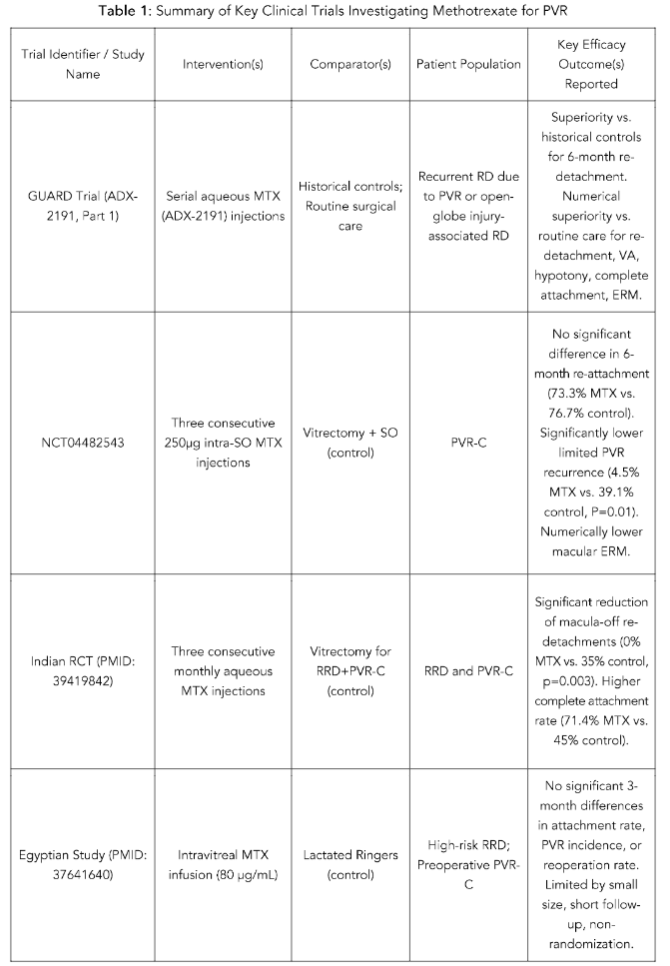
The clinical utility of MTX as an adjunctive therapy for PVR remains under active investigation, with a heterogeneous evidence base yielding inconsistent results (Table 1).²,⁴,¹²,¹⁶–¹⁸ While early reports and uncontrolled studies often portray MTX favorably, translating these findings into consistently positive outcomes in rigorous randomized controlled trials has proven challenging, and conclusive evidence supporting its routine use is lacking.²,⁴,⁶,¹²,¹⁶–¹⁸

This image has an empty alt attribute; its file name is image-72.png


This image has an empty alt attribute; its file name is image-73.png

ADDITIONAL DETAILS ON SELECTED TRIALS:

GUARD Trial (ADX-2191, Aqueous Injections):
This Phase 3 trial evaluated serial aqueous MTX (ADX-2191) versus standard care for the prevention of PVR in patients with recurrent retinal detachment due to PVR or with open-globe injury–associated retinal detachment.²⁶,²⁷ Part 1 demonstrated the superiority of MTX (n = 68) over historical controls (n = 292) for the 6-month re-detachment primary endpoint.²⁶,²⁷ Secondary endpoint results exhibited similar visual acuity and fewer re-detachments for MTX versus the routine surgical care group (n = 38), although this comparison was relatively underpowered.²⁶,²⁷ Additionally, MTX showed numerical superiority regarding dichotomous exploratory endpoints (hypotony, complete 6-month retinal/macular attachment, and ERM formation) versus the routine surgical care group.²⁶,²⁷ Notably, the GUARD trial’s reliance on historical controls is a significant limitation and places the validity of the results into question.²⁶,²⁷

NCT04482543 (Intra-SO Injections):
This multicenter RCT evaluated outcomes of surgery for PVR-C with three consecutive 250 µg intra-SO MTX injections (n = 30) versus control (vitrectomy + SO, n = 30).¹² There was no significant difference in the 6-month re-attachment primary outcome: 73.3% MTX vs. 76.7% control.¹² However, limited PVR recurrence (secondary outcome), defined as membranes/shortening without re-detachment, was significantly lower in the MTX group: 4.5% vs. 39.1% control, P = 0.01.¹² Additionally, macular ERM rates were numerically lower (non-significant), and there was no difference in time to surgical failure.¹² These results suggest MTX might modulate PVR severity rather than preventing all re-detachments.

Indian RCT (PMID: 39419842, Aqueous Injections):
This RCT evaluated re-detachment rates in patients with RRD and PVR-C following vitrectomy with three consecutive monthly aqueous MTX injections (n = 23) versus control (vitrectomy for RRD + PVR-C, n = 20).²⁸ Six-month results exhibited a significant reduction of macula-off re-detachments in the MTX group: 0% vs. 35% control (p = 0.003).²⁸ Additionally, there was a higher complete attachment rate in the MTX group (71.4%) compared to the control group (45%).²⁸ This again suggests a potential benefit in reducing the severity or frequency of recurrence.

Egyptian Study (PMID: 37641640, Infusion):
This prospective, non-randomized, interventional study evaluated intravitreal MTX infusion (80 µg/mL, n = 23) versus control (lactated Ringers, n = 24) in patients with high-risk RRD and patients with preoperative PVR-C.³⁰

C.¹⁰ Three-month results showed no significant differences in attachment rate, PVR incidence, or reoperation rate.¹⁰ Notably, this study is limited by its small sample size, short follow-up period, and non-randomized design.¹⁰

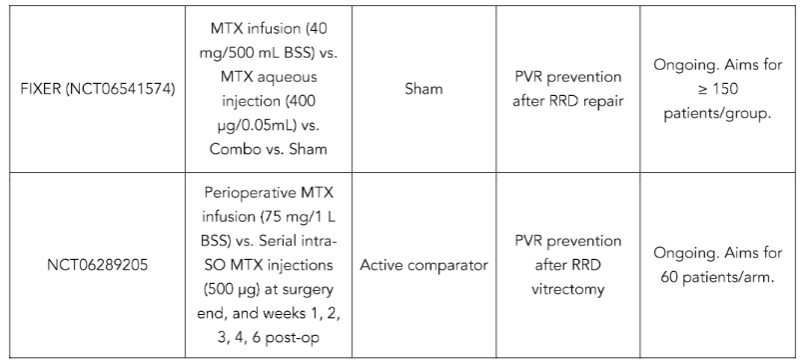
Ongoing Trials: FIXER (NCT06541574) is a prospective double-masked trial comparing MTX infusion (40 mg/500 mL BSS), MTX aqueous injection (400 µg/0.05 mL), a combination, and sham for PVR prevention after RRD repair.²⁴ FIXER aims to have ≥150 patients in each group.²⁴ NCT06289205 directly compares perioperative MTX infusion (75 mg/1 L BSS) versus serial intra-SO injections (500 µg) after surgery, and at 1, 2, 3, 4, and 6 weeks post-op.²⁵ This trial aims to have 60 patients in each study arm.²⁵ Results from these trials are eagerly awaited to clarify optimal MTX treatment strategies.

Numerous case series and retrospective studies report favorable outcomes (e.g., 72–100% reattachment rates) across various regimens (infusion, serial aqueous, serial intra-SO).¹⁶,¹⁸,²⁹–³² Case reports suggest MTX might arrest early PVR progression.³¹ A study evaluating MTX pre/post-SO removal found lower ERM/CME rates with combined treatment.³¹

SYNTHESIS OF EFFICACY FINDINGS: READING BETWEEN THE LINES
The evidence presents a complex, somewhat contradictory picture. Uncontrolled studies often report high success rates, which may be inflated by selection bias.⁴,⁵,⁷ Systematic reviews incorporating controlled trials indicate pooled reattachment rates of approximately 80% for MTX, which are usually similar to those of controls (83%).⁴ Key RCTs show no significant difference in overall re-attachment.⁴,²⁷

However, a nuanced interpretation is emerging: Methotrexate might not drastically increase overall anatomical success in complex PVR-C cases but could favorably modulate the nature or severity of PVR recurrence. The significant reductions in “limited PVR” (NCT04482543) and “macula-off re-detachments” (Indian RCT) support this hypothesis.¹²,²⁸ Shifting outcomes towards less severe PVR or reducing secondary complications, such as ERM and CME, could still represent a clinically meaningful benefit, even if primary re-detachment rates remain unchanged.³¹ Importantly, visual acuity outcomes remain mixed across studies.⁴,¹⁶,²⁶,³³

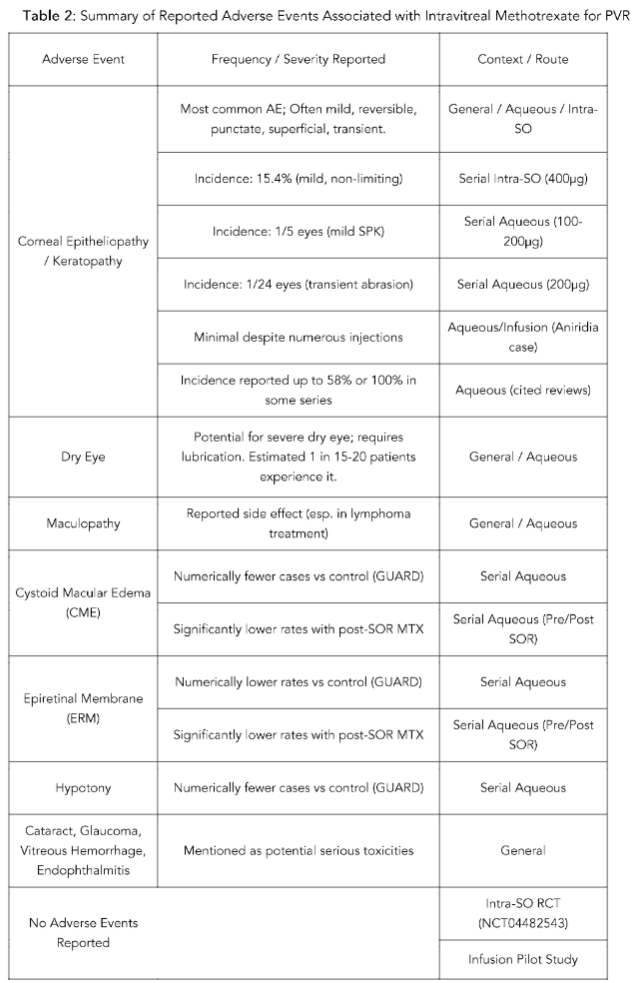
Safety Profile (Table 2): Generally Favorable but Requires Vigilance

Intravitreal MTX is frequently described as safe and well-tolerated, especially considering the complex pathologies being treated.⁴,⁵,²⁰–²²,²⁹ For instance, the GUARD trial reported no new safety signals, the intra-SO RCT (NCT04482543) observed no adverse effects, and pilot infusion studies similarly found no MTX-related complications.¹¹,¹²,²⁶,²⁷

CORNEAL TOXICITY
Corneal epitheliopathy/keratopathy is the most consistently reported adverse effect, typically described as mild, reversible, superficial, punctate, or transient.⁴,⁵,²⁰ This effect is most common with multiple short-interval MTX injections.⁴,⁵ However, the reported incidence of corneal toxicity varies dramatically:

GUARD trial: Punctate keratitis is common but mostly mild.²⁷
Intra-SO series (400 µg): Mild epitheliopathy in 15.4% (2/13 eyes).²⁰
Aqueous series (100–200 µg): Mild SPK in 20% (1/5 eyes).⁷
Aqueous series (200 µg bi-weekly): Transient abrasion in 4% (1/24 eyes).³²
• Reviews cite rates from ~15% up to 58%, occasionally higher.²⁰ This wide variability likely reflects differences in dose, frequency, administration route (aqueous vs. intra-SO), formulation (compounded vs. purpose-formulated ADX-2191), and individual susceptibility.

• Associated severe dry eye requiring meticulous lubrication is a potential issue, possibly affecting 1 in 15–20 patients.²⁶

This image has an empty alt attribute; its file name is image-71.png

INTRAOCULAR INFLAMMATION AND MACULAR EFFECTS: REASSURANCE AND POTENTIAL BENEFIT?

While maculopathy is a known risk with multiple MTX injections (e.g., for lymphoma), studies in the context of PVR suggest MTX might be protective.³¹:

GUARD: Numerically lower central macular thickness vs. controls.²⁷
GUARD: Numerically fewer cases of CME vs. routine care.²⁷
Pre/Post-SOR study: Significantly lower rates of postoperative CME and ERM with more MTX exposure.³⁰

These findings suggest that MTX’s anti-inflammatory and anti-proliferative effects in the PVR setting might reduce, rather than cause, common postoperative macular complications.

OTHER POTENTIAL COMPLICATIONS:

Rare serious events mentioned in available literature include cataract, glaucoma, vitreous hemorrhage, and endophthalmitis.⁴,⁵,³¹ Notably, hypotony was numerically lower in the GUARD MTX group.²⁷

SAFETY OF INTRA-SO ADMINISTRATION:

Specific data are limited, but adverse event profiles from recent studies are encouraging.¹⁹ For example, the RCT (NCT04482543) reported no adverse events, and a case series using 400 µg intra-SO injections noted a low (15.4%) rate of mild epitheliopathy.¹²,²⁰ While intra-SO MTX appears favorable compared to some reports of aqueous MTX injections, direct comparative data are scarce.⁸,¹²,¹⁹ Crucially, the theoretical concerns regarding unpredictable pharmacokinetics and potential toxicity at the SO–retina interface due to MTX’s hydrophilicity and tendency for gravitational pooling persist.⁸,¹⁹ These issues warrant further investigation.


Limitations of Current Evidence: Barriers to Clinical Translation

The current body of evidence supporting the use of intravitreal MTX for PVR suffers from significant limitations, consistently highlighted across reviews and studies.⁴,⁵,⁹ These weaknesses temper enthusiasm for clinical use and explain why MTX has not achieved standard-of-care status.

Methodological Weaknesses:
The available evidence is derived mainly from preclinical studies, case reports, or small, uncontrolled series, with a relatively limited number of high-quality randomized controlled trials.⁴,⁵ The lack of randomization, reliance on historical controls (e.g., the GUARD trial), small sample sizes that lack statistical power, short follow-up durations (often insufficient to capture late PVR development), high risk of bias, and lack of masking compromise the validity and generalizability of findings.⁴,⁹,¹⁶,²⁷,³³

Heterogeneity:
Profound heterogeneity exists in patient populations (varying PVR grades, underlying pathologies, diverse risk factors) and treatment protocols (differences in MTX dosage, administration frequency, treatment duration, and route of administration—infusion vs. aqueous vs. intra-SO).⁴,⁵ This lack of standardization makes cross-study comparisons and meta-analyses exceedingly challenging and hinders the identification of optimal regimens.

Other Factors:
Limitations in PVR classification systems themselves also impede accurate patient stratification and outcome prediction.¹⁹

These collective weaknesses contribute directly to the inconsistent efficacy findings reported in the literature, preventing the formulation of definitive conclusions regarding MTX’s role in PVR management.⁴,⁵,⁹ They underscore the preliminary nature of the current evidence base and highlight the widespread agreement on the critical need for more rigorous, well-designed clinical trials.⁴,⁵

Comparison with Other Adjunctive Pharmacotherapies: Learning from Past Failures

Methotrexate is investigated against a backdrop of largely unsuccessful attempts with other adjunctive agents, providing crucial context for this study.

Corticosteroids: Logically appealing due to PVR’s inflammatory component, but despite animal model success, human RCTs (triamcinolone, dexamethasone implants) generally showed no significant benefit over controls for reattachment, visual acuity, or preventing severe PVR.¹,⁴,¹⁴ Methotrexate offers a distinct anti-inflammatory mechanism (inhibits inosine monophosphate synthase, increasing intra/extracellular adenosine) and superior in vitro inhibition of PVR membrane contraction compared to dexamethasone.⁴,¹⁶

5-fluorouracil ± low molecular weight heparin: Both have shown inconsistent results for PVR treatment and prevention.¹,⁴⁹ Large RCTs found no overall benefit, though a meta-analysis hinted at a possible subgroup benefit in pre-existing PVR-C.¹,³⁵ There are significant concerns regarding retinal toxicity, including photoreceptor damage in vitro and worsened visual acuity (VA) in one randomized controlled trial (RCT).⁴,¹³,¹⁶ Importantly, MTX showed better in vitro retinal safety.⁴,¹⁶

Daunorubicin: Despite animal data, a large RCT showed no significant benefit on anatomical success or visual acuity.¹³⁶ It also failed to inhibit PVR membrane contraction in vitro, unlike MTX.¹⁶

Other agents, such as retinoic acid, mitomycin C, colchicine, and glucosamine, have shown limited success or lack sufficient human data.²,³⁹ Anti-VEGF agents have not proven effective for PVR-induced RD.¹³⁷

The historical failures underscore the inherent challenges of pharmacologically tackling PVR and reinforce the unmet clinical need.¹,²,³⁴ Methotrexate continues to be pursued due to its pleiotropic mechanism and potential in vitro advantages in safety (vs. 5-FU) and efficacy (vs. dexamethasone, daunorubicin) on key PVR mechanisms.⁴,¹⁴,¹⁶,³⁴


Conclusion

Based on this synthesis, intravitreal MTX stands as a promising but currently investigational adjunctive therapy for PVR. Its potential is rooted in a strong pharmacological rationale targeting the multifaceted PVR pathophysiology (inflammation, proliferation, fibrosis).¹⁴ Administration via intra-SO injection is a strategy of particular interest, offering theoretical advantages in sustained delivery, although its pharmacokinetic profile and superiority remain unproven.⁴,⁸,¹²,¹⁹,²⁵

While encouraging outcomes emerge from uncontrolled studies, rigorous RCTs present a more complex picture, failing to consistently demonstrate superiority in preventing primary retinal re-detachment.⁴ Intriguing signals suggest that MTX might modulate PVR severity, reducing the likelihood of recurrence or high-risk detachments, which warrants further exploration.⁴,¹² The overall safety profile appears acceptable, with transient corneal epitheliopathy—most commonly associated with short-interval dosing—being the primary concern.⁴,⁵,¹²⁰ However, significant knowledge gaps persist regarding optimal dosing, the impact of administration route (especially intra-SO pharmacokinetics and safety), and long-term effects.⁴,⁵,¹⁹

The field widely concurs that current evidence is insufficient to establish MTX, including intra-SO use, as a standard of care.¹,⁴,⁶,⁷ Methotrexate’s use for PVR remains off-label.⁸ The path forward necessitates addressing the limitations of existing research.⁴


FUTURE RESEARCH IMPERATIVES:

High-Quality RCTs: Large-scale, multicenter, randomized, double-masked, controlled trials with adequate power are paramount.⁵,⁹
Extended Follow-Up: Durations of 3–6 months are insufficient to capture late PVR events.¹⁰

Regimen Optimization: Systematic comparison of dosages, frequencies, durations, and routes (infusion vs. aqueous vs. intra-SO) is critical. Results from ongoing trials (FIXER, NCT06289205) comparing strategies are vital to support clinical acceptability.²⁴,²⁵

Pharmacokinetic Studies: Urgent need for studies defining MTX behavior, clearance, and dosing within SO-filled eyes.¹⁹

Comprehensive Safety Evaluation: Assessment of long-term safety and route-specific toxicity profiles.

Subgroup Analyses: Investigation in specific populations (e.g., pediatrics, high-risk profiles).³⁴

In conclusion, while intravitreal MTX, particularly when administered via an intra-SO approach, offers a theoretically compelling method to mitigate PVR, its clinical utility remains unproven. Its status is firmly investigational, awaiting definitive validation from robust future research designed to resolve current inconsistencies and knowledge gaps.


Conflicts of Interest Statement:
AB: No conflicts of interest to declare

DA: ACYLERIN, ALCON, ALIMERA SCIENCES, ALLERGAN/ABBVIE, BAUSCH + LOMB, BAYER, BOEHRINGER INGELHEIM, CITRUS THERAPEUTICS, CLINICAL TRIALS NETWORK, EYEPOINT PHARMACEUTICALS, GENENTECH, GYROSCOPE THERAPEUTICS, NOVARTIS, OCUGEN, OPTHEA, REGENERON, REGENXBIO, ROCHE, SAMSARA VISION, SPHERIX CONSULTING GROUP

Funding Statement:
The authors have no external funding sources to disclose.


References

1. Idrees S, Sridhar J, Kuriyan AE. Proliferative vitreoretinopathy: a review. Int Ophthalmol Clin. 2019;59(1):221-240. doi:10.1097/IIO.00000000000 00258

2. Ferro Desideri L, Artemiev D, Zandi S, Zinkernagel MS, Anguita R. Proliferative vitreoretinopathy: an update on the current and emerging treatment options. Graefes Arch Clin Exp Ophthalmol. 2024; 262(3):679-687. doi:10.1007/s00417-023-06264-1

3. Proliferative Vitreoretinopathy. EyeWiki. May 8, 2024. Accessed April 20, 2025.
https://eyewiki.org/Proliferative_Vitreoretinopathy

4. McAllister MA, Moore SM, Bullock B, Christoforidis JB. Intraocular methotrexate for the treatment and prevention of proliferative vitreoretinopathy: a review. J Vitreoretin Dis. 2022;7(2):144-153. doi:10.1177/24741264221135799

5. Abdi F, Mohammadi SS, Falavarjani KG. Intravitreal methotrexate. J Ophthalmic Vis Res. 2021;16(4):657-669. doi:10.18502/jovr.v16i4.9756

6. Intravitreal methotrexate for the treatment and prevention of proliferative vitreoretinopathy. Retinal Physician. January 11, 2024. Accessed April 20, 2025.
https://retinalphysician.com/issues/2022/june/intravitreal-methotrexate-for-the-treatment-and-prevention-of-proliferative-vitreoretinopathy

7. Benner JD, Dao D, Butler JW, Hamill KI. Intravitreal methotrexate for the treatment of proliferative vitreoretinopathy. BMJ Open Ophthalmol. 2019; 4(1):e000293. doi:10.1136/bmjophth-2019-000293

8. Sadaka A, Sisk R, Osher J, Toygar O, Duncan M, Riemann C. Intravitreal methotrexate infusion for proliferative vitreoretinopathy. Clin Ophthalmol. 2016;10:1811-1817. doi:10.2147/OPTH.S111893

9. Desideri LF, Zandi S, Zinkernagel MS, Anguita R. Challenges in proliferative vitreoretinopathy: is biological therapy a solution? Expert Opin Biol Ther. 2023;23(10):937-939. doi:10.1080/1471259 8.2023.2248881

10. Fouad Aziz JH, Abd Al-Hakim Zaki M, Abd El-Fattah El-Shazly A, et al. Intravitreal methotrexate infusion for prophylaxis of proliferative vitreoretinopathy after pars plana vitrectomy for rhegmatogenous retinal detachment. Med Hypothesis Discov Innov Ophthalmol. 2022;11(3): 95-103. doi:10.51329/mehdiophthal1452

11. Jahangir S, Jahangir T, Ali MH, et al. Use of intravitreal methotrexate infusion in complicated retinal detachment for prevention of proliferative vitreoretinopathy: a pilot study. Cureus. 2021;13 (8):e17439. doi:10.7759/cureus.17439

12. Nourinia R, Safi S, Mohammadpour M, et al. Effects of repeated intra-silicone oil injections of methotrexate on proliferative vitreoretinopathy grade C: a multicenter randomized controlled trial. Sci Rep. 2024;14(1):28842. doi:10.1038/s41598-024-79708-1

13. Chen C, Chen P, Liu X, Li H. Combined 5-fluorouracil and low molecular weight heparin for the prevention of postoperative proliferative vitreoretinopathy in patients with retinal detachment: a meta-analysis. Front Med. 2021;8:790460. doi:10.3389/fmed.2021.790460

14. Shi H, Guo T, Liu P, et al. Steroids as an adjunct for reducing the incidence of proliferative vitreoretinopathy after rhegmatogenous retinal detachment surgery: a systematic review and meta-analysis. Drug Des Devel Ther. 2015;9:1393-1400. doi:10.2147/DDDT.S80983

15. Han H, Yu JG, Yan H. [Research progress on signaling pathways related to drug research in proliferative vitreoretinopathy]. PubMed. 2023;59 (3):225-230. doi:10.3760/cma.j.cn112142-20221117-00589

16. Surgical interventions and novel therapies for proliferative vitreoretinopathy. Eyes on Eyecare. Published March 6, 2025. Accessed April 20, 2025. https://eyesoneyecare.com/resources/surgical-interventions-novel-therapies-for-proliferative-vitreoretinopathy

17. Al-Moujahed A, Saleh S, Ghoraba H, et al. Systemic and intraocular methotrexate for the prevention and treatment of proliferative vitreoretinopathy in children with rhegmatogenous retinal detachment and underlying inflammatory disease. J Vitreoretin Dis. 2022;6(5):399-404. doi:10.1177/24741264221076357

18. Falavarjani KG, Hadavandkhani A, Parvaresh MM, et al. Intra-silicone oil injection of methotrexate in retinal reattachment surgery for proliferative vitreoretinopathy. Ocul Immunol Inflamm. 2019;28 (3):513-516. doi:10.1080/09273948.2019.1597894

19. Olsen TW, Asheim CG, Salomao DR, et al. Aerosolized, gas-phase, intravitreal methotrexate reduces proliferative vitreoretinopathy in a randomized trial in a porcine model. Ophthalmol Sci. 2023;3(3): 100296. doi:10.1016/j.xops.2023.100296

20. Shen-Sampas JH, Ahmad TR, Stewart JM. Corneal toxicity of intravitreal methotrexate used for the treatment of proliferative vitreoretinopathy in silicone oil-filled eyes: a case series. Cornea. 2021; 41(4):499-501. doi:10.1097/ico.0000000000002774

21. Velez G, Yuan P, Sung C, et al. Pharmacokinetics and toxicity of intravitreal chemotherapy for primary intraocular lymphoma. Arch Ophthalmol. 2001;119 (10):1518-1524. doi:10.1001/archopht.119.10.1518

22. Desideri LF, Sim PY, Bernardi E, et al. Evidence-based guidelines for drug dosing in intravitreal injections in silicone oil-filled eyes: pharmacokinetics, safety, and optimal dosage. Surv Ophthalmol. 2024; 70(1):96-105. doi:10.1016/j.survophthal.2024.09.006

23. El Baha S, Leila M, Amr A, Lolah MMA. Anatomical and functional outcomes of vitrectomy with/without intravitreal methotrexate infusion for management of proliferative vitreoretinopathy secondary to rhegmatogenous retinal detachment. J Ophthalmol. 2021;2021:3648134. doi:10.1155/20 21/3648134

24. Prevention of proliferative vitreoretinopathy with intravitreal methotrexate in primary retinal detachment repair (FIXER) trial. ctv.veeva.com. Accessed April 20, 2025.
https://ctv.veeva.com/study/prevention-of-proliferative-vitreoretinopathy-with-intravitreal-methotrexate-in-primary-retinal-deta

25. University of Health Sciences Lahore. Comparison of peroperative methotrexate infusion with postoperative intra-silicone oil methotrexate injections for prevention of proliferative vitreoretinopathy development after vitrectomy for rhegmatogenous retinal detachment repair. Accessed April 20, 2025. https://cdn.clinicaltrials.gov/large-docs/05/NCT06289205/Prot_SAP_000.pdf

26. Stephenson M. Current therapies for PVR. Rev Ophthalmol. March 21, 2025. Accessed April 20, 2025. https://www.reviewofophthalmology.com/article/current-therapies-for-pvr

27. Top-line results from Part 1 of the Phase 3 GUARD trial of ADX-2191 in proliferative vitreoretinopathy. Aldeyra Therapeutics. October 6, 2022. Accessed April 20, 2025. https://ir.aldeyra.com/static-files/cde1aa20-d22a-4f38-a9a5-523b803aca40

28. Rajan RP, Babu KN, Arumugam KK, et al. Intravitreal methotrexate as an adjuvant in vitrectomy in cases of retinal detachment with proliferative vitreoretinopathy. Graefes Arch Clin Exp Ophthalmol. 2025;263(2):387-391. doi:10.1007/s00417-024-06665-w

29. Toh VTR, Gerard G, Tay ZQ, et al. Efficacy and safety of methotrexate in the treatment of proliferative vitreoretinopathy: a systematic review. Eye (Lond). 2025;39(3):460-467. doi:10.1038/s41433-024-03503-5

30. Liu T, Runner M, Mahmoud TH, et al. A modified intravitreal methotrexate protocol for the prevention of proliferative vitreoretinopathy after silicone oil removal. Ophthalmol Retina. 2025;9 (4):314-321. doi:10.1016/j.oret.2024.10.006

31. Ahmad TR, Stewart JM. Tolerability and efficacy of multiple series of intravitreal methotrexate injections for complex retinal detachment associated with proliferative vitreoretinopathy. Future Pharmacol. 2023;3(2):464-472. doi:10.3390/futurepharmacol3 020029

32. Ullah A, Toth CA, Burnett HW, et al. Low-dose intravitreal methotrexate for proliferative vitreoretinopathy. Ophthalmic Surg Lasers Imaging Retina. 2023;54(3):139-146. doi:10.3928/23258160-20230220-01

33. Balas M, Abdelaal A, Popovic MM, et al. Intravitreal methotrexate for the prevention and treatment of proliferative vitreoretinopathy in rhegmatogenous retinal detachment: a systematic review. Ophthalmic Surg Lasers Imaging Retina. 2022;53(10):561-568. doi:10.3928/23258160-2022 0920-04

34. Ambati NR, Riemann CD. Intraocular use of methotrexate (MTX) for the treatment of proliferative vitreoretinopathy (PVR) in congenital aniridia (CI) and a possible link to aniridia fibrosis syndrome (AFS) treatment. Am J Ophthalmol Case Rep. 2024;36:102216. doi:10.1016/j.ajoc.2024.102216

35. Schaub F, Hoerster R, Schiller P, et al. Prophylactic intravitreal 5-fluorouracil and heparin to prevent proliferative vitreoretinopathy in high-risk patients with retinal detachment: study protocol for a randomized controlled trial. Trials. 2018;19(1): 2761. doi:10.1186/s13063-018-2761-x

36. Xie EF, Xie B, Nadeem U, et al. Using advanced bioinformatics tools to identify novel therapeutic candidates for proliferative vitreoretinopathy. Transl Vis Sci Technol. 2023;12(5):19. doi:10.1167/tvst.12.5.19

37. Huang RS, Felfeli T, Mandelcorn ED. Management options for PVR. Retina Specialists. Published April 13, 2024. Accessed June 5, 2025. https://retina-specialists.com/articles/management-options-for-pvr“`

Interested in publishing your own research?
ESMED members can publish their research for free in our peer-reviewed journal.
Learn About Membership

Call for papers

Have a manuscript to publish in the society's journal?