






Non-Communicable Diseases in Ghana’s Mining Areas
Increasing Cases of Non-Communicable Diseases in Mining Areas of Ghana: Is it a Lifestyle or Hidden Players at Work?
Emmanuel Arhin 1, Bright Karim-Abdallah 2,3, Christiana Baah 4
- University of Energy and Natural Resources, School of Geosciences
- University of Energy and Natural Resources, Quality Assurance Directorate and Academic Planning Directorate, Ghana.
- University of Energy and Natural Resources, Department of Statistics and Mathematics, Ghana
- Ghana Health Services, P.M.B Ministries, Ashanti Region
OPEN ACCESS
PUBLISHED: 31 January 2025
CITATION: Arhin, E., Karim-Abdallah, B., et al., 2025. Increasing Cases of Non-Communicable Diseases in Mining Areas of Ghana: Is it a Lifestyle or Hidden Players at Work?. Medical Research Archives, [online] 13(1). https://doi.org/10.18103/mra.v13i1.6134
COPYRIGHT: © 2025 European Society of Medicine. This is an open- access article distributed under the terms of the Creative Commons Attribution License, which permits unrestricted use, distribution, and reproduction in any medium, provided the original author and source are credited.
DOI https://doi.org/10.18103/mra.v13i1.6134
ISSN 2375-1924
Abstract
Ghana’s mining industry, especially Artisanal and Small-Scale Gold Mining (ASGM), is significant in driving economic growth and development, contributing substantially to the country’s Gross Domestic Product (GDP) and export revenue. ASGM contributes over 40% of the country’s gold production. However, current ASGM practices have neglected responsible mining operations, resulting in environmental degradation and adverse health impacts. The presumed notion that specific trace elements, such as those originating from sulphide minerals, exert an influence on non-communicable diseases (NCDs) prompted the researchers to examine arsenic (As), lead (Pb), copper (Cu), and zinc (Zn) in 449 soil samples from four designated regions where mining and agriculture serve as the primary sources of sustenance for the residents.
The samples were collected 30 cm below the humic layer to ascertain the trace elements within for subsequent chemical analysis. Results obtained from ICP-MS analysis were compared with the globally accepted baseline values. A pollution load index (PLI) and Geo-accumulation index (Igeo) were used to determine the pollution status across the four sampled areas. The calculated PLI for As, Pb, Cu and Zn was 1.01, indicating moderate pollution levels. In contrast, Igeo indicated moderate-to-heavy levels of pollution; 84.35% -95.79% of elements departed from the accepted baseline values, highlighting hidden dangers posed by these pollutants on population health within the study areas. Arsenic was consistently higher than other elements and is also known to cause NCDs like diabetes mellitus, hypertension, and cardiovascular diseases. The paper concludes that mineral imbalances, among others, lie clearly in the geochemical environment. Therefore, partnerships between Geoscientists and Medical healthcare workers can identify mitigation strategies towards reducing or eliminating NCDs.
Keywords: Potential harmful element, Pollution status, Health Risks, Arsenic, Trace elements
1. Introduction
The Wassa Traditional Area, situated in the Southwestern Region of Ghana, is an agricultural and mining district with a population of approximately 200,000. According to 1 mining has brought economic growth to the area, but it has also caused environmental challenges due to the release of trace elements such as arsenic (As), lead (Pb), copper (Cu), and zinc (Zn) into the ecosystems, particularly soil and water resources. The collected soil samples showed high levels of As, Pb, Cu and Zn compared with the local background values. Work done in the area by 2 showed the local background values were 10 mg/kg for As, 6.69 mg/kg for Pb, 70 mg/kg for Cu and 20 mg/kg for Zn. 3 work in the same area revealed hotspots of disease-causing elements also. The excess concentrations of elements released from the sulphide minerals observed by 3 and those introduced into the environment via anthropogenic and/or natural sources are problematic because of their pollution status which poses environmental health risks to people. The PHEs in the natural environment have negative effects on the sustainability of life-support systems at both local and global levels. The impact of these environmental factors on public health is extensively documented by 4 and other scholars. While copper (Cu), zinc (Zn) and iron (Fe) are generally considered micronutrients essential for human development at low concentrations, they become toxic when present in excess.5,6 This cannot be said for heavy metals like Pb or light metals/metalloids like As which are toxic even at very low concentrations and pose dangerous risks above their worldwide accepted values.7 If all these elements form part of rocks that weather to soils then many diseases could originate from earth sources.8 This confirms 4,6,8 findings that suggest a link between chemical elements present in the landscapes and public health cases.
The trace elements can have detrimental effects on human health because they can be bio-accessible and can accumulate in the body over time regardless of their concentration levels.9–11 These trace elements primarily originate from mining activities and agricultural practices. Of particular concern is the knowledge that gold deposits found within Ghana’s Birimian System are associated with sulphide minerals containing As, Pb, Cu, and Zn. This shows that mining activities contribute to the spread of these trace elements, leading to soil pollution in areas where food and drinking water systems are affected.3
The significance of soil health in determining human well-being is globally recognized. Therefore, identifying potential areas with health risks in selected regions for proper mitigation protocol design can be achieved by isolating polluted areas using pollution load indices alongside geo-accumulation indices. The percentages of these elements above the globally accepted concentration levels are also established to guide in predicting the health consequences as the population gets exposed to them.
This paper again seeks to assess the pollution status of communities by utilizing geo-accumulation indices calculated from concentrations of trace elements existing within soils located throughout the Wassa Traditional Area while incorporating a health risk index. The objective is to understand potential risks associated with selected areas’ pollution status while offering valuable information to policymakers, public officials, and local communities. This study hopes to contribute toward developing effective strategies meant for managing environmental pollution while reducing health risks linked directly towards toxic trace elements left behind via various element types prevalent in the study area.
THE NEXUS BETWEEN GEOLOGY AND ENVIRONMENTAL HEALTH
The Earth is a closed system, and the minerals that combine to create rocks tend to correct themselves whenever the planet is hit.12 The stability of these minerals inside the Earth’s system is determined by temperature and pressure in deeper regions.13 As described by Bowen during magma crystallization, when magma moves up from the core to the crust and cools, new minerals are formed.14 The climate also affects superficial materials near the surface environment, resulting in weathering and the change of primary minerals into secondary ones.12 Certain naturally occurring elements in rocks may be hazardous if exposed to humans.
Research has proved that there is a link between some chemicals in geogenic materials (rocks, soils, groundwater) and non-communicable diseases (NCDs).3,15,16 In those days, certain diseases were said to be associated with old age and lifestyle. These days, these narratives have changed, and people in their teens and youthful age are contracting these lifestyle or old-aged diseases. Despite increasing awareness of the health risks connected with mining activities, there is still a significant vacuum in knowing the particular processes by which these hazards contribute to the incidence of NCDs in Ghana’s mining areas. Existing research has primarily focused on lifestyle characteristics, failing to highlight the interconnection between the hazardous mining-related elements and increasing cases of NCDs.
MyJoyNewsOnline in Ghana published reports by the medical health workers in Western and Central Regions citing the increase in renal diseases in the area due to the mining operations.3 In Ghana’s Birimian Supergroup terrain, gold is found with sulfide minerals such as arsenopyrite (FeAsS), chalcopyrite (CuFeS2), galena (PbS), and sphalerite (ZnFeS). These minerals are stable in deep environments but become unstable in secondary environments; in the process of becoming stable, they transform into respective heavy metals like iron (Fe), copper (Cu), lead (Pb) zinc (Zn) and arsenic (As), at the same time, sulfur goes into solution.17 Although copper (Cu), zinc (Zn) and iron (Fe) serve as micronutrients or essential elements at low concentrations, they turn toxic when present excessively. In contrast, other heavy metals/metalloids including lead (Pb), mercury (Hg) and arsenic (As) are toxic even at very low concentrations 18. If all these elements are part of rocks that weather to soils, then many diseases could originate from natural earth sources, which confirms16 findings suggesting a link between chemical elements present in landscapes & public health cases.
Most complaints about mining activities focus on pollution of water bodies, degradation of forest resources, depletion of soil nutrients, destruction of wildlife habitat, reduction of air quality, threats to people’s health, etc. Human health impacts are documented & reported, for example, malaria, skin diseases, diarrhoea, fever, colds, catarrh, etc.19 Necessitating this study was a report by MyJoynews revealing that 65 miners were admitted for kidney dialysis in August 2017 in the mining districts of Ghana, along with the prevalence of hypertension, diabetes, and sore throats among medical cases stemming from the same mine districts.20 Research reports show strong evidence of elevated mercury exposures in workers/people living in artisanal small-scale mining communities.20
According to,3 cognition regarding element distributions and concentrations within superficial materials contributes towards monitoring potentially harmful element spread causing adverse health effects. The literature attributes renal disease, kidney failure, diabetes, hypertension, and skin, lung, and bladder cancers to be due to exposure to toxic concentrations of As, Pb, Cu, and Zn. All those mentioned above are potentially toxic and essential elements associated with Ghana’s gold mines. Hence, it is imperative to map out these elements’ spatial distributions and concentrations to generate geospatial maps that pinpoint areas at risk of non-communicable diseases (NCDs) due to exposure to these harmful substances.
Enrichment of potentially harmful trace elements and deficiency of essential trace elements in the natural environment causes a widespread impact. The ingestion of contaminated food and water, as well as inhalation of air polluted by natural or anthropogenic sources, necessitates those individuals in developing nations be aware of the hotspots, distributions, and concentrations of disease-causing agents. Therefore, comprehension of these factors would facilitate the development of tactics for addressing environmental health issues that may impede developing countries from attaining SDG 3.2,4
Geological records show that there have been large climate variations caused by natural factors (changes in solar emissions, volcanoes, variations in atmospheric CO2 levels, including human activities). Though not an industrialized nation, Ghana is known for its gold mining and agricultural activities.21 These local activities contribute to changes in the earth’s chemistry. Mining operations introduce substances such as mercury (Hg) and cyanide (CN) into the environment during gold processing, which can result in both natural toxins and essential elements migrating. The deposition of toxic minerals that are deeply embedded in the earth after mining occurs not only at the surface level but also results in their transportation to bodies of water, thereby polluting ecosystems. The ramifications of gold mining have a devastating impact on the environment, resulting in deforestation and pollution of water and soil through the release and introduction of toxic chemicals.22 Several scholars have examined the environmental effects of mining in Ghana; however, they failed to establish a correlation between harmful elements and their impact on human health. 23 identified that the mobilization of chemical elements, both from human activities and natural geological processes, into the environment is a significant contributor to numerous non-communicable diseases in developing nations. The NCDs previously meant for the Aged and the Rich, now affect people of all ages, particularly in districts affected by mining operations. Exposure to toxic amounts of As, Pb, Cu, and Zn, which hitherto were part of deep-seated sulfur minerals, found their way to the surface environment through mining. Toxic exposure to these elements contributes to NCD which leads to deaths and also causes congenital malformations 24.
Mining regions across Ghana and many developing countries harbour hidden health risks that manifest as emerging NCDs. This research endeavours to illuminate the concealed perils threatening public health in these areas, exploring the origins and drivers behind the rise of NCDs. In Ghana, NCDs are now the leading cause of death 25. On this basis, this paper aims to establish potential correlations between chemical elements originating from the underlying rocks, those introduced into the environment through mining and farming practices, and the secondary formation of new minerals and elements distributed in the superficial environment, to discern the corresponding health impacts. Understanding the complex mechanisms driving the increase of NCDs in Ghana’s mining areas is critical for developing targeted interventions and policy reforms to protect public health. This study aims to empower stakeholders, such as policymakers, healthcare providers, mining companies, and community members, to take proactive measures to protect and promote the well-being of affected populations by unravelling the complex between mining-related trace elements and increasing cases of health issues in the mining communities.
2. Location, Geology, and Physiographic Settings
2.1 LOCATION
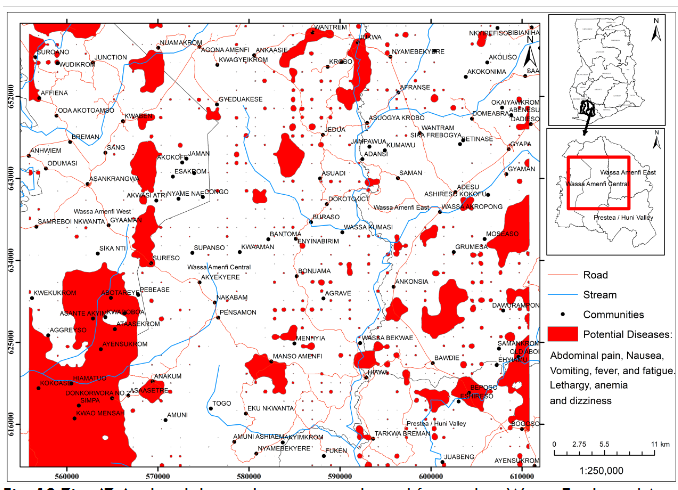
The study area is field sheet 0503B in Ghana and covers two districts: Wassa Amenfi West and East Districts situated in the Western Region (Fig. 1). The district capital of Amenfi East, Wassa Akropong, is located 135.1 km south-southwest of Kumasi via Obuasi-Dunkwa-on-Offin Road. Similarly, Asankragwa – the other district capital of Amenfi West is situated approximately 212 km southwest of Kumasi. Notably, all primary roads leading to these districts are navigable throughout the year.26
2.2 GEOLOGY
The areas are located on the Birimian Supergroup terrain consisting of metavolcanic and metasedimentary rock units, with some granitic intrusions present in certain areas (Fig. 2). The Birimian metavolcanic rocks consist of basalt-andesite-rhyodacite lavas with elevated Mg-Ca-Na contents, as well as volcaniclastics.27 Similarly, the metasedimentary rocks contain isoclinally folded dacitic volcaniclastics, wackes, and argillitic sediments along with granitoids. However, occurring at the transition between metavolcanic and metasedimentary rock zones are chemical facies.28 These chemical facies are defined by cherts, manganiferous and carbon-rich sediments, Fe-Ca-Mg carbonates, as well as sulphide mineral disseminations.
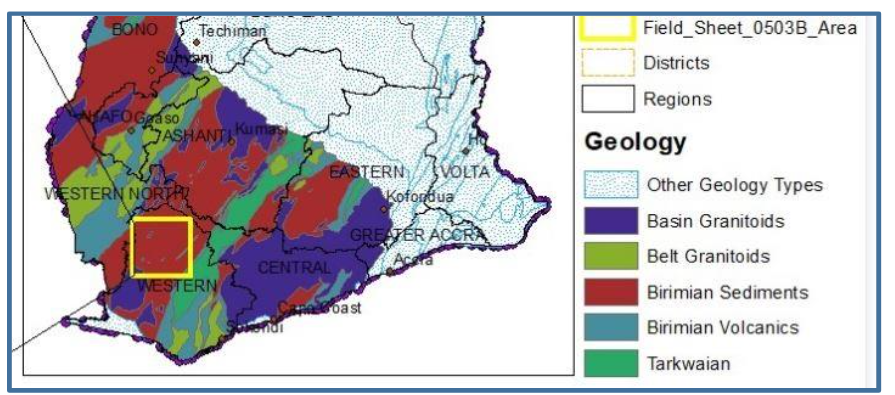
Archival reports show that gold mineralization has been discovered in association with hydrothermal veins that are rich in sulfide minerals within the transition zone, particularly in areas characterized as alteration zones.30 Furthermore, arsenopyrite, chalcopyrite, galena, pyrite, and sphalerite have been identified among the sulfide minerals that are disseminated throughout both the rocks themselves and their alteration zones.
2.3 PHYSIOGRAPHIC SETTINGS
The topography of the study area is characterized by undulating terrain, comprising low hills and isolated peaks interspersed with both narrow and wide valleys. The altitude of the low and high hills ranges between 190 m and 280 m above sea level. The area experiences a tropical climate marked by distinct wet and dry seasons; the latter occurs from late November to February, as well as briefly in August. Two peak rainfall periods are observed annually: March through July, and September to early November.32 Annual precipitation levels vary between 700 mm and 2,100 mm. Vegetation in this locale comprises rainforest-type forestland with several canopies of trees alongside undergrowth vegetation. However, indiscriminate deforestation activities, such as logging of upper-middle layer trees for commercial purposes coupled with farming practices, have resulted in primary forests being converted into secondary forests or shrublands.33 Entandrophragma cylindricum (Sapele) and Aningeria spp. (Asanfena) are the dominant species, occupying an area density of approximately twenty hectares per tree for Sapele while Asanfena occupies fifty hectares per tree respectively.33
2.4. OCCUPATION
The primary economic activities in the region comprise farming, artisanal small-scale and large-scale mining. The agricultural practice encompasses both subsistence and commercial crop farming, with the use of chemical agents such as fertilizers, pesticides, and herbicides being a common sight.34 Furthermore, there is an indiscriminate application of hazardous chemicals like mercury (Hg) and cyanide (CN) during gold extraction processes. Such uncontrolled usage of chemicals poses a significant risk to environmental health since these substances can easily contaminate drinking water sources and soil components through mobilization or remobilization into the ecosystem. Research findings indicate that almost all Ghanaians consume what they cultivate or rear for sustenance purposes while selling any surplus produce for trade to meet other essential needs.35 Some farms also keep small livestock and poultry for meat and egg production in addition to crop cultivation efforts. To address food security concerns adequately while generating income streams necessary for comfortable living standards, it is critical to identify disease-causing hotspots accurately within this context – a move that aligns with several UN sustainable development goals as well.36
3. Methodology
To mitigate emerging diseases as a result of imbalances of trace elements, this study examined trace elements, namely, arsenic (As), lead (Pb), copper (Cu), and zinc (Zn) in 2668 soil samples from Wassa, a mine and agricultural district in Ghana. The soil sampling survey was conducted on field sheet 0503B at a scale of 1/50,000. The predetermined sample points were demarcated on a base map that guided the geochemical survey. The areas where the studies were conducted are Agrave, Bogoso-Beposo-Juabeng, Ankaaase-Gyeduase and Gyapa areas (Fig 2). To navigate to these locations, the GARMIN ETREX GPS device was used. This apparatus was selected for its capacity to detect accuracy within a range of 5 to 10 meters, which was observed to occur in 95% of normal conditions. Soil samples were taken from nominal diameter holes of up to 30 cm in depth and the soil samples collected from the dugout holes were placed in plastic bags.
At each site, two (2) kg samples were collected from dug-out materials while composite samples weighing five (5) kg containing not less than three sub-samples were obtained where necessary. The sample collection size was contingent upon the characteristics of the regolith material. For residual regolith areas, 2 kg weights were deemed sufficient to procure ample amounts of finer materials (<125 µm) following sieving. Conversely, depositional regolith terrains necessitated a larger sample weight of 5kg due to their tendency to harbour pebbles and coarse particles which are typically disregarded. This sampling approach ensured that enough fine and representative samples were obtained for the geochemical analysis.
A total of 449 soil samples underwent a meticulous sample process that involved drying to remove the water content and sieving until a fraction of less than 106 µm was attained at an in-house preparation site. This was conducted to ensure uniformity in the distribution of grain size (<106 µm fraction) for consistent determination of concentration levels of trace elements. The in-house-prepared samples were dispatched for elemental chemical analysis by the Australian Laboratory Services (ALS) Geochemical Laboratory located in Kumasi. The elements analyzed in this study included As, Zn, Cu, and Pb utilizing the ICP-MS technique with great precision and attention to detail. The internally prepared soil samples underwent digestion processes using nitric acid (HNO3), hydrochloric acid (HCl), hydrofluoric acid (HF), and perchloric acid (HClO4) to break down the matrix whilst extracting the elements of interest. This was followed by ionization of the samples where the prepared samples were introduced into an inductively coupled plasma source. In the plasma, the elements were ionized, forming positively charged ions. This ionization process allows for the generation of ions suitable for mass spectrometric analysis. The ions produced were then separated based on their mass-to-charge ratio (m/z) using a mass spectrometer. This step enabled the identification of different elements present in the sample. The concentration levels of the contained elements were quantified by measuring the intensities of the ions at specific m/z values after which the measured concentrations were compared with known standards. The inductively coupled plasma (ICP) method employed ALS-Chemex sample analysis protocol ME-MS41 that uses both atomic emission spectrometry (ICP-AES) and mass spectrometry (ICP-MS) techniques. The combined methods used in this analytical protocol consist of near-total and partial extraction methods.
The ALS laboratory was selected for the study due to its pioneering ICP-MS technology, which enables super-trace analysis and significantly improves detection limits. This is especially true for As, Pb, Cu, and Zn elements where orders of magnitude below average crustal abundance can be achieved. Consequently, geochemical background levels are precisely measured with exceptional accuracy leading to improved anomaly definition.
The fieldwork spanned approximately half a year, with two of those months dedicated to sample preparation. Laboratory procedures and the subsequent receipt of analytical outcomes accounted for an additional four months. The Geochemical survey was executed by three teams, each composed of three individuals. Meanwhile, to guarantee precise analytical outcomes for all batches of samples forwarded to the ALS laboratory for testing, quality assurance (QA/QC) samples in the form of control or reference materials were inserted into each batch comprising about 150 geochemical samples. The reference materials SARM1, SARM2 and AMIS17 purchased from Geostat Pty were inserted after every forty-fifth analysis. Additionally, duplicate precision analyses were conducted following every twenty-fifth (25th) soil sample collected from the field samples, to affirm sample result precision. The precision was obtained by calculating the standard deviation of the duplicate-pairs dataset. The standard deviation measures the dispersion of values around the mean. The smaller standard deviation indicates higher precision and the bigger standard deviation implies lower precision.
This precision analysis is a statistical concept that assesses the consistency or reproducibility of a set of measurements from duplicate pairs.37 It reflects the level of agreement among duplicate-pair sample measurements and it does help to identify that the results obtained are consistent and repeatable. The decision to rely on and work with results received from the ALS laboratory depends on the repeatability and reproducibility, hence the importance of the precision analysis. Additionally, to provide defendable results and conclusion, recovery rates of As and Pb the known potentially harmful elements were assessed. The recovery rate was calculated by dividing the result of a measured concentration of analytes by a known concentration of the same analyte in a certified reference material (CRM). This is expressed typically as a percentage and is calculated using the following formula39:
Recovery Rate (%) = (Measured Concentration / CRM) × 100
Results
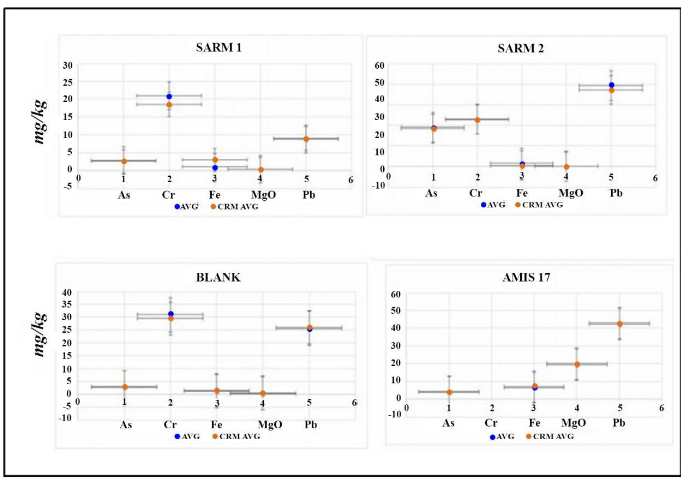
As a component of the Quality Assurance and Quality Control (QA/QC) analysis aimed at monitoring analytical accuracy and precision, three unique reference materials SARM1, SARM2, AMIS17, and a BLANK duplicate-paired field samples underwent QA/QC evaluation. The results of the analytical assessment conducted on these reference samples are shown in Figure 3, while Table 1 showcases recovery rates established by comparing concentration values of certified reference material (CRM) with its measured assay values.
| Elements | SARM 1 AVG CRM RR | SARM 2 AVG CRM RR | BLANK AVG CRM RR | AMIS 17 AVG CRM RR |
|---|---|---|---|---|
| As | 2.8 | 19.2 | 2.7 | 4.3 |
| Cr | 21 | 23 | 31 | |
| Fe | 1.36 | 6.54 | ||
| MgO | 0.4 | 0.07 | 0.51 | 19.51 |
| Pb | 8.8 | 39.3 | 25.7 | 42.3 |
The statistical data compiled for the four specified elements, namely, Arsenic (As), Lead (Pb), Copper (Cu), and Zinc (Zn), believed to have been leached from the sulphide minerals associated with gold deposits in the Birimian rock formations of Ghana, as a result of weathering processes, are depicted in Table 2.
| Elements | Maximum | Minimum | Mean | Standard Deviation |
|---|---|---|---|---|
| As | 246 | 2 | 17.194 | 15.544 |
| Pb | 148 | 5 | 7.344 | 4.941 |
| Cu | 87 | 4 | 12.59 | 8.203 |
| Zn | 200 | 6 | 28.121 | 13.580 |
Table 3 also illustrates the outcomes of the hypothesis concerning elements that may be predominant in a specific region and their potential impact on the local populace in terms of possible health ramifications.
| Hypothesis Testing Results for the Study Areas in Wassa Traditional Area | Mean | Standard Error | t Value | p Value | Difference |
|---|---|---|---|---|---|
| Arsenic | 25.28 | 1.56 | 5.62 | < 0.001 | 15.28 |
| Lead | 8.68 | 0.56 | 3.12 | 0.002 | 1.99 |
| Zinc | 27.99 | 1.78 | 4.56 | 0.001 | 7.99 |
| Copper | 14.16 | 0.45 | -3.12 | 0.001 | -138.842 |
Further, the Potential Contamination Index (CP) to assess the degree of contamination obtained for an element at a given place is thus obtained by:
CP = (Metal) sample maximum / (Metal) Background or Baseline
Lower CP values imply low contamination and vice versa.40 CP values for the four elements As, Pb, Cu and Zn are shown in Table 4.
| Pollution Status Measurement at the Study Area | PLI | Igeo |
|---|---|---|
| As | 1.01 | 2.5 |
| Pb | 1.02 | 2.3 |
| Cu | 1.03 | 2.1 |
| Zn | 1.04 | 2.0 |
Medical Geochemists along with numerous healthcare professionals have established a positive correlation between trace elements such as arsenic (As), copper (Cu), cadmium (Cd), lead (Pb), mercury (Hg) and non-communicable diseases such as hypertension, diabetes mellitus, cancerous growths within the body system as well as neurological.9,42–46 These elements are frequently found in various environmental sources like food products, water supplies and in superficial soils; thus accumulating over time inside the human body. To mitigate health hazards associated with exposure to trace elements it is crucial to implement preventive measures aimed at reducing exposure to these toxic substances while enhancing management of environmental monitoring systems. Table 5 is the interpretation of the geo-accumulation index and Tables 6-9 have been presented in accordance to predict regions where non-communicable diseases may be more prevalent due to elevated levels of As, Pb, Cu and Zn compared to their globally accepted concentration averages in soils.
| Igeo Value | Class | Pollution Class |
|---|---|---|
| Igeo < 0 | 0 | Practically uncontaminated |
| 0 < Igeo < 1 | 1 | Uncontaminated to moderately uncontaminated |
| 1 < Igeo < 2 | 2 | Moderately contaminated |
| 2 < Igeo < 3 | 3 | Moderately to heavily contaminated |
| 3 < Igeo < 4 | 4 | Heavily contaminated |
| 4 < Igeo < 5 | 5 | Heavily to extremely contaminated |
| 5 < Igeo < 6 | 6 | Extremely contaminated |
Table 6 Agrave Areas Percentage of Measured Element
| Elements | No. of Samples | Max (ppm) | Background Value | Percentage Above Background |
|---|---|---|---|---|
| As | 32 | 246.00 | 10.00 | 84.38 |
| Pb | 32 | 148.00 | 6.69 | 78.00 |
| Cu | 32 | 87.00 | 70.00 | 24.00 |
| Zn | 32 | 200.00 | 20.00 | 76.00 |
Table 7 Ankaase-Gyeduase Areas Percentage of Measured Elements
| Elements | No. of Samples | Max (ppm) | Background Value | Percentage Above Background |
|---|---|---|---|---|
| As | 32 | 246.00 | 10.00 | 82.69 |
| Pb | 32 | 148.00 | 6.69 | 48.56 |
| Cu | 32 | 87.00 | 70.00 | 22.00 |
| Zn | 32 | 200.00 | 20.00 | 76.00 |
Table 8 Bogoso-Beposo-Juabeng Percentage of Measured Element
| Elements | No. of Samples | Max (ppm) | Background Value | Percentage Above Background |
|---|---|---|---|---|
| As | 32 | 246.00 | 10.00 | 95.61 |
| Pb | 32 | 148.00 | 6.69 | 55.26 |
| Cu | 32 | 87.00 | 70.00 | 24.00 |
| Zn | 32 | 200.00 | 20.00 | 76.00 |
Table 9 Gyapa area Percentage of Measured Elements
| Elements | No. of Samples | Max (ppm) | Background Value | Percentage Above Background |
|---|---|---|---|---|
| As | 32 | 246.00 | 10.00 | 84.38 |
| Pb | 32 | 148.00 | 6.69 | 37.50 |
| Cu | 32 | 87.00 | 70.00 | 22.00 |
| Zn | 32 | 200.00 | 20.00 | 76.00 |
Also, the Potential Contamination Index (CP) is calculated as:
CP = (Metal) sample maximum / (Metal) background/baseline
Where lower CP values imply low contamination and vice versa40 is shown in Table 9.
The potential contamination of Arsenic (As), Lead (Pb), Copper (Cu), and Zinc (Zn) is also presented in Table 10, showcasing the presence of pollutants in various research sites. This tabulation offers a succinct overview of the concentrations of elements that exceed permissible levels in soil specimens.
| Potential Contamination Index of Elements Measured | As | Pb | Cu | Zn |
|---|---|---|---|---|
| Sample 1 | 150 | 80 | 10 | 30 |
| Sample 2 | 200 | 90 | 15 | 40 |
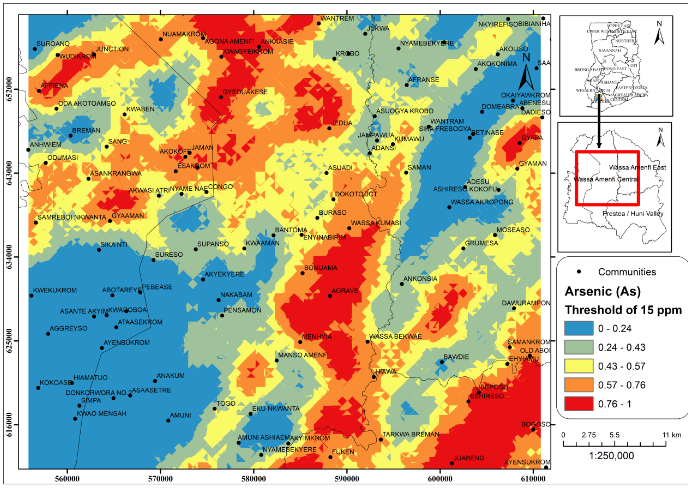
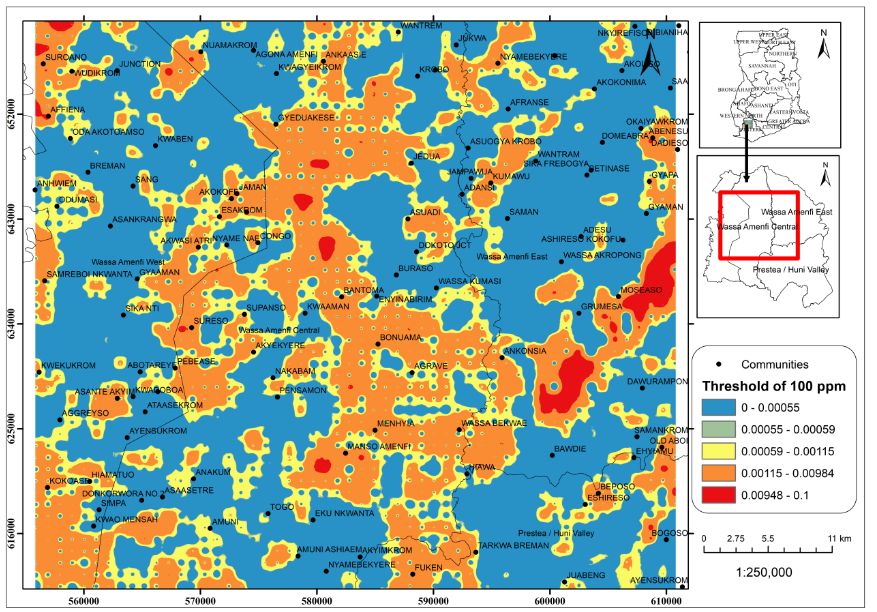
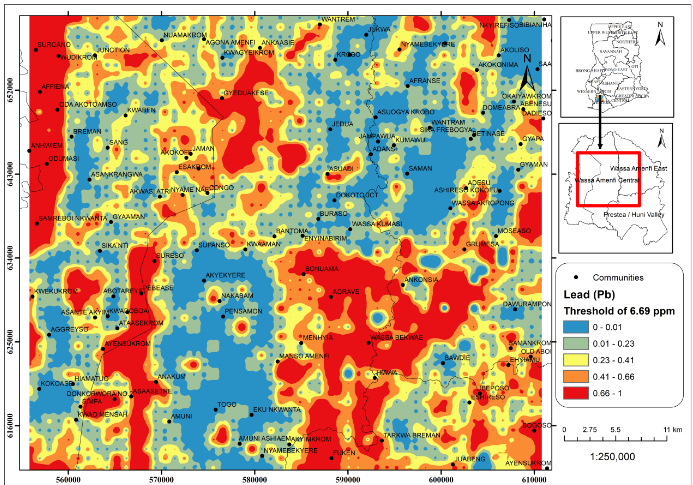
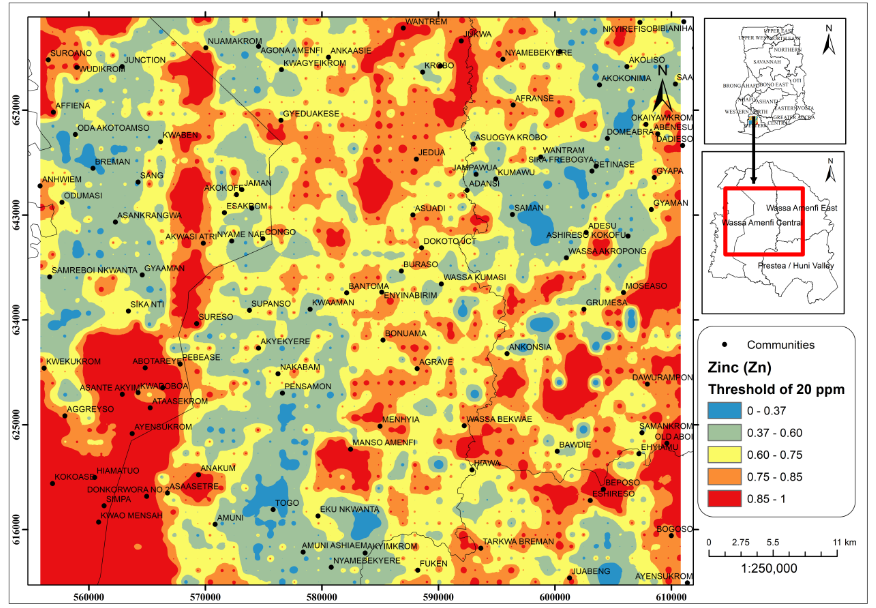
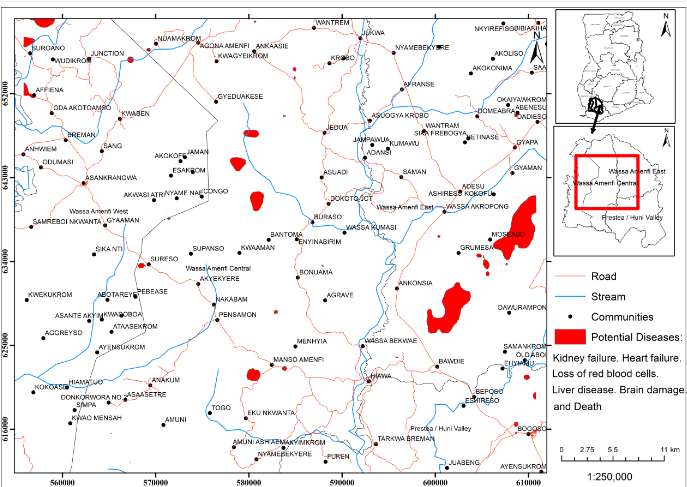
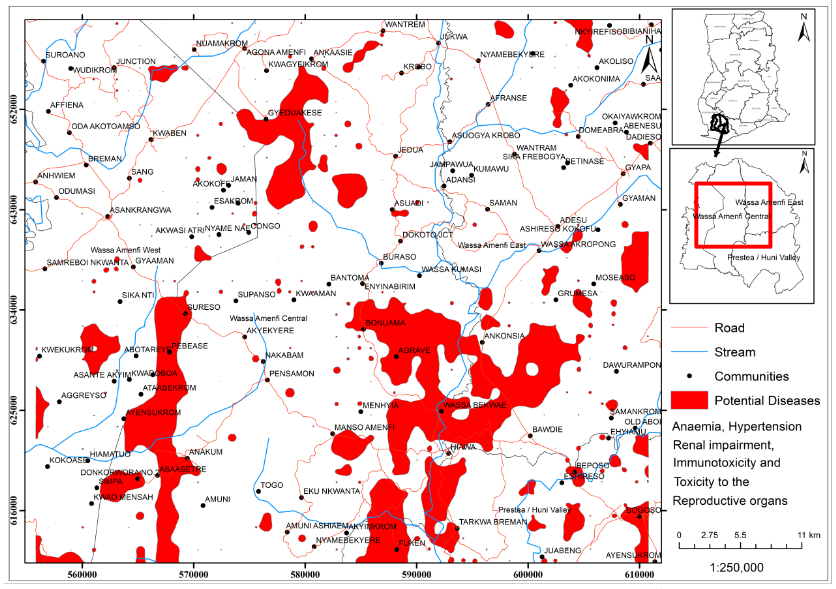
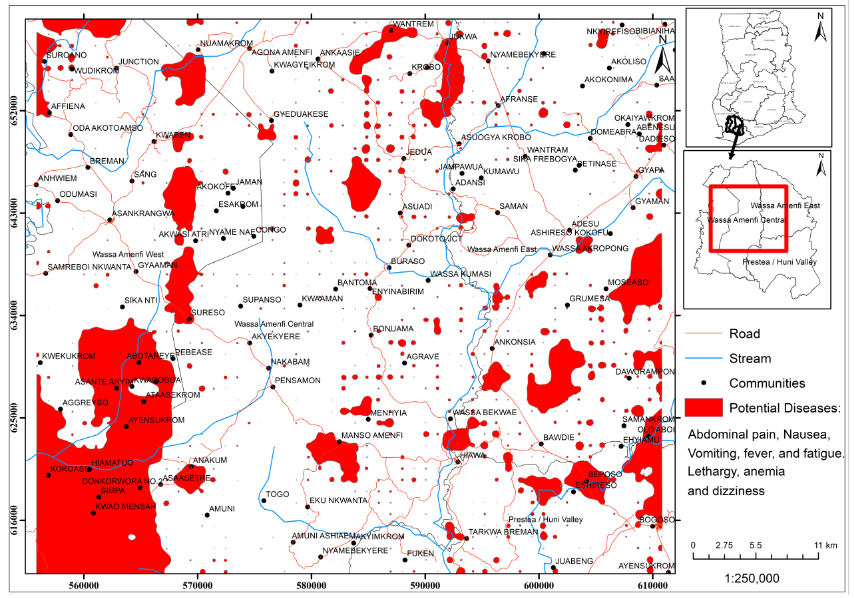
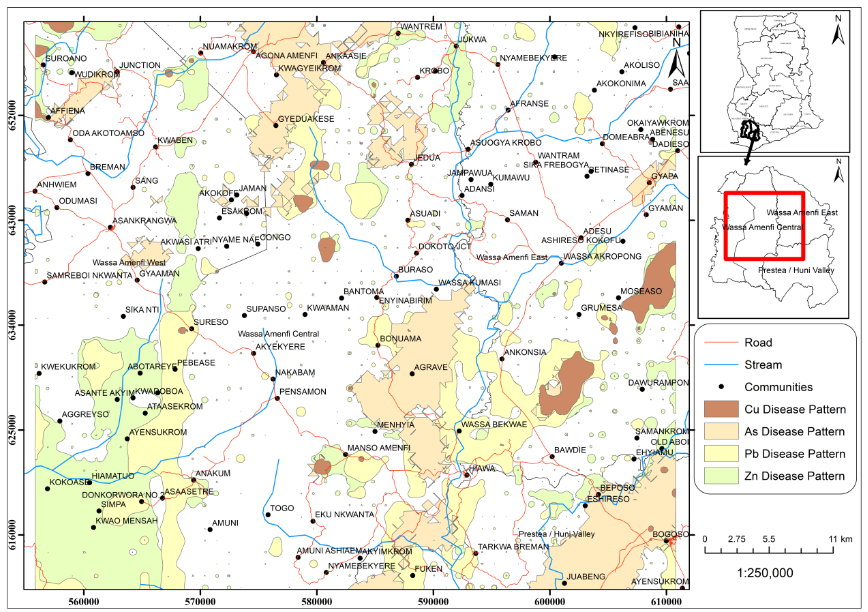
Also, Figures 5-12 illustrate the spatial distributions and concentrations of the aforementioned elements, along with their corresponding potential disease maps. Additionally, Figure 13 displays a disease pattern map for these four elements released from sulfide minerals (namely arsenopyrite, chalcopyrite, galena, and sphalerite) that are believed to be correlated with gold deposits within Ghana’s Birimian System. These maps were generated utilizing Probability Kriging, a methodology that combines traditional kriging – a spatial interpolation technique – with a probabilistic framework.47 The probability kriging equation can be expressed as follows:
P((s) ≤ z|Z) = Φ(z−Ẑ(𝒔))/σ(𝒔)
Here, Z(s) represents the spatial random variable at location s and Z is the vector of observed values. Moreover, Ẑ(s) denotes the kriging estimate of z at location s while σ(s) corresponds to its respective kriging standard deviation. Additionally, Φ serves as the cumulative distribution function of the standard normal distribution.
The expression P((s) ≤ z|Z), on the other hand, indicates the probability that the true value at location s is less than or equal to z given observed values, whereas Ẑ(s), again, refers to the kriging estimate of the spatial variable at said location and σ(s), still pertains to its associated kriging standard deviation.
The generated maps for the four soil elements display each pixel’s likelihood of exceeding or falling below a predetermined threshold at a given location. These thresholds, which include accepted baseline values for As, Pb, Cu, and Zn in soil development, are utilized to produce Probability Kriging maps. According to, 48 these maps indicate the probability of contaminant concentrations surpassing selected thresholds such as As, Pb, Cu, and Zn. Regions with higher probabilities represent communities that contain harmful elements causing diseases. In a GIS environment, hotspots and cold-spots maps utilize specific thresholds to determine predictions that receive either 0 or 1 classification status.

4. Discussions
THE SOILS, CONTAINED ELEMENTS AND HUMAN HEALTH
Soils containing elevated levels of toxic elements such as arsenic (As), lead (Pb), copper (Cu), and zinc (Zn) can lead to various environmental health complications. The authors suggest that plants grown in the soil within the specified study areas outlined in Tables 2 – 9 possess the ability to absorb these hazardous elements, thereby producing food crops that may contain high concentrations of As, Pb, Cu, and Zn. When consumed by individuals or animals residing in the region, these elements have the potential to accumulate in the body and trigger health problems.
Additionally, dust and particles from contaminated soils in the area can become airborne, especially during farming, mining and/or construction activities, contributing to air pollution. Inhaling these particles can lead to respiratory issues and other health concerns. Rainwater can wash off these toxic elements from the soil into nearby water bodies, contaminating streams, rivers, and groundwater. This pollution can affect aquatic ecosystems and also pose risks to human health through drinking the contaminated water. In addition to the aforementioned, exposure to elevated levels of Arsenic (As), Lead (Pb), Copper (Cu), and Zinc (Zn) can lead to a variety of health issues such as neurological ailments, renal impairment, respiratory complications, dermatological conditions, developmental challenges in juveniles, and even a heightened susceptibility to certain malignancies.49
Another hidden danger that has been underestimated is the presence of these toxic elements, which can gradually deteriorate the soil quality, affecting its fertility and capacity to support plant growth. This deterioration can result in decreased agricultural efficiency and worsen food insecurity. Most significantly, there is the issue of ecological imbalance. The existence of elevated levels of these elements in the soil has the potential to disturb the natural equilibrium of ecosystems, impacting both plant and animal life in the region. This disruption can lead to a loss of biodiversity and enduring harm to the environment.
4.1 ANALYSIS OF QUALITY ASSURANCE
The reference samples demonstrated excellent reproducibility for all elements, except Fe and Cr analyzed from the reference material labeled SARM1 (Fig. 3). The percent precision measured for the field duplicates was deemed acceptable (Fig. 3) as there were no significant variations between paired samples. Major elements recorded in the samples showed minimal average variation ranging from 1.5% to 9.3% between duplicate sample pairs, with Na and Mg being exceptions at 18.8% and 35.2%, respectively. Variations in lead (Pb) and cobalt (Co) concentrations in duplicate pairs were attributed to their proximity to the detection limits of the instrument used for measurement purposes. Certified reference materials indicated small errors that raised confidence levels regarding analytical quality data; thus, increasing the trustworthiness of results obtained from laboratory tests. Quality assurance analysis also considered recovery rates of selected elements such as Cr, As, and Pb in reference materials SARM1, SARM2, and AMIS17 respectively, expressed as a percentage against CRM certificate values. The recovered As in analyzing the CRM samples was 107%, while Cr stood at an impressive rate of 112%. Pb had a rate of about 90 %, which was not too bad. Measured CRM using reference material SARM2 saw recoveries for both As & Pb above 100% each; meanwhile, AMIS17’s readings produced only 98% for Pb. However, recovery rates in Table 1 proved satisfactory across these three different sets of reference materials, yielding somewhere within 85. – 120 percentile range.
4.2 THE ANALYTICAL DATA ASSESSMENTS
The distinctiveness of As, Pb, Cu, and Zn in this study lies in their oxidation from sulfide minerals that exhibit geochemical fractionation characteristics, leading to either depletion or accumulation of elements to toxic levels due to natural rainfall and other environmental activities. Table 2 reveals the minimum concentrations of potentially harmful elements such as As and Pb at 2 ppm and 5 ppm respectively, while their maximum concentration levels were found to be 216 ppm and 148 ppm correspondingly. Likewise, Cu and Zn are essential nutritional elements for humans but also display varying concentrations (Table 2). Although these elements are generally present in soils at low concentrations, they can become elevated or depleted due to both natural processes and human activities. The minimum (ranging from 2 -6 ppm), as well as the maximum (ranging from 87-246 ppm) displayed in Table 2, illustrate the impact of both natural processes and human activities on element concentrations. This further suggests that some areas or communities may experience hot spots or cold spots of disease-causing elements where there is an excess of harmful components compared with baseline values found within soils.
Although Cu and Zn are essential nutrients, too much exposure could prove fatal. Ingesting food or drinking water contaminated with high levels of copper can result in its build-up within internal organs such as the brain, liver, and lungs, which eventually would lead to kidney failure, heart failure, loss or reduction of red blood cells, liver disease, brain damage, etc. Similarly, excessive exposure to zinc could lead to abdominal pains, nausea, vomiting, fever, and fatigue, among other symptoms. Additional effects comprise fatigue, anaemia, and vertigo or dizziness. Furthermore, based on Table 2, the computed arithmetic means for the four chosen elements are 17.19 ppm, 7.34 ppm, 12.59 ppm, and 28.12 ppm, respectively. By comparing these values to globally accepted baseline concentration levels as explained by deductions, could be made that the baseline concentration levels represent natural heavy metal content present in samples without human or urban influences under idealized conditions around a mean value within an expected range of approximately 95%. The explanation provided by definition indicates that both anthropogenic and natural processes have an impact on element concentrations.50 As illustrated in Table 2, average concentrations of As, Pb, and Zn exceed their respective baseline values, while Cu’s average is lower than its corresponding baseline value.
The selected elements, like all trace elements in soils, exhibit varying concentration levels as demonstrated by Table 2. The concentrations of the elements that oxidize from sulfide minerals may be influenced by the type of parent material and soil characteristics after weathering, such as pH, cation exchange capacity (CEC), particle size distribution, organic matter content, and oxide content. These properties contribute to the accumulation or dispersion of trace elements throughout the environment. When parent materials contain high concentrations of trace elements, soils developed on them are likely to have elevated levels of these substances. Consequently, some landscapes may harbour hotspots or cold spots for disease-causing agents depending on whether element concentrations are high or low in specific locations within those areas. For instance, As, Pb, Cu, and Zn have minimum and maximum analytical values shown in summary statistics (Table 2). While minimum measured values for these trace elements appear lower than globally acceptable values in soils, maximum measured values far exceed such standards. Comparing minima with maxima allows us to plot average element concentrations across different soil samples against global averages used as thresholds to grid data defining hotspots and cold spots associated with disease-causing sites outlined herein.
Identifying hotspots and cold spots is significant not only for environmental purposes but also because it reveals potential diseases that may emerge from certain areas characterized by either high or low-exposure terrains with both essential and potentially harmful elements. These observations can help inform policy development aimed at mitigating health-related issues arising from trace element exposures.
The hypothesis testing analysis (Table 3) conducted on the samples from the Agrave area reveals that the arsenic concentration of 25.28 ppm significantly exceeds the safety threshold of 10 ppm. A minute p-value (< 0.001) rejects the null hypothesis that the mean is ≤ 10 ppm. The elevated arsenic levels of 25.28 ppm pose a substantial risk to the population residing in the area. Similarly, the lead (Pb) concentration of 8.68 ppm surpasses the 6.69 ppm limit. The resulting p-value supports the rejection of the null hypothesis, highlighting the concerning Pb levels. Additionally, the zinc concentration of 27.99 ppm exceeds the 20 ppm threshold. The p-value indicates that zinc levels surpass safety limits, prompting concerns about its potential health implications.
On the contrary, the concentration of Copper at 14.16 parts per million (ppm) falls significantly below the threshold of 153 ppm. The substantial mean difference of -138.842 ppm unequivocally indicates that the sample mean is notably lower than the prescribed threshold. The 95% confidence interval for the mean difference is negative, thereby reinforcing the conclusion that the sample mean is below the threshold. Exposure to Copper in soils in the Agrave region is unlikely to result in adverse health effects on the local population. While Copper levels are considered safe, the concentrations of Arsenic, Lead, and Zinc exceed their respective thresholds, posing potential risks.
At Ankaase Gyeduase, the findings reveal that the levels of arsenic, lead, and zinc surpass the prescribed safety thresholds, whereas the concentrations of copper notably fall short. This observation implies that the region is facing a contamination threat associated with arsenic, lead, and zinc, alongside a copper deficiency. It is important to note that copper deficiency is linked to specific ailments that warrant attention.
For Beposo Juabeng, the findings reveal that concentrations of arsenic, lead, and zinc exceed the established safe thresholds significantly (Table 3). In contrast, the level of copper falls notably below the accepted safety limit, indicating a copper deficiency. These discoveries underscore potential contamination hazards associated with arsenic, lead, and zinc, while also highlighting a substantial insufficiency in copper.
On the other hand, the hypothesis testing analysis carried out in the Gyapa region indicates that the levels of arsenic surpass the established safety threshold, although this increase does not demonstrate statistical significance (p = 0.064 is not considerably low). Moreover, the levels of copper are markedly deficient, potentially impeding human development as copper can have dual effects. Lead levels slightly exceed the safe limit, yet the difference is not statistically significant. In contrast, zinc levels significantly surpass the permissible threshold. These findings suggest possible hazards arising from zinc contamination. Although arsenic levels may be elevated, the evidence supporting this assertion is not robust enough to confirm it.
As depicted in Figures 5 and 9, there exist areas with elevated and depleted concentrations of arsenic (As). These areas may be referred to as hotspots and cold spots, respectively. The overlap between these areas and some communities that host hundreds of people renders the inhabitants vulnerable to toxic arsenic exposure. As documented in the literature, such exposure to potentially harmful element arsenic could result in various ailments including hypertension, skin, lung, liver and kidney disorders. Gyapa, Agrave, Juabeng, Bogoso, Gyeduakese, Ankaasie Eshireso, and Beposo are among the susceptible communities identified in Figure 8. Identifying sources of As-related diseases would be challenging unless environmental geochemistry is assessed alongside disease linkages evaluation. Nevertheless, individuals residing within hotspot areas consuming food produced within those regions or drinking untreated water sourced from them will inevitably experience the listed illnesses. Prevalence rates will depend on the degree and duration of exposure. In this case, children diagnosed with hypertension would be attributed to their exposure to trace elements rather than linking it to lifestyle factors alone. In times past, cumulative pollution resulting from natural phenomena as well as human activities became prevalent in our environment; age was a primary factor associated with arsenic-related diseases, but today this narrative has changed since people across all ages can fall victim to such maladies.
Similarly, as illustrated by Figures 6 and 10; copper (Cu) hotspots and cold spots which characterize Affaina, Moseaso, and Abenesu localities have the propensity to render residents in these areas prone to Cu-related health issues. Some of the diseases are heart failure, kidney malfunction, brain damage, liver disorders, and loss of red blood cells. This, therefore, implies that not all renal patients living in these areas have their condition linked solely to lifestyle choices since some may have unknowingly ingested toxic amounts of both As and Cu either through food or drinking water intake. Moreover, Figs. 7 and 11 highlight Pb concentration anomalies along with corresponding diseases covering about forty percent (40%) of the study area landmasses.
Of great concern is the potential impact of Pb exposure on human health, as evidenced by a review of relevant literature which highlights nervous system dysfunction and anaemia among children, while adults are more susceptible to cardiovascular dysfunction and neurological decline. Additionally, Pb exposure may contribute to high blood pressure, brain damage, kidney impairment, and reproductive health issues in adults. Symptoms associated with Pb poisoning include headaches, stomach cramps, constipation, joint pain, and trouble sleeping; individuals may also experience fatigue, irritability, or suffer from loss of sex drive. Unfortunately, many affected individuals do not seek medical attention due to their lack of apparent illness. As a result, they often fail to recognize Pb-related ailments, including hypertension or anaemia, until it is too late for effective treatment. Identifying regions where such diseases are prevalent would be critical in developing appropriate therapeutic strategies aimed at preventing their further spread throughout those populations.
In particular, Figs 8 and 12 illustrate that southwestern communities exhibit toxic concentrations of Zn, leading one to conclude that inhabitants within these areas may experience various Zn-related diseases such as abdominal pains or nausea, along with vomiting, fever, lethargy, anaemia, dizziness, etc. It should be noted, however, that even low levels of zinc deficiency could increase the risk factors associated with diabetes mellitus or obesity among certain populations.
The disease patterns related to various elements, as illustrated in Figure 13, exhibit how different communities preserve distinct disease patterns. For instance, Cu-related diseases dominate the eastern side of the study area and trend northeast-southwest, while Zn-related diseases mainly occur in the Southeast. The Zn-Pb-related diseases are predominant in the Southwest portion, while As-Pb tends to be in the middle third of the study area. The southeastern tip is characterized by As-related diseases, which are associated with As-toxic exposure. In contrast, isolated disease patterns for As, Zn, and Pb prevail in the northern portions of the study area, whereas a small Cu-related disease pattern is evident at its northwestern extremity.
Countries worldwide strive to ensure healthy lives and promote well-being for all ages. Ghana has set a goal to reduce premature mortality from non-communicable diseases (NCDs) by one-third through prevention and treatment before 2030. From Figure 13, it is apparent that there are numerous NCDs whose sources can be traced back to four elements having an association with gold in the Birimian Systems of Ghana. This could explain why emerging cases of hypertension, diabetes, and many renal diseases have become prevalent in Ghana among people across all age brackets rather than just affecting affluent older individuals.
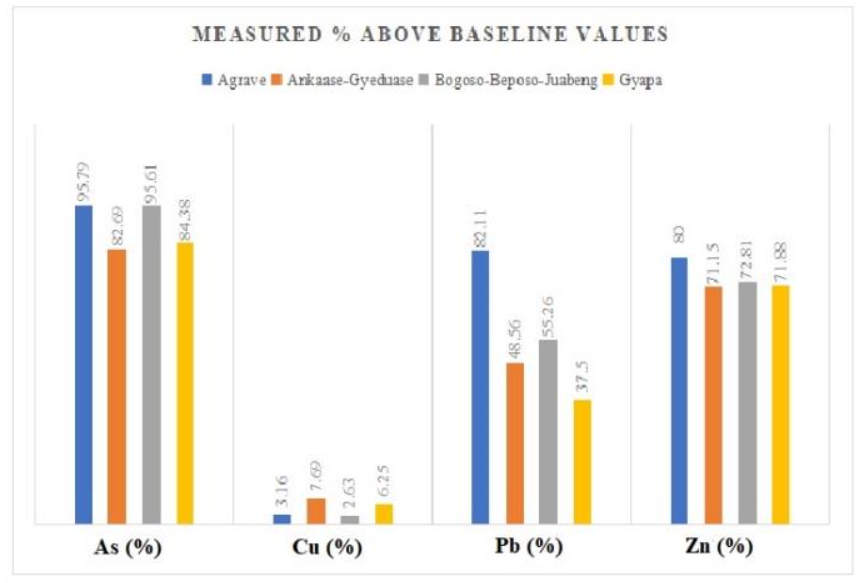
It seems scientifically incorrect to attribute causes behind children under ten years old being diagnosed with hypertension or diabetes or developing renal impairment simply due to attitudinal reasons; instead, exposure beyond or below what their bodies require concerning trace elements may be responsible for such conditions, as Paracelsus had emphasized regarding dosing distinctions between toxicity and treatment. As asserted by, 46 arsenic contributes to non-communicable diseases like diabetes mellitus and cardiovascular diseases is worth noting since they found evidence of arsenic-induced diabetes as well as hypertension resulting from oxidative stress, altered vascular response to neurotransmitters, impaired vascular muscle calcium signalling, renal damage and interference with renin-angiotensin system (RAS). Fig.5 shows that between 84.35%-95.79% of all samples collected were found to be above the accepted background levels for these four elements investigated; thus revealing hidden peril to population health in study areas. Medical practitioners’ reports about increasing spate cases of renal disease in Ghana’s mine districts seem true because rural populations depend on groundwater as their drinking source; unfortunately mining activities have led to As seeping into groundwater from underlying rocks thereby posing a serious risk to human health due to limited knowledge on As in water and food particularly at this part of the world.
Prolonged exposure to excessive amounts of inorganic As in drinking water may culminate in potentially fatal diseases such as skin/internal cancers; diabetes; and hypertension which require collaboration between geoscientists and medical practitioners who must work together towards devising an appropriate therapeutic strategy capable of addressing emerging diseases associated with harmful elements discovered during research studies conducted over time. 29confirms occurrences of As in groundwater in rural Ghana citing examples at Obuasi and Bolgatanga both areas being underlain by Birimian rocks containing sulphide minerals. From Fig. 5, As is highest at Agrave area followed by Bogoso-Beposo-Juabeng >Gyapa>Ankaase. This means that the likelihood that inorganic As would be in the groundwater and would be taken up by the population as drinking water through boreholes is undisputed. 29 report found an increase in inorganic As in groundwater to occur at depths between 40 m to 70 m below ground level in Obuasi and 20–40 m in Bolgatanga. The average depth of a borehole is between 60 m and 80 m but this can be less as well as significantly more. The wells which meet the needs of many rural dwellers may be shallower. Although an investigation into the concentration of enriched As in boreholes within the study area has yet to be conducted, it is unlikely that the findings would differ significantly from those in Obuasi due to similar climatic and geological conditions as well as comparable anthropogenic influences.
The concentration of Pb, a potentially harmful element, is notably high in several areas according to Fig. 5: Agrave (82.11%), Bogoso-Beposo-Juabeng (55.26%), Ankaase-Gyeduase (48.56%), and Gyapa (37.5%). These percentages exceed the accepted baseline value and pose long-term risks for adults such as increased risk of high blood pressure, cardiovascular problems, and kidney damage. Exposure to high levels of Pb during pregnancy can cause miscarriage, stillbirth, premature birth, and low birth weight. Children are also vulnerable to adverse health effects from toxic Pb exposure through inhalation or ingestion which may lead to brain and nervous system damage, hindering growth and development, learning difficulties or behavioural problems as well as hearing or speech impairments.
One issue with toxic levels of As and Pb in these regions is that they can bioaccumulate in the bodies of exposed individuals.43 This accumulation disrupts various bodily systems including neurological function, skeletal structure, reproductive health, hematopoietic function, renal performance, and cardiovascular activity, among others leading to significant negative impacts on overall health status. The rising prevalence of renal diseases reported by medical professionals in Western and Central Regions of Ghana may be linked to unknown exposure to these toxic elements within mining districts as shown in Figs. 5-13.
Therefore, Figs 5-13 suggest outlining hot spots and cold spots of disease-causing elements must define preventive measures better since consuming homegrown produce and unprocessed water remains a common practice, especially among developing nations where NCDs cause maximum fatalities like Ghana. If the intentions of the developing countries, of which Ghana is one, aim towards attaining SDG 3 and seek to promote healthy living and well-being across all ages, then there is a need to situate a proper attention and action implementation plan accordingly without delay.
5. Conclusion
The study conducted in the Wassa Traditional Area revealed that the areas experienced moderate to severe pollution in all elements assessed. The study revealed that the levels of elemental contaminants such as Arsenic (As), Lead (Pb), Copper (Cu), and Zinc (Zn) exhibited variations based on both natural and human-influenced settings. Analysis of soil samples taken from the Agrave region indicated that 91% of Arsenic levels surpassed the established baseline, followed by Lead and Zinc at 78% and 76% respectively.
Cu was found to be low with an enrichment factor expressed as a percentage of 3.16%. Conversely, trends observed at Ankaase-Gyeduase, Bogoso-Beposo-Juabeng, and Gyapa were similar to Zn replacing Cu in the Agrave area (i.e., As>Zn>Pb>Cu). It is also worth noting that the concentration levels of As consistently surpassed those of other elements across all four study areas, exceeding the accepted baseline value (10 ppm As) by percentages such as Agrave area (95.79%), Bogoso-Beposo-Juabeng (95.61%), Gyapa (84.38%), and Ankaase-Gyeduase area (82.69%). Deductions from these values are that high enrichment factors suggest high exposure to both organic As in food and inorganic As in drinking water. Ingestion As into human bodies through consuming locally produced and drinking boreholes and wells from moderate to heavily polluted areas could lead to non-communicable diseases such as diabetes mellitus or cardiovascular disease thereby contributing significantly to their prevalence rates.
Similarly, toxic exposure to Pb could cause illnesses similar to those caused by arsenic; if its enrichment factor is relatively high like that of As and it is. The implication is that Pb-related diseases could also occur frequently among residents. The lifestyle behaviours noted by the medical practitioners would likely aggravate NCDs, and knowledge about the sources responsible for this emerging health challenge are fundamental first steps towards preventing their emergence since they are considered the leading cause of death in Ghana. In conclusion, considering that prevention is better than cure; forming partnerships between Geoscientists and medical professionals who could help outline geospatial locations associated with disease-causing-elements while medical professionals could prescribe therapeutic techniques to limit the spread of NCDs.
References
- Emmanuel J, Dzigbodi. Environmental and Health Impacts of Mining in Ghana. Vol 8.; 2018.
- Arhin E, Kazapoe RW. Influence of trace elements in the natural environment and public Health: A Medical Geology perspective. Published online 2021.
- Arhin E, Zhang C, Kazapoe R. Medical geological study of disease-causing elements in Wassa area of Southwest Ghana. Environ Geochem Health. 2019;41(6):2859-2874.
- Finkelman RB, Centeno JA, Selinus O. THE EMERGING MEDICAL AND GEOLOGICAL ASSOCIATION. Vol 116.; 2005. www.medicalgeology.org
- Arhin E, Zango MS. Impact of Trace Elements in the Natural Environment and Public Health: A Medical Geology Perspective. Vol 3.; 2016.
- Jaishankar M, Tseten T, Anbalagan N, Mathew BB, Beeregowda KN. Toxicity, mechanism and health effects of some heavy metals. Interdiscip Toxicol. 2014;7(2):60-72. doi:10.2478/intox-2014-0009
- Bini C, Wahsha M. Potentially harmful elements and human health. In: PHEs, Environment and Human Health: Potentially Harmful Elements in the Environment and the Impact on Human Health. Springer Netherlands; 2014:401-463. doi:10.1007/978-94-017-8965-3_11
- Gomes C de SF, Silva JBP. Minerals and clay minerals in medical geology. Appl Clay Sci. 2007;36(1-3):4-21. doi:10.1016/j.clay.2006.08.006
- Shankar S, Shanker U, Shikha. Arsenic contamination of groundwater: A review of sources, prevalence, health risks, and strategies for mitigation. Scientific World Journal. 2014;2014. doi:10.1155/2014/304524
- Addo J, Agyemang C, Smeeth L, et al. ORIGINAL ARTICLES A REVIEW OF POPULATION-BASED STUDIES ON HYPERTENSION IN GHANA.; 2012.
- Kyere-Boateng R, Marek M V. Analysis of the social-ecological causes of deforestation and forest degradation in ghana: Application of the dpsir framework. Forests. 2021;12(4). doi:10.3390/f12040409
- Chu EW, Karr JR. Environmental Impact: Concept, Consequences, Measurement ☆. In: Reference Module in Life Sciences. Elsevier; 2017. doi:10.1016/b978-0-12-809633-8.02380-3
- Tsuchiya J, Thompson EC. The role of hydrogen bonds in hydrous minerals stable at lower mantle pressure conditions. Prog Earth Planet Sci. 2022;9(1). doi:10.1186/s40645-022-00521-3
- Bowen NL. JOURNAL OF GEOLOGY THE BEHAVIOR OF INCLUSIONS IN IGNEOUS MAGMAS.
- Cook J, Nuccitelli D, Green SA, et al. Quantifying the consensus on anthropogenic global warming in the scientific literature. Environmental Research Letters. 2013;8(2). doi:10.1088/1748-9326/8/2/024024
- Selinus O. Medical Geology: Impacts of the natural environment on public health. Published online 2016.
- Smith AJB, Henry G, Frost-Killian S. A review of the birimian supergroup-and tarkwaian group-hosted gold deposits of Ghana. Episodes. 2016;39(2):177-197. doi:10.18814/epiiugs/2016/v39i2/95775
- Angulo-Bejarano PI, Puente-Rivera J, Cruz-Ortega R, Hanus-Fajerska E. plants Metal and Metalloid Toxicity in Plants: An Overview on Molecular Aspects Metal and Metalloid Toxicity in. Plants: An Overview on Molecular Aspects Plants. 2021;10:635. doi:10.3390/plants
- Emmanuel AY, Jerry CS, Dzigbodi DA. Review of environmental and health impacts of mining in Ghana. J Health Pollut. 2018;8(17):43-52.
- Joy news. Dialysis Crisis. (2023). Illegal miners should be wary of kidney diseases -GKA warns.
- Jackson St. Climate Change. In: Encyclopedia Britannica. ; 2023.
- Hilson G. The environmental impact of small-scale gold mining in Ghana: Identifying problems and possible solutions. Geographical Journal. 2002;168(1):57-72. doi:10.1111/1475-4959.00038
- Rother HA. Controlling and preventing climate-sensitive noncommunicable diseases in urban sub-Saharan Africa. Science of the Total Environment. 2020;722. doi:10.1016/j.scitotenv.2020.137772
- Rajaee M, Obiri S, Green A, et al. Integrated Assessment of Artisanal and Small-Scale Gold Mining In Ghana—Part 2: Natural Sciences Review. Int J Environ Res Public Health. 2015;12(8):8971-9011. doi:10.3390/ijerph120808971
- Addo J, Agyemang C, Smeeth L, et al