


One Health Approach: Soil’s Impact on Human Health
Opportunities and Challenges of the “One Health” Approach
Rattan Lal1
- CFAES Rattan Lal Center for Carbon Management and Sequestration, The Ohio State University, Columbus, OH 43210
OPEN ACCESS
PUBLISHED: 31 December 2024
CITATION: Lal, R., 2024. Opportunities and Challenges of the “One Health” Approach. Medical Research Archives, [online] 12(12). https://doi.org/10.18103/mra.v12i12.6004
COPYRIGHT: © 2024 European Society of Medicine. This is an open-access article distributed under the terms of the Creative Commons Attribution License, which permits unrestricted use, distribution, and reproduction in any medium, provided the original author and source are credited.
DOI https://doi.org/10.18103/mra.v12i12.6004
ISSN 2375-1924
ABSTRACT
Human health and wellbeing is greatly jeopardized by the twin global problems of undernutrition and malnutrition. These issues have plagued humanity since time immemorial because the underlying determinant of the problem has not been systematically addressed. Several ancient cultures emphasized the importance of good diet to human health, and also realized that nutritious diet comes from food (plants and animals) raised on a healthy soil. During the early 20th century, Lady Eve Balfour and Sir Albert Howard recognized the importance of soil health on diet quality and proposed the idea that “human health begins in soil”. Indeed, the root cause, degradation of soil quality caused by land misuse and soil mismanagement but aggravated by climate change, must be systematically addressed by adopting the “One Health” approach at local, county/district, state, regional, national and global level. People are mirror image of the soil on which they depend for food, water, air, minerals and the clean environment. Therefore, protection, restoration and sustainable management of soil functions to provide these services in perpetuity is critical to human health and wellbeing for the present and future generations. It is precisely in this context that the scope of the One Health approach must be broader beyond the human-animal health, and encompass the concept that health of soil, plants, animals, people, environment and the planetary processes is one and indivisible. The “One Health” concept is inter-disciplinary, scale neutral, and facilitates exploration of the innovative methods of disease prevention and management based on a holistic strategy. The systemic soil health needs to be improved by holistic approach, based on sustainable management of soil functions that strengthen and enhance its life support processes, it must be implemented to eliminate undernutrition, malnutrition, and other health-related issues so that human live in harmony with nature and in peace with the overall environment.
Keywords
One Health, soil health, human health, malnutrition, sustainable management
Introduction
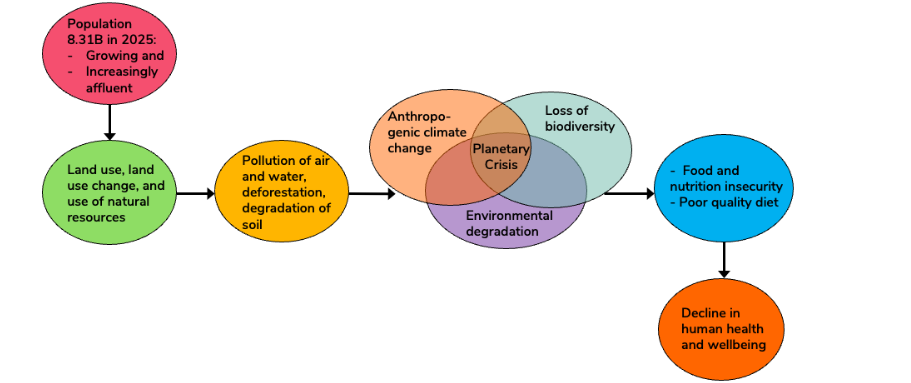
The world is faced with the population-driven planetary crisis with a profound effect on human health and wellbeing (Figure 1). This crisis has created some challenging global issues such as: decreasing per capita arable land area, increasing risks of soil degradation, aggravating anthropogenic climate change, decreasing per capita renewable fresh water supply and its eutrophication, increasing demand for energy leading to continued dependence on fossil fuel, and vulnerability to hunger and malnutrition. Whereas 800m people are food insecure, 2 to 3B are prone to malnutrition due to deficiency of protein, and micronutrients. Seventeen micronutrients essential for human health must come from food grown on a healthy soil. The growing challenge of human malnutrition is related to the so called “One Health” concept that links human health to animal health. The One Health concept was used by the Wildlife Conservation Society (2004) who specifically acknowledged the crucial role of wildlife health in spreading diseases to human through emergence of zoonotic infectious diseases. However, the soil-centric approach to “One Health” was explained in the Ramayana by Valmiki around 7th to 5th Century BCE. In Ramayana (a scripture epic of the Indo-Aryans), Lord Rama consoles the widow of Bali by stating that “Chiti, Jal, Pavak, Gagan, Samira; Panch Rachit Ati Adham Shareera”, or “human body is made of five elements: soil, water, energy, space, and wind”. In other words, human body is made from soil and it is eventually returned to the soil. The ancient One Health concept is also closely related to human diet. Several ancient civilizations have emphasized the importance of diet to human health. Indeed, diet is an important determinant of human health. For example, in the 5th century B.C., the Greek Physician Hippocrates stated that “let thy food be thy medicine and thy medicine be thy food”. He emphasized that poor diet was an important cause of illness. Similarly, Ayurveda (5000-year-old Indian medical system) emphasized the impact of diet on human health: “when diet is right, medicine is of no need; when diet is wrong, medicine is of no use”. It has been also recognized that good diet comes from food grown on a healthy soil. The Sikhism’s “Jap Ji Sahib” or Gurbani composed in the 17th century (1604-1708 AD) vividly states that “Paun Guru, Pani Pita, Mata Dharat Mahat”, or “wind is the teacher, water is the father, and the greatest of them all is the mother Earth”. Building upon the traditional knowledge and combining it with the modern science, Lady Eve Balfour (1943) and Sir Albert Howard (1943) recognized the importance of soil health on diet quality and promoted the idea that “health begins in the soil”. In the modern civilization of the 21st century, the importance of diet on human health and that of soil on diet quality can never be over-emphasized.
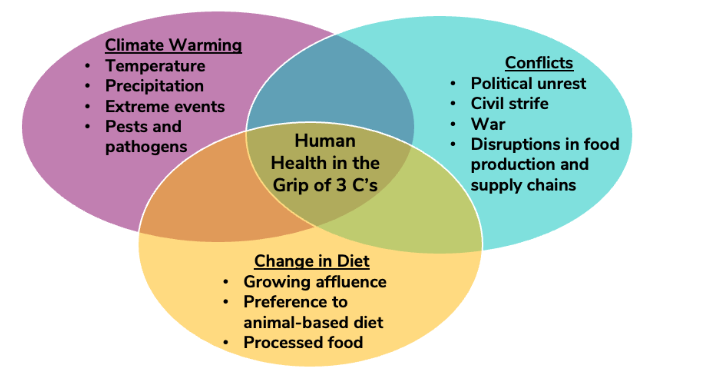
The “One Health” concept; being transdisciplinary, scale neutral and the basis of exploring innovative methods of disease prevention and management; embraces a holistic approach to collectively improve the health of soil, plants, animals, people, and the environment because of their inter-connectivity. Rather than keeping a narrow scope of “balancing the health of people, animals and environment”, embracing a broader approach that “health of soil, plants, animals, people, ecosystems, and planetary processes is one and indivisible” lays the foundation of interconnectedness of human health to soil health. Indeed, the modern One Health concept is based on the basic law of ecology which states that “everything is connected to everything else”. Furthermore, everything is also dependent on soil and the determinants which affect its quality or functions, specifically those products related to anthropogenic activities. Notable among these activities are land use, soil management, tillage, soil fertility or nutrient management, water management (drainage and irrigation) in conjunction with the need of conserving soil and protecting it against erosivity of water, wind, gravity, and tillage. Therefore, the objective of this article is to understand and deliberate the relevance of the “One Health” concept in era of growing and increasingly affluent world population whose vulnerability to pests and pathogens may be aggravated by the anthropogenic global warming on the one hand and political instability and wars on the other. This inter-connectivity, as is also visualized in Figure 2, is the conceptual basis of this article. The article is based on the hypothesis that risks of emerging zoonotic infectious diseases which originate in animals and especially in wildlife can be addressed through the wider implementation of the “One Health” concept, and that restoration and sustainable management of soil of agro-ecosystems can produce an adequate amount of healthy and safe food for the current and future population of the growing and increasingly affluent human population.
Operationalizing The One Health Approach
The Wildlife Conservation Society (2004) noted the close link between human and animal health and listed the so called “Manhattan Principle” which recognized the role of wildlife in spread of human diseases. However, the Manhattan Principle based on the close link between human-and-animal health must be expanded to the original idea of soil-food-human health as outlined in Ayurveda and by Hipocrate, and explained by Lal (2009). An entry point to include “soil health” in the mix of the “human-animal-health nexus” is to incorporate the concept of wellbeing systems and the effects of soil health on food quality. In addition to other functions, research must also focus on human wellbeing in conjunction with soil health. Human wellbeing, in the context of soil health, comprises of physical health or physical wellbeing, mental health or psychological wellbeing, social health or ability to meet social needs, spiritual health or spiritual wellbeing, financial health or economic wellbeing, and environmental health or ability to be able to live in harmony with nature. The latter (i.e., environmental health) implies restoring soil health while providing critical ecosystem services for human need and nature conservancy. Therefore, operationalization of the One Health concept must begin with protection, restoration and sustainable management of soil health. Degraded soils of agro-ecosystems are estimated at 40% of the land area of the earth and affect half of the humanity including 3.2 B people affected by desertification. Unless urgent and immediate action is taken to reverse these degradative trends, more than three-quarters of the population may be affected by 2050. Thus, soils must be restored and the downward spiral reversed by enacting and implementing policies which are pro-nature, pro-agriculture and pro-farmer. Operationalization of the One Health concept begins with restoration and sustainable management of soil health.
Global Warming and Human Health
Anthropogenic global warming is being accelerated. Ke et al. (2024) indicated that atmospheric CO2 growth rate was 3.37 ± 0.11 ppm for 2023 at Mauna Loa which is 86% more than that in 2022. This drastic increase may be attributed to a weak global net land CO2 sink of 0.44 ± 0.21 PgC yr-1. Because of a weaker C sink, the year 2023 recorded an extreme warming of 0.6°C above the 1991-2020 average and 1.48°C warmer than the 1850-1900 pre-industrial level. Global warming can aggravate vulnerability to human diseases including insect-borne diseases (i.e., malaria, dengue), water and food-borne diseases (i.e., E. coli and vibrio), non-communicable diseases or NCDs (e.g., stroke, heart diseases, asthma), mental health issues caused by anxiety and stress, fungal infections (i.e., Candida auris) among others. Global warming has also strong effects on food-borne diseases because of change in survivability and distribution of pathogens, decline in safety and quality of food, and increase in risks of consuming raw food such as leafy green products (I.e., lettuce). ASM (2024) reports that salmonella enterica causes disease in 1.2 million people in the U.S. every year. There is strong evidence for coastal vulnerability to S. enterica. Global warming is also aggravating severity of viral diseases and threat to global aquaculture.
Simply put, soil health has strong link to advancing Sustainable Development Goals or SDGs of the United Nations, especially SDG #1 (end poverty), SDG #2 (zero hunger), SDG #13 (climate action), and SDG #15 (life on land). Whereas the One Health concept proposed by the Wildlife Conservation Society in 2004 focuses at the animal-human-ecosystem focus, the broader aspect of the ancient concept going back to Vedic Era of Indo-Aryans and other ancient societies is all inclusive and clearly states that the health of soil, plants, animals, people, ecosystems, and the planetary processes is one and indivisible. The One Health concept is closely associated with the planetary health that promotes evidence-based policies in relation to human health and wellbeing while preserving and restoring the environment. Indeed, human health strongly depends on the optimal functioning of natural ecosystems and preserving their quality and capacity to generate ecosystem services. In other words, planetary health is adversely affected by the population driven planetary crisis, which necessitate a human rights approach to advancing human wellbeing through planetary health.
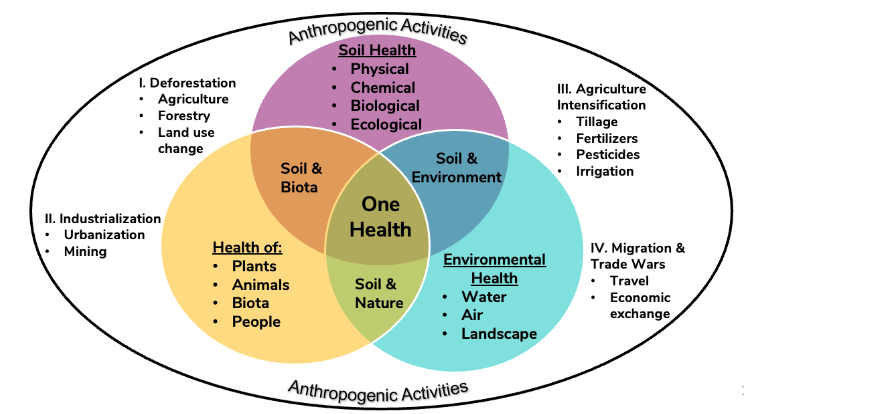
The broader scope of the One Health concept promotes inter-disciplinary cooperation among pedology, ecology, wildlife, social sciences, land use and land use change, biodiversity, food system sciences, hydrology, climatology, medicine, and veterinary sciences, etc. Indeed, 3rd November is declared as the World Health Day since 2016 by One Health Commission, The One Health Platform Foundation, and The One Health Initiative. The One Health concept (soil-water-human health nexus) bridges across microbiomes of humans, animals, plants, soil, ecosystem, and planetary processes. Hope (2024) estimated that 2B people (out of the population of 7.88B in 2023) lacked safe water. However, Greenwood et al. (2024) reported that 4.4B people (out of the world population of 8.2B) suffer from lack of safe water across 135 low and middle-income countries, an estimate more than double that for 2020. While the primary factors affecting water safety include fecal contamination, the importance of soil management on water infiltration, denaturing and filtration of contaminants cannot be overemphasized. It is precisely in this context that Greenwood and colleagues suggested that clean water is critical to human health, and it must pass through soil to filter and denature the pollutants.
Soil as a Cause and Remedy of Human Diseases
Impact of soil on human health is not widely reported despite the fact that soil plays a critically important role in moderating water, air, nutrient, and biotic properties that make it source or moderator of pests and pathogens. Soil can be a source of many human and animal infections. For example, ticks are soil-dwelling arthropods and form an intersection between soil ecology and diseases for human and animals. Burtis et al. (2019) described the linkages between soil factors and tick densities, and biotic and abiotic factors within the soil ecosystem that affect tick survival. Soil properties and processes affect the survival and behavior of ticks during their off-host periods, and necessitate an inter-disciplinary approach to such complex disease cycles. Samaddar et al. (2021) provided an overview of pathogens in soil with focus on human and crop pathogens and how microbial community in soils regulate soil-borne pathogens. Healthy soils which suppress pathogens are called “disease suppressive soils”. Disease suppression leads to decline in the incidence of soil-borne diseases even in the presence of a host plant and inoculum in the soil. It is also recognized that some indigenous microbiomes can reduce disease by general or specific suppression. An example of Fusarium wilt suppressive soil was described by Alabouvatte (1999). Thus, integrating soil, plants, animal, and human health could lead to efficient and multifunctional strategies for regulating detrimental organisms and processes.
Soil and Crop Management Practices with Positive Impacts on Diet Quality
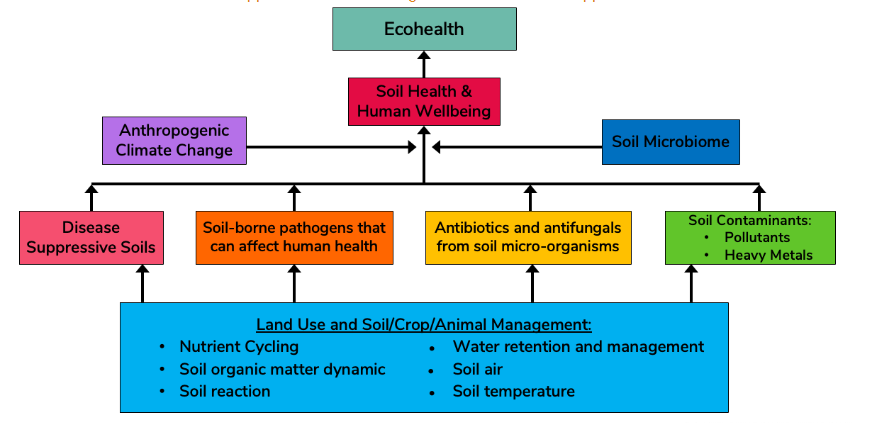
Whereas the laws or basic principles of sustainable soil management are widely known, their adaptation to soil-ecoregion specific situation has not happened especially in developing countries of the tropics and sub-tropical regions. The widespread adoption of known and proven technologies would need a strong cooperation between researchers, private sector and public institutions. Private sector can and must play an important role in translating science into action by improving access to inputs and providing resources for site specific research, education and outreach or upscaling. The soil-centric basis for improving soil health, with attendant impact on quality of food production, outlined in Figure 3 is based on the need for implementation of the One Health concept via inter-disciplinary and wholistic approach. It is important to recognize that there is no one panacea or one size fits all situation. Thus, there is a wide range of improved practices of soil and crop management. Some examples of these practices include use of soil amendments (i.e., organic manure, compost, green manure, crop residue retention) and which can moderate incidence of pests and pathogens. Other practices with impacts on soil health include cover cropping, conservation agriculture, irrigation/drainage, complex rotations and integration of crops with trees and livestock. Thus, global focus on the health of soils offers numerous opportunities for managing human health and wellbeing while also improving the planetary health.
Medical Approaches to “One Health” Concept
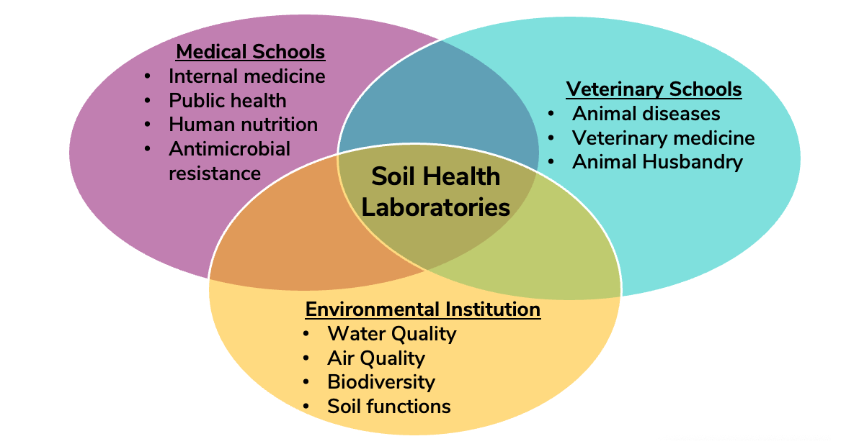
During the 20th century, Calvin Schwab (1964) proposed the idea of “One Medicine”, and realized the nexus between human and veterinary medicine. The concept of “One Medicine” was extended to “One Health” during the early 21st century because of the importance of ecosystem approaches to human health. This holistic approach is also called “Ecosystem Health”. The latter involves the human-environmental nexus or the social-ecological nexus. Yet most of these ideas linked human health to animal health, but did not extend it to ecosystem health (soil, plants, animals, and human). Van Bruggen et al. (2019) extended the human-animal health nexus to ecosystem health and stated that the health conditions of all organisms in an ecosystem are interconnected. Therefore, sustainable management of ecosystems affects the quality and functioning of microbiomes and “ecohealth”. Furthermore, the “ecohealth” is also strongly affected by the anthropogenic climate change. The holistic concept of “ecohealth” or “one health” is outlined in Figure 4. Montgomery et al. also argued that a greater understanding of soil health and its management (land use and agronomic practices) is critical to promoting the “One Health” or “Eco Health” approach. Swan et al. (2024) linked soil security to “One Health” and to Sustainable Development Goals of the Agenda 2030 of the United Nations. This holistic approach emphasizes the importance of a multi-disciplinary approach to addressing emerging infectious diseases aggravated by environmental degradation and antimicrobial resistance. The aim is to create a resilient future by improving the environment and safeguarding human health. This approach would involve a close cooperation between medical institutions and environmental health laboratories. The One Health approach can be effective in addressing human health in relation to zoonotic diseases, antimicrobial resistance, food safety and nutritional quality, and climate change. A close cooperation between medical schools, environmental institutions, and soil health laboratories is critical to translating this innovative idea into action.
Conclusions
The soil-human health-nexus has long been recognized by ancient civilizations such as India and Greek. The recent interest in human-animal health link, as evidenced by COVID 19 and other infectious diseases, must be broadened in scope to consider environmental factors with strong effects on human health. Therefore, the focus must be on the wholistic view that “health of soil, plants, animals, people, ecosystems and planetary processes is one and indivisible”. The important link between soil health and human health was advocated by Lady Eve Balfour and Sir Albert Howard during the middle of the 20th Century. The importance of managing and sustaining soil health for human health and wellbeing is more important now than ever before because of the growing and increasingly affluent human population with strong demands on finite and fragile prime soil resources of the world. Therefore, integrating soil, plants, animal, and human health could lead to efficient and multifunctional strategies for regulating detrimental organisms and processes and improving human health and wellbeing. In addition to enacting policies which are pro agriculture with focus on soil health, private sector can and must also play an important role in translating science into action by improving access to inputs and providing resources for site specific research, education and outreach or upscaling. Healthy soils can also suppress pathogens and have “disease suppressive” capabilities while also improving water quality. Indeed, the effect of soil management on water infiltration, and denaturing and filtration of contaminants on human health and wellbeing cannot be overemphasized. Thus, the soil-centric basis of the “One Health” concept must be embodied as a cornerstone to advance human health and wellbeing while also improving the planetary health. It is equally pertinent to realize that wars and political instability also affect human health through pollution (soil, water, air, biodiversity), disruption of food production and supply chain, and destruction of nature that may recover over decadal/centennial scale and lead to long-term adverse effects on environments. While wars have been a self-inflicted curse since the dawn of humanity, adverse effects of modern weapons on soil and environments are worst now than ever before and polluted soils may be reclaimed/restored over a generational on longer time scale. The war-induced crime against nature in general and soil in particular is not acceptable. It is also important to study soil properties and processes which affect disease suppressive attributes, antibiotic/antifungal properties, density and perpetuity of soil-borne pathogens, and retention and denaturing of pollutants and contaminants which affect soil health, ecohealth and human health. Multidisciplinary research and education is needed to address this issue. It should involve a close cooperation between medical school, environmental research institutions, and agronomic/pedological laboratories. Soil health should be a part of the curricula of medical schools and public health research and educational programs.
References
- Lal R. Soil degradation as a reason for inadequate human nutrition. Food Security. 2009;1(1):45-57. doi:10.1007/s 12571-009-0009-z
- Robert A. Cook, William B. Karesh, Steven A. Osofsky, Wildlife Conservation Society. Conference Summary One World, One Health: Building Interdisciplinary Bridges to Health in a Globalized World. Wildlife Conservation Society; 2004. https://www.oneworldonehealth.org/sept2004/owoh_sept04.html
- Mackenzie J, Jeggo M. The One Health Approach-Why Is It So Important? Tropical Medicine And Infectious Disease. 2019;4(2). doi:10.3390/tropicalmed4020088
- Chopra AS. Āyurveda. In: Selin H, ed. Medicine Across Cultures: History and Practice of Medicine in Non-Western Cultures. Springer Netherlands; 2003:75-83. doi:10.1007/0-306-48094-8_4
- Dominik Wujastyk. The Roots of Ayurveda: Selections from Sanskrit Medical Writings. Penguin Classics; 2003.
- Billy, J. Ayurveda Diet. Amazon Digital Services, LLC; 2022.
- Manthappa, M. Eat Healthy to Stay Healthy: When the Diet Is Wrong, Medicine Is of No Use; When the Diet Is Right, Medicine Is of No Need.; 2016.
- Lady Eve Balfour. Towards a Sustainable Agriculture: The Living Soil. Faber and Faber Ltd; 1943.
- Howard A. An Agricultural Testament. Oxford University Press; 1943:228. http://journeytoforever.org/farm_library/howardAT/ATtoc.html
- Rattan Lal. The Soil-Human Health-Nexus. 1st edition. Taylor & Francis (CRC Press); 2020.
- Commoner B. The Closing Circle: Nature, Man, and Technology. Knopf; 1971:326. https://books.google.com/books?id=lpYwAAAAMA AJ
- Taylor L, Latham S, Woolhouse M. Risk factors for human disease emergence. Philosophical Transactions of The Royal Society B-Biological Sciences. 2001;356(1411):983-989. doi:10.1098/rstb.2001.0888
- Friedrichsen CN, Mizuta K, Wulfhorst JD. Advancing the intersection of soil and well-being systems science. Soil Security. 2022;6:100036. doi:10.1016/j.soisec.2022.100036
- Hettiarachchi G, Lee L, Li H, Brose D, Basta N. Editorial: Translating soil science to improve human health. FRONTIERS IN ENVIRONMENTAL SCIENCE. 2023;11. doi:10.3389/fenvs.2023.1215416
- UNEP. World Environment Day Turns Global Gaze towards Land Restoration.; 2024. https://www.unep.org/news-and-stories/story/world-environment-day-turns-global-gaze-towards-land-restoration
- Ke P, Ciais P, Sitch S, et al. Low Latency Carbon Budget Analysis Reveals a Large Decline of the Land Carbon Sink in 2023.; 2024. doi:10.48550/arXiv.2407.12447
- Friedlingstein P, O’Sullivan M, Jones MW, et al. Global Carbon Budget 2022. Earth System Science Data. 2022;14(11):4811-4900. doi:10.5194/essd-14-4811-2022
- Friedlingstein P, O’Sullivan M, Jones MW, et al. Global Carbon Budget 2023. Earth System Science Data. 2023;15(12):5301-5369. doi:10.5194/essd-15-5301-2023
- Martens P. How will climate change affect human health? AMERICAN SCIENTIST. 1999;87(6):534-541. doi:10.1511/1999.42.839
- Owino V, Kumwenda C, Ekesa B, et al. The impact of climate change on food systems, diet quality, nutrition, and health outcomes: A narrative review. Frontiers in Climate. 2022;4. doi:10.3389/fclim.2022.941842
- Maria Cristina Tirado, Shamini Albert Raj. Climate Change and Emerging Risks to Food Safety: Building Climate Resilience. Food Safety Magazine. Published online December 11, 2023. https://www.foodsafety.com/articles/9099-climate-change-and-emerging-risks-to-food-safety-building-climate-resilience
- American Society for Microbiology. Climate Change Increases Foodborne Illness Risk From Raw Produce.; 2024. https://asm.org/press-releases/2024/august/climate-change-increases-food-borne-illness-risk-f
- Jiang C, Shaw K, Upperman C, et al. Climate change, extreme events and increased risk of salmonellosis in Maryland, USA: Evidence for coastal vulnerability. ENVIRONMENT INTERNATIONAL. 2015;83:58-62. doi:10.1016/j.envint.2015.06.006
- Combe M, Reverter M, Caruso D, Pepey E, Gozlan R. Impact of Global Warming on the Severity of Viral Diseases: A Potentially Alarming Threat to Sustainable Aquaculture Worldwide. MICROORGANISMS. 2023;11(4). doi:10.3390/microorganisms11041049
- Lal R, Bouma J, Brevik E, et al. Soils and sustainable development goals of the United Nations: An International Union of Soil Sciences perspective. Geoderma Regional. 2021;25(June 2021):e00398-e00398. doi:10.1016/j.geodrs.2021.e00398
- Ayala A, Meier BM. A human rights approach to the health implications of food and nutrition insecurity. Public Health Reviews. 2017;38(1):10. doi:10.1186/s40985-017-0056-5
- Hope R. Four billion people lack safe water. Science. 2024;385(6710):708-709. doi:10.1126/science.adr3271
- Greenwood E, Lauber T, van den Hoogen J, et al. Mapping safe drinking water use in low- and middle-income countries. SCIENCE. 2024;385(6710):784-790. doi:10.1126/science.adh9578
- Abrahams PW. Soils: Their implications to human health. Science of the Total Environment. 2002;291(1-3):1-32. doi:10.1016/S0048-9697(01)01102-0
- Burtis J, Yavitt J, Fahey T, Ostfeld R. Ticks as Soil-Dwelling Arthropods: An Intersection Between Disease and Soil Ecology. Journal of Medical Entomology. 2019;56(6):1555-1564. doi:10.1093/jme/tjz116
- Samaddar S, Karp D, Schmidt R, et al. Role of soil in the regulation of human and plant pathogens: soils’ contributions to people. Philosophical Transactions of The Royal Society B-Biological Sciences. 2021;376(1834). doi:10.1098/rstb.2020.0179
- Jayaraman S, Naorem AK, Lal R, et al. Disease-Suppressive Soils—Beyond Food Production: a Critical Review. Journal of Soil Science and Plant Nutrition. 2021;21(2):1437-1465. doi:10.1007/s42729-021-00451-x
- Schlatter D, Kinkel L, Thomashow L, Weller D, Paulitz T. Disease Suppressive Soils: New Insights from the Soil Microbiome. PhytopathologyTM. 2017;107(11):1284-1297. doi:10.1094/PHYTO-03-17-0111-RVW
- Alabouvatte C. Fusarium wilt suppressive soils: an example of disease-suppressive soils. Australasian Plant Pathology. 1999;28(1):57-64. doi:10.1071/AP99008
- Lal R. Laws of sustainable soil management. Agronomy for Sustainable Development. 2008;29(1):7-9. doi:10.1051/agro:2008060
- Montgomery DR, Rabinowitz P, Sipos Y, Wheat EE. Soil health: A common focus for one health and planetary health interventions. One Health. 2024;18:100673. doi:10.1016/j.onehlt.2023.100673
- Calvin W. Schwabe. Veterinary Medicine and Human Health. Williams & Wilkins; 1964.
- Zinsstag J, Schelling E, Waltner-Toews D, Tanner M. From “one medicine” to “one health” and systemic approaches to health and well-being. Preventive Veterinary Medicine. 2011;101(3-4):148-156. doi:10.1016/j.prevetmed.2010.07.003
- van Bruggen AHC, Goss EM, Havelaar A, van Diepeningen AD, Finckh MR, Morris JG. One Health – Cycling of diverse microbial communities as a connecting force for soil, plant, animal, human and ecosystem health. Science of The Total Environment. 2019;664:927-937. doi:10.1016/j.scitotenv.2019.02.091
- Swan T, Mcbratney A, Field D. Linkages between Soil Security and One Health: implications for the 2030 Sustainable Development Goals. Frontiers in Public Health. 2024;12. doi:10.3389/fpubh.2024.1447663
- Danasekaran R. One Health: A Holistic Approach to Tackling Global Health Issues. Indian Journal of Community Medicine. 2024;49(2). https://journals.lww.com/ijcm/fulltext/2024/49020/one_health__a_holistic_approach_to_tackling_glob.5.aspx
- Machalaba C, Raufman J, Anyamba A, et al. Applying a One Health Approach in Global Health and Medicine: Enhancing Involvement of Medical Schools and Global Health Centers. Annals of Global Health. 2021;87(1). doi:10.5334/aogh.2647