





Online Psychoeducation for Neurodevelopmental Disorders
A review of online and gamified psychoeducational interventions for children with neurodevelopmental disorders and their parents
OPEN ACCESS
PUBLISHED: 30 September 2024
CITATION: Chebli, M., Tracol, S., et al., 2024. A review of online and gamified psychoeducational interventions for children with neurodevelopmental disorders and their parents. Medical Research Archives, [online] 12(9). https://doi.org/10.18103/mra.v12i9.5894
COPYRIGHT © 2024 European Society of Medicine. This is an open-access article distributed under the terms of the Creative Commons Attribution License, which permits unrestricted use, distribution, and reproduction in any medium, provided the original author and source are credited.
DOI: https://doi.org/10.18103/mra.v12i9.5894
ISSN: 2375-1924
ABSTRACT
Background. Children with neurodevelopmental disorders (NDD) are impacted in their emotional, cognitive, social, and/or motor development. They, along with their relatives, confront multifaceted challenges. Psychoeducation as an evidence-based intervention providing support and education, would play a crucial role to facilitate their daily live and disorders’ progress. In the emerging digital world, online and gamified psychoeducation has gained increasing traction since they offer a better engagement and accessibility. However, there is a discrepancy between the number of digital psychoeducation programs and those with clinical evidence-basis. The present work aims at reviewing evidence-based interventions for neurodevelopmental disorders, targeting both children and/or parents. Methods. A systematic search of PubMed, Web of Science, and Cochrane was conducted with keywords related to “neurodevelopmental disorders”, “psychoeducation”, “online and digital interventions”, and no publication date restrictions. Inclusion criteria involved studies on psychoeducation for parents or children using online platforms or gamified designs. Results. Out of the initial 70 articles, only 8 met inclusion criteria. Limited number of the publications showed that psychoeducation is a recent area of research for neurodevelopmental disorders. Reported results converged to support that technology and gamification in psychoeducational interventions stimulate children’s interest and improve outcomes for children with neurodevelopmental disorders and their parents. Discussion. While digital psychoeducational interventions are promising for children and parents, the existing literature highlights the need of a scientific validation of such technology-enhanced interventions before being translated in real life practice. Furthermore, such research topic should account for behavioral and cognitive skills along with quality of life, to consider the NDD comorbidities.
Keywords:
Psychoeducation, intervention, neurodevelopmental disorders, serious game, children
1 Introduction
Neurodevelopmental disorders (NDDs) are defined in accordance with the criteria outlined in the Diagnostic and Statistical Manual of Mental Disorders. Among the most prevalent NDDs are attention-deficit/hyperactivity disorder (ADHD), specific learning disorders (SLD), or autism spectrum disorder (ASD).
Neurodevelopmental disorders present a range of long-term challenges due to their complex clinical nature and associated symptoms. These challenges encompass various domains, including emotional regulation; issues related to school attendance, such as absenteeism or exclusion; difficulties in executive functioning; impairments in social cognition; a higher rate of unemployment; and difficulties in skills related to rhythm. Therefore, children with NDDs encounter multifaceted obstacles across emotional, motor, cognitive, and behavioral domains, highlighting the diverse and profound nature of their struggles.
One way to ease these difficulties is by assisting children and parents in managing their condition through education about their symptoms and providing them with effective strategies. When children’s development is compromised due to, for instance, cognitive or behavioral problems, these positive reinforcements, are often less clearly present in the children’s behavior, compared to their typically developing peers.
In recent years, the spotlight has increasingly turned toward psychoeducational interventions as a pivotal component in the holistic management of NDDs. Psychoeducation refers to a therapeutic approach or intervention that focuses on providing individuals, families, or groups with information, knowledge, and strategies related to mental health, emotional well-being, or specific psychological conditions. It helps with better managing such condition, higher acceptance of illness and an adherence to therapy and treatment.
Such intervention can also be delivered in the parents’ daily life, lowering the threshold for participation and engagement, and focuses on proximal behavioral, cognitive or emotional changes. These interventions serve as a critical resource not only for children affected by NDDs but also for their parents, who often find themselves navigating the complex terrain of supporting and caring for their child. It’s important to recognize that parents bear also the emotional and practical burdens of their child’s condition, often experiencing challenges in coping and effectively addressing their child’s symptoms. Parents of children with NDDs report higher parental stress compared with parent of children without NDDs, potentially leading to a lower quality of life.
Promisingly, psychoeducational interventions have shown encouraging results in improving various aspects of life for both parents and children dealing with NDDs. A psychoeducational intervention has improved ADHD symptoms by addressing behavioral issues, as reported by parents. Indeed, the authors reported that the enhanced understanding of parents regarding how ADHD impacts their child’s behavior have reduced indirectly ADHD symptoms. Similarly, another parental psychoeducation intervention showed a decrease in parental stress along with a decrease of ASD severity symptoms in children. This pilot study has explored the impact of psychoeducational interventions on enhancing parental skills by reducing stress for parents and improving the symptoms management by the children with ASD. This psychoeducational program consisted of several sessions that included strategies for behavior management, various communication techniques, and stress-coping mechanisms tailored specifically for parents of children with ASD. Therefore, this type of interventions appears to provide valuable guidance, strategies, and resources to enhance emotional regulation, cognitive functioning, social interactions, and overall well-being.
In the era of emerging technologies, there has been a noticeable shift towards utilizing technological approaches to tackle NDDs and facilitate either assessments or treatments along with enhanced user impacts. However, only half of the technologies-based interventions reported in this review, showed clinical effectiveness on symptoms, parental distress, social skills as treatment efficacy mainly in ASD and ADHD. The appeal of these digital interventions lies in their potential to engage individuals more effectively while ensuring accessibility. Online platforms have broadened the reach of therapy, breaking down geographical barriers and providing crucial support to individuals who might otherwise face challenges in accessing help.
Meanwhile, gamification has been characterized by interactive and game-like elements, that hold the promise of making the journey of coping with NDDs more engaging, effective and higher motivation approaches. Numerous studies have demonstrated the positive impact of technology on NDDs, particularly in the context of rehabilitating cognitive and social abilities. Lewandowski, Wood & Miller, (2016) demonstrated that technology is often used for assessments, education, and cognitive exercises (e.g., memory training) that benefit the patients. Several games were designed to improve executive function such as Cogmed or Luminosity. These serious games offer activities aimed at enhancing attention, memory, spatial skills, processing speed, problem-solving, and more. They engage participants more to overcome their difficulties because they (i) offer more interactive experiences, (ii) provide positive reinforcement such as praise or encouragement, (iii) allow participants to mitigate the impact of their difficulties and access literacy remediation, and (iv) finally help them complete treatments sessions. However, there are few digital interventions specifically designed for psychoeducational purposes for children and parents.
This comprehensive review aims to provide a detailed exploration of the current state of research regarding online and gamified psychoeducational and evidence-based interventions tailored for children affected by NDDs, and targeting either children, parents, or both. In this review, technologies included, were mobile apps/tablets and online video interventions due to their user-friendly nature, making them suitable for independent use at home and easily accessible at any time.
2 Material and methods
2.1 SEARCH STRATEGY AND INCLUSION/EXCLUSION CRITERIA
The review followed The Preferred Reporting Items for Systematic reviews and Meta-Analyses (PRISMA) guidelines. A systematic search was conducted on electronic databases, that included PubMed, Web of Science, and the Cochrane Library. Our search strategy was based on Population, Intervention, Comparison, and Outcomes (PICO) domains with specific keywords related to neurodevelopmental disorders, psychoeducation, and digital interventions (Table 1). Interventions were whether given online or were app based. Focus was performed on gamified interventions since psychoeducational information can be delivered through engaging videos, web sessions, and/or interactive questionnaires, that are often considered intuitive and user-friendly. Interventions were considered if targeting either parents or children, as they both play a beneficial role in managing the children’s condition. To ensure that the search was not overly constrained, the keywords included parent, parent, and children, or solely children, allowing for a comprehensive exploration of the literature. No specific publication date limit was imposed.
Lastly, only articles that specifically delineated their interventions as psychoeducational were chosen. It is important to note that psychoeducation encompasses a broad spectrum of practices, and its definition is expansive. Therefore, interventions that could be psychoeducational but were not delimited as psychoeducational interventions by the authors were not included.
| Criteria | Details |
|---|---|
| Inclusion criteria | 1) studies published in English 2) research focused on psychoeducational interventions targeting neurodevelopmental disorders, including Attention Deficit Hyperactivity Disorders (ADHD), Specific Learning Disorders (SLD), speech and communication disorders, Autism Spectrum Disorders (ASD), and TIC disorders 3) studies examining online or gamified interventions for children with neurodevelopmental disorders (NDDs) or parents that have children affected by NDD, 4) research available in full-text format. |
| Exclusion Criteria | studies not published in English, that do not address psychoeducational interventions or neurodevelopmental disorders, research focused on non-neurodevelopmental disorders and lacking access to the full text or that are unavailable. |
2.2 STUDY SELECTION PROCESS
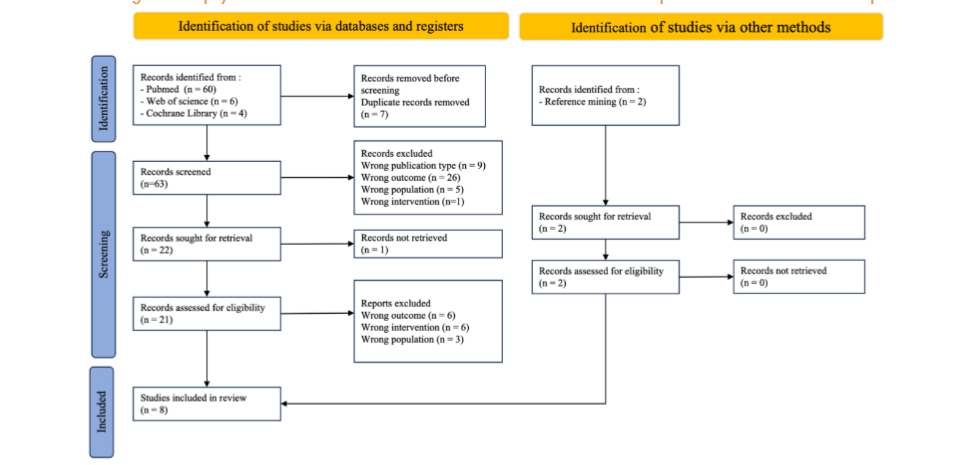
The process of identification, screening, and inclusion of studies is presented in the PRISMA Flow Diagram (Figure 1). Duplicates were removed, and then the records were checked for eligibility, first by screening the abstracts and then making their final decisions by reading the full articles.
2.3 DATA EXTRACTION
The extracted information for each study included: title, author, year of publication, country, conflicts of interest, type of the study design, description of the target population (number of participants, gender, age, and type of NDD diagnosis), tool(s) for the NDD assessment, inclusion/exclusion criteria of the target population, technology used for diagnosis and/or intervention, its operator, and outcomes. Given the substantial variability among the included studies, including technologies employed, study designs, participant ages and genders, outcome measures, and follow-up durations, and considering the limited number of studies available, it was not possible to conduct a meta-analysis. The main findings and conclusions of each study, especially those related to the effectiveness and impact of the interventions, were summarized, narratively.
3 Results
3.1 STUDY SELECTION
Although time and date were not limited in the inclusion criteria, only 70 studies were identified through the database search. Additional 2 records were selected for screening by reference mining. After removing duplicates, 63 remaining records were checked for eligibility by two independent authors. 41 records were excluded during the abstract screening phase, as they differ by: 1) targeted populations, n= 5, (e.g., individuals with brain injuries, autistic adults, etc.), 2) 9 were meta-analyses or reviews, and 3) 26 articles did not match the results from the word search, indicating an unexpected outcome, (e.g., basic research, pharmaco-studies), 4) One intervention did not meet the criteria for the digital psychoeducational intervention that was being sought, it was an online therapy. One article could not be retrieved. The remaining 21 articles underwent the reading phases of the full publications. Out of the 21, only 6 met all inclusion criteria while the others were excluded (Figure 1). 6 did not reach the outcomes of interest, 6 were online sessions with health practitioners (teleconsultation), 3 were finally dedicated to adult patients. 2 publications that were identified during the reading phase in literature review papers, were added to the 6 ones as both meet all inclusion criteria. Altogether, 8 publications were finally included in the present study.
3.2 STUDY CHARACTERISTICS
Overview – 70 studies were identified with the 3 keywords used for the screening phase, and they were all published during a short period of time covering between 1989 to 2023. Furthermore, the 8 articles that were finally included in the present review, were published very recently: first in 2008, and most of the publications (n= 5) after 2021.
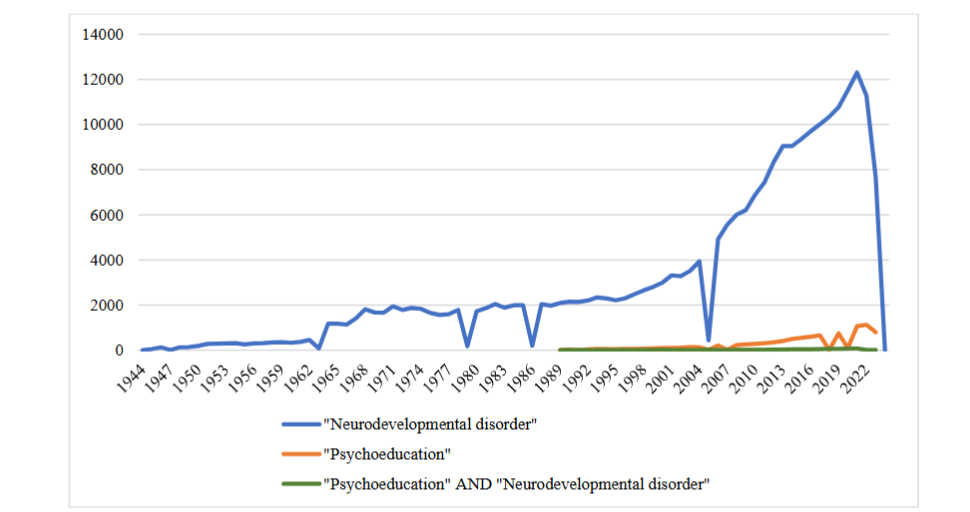
To examine whether psychoeducation or neurodevelopmental disorders were limiting in our systematic search, we investigated the number of articles published using the keywords “Psychoeducation” and/or “Neurodevelopmental disorder” in the PubMed database. Our findings revealed that studies on neurodevelopmental disorders have been conducted since 1944 and have shown an increase in publication over time (n = 244,155), with some fluctuations potentially attributed to database discrepancies rather than the actual number of published studies. In contrast, the concept of “psychoeducation” was not clearly defined before the 1980s, with Bonsack and Boscoville among the first to formally introduce it as a research domain. Papers found prior to 1980 may have addressed related concepts, but these were not recognized as “psychoeducation” in the contemporary sense. This lack of a unified terminology likely contributed to the limited presence of “psychoeducation” in earlier searches. Since its introduction, psychoeducation has shown an upward trend in publications (n = 9,450), although at a slower rate compared to research on “Neurodevelopmental disorders.” When searching for records with “Psychoeducation” and “Neurodevelopmental disorder” only 843 records were published since 1980, highlighting by their combined status, that are a novel area of interest for the scientific community.
The 8 publications selected were reported across seven different developed countries whereas none was done in middle-income countries. Two articles originate from Switzerland. All studies had no particular interest in ethnicity and culture.
A summary of the characteristics of all the included reviews is reported in the Table 2.
Participant characteristics
The average number of participants in the present study ranged from 3 to 74. Most of the studies included children; however, the mean age of the included participants was not reported systematically. Three studies were specifically designed for children, three for parents, and one for both children, and parents (Table 2), one for parents and health professionals. Overall, the articles reported details on participant recruitment, some described that the included studies recruited participants via web using convenience and snowball sampling. Participants were also recruited from a target population, especially in clinical setting. Five studies focused on ASD, and 1 on chronic TIC disorders. Two studies included participants with various NDDs, such as ADHD, SLD, and/or ASD.
Only 3 of the publications specified the gender distribution of participants. Only one study succeeded in enrolling at least 50% female subjects. The two others showed discrepancy in participant gender distribution, failing to achieve a balanced representation of both females and males, that is an important variable to account for when studying NDDs. Other information on the diversity of samples in the included studies (e.g., ethnicity and socioeconomic status) was lacking.
Mobile Tools Used & Interventions
The technologies used for the psychoeducational interventions were mobile apps/tablets (n = 4), web-based (n = 2) and computer serious games (n = 2). Most interventions targeting children aimed to assist them in their daily lives by offering psychoeducational information, such as self-monitoring and skill enhancement. The interventions developed for parents focused on enhancing their skills to support their children, providing them with knowledge about their children’s condition to facilitate more effective assistance.
The duration of interventions across the studies exhibited substantial variability, reflecting differences in study designs and objectives. In studies involving multi-session interventions to assess the impact on symptoms of neurodevelopmental disorders (NDDs), the intervention duration ranged from 3 weeks to 16 weeks. Some studies, particularly those in the pilot or feasibility study phase, featured interventions tested only once, with no long-term follow-up. The duration of the study and the number of visits did not vary depending on the clinical specificity (i.e. NDD types); it was contingent on the primary objective of the study, either to evaluate the intervention’s impact on NDD symptoms (multi-session) or to test its feasibility and gather participant feedback (one session). The difference in intervention’s duration underscores the diversity in research methodologies and goals across the selected studies.
3.3 OUTCOMES STUDIES
In all selected studies, interventions or assessments of the tools’ quality were evaluated through questionnaires with participants. To examine the efficacy, assessments were conducted overtime: once prior intervention to establish baseline profiles, then at midpoint of the intervention, and post-intervention to determine whether intervention gain was maintained over time.
To evaluate the impact of the interventions, five studies employed neuropsychological assessments administered both before and after the intervention. These studies focused on interventions for ASD, utilizing tools such as the Autism Diagnostic Observation Schedule – Second Edition (ADOS-2), the Childhood Autism Rating Scale – Second Edition (CARS-2), and the Adaptive Behavior Assessment System – Second Edition (ABAS-II). These assessments measure various aspects of participants’ progress, including behavioral, social, and cognitive skills related to ASD.
One study adopted semi-structured interviews as the primary method for assessment, allowing for a deeper exploration of participants’ experiences and perceptions of the intervention. In the other studies, a specific questionnaire was designed to gather feedback and insights regarding the intervention tool itself. This approach aimed to assess the participants’ perceptions of the tool’s utility. The difference in methodologies and approaches across the studies make it challenging to compare their results.
Six studies examined the clinical impact of the interventions on symptoms related to NDDs. Bamford (2016) investigated the impact of self-monitoring through iPad usage on improving on-task behaviors in high school students (aged 14 to 17 years old) diagnosed with ADHD with ABAB phases (A- Baseline period and data collection, B- Intervention, A- Removal of the intervention, back to baseline and B- Introduction of the intervention again). In Phase A1, student behaviors were meticulously observed and documented using a checklist over the course of 8 days. Subsequently, during Phase B1, the implementation of the Choiceworks App as a self-monitoring tool was introduced, and the observations continued. In Phase A2, the iPad was temporarily withdrawn for 8 days to assess whether there were any changes in the students’ behavior. Throughout this phase, the same observations were conducted as during the previous phases. All participating students were administered a questionnaire survey, comprising five Likert-scale items, to evaluate their satisfaction levels with the self-monitoring process. The study duration was 3 weeks, during which the students’ behaviors were closely observed. Students completed surveys to assess their satisfaction, and their academic test scores were analyzed to evaluate their learning outcomes. While the study included only 4 participants, the descriptive results suggested an increase in the occurrences of on-task behavior when the Choiceworks App was employed for self-monitoring during the interventions. Overall, both students expressed positive evaluations of the app, indicating its potential for future use.
Fridenson-Hayo et al. (2017) conducted a cross-cultural study examining the efficacy of Emotiplay, a serious game developed to educate children with autism about emotions. The research was conducted across three sites: the UK, Sweden, and Israel, with the aim of assessing the impact of the serious game on emotional regulation within diverse cultural contexts. They conducted a clinical trial in the UK where parents filled out the school-age form (4–18 years) of the Social Responsiveness Scale, 2nd edition (SRS-2) and the Vineland Adaptive Behavior Scales (VABS-II) Socialization scale and children were administered the ADOS-2, the Wechsler subtests, and the body language and integrative emotional regulation tasks pre-intervention. Then the children engaged in playing Emotiplay for 2 hours per week over an 8-week period. After the 8-week intervention period, participants and their parents filled out the same assessments of the pre-intervention to observe potential progress. This design was replicated with families in Sweden and Israel. Results from the intervention groups in the UK, Sweden, and Israel demonstrated a significant improvement across all emotional regulation tasks, while no notable differences were observed in the control group.
Law, Neihart & Dutt (2018) examined the impact of a mobile app designed for parents of children with ASD to improve communication skills. Map4speech is a mobile app training program aiming to enhance functional communication in young children with ASD through naturalistic interventions. The program comprises eight learning stages across four curriculum areas: following the child’s lead, imitation, creating moments for togetherness, and prompting and expanding. Each stage integrates five application features: instructional videos, quick checks, interactive games, practice videos, and feedback mechanisms. Results revealed that the fidelity of parental interventions surpassed 85% following the training, leading to substantial improvements in the children’s use of words and gestures. These findings underscore the potential of mobile applications in bolstering the effectiveness of digital psychoeducational interventions.
Lussier-Desrochers et al. (2023) investigated the role of a serious game on the performance of daily routines by ASD and ADHD children. Participants were randomly assigned to three interventions (serious game, parental support, and a combination of serious game and parental support). Before the intervention, parents were instructed to identify challenging routines and integrate them into the Kairos app to enable it to support assistance and reminders. They also completed a Routine Achievement Assessment Tool, an adapted version of the Before School Functioning Questionnaire (BSFQ). Subsequently, children were granted access to a preliminary version of the serious game called Kairos, which offered assistance and incentives for completing daily tasks. Within the app’s private section, parents scheduled specific prompts, and the app’s avatar would remind the children to complete the designated tasks at predetermined times. Following the intervention, parents were asked to complete the same Routine Achievement Assessment Tool. The results indicated an overall improvement in various aspects of daily routines, including understanding and following instructions, listening, task organization, memory retention, time management, and a reduction in procrastination, especially when parents provided support. Several studies have demonstrated that the whole family environment can be improved by increasing parental skills and reducing parental stress to ultimately enhance their child’s condition.
Trudel, Lanovaz, & Préfontaine (2021) conducted a study focusing on the utilization of mobile app, iSTIM, to assist parents in managing stereotypy, referring to repetitive, purposeless movements, behaviors, or speech patterns, among their children with autism. The study investigated the effectiveness of the intervention over a brief period, involving the monitoring of participants’ responses and the application of mobile technology. Researchers evaluated the symptoms severity of ASD and stereotypy by administering the CARS-2, Treatment Acceptability Rating Form-Revised (TARF-R) and measured the duration of stereotypy before and during the intervention. Although the study group consisted of a limited number of participants, the findings indicated a reduction in stereotypic behaviors when the mobile technology intervention was employed.
Lastly, a study by Siracusano et al. (2021) aimed to assess behavioral functioning and parental stress. The intervention utilized TrASDition, a program designed to address challenges of the transition to the adult age for youth with ASD while enhancing communication abilities, adaptive skills, and social relationships, with specific objectives outlined in each module. Behavioral skills were measured using ABAS-II, and parental stress was assessed using the Parental Stress Index Short Form (PSI-SF) before and after the intervention. The study did not find any significant decrease in repetitive or problematic behavior. However, significant improvement was demonstrated in adaptive functioning among participants with ASD, alongside a reduction in parental stress.
Three studies focused on evaluating the efficacy of psychoeducational digital interventions. Brezinka (2008) created a computer-based serious game for psychoeducational training, which received positive feedback and generated increased interest among the participating children during playability tests. Jöhnk et al. (2023) aimed to involve parents and professionals in developing a mobile app for chronic tic disorders, although it remains a pilot study with no effect yet.
| Authors, year, Country, study design | Participants Gender, mean age of the Children | NDD | Intervention characteristics | Outcomes measures | Results |
|---|---|---|---|---|---|
| Bamford (2016), USA, single subject design with ABAB phases | Children, N = 4; 2 males, 2 females, M = 16.5 | 2 OHI (Other Health Impaired), 1 SLD (Specific Learning Disability) and 1 ASD (autistic spectrum disorder) | IPad Choice Works app helping with organization and tasks. 20 min (baseline observation), use app for 8 days, intervention duration 3 weeks | Guided reading packet, multiple choice, observation checklist, education | A trend towards improvements in on task behavior was reported when participants used the iPad |
| Brezinka (2008), Switzerland, pilot study | Children ASD | Treasure Hunt, serious game on computer, psychoeducational training. | Playability tests | Positive reactions and increased interest among children. | |
| Fridenson-Hayo et al. (2017), Israel, Randomized Controlled Trial (RCT) | Children, N = 74 | ASD | 8 weeks of serious game internet-based Emotiplay at home, teaching children with ASD to recognize emotions from facial expressions, vocal prosody, body language, and their integration in context. | Pre-intervention assessment (SRS-2, interpersonal relations subscale from VABS-2, ADOS-2, the four ER tasks from Wechsler). Post intervention assessment (SRS-2, interpersonal relations subscale and the four ER) | Significant gains on all ER tasks in the intervention group, in comparison to the control group. |
| Jöhnk et al. (2023), Danemark, qualitative study | Parents and health professionals | Chronic tic disorders | App-based self-training and short videos | Qualitative interviews | |
| Law, Neihart & Dutt (2018), China, multiple-baseline single-case experimental design | Parents, N = 3; Aged between 30–52 months old | ASD | Map4speech a mobile application provides high-quality, interactive learning, coupled with frequent feedback and live coaching to train parents in a naturalistic language intervention, in average 63 days of intervention | Observation (10 parent behavior variables and Child’s language and pointing gestures, spontaneous/prompted) and TARF-R | Utilizing mobile applications that incorporate feedback holds great promise in enhancing the efficiency and efficacy of spreading evidence-based practices for autism intervention. |
| Lussier-Desrochers et al. (2023), Switzerland, mixed-methods design | Families (parents and children) N = 201; 139 males, 62 females | ADHD, ASD, neurotypical | Randomly assigned to different groups serious game (Kairos app) providing support and rewards for the accomplishment of daily routines, parental support, and a combination of serious game and parental support based on diagnosis, 8 weeks | Sociodemographic Questionnaire and BSFQ | In response to the combination of a serious game and parental support, children with NDDs, showed a significant clinical effect. |
| Siracusano et al. (2021), Italy, single subject design | Parents N = 23; 18 males, 5 females, M = 16.82 | ASD | 6 psychoeducational videos on a website about communication; adaptive skills; interpersonal relationships; change; daily skills scheduling; and sexuality. 20 minutes during 6 weeks | Assessments ABAS-II, RBS-R, ABC-C, PSI-SF | Significant improvement in adaptive functioning of ASD participants and a reduction of parental stress. No significant decrease of repetitive and problematic behavior emerged in this study. |
| Trudel, Lanovaz, & Préfontaine (2021), Canada, AB quasi-experiment design | Parents N = 7; Aged between 2 and 9 years old | ASD with stereotypy at least 20% of the time | iSTIM, an application with 4 parent training and support modules to reduce stereotypy in children with ASD. Each module is followed by a quizz. Sessions once or twice per week over a period of 8 to 16 weeks. | CARS-2, observation method, TARF-R | Reduction in stereotypy in six of seven participants in various contexts. |
| Vandesande et al. (2023), Belgium, mixed-methods design | Families (parents and children) N = 16; 4 male, 12 females, up to 10 years old | Severe disabilities | Attachment psychoeducational videos for 3 weeks | Diary and questionnaire | Good acceptability and adherence. No significant results testing efficacy. |
4 Discussion
4.1 DISCUSSION
This systematic review summarizes narrative publications on the existing technological NDDs psychoeducational interventions based on technologies. Despite the absence of a publication date limit, the screening process encompassed 70 records, ultimately culminating in the inclusion of 8 relevant publications. This limited number unravels that psychoeducation is a recent research domain and it underscores also the current gap in the development of digital psychoeducational interventions specific to NDDs. Indeed, the first “psychoeducation like intervention” appeared at the “Boscoville” center (1947), where was developed a pedagogy centered on the identification of young people’s needs and skills, fostered by an educational relationship based on adapted activities and shared experiences, illustrating the notion that the environment can be structuring or destructuring.
However, the term of psychoeducation emerged in the scientific literature from 1980s to describe the transmission of knowledge on psychiatric disorders for therapeutic purposes, first to relatives, then to people suffering from schizophrenia. Then, the use of psychoeducation was extended to other psychological disorders among children with mental health problems. The outcomes of the reviewed studies demonstrated promising results, highlighting the potential benefits of digital interventions in the realm of NDDs. Technology approaches seem generally feasible for various young population with psychopathological symptoms. Studies that conducted statistical comparisons between groups reported behavioral improvements. Short-term progress in reducing behavioral symptoms was observed in children with NDDs. While some studies were purely descriptive, they indicated a trend towards improved conditions. One plausible explanation for the promising results is the high accessibility of these interventions, facilitating their utilization at the convenience of individuals across diverse locations, cost-effectively, with a lower economic impact, and a more engaging user impact (acceptability/ feasibility). By being easily accessible, individuals from diverse locations can conveniently utilize these interventions without the constraints of geographical distance or the need for organized visits or appointments. This feature holds particular significance for individuals with NDDs and their caregivers, as it reduces the burden of frequent travel and facilitates consistent engagement with the intervention, ultimately leading to improved outcomes.
Furthermore, the interactive and engaging nature of these digital tools is specifically tailored to the unique needs and preferences of children with NDDs. Designed with user-friendly interfaces and interactive features like reminders and gamification, these interventions create a dynamic and stimulating learning environment. This approach encourages children’s active participation and maintains their interest over time. This aspect is particularly crucial as it enhances the effectiveness of the interventions by maintaining the attention and motivation of the children throughout the learning process. The combination of high accessibility and engaging design thus contributes significantly to the overall success and positive outcomes observed in the context of neurodevelopmental disorder interventions. Clinicians should be aware of these results to reach better robust outcomes and beneficial effects of their interventions on the whole family, by embedding psychoeducation towards parents and patients in an intervention trajectory.
The studies considered in this review exhibit significant heterogeneity across various aspects, including the diverse range of outcome measures employed, the disparate study designs utilized, and characteristics of the study populations. The selected studies employed a range of technologies for psychoeducational interventions, including mobile apps/tablets, web-based platforms, and computer serious games. This diversity underscores the flexibility of technology in addressing NDDs, catering to varying preferences and needs of both children and parents. Notably, our review encompassed interventions targeted at children, parents, and families. The inclusion of a variety of stakeholders acknowledges the complex network involved in supporting individuals with NDDs. Additionally, the duration of the interventions also exhibited variability across the studies.
This systematic review encompassed an examination of various digital psychoeducational interventions tailored for individuals with Neurodevelopmental Disorders (NDDs). The literature revealed that most of the studies focused predominantly on ASD, aligning with the current trend observed in similar systematic reviews. Historically, psychoeducation began as an approach for children with behavioral difficulties, particularly those with autism, which became more prominent due to the challenges it posed for families. As psychoeducation evolved, it increasingly focused on empowering families to manage these challenges at home, enabling children to remain with their families. This evolution has broadened the application of psychoeducation to encompass all mental health disorders today, though it continues to be particularly significant for NDDs, where family involvement is essential.
Several studies included in this review were characterized as pilot or descriptive studies, often with limited participant numbers. Consequently, the effectiveness of the interventions over extended periods was not rigorously tested.
Tech applications represent a societal challenge capable of simultaneously capturing an individual’s strengths and weaknesses at any time. Digital Epidemiology has emerged as the real-time integration of various data sources, which are consequences of the digital age we now live in. The internet, mobile phones, wearable devices, social media – these are technologies we know all take for granted daily, almost anywhere in the world, allow us to address early outbreak detection, public health prevention and patient-tailored digital interventions. However, such digital approaches need to be adopted by patients and their relatives. To ensure successful adoption, these stakeholders must be integrated into the innovation workflow through a design thinking approach. This human-centered methodology emphasizes empathy and iterative feedback, allowing the needs and experiences of patients and their families to shape the development of digital interventions. By involving them closely, innovative practices can be more effectively tailored to their specific contexts. Additionally, this approach aligns with the principles of digital epidemiology, which leverages digital tools and data to monitor and improve public health. In this setting, science becomes more participatory, with individuals taking on the role of “citizen scientists,” contributing valuable insights and data that drive both the design and implementation of these digital health solutions.
Future studies should follow the opportunities by using digital approaches in different settings with a better involvement when both children and parents are involved, but also to reach a better understanding of cognitive and motivational processes underlying neural mechanisms. However, even digitalization of psychoeducational interventions is considered promising, we should be careful at specific benefits and limitations of such approaches depending on the targeted population.
4.2 LIMITATIONS
To address the scientific validity, psychoeducational intervention should follow evidence-based methodology. However, only few studies were randomized controlled trials (RCTs) with comprehensive information such as mean age or gender. Indeed, several studies under RCTs have showed for adults and elderly that technology-based psychoeducational programs improve mental health and emotional wellbeing and reduce psychological distress for patients and caregivers. Therefore, the effectiveness of these various technologies in delivering psychoeducation should be further explored to better align interventions with individual preferences and capabilities, underscoring the necessity for additional research to establish these interventions as viable therapeutic methods.
Another limitation is the issue of participant representativeness that is frequently raised, particularly concerning the underrepresentation of female subjects in many of the included studies. Ensuring a balanced representation of both genders is essential for comprehensively understanding the effectiveness of psychoeducational interventions across the diverse population affected by NDDs. When addressing ADHD and specific learning disorders, it is crucial to account for sex differences in intervention strategies, regardless of the specific ratios of prevalence between genders. For example, ADHD is often diagnosed at a ratio of approximately 1:3 (male to female), while specific learning disorders are more commonly identified at a ratio of 1:2. These differences in prevalence highlight the need for tailored interventions that consider the distinct ways in which these conditions may manifest, and impact individuals based on their sex.
ADHD symptoms manifest differently in boys and girls, often resulting in an underestimation of ADHD in girls. This underestimation can lead to inadequate treatment, which may have negative consequences for their overall health and mental well-being. Sex-specific approaches can enhance the effectiveness of support and treatment by addressing the unique challenges faced by each group. Therefore, acknowledging and incorporating these sex differences into intervention plans is essential for providing equitable and effective support to all individuals affected by these disorders. Overall, the issue of participant representativeness, particularly the underrepresentation of female subjects in the reviewed studies, underscores the need for a balanced gender representation. Furthermore, the observed gender bias in the diagnosis of NDDs, with a more accurate ratio of 3:1 between males and females, emphasizes the importance of addressing potential biases in clinical practices and promoting gender-inclusive research efforts within the field of NDDs.
Psychoeducation, being a broad concept, encompasses various digital interventions that may have psychoeducational components, even if they are not explicitly classified as psychoeducation explaining thus the limited number of articles. Furthermore, only a limited number of studies considered the perspectives and needs of children, families, and healthcare professionals. Several interventions were based on prior research without integrating interviews or quality assessments from these key stakeholders.
In addition, the notion of transdiagnostic approaches in the realm of neurodevelopmental disorders (NDDs) highlights the importance of considering a broader spectrum of conditions rather than focusing solely on one specific disorder, such as ASD. Acknowledging the existence of comorbidities within the NDD framework, future research endeavors should prioritize the exploration of specific symptoms and the development of tailored online and gamified psychoeducational programs targeting these distinctive aspects. For example, the creation of a comprehensive digital intervention program addressing attentional deficits could yield valuable insights and benefits for individuals with varying NDDs. By adopting a transdiagnostic perspective, researchers and practitioners can obtain a more holistic and nuanced understanding of the potential applications and efficacy of digital psychoeducational interventions across diverse NDDs. This inclusive approach holds the potential to foster greater inclusivity, accessibility, and effectiveness in supporting individuals affected by a range of neurodevelopmental challenges.
Conclusion
This review highlights an open field of research for the digital psychoeducational interventions for NDDs, since only eight relevant studies identified as today. Despite the limited number of publications, psychoeducation has an evidence-based efficacy to prevent relapse and hospitalization when associated with other treatments, including medication or psychosocial rehabilitation, demonstrating behavioral improvements and high feasibility in children with NDDs. Key factors contributing to the success of these interventions include high accessibility and engaging designs, which facilitate consistent use and positive outcomes.
The studies varied significantly in outcome measures, designs, and participant characteristics, showcasing the adaptability of technology in addressing diverse needs. Most interventions focused on ASD and were often pilot or descriptive studies, limiting long-term effectiveness assessment. The findings suggest a digital shift in NDD interventions, emphasizing psychoeducation for both children and parents that ensures better involvement while carefully considering the specific benefits and limitations for different populations.
In the current digital world where the access of health professional is limited, clinicians should embrace more remote/online/digital interventions and the need to test rigorously the feasibility of new, digital interventions is urgent.
Conflicts of Interest Statement
The author(s) declared no potential conflicts of interest with respect to the research, authorship, and/or publication of this article.
Funding Statement
The author(s) disclosed receipt of the following financial support for the research, authorship, and/or publication of this article: This work was supported by the BPI France (PIA4) under the grant number DOS0180634/00.
References
- American Psychiatric Association. Diagnostic and Statistical Manual of Mental Disorders. American Psychiatric Association; 2013. doi:10.1176/appi.books.9780890425596
- Francés L, Quintero J, Fernández A, et al. Current state of knowledge on the prevalence of neurodevelopmental disorders in childhood according to the DSM-5: a systematic review in accordance with the PRISMA criteria Child and Adolescent Psychiatry and Mental Health. Child Adolesc Psychiatry Ment Health. 2022;16:27. doi:10.1186/s13034-022-00462-1
- Hansen BH, Oerbeck B, Skirbekk B, Petrovski BÉ, Kristensen H. Neurodevelopmental disorders: prevalence and comorbidity in children referred to mental health services. Nord J Psychiatry. 2018;72(4):285-291. doi:10.1080/08039488.2018.1444087
- Rong Y, Yang CJ, Jin Y, Wang Y. Prevalence of attention-deficit/hyperactivity disorder in individuals with autism spectrum disorder: A meta-analysis. Res Autism Spectr Disord. 2021;83:101759. doi:10.1016/J.RASD.2021.101759
- England-Mason G. Emotion Regulation as a Transdiagnostic Feature in Children with Neurodevelopmental Disorders. Curr Dev Disord Rep. 2020;7(3):130-138. doi:10.1007/s40474-020-00200-2
- John A, Friedmann Y, Delpozo-Banos M, Frizzati A, Ford T, Thapar A. Association of school absence and exclusion with recorded neurodevelopmental disorders, mental disorders, or self-harm: a nationwide, retrospective, electronic cohort study of children and young people in Wales, UK. Published online 2022. doi:10.1016/S2215-0366(21)00367-9
- Bausela Herreras E, Tirapu Ustárroz J, Cordero Andrés P. Executive function impairments and neurodevelopmental disorders in childhood and adolescence. Rev Neurol. 2019;69(11):461. doi:10.33588/rn.6911.2019133
- Pastorino GMG, Operto FF, Padovano C, et al. Social Cognition in Neurodevelopmental Disorders and Epilepsy. Front Neurol. 2021;12. doi:10.3389/fneur.2021.658823
- Lense MD, Ladányi E, Rabinowitch TC, Trainor L, Gordon R. Rhythm and timing as vulnerabilities in neurodevelopmental disorders. Philosophical Transactions of the Royal Society B: Biological Sciences. 2021;376(1835). doi:10.1098/rstb.2020.0327
- Sarkhel S, Singh O, Arora M. Clinical Practice Guidelines for Psychoeducation in Psychiatric Disorders General Principles of Psychoeducation. Indian J Psychiatry. 2020;62(8):319. doi:10.4103/psychiatry.IndianJPsychiatry_780_19
- Schuengel C, Janssen CGC. People with Mental Retardation and Psychopathology: Stress, Affect Regulation and Attachment: A Review. Int Rev Res Ment Retard. 2006;32:229-260. doi:10.1016/S0074-7750(06)32008-3
- Bonsack C, Rexhaj S, Favrod J. Psychoéducation : définition, historique, intérêt et limites. Annales Médico-psychologiques, revue psychiatrique. 2015;173(1):79-84. doi:10.1016/J.AMP.2014.12.001
- Craig F, Savino R, Fanizza I, Lucarelli E, Russo L, Trabacca A. A systematic review of coping strategies in parents of children with attention deficit hyperactivity disorder (ADHD). Res Dev Disabil. 2020;98:103571. doi:10.1016/J.RIDD.2020.103571
- Atri A, Sharma M. Psychoeducation. Calif J Health Promot. 2007;5(4):32-39. doi:10.32398/cjhp.v5i4.1266
- Baumel A, Fleming T, Schueller SM. Digital Micro Interventions for Behavioral and Mental Health Gains: Core Components and Conceptualization of Digital Micro Intervention Care. J Med Internet Res. 2020;22(10):e20631. doi:10.2196/20631
- Yang L, Bai G nan, Wang Y feng, Niu WY. Effectiveness of a focused, brief psychoeducation program for parents of ADHD children: improvement of medication adherence and symptoms. Neuropsychiatr Dis Treat. Published online October 2015:2721. doi:10.2147/NDT.S88625
- Powell LA, Parker J, Weighall A, Harpin V. Psychoeducation Intervention Effectiveness to Improve Social Skills in Young People with ADHD: A Meta-Analysis. J Atten Disord. 2022;26(3):340-357. doi:10.1177/1087054721997553
- Dahl V, Ramakrishnan A, Spears AP, et al. Psychoeducation Interventions for Parents and Teachers of Children and Adolescents with ADHD: a Systematic Review of the Literature. J Dev Phys Disabil. 2020;32(2):257-292. doi:10.1007/s10882-019-09691-3
- Kalalo RT, Yuniar S, Ariyanto FC. Effect of parental skills-based psychoeducation intervention on parental stress index and severity of children with autism spectrum disorders: A pilot study. Annals of Medicine and Surgery. 2021;70:102873. doi:10.1016/j.amsu.2021.102873
- Valentine AZ, Brown BJ, Groom MJ, Young E, Hollis C, Hall CL. A systematic review evaluating the implementation of technologies to assess, monitor and treat neurodevelopmental disorders: A map of the current evidence. Clin Psychol Rev. 2020;80:101870. doi:10.1016/j.cpr.2020.101870
- Simblett S, Greer B, Matcham F, et al. Barriers to and Facilitators of Engagement With Remote Measurement Technology for Managing Health: Systematic Review and Content Analysis of Findings. J Med Internet Res. 2018;20(7):e10480. doi:10.2196/10480
- Yardley L, Spring BJ, Riper H, et al. Understanding and Promoting Effective Engagement With Digital Behavior Change Interventions. Am J Prev Med. 2016;51(5):833-842. doi:10.1016/j.amepre.2016.06.015
- Firth J, Torous J, Nicholas J, et al. The efficacy of smartphone‐based mental health interventions for depressive symptoms: a meta‐analysis of randomized controlled trials. World Psychiatry. 2017;16(3):287-298. doi:10.1002/wps.20472
- Fadhli M, Brick B, Setyosari P, Ulfa S, Kuswandi D. A meta-analysis of selected studies on the effectiveness of gamification method for children. International Journal of Instruction. 2020;13(1).
- Olsen MR, Casado-Lumbreras C, Colomo-Palacios R. ADHD in eHealth – A Systematic Literature Review. Procedia Comput Sci. 2016;100:207-214. doi:10.1016/j.procs.2016.09.142
- Ren X, Wu Q, Cui N, Zhao J, Bi HY. Effectiveness of digital game-based trainings in children with neurodevelopmental disorders: A meta-analysis. Res Dev Disabil. 2023;133:104418. doi:10.1016/j.ridd.2022.104418
- Lewandowski L, Wood W, Miller LA. Technological Applications for Individuals with Learning Disabilities and ADHD. In: Computer-Assisted and Web-Based Innovations in Psychology, Special Education, and Health. Elsevier; 2016:61-93. doi:10.1016/B978-0-12-802075-3.00003-6
- Skiada R, Soroniati E, Gardeli A, Zissis D. EasyLexia: A Mobile Application for Children with Learning Difficulties. Procedia Comput Sci. 2014;27:218-228. doi:10.1016/j.procs.2014.02.025
- Cidrim L, Madeiro F. Studies on spelling in the context of dyslexia: a literature review. Revista CEFAC. 2017;19(6):842-854. doi:10.1590/1982-0216201719610317
- Prins PJM, Dovis S, Ponsioen A, ten Brink E, van der Oord S. Does Computerized Working Memory Training with Game Elements Enhance Motivation and Training Efficacy in Children with ADHD? Cyberpsychol Behav Soc Netw. 2011;14(3):115-122. doi:10.1089/cyber.2009.0206
- Oldrati V, Corti C, Poggi G, Borgatti R, Urgesi C, Bardoni A. Effectiveness of Computerized Cognitive Training Programs (CCTP) with Game-like Features in Children with or without Neuropsychological Disorders: a Meta-Analytic Investigation. Neuropsychol Rev. 2020;30(1):126-141. doi:10.1007/s11065-020-09429-5
- Kollins SH, DeLoss DJ, Cañadas E, et al. A novel digital intervention for actively reducing severity of paediatric ADHD (STARS-ADHD): a randomised controlled trial. Lancet Digit Health. 2020;2(4):e168-e178. doi:10.1016/S2589-7500(20)30017-0
- Page MJ, Mckenzie JE, Bossuyt PM, et al. The PRISMA 2020 statement: an updated guideline for reporting systematic reviews. bmj.com. doi:10.1136/bmj.n71
- Brezinka V. Treasure Hunt – a serious game to support psychotherapeutic treatment of children. Stud Health Technol Inform. 2008;136:71-76.
- Fridenson-Hayo S, Berggren S, Lassalle A, et al. ‘Emotiplay’: a serious game for learning about emotions in children with autism: results of a cross-cultural evaluation. Eur Child Adolesc Psychiatry. 2017;26(8):979-992. doi:10.1007/s00787-017-0968-0
- Law GC, Neihart M, Dutt A. The use of behavior modeling training in a mobile app parent training program to improve functional communication of young children with autism spectrum disorder. Autism. 2018;22(4):424-439. doi:10.1177/1362361316683887
- Siracusano M, Calsolaro J, Riccioni A, et al. TrASDition Training: An online parental training for transition-age youth with autism spectrum disorder. Psychiatry Res. 2021;300:113930. doi:10.1016/j.psychres.2021.113930
- Trudel L, Lanovaz MJ, Préfontaine I. Brief Report: Mobile Technology to Support Parents in Reducing Stereotypy. J Autism Dev Disord. 2021;51(7):2550-2558. doi:10.1007/s10803-020-04735-6
- Jöhnk M, Jensen C, Nissen J, Thomsen P. Mobile app-assisted behavioural treatment (MA-BT) in Children and Adolescents with chronic tic disorders–a qualitative evaluation study. Published online 2023. Accessed July 16, 2024. https://osf.io/vd6fn/resources
- Bamford C. The Effects of Self-Monitoring Using an IPad to Increase on-Task The Effects of Self-Monitoring Using an IPad to Increase on-Task Behaviors of High School Students with Attention Deficit/ Hyperactivity Disorder (ADHD).; 2016. https://rdw.rowan.edu/etd/1581
- Lussier-Desrochers D, Massé L, Simonato I, Lachapelle Y, Godin-Tremblay V, Lemieux A. Evaluation of the Effect of a Serious Game on the Performance of Daily Routines by Autistic and ADHD Children. Adv Neurodev Disord. 2023;7(4):566-578. doi:10.1007/s41252-023-00319-4
- Bruni TP. Test Review: Social Responsiveness Scale–Second Edition (SRS-2). J Psychoeduc Assess. 2014;32(4):365-369. doi:10.1177/0734282913517525
- Sparrow SS, Cicchetti D V, Balla DA. Vineland adaptive behavior scales. Circle Pines MN: American Guidance Service. Published online 2005.
- Wechsler D. Wechsler intelligence scale for children fourth edition. Psychological Corporation, San Antonio. Published online 2003.
- Wilens TE, Hammerness P, Martelon M, Brodziak K, Utzinger L, Wong P. A Controlled Trial of the Methylphenidate Transdermal System on Before-School Functioning in Children With Attention-Deficit/Hyperactivity Disorder. J Clin Psychiatry. 2010;71(05):548-556. doi:10.4088/JCP.09m05779pur
- Kaiser AP, Hancock TB, Nietfeld JP. The Effects of Parent-Implemented Enhanced Milieu Teaching on the Social Communication of Children Who Have Autism. Early Educ Dev. 2000;11(4):423-446. doi:10.1207/s15566935eed1104_4
- Karst JS, Van Hecke AV. Parent and Family Impact of Autism Spectrum Disorders: A Review and Proposed Model for Intervention Evaluation. Clin Child Fam Psychol Rev. 2012;15(3):247-277. doi:10.1007/s10567-012-0119-6
- Siebelink NM, Bögels SM, Speckens AEM, et al. A randomised controlled trial (MindChamp) of a mindfulness‐based intervention for children with ADHD and their parents. Journal of Child Psychology and Psychiatry. 2022;63(2):165-177. doi:10.1111/jcpp.13430
- Reimers TM, Wacker DP, Cooper LJ. Evaluation of the Acceptability of Treatments for Children’s Behavioral Difficulties. Child Fam Behav Ther. 1991;13(2):53-71. doi:10.1300/J019v13n02_04
- Abidin R, Flens JR, Austin WG. The parenting stress index. Lawrence Erlbaum Associates Publishers. Published online 2006.
- Mak WW, Tong AC, Yip SY, et al. Efficacy and Moderation of Mobile App–Based Programs for Mindfulness-Based Training, Self-Compassion Training, and Cognitive Behavioral Psychoeducation on Mental Health: Randomized Controlled Noninferiority Trial. JMIR Ment Health. 2018;5(4):e60. doi:10.2196/mental.8597
- Yu Y, Xiao L, Ullah S, et al. The effectiveness of internet-based psychoeducation programs for caregivers of people living with dementia: a systematic review and meta-analysis. Aging Ment Health. 2023;27(10):1895-1911. doi:10.1080/13607863.2023.2190082
- Breach MR, Lenz KM. Sex Differences in Neurodevelopmental Disorders: A Key Role for the Immune System. Curr Top Behav Neurosci. 2023;62:165. doi:10.1007/7854_2022_308
- Görker I. The Prevalence and Gender Differences in Specific Learning Disorder. Learning Disabilities – Neurological Bases, Clinical Features and Strategies of Intervention. Published online November 25, 2019. doi:10.5772/INTECHOPEN.90214
- Fraticelli S, Caratelli G, de Berardis D, et al. Gender differences in attention deficit hyperactivity disorder: an update of the current evidence. Riv Psichiatr. 2022;57(4):159-164. doi:10.1708/3855.38380
- Klefsjö U, Kantzer AK, Gillberg C, Billstedt E, Klefsjö U. The road to diagnosis and treatment in girls and boys with ADHD-gender differences in the diagnostic process. Published online 2020. doi:10.1080/08039488.2020.1850859
- Carlier S, Van der Paelt S, Ongenae F, De Backere F, De Turck F. Empowering Children with ASD and Their Parents: Design of a Serious Game for Anxiety and Stress Reduction. Sensors. 2020;20(4):966. doi:10.3390/s20040966
- Astle DE, Holmes J, Kievit R, Gathercole SE. Annual Research Review: The transdiagnostic revolution in neurodevelopmental disorders. Journal of Child Psychology and Psychiatry. 2022;63(4):397-417. doi:10.1111/jcpp.13481