

Patient-Centered Approaches in Obesity Management
Centering the patient: How patient lived experience can and should shape obesity thinking
Rachel Abramczuk1, Theodore K Kyle2, Bonnie L. Kuehl3
- Formerly at Department of Health, Kinesiology, and Applied Physiology, Concordia University, Montreal, Canada & Independent Researcher, Toronto, Canada.
- Conscien Health, Pittsburgh, Pennsylvania, United States.
- Scientific Insights Consulting Group Inc., Mississauga, Ontario, Canada
OPEN ACCESS
PUBLISHED: 30 June 2025
CITATION Abramczuk, R., et al., 2025. Centering the patient: How patient lived experience can and should shape obesity thinking. Medical Research Archives, [online] 13(6). https://doi.org/10.18103/mra.v13i6.6639
COPYRIGHT © 2025 European Society of Medicine. This is an open-access article distributed under the terms of the Creative Commons Attribution License, which permits unrestricted use, distribution, and reproduction in any medium, provided the original author and source are credited.
DOI https://doi.org/10.18103/mra.v13i6.6639
ISSN 2375-1924
ABSTRACT
Obesity is a complex disease that affects millions of people across the world, however a clear disconnect emerges between patient and physician beliefs about obesity when comparing the literature with the lived experience of those affected. The voices of people living with obesity are often unheard despite these being crucial to understanding the complexity and management of obesity. Recent updates in diagnosis and management recommendations of obesity are a step towards change, nonetheless the clinical application of these recommendations across healthcare remains to be determined and notably continues to disregard patient lived experiences. Considering recent publications, clinical experience, and testimonials from people with obesity, here we discuss the stigma faced at the individual, public, and institutional levels for people with obesity, how perspectives of the disease differ between patient and physicians across all levels of stigma in recent literature and identify where further knowledge and clinical application is needed to drive change for the treatment of this ever-evolving disease. The future of obesity management needs to prioritize a holistic, patient-centered approach and the first step to achieve this is to understand the disease through the lens of those living with obesity.
Keywords: Obesity, Patient Perspective, Weight Bias
Introduction
Obesity is a complex, multifactorial, chronic disease and living with obesity is often seen as a failure on the part of the individual despite the knowledge that the causes of obesity, and its impact on the individual, are multifaceted. Further, management of obesity is often not prioritized in the healthcare setting as it is still regarded as a behavioural and social problem, rather than a biological problem. People living with obesity are often faced with stigma which can be divided into three types: self stigma, public stigma, and institutional stigma. Self stigma is internalized beliefs within people living with obesity that creates barriers to seeking treatment, affects self-esteem, and is perpetuated by the public stigma of negative attitudes and beliefs held against individuals by society. Institutional stigma comes from the internalization of stigmatization at the community level and includes societal and institutional policies or practices that further the discrimination against people with obesity. There are considerable literature gaps in how stigmatization clinically affects people living with obesity, suggesting that there are also significant clinical gaps. Lived experience perspective from people living with obesity is vital to determine the true nature of how stigmatization affects those living with obesity.
As part of a clinical study team, we had the opportunity to learn about the lived experience of obesity from over 30 diverse individuals with obesity, as defined by a body mass index [BMI] ≥30 kg/m², participating in a 12-week high-protein ketogenic dietary intervention aimed at weight loss. Participants were seen biweekly, allowing for extensive engagement and the opportunity to gain detailed insights into their personal health and weight-related experiences. At trial initiation, many participants rated losing weight and reducing their BMI as the primary motivation for participation, however at the completion of the trial these motivations evolved for some. Participants reported a handful of different, qualitative goals and quality of life motivators after enrolling in the trial, learning more about obesity from the clinical team, and seeing beneficial results.
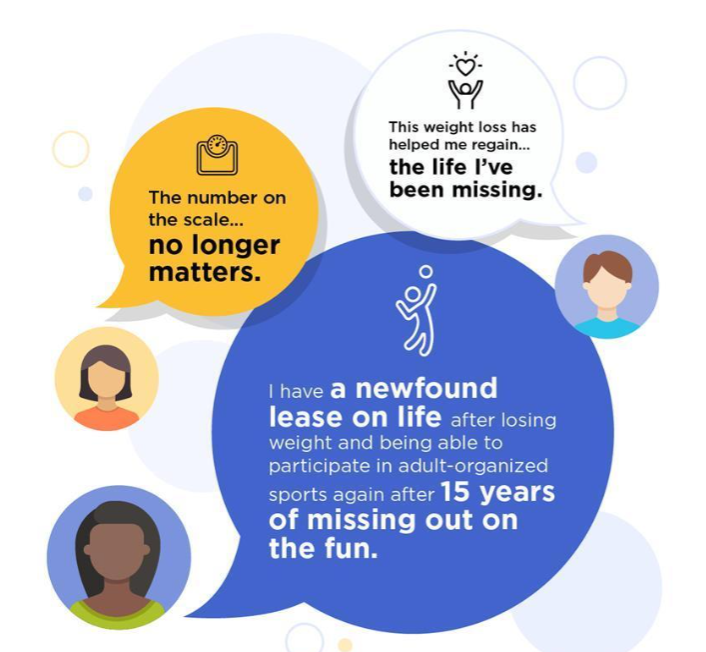
Unfortunately, these types of anecdotal statements are far too common and are largely where patient perspectives on obesity come from due to research, and then the literature, being largely focused on quantifiable outcomes with no regard for lived experience. There remains a need for a greater understanding, in the clinic and in publications, capturing the experiences of people living with obesity.
Understanding the patient perspective and hearing about the lived experiences of people with obesity can lead to breaking down preconceived notions and is crucial for changing the public and institutional perceptions of obesity. The aim of this review is to spark discussion about obesity from the patient perspective based on literature published since 2020, identify gaps where further information and understanding are needed, and identify how to implement a more holistic, patient-centered approach to reduce stigmatization and benefit people living with obesity.
Internalized bias: Lived experiences, perspectives, and goals vary greatly
PROFILES OF PEOPLE WITH OBESITY ARE DIVERSE AND HOMOGENEOUS
Internalized bias is a key driver of weight loss goals and associated weight loss challenges. With about 1 in 8 people in the world living with obesity in 2022, the obesity community is unable to identify one collective group of people with obesity due to the complexity and heterogeneity of the disease. People with obesity may experience obesity differently, making identifying population-wide goals and perspectives difficult. Surveys have only given us a glimpse into the different viewpoints on obesity. In an interview from 2022, 48 participants (24 patients with obesity, 24 physicians) demonstrated largely skewed results. This limited sample size was unable to report on how people of different backgrounds, race, or socioeconomic status may perceive obesity. In addition, most (n=21) participants were women where no data regarding ethnicity or socioeconomic status was provided making it difficult to measure the different viewpoints within and between patient and physician groups. However, this evidence can be used as a stepping stone as we begin to build a comprehensive understanding about the people living with obesity and the perspectives of the clinical community.
Not surprisingly, the weight loss goals of people with obesity may not always align to clinical recommendations. Clinically meaningful weight loss according to recommendations is defined as 5-10%, but people with obesity frequently set weight loss goals much greater than recommended. In fact, a 2024 study evaluated perspectives of people living with obesity (N=1000; mean BMI = 34.2 kg/m²) through an online survey and found that their weight loss goal was much higher at 16.7%. The clinical data supports that when it comes to weight loss, even modest amounts can offer clinically meaningful benefits for people with obesity and other comorbidities such as type 2 diabetes and cardiovascular disease. People living with obesity frequently have multiple goals or motivators for obesity management. Within the ketogenic diet clinical trial, participants had goals of anywhere between 5-20% weight loss, but each participant had other specific goals and concerns when it came to obesity management. Participants reported goals such as reducing the risk of comorbidities, fitting into their clothes better, and improved mental and physical health. Other weight loss goals or motivators can include enhancing physical appearance, improving quality of life, and fertility. A mindset shift in physicians is needed when helping patients set weight loss goals, from health-related treatment goals to patient-centered goals. Greater consideration of patient preferences and priorities could ignite a collaborative and holistic approach to managing obesity.
POTENTIAL STRATEGIES TO REDUCE BIAS
Over-focusing on weight by people with obesity (or overweight) increases self stigmatization while a positive body image has been found to be a critical component in determining the likelihood of someone achieving weight loss targets. A recent review demonstrated that internalized weight stigma may be an intervening variable between experienced and perceived weight stigma and adverse health outcomes; therefore, interventions that address internalized weight stigma may show greater improvement of health outcomes. The use of endpoints such as quality of life or muscle function could help reduce internalized bias as these measurements can be a reliable measure of overall health and successful weight management without focusing on quantitative weight loss in isolation.
Healthcare level bias: Physician support may be inadequate or inconsistent
PHYSICIAN SUPPORT FOR THE MANAGEMENT OF OBESITY
Physician’s bias is perpetuated by inconsistent understanding and support for people living with obesity, largely rooted in internalized bias of the causes and pathophysiology of obesity. Studies in the early 2000s found that physicians and nurses alike hold negative feelings about people who have overweight or obesity and were pessimistic about weight management techniques. It is unknown if this sentiment remains as education and awareness have advanced in recent years. However, a survey from 2023 revealed that 40% of physicians self-reported a high level of weight bias. Despite evidence showing that the pathophysiology of obesity is multifactorial, two recent studies that examined beliefs around obesity reported physicians continue to believe obesity is mainly a lifestyle problem. Further, a 2024 global observational study found that perceptions of obesity causes and therapeutic outcomes differed between physicians and people with obesity, with physicians citing behaviour and socio-economic factors as the primary causes.
Unlike the inconsistencies between types of people living with obesity and goals for weight loss, people with obesity tend to have a consistent view of physician support. People with obesity seek support from healthcare professionals to gain different perspectives and receive educated management support. Despite this, support provided to this population tends to be largely inadequate, likely related to physicians not receiving any formal training to treat/manage obesity in medical school. The aforementioned 2023 survey of physician bias also found that obesity-specific education varies greatly across specialties and countries: with many physicians receiving an average of between 12 and 16 hours of obesity-specific training. Experts in the field of obesity, including Dr. Arya Sharma from the University of Alberta, speculate that this lack of training leads to improper management and patient handling in clinical settings.
Within the ketogenic diet clinical trial, two participants reported feeling largely “on [their] own” when it came to the treatment of obesity since their primary care physician told them they just needed to eat less and move more – with limited direction regarding tools to help them achieve this. This is supported by a study where adults with obesity (N=33) were surveyed and reported that they believed healthcare professionals lacked information about available treatment options with patients frequently told to ‘Google it, have a look online’ when seeking support from their healthcare professional. This lack of knowledge amongst healthcare professionals is observed across the globe, with a study from New Zealand reporting that adults living with obesity also experienced feelings of ‘physicians not providing adequate support’ for their weight-related concerns. Other studies suggest that healthcare professionals neglect to diagnose obesity and also that time constraints and other health issues deprioritize their time to discuss weight loss.
People with obesity are seeking support from physicians yet physicians believe the onus is on the individual with obesity. Scottish physicians reported that structural factors such as lifestyle, lack of effective intervention, and patient-related factors (patient motivation, ignorance of consequences to health, etc.) are barriers to weight management, yet believed that primary care physician factors are not hindering appropriate treatment. This seems to be contradictory to previous reporting and the patient lived experiences described earlier.
While primary care physicians are essential in addressing obesity, many may have limited formal training in specialized obesity management and should be mindful of best practices to ensure effective care. This is further supported by a study in which primary care physicians expressed a desire to have obesity medicine training and certification to improve their ability to provide effective, evidence-based obesity treatment. The lack of knowledge and guidance from respected “experts” leaves people with obesity feeling as if they have no control over their own healthcare requirements. Primary care education and awareness needs to be a top priority for the clinical community as the lack of knowledge is perceived as non-collaborative and non-patient-centered and can significantly affect their patient relationship.
POTENTIAL STRATEGIES TO REDUCE BIAS
In a 2024 study, people with obesity expressed hope that personalized obesity medicine will reduce stigma, improve understanding of obesity as a disease, and lead to improved treatment acceptance, adherence, and efficacy. Inconsistent views of the pathophysiology of obesity between physicians and people with obesity may present barriers to effective discussions about weight and treatment. Primary care physicians should prioritize patient-centered approaches to facilitate effective communication.
On top of adopting a personalized, patient-centered approach to treatment, continued education of patient goals in obesity, and acknowledgement of the lived experiences of people with obesity, is a simple method to reduce public/physician bias within the research community. Technology, such as social media and artificial intelligence (AI) can be valuable, low cost, and easily accessible tools for obesity education through dissemination of patient-centered language, shared-decision making approaches, and management strategies. Health professionals should use social media as a platform to engage with each other and people living with obesity, as both content creators and audience members, to help identify common population-wide goals. Despite some physicians adopting social media for continued education, future studies are needed to determine the impact and efficacy of social media as an educational tool in improving obesity health literacy.
Institutional bias: Recommendations are outdated
DIAGNOSTIC CRITERIA FOR OBESITY
Body mass index has long been believed to be the diagnostic measurement of obesity, however it is known to both underestimate and overestimate adiposity and true obesity. Despite being useful for large-scale communities and epidemiological studies, this is not an appropriate measurement of obesity in isolation at the individual level. While working closely with people with obesity, it is clear that BMI has the ability to both underestimate and overestimate adiposity and true obesity based on lifestyle, health conditions, genetics, and environmental factors. Up until recently, there was no well-defined definition of obesity, and most people believed BMI was the most appropriate measurement of obesity. In January 2025, the Lancet released an updated definition and diagnostic criteria for clinical obesity echoing this sentiment. The Lancet commission has adopted a more comprehensive definition for diagnosing clinical obesity with the addition of pre-clinical obesity and places a higher emphasis on overall health rather than BMI alone. With a new understanding, BMI should be considered alongside other health indicators and lifestyle factors when determining disease diagnosis. As a physician, focusing on overall wellness rather than just the number on the scale may lead to a healthier, happier individual with obesity and an overall improved quality of everyday living.
TREATMENT GUIDELINES FOR OBESITY
Obesity needs to be recognized as an independent chronic disease not a risk factor for other comorbidities. Management needs to focus on improved health and well-being rather than weight loss to a specific target. Recognizing that obesity management guidelines lack consistency globally, it is important that these recent, more holistic recommendations from the Lancet Commission be thoughtfully considered as we collectively look to change our point of view and change how we interact with and manage people with obesity.
WHAT SHOULD BE THE FUTURE VIEW FOR OBESITY?
The prevalence of obesity continues to grow year on year, with the prevalence expected to reach 1 billion people worldwide by 2030. The treatment of obesity has changed drastically in the past decade, however, updated guidelines and clinician consensus, and physician education is vital. Future studies will be needed to identify if 1) updated guidelines will be adopted into clinical practice and 2) if patients realize a beneficial change in overall care.
Despite the publication of the Lancet commission’s updated diagnostic criteria, there remains a need for updated treatment guidance that reflect the current scientific advancements and clinical practice. What remains missing from clinical guidelines and clinical practice is an understanding of the perspective of living with obesity at the level of the individual, their hopes, beliefs and desired outcomes. Clinicians are encouraged to seek out the patient’s perspective and continue to learn about the lived experience of obesity to make these individuals feel heard and truly supported.
Conclusion
Obesity remains a significant public health issue globally despite ongoing efforts to address the complexity of disease. Clinical approaches often focus primarily on weight loss but fail to take patient perspectives and lived experiences into consideration which leads to further unintentional bias within the scientific community. Being open to accepting institutionalized internalized bias is the first step to reducing stigma and understanding the health concerns of people with obesity is vital to identifying appropriate treatment. There remains a lack of data, a failure to understand the lived experience of a person with obesity, leading to a failure to truly convey their perspective or their needs within the clinical community. We often fail to ask these individuals what their primary health concerns are and to truly understand their desired outcome, whether that may be to lose 20 lbs or be able to go for walks with family or friends after work.
The introduction of updated diagnostic criteria was the first step, but this now highlights the need for updated clinical management guidelines that consider both the physiological aspects of obesity and the goals of the person at the center of the disease. By taking patient perspective, concerns, and goals into consideration, this will lead to reduced stigmatization at all three levels discussed earlier and lead to better long-term outcomes for people living with obesity.
Conflict of interest statement
Rachel Abramczuk and Bonnie Kuehl have no conflicts of interest to report. Ted Kyle has consulted for, been an advisor for, or spoken on behalf of the following organizations: Novo Nordisk, Nutrisystem, Emerald Lake Safety, Roman Health Ventures, Boehringer Ingelheim.
Author acknowledgements
The authors acknowledge Sylvia Santosa as the lead researcher of the clinical study team where patient testimonials were sourced from, Alayna Lea for providing editorial support for the development of this manuscript, and Lillian Piekut for the graphical design of the figure.
References
- World Health Organization. Obesity and overweight. Updated March 1, 2024. Accessed March 23, 2025. https://www.who.int/news-room/fact-sheets/detail/obesity-and-overweight
- Timpson NJ, Wade KH, Smith ML, et al. New insights into understanding obesity: from measures to mechanisms. BMJ Medicine. 2024;3(1):e000787.
- Salas RX, et al. Disconnect between the perceptions of people with obesity and their physicians in real-world settings in Europe, the United States, and Australia. Abstract 0687. ECO 2025, Malaga, Spain.
- Craig HC, et al. Patient perspectives about treatment preferences for obesity with complications. Obesity Sci Pract. 2023;10(1):e720.
- Okolo D, Akpanumo B, Okeke CH, et al. The influence of obesity on quality of life: A systematic review. J Adv Med Medl Res. 2024;36(11):267-279.
- NCD Risk Factor Collaboration. Worldwide trends in underweight and obesity from 1990 to 2022: a pooled analysis of 3663 population-representative studies with 222 million children, adolescents, and adults. Lancet. 2024;403(10431):1027-1050.
- Shahed Q, et al. Doctors and patients’ perspectives on obesity. A Q-methodology study. Fam Pract. 2022;39(4):694-700.
- Horn DB, Almandoz JP, Look M. What is clinically relevant weight loss for your patients and how can it be achieved? A narrative review. Postgraduate Medicine. 2022;134(4):359-375.
- American Diabetes Association. Improving care and promoting health in populations: Standards of medical care in diabetes – 2020. Diabetes Care. 2020;43(supplement 1):S7-S13.
- Apovian CM, et al. Pharmacological management of obesity: An endocrine society clinical practice guideline. JCEM. 2016;100(2):342-362.
- Yunus NA, et al. Patients’ experience of accessing healthcare for obesity in Peninsular Malaysia: a qualitative descriptive study. BMJ Open. 2023;13:e071087.
- Penney TL, Kirk SF. The Health at Every Size paradigm and obesity: Missing empirical evidence may help push the reframing obesity debate forward. Am J Public Health. 2015;105:e38-e42.
- Burckhardt CS, Anderson KL. The Quality of Life Scale (QOLS): Reliability, validity, and utilization. Health Qual Life Outcomes. 2003;1:60.
- Vallis M. Quality of life and psychological well-being in obesity management: improving the odds of success by managing distress. Int J Clin Pract. 2016;70(3):196-205.
- Wadden TA, Phelan S. Assessment of quality of life in obese individuals. Obesity Res. 2002;10(Suppl 11):50S-57S.
- Hayes A, Raghunandan R, Killedar A, et al. Reliability, acceptability, validity and responsiveness of the CHU9D and PedsQL in the management of quality of life in children and adolescents with overweight and obesity. Int J Obes. 2023;47:622-629.
- Sizoo D, de Heide LJM, Emous M, et al. Measuring muscle mass and strength in obesity: a review of various methods. Obes Surg. 2020;31(1):384-393.
- Bocquier A, Verger P, Basdevant A, et al. Overweight and obesity: knowledge, attitudes, and practices of general practitioners in France. Obes Res. 2005;13(4):787-795.
- Brown I, Thompson J. Primary care nurses’ attitudes, beliefs and own body size in relation to obesity management. J Adv Nurs. 2007;60(5):535-543.
- Dixon JB, Ghani RA, Sbraccia P. Perceptions of obesity among healthcare professionals and policy makers in 2023: Results of the Global OPEN Survey. Obes Sci Pract. 2025;11(1):e700333.
- Masood B, Moorthy M. Causes of obesity: a review. Clin Med (Lond). 2023;23(4):284-291.
- Lee A, Cardel M, Donahoo WT. Social and environmental factors influencing obesity. Endotext. Updated October 1, 2019. Accessed March 26, 2025. https://www.ncbi.nlm.nih.gov/books/NBK278977/
- Norman K, et al. Understanding weight management experiences from patient perspectives: qualitative exploration in general practice. BMC Primary Care. 2023;24(45):1-9.
- Kaplan LM, Golden A, Jinnett K, et al. Perceptions of barriers to effective obesity care: Results from the national ACTION study. Obesity. 2018;26(1):61-69.
- McHale CT, Laidlaw AH, Cecil JE. Primary care patient and practitioner views of weight and weight-related discussion: a mixed-methods study. BMJ Open. 2020;10:e034023.
- Ryan L, et al. Weight stigma experienced by patients with obesity in healthcare settings: A qualitative evidence synthesis. Obes Rev. 2023;24(10):e13606.
- Oshman L, Othman A, Furst W, et al. Primary care providers’ perceived barriers to obesity treatment and opportunities for improvement: A mixed methods study. PLoS ONE. 2023;18(4):e0284474.
- Farrell E, et al. Patient perspectives on personalised medicine for obesity: An IMI2 SOPHIA study. Obesity Res Clin Pract. 2024;18(3):216-221.
- Sobel SI, Dubé JJ. Social media for obesity education: a general overview for the novice creator. Physiol Obes. 2024;48(1):114-121.
- Kim S. Trends and perspectives of mHealth in obesity control. Appl Sci. 2025;15(1):74.
- Rubino F, et al. Definition and diagnostic criteria of clinical obesity. Lancet Diabetes Endocrinol. 2025;13(3):P221-262.
- Sweatt K, Garvey WT, Martins C. Strengths and limitations of BMI in the diagnosis of obesity: What is the path forward? Curr Obesity Reports. 2024;13:584-595.
- National Heart, Lung, and Blood Institute. Overweight and obesity causes and risk factors. Updated March 24, 2022. Accessed March 21, 2025. https://www.nhlbi.nih.gov/health/overweight-and-obesity/causes
- Yumuk V, et al. European guidelines for obesity management in adults. Obes Facts. 2015;8(6):402-424.
- Wharton S, et al. Obesity in adults: a clinical practice guideline. CMAJ. 2020;192(31):E875-E891.
- International Diabetes Federation. One billion people globally estimated to be living with obesity by 2030. Posted March 4, 2022. Accessed March 26, 2024. https://idf.org/news/one-billion-people-globally-estimated-to-be-living-with-obesity-by-2030/