


Polyoxometalates: Anti-Aging Applications and Insights
Biological activity of polyoxometalates and their applications in anti-aging
Katsuaki Dan 1,2, Hseng-Long Yeh3,4
- Division of Research and Development, Research Organization of Biological Activity, Tokyo, Japan
- Department of Pathophysiology, Yokohama University of Pharmacy, Yokohama, Japan
- School of Public Health, College of Public Health, Taipei Medical University, Taipei, Taiwan.
- Division of Cardiology, Department of Internal Medicine, Sijhih Cathay General Hospital, Sijhih City, Taipei, Taiwan.
OPEN ACCESS
PUBLISHED: 31 December 2024
CITATION: Dan, K., Yeh, H., et al., 2024. Biological activity of polyoxometalates and their applications in anti-aging. Medical Research Archives, [online] 12(12). https://doi.org/10.18103/mra.v12i12.6108
COPYRIGHT: © 2025 European Society of Medicine. This is an open-access article distributed under the terms of the Creative Commons Attribution License, which permits unrestricted use, distribution, and reproduction in any medium, provided the original author and source are credited.
DOI https://doi.org/10.18103/mra.v12i12.6108
ISSN 2375-1924
ABSTRACT
Polyoxometalates (PM) exhibit a wide range of biological activities, such as antimicrobial, antitumor, and antiviral properties against neurodegenerative diseases and have been investigated for applications in catalysis and energy accumulation. Some PMs are more active than existing medicines; however, they have not been applied. In order to utilize PM, which has been found to have a wide variety of biological activities, we have discovered the possibility of bringing it into the anti-aging field. Recently, the global average life expectancy has increased, and cancer and senescence reveal an integral relationship to this aspect. For example, in anti-aging research, eliminating senescent cells from the body can increase life expectancy. Cancerous cells are either arrested during cell division as they are perceived as senescent cells or directed toward cell death by apoptosis or ferroptosis. Cancer cells are also resistant to these processes. Such interactions between cancer cells and biological defense mechanisms can also be applied to normal cells, which may lead to anti-aging effects. This review focuses on the literature available on PM, identifies the effects that broadly encompass age-related diseases from conventional disease-by-disease correspondence, and describes its potential in novel aspects of anti-aging.
Keywords
polyoxometalates, anti-aging, biological activity, cancer, senescence
Introduction
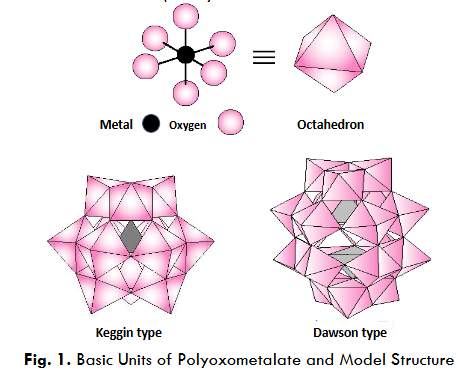
Polyoxometalates (PM; referred to as POM in some studies) can incorporate several elements (mainly transition metal elements) into characteristic multiconformations, leading to extremely diverse synthetic compounds (Fig. 1).
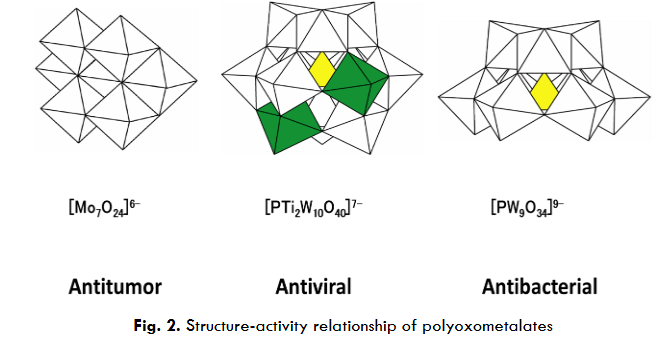
Structure-activity relationships have been determined for the conformation and biological activity of PM. Modification of the diagram (Fig. 2). This review provides a brief introduction to the main biological activities of PM, including their antimicrobial, antitumor, and neurodegenerative effects, which have been reported to date, with a focus on their antiviral effects. However, the main objective of this review is to generate interest in the anti-aging effects of PM.
Background
In the 21st century, the damage caused by viral infectious diseases continues, with a tendency for the occurrence of SARS, MARS, COVID-19, and other similar diseases to become more frequent. While human lifespan has nearly doubled over the past 100 years, this has also led to an age-related decline in the functions of the heart, brain, kidneys, and other organs, as well as an increased incidence of lifestyle-related diseases such as cancer and diabetes. In this scenario, it has become impossible to prescribe drugs to cope with individual diseases; hence, anti-aging drug development, also known as preventive medicine research, has been established to suppress age-related diseases in a single network. Senescent cells can extend their lifespan by ceasing cell division, and cancer suppressor mechanisms mimic this process by ceasing the division of cells at risk of becoming cancerous during spontaneous senescence, a process in which cells divide repeatedly. Cancer cells exhibit drug resistance. Anti-aging is being investigated by using these biological defense mechanisms in normal cells.
As a number of PMs have been synthesized, there have been several excellent reviews covering their chemical properties, structural characterization, catalytic, photochemical, and electrochemical activities, and various biological activities (antiviral, antimicrobial, and antitumor effects). In the history of the study of PM, researchers have been working on PM synthesized by Dr. Yamase from screening stage for antivirally active compounds. In particular, keggin of heteropolyoxotungstate, K7[PTi2W10O40]∙6H2O (PM-19), has revealed extensive activity against HIV and other DNA viruses, including one aspect of the mechanism of action against herpes simplex virus (HSV). Dr. Shigeta noted in a review that “PM has been proven to be a broad-spectrum, nontoxic antiviral RNA in both in vitro and in vivo studies and is a promising candidate for first-line treatment of acute respiratory illness.” Some existing pharmaceuticals have active ingredients against other diseases because of their mechanisms of action and are clinically useful because of their proven safety. Other PM compounds exhibit more potent antimicrobial and antiviral activities than drugs; however, they have not yet been developed for various reasons, such as lack of time for the drug to remain in the body, indicating inadequate time for the drug to be effective, and lack of sponsors.
In the context of the inability to utilize many active compounds effectively or through trial and error, applications have been found in categories other than pharmaceuticals, such as public health, cosmetics, regeneration, or anti-aging. Evidence is scarce; however, the present review introduces new possibilities with the hope that they will be further utilized in translational research.
Antiviral activity of polyoxometalates
The activity of PM against viruses has been reported. [SiW12O40]4 of the Kegin structural PM inhibited the friend leukemia virus and Moloney murine sarcoma virus in vitro, whereas [Na(SbW7O24)3(Sb3O7)2]18 (equivalent to the French drug HPA-23) inhibited these viruses in vivo. Subsequently, many polyoxotungstate salts with Keggin or Wells–Dawson structures were reported to exhibit DNA and RNA viral inhibition activity in vitro. Specifically, K13[Ce(SiW11O39)2]∙26H2O (JM1590) and K6[BGa(H2O)W11O39]∙15H2O (JM2766) potently suppressed HIV-1 and simian immunodeficiency viruses at low doses of 0.008–0.8 μM. [(VIVO)3(SbW9O33)2]12 and [(VVO)(VIVO)2(SbW9O33)2]11 were demonstrated to have much higher selection index (SI) values (>104) than the licensed drugs AZT and dextran-sulfate against various enveloped viruses. K11H[(VO)3(SbW9O33)2]∙27H2O (PM-1002) has been reported as an antiviral (specifically anti-SARS) active compound. Polyoxotungstate, PM-19, exhibits potent blockade both in vitro and in vivo against a wide range of DNA viruses and has also been observed to be effective against thymidine kinase-deficient (TK) HSV mutants, particularly HCMV, including HSV type 1 (HSV-1) and HSV type 2 (HSV-2). PM-19 inhibited viral entry and secondary infection of host cells without direct interaction with HSV. PM-19 pretreated cells resulted in an approximately 10-fold enhancement of the anti-HSV potency after infection of PM-19 compared to cells treated with only PM-19. Overall, PM-19 inhibited interactions between HSV envelopes; the pretreatment of cells with proteins (gD, glycosylated ectodomain) and cell-surface membrane proteins (HVEM), suggests the strong binding between HVEM and PM-19. HSV-2-infected immunosuppressed mice also revealed significant in vivo efficacy of PM-19 through multiple mechanisms involving direct inhibitory effects on viral replication (inhibition of viral adsorption) as well as host-mediated antiviral responses (activation of macrophages). The conformation and activities of several PMs have been described. PM inhibited the replication of HIV-1 (IIIb), with an inhibitory value ranging between 0.03 and 2.0 μM, and other RNA viruses, such as dengue fever virus, influenza virus A, respiratory syncytial virus, parainfluenza virus type 2, and canine distemper virus. As an inhibitor of viral RNA synthesis, PM also exerted a stronger inhibitory effect on intracellular inosine monophosphate dehydrogenase activity than ribavirin. The difference in the antiviral activity of PM against various RNA viruses may depend on the composition of the target amino acid sequence of the viral envelope glycoprotein. Regarding the mechanism of action against RNA viruses, it is hypothesized that these PMs inhibit severe acute respiratory syndrome coronavirus (SARS-CoV), as antiviral PMs inhibit the adsorption of most enveloped RNA viruses onto host cells. Indeed, the selectivity index (SI) against SARS-V was demonstrated, and PM-1002 revealed high SI levels among the PMs studied, as well as anti-TGEV activity. For a comprehensive review of the antiviral activity and mechanism of action of PM before 2013, we have indicated the following excellent reviews. Subsequent reports of HIV and new coronaviruses are presented in a brief list, as PM has broadly demonstrated antiviral activity.
Polyoxometalates bind with high-affinity to 3CL (pro) in the active site regions of SARS. The ability of functionalized PMs to inhibit HIV-1 protease has been described, and the anti-influenza activity of a novel polyoxometalate derivative (POM-4960) has also been described. The synthesis, characterization, and biological activity against the hepatitis B virus of niobium-substituted heteropolytungstates have been described. Enhanced in vitro anti-HIV activity of caffeine-functionalized PMs has been reported. Metallodrug profiling against SARS-CoV-2 target proteins revealed highly potent inhibitors of S/angiotensin converting enzyme 2 (ACE2) interaction and papain-like protease PLpro. Polyoxometalates (referred to as POM in the report) can prevent the cellular entry of coronavirus 2019-nCoV, and the interaction of POM with transmembrane serine protease 2 and the spike receptor domain in complex with ACE2 (ACE2-receptor-binding domain) has been described. Among the many PMs, basic research on the anti-viral activity, analysis of the mechanism of action, and applications to the living environment using K7[PTi2W10O40]∙6H2O (PM-19), K11H[(VO)3(SbW9O33)2]∙27H2O (PM-1002), and Na2[SbW9O34]·19H2O has progressed in particular. Notably, K11H[(VO)3(SbW9O33)2]∙27H2O (PM-1002) exhibits high activity (KD; 10-9 M) against viruses (Influenza A virus matrix 2 protein, SARS-CoV-2, norovirus GII.4, and VP1 VLP) and has been incorporated into the surface materials of sanitary products (hand towels) and stationery (ballpoint pens) to confirm its antibacterial and antiviral effects. Though many antiviral agents have been developed, their main action is to terminate the viral infection process. However, the emergence of resistance strains remains a problem. PM acts on the cell surface. It has a high affinity but does not kill the virions, and its main mode of action is to inhibit adsorptive entry into the cell. PM has a different mechanism of action from conventional antiviral agents and low cytotoxicity, making it potentially effective against emerging viruses. This activity is not limited to administration to the body, and the possibility is sufficient if applications such as adaptation to the living environment are considered.
Antibacterial PM
Although antibiotics have been used as antibacterial agents, the emergence of resistant strains is a major issue. This has led to a strong need for novel chemotherapeutic agents against methicillin-resistant Staphylococcus aureus (MRSA) and vancomycin-resistant Staphylococcus aureus (VRSA) strains. Most antiviral polyoxotungstates have promising synergy with β-lactam antibiotics against Gram-positive MRSA and VRSA strains. Antibacterial PM has also been shown to be effective against gram-negative bacteria such as Streptococcus pneumoniae and Helicobacter pylori. Heteropolyoxotungstate, PM-19, which exhibits broad activity against DNA viruses, also revealed antimicrobial effects and synergistic effects with oxacillin. Since 2018, various synthesized PMs have exhibited efficacy against Escherichia coli, O-157, Staphylococcus aureus, and various fungi. Structure-activity relationships of a series of POM for Helicobacter pylori and Streptococcus pneumoniae have been demonstrated. The three most active compounds ([NaP5W30O110]14-, [P2W18O62]6-, and [H3P2W15V3O62]6-) exhibited bacteriostatic efficacy against M. catarrhalis in bactericidal rate studies. Decavanadate inhibited mycobacterial growth more potently than other oxovanadates. In vitro antifungal activity and mechanism of Ag3PW12O40 composites against Candida bacteria have been analyzed. The adaptive responsiveness of POM-based triple assemblies, such as peroxidases, to the bacterial microenvironment greatly enhanced antimicrobial efficacy. An examination of the synergy between PMs and β-lactam antibiotics is desirable from the viewpoint of the appearance of resistant strains.
Antitumor PM
In 1988, the antitumor efficacy of polyoxomolybdate, [Mo7O24]6 (PM-8), was reported in vitro and in vivo against solid human cancer (breast, lung, and colon cancer) xenografts (MX-1, OAT, CO-4, respectively). Na5[IMo6O24]∙34H2O (PM-32), 5-FU, ACNU, and cis-diamminedichloroplatinum (II) (CCDP) have also been evaluated as controls. The antitumor potency of PM-8 against CO-4 human colorectal cancer is comparable to that of approved drugs. The photoreduction product of PM-17(PM-8) revealed more effective cancer-killing potency against AsPC-1 human pancreatic cancer cells and MKN-45 human gastric cancer cells than PM-8, suggesting apoptotic body formation of cells by DNA fragmentation in cells with AsPC-1 and MKN-45 in PM-17 and PM-8. Intravital cell killing by PM-17 was observed to be based on apoptosis in parallel with autophagy. Other reports of antitumor efficacy are briefly listed. CD39 activity on Tregs is significantly inhibited by PM (polyoxometalate-1), an inhibitor of nucleoside triphosphate diphosphohydrolase activity. Oxomolybdate complexes with functionalized bisphosphonate ligands have been reported to have tumor cell-killing activity. The synthesis, structure, magnetic and spectroscopic characterization, and activity against tumor cell lines of PMs functionalized with bisphosphonate trigger have been verified. β-diketone-cobalt complexes have been reported to inhibit DNA synthesis and induce S-phase arrest in rat C6 glioma cells. Lanthanide-bound and solitary electron-paired active triangular cone AsO3 has been reported to induce nanosized poly (polyoxotungstate) aggregates and anticancer activity. Polyoxometalate, POM macroanions showed high cytotoxicity against various cancer cells, particularly ovarian cancer cells. Degradable organic-derivatized PMs showed enhanced activity against glioblastoma cell lines. Apoptosis has been reported in human lung cancer A549 cells. Na7CrCuW11O39.16H2O induces apoptosis in human ovarian carcinoma SKOV3 cells via the p38 signaling pathway. We reported for the first time that hybrids of Mo6L2 (L = Zol, ZolC6, ZolC8) and Mo4L2Mn (L = Zol, ZolC8) heteropolyoxomolybdate bisphosphonates kill tumor cells in vitro and greatly reduce tumor growth in vivo. The efficacy against cancers caused by Ras and epidermal growth factor receptor (EGFR) is of interest. Polyoxometalate-doped silica nanospheres were synthesized and exhibited cytotoxicity and antitumor mechanism in breast cancer MCF-7 cells. The antiproliferative activity and mechanism of action of K12[V18O42(H₂O)]∙6H₂O on breast cancer cell lines have been verified. A Polyoxometalates-encapsulated metal-organic framework nanoplatform has been constructed for synergistic photothermal chemotherapy and anti-inflammation in ovarian cancer. pH-sensitive molybdenum (Mo)-based PM nanoclusters exert therapeutic effects against inflammatory bowel disease by counteracting ferroptosis.
Anti-neurodegenerative disease activity PM
Polyoxometalate is involved in the precipitation of prion protein and is involved in the aggregation of amyloid-beta and scrapie. Polyoxometalate promoted nerve growth factor (NGF)-induced neurite outgrowth in PC12 cells, accompanied by the expression of axon growth-associated protein 43 (GAP-43). Nerve growth factor (NGF) induced neurite outgrowth of PC12 cells, Na9[SbW(9)O(33)].19.5H(2)O (SbW(9)) or (NH(3)Pr(i))6[Mo(7)O(24)].3H(2) promoted by PMs such as O (Mo(7)). This finding suggests that PM may be a candidate for new drugs for neurodegenerative diseases such as Alzheimer’s disease, especially because rat neuronal PC12 differentiated by NGF stimuli is used as an in vitro model for the characterization of neurotoxins. The surface charge of PMs regulates the polymerization of scrapie prion proteins. PM exerts Aβ and peroxidase-like activity inhibitory effects. The mechanism of scrapie prion precipitation by phosphotungstic acid anion has been demonstrated. β-amyloid aggregation was monitored using multifunctional peptide-conjugated gold nanorods and chemophotothermal therapy for Alzheimer’s disease. PM-modified gold nanoparticles inhibit β-amyloid aggregation and cross the blood-brain barrier in a μ physiological model.
Additional activity of PM
The activity of PM is not limited to biological activity but can vary. Areas related to catalysis and energy accumulation are beyond the scope of this review; however, some are interesting from an antiaging perspective. Solar-induced direct biomass-electric hybrid fuel cells that can use PMs as photocatalysts and charge carriers have been described. Molybdenum-PM nanoparticles have been reported to inhibit tumor growth and vascular endothelial growth factor-induced angiogenesis. Bioresponsive PM clusters that can be used in redox-activated photoacoustic imaging-guided photothermal cancer therapy have been described. Molybdenum-based nanoclusters have been reported to function as antioxidants and reduce acute kidney injury in mice. Inhibition of ATP hydrolysis in cystic fibrosis airway epithelium has been reported to restore airway surface liquid production. Molybdate injected into molybdenum storage proteins has been reported to act via an ATP-driven perforation mechanism. Polyoxotungstate has been reported for the first time to inhibit aquaporin-3. PM SbW9 controls the growth and apoptosis of NSCLC cells through the PTEN-dependent AKT signaling pathway. Nanoclusters (NIR-responsive molybdenum (Mo)-based) could enhance reactive oxygen species (ROS) scavenging in osteoarthritis treatment.
Future Outlook for PM (Anti-aging effects)
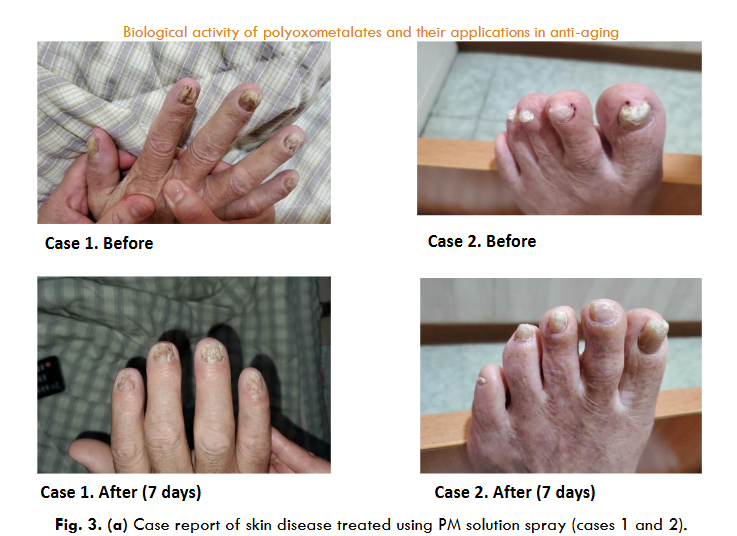
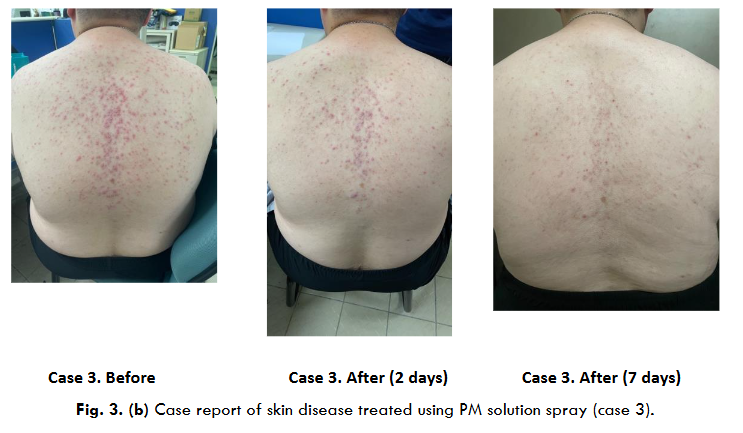
There is an extremely high potential for an overview of the various activities of PM. Certain researchers are involved in the development of PM medicines and continue to conduct research into how PM should be utilized in the future. A wide range of applications, including adaptation to living environments, regenerative medicine, and anti-aging, is being worked on. In recent years, clinical applications of heteropolyoxotungstic acid as an antibacterial and antiviral agent have been confirmed under the supervision of Dr. Yeh, a Taiwanese clinician, who confirmed that a spray containing heteropolyoxotungstic acid was extremely effective against skin inflammation (mainly fungal infections) on the hands, fingers, backs, and other areas of various patients (case report in preparation). Verification using parameters was impossible; however, some cases are shown in Fig. 3a, b.
The inclusion of sanitary products and stationery was also examined. Drug safety requires a significant difference between the minimum effective and cytotoxic concentrations, and PM meets this requirement. The certification standards for the antibacterial and antiviral properties of everyday products are determined by their ability to directly kill bacteria and viruses and not have any effects on living organisms. As an application of the anti-aging effects of PM, it was envisaged that PM would be incorporated into cosmetics. The repair ability of PM in skin fibroblasts damaged by aging stress has been verified. Polyoxomatalate significantly increased the mRNA levels of receptors and several heat shock proteins that recognize and eliminate AGE under glycation stress (AGE). Under oxidative stress (H2O2), aquaporin (AQP-1, AQP-3) mRNA levels and hyaluronan and elastin generation were recovered. Polyoxotungstate (POT) affects the activity of aquaporin-3 (AQP3) and inhibits melanoma cell migration. Of the 20 aquaporins, AQP-1 and AQP-3 are expressed in the skin. In addition to the elevation of aquaporin-3 (AQP3) in melanoma cells and its inhibition by PM, our findings indicate that PM can improve AQP expression, even under aging stress. Polyoxotungstate (POM-1) treatment associated with ferroptosis increased lipid peroxidation levels by 5.6-fold, indicating increased expression of ferroptosis-related proteins. Cancer cells take up cystine so that they cannot die by ferroptosis. The antioxidant-reduced glutathione (GSH) is used to eliminate ROS and prevent cell death. Cancer research is currently examining whether cancer cells can be killed via ferroptosis by blocking the uptake of cystine. If PM increases cystine uptake by stressed dermal fibroblasts, it may eliminate ROS accumulation and delay cellular senescence. Evidence suggests that cancer and senescence may also be linked. In addition, when human mesenchymal stem cells are cultured with PM, exosomes secreted by stem cells also differ from conventional exosomes. We also confirmed that these preconditioned exosomes positively affected cellular senescence (These results are currently being prepared for publishing; therefore, the details cannot be revealed). Although not simplistic, PM may be useful in anti-aging areas.
Conclusion
Despite the far-reaching body of evidence regarding the biological activity of PM, it has not yet been developed as a new drug. Notably, the strength of activity in a common conformation depends, in part, on the type and number of transition metal elements incorporated. New synthetic PM and their hybridization with other molecules may be possible in the future. Progress has been made in elucidating the mechanism of action in several pathological conditions and cells. In the future, we hope to achieve a breakthrough that will enable PM to be applied in many areas beyond just medicine. In a society with increased life expectancy, cancer and aging are in an integral relationship, and controlling both will change the future of medicine. In anti-senescence research, the goal of eliminating senescent cells and treating aging-related diseases has been established. This review was written considering that PM might have been responsible for it.
Conflict of Interest Statement
The authors have no conflicts of interest to declare.
Funding
This review was funded in part by the Research Organization of Biological Activity, to which the authors are affiliated.
Acknowledgments
We thank Dr. Yamase for his guidance on the supply of raw materials for PM for synthetic methods, biological activities, and for my degree (K.Dan; Tokyo Institute of Technology). We would like to thank all members of FSX Inc. (CEO; Mr. Fujinami), who participated in the clinical implementation of the PM for their continued cooperation. We would like to thank Editage (www.editage.jp) for the English language editing.
References
- Moonshot Goal 1 Realization of a society in which human beings can be free from limitations of body, brain, space, and time by 2050. https://www.cao.go.jp/index-e.html.
- De Clercq E. Antiviral therapy for human immunodeficiency virus infections. Clin Microbiol Rev. 1995;8(2):200-239. doi:10.1128/CMR.8.2.200.
- Shigeta S. Recent progress in anti-influenza chemotherapy. Drugs R D. 1999;2(3):153-164. doi:10.2165/00126839-199902030-00001.
- De Clercq E. New developments in anti-HIV chemotherapy. Curr Med Chem. 2001;8(13):1543-1572. doi:10.2174/0929867013371842.
- De Clercq E. New developments in anti-HIV chemotherapy. Biochim Biophys Acta. 2002;1587(2-3):258-275. doi:10.1016/S0925-4439(02)00089-3.
- Yamase T. Polyoxometalates active against tumors, viruses, and bacteria. Prog Mol Subcell Biol. 2013;54:65-116. doi:10.1007/978-3-642-41004-8_4.
- Yamase T. Photochemical studies of the alkylammonium molybdates. Part 6. Photoreducible octahedron site of [Mo7O24]6- as determined by electron spin resonance. JCS. Dalton Trans. 1982:1987-1991.
- Yamase T. Antitumoral and antiviral polyoxometalates (inorganic discrete polymers of metal oxide). In: Salamone JC, ed. Polymeric Materials Encyclopedia: Synthesis, Properties, and Applications. Boca Raton, FL: CRC Press; 1996.
- Yamase T. Photoredox chemistry of polyoxometalates as a photocatalyst. Catal Surv Asia. 2003;7(4):203-217. doi:10.1023/B:CATS.0000008161.21857.0d.
- Dan K, Miyashita K, Seto Y, Yamase T. Quantitation of herpes simplex viral DNA in Vero cells for evaluation of an antiviral agent using the polymerase chain reaction. J Virol Methods. 1998;76(1-2):73-79. doi:10.1016/s0166-0934(98)00124-4.
- Dan K, Miyashita K, Seto Y, Fujita H, Yamase T. The memory effect of heteropolyoxotungstate (PM-19) pretreatment on infection by herpes simplex virus at the penetration stage. Pharmacol Res. 2002;46(4):357-361. doi:10.1016/s1043661802001706.
- Dan K, Miyashita K, Seto Y, Fujita H, Yamase T. Mechanism of the protective effect of heteropolyoxotungstate (PM-19) against herpes simplex virus type 2. Pharmacology. 2003;67(2):83-89. doi:10.1159/000067738.
- Dan K, Yamase T. Prevention of the interaction between HVEM, herpes virus entry mediator, and gD, HSV envelope protein, by a Keggin polyoxotungstate, PM-19. Biomed Pharmacother. 2006;60(4):169-173. doi:10.1016/j.biopha.2006.02.005.
- Jasmin C, Raybaud N, Chermann JC, et al. In vivo effects of silicotungstate on some RNA viruses. Biomedicine. 1973;18(4):319-327.
- Jasmin C, Chermann JC, Hervé G, et al. In vivo inhibition of murine leukemia and sarcoma viruses by the heteropolyanion 5-tungsto-2-antimonate. J Natl Cancer Inst. 1974;53(2):469-474. doi:10.1093/jnci/53.2.469.
- Hill CL, Weeks MS, Schinazi RF. Anti-HIV activity, toxicity, and stability studies of representative structural families of polyoxometalates. J Med Chem. 1990;33(10):2767-2772. doi:10.1021/jm00172a014.
- Inouye Y, Take Y, Tokutake Y, et al. Inhibition of replication of human immunodeficiency virus by a heteropolyoxotungstate (PM-19). Chem Pharm Bull (Tokyo). 1990;38(1):285-287. doi:10.1248/cpb.38.285.
- Fukuma M, Seto Y, Yamase T. In vitro antiviral activity of polyoxotungstate (PM-19) and other polyoxometalates against herpes simplex viruses. Antiviral Res. 1991;16(4):327-339. doi:10.1016/0166-3542(91)90047-u.
- Take Y, Tokutake Y, Inouye Y, et al. Inhibition of proliferation of human immunodeficiency virus type 1 by novel heteropolyoxotungstates in vitro. Antiviral Res. 1991;15(2):113-124. doi:10.1016/0166-3542(91)90029-q.
- Weeks MS, Hill CL, Schinazi RF. Synthesis, characterization, and anti-human immunodeficiency virus activity of water-soluble salts of polyoxotungstate anions with covalently attached organic groups. J Med Chem. 1992;35(7):1216-1221. doi:10.1021/jm00085a008.
- Yamamoto N, Schols D, De Clercq E, et al. Mechanism of anti-human immunodeficiency virus action of polyoxometalates, a class of broad-spectrum antiviral agents. Mol Pharmacol. 1992;42(6):1109-1117.
- Ikeda S, Nishiya S, Yamamoto A, Yamase T, Nishimura C, De Clercq E. Activity of the Keggin polyoxotungstate PM-19 against herpes simplex virus type 2 infection in immunosuppressed mice; role of peritoneal macrophage activation. J Med Virol. 1993;41(3):191-195. doi:10.1002/jmv.1890410304.
- Shigeta S, Mori S, Watanabe J, Yamase T, Schinazi RF. In vitro antimyxovirus activity and mechanism of anti-influenza virus activity of polyoxometalates PM-504 and PM-523. Antivir Chem Chemother. 1996;7(6):346-352. doi:10.1177/095632029600700608.
- Shigeta S, Mori S, Watanabe J, Soeda S, Takahashi K, Yamase T. Synergistic anti-influenza virus A (H1N1) activities of PM-523 (polyoxometalate) and ribavirin in vitro and in vivo. Antimicrob Agents Chemother. 1997;41(7):1423-1427. doi:10.1128/AAC.41.7.1423.
- Barnard DL, Hill CL, Gage T, et al. Potent inhibition of respiratory syncytial virus by polyoxometalates of several structure classes. Antiviral Res. 1997;34(1):27-37. doi:10.1016/s0166-3542(96)01019-4.
- Rhule JT, Hill CL, Judd DA, Schinazi RF. Polyoxometalates in medicine. Chem Rev. 1998;98(1):327-358. doi:10.1021/cr960396q.
- Witvrouw M, Weigold H, Pannecouque C, Schols D, De Clercq E, Holan G. Potent anti-HIV(type 1 and type 2) activity of polyoxometalates: structure-activity relationship and mechanism of action. J Med Chem. 2000;43(5):778-783. doi:10.1021/jm980263s.
- Shigeta S, Mori S, Kodama E, Kodama J, Takahashi K, Yamase T. Broad spectrum anti-RNA virus activities of titanium or vanadium substituted polyoxotungstates. Antiviral Res. 2003;58(3):265-271. doi:10.1016/s0166-3542(03)00009-3.
- Yamase T, Botar B, Ishikawa E, Fukaya K. Chemical structure and intramolecular spin exchange interaction of [(VO)3(SbW9O33)2]12-. Chem Lett. 2001:56-57.
- Yamase T, Botar B, Ishikawa E, Fukaya K, Shigeta S. Magnetic exchange coupling and potent antiviral activity of [(VO)3(SbW9O33)2]12-. In: Yamase T, Pope MT, eds. Polyoxometalate Chemistry for Nanocomposite Design. Dordrecht: Kluwer Publishers; 2002.
- Ikeda S, Nishiya S, Yamamoto A, Yamase T, Nishimura C, De Clercq E. Antiviral activity of a keggin polyoxotungstate PM-19 against herpes simplex virus in mice. Antivir Chem Chemother. 1994;5(1):47-50. doi:10.1177/095632029400500107.
- Gilbert BE, Knight V. Biochemistry and clinical application of ribavirin. Antimicrob Agents Chemother. 1986;30(2):201-205. doi:10.1128/AAC.30.2.201.
- Hosoya M, Balzarini J, Shigeta S, De Clercq E. Differential inhibitory effect of sulfated polysaccharides and polymers on the replication of various myxoviruses and retroviruses, depending on the composition of the target amino acid sequences of the viral envelope glycoproteins. Antimicrob Agents Chemother. 1991;35(12):2515-2520. doi:10.1128/AAC.35.12.2515.
- Shigeta S, Yamase T. Current status of anti-SARS agents. Antivir Chem Chemother. 2005;16(1):23-31. doi:10.1177/095632020501600103.
- Hu D, Shao C, Guan W, Su Z, Sun J. Studies on the interactions of Ti-containing polyoxometalates (POMs) with SARS-CoV 3CLpro by molecular modeling. J Inorg Biochem. 2007;101(1):89-94. doi:10.1016/j.jinorgbio.2006.08.013.
- Flütsch A, Schroeder T, Grütter MG, Patzke GR. HIV-1 protease inhibition potential of functionalized polyoxometalates. Bioorg Med Chem Lett. 2011;21(4):1162-1166. doi:10.1016/j.bmcl.2010.12.103.
- Hosseini SM, Amini E, Tavassoti Kheiri M, Mehrbod P, Shahidi M, Zabihi E. Anti-influenza activity of a novel polyoxometalate derivative (POM-4960). Int J Mol Cell Med. 2012;1(1):21-29.
- Zhang H, Qi Y, Ding Y, et al. Synthesis, characterization and biological activity of a niobium-substituted-heteropolytungstate on hepatitis B virus. Bioorg Med Chem Lett. 2012;22(4):1664-1669. doi:10.1016/j.bmcl.2011.12.115.
- Enderle AG, Bosso M, Groß R, et al. Increased in vitro anti-HIV activity of Caffeinium-Functionalized polyoxometalates. ChemMedChem. 2021;16(17):2727-2730. doi:10.1002/cmdc.202100281.
- Gil-Moles M, Türck S, Basu U, et al. Metallodrug Profiling against SARS-CoV-2 Target Proteins Identifies Highly Potent Inhibitors of the S/ACE2 interaction and the Papain-like protease PLpro. Chemistry. 2021;27(71):17928-17940. doi:10.1002/chem.202103258.
- Shahabadi N, Mahdavi M, Zendehcheshm S. Can polyoxometalates (POMs) prevent of coronavirus 2019-nCoV cell entry? Interaction of POM with TMPRSS2 and spike receptor domain complexed with ACE2 (ACE2-RBD): Virtual screening approaches. Inform Med Unlocked. 2022;29:100902. doi:10.1016/j.imu.2022.100902.
- Dan K, Katoh N, Matsuoka T, Fujinami K. In vitro antimicrobial effects of virus block, which contains multiple polyoxometalate compounds, and hygienic effects of virus block-supplemented moist hand towels. Pharmacology. 2019;104(1-2):1-15. doi:10.1159/000500897.
- Fujinami K, Dan K, Tanaka-Kagawa T, Kawamura I. Anti-aging effects of polyoxometalates on skin. Appl Sci. 2021;11(24):11948. doi:10.3390/app112411948.
- Yamase T, Fukuda N, Tajima Y. Synergistic effect of polyoxotungstates in combination with β-lactam antibiotics on antibacterial activity against methicillin-resistant Staphylococcus aureus. Biol Pharm Bull. 1996;19(3):459-465. doi:10.1248/bpb.19.459.
- Yamase T, Ohtaka K, Suzuki M. Structural characterization of spherical octadecavanadates encapsulating Cl and H2O. J Chem Soc, Dalton Trans. 1996;(3):283-289. doi:10.1039/dt9960000283.
- Fukuda N, Yamase T, Tajima Y. Inhibitory effect of polyoxotungstates on the production of penicillin-binding proteins and β-lactamase against methicillin-resistant Staphylococcus aureus. Biol Pharm Bull. 1999;22(5):463-470. doi:10.1248/bpb.22.463.
- Fukuda N, Yamase T. In vitro antibacterial activity of vanadate and vanadyl compounds against Streptococcus pneumoniae. Biol Pharm Bull. 1997;20(8):927-930. doi:10.1248/bpb.20.927.
- Inoue M, Suzuki T, Fujita Y, Oda M, Matsumoto N, Yamase T. Enhancement of antibacterial activity of β-lactam antibiotics by [P2W18O62]6-, [SiMo12O40]4-, and [PTi2W10O40]7- against methicillin-resistant and vancomycin-resistant Staphylococcus aureus. J Inorg Biochem. 2006;100(7):1225-1233. doi:10.1016/j.jinorgbio.2006.02.004.
- Yang FC, Wu KH, Lin WP, Hu MK. Preparation and antibacterial efficacy of bamboo charcoal/polyoxometalate biological protective material. Microporous Mesoporous Mater. 2009;118(1):467-472. doi:10.1016/j.micromeso.2008.09.026.
- Bijelic A, Aureliano M, Rompel A. The antibacterial activity of polyoxometalates: structures, antibiotic effects and future perspectives. Chem Commun (Camb). 2018;54(10):1153-1169. doi:10.1039/c7cc07549a.
- Gumerova NI, Al-Sayed E, Krivosudský L, Čipčić-Paljetak H, Verbanac D, Rompel A. Antibacterial activity of polyoxometalates against Moraxella catarrhalis. Front Chem. 2018;6:336. doi:10.3389/fchem.2018.00336.
- Samart N, Arhouma Z, Kumar S, Murakami HA, Crick DC, Crans DC. Decavanadate inhibits mycobacterial growth more potently than other oxovanadates. Front Chem. 2018;6:519. doi:10.3389/fchem.2018.00519.
- Zhang X, Zhang T, Guo S, et al. In vitro antifungal activity and mechanism of Ag3PW12O40 composites against Candida species. Molecules. 2020;25(24):6012. doi:10.3390/molecules25246012.
- Zhang C, Liu R, Kong X, et al. Adaptive responses of a peroxidase-like polyoxometalate-based tri-assembly to bacterial microenvironment (BME) significantly improved the anti-bacterial effects. Int J Mol Sci. 2023;24(10):8858. doi:10.3390/ijms24108858.
- Yamase T, Fujita H, Fukushima K. Medical chemistry of polyoxometalates. Part 1. Potent antitumor activity of polyoxomolybdates in animal transplantable tumors and human cancer xenograft. Inorg Chim Acta. 1988;151(1):15-18. doi:10.1016/S0020-1693(00)83477-5.
- Yamase T, Tomita K, Seto Y, Fujita H. Antitumor and antiviral activities of certain polyoxometalates. In: Ottenbrite RM, Chiellini E, eds. Polymers in Medicine: Biomedical and Pharmaceutical Applications. Lancaster, PA: Technomic Publishing Company Inc; 1992:187-212.
- Lin CG, Chen W, Long DL, Cronin L, Song YF. Step-by-step covalent modification of Cr-templated Anderson-type polyoxometalates. Dalton Trans. 2014;43(23):8587-8590. doi:10.1039/c4dt00033a.
- Fujita H, Fujita T, Sakurai T, Yamase T, Seto Y. Antitumor activity of new antitumor substance, polyoxomolybdate, against several human cancers in athymic nude mice. Tohoku J Exp Med. 1992;168(2):421-426. doi:10.1620/tjem.168.421.
- Yamase T, Ozeki T, Motomura S. 183W NMR and x-ray crystallographic studies on the peroxo complexes of the Ti-substituted α-Keggin typed tungstophosphates. Bull Chem Soc Jpn. 1992;65(5):1453-1459. doi:10.1246/bcsj.65.1453.
- Yamase T. Polyoxometalates for molecular devices: antitumor activity and luminescence. In: Pope MT, Müller A, eds. Topics in Molecular Organization and Engineering. Polyoxometallates: from Platonic Solids to Anti-Retroviral Activity. Dordrecht: Kluwer Publishers; 1994:337-358. doi:10.1007/978-94-011-0920-8_25.
- Ogata A, Mitsui S, Yanagie H, et al. A novel antitumor agent, polyoxomolybdate induces apoptotic cell death in AsPC-1 human pancreatic cancer cells. Biomed Pharmacother. 2005;59(5):240-244. doi:10.1016/j.biopha.2004.11.008.
- Mitsui S, Ogata A, Yanagie H, et al. Antitumor activity of polyoxomolybdate, [NH3Pri]6[Mo7O24]∙3H2O against human gastric cancer model. Biomed Pharmacother. 2006;60(7):353-358. doi:10.1016/j.biopha.2006.02.009.
- Ogata A, Yanagie H, Ishikawa E, et al. Anti-tumoral effect of polyoxomolybdates: induction of apoptotic cell death and autophagy in in vitro and in vivo models. Br J Cancer. 2008;98(2):399-409. doi:10.1038/sj.bjc.6604133.
- Sun X, Wu Y, Gao W, et al. CD39/ENTPD1 expression by CD4+Foxp3+ regulatory T cells promotes hepatic metastatic tumor growth in mice. Gastroenterology. 2010;139(3):1030-1040. doi:10.1053/j.gastro.2010.05.007.
- Compain JD, Mialane P, Marrot J, et al. Cite Share tetra- to dodecanuclear oxomolybdate complexes with functionalized bisphosphonate ligands: activity in killing tumor cells. Chemistry. 2010;16(46):13741-13748. doi:10.1002/chem.201001626.
- El Moll H, Zhu W, Oldfield E, et al. Polyoxometalates functionalized by bisphosphonate ligands: synthesis, structural, magnetic, and spectroscopic characterizations and activity on tumor cell lines. Inorg Chem. 2012;51(14):7921-7931. doi:10.1021/ic3010079.
- Zhang K, Zhao X, Liu J, et al. β-diketone-cobalt complexes inhibit DNA synthesis and induce S-phase arrest in rat C6 glioma cells. Oncol Lett. 2014;7(3):881-885. doi:10.3892/ol.2013.1772.
- Zhao JW, Li HL, Ma X, Xie Z, Chen LJ, Zhu Y. Lanthanide-connecting and lone-electron-pair active trigonal-pyramidal-AsO3 inducing nanosized poly(polyoxotungstate) aggregates and their anticancer activities. Sci Rep. 2016;6:26406. doi:10.1038/srep26406.
- Konkova AV, Savina IV, Evtushok DV, et al. Water-soluble Polyoxometal clusters of molybdenum (V) with Pyrazole and Triazole: Synthesis and Study of Cytotoxicity and Antiviral Activity. Molecules. 2023;28(24):8079. doi:10.3390/molecules28248079.
- She S, Bian S, Huo R, et al. Degradable organically derivatized polyoxometalate with enhanced activity against glioblastoma cell line. Sci Rep. 2016;6:33529. doi:10.1038/srep33529.
- Xia RY, Zhang RR, Jiang Z, Sun YJ, Liu J, Chen FH. K9(C4H4FN2O2)2nd(PW11O39)2∙25H2O induces apoptosis in human lung cancer A549 cells. Oncol Lett. 2017;13(3):1348-1352. doi:10.3892/ol.2016.5543.
- Sap A, Vandebroek L, Goovaerts V, Martens E, Proost P, Parac-Vogt TN. Highly selective and tunable protein hydrolysis by a polyoxometalate complex in surfactant solutions: A step toward the development of artificial metalloproteases for membrane proteins. ACS Omega. 2017;2(5):2026-2033. doi:10.1021/acsomega.7b00168.
- Boulmier A, Feng X, OMS, Oms O, et al. Anticancer activity of polyoxometalate-bisphosphonate complexes: synthesis, characterization, in vitro and in vivo results. Inorg Chem. 2017;56(13):7558-7565. doi:10.1021/acs.inorgchem.7b01114.
- Cao H, Li C, Qi W, et al. Synthesis, cytotoxicity and antitumour mechanism investigations of polyoxometalate doped silica nanospheres on breast cancer MCF-7 cells. PLOS ONE. 2017;12(7):e0181018. doi:10.1371/journal.pone.0181018.
- Qi W, Zhang B, Qi Y, et al. The anti-proliferation activity and mechanism of action of K12[V18O42(H₂O)]∙6H₂O on breast cancer cell lines. Molecules. 2017;22(9):1535. doi:10.3390/molecules22091535.
- Wang D, Wang Y, Zhang X, et al. A polyoxometalate-encapsulated metal–organic framework nanoplatform for synergistic photothermal-chemotherapy and anti-inflammation of ovarian cancer. Molecules. 2022;27(23):8350. doi:10.3390/molecules27238350.
- Yang F, Chen Y, Xiao Y, et al. pH-sensitive molybdenum (Mo)-based polyoxometalate nanoclusters have therapeutic efficacy in inflammatory bowel disease by counteracting ferroptosis. Pharmacol Res. 2023;188:106645. doi:10.1016/j.phrs.2023.106645.
- Carvalho F, Aureliano M. Polyoxometalates impact as anticancer agents. Int J Mol Sci. 2023;24(5):5043. doi:10.3390/ijms24055043.
- Shi F, Chen Y, Dong C, et al. Ni/Mn-complex-tethered tetranuclear Polyoxovanadates: crystal structure and inhibitory activity on human hepatocellular carcinoma (HepG-2). Molecules. 2023;28(19):6843. doi:10.3390/molecules28196843.
- Lin JW, Zhou Y, Xiao HP, et al. Antitumor effects of a Sb-rich polyoxometalate on non-small-cell lung cancer by inducing ferroptosis and apoptosis. Chem Sci. 2024;15(37):15367-15376. doi:10.1039/d4sc03856h.
- Safar JG, Wille H, Geschwind MD, et al. Human prions and plasma lipoproteins. Proc Natl Acad Sci U S A. 2006;103(30):11312-11317. doi:10.1073/pnas.0604021103.
- Oda M, Inoue M, Hino K, Nakamura Y, Yamase T. Enhancement effect of polyoxometalates on NGF-induced neurite-outgrowth of PC12 cells. Biol Pharm Bull. 2007;30(4):787-790. doi:10.1248/bpb.30.787.
- Geng J, Li M, Ren J, Wang E, Qu X. Polyoxometalates as inhibitors of the aggregation of amyloid β peptides associated with Alzheimer’s disease. Angew Chem Int Ed Engl. 2011;50(18):4184-4188. doi:10.1002/anie.201007067.
- Wille H, Shanmugam M, Murugesu M, et al. Surface charge of polyoxometalates modulates polymerization of the scrapie prion protein. Proc Natl Acad Sci U S A. 2009;106(10):3740-3745. doi:10.1073/pnas.0812770106.
- Gao N, Sun H, Dong K, et al. Transition-metal-substituted polyoxometalate derivatives as functional anti-amyloid agents for Alzheimer’s disease. Nat Commun. 2014;5:3422. doi:10.1038/ncomms4422.
- Levine DJ, Stöhr J, Falese LE, et al. Mechanism of scrapie prion precipitation with phosphotungstate anions. ACS Chem Biol. 2015;10(5):1269-1277. doi:10.1021/cb5006239.
- Li M, Guan Y, Zhao A, Ren J, Qu X. Using Multifunctional Peptide conjugated au nanorods for Monitoring β-amyloid Aggregation and Chemo-Photothermal Treatment of Alzheimer’s disease. Theranostics. 2017;7(12):2996-3006. doi:10.7150/thno.18459.
- Perxés Perich M, Palma-Florez S, Solé C, et al. Polyoxometalate-Decorated Gold Nanoparticles Inhibit beta-amyloid Aggregation and Cross the blood-brain Barrier in a physiological Model. Nanomaterials (Basel). 2023;13(19):2697. doi:10.3390/nano13192697.
- Liu W, Mu W, Liu M, Zhang X, Cai H, Deng Y. Solar-induced direct biomass-to-electricity hybrid fuel cell using polyoxometalates as photocatalyst and charge carrier. Nat Commun. 2014;5:3208. doi:10.1038/ncomms4208.
- Zheng W, Yang L, Liu Y, et al. Mo polyoxometalate nanoparticles inhibit tumor growth and vascular endothelial growth factor induced angiogenesis. Sci Technol Adv Mater. 2014;15(3):035010. doi:10.1088/1468-6996/15/3/035010.
- Ni D, Jiang D, Valdovinos HF, et al. Bioresponsive polyoxometalate cluster for redox-activated photoacoustic imaging-guided photothermal cancer therapy. Nano Lett. 2017;17(5):3282-3289. doi:10.1021/acs.nanolett.7b00995.
- Ni D, Jiang D, Kutyreff CJ, et al. Molybdenum-based nanoclusters act as antioxidants and ameliorate acute kidney injury in mice. Nat Commun. 2018;9(1):5421. doi:10.1038/s41467-018-07890-8.
- van Heusden C, Button B, Anderson WH, et al. Inhibition of ATP hydrolysis restores airway surface liquid production in cystic fibrosis airway epithelia. Am J Physiol Lung Cell Mol Physiol. 2020;318(2):L356-L365. doi:10.1152/ajplung.00449.2019.
- Brünle S, Eisinger ML, Poppe J, et al. Molybdate pumping into the molybdenum storage protein via an ATP-powered piercing mechanism. Proc Natl Acad Sci U S A. 2019;116(52):26497-26504. doi:10.1073/pnas.1913031116.
- Pimpão C, da Silva IV, Mósca AF, et al. The Aquaporin-3-Inhibiting potential of polyoxotungstates. Int J Mol Sci. 2020;21(7):2467. doi:10.3390/ijms21072467.
- Sun HB, Xu L, Wang ZX, et al. Polyoxometalate SbW9 regulates proliferation and apoptosis of NSCLC cells via PTEN-dependent AKT signaling pathway. Eur Rev Med Pharmacol Sci. 2021;25(7):2825. doi:10.26355/eurrev_202104_25525.
- Shi G, Jiang H, Yang F, et al. NIR-responsive molybdenum (Mo)-based nanoclusters enhance ROS scavenging for osteoarthritis therapy. Pharmacol Res. 2023;192:106768. doi:10.1016/j.phrs.2023.106768.
- Dan K, Fujinami K, Sumitomo H, et al. Application of antiviral polyoxometalates to living environments—antiviral moist hand towels and stationery items. Appl Sci. 2020;10(22):8246. doi:10.3390/app10228246.