


Recycling Medical Textiles: California’s EPR Program Insights
Waste Regulations Incentivizing Reuse and Recycling of Medical Textiles in California
Joanne Brasch, Ph.D ¹, Doug Kobold ¹, Ryan Klein ¹
¹ California Product Stewardship Council (CPSC)
OPEN ACCESS
PUBLISHED: 30 June 2025
CITATION: Brasch, J., Kobold, D., et al., 2025. Waste Regulations Incentivizing Reuse and Recycling of Medical Textiles in California. Medical Research Archives, [online] 13(6). https://doi.org/10.18103/mra.v13i6.6624
COPYRIGHT © 2025 European Society of Medicine. This is an open-access article distributed under the terms of the Creative Commons Attribution License, which permits unrestricted use, distribution, and reproduction in any medium, provided the original author and source are credited.
DOI: https://doi.org/10.18103/mra.v13i6.6624
ISSN: 2375-1924
Abstract
Medical textiles—including linens, scrubs, towels, and gowns—are essential in clinical settings but contribute significantly to healthcare’s environmental footprint. California’s Senate Bill 707 (SB 707, Newman, 2024) establishes the first textile Extended Producer Responsibility (EPR) program in the United States, requiring manufacturers to fund and operate collection, repair, and recycling systems for covered textiles. This article, authored by the bill’s sponsor, outlines the scientific, stakeholder, and legislative processes that shaped SB 707, with particular focus on its implications for healthcare. Through pilot programs and fiber audits, findings showed that most discarded medical textiles are reusable or recyclable yet lack adequate collection, repair, and reuse distribution infrastructure. The policy is designed to reduce costs, improve supply chain resilience, and lower climate and public health impacts—without placing additional burden on healthcare providers. Hospitals and healthcare facilities can participate in the EPR program at no cost and are encouraged to support implementation by identifying eligible products, hosting collection sites, and advocating for reuse and repair within their systems.
Keywords
- Medical textiles
- Extended Producer Responsibility
- Recycling
- Reuse
- California
1. Introduction
Patient gowns and bed linens often rip and must either be repaired or face disposal. Staff uniforms and towels get stains. All medical textiles, even reusable durable ones, have a point when they are no longer usable at the healthcare facility. Then what? The responsibility has always been on the healthcare facility to figure out how to best manage unwanted medical textiles. Until now.
Emerging regulations in the United States and the European Union specifically address textile waste and are poised to affect medical applications. Textiles are a common material found in California’s residential, commercial, and institutional waste streams, including in hospitals and clinics. These include hospital linens, staff uniforms, surgical gowns, patient gowns, curtains, and reusable drapes. Studies have shown that textiles are one of the top waste materials in surgical units, which are often the highest waste-generating departments in hospitals.
When gowns, scrubs, or curtains are discarded after minimal use, hospitals lose money and increase their carbon footprint without gaining safety benefits. As California enforces more ambitious waste diversion targets, healthcare facilities will need to address textile waste in ways that do not compromise patient safety or infection control standards.
Textile-based products are essential to patient care and healthcare operations. They are used for infection control, patient comfort, staff protection, and environmental cleanliness. However, these same materials often end up in landfills or waste-to-energy facilities (also referred to as incineration) after only limited use, contributing to significant environmental harm and high disposal costs. The high cost of waste management for healthcare facilities highlights the need for more sustainable solutions. For clinicians, addressing medical textile waste is not only an environmental concern but also a matter of operational efficiency, budget management, and patient health, as improper disposal can contribute to microplastic exposure, air pollution from incineration, and rising waste-related costs. However, starting a program for textile reuse, repair, or recycling is not easy.
Healthcare professionals must balance a variety of considerations, more often driven by policy compliance over user preferences or environmental performance. Hospitals must rethink their approach to medical textiles by adopting sustainable alternatives to reduce their textile waste and lower Greenhouse Gas (GHG) emissions. Life cycle assessments and cost-benefit analyses comparing disposable and reusable textiles have shown better indicators for reuse and repair over recycling. Reusable and recyclable textile systems reduce waste generation, GHG impact, and the risk of supply-chain disruptions, as seen with single-use PPE during the COVID-19 pandemic. Yet, reuse and recycling programs without proper oversight can lead to human and environmental health impacts, such as exposure to microplastics and harmful chemicals.
Policies driving textile reuse and recycling are just catching up to the research and market demands. The market research indicators highlight a growing demand for programs focused on textile reuse, repair, and recycling. Clinicians who desire reusable textiles identify policy as a top barrier preventing widespread adoption of reusable or recyclable medical textiles. Waste reduction regulations, if designed right, can still prioritize health and safety, while incentivizing changes in product purchasing.
In the United States, government agencies are calling for action on textile waste prevention and mitigation. The U.S. Government Accountability Office released the first federal report on the environmental impact of textile waste, increasing production volumes, and the need for stronger federal and interagency coordination to tackle the issue of textile waste. Material management policies are integral to creating closed-loop systems that prioritize reuse and recycling over disposal. The hospitality industry acknowledges an urgent need for climate legislation, focused on reporting and performance.
The US and EU have different political systems, and medical textiles are regulated differently in each market. Extended Producer Responsibility (EPR) programs provide safe, flexible options for managing products with varying end-of-life pathways. It’s becoming an increasingly common way to manage problematic products. EPR programs have and will impact medical waste management. This study will explore the Textile EPR programs proposed around the world and their impact on medical textiles.
In the EU, EPR mandates that producers manage their products’ entire lifecycle. Sustainability-related policies, such as the European Green Deal, Waste Framework Directive, and Digital Passport Transformation, significantly impact products. The EU Waste Framework Directive mandates that member states implement Textile EPR programs to improve waste management and recycling practices. Although the EU started the process of adopting Textile EPR earlier, California has been moving faster and became the first state in the U.S. to adopt a Textile EPR policy.
In California, the legislature takes a more detailed approach, creating EPR programs product by product. In most EPR programs in California, detailed definitions and exemptions of covered products are negotiated in the legislative process. In most cases, some, but not all, medical products are exempted from the programs. In the examples of textile EPR in California, textile products such as uniforms, sheets, towels, pillows, and shoes are included as covered products, and exemptions for other medical products were carefully negotiated by advocacy groups during the legislative process.
Senator Josh Newman authored SB 707 (2024) known as the Responsible Textile Recovery Act, with the California Product Stewardship Council (CPSC) as the sole sponsor, which establishes California’s first Extended Producer Responsibility (EPR) program for textiles. Nongovernmental organizations, like CPSC, play a crucial role in this process by leveraging their subject matter expertise, engaging in public education, and building coalitions to support the bill’s success. The legislation passed in September 2024 with over 158 endorsements and zero opposition on record and was subsequently signed into law by Governor Newsom.
This study reviews the processes of garnering stakeholder feedback and collecting waste generation data that were used to assist in the development of the California Textile EPR law and how the recently signed law impacts products used in healthcare settings in California.
2. Methods
The California Product Stewardship Council (CPSC) was the sponsor of SB 707 (Newman, 2024), which was authored by Senator Josh Newman. A sponsor serves as an intermediary between the legislator and stakeholders to oversee education and outreach and support the passage of the bill. A bill’s sponsor collaborates with lawmakers by gathering support, educating stakeholders, and refining the bill language to advance it through the legislative process. Sponsors support the legislator and their staff in reviewing stakeholder feedback and suggest amendments by drafting policy language, conducting research, mobilizing stakeholders, and lobbying for its passage. This paper will walk readers through understanding how the legislation was developed and provide a unique review of the policy language in the context of covered medical products.
2.1 SUMMARY OF DATA SOURCES USED TO DEVELOP SB 707
In California, stakeholder discussions were conducted through various channels to ensure a diverse, equitable, and accessible legislative process. Stakeholder input was gathered through a variety of channels, including conferences, workshops, webinars, and both private and public meetings. Throughout this process, the bill received formal support and opposition positions—most notably from industry groups such as the American Apparel & Footwear Association (AAFA) and the California Chamber of Commerce (CalChamber)—which informed several rounds of amendments and dialogue. This paper outlines the engagement strategies used during the two-year legislative session (2023-2024), during which the bill was amended nine times to incorporate feedback and strengthen policy outcomes.
Additionally, below is a short summary of the methods used in several publicly and privately funded pilot projects that provided data used to develop SB 707. CPSC led multiple textile audit and collection pilots to assess the composition of discarded textiles and identify pathways for circularity. The findings informed policy discussions and programmatic initiatives that drive textile circularity, while also supporting the development and evaluation of textile collection programs for cities, waste management authorities, and secondhand retailers.
The projects are grouped by the methods used for each study, including:
- State and local government waste audits – This paper presents the results from six state and local government studies conducted in California. These studies provided data and insight on the volume of textile waste and the types of fibers used in the unwanted textiles. CPSC conducted four of the six waste characterization audits to gather data on the fiber composition and fate of post-consumer textiles, providing insights into waste prevention strategies and market-based recycling solutions. A textile fiber audit is a systematic assessment of textile waste streams to determine fiber composition, material condition, and potential for reuse, repair, or recycling. The methods involve sorting and characterizing textiles sourced from one or multiple outflow streams. Using a Near Infrared (NIR) scanning device, the audit team identifies fiber content, while qualitative assessments evaluate garment condition, repairability, and recyclability. The process includes pre-weighing all textiles, sorting a sampling by fiber type and condition, and final weight tracking to quantify material recovery potential.
- Textile waste collection and processing – The California Product Stewardship Council was contracted to lead three textile waste recovery pilots. These pilots collected textile waste from various generators and sent samples to recyclers all over the world to test feasibility of processing the feedstock. They also included repair and upcycling components of the study that impacted the policy outcomes. Summaries of each pilot include the GHG impacts of the diverted textile waste and how the results were used to develop the policy language in SB 707 (Newman, 2024).
2.2 POLICY REVIEW TO SUMMARIZE MEDICAL TEXTILE COVERED PRODUCTS
To assess the potential impact of SB 707 on healthcare-related textiles, a policy review was conducted of California’s legislation on Textile Extended Producer Responsibility (EPR). This policy review was conducted by the sponsors of SB 707, providing firsthand insight from the policy sponsors into how medical textiles were prioritized within the law. The analysis drew on public policy documents, regulatory frameworks, and published legislative texts.
The final version of SB 707 was analyzed in detail to determine which healthcare-associated textile products were classified as “covered products” under California law. The bill’s definitions section and exemption clauses were examined to understand the rationale behind including items like hospital uniforms, sheets, towels, and curtains, while excluding others such as PPE, surgical drapes, diapers, and feminine hygiene products. The results focus on identifying key policy information and sections of the policy text that relate to medical textiles. Where applicable, findings from stakeholder feedback and global precedent were used to validate the policy decisions reflected in the bill. A final summary of product coverage was compiled to support implementation planning and clarify compliance obligations across the medical sector.
3. Results
3.1 STAKEHOLDER FEEDBACK ON MEDICAL TEXTILE PRODUCTS IMPACTED BY SB 707
It was especially important to coordinate with the various trade associations representing covered products, but part of accessibility meant giving time to anyone who reached out. To provide space for deeper engagement before and during the legislative process for SB 707, the California Product Stewardship Council (CPSC) formed the Statewide Textile Recovery Advisory Committee (STRAC) in 2020. Upon passage of SB 707 in 2024, the STRAC was renamed to be the Statewide Textile Recovery Act Taskforce (STRAT), inviting input from even more stakeholders seeking extended dialogue on textile recovery, reuse, repair, and recycling.
The STRAT serves as a collaborative forum for those engaged in textile waste prevention, recovery, and circularity efforts. Between its inception in 2020 as the STRAC and through 2024, the STRAT met 38 times. It convened industry stakeholders, brand representatives, policymakers, local governments, and nonprofit organizations to discuss textile recovery initiatives, policy developments, and pilot programs. Meetings typically focused on legislative updates, emerging challenges in textile circularity, and programmatic feedback to guide CPSC’s mission-aligned work.
Many discussions included comparisons with European Extended Producer Responsibility (EPR) programs for textiles to identify the best global practices. Throughout the development process, the taskforce frequently examined the EU’s regulatory framework to compare policies and identify best practices for advancing textile stewardship in California and the U.S.
The California Product Stewardship Council actively engaged stakeholders through educational events and lobbying efforts to promote the bill. It also facilitated opportunities for stakeholders to provide feedback and endorsements. By collaborating with associations and non-governmental organizations (NGOs) that represent various groups, CPSC ensured diverse perspectives were included in the policy development. These partnerships enhanced advocacy campaigns and educational programs, fostering a comprehensive approach to sustainable product management. CPSC’s partnerships and collaborations included organizations from all over the world. The list below is not exhaustive of the larger stakeholder groups engaged on the bill. The coalition letter led by CPSC shows the full list of endorsers at the final hearing for the bill before it passed.
Some of the outcomes from the various stakeholder meetings included policy amendments and exemptions. For example, meetings with industry groups resulted in exempting product types that did not align with the program’s scope, leading to their removal. The list below reflects products that are not included in the program:
- Personal protective equipment or clothing items for use by the United States military.
- Personal protective equipment worn to protect the wearer from health or environmental hazards.
- Reusable products designed to collect and absorb urine and feces, or reusable products regulated by the United States Food and Drug Administration that are designed to collect and absorb menstruation or vaginal discharge.
- Toys and fabric-on-the-bolt. (Earlier versions of the bill included these as covered products).
In addition to support from a wide range of stakeholders, the legislative process also encountered opposition from several industry groups. Concerns raised by organizations such as the American Apparel & Footwear Association (AAFA) and the California Chamber of Commerce (CalChamber) centered on the legal uncertainties related to producer responsibility definitions and operational challenges for companies managing diverse product lines. These concerns informed the policy development process and contributed to exemptions and clarifying amendments reflected in the final version of the bill.
3.2 PILOT PROJECTS AND STUDIES PROVIDING WASTE GENERATION DATA
The following studies and pilots were used as evidence in the development and advocacy of SB 707, to pass a Textile Extended Producer Responsibility (EPR) program in California. Because companies do not disclose production data, waste studies were necessary to demonstrate the scale of the lack of proper textile management and the urgency to find a solution.
3.2.1 State and Local Government Waste Audits
The Department of Resources Recycling and Recovery (CalRecycle), the state agency overseeing waste management, conducts waste characterization studies to analyze California’s disposed waste composition. These studies help shape policy and waste management strategies. These studies assess different waste streams, including residential, commercial, and self-hauled waste, and categorize materials into various types such as organics, plastics, paper, and textiles. The 2018 waste characterization study found that textiles accounted for 3.9%, or 340,794 tons (over 336 million kilos), of the overall disposed waste stream for that specific year, highlighting their presence in California landfills.
The most recent CalRecycle waste characterization study (2021) altered its methodology, making direct comparisons to previous findings difficult, particularly regarding textiles. Unlike the 2018 study, which provided a clear percentage, the 2022 study classified textiles differently, making it challenging to determine their precise share of the waste stream. As a result, stakeholders are currently awaiting the next waste characterization study, which is expected to offer improved textile measurement methods and updated insights into disposal trends.
In 2020, CPSC partnered with Goodwill and the San Francisco Environment Department (SFE) to conduct a detailed fiber characterization of post-consumer textiles, resulting in the identification of 44 unique fiber types and 275 fiber blends. This study was done manually by reading garment labels since the researchers did not have access to a scanning device at that time.
A 2023 audit with GreenWaste in San Jose, California examined textile composition in municipal waste, finding that 87% of discarded textiles were potentially reusable, with 35% resalable and 42% repairable. The analysis of collected textiles from GreenWaste revealed that the majority of 2,477 kilos audited were synthetic or blended fibers, highlighting challenges in recyclability due to fiber composition. This was the first study using the Near Infrared (NIR) scanning device. In terms of volume, post-consumer textiles made up the largest share, reinforcing the need for scalable sorting and recycling solutions to address the growing waste stream.
The City of Los Angeles invested in a textile waste recovery pilot and the first phase identified blended fabrics as the dominant fiber type in most of the commercial waste streams, with high occurrences of these materials ending up in landfills. In terms of product types, the study mapped sources of commercial textile waste, revealing that textiles accounted for 6% of black bin waste (garbage bound for landfill) and 2% of blue bin waste (mixed recycling bound for material recovery facilities), highlighting significant opportunities for diversion and circular economy initiatives. Residential curbside collection programs are typically the black bin (garbage), the blue bin (recycling), and the green bin (organics). Another fiber audit took place in the City of Los Angeles with the waste hauler, Athens Services. Using NIR scanning and visual inspection, the audit identified fiber types, contamination levels, and potential for reuse, repair, or recycling. Findings revealed high concentrations of cotton and polyester in certain zones within the city, emphasizing the need for source-separated collection to prevent contamination and ensure successful recovery.
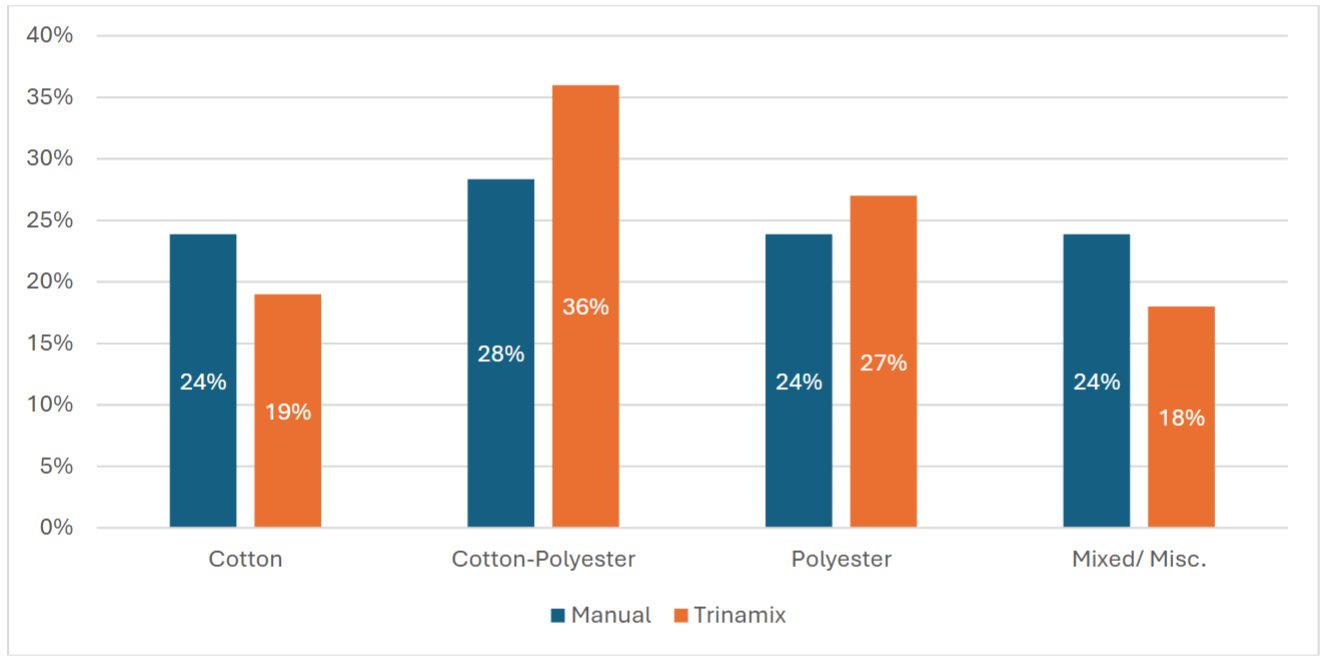
An audit, conducted by the Castro Valley Sanitary District (CVSan) in 2024, assessed post-consumer textiles from a curbside collection program. The CVSan textile audit examined 318 kilos of post-consumer textiles and found that cotton-polyester blends were the most common fiber type, followed by polyester. It found that 87% of sampled items were resalable, while 13% were suitable for repurposing. However, discrepancies between garment labels and actual fiber content, particularly in cotton-polyester blends, highlighted the need for improved labeling to support effective recycling and repurposing. Additionally, over 90% of discarded clothing was still reusable in its current form, emphasizing the importance of source-separated collection and sortation to maximize reuse and extend the lifespan of textiles collected curbside.
3.2.2 Textile Waste Collection Pilots
The collection pilots serve as critical models for domestic circularity by demonstrating scalable solutions for keeping materials in use and out of landfills. These pilots test innovative strategies for local collection, sorting, and redistribution, helping to refine best practices for circular systems that can be replicated across regions. The pilots showcase the economic and environmental benefits of closing material loops while reducing reliance on international processing markets by establishing localized infrastructure and partnerships. The pilot outcomes highlight the efforts made by local governments measuring the problems, gathering essential data, investing in solutions, and proving viability of reuse and recycling programs. However, local efforts alone are not enough; they need the State to step in with supportive policies, funding, and regulatory frameworks to scale these models and ensure long-term success.
In 2021, a repair and redesign pilot was launched in collaboration with California State University, San Francisco, and local up-cyclers. Building on findings from the first phase, the project successfully resorted 876 garments, diverted 370 kilos of textiles, and reduced 8.61 metric tons of CO2 emissions. Findings supported the need to prioritize funding reuse and repair for high GHG impact.
In 2022, the City of Los Angeles’ Textile Recovery Pilot worked with a all-natural cotton fabric and garment manufacturer, California Cloth Foundry, on a compost trial. The natural cotton scraps were dyed using food grade pigments and mordants. The results showed successful cotton composting, with the right mixture of other organic waste, and after the bales of textile cuttings were adequately separated.
In 2024, the City of Los Angeles’ Textile Recovery Pilot successfully sorted over 454 kilos of cotton waste from the textile industrial sector and processed through mechanical recycling, demonstrating the feasibility of local textile recovery solutions. The environmental impact of this diversion was significant, resulting in a GHG reduction of 39.23 metric tons of CO₂ (MTCO₂)—equivalent to removing 8.7 gas-powered cars from the road for an entire year. These results underscore the potential of textile recycling to contribute to California’s climate goals and reducing textile waste by building regional hubs to support better sorting and expanded capacity for repair and recycling businesses.
3.3 POLICY REVIEW FOR MEDICAL TEXTILE COVERED PRODUCTS IN SB 707 (NEWMAN)
As Textile Extended Producer Responsibility (EPR) programs become enacted around the world, some will have a greater impact on medical textiles than others. In California, SB 707 will have a direct impact on the manufacturing and sale of covered products used in healthcare settings. It will also impact other parts of the supply-system, such as laundries and recycling facilities, who will play integral roles in providing the infrastructure for the program.
EPR policies use multiple policy tools to create a recovery and recycling program that does not interfere with overlapping regulatory requirements for the products entering the market. The bill requires textile producers—such as brands and manufacturers—to develop and fund statewide systems for textile collection, reuse, repair, and recycling, ensuring that discarded textiles are diverted from landfills and processed into new products whenever possible. The consumers of the covered medical products are guaranteed “free and convenient” access to the program included in the price of the product, so finding the best reuse, repair, or recycling service isn’t a burden on the healthcare facility.
There are several key goals and tools used in the Textile EPR policy development that serve as incentives for producers of covered products to create more circular and sustainable products, whatever that might look like for their product type.
| Policy Information | Details |
|---|---|
| Enacting Bill Number (Author) | SB 707 (Newman) |
| Year of Passage | 2024 |
| Year of Regulation Adoption | 2028/2029 |
| Year of Plan Adoption | 2030 |
| Year of Full Implementation | 2031 |
| Oversight Agency | Department of Resources Recycling and Recovery (CalRecycle) |
| Policy Goals | Waste Reduction, Human and environmental protection, Business and market development, Transparency |
| Policy Tools | Performance Standards, Technology Standards, Disclosures/Reporting |
| Enforcement Mechanisms | Fines for noncompliance, Sales ban for noncompliant producers, Public disclosure of noncompliant producers, Revocation of program operator authority |
The text of the policy contains all the details of the program. The primary burden falls on the product producers, to fund, design, and implement the textile reuse, repair, and recycling program. The other program components offer details for other supply-chain participants, including healthcare providers looking to offer reuse and recycling programs at their facility(ies).
There are several distinct sections of the bill that serve as a framework for implementing and overseeing the program.
- Definitions – The definitions section is where covered products and covered producers are defined so the oversight agency and program operator understand who is responsible for paying into the program for what products. The definition of producer follows a tiered system, meaning that if the original manufacturers cannot be identified (such as foreign manufacturers), responsibility shifts down the supply chain to first importers, distributors, brands, and ultimately retailers. There is a small business exception within SB 707. The definition of covered product(s) is a list of apparel and textile article products and only those products are required to have reuse, repair, and recycling programs, with some exemptions and exceptions.
- Needs Assessment – The needs assessment is designed and conducted by the Program Operator to determine the necessary steps and investment needed for covered products, to achieve the requirements of this chapter. Needs assessments, or components thereof, shall be updated every five years or as necessary to ensure the requirements of this chapter are met.
- 5-Year Plan – The Program Operator uses the findings of the needs assessment to develop a 5-year Plan on how they plan to provide free, convenient, and safe collection, transportation, repair, recycling, and otherwise proper management of covered products. The Plan will need to include quantified performance goals, and steps for how the program will accomplish them. These programmatic performance goals include:
- Convenient collection with a minimum per capita collection site requirement
- Sorting criteria by fiber type and end-markets
- Repair and recycling rates and efficiency
- Education and outreach
- Annual Report – The program operator annually submits to the department, in form and manner and by the date determined by the department, an annual report and makes that report publicly available on the PRO’s internet website. The policy describes the minimum content required in the annual report, such as costs, number and locations of collection sites, processors, and responsible end markets. The annual report requires that sorters and recyclers report the weight of processed textiles by fiber type. Additionally, they must outline tracking methods to ensure materials are managed in an environmentally responsible manner while minimizing risks to public health and worker safety. The department may adopt regulations to identify responsible end markets and to establish criteria regarding benefits to the environment and minimize risks to public health and worker health and safety.
- Enforcement – This section describes how the program operator will be held responsible for compliance using the annual report information, compared to the goals set in the approved Plan. There are antitrust protections for brands, as they will be required to share new levels of data on their products entering the market, and subsequently the EPR program. The enforcement mechanisms used to ensure compliance include a daily fine per day for noncompliance, a sales ban for noncompliant producers, and a public list of noncompliance brands. For hospitals, this means they may need to verify that their suppliers meet regulatory requirements to avoid disruptions in procurement. Manufacturers and suppliers must comply with the law to continue selling medical textiles, ensuring their products align with sustainability and recycling mandates. The program operator faces noncompliance fines up to $50,000 per day.
4. Discussion
There is no single policy that can fully solve the complex challenges of building a circular economy, especially in healthcare. Extended Producer Responsibility (EPR) is one important tool that uses a combination of policy strategies to improve recycling, reduce waste, and promote product reuse and repair. For EPR to succeed in healthcare settings, it must be flexible, equitable, and focused on safety. This section outlines how the policy addresses key challenges using policy tools and mechanisms presented in the results.
4.1 POLICY CHALLENGE: CREATE AN EQUITABLE PROGRAM FOR ALL PRODUCERS AND PRODUCTS.
Extended Producer Responsibility (EPR) emphasizes the importance of flexibility in managing different product pathways to ensure compliance across various sectors. Covered products such as sheets, towels, pillows, and apparel are all used in multiple market sectors, including healthcare, hospitality, and individual consumer homes. The policy requires covered products to be part of a reuse, repair, or recycling programs, while allowing collection programs that align with existing regulations.
Compliance flexibility is crucial because different types of textiles, such as medical textiles and fashion products, require distinct collection and processing methods due to their unique characteristics and end-of-life management needs. Cotton products from medical uses, such as towels, linens, scrubs, can all be recycled with cotton products from fashion uses, such as denim and T-shirts, and still accommodate the different collection requirements. Medical textiles, for instance, involve specific hygiene and safety considerations during collection or recycling, whereas fashion products collected from the public have different barriers to recycling with more mixed fibers and embellishments.
The overarching goal of textile EPR is to create an equitable program that accommodates the diverse needs of all producers and products participating in the program, encouraging sustainable practices and reducing environmental impact across the industry. Some medical textiles have design standards that might impede recycling, but can still work in the program through reuse, repair, or disposal options.
Other measures of equity include the small business exemption for producers with annual revenues under $1 million and eco-modulated fees to reward producers leading in green design. These fees vary based on the volume and cost of managing the covered products, with fee reduction opportunities for existing producer collection, repair, reuse, and recycling programs.
To address equity in the program’s governance, there is a requirement that the program operator have representation from all types of covered products on the Board, with ex officio non-voting board members from other sectors of the program, such as reuse and recycling companies. The roles and responsibility of each stakeholder group will be laid out in the Plan. Healthcare facilities buying medical textiles play the role of the covered product user. Their requirements will be to purchase compliant products and divert unwanted covered products into the program at no added cost. Through the eco-modulated fees paid by the producers, the products that are easier to reuse, repair, and recycle will have a lower fee. The lower fees will incentivize the market to shift to more reusable, repairable, and recyclable products, such as more cotton uniforms and durable footwear. For example, France’s textile EPR program applies reduced fees to garments designed with mono-materials (e.g., 100% cotton), that are certified free of hazardous chemicals, or that meet durability and repairability criteria—thereby financially incentivizing brands to prioritize recyclability and safe chemistry.
The responsibility for finding the collectors and processors of the medical textiles does not fall on the healthcare facility. The responsibility to provide convenient access to the collection sites falls on the program operator, as funded and directed by the Plan.
Commercial and hospital laundries have long played a critical role in the reuse and repair of medical textiles, making them a natural foundation for expanding circular economy initiatives under SB 707. Many healthcare laundries already operate highly regulated, specialized facilities that clean, sterilize, and extend the lifespan of reusable gowns, scrubs, bed linens, and surgical drapes. These existing systems demonstrate the feasibility of textile reuse while maintaining infection control standards required in medical settings. Laundries qualify to receive funding to provide the required repair and sorting for recycling services required by the law. By definition, washing, stain removal, ironing, etc. qualify as repair services. Additionally, SB 707 sets a global precedent for requiring the producers to fund microfiber filtration devices for all laundries participating in the program.
Increasing microfiber filtration will reduce human exposure to a well-known health hazard. Exposure to microfibers leads to alterations in growth and behavior, with synthetic fibers causing more pronounced effects and underscore the importance of implementing filtration systems to reduce microfiber release into aquatic environments.
Beyond laundering, some facilities also engage in textile repair, mending minor damage to scrubs, linens, and other hospital textiles rather than discarding them prematurely. As more medical textile products shift toward durability and recyclability, laundries serve as a key infrastructure for collection, sorting, and redistribution, ensuring that textiles remain in use longer before reaching the need for end-of-life processing. By incorporating laundering and repair into EPR programs, hospitals can leverage their existing laundry infrastructure to extend the life of medical textiles, reducing waste, lowering costs, and minimizing their environmental impact while maintaining high-performance standards.
Hospitals and healthcare systems should begin identifying which of their textile products are covered under SB 707 and assess opportunities to support circular practices through procurement, partnerships with laundries, and on-site collection logistics. They can also work with suppliers to prioritize products that are repairable and recyclable under the EPR framework.
4.2 POLICY CHALLENGE: LEVEL THE PLAYING FIELD WITHOUT STIFLING INNOVATION
Innovation plays an important role in supporting the textile industry, especially with respect to identifying new ways to reuse, repair, and recycle textile materials. Textile Extended Producer Responsibility (EPR) aims to create a balanced framework where all stakeholders, including manufacturers, consumers, and waste management entities, contribute to sustainable practices. By mandating that producers take responsibility for the post-consumer stage of their products, EPR encourages the design of textiles that are not only functional and safe for medical use but are also environmentally friendly. The goal is to level the playing field, ensuring that all companies adhere to the same standards without hindering innovation. This encourages the development of new materials and processes that enhance sustainability while maintaining the high standards required in medical textiles. For example, large volumes of bed sheets, blankets, and patient gowns are discarded annually. EPR incentives could fund textile-to-textile recycling programs, ensuring high-quality fibers remain in circulation while hospitals maintain strict hygiene standards.
By fostering a collaborative environment, EPR policies can drive the industry towards a more circular economy, where waste is minimized, and resources are efficiently utilized. More healthcare facilities can easily transition to reusable medical textiles without having significant barriers to adoption. Hospitals increasingly adopt high-performance reusable surgical textiles that meet liquid barrier standards while reducing waste. Investments in textile reprocessing technology, supported by EPR, can enhance sterilization efficiency and extend product life cycles.
To achieve this, the EPR program should focus on creating an environment that encourages competition while providing equitable opportunities for all players, regardless of size or resources. Incentives like eco-modulated fees, grants for market development, and investments in education and infrastructure can stimulate innovation. For example, mixed fiber-content textiles will still be allowed, but eco-modulated fees are lower for mono-materials, such as 100% cotton. Grants for market expansion provide funding to develop textile-to-textile recycling. Advancing sustainable solutions is crucial for developing new methods for reuse, repair, and recycling—such as mechanical fiber recovery for damaged patient gowns or automated sorting systems for high-volume hospital bedding.
Programs like EPR support recycling costs for products that are safe and eligible for recycling, while supporting market development and research for those that are not. The EPR program operator has a responsibility to invest in grants to support program participants, expand processing capacity, and develop responsible end-markets. In other established programs, grants have been used to research innovative solutions to specific problems for that program. Since 2016, the California Carpet Stewardship Program has paid out more than $10.3 million in grants, including several academic campuses working on polymer research and recyclers who will be processing textile fibers. Another example, in California Mattress Stewardship Program, individually wrapped pocket coils were a barrier to recycling, so the program invested in research that resulted in a patent for a technology that removed the coil wrapping. Instead of banning individually wrapped coils through technology standards, EPR uses market-based incentives to encourage industry innovation and improve recyclability.
4.3 POLICY CHALLENGE: AVOID UNINTENDED CONSEQUENCES
Extended Producer Responsibility (EPR) programs cannot solve every issue impeding a circular economy for various products. As the program scope and implementation plan is developed, regulators need to avoid unintended consequences. Some potential consequences for poorly planned EPR programs can include:
- Cost concerns – EPR programs typically require producers to cover end-of-life management costs, which may be passed down to the consumers, including hospitals and healthcare facilities, through higher product prices. This concern is addressed through producer funded fees so that healthcare facilities can create textile reuse, repair, and recycling programs at little to no cost since most of the costs will be covered by the EPR program operator.
- Disposable vs reusable textiles – Healthcare facilities might opt for cheaper disposable alternatives rather than investing in reusable options, contradicting the goal of waste reduction. This concern is addressed through the per-unit fee charged each time a single-use item is purchased, whereas reusable textiles only have one initial fee payment and zero payments for rental, reuse, or repair. Additionally, the EPR program funds hospital laundries in upgrading sterilization technology for increasing reuse and repair services.
- Hard-to-recycle medical textiles – Without clear pathways for fiber separation or alternative disposal methods, recycling is not possible and/or is too expensive, leading to stockpiling or illegal dumping. For example, textiles made from blended fabrics, such as polyester-cotton scrubs, are difficult to recycle because the fibers cannot be easily separated, limiting their reuse and recyclability. This concern is addressed through eco-modulated fees that reduce costs to the producers who have already invested in greener processes, such as recycled content or mono-material designs.
- Transportation emissions – Centralized collection and processing facilities for discarded medical textiles could increase transportation emissions if materials must be shipped long distances for sorting or recycling. This concern is addressed with a provision calling for the program to prioritize incentive payments, grants, and market development investments to build infrastructure closer to the point of generation. Similarly, when multiple processors are available, the EPR program must select the ones with the best performance. The program must prioritize the use of sorting and recycling facilities located closer to the point of generation to minimize transportation emissions and increase accountability for the ultimate disposition of collected covered products.
- Human Health Impacts – Transitioning to safer, more transparent textile management practices can reduce risks not just for wearers, but for workers throughout the supply chain. In addition to end-of-life waste concerns, medical textiles can have human health impacts during their lifecycle, if not handled properly. Some of these concerns include but not limited to human exposures to chemicals using in the manufacturing processes, pathogen risk, or microplastic inhalation. Workers involved in textile manufacturing—especially dyeing and finishing—are frequently exposed to hazardous chemicals, including carcinogens, endocrine disruptors, and respiratory irritants. Studies suggest that chronic inhalation may lead to respiratory inflammation and pulmonary effects, raising concern for long-term occupational exposure. Additionally, communities located near landfills and incinerators that dispose of textile waste may face increased exposure to hazardous emissions, including heavy metals and volatile organic compounds (VOCs) released during incineration or decomposition. These exposures contribute to environmental injustice and underscore the urgency of upstream product redesign and robust end-of-life solutions.
There are often controversial, or emerging concerns that are out of scope for the program requirements. To enhance the effectiveness of the EPR program, it is essential to develop additional policies that address issues beyond the current scope of the program. These policies could target areas such as microfiber pollution, chemical contamination, and social responsibility within the supply chain. Also, decarbonizing the supply-chain and transportation systems will need complimentary policies. For example, many water and stain resistant textiles used in healthcare contain per- and polyfluoroalkyl substances (PFAS), which persist in the body and the environment. PFAS exposure has been linked to cancer, developmental toxicity, and immune dysfunction, highlighting the need for regulations that consider both environmental and human health risks when evaluating textile chemistry and recyclability.
To avoid unintended consequences and strengthen long-term outcomes, hospitals should engage early with the EPR program through stakeholder processes—such as the CalRecycle rulemaking workshops—to ensure implementation aligns with clinical realities, while also advocating for complementary policies like stricter microfiber regulations, supply chain transparency, and incentives for decarbonization and chemical safety.
5. Conclusions
Textiles are a significant yet often overlooked contributor to healthcare’s climate and waste footprint. SB 707 gives California’s healthcare sector a new tool to address this impact through Extended Producer Responsibility (EPR), shifting the burden of textile waste away from hospitals and toward manufacturers while encouraging better product design. By creating accessible collection infrastructure and aligning with existing laundry and repair systems, the program enables facilities to extend the life of linens, scrubs, and other medical textiles—supporting both infection control and sustainability goals. California’s leadership offers a replicable model for sustainable healthcare infrastructure that improves supply resilience and public health outcomes.
Healthcare providers, purchasers, and policymakers each have a role to play in ensuring the success of this first-in-the-nation textile EPR program. No one needs to wait for the policy to be implemented to initiate better textile management in their facility. Ask current laundry and product suppliers how they plan on complying with the EPR laws to offer free and convenient access to repair and recycling programs for their customers. Partner with linen or laundry vendors to evaluate reuse, repair, and recycling opportunities that can potentially qualify for EPR funding. Register for CalRecycle’s rulemaking notifications to stay involved. Participating in CalRecycle’s regulatory process through workshops, hearings, and public comment opportunities is critical for shaping program details to reflect the practical needs of clinical settings. By voicing priorities such as safety, durability, and comfort, stakeholders can help ensure regulations support high-quality care while reducing waste and emissions.
As climate risks grow and resource pressures mount, transitioning to circular medical textile systems is not only feasible—it is necessary. SB 707 marks a milestone in that shift, and with active healthcare engagement, it can set a new standard for aligning environmental responsibility with patient care.
Conflicts of Interest Statement
The authors have no conflicts of interest to declare.
Funding Statement
The following agencies and organizations provided funding that contributed to this research: LA Sanitation & Environment (LASAN), San Francisco Environment Department (SFE), Castro Valley Sanitation (CVSan), CalRecycle, RRS, Fashion for Good, GreenWaste, Athens Services, WM, TOMRA, USAgain, Reformation, Gap, H&M.
Acknowledgments
The authors would like to recognize the previous, current, and future Board Members and staff of the California Product Stewardship Council (CPSC). All the project partners and collaborators contributed to the success of the pilots and policy outcomes. Inspiration for protecting humans comes from the amazing fathers of all three authors.
References
- CalRecycle. 2021 Disposal Facility-Based Characterization of Solid Waste in California. California Department of Resources Recycling and Recovery; 2021. Accessed March 10, 2025.
- Kang J, Kilpatrick C. Disposable and Reusable Medical Textiles. Encyclopedia of Biomedical Engineering. 2019:382-393. Accessed March 10, 2025.
- Daniels M, Priefer R. Medical Waste Proper Disposal and Techniques – A Review of Multiple Devices. Medical Research Archives. 2020;8(12). doi:https://doi.org/10.18103/mra.v8i12.2266
- Rucker MH, Brasch JE, Haise CL. Textile Products and Prevention of Hospital Acquired Infections: Understanding the Hospital Perspective. Journal of Medical Marketing: Device, Diagnostic and Pharmaceutical Marketing. 2011;11(2):156-164. doi:https://doi.org/10.1057/jmm.2011.2
- Vozzola E, Overcash M, Griffing E. Life Cycle Assessment of Reusable and Disposable Cleanroom Coveralls. PDA Journal of Pharmaceutical Science and Technology. 2018;72(3):236-248.
- Patel A, D’Alessandro MM, Ireland KJ, Burel WG, Wencil EB, Rasmussen SA. Personal Protective Equipment Supply Chain: Lessons Learned from Recent Public Health Emergency Responses. Health Security. 2017;15(3):244-252. doi:https://doi.org/10.1089/hs.2016.0129
- United States Government Accountability Office. Textile Waste: Federal Entities Should Collaborate on Reduction and Recycling Efforts. GAO-25-107165. Published December 2024. Accessed March 10, 2025. https://files.gao.gov/reports/GAO-25-107165/index.html?_gl=1
- der Klink M van, Demirel P. Implementing Reusable Medical Textiles in NHS Operating Theatres: Barriers and Enablers. Journal of Cleaner Production. 2025;491:144852. doi: https://doi.org/10.1016/j.jclepro.2025.144852
- Legrand W. Sustainability-Driven Legislation – Setting the Right Conditions for Hospitality? A Review of Viewpoints | by Willy Legrand. Hospitality Net. Published March 29, 2021. https://www.hospitalitynet.org/opinion/4103666.html
- European Commission. Waste Framework Directive. European Commission. Published 2022. https://environment.ec.europa.eu/topics/waste-and-recycling/waste-framework-directive_en
- OECD. OECD Due Diligence Guidance for Responsible Supply Chains in the Garment and Footwear Sector. OECD; 2018. doi: https://doi.org/10.1787/9789264290587-en
- National Conference of State Legislators. Learning the Game. Published 2021. https://www.ncsl.org/legislative-staff/civics-education/learning-the-game
- California Product Stewardship Council. SB 707 (Newman) Coalition Letter of Support. Published online September 3, 2024. Accessed March 10, 2025. https://www.calpsc.org/_files/ugd/ad724e_551ac66093d34d868ac8d995637cfc53.pdf
- CalRecycle. 2018 Disposal-Facility-Based Characterization of Solid Waste in California.; 2020. Accessed March 10, 2025. https://www2.calrecycle.ca.gov/Publications/Details/1666
- CalRecycle. 2021 Disposal-Facility-Based Characterization of Solid Waste in California.; 2024. Accessed March 10, 2025. https://www2.calrecycle.ca.gov/Publications/Details/1738
- California Product Stewardship Council. Webinar: SF Textile Repair Pilot Project. YouTube. Published online May 31, 2023. Accessed March 10, 2025. https://youtu.be/5Q6mV12FkF0
- California Product Stewardship Council. GreenWaste Textile Waste Audit Report.; 2023. Accessed March 10, 2025. https://www.calpsc.org/_files/ugd/ad724e_479ccd204c954416bc781acad35fd4ea.pdf
- California Product Stewardship Council, LA Sanitation and Environment, City of Los Angeles. City of Los Angeles Textile Recovery Project; 2022. Accessed March 10, 2025. https://www.calpsc.org/_files/ugd/ad724e_8515d7f4b3d347798dd589cc2707e51f.pdf
- California Product Stewardship Council. Castro Valley Sanitary District Textile Waste Audit Report.; 2025. Accessed March 10, 2025. https://www.calpsc.org/_files/ugd/ad724e_b44214e4e9c44de58dcadb204361b52b.pdf
- California Product Stewardship Council, LA Sanitation and Environment, City of Los Angeles. City of Los Angeles textile recovery project phase 2 final report. 2024. Accessed March 10, 2025. https://www.calpsc.org/_files/ugd/ad724e_f9b3259b070840a1871c2b3ceb55dc5c.pdf
- California Product Stewardship Council, LA Sanitation and Environment, City of Los Angeles. City of Los Angeles Textile Recovery Project Phase 2 Final Report.; 2024. Accessed March 10, 2025. https://www.calpsc.org/_files/ugd/ad724e_f9b3259b070840a1871c2b3ceb55dc5c.pdf
- Guide Des Eco-Modulations 2025. 2025 Eco-Modulations Guide. Accessed May 8, 2025. https://refashion.fr/pro/sites/default/files/fichiers/guide_eco-modulations_FR_refashion_2025_vdef.pdf.
- Periyasamy AP. Microfiber Emissions from Functionalized Textiles: Potential Threat for Human Health and Environmental Risks. MDPI. April 24, 2023. Accessed May 8, 2025. https://www.mdpi.com/2305-6304/11/5/406.
- Siddiqui S, Hutton SJ, Dickens JM, Pedersen EI, Harper SL, Brander SM. Natural and Synthetic Microfibers Alter Growth and Behavior in Early Life Stages of Estuarine Organisms. Frontiers. May 8, 2025. Accessed May 8, 2025. https://www.frontiersin.org/journals/marine-science/articles/10.3389/fmars.2022.991650/full.
- Ruiz A. CARE Grants Accelerate Innovation, Expand Recycling and Collection – Waste Advantage Magazine. Waste Advantage Magazine. Published February 27, 2025. Accessed March 10, 2025. https://wasteadvantagemag.com/care-grants-accelerate-innovation-expand-recycling-and-collection/
- Mattress Recycling Council. Mattress Recycling Council Advances Pocketed Coil Recycling Technology – Mattress Recycling Council | Recycling Programs in California, Connecticut & Rhode Island. Mattress Recycling Council. Published October 5, 2020. Accessed March 10, 2025. https://mattressrecyclingcouncil.org/mrc-advances-pocketed-coil-recycling-technology/
- Graczyk H, Azzi M, Mandrioli D. Exposure to hazardous chemicals at work and resulting health impacts: A global review. International Labour Organization. July 30, 2024. Accessed May 19, 2025. https://www.ilo.org/publications/exposure-hazardous-chemicals-work-and-resulting-health-impacts-global.
- Negri E, Bravi F, Catalani S, et al. Health effects of living near an incinerator: a systematic review of epidemiological studies, with focus on last generation plants. Environmental Research. 2020;184:109305. doi: https://doi.org/10.1016/j.envres.2020.109305.