





Strategic Foresight in Dementia Care in Portugal
Framework for strategic foresight in dementia care in Portugal
An Maria Herrero Valverde1, Ana Margarida Albuquerque2, José Francisco Pavia3, Raquel Barros4, Bruno Pereira5, Henrique Lopes6
- Neurology Unit, CUF Descobertas Hospital, Lisboa.
- Departamento de Saúde Mental Hospital de Cascais, Lisbon, Portugal.
- NOVA Center for Global Health, NOVA IMS – Information Management School, Universidade Nova de Lisboa, Lisbon, Portugal.
- Unidade de Saúde Familiar Santo André de Canelas, Vila Nova de Gaia, Portugal.
- Serviço de Neurologia, Centro Hospitalar Lisboa Ocidental, Lisbon, Portugal.
- NOVA Center for Global Health, NOVA IMS – Information Management School, Universidade Nova de Lisboa, Lisbon, Portugal.
OPEN ACCESS
PUBLISHED: 31 December 2024
CITATION: Valverde A, Albuquerque AM, et al., 2024. Framework for strategic foresight in dementia care in Portugal. Medical Research Archives, [online] 12(12), https://doi.org/10.18103/mra.v12i12.6118
COPYRIGHT: © 2024 European Society of Medicine. This is an open-access article distributed under the terms of the Creative Commons Attribution License, which permits unrestricted use, distribution, and reproduction in any medium, provided the original author and source are credited.
DOI https://doi.org/10.18103/mra.v12i12.6118
ISSN 2375-1924
ABSTRACT
Introduction: Neurological disorders have become the leading cause of global disease burden, posing a significant public health challenge. With an aging global population, conditions like Alzheimer’s disease and other dementias are expected to increase demands on healthcare services. Variations in risk factors and healthcare services across the country are impacting the diagnosis, treatment, and support, with many regions lacking sufficient resources. Additionally, there is a need to improve monitoring of dementia-related metrics and advance research, particularly regarding treatment and access to clinical trials. This study provides an overview of the current care landscape for dementia patients by analyzing real-world-based data. Gaps and challenges in dementia care, as well as suggestions for optimal care, are discussed.
Methods: Three plenary sessions were held, gathering healthcare professionals experienced in dementia care, along with representatives from patient associations. During these virtual meetings, participants shared their insights and discussed the current state of dementia care and treatment in Portugal. Key factors were proposed to guide a roadmap for transitioning from scenario planning to concrete strategic actions.
Results: National dementia care initiatives with implications for care quality were analyzed. The incidence of dementia continues to rise, including in Portugal, although comprehensive data remains limited. Dementia poses a significant healthcare challenge, necessitating a multidisciplinary approach at every stage of the disease.
Conclusion: Countries need detailed national plans that outline how resources will be allocated to enhance dementia awareness, train and support caregivers, and mobilize efforts to reduce risk factors and strengthen research capabilities. These plans should be shaped by input from consumers and adapted to local contexts, aiming to create an inclusive society for individuals living with dementia and their families.
Keywords: Dementia, Portugal, multidisciplinary care, real-world data, patient-centered care.
Introduction
Dementia is a common disorder mostly caused by neurodegenerative conditions such as Alzheimer’s disease, and a leading cause of disability and dependency among older adults worldwide. Published estimates of numbers of people with dementia in Portugal have been based, in most cases, on prevalence rates derived from international studies or expert consensus. As in many other countries, Portuguese community prevalence studies’ results are nongeneralizable to a country level. Moreover, their prevalence estimates differ (not surprisingly, owing to different methodologies, e.g., design, sampling, and diagnostic criteria)¹.
Individuals with dementia often have unmet needs, primarily in terms of companionship (23%), emotional support (20%), and assistance with daily activities (14%). Family caregivers devote a median of 150 minutes per day to providing care, with 44% experiencing unmet needs related to psychological distress. When issues arose with accessing or using formal services, they were often linked to attitudes or lack of awareness on the part of one or both members of the caregiving pair².
Dementia places a substantial burden on individuals, their families, and the healthcare, social welfare, and financial systems worldwide. In 2019, the global cost of medical, social, and informal care for dementia was estimated to exceed US$ 1.3 trillion¹, and it is projected that this figure would surpass US$ 2.8 trillion² by 2030 (3). The costs of dementia for governments, communities, families and individuals, are huge. In 2019, the total global societal cost of dementia was estimated at US$ 1.3 trillion, equivalent to 1.5% of global gross domestic product (GDP)³.
Regarding the costs attributable to Alzheimer’s disease (AD) in Portugal, direct non-medical costs accounted for 89% of the total, estimated at approximately €2 billion³ (2 × 10⁹), or about 1% of the national GDP in 2018. Around 54% of the total costs were related to the monetary value of informal caregiving. These findings are consistent with other studies, particularly concerning the significant role that the monetary value of informal care and social support play in the overall costs attributable to AD. Additionally, the burden of informal care is higher in Southern European countries compared to Northern European ones, where a larger share of the costs is related to patient institutionalization⁴⁵.
In 2017, in the European Union, stroke, dementias, and headache were the three commonest causes of DALYs (disability-adjusted life years), with the prevision that their prevalence and burden would likely increase with the progressive ageing of the European population⁶. The 2024 update from the Lancet Commission on dementia prevention, intervention, and care emphasized the evidence for 14 modifiable risk factors for dementia⁷. Tackling these factors through public health measures offers a strategy to lower disease prevalence, and future shifts in modifiable risk factors could impact the direction of trends in age-specific prevalence⁸.
The G20 countries reaffirmed their commitment to the global dementia action plan in 2019, acknowledging the significant impact of dementia and urging nations to develop ambitious national strategies and adopt integrated approaches aligned with the global plan. However, lack of progress in all dementia-related action areas hinders efforts to meet other global commitments, such as universal health coverage⁹. A key driver of progress is the active involvement of all the stakeholders, including people with lived experience, governments, civil society organizations, researchers and the private sector¹⁰.
In 2023, WHO published a 10-year global action plan (2022–2031), for neurological disorders like dementia, that addressed strategic areas. These include timely and responsive diagnosis, treatment and care; strategies for promotion and prevention, and developing research and innovation with strengthening information systems (10). In Portugal, regional dementia care plans were drafted in 2018 with evidence-based solutions, but their implementation remains incomplete¹¹.
Drawing on international and national experiences found in the literature, a previous paper addressed recommendations for gaps in dementia care¹².
1. PROMPTLY ACCESS AND EARLY IDENTIFICATION
Most individuals living with dementia are diagnosed and managed within primary care settings. For effective post-diagnostic support, primary care professionals must receive adequate backing. A multidisciplinary approach, where healthcare professionals across various specialties coordinate and collaborate, is the most effective method to deliver optimal post-diagnostic care for people with dementia and their caregivers. Successful management models are linked to fewer visits to emergency departments and hospital admissions¹³. Finger-prick blood tests have the potential to enhance Alzheimer’s diagnosis in primary care settings or resource-limited areas¹⁴. Ongoing pilot studies must be replicated, and continuous education, from the undergraduate level to regular updates for primary care physicians, is essential.
2. INTEGRATED CARE. PERSON-CENTERED CARE
The medical follow-up of a person living with dementia, across all stages of the disease, is part of a comprehensive person-centered care approach aimed at preventing and managing complications. This evaluation must be tailored to the individual’s lifestyle and stage of the disease. Multidisciplinary teams, including neurologists, geriatricians, nurses, psychologists, and nutritionists, should collaborate in dedicated, specialized centers. Numerous studies have demonstrated that the meaningful engagement approach improves outcomes and quality of life within a person-centered care model¹⁵. This approach involves patients and caregivers with lived experience in co-creating relevant policies, programs, and services based on their priorities. An integrated strategy is essential to maximize resources, especially given current global health funding constraints¹⁶.
3. CONTINUUM POST-DIAGNOSTIC CARE
Post-diagnostic management for individuals living with dementia is described as holistic, integrated, and continuous care, addressing the progressive decline in function and the growing needs of the family¹⁷. In line with the Chronic Care Model, the provision of support and services is personalized to meet the specific needs of individuals with dementia and their caregivers¹⁷. A key aspect of this model is a collaborative effort between primary care, specialized care, and community organizations, including local Alzheimer’s Society chapters. For more complex cases, digital technologies are employed to bring specialized expertise to rural and remote areas that would otherwise lack access. Multiple evaluation studies have shown cost savings and high satisfaction levels among people with dementia, their caregivers, and healthcare providers with models that offer quick access to comprehensive dementia care from a single, nearby location within their communities¹⁸.
4. CARE PATHWAYS
In recent years, numerous efforts have sought to position dementia as a public health priority through policies and action plans¹⁹. Specific guidelines were introduced to establish care standards at each phase of the disease, spanning from public awareness to late-stage palliative care. The clinical care pathway should be coordinated and patient-centered, involving the identification of available health and community resources (including public, private, and social institutions), defining referral criteria from primary to secondary care, and creating a personalized, integrated care plan for everyone. Key principles to consider include proximity, accessibility, equity, and continuity¹⁹. Managing the care plan requires a coordinated approach, prioritizing the preferences and needs of people with dementia and their caregivers, who should actively participate in the process. Person-centered care is regarded as the gold standard for managing complex conditions like dementia, as it focuses on timely access to appropriate services and addressing individual needs²⁰.
5. HEALTHCARE WORKFORCE DEVELOPMENT
Healthcare and social care workers need adequate knowledge, attitudes, and skills to effectively manage patients with dementia. Training standards differ worldwide, and there is still debate over the most effective training methods. However, insights from published research, surveys, and training program experiences suggest several conclusions: training should be customized to the learner’s experience and role, it should provide specific tools for addressing challenges like pain or behavioral disturbances, and learners should be actively engaged using videos or simulations²¹.
6. PUBLIC AWARENESS: PREVENTION SIGNIFICANCE
Improving consciousness and education about dementia, with a possible early diagnosis and treatment is one of the main priorities of any dementia national plan²². Pedagogic efforts through social media, or multimedia platforms with adequate information adapted to different levels of literacy and population heterogeneity should be addressed regularly. Prevention is profusely highlighted in the literature as the key element in managing the global high incidence and prevalence of dementia.
The FINGER clinical trial (Finnish Geriatric Intervention Trial to Prevent Cognitive Impairment and Disability)²³ was the first large, long-term randomized controlled trial demonstrating that it is possible to prevent cognitive and functional decline among elderly persons at risk of dementia, through a multidomain lifestyle-based intervention.
The objectives of this manuscript are twofold: first, to provide an overview of the current state of dementia care in Portugal, drawing from real-world scenarios discussed during consensus meetings with health professionals from various regions of the country. Second, in alignment with WHO’s intersectoral global action plan for neurological disorders (2022–2031), and building on previously identified gaps and unmet needs, to propose strategic objectives, action areas, and targets aimed at enhancing the quality of dementia care.
Methods
Three consensus meetings were held, bringing together healthcare professionals experienced in the field of dementia, along with representatives from patient associations.
The scope of these meetings is summarized in Figure 1.
Figure 1. Scope of the consensus meetings.
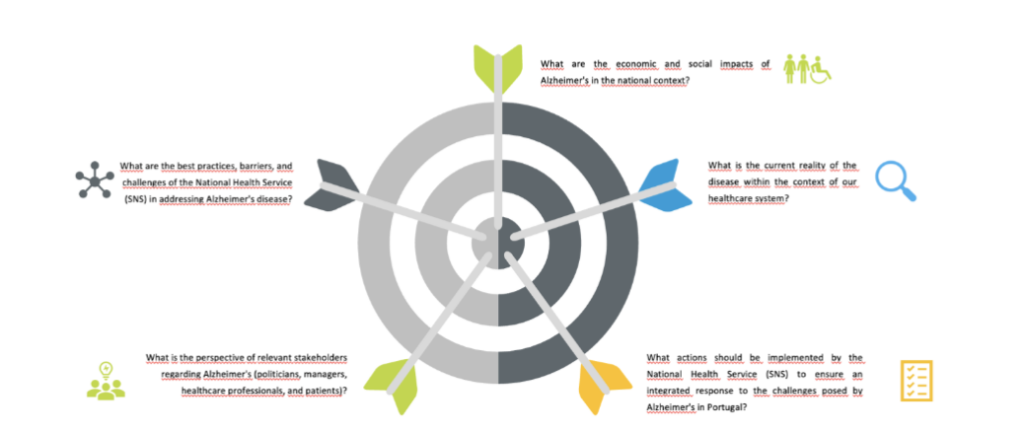
Participants were provided with background through the prior reading of two articles¹²⁴. The objectives of the discussions were: 1) to characterize the current reality of dementia in its socioeconomic, epidemiological, clinical, and therapeutic dimensions; 2) to encourage reflection on a new integrated and multidisciplinary model for managing dementia in Portugal, aligned with the latest advances in the field; and 3) to define measurable goals and to tailor the proposed management model to the resources available within the Portuguese healthcare system. Participation in the discussions was entirely voluntary. These discussions culminated in a comprehensive diagnosis of existing challenges and unmet needs within the current framework of dementia care.
Several initiatives were introduced across various areas of care, with the Blue Ocean Strategy (BOS)²⁵ serving as the foundation for developing evidence-based proposals. BOS is a strategic framework that uses a four-action approach to tackle key challenges: create, raise, eliminate, and reduce. These actions address critical obstacles that can prevent those involved in executing a strategy from recognizing the need for transformative change. Additionally, BOS helps secure the resources necessary for a strategic shift, maintain commitment during implementation, and overcome resistance from vested interests that may hinder progress²⁶.
Results
A. SCANNING: GRASPING AND EXPLORING CONTEXT
Epidemiological data
a) Prevalence/incidence
It is challenging to obtain reliable epidemiological data on dementia prevalence and incidence in Portugal, with few studies based on community and others on institutionalized individual data. Until recent years, the estimates of number of people with dementia in Portugal were primarily based on community prevalence studies with significant methodological variability, making it difficult to accurately assess dementia prevalence. The absence of high-quality epidemiological data, particularly in specific geographic regions, prompted the use of assessment protocols such as the 10/66 DRG algorithm²⁷. Originally validated in developing countries, this tool demonstrated potential applicability in European regions and provided an estimate of 217,549 people living with dementia in the community in 2021¹.
There is no equivalent data available regarding hospital care specifically related to dementia. To gather information on patients receiving care in the Lisbon Region Hospital Services, a survey was distributed to all hospitals. However, most hospitals provided unreliable data due to the lack of systematic records for dementia diagnoses. While some hospitals do operate specialized dementia outpatient clinics, there is still considerable variation in both the organization and services offered²⁸.
A study conducted in 2021²⁹ revealed that cognitive deterioration was more prevalent in residential care facilities for the elderly (ERPI), with a rate of 56.6%, compared to 39.8% in Day Centers (DC). Earlier, in 2013³⁰, the Alzheimer’s Association Portugal carried out a sociodemographic characterization of people with dementia who utilized social services – ERPI, DC, and Home Support Services (SAD) – in the municipalities of Cascais, Oeiras, and Sintra. The percentage of users with dementia (or suspected dementia) was similar in Cascais and Oeiras, at 32% and 33% of total users, respectively. In Sintra, this percentage was higher, reaching 40%. Overall, 49.9% of users in ERPI, 30.7% in DC, and 28.8% in SAD had dementia (or suspected dementia), with 938 diagnosed individuals and 505 suspected cases. These figures represent only 12% of the estimated 12,160 people, based on prevalence percentages reported in the literature.
In 2022, available data³¹ indicated a prevalence of 200,994 dementia cases in Portugal in 2019, with a projected 75% increase by 2050, reaching an estimated 351,504 cases. A global-scale study emphasized the urgent need for public health planning and appropriate political engagement to address the growing needs of these patients.
b) Costs per Patient in Formal and Informal Care
In 2018³² the direct medical costs attributable to Alzheimer’s disease for the healthcare system in Portugal were estimated at approximately 219 million euros, allocated as follows: 166 million euros for outpatient treatments, 29 million euros for hospital admissions, and 24 million euros for pharmacological treatments. Direct non-medical costs were estimated at around 1.8 billion euros, with the breakdown as follows: 1.1 billion euros for the monetary valuation of informal care, 551 million euros for social support, 122 million euros for assistive devices, care accessories, and home adaptations, and 40 million euros for transportation. The total estimated cost amounted to roughly 2 billion euros, with informal care representing approximately 54% of the total costs, equivalent to about 1% of the Gross Domestic Product (GDP).
Access and timely diagnosis
Reliable screening methods and timely referrals are essential for achieving early dementia diagnosis. The identification of early-stage Alzheimer’s disease (AD) patients who may be candidates for amyloid-targeting treatments requires careful observation by patients, their families, and physicians for early signs³³. Although primary care generally favors early diagnosis, several obstacles hinder early case identification. Common challenges at the non-specialized level include limited time, insufficient knowledge about early-stage AD, and inadequate reimbursement³⁴.
Dementia Literacy Awareness about first symptoms of dementia
Ignorance and stigma associated with dementia are widely recognized as significant barriers to early diagnosis and help-seeking, both for patients and their informal caregivers³⁴. The national patient’s association, Alzheimer Portugal, plays a vital role in the continuous education of formal and informal caregivers, as well as individuals with early-stage dementia, through initiatives such as the Café Memória meetings and the Caregiver’s Office. Additionally, the association developed a variety of informational materials, including brochures and books, aimed at raising awareness and providing guidance on dementia care and management.
However, there remains a lack of comprehensive knowledge about many of these initiatives, largely due to insufficient outreach, which limits their reach and potential impact.
Primary Healthcare
Primary care is an essential pillar of health systems. In a country with a population of around 10.3 million inhabitants, 16.5% of patients in primary care had no assigned GP in 2023³⁵. Insufficient time during the consultation is a major limitation in providing comprehensive generalist care³⁶. Inadequate consultation times and poor coordination between primary and specialized care in dementia diagnosis and management are concerning issues. To address these challenges, several strategies can be implemented, including improving general practitioner (GP) training, standardizing diagnostic protocols, and adapting international guidelines to the Portuguese context. Enhanced collaboration between different levels of care and involving caregivers in consultations are also critical steps. Healthcare professionals and social workers in the field of dementia require up-to-date knowledge and improved skills, which can be achieved through regular training.
Training models vary across countries. It is essential that training programs be tailored to the specific roles and experience of the participants, covering topics such as pain management and managing behavioral changes in dementia patients. Quality certification of institutions should also be prioritized by authorities¹² to ensure a high standard of care.
The current Portuguese Clinical Guidelines³⁷ for the diagnostic and therapeutic approach to patients with cognitive decline or dementia are considered effective tools for initial clinical evaluation and early diagnosis. Additionally, adapting consultation times to better accommodate patients, along with the active involvement of caregivers and families – who provide essential information – would improve care. Early screening protocols that facilitate accurate referrals and diagnostics could further optimize consultation times, both in primary and hospital care.
Specialized Consultation
a) Time to First Consultation
Limited awareness of new treatments among both patients and physicians, skepticism from consulting doctors, long or difficult travel to healthcare facilities, and out-of-pocket costs in some healthcare systems are some of the barriers identified that prevent a timely access. Referral criteria for cognitive complaints vary across health institutions, with some cases being managed in general Neurology appointments, while others are addressed in specialized dementia consultations.
The general population can access information regarding wait times for consultations at National Health Service hospitals through the MySNS tempos mobile application. However, expert centers that guide the diagnostic process continue to present a bottleneck, as their limited capacity constrains the system’s ability to provide timely, specialized care.
There is considerable heterogeneity in both referral criteria for individuals with cognitive complaints and the time it takes to secure a consultation. This situation is particularly challenging in peripheral regions, such as Alentejo, where resources are severely limited. Participants also perceived that the COVID-19 pandemic further exacerbated waiting times, especially for Neurology appointments, where the demand for specialized consultations far exceeds the available supply.
b) Access to Surrogate Exams
The required diagnostic capabilities currently surpass what is available in nearly all European countries³⁹. Access to essential diagnostic tests for dementia remains inconsistent across Portugal and can be one of the bottlenecks. Magnetic Resonance Imaging (MRI) is in short supply nationwide, often leading to long waiting lists. As a result, it is frequently necessary to turn to private providers, either on an individual or institutional basis, to obtain these tests in a timely manner.
Key diagnostic tests for Alzheimer’s disease (AD), such as Positron Emission Tomography (PET) and cerebrospinal fluid (CSF) biomarker analysis, face additional access challenges due to economic constraints and limitations in human and technical resources, which further contribute to delays in the diagnostic process.
Post-diagnosis care and support
Post-diagnosis care and support (“care” hereafter) encompasses both formal and informal services designed to enhance the health and well-being of individuals with dementia and their caregivers following a diagnosis⁴⁰. These services come in various forms, including different delivery modes (such as episodic or continuous care), informal assistance from family or friends, and diverse settings like hospitals, outreach programs, community-based services, or virtual platforms.
They also involve a range of both pharmacological and non-pharmacological treatments and interventions. Recent systematic reviews have highlighted the significant benefits of behavioural, cognitive, environmental, psychological, and psychosocial interventions for those living with dementia and their informal caregivers⁴¹. These findings are echoed in the latest international guidelines, which advocate for physical exercise, cognitive behavioural therapy, cognitive stimulation therapy, and cognitive training to promote the health and well-being of individuals with dementia⁴².
Additionally, mindfulness-based approaches, multicomponent interventions, psychoeducation, and psychotherapy/counselling are recommended for family caregivers of people with dementia.
Despite ongoing efforts, the standardization and equity in dementia treatment, which are key goals for disease management, have yet to reach the desired levels. The recommended frequency of consultations – ideally at least semi-annual – is rarely achieved, compromising the continuity of care.
Non-pharmacological therapies and caregiver supports
The continuity of care for people with dementia faces significant challenges at all stages of the disease. In its early stages, occupational therapy plays a crucial role in maintaining the patient’s functionality. However, the availability of these services within the public system is fragmented and often restricted to certain geographical areas. There is a limited number of occupational therapists working in the public sector.
In the northern region, a public hospital, with a small team of two occupational therapists and two psychologists, provide activities for dementia patients, including neurocognitive stimulation, physical activity, art therapy, and psychoeducational groups for caregivers.
In the private and social sectors, some initiatives are emerging, such as the project Home360⁴³, which offers community care to patients and caregivers in the Oeiras/Sintra region (Lisbon area), and Casa do Povo de Abrunheira⁴⁴ in the Coimbra region. Partnerships between Alzheimer Portugal and museums in Lisbon and the Central region also exemplify innovative approaches to dementia care, though these remain limited in scope.
One of the major issues is the absence of a centralized platform to register and promote the different initiatives, apart from those by Alzheimer Portugal. As a result, many of these services are only advertised at local or regional levels, leaving them unknown to a wider audience.
In the most advanced stages of dementia, when palliative care becomes necessary, the establishment of dedicated community teams, as recommended by the 2018 National Dementia Plan⁴⁵, has yet to be fully implemented, leaving a critical gap in care during the later stages of the disease.
While there are some initiatives targeting the early stages of dementia, these efforts are often limited and geographically restricted. For instance, in Vila Nova de Gaia (Oporto region), palliative care teams are dedicated to patients with neurodegenerative diseases.
There are isolated initiatives offering palliative care training for formal caregivers, as well as support groups for family members where specific issues are addressed. For example, the Psychogeriatrics Team of the Psychiatry Service at the Local Health Unit (ULS) Algarve organized quarterly Psychoeducation Sessions throughout 2024 in several municipalities of the western Algarve. These community-based programs aimed to equip informal caregivers with knowledge, techniques, and strategies for managing dementia-related challenges, while providing a space to address practical concerns. The program covered essential topics, such as symptom management, environmental adaptation, and available social support.
In the Oporto region, a private association named Com Paixão por Gaia⁴⁶ offers educational sessions on palliative care and pain management for caregivers in Vila Nova de Gaia. Additionally, the Magalhães de Lemos Psychiatric Hospital runs a weekly mutual aid group for patients and families, along with a psychoeducational group specifically for patients’ families.
Moreover, the low ratio of hospital beds per capita further restricts the availability of dedicated beds for dementia patients, exacerbating the challenges of providing adequate care. The initiative Home 360 program⁴³, developed in collaboration with the São João de Deus Institute in the municipalities of Oeiras and Sintra (Lisbon region), offers a specialized community-based response for people with dementia and their informal caregivers. Its goal is to enhance quality of life, dignity, well-being, and social inclusion through individualized care and integrated empowerment strategies. By coordinating resources via the role of a context manager, the program aims to reduce early institutionalization and alleviate the burden on caregivers.
Psychological support for informal caregivers is extremely limited, significantly increasing their risk of burnout⁴⁷. The absence of legislation allowing flexible work schedules for caregivers further exacerbates this issue. The economic burden of dementia is substantial, with costs in 2018 accounting for approximately 1% of Portugal’s GDP. Notably, more than half of these costs are related to informal care, highlighting the heavy financial strain borne by caregivers.
Only Alzheimer Portugal has received international certification⁴⁷ from the Confederación Española de Alzheimer (CEAFA) for its day centers, recognizing care provided without the use of physical restraints (Acreditación Cuidados de Demencias Sin Sujeciones). The remaining participants were unaware of any similar certification for other centers.
B. DRIVERS OF CHANGE
Early Diagnosis
It is crucial to develop tools that enable accurate detection of mild cognitive impairment (MCI) and early dementia in non-specialist settings, and to foster an environment where primary care physicians are supported in diagnosing, advising, and managing early-stage AD patients.
Referrals should originate from Primary Health Care and be limited to patients with a Family Doctor, with efforts to increase the number of GPs and the size of the patient load per doctor, considering alternative care models. Ongoing efforts, such as those by the 10/66 Dementia Research Group²⁷, include developing a screening questionnaire tailored for primary care settings. A more refined screening method would enable the more accurate identification of true cognitive decline cases while reducing unnecessary referrals for subjective memory complaints.
It is also important to note that despite not all individuals with cognitive complaints will progress to dementia, a systematic review by Mendonça MD et al.⁴⁸ concluded that individuals with memory complaints are 1.5 to 3 times more likely to develop progressive cognitive decline (Mild Cognitive Impairment or Dementia) compared to those without complaints. The risk is especially pronounced when these complaints are corroborated by caregivers, impact daily activities, or cause concern to the individuals themselves. Therefore, overly simplistic screening methods may either identify patients with non-neurological diagnoses or overlook those potentially at risk of cognitive decline.
The need for additional resources and improved coordination between primary care and specialized care is critical. Artificial intelligence could play a significant role in speeding up the initial diagnosis of dementia. Multidisciplinary meetings for case discussions, like those used in oncology for therapeutic decisions, could also provide valuable insights.
New digital biomarkers are expected to emerge, incorporating a range of advanced imaging and analytical techniques that can enhance early detection and diagnosis of dementia. Additionally, the recent creation of Local Health Units⁴⁹ is expected to enhance network coordination between primary and hospital care, further improving the management of dementia.
Improving Access in Non-Urban Areas
Large regions such as the Algarve and Alentejo – and, in the case of the latter, also sparsely populated – have limited referral centers, making access to specialized care, particularly hospital services, difficult. In the Algarve, there are plans to establish a gerontology team, which will be integrated into the Department of Psychiatry and Mental Health. In Alentejo, some local councils provide dementia management support on an individual basis, but there is no comprehensive project covering the entire region.
Specialized teams of Primary Health Care doctors and nurses could play a key role in the care of dementia patients in these regions. Enhancing the involvement of community structures, including local councils and non-governmental organizations, could also help bridge the gap in care by providing localized support and resources to dementia patients and their caregivers.
Post-Diagnosis Care: How to Improve Clinical Follow-Up After Diagnosis?
For cases with a clear diagnosis and typical linear progression, transitioning from hospital-based care to community-based follow-ups, led by nurses, is considered both useful and appropriate⁵⁰. Nurse-led follow-ups can provide ongoing monitoring and support for patients, reducing the burden on hospital services.
The integration of healthcare records across different specialties and institutions – whether public or private – with consistent coding, as well as improving access to patient data, remains a persistent challenge. Inadequate diagnosis codification impedes the ability to gather comprehensive data and track patient outcomes. While primary care centers can decide which hospital to refer patients to, based on consultation wait times and patient preferences, the subsequent screening and follow-up are largely determined by the organizational structure of each hospital department.
Ongoing projects aimed at improving care coordination and collaboration between healthcare providers must be accelerated and implemented without delay. Multidisciplinary teams and network collaboration, which involve community nurses disseminating scientifically validated protocols, could significantly enhance patient care. Partnerships between Neurology, Psychiatry, General Practitioners, Palliative Care, and Home Hospitalization services are essential for holistic care.
Digital solutions hold potential for non-pharmacological treatment, particularly through auditory content and interactive games designed to stimulate cognitive function. These tools could serve as valuable resources in both home and institutional care settings. However, ongoing surveillance and control of such applications should be regularly updated to ensure their effectiveness, and these tools must be properly validated for clinical use. The development of these technologies can be challenging due to limited funding, which restricts innovation and broader application.
At the patient monitoring level, technologies such as fall sensors that alert caregivers are currently in use. Expanding on this, it would be beneficial to develop a more comprehensive suite of home monitoring technologies, including tools for tracking mobility, step counts, and alarm buttons for emergency situations, to ensure greater patient safety and caregiver support.
Post-diagnosis care for dementia patients should involve non-pharmacological therapies and family support programs. There is a growing demand for more occupational therapists, physical therapists, and speech therapists, as their roles are crucial in maintaining patient functionality post-diagnosis. Collaboration between these professionals and others, such as psychologists, is vital to providing comprehensive care.
It is crucial to offer specialized training to staff in nursing homes, day-care centers, and other residential facilities, and to consider implementing an evaluation and certification process to ensure quality care.
Additionally, developing a network of home care services with trained professionals would further enhance support for dementia patients. For instance, Hospital São Sebastião in Santa Maria da Feira, in the northern region of Portugal, is creating a specialized unit aimed at preventing cognitive deterioration during acute illness hospitalization. Nurses in this unit are being trained to manage cognitive deficits.
Resources such as guides and books for patients and caregivers are helpful, and several exist in Portuguese with activities tailored for dementia patients’ daily routines. Access to this information, beyond what is provided by Alzheimer Portugal, is fragmented. Local councils could play a critical role in disseminating this information, potentially collaborating with health-related institutions to spread awareness through students and community programs.
Integrating municipalities and communities to promote community-based exercise programs, such as community gardens and regular physical activity initiatives, could offer practical solutions. The National Physical Activity Plan⁵¹, which targets not only the general population but also individuals with dementia, is a valuable tool that needs to be more widely disseminated.
However, more than simply proposing solutions, there is an urgent need to implement and replicate these initiatives nationwide. Collaboration with political authorities and funding entities is crucial for advancing non-pharmacological care initiatives for dementia. The recent launch of a manifesto by Alzheimer Europe⁵² serves as an important document for further reflection and action.
At the beginning of 2024, a new healthcare organization model was introduced⁴⁹ in Portugal, yet the management of dementia across the country remains uncertain. The latest government directive outlines a regional structure, involving the creation of a regional health commission for dementia. This commission, while appointed by the executive board of the National Health Service, operates independently and is responsible for driving the implementation of the respective regional plan.
Epidemiological Data and Research
Difficulties in standardizing data due to coding inconsistencies present significant challenges in obtaining reliable epidemiological data. This underscores the potential of using artificial intelligence to develop advanced methods for overcoming these obstacles in the future. AI could facilitate the standardization of data collection and analysis, improving the accuracy and reliability of epidemiological data, and enabling more informed decision-making in healthcare.
In terms of clinical trials, doctors currently request information directly from the centers. This information is also accessible via the Alzheimer Portugal Association and the Portugal Clinical Trials website⁵³, although the data is often outdated. Therefore, establishing a referral network for ongoing clinical trials would be advantageous. Platforms for sharing information about clinical trials are being developed at the European level, but most Portuguese patients will likely not have the opportunity to participate in trials outside the country. Consequently, establishing a national network is crucial, which could be spearheaded by the Agency for Clinical Research and Biomedical Innovation (AICIB).
Discussion
According to the most recent data from 2022, Portugal is classified as a high-income country by the World Bank, corresponding to those deemed developed countries by the United Nations⁵⁴. Population ages 65 and above (% of total population) in Portugal was reported at 23.3% in 2023, according to the World Bank collection of development indicators, compiled from officially recognized sources⁵⁵.
Comparing to other high-income countries, such as South Korea, where 18.4% of the population is aged 65 or older, and in which dementia has emerged as a major public health concern, South Korea enacted the Dementia Management Act in 2012, launching the first Comprehensive Dementia Management Plan (CDMP) to establish a strong foundation for the National Dementia Responsibility System (launched in 2017)⁵⁶.
As a key component of the 1st CDMP, public centers were established nationwide, functioning as a system for dementia prevention, early detection, treatment expansion, and referrals to dementia clinics and institutions throughout the country. Public awareness of dementia has significantly increased. Since the implementation of the long-term care insurance program in 2008, growing national and local campaigns, supported by public health organizations, academic institutions, and the media, have focused on educating the public about dementia and reducing stigma⁵⁶.
Since 2012, early detection of dementia has significantly increased. Free cognitive screening tests are offered every two years to individuals aged 60 and older at local dementia centers. Those identified as at risk are referred to specialist clinics, where psychiatrists or neurologists confirm the diagnosis. Dementia care is covered by both long-term care and health insurance⁵⁷. The care level for individuals with dementia is determined by an independent long-term care committee, and in 2021, around one in four received recommended care services. People with dementia are cared for in nursing homes and long-term care facilities, such as geriatric hospitals, most of which are privately owned. Geriatric hospitals and community care centers provide services like home visits, day and night care, and respite care⁵⁸.
These changes are feasible in Portugal, but certain fundamental principles must be considered: government funding for dementia care initiatives, joint efforts between governmental and non-governmental organizations, and a decentralized approach overseen by state health departments or relevant authorities, as it was performed in other countries⁵⁶.
Despite Portugal belonging to the group of high-income countries, the lack of comprehensive dementia prevalence data, which only exists partially or through estimates, places it in the same situation as lower-middle-income countries⁵⁶. Marked differences across rural regions and major cities remain in terms of access to facilities and post-diagnosis care. Regional differences in access to dementia care are somewhat anticipated in a large country like China, due to its vast size⁵⁶.
For the past several years, local action plans have aimed to ensure preventive health measures, early diagnosis, and dementia management. However, there is still no formal care pathway, nor are there hubs or central-referral hospitals to track all dementia and neurological impairment patients for follow-up and post-diagnosis care.
The Alzheimer’s Disease Association website offers caregiver support resources and a directory of care providers and centers. However, a government-funded national program specifically for dementia caregivers has yet to be legislated and put into practice.
The services offered by social organizations require better standardization, monitoring, and evaluation of outcomes, as happens in upper-middle income countries.
Using the skeleton of the four actions, or the Blue Ocean Strategy (BOS), we can structure the proposals for each area of interest by drawing from the Consensus meetings layout and insights from the literature to develop a comprehensive framework (Table 1).
Table 1. Framework based on four options strategy
RAISE
Dementia literacy: Public campaigns, aligned with policy initiatives and service developments, combined with a coordinated effort across schools, healthcare services, community organizations, and governments at a large scale.
Access: Number and capacity of GPs. Adjustment of consultation times. Risk stratification: prioritize those at higher risk of cognitive decline.
ELIMINATE
Belief that dementia was a normal part of aging, leading to a failure in recognizing it as a brain disease.
Disparity in access to information and services. Difficult availability of information on how to access these services.
REDUCE
Decision-making levels.
Waiting times for first consult.
CREATE
Dementia-friendly communities and public education and campaign activities.
Technology and telehealth advancements for access in more remote regions.
Framework based on four options strategy
RAISE
Multi-step process, starting with an initial assessment by a GP, who then sends to relevant specialists (e.g., geriatrician, neurologist) or memory clinics for comprehensive evaluation.
Post-diagnosis care: Number and capacity of GPs. Care pathway designed to be person-centered and collaborative, recognizing the unique needs of individuals with dementia and their caregivers. Case management model: an appropriately trained professional provides care coordination and links people with dementia to multidisciplinary teams. Focus on the person’s abilities, optimizing health and well-being through participation in their daily, physical, social, and community activities.
Formal and informal carer education: A local or national funded dementia training program with opportunities for workforce capacity building across diverse workforce and care settings.
Community: Primary care capacity. Community and health resources divulgation. Pathways to access. Resources for caregivers: psychological and social support.
Institutional: Palliative care and long-term care beds. Rehabilitation. Specialized dementia care institutions. Day centers for dementia people. Knowledgeable workforce.
Research: Data management. Private or public funds for research. New technology. AI for improving care.
ELIMINATE
Lack of standardization, with access to allied health services.
Appropriate regulatory requirements for a skilled workforce.
Stigma and unknowledge.
Less differentiation and physical contention.
Scarce information for patients and professionals.
REDUCE
Data heterogeneity with difficult access.
Decision-making levels.
Lack of specificity for dementia care.
Lack of knowledge and expertise for dementia patients during hospital admissions.
Decision-making levels.
CREATE
Introduction of new biomarkers for dementia will improve diagnostic efficiency. Clear referral criteria. Data management: mandatory and homogenous registry.
Priority environment for assistance in ER. Virtual meetings and communication channels between primary health, hospital, and social workers. A model of care based on “hub-and-spoke” networks (with dedicated regional centers supported by central expertise), with decreasing costs and faster access to the internet; a flexible model that can be deployed regardless of distances and/or geographical isolation.
Virtual training, updated programs adapted to different people and levels of knowledge.
Involvement of patients and caregivers in care with satisfaction and quality of life questionnaires.
Social resources in enough number according to local needs.
Sources of publicity within ethical limitations.
Conclusions
Significant gaps persist in the management of dementia patients in Portugal, spanning from diagnosis to follow-up care and end-of-life support. To address these challenges, it is critical to raise awareness of dementia among communities, healthcare professionals, and policymakers, fostering greater health literacy and dismantling the stigma surrounding the disease.
Strengthening healthcare services requires focused efforts on building a well-trained workforce, particularly in primary care, equipped with specialized knowledge of dementia care models. Anticipating future care needs based on disease prevalence is vital, with a priority on specialized care during the early stages of dementia. Moreover, a greater focus on community-based interventions post-diagnosis is essential for improving patient outcomes.
Multidisciplinary care, personalized according to the severity of the condition, must become a cornerstone of dementia care. Aligning health funding for dementia care with other national health priorities, such as immunization and communicable diseases, and implementing a coordinated, intersectoral national framework, will significantly advance dementia care initiatives.
A flexible “hub and spoke” model, like the one adopted in South Korea, which accounts for local conditions and resource availability, offers a scalable solution for efficiently deploying resources and ensuring equitable access to services. Ultimately, these efforts must place patients and caregivers at the heart of the care process, actively involving them in decisions and ensuring that their perspectives and needs are prioritized, driving the evolution of care.
Conflict of Interest:
None
Funding Statement:
None.
Acknowledgements:
Ana Gonzaga, Occupational Therapy Coordinator, Magalhães Lemos Hospital (CHUSA); Bruno Henriques, Mental Health Specialist Nurse,
Representative of the Order of Nurses; Ricardo Castro Alves, Dentist, Representative of the Order of Dentists; Carla Diogo, Pharmacist, Representative of the Order of Pharmacists; Filipe Godinho, Psychiatrist, Évora Hospital; Rafael Franco, Representative of the Shared Services of the Ministry of Health (SPMS); Gonçalo Sarmento, Internist at the Geriatric Unit of CHEDV; Hugo Ribeiro, Family Medicine Physician, Palliative Care ACES Gaia; Mário Pinto, Family Medicine Physician specializing in aging; Isabel Santana, Neurologist, Director of the Neurology Service at CHUC; João Massano, Neurologist at CH São João, Porto, responsible for the Dementia Clinic; João Diogo Casaca, Physiotherapist, Representative of the Order of Physiotherapists; Inês Laranjinha, Neurologist at CHUSA; Luís Maia, Neurologist at CHUSA; Luísa Alves, Neurologist at CHLO, President of the Brain Aging and Dementias Group; Soledade Manuela Nogueira, Nutritionist, Representative of the Order of Nutritionists; Inês Caldeira Vasconcelos, Family Medicine Intern; Mariana Silva Ribeiro, Family Medicine Physician; Clara Ferreira, Family Medicine Physician; Patricia Cavaco, Representative of APFH; Pedro Varandas, Psychiatrist, Director of the Hospitaler Sisters/ Casa de Saúde da Idanha; Catarina Alvarez, Psychologist, Representative of Alzheimer Portugal and the Order of Psychologists; Rosário Zincke, President of Alzheimer Portugal.
Disclosures:
Roche Pharmaceuticals Química Portugal LDA, without any conditionalism, being the result of the sole responsibility of the authors.
Scientific Secretariat:
Catarina Hermenegildo, NOVA Center for Global Health.