

Thermodynamic Framework for Immune Health Restoration
Lifestylopathy: A Thermodynamic Framework for Immune Regulation and Health Restoration
Jawad Alzeer¹,², Jamal Ahmad¹, Thkra Meshal¹, Omar Salloum¹, Mohmmadrjab Seder¹
- College of Medicine and Health Sciences, Palestine Polytechnic University, Hebron, Palestine.
- Swiss Scientific Society for Developing Countries, Zürich, Switzerland.
OPEN ACCESS
PUBLISHED: 31 July 2025
CITATION: Alzeer, J., Ahmad, J., et al., 2025. Lifestylopathy: A Thermodynamic Framework for Immune Regulation and Health Restoration. Medical Research Archives, [online] 13(7). https://doi.org/10.18103/mra.v13i7.6774
COPYRIGHT: © 2025 European Society of Medicine. This is an open-access article distributed under the terms of the Creative Commons Attribution License, which permits unrestricted use, distribution, and reproduction in any medium, provided the original author and source are credited.
DOI https://doi.org/10.18103/mra.v13i7.6774
ISSN 2375-1924
ABSTRACT
Lifestylopathy introduces a novel thermodynamic framework for understanding immune health as a function of energy dynamics, entropy regulation, and lifestyle coherence. Anchored in the principles of physics, systems biology, and psychoneuroimmunology, this model reconceptualizes health as the body’s capacity to maintain internal order and regenerate through five interdependent domains of potential energy: chemical, physical, mental, voluntary, and restorative. Each domain contributes to the balance between potential energy and entropy, shaping immune responsiveness and metabolic efficiency. The immune system is reframed not only as a defence mechanism but as a dynamic mirror of the body’s energetic state, shifting between optimal “fight mode” and dysfunctional “fright” or “flight” responses based on lifestyle signals. When energy is well-regulated, the immune system operates in a state of homeodynamic readiness, capable of both protection and repair. However, chronic stress, poor nutrition, disconnection, and emotional misalignment can tip this balance, leading to inflammation, suppression, or breakdown. Lifestylopathy offers a personalized, integrative approach to health recovery, emphasizing lifestyle interventions as precision tools to restore thermodynamic harmony, promote immune clarity, and enhance long-term resilience.
Keywords: Lifestylopathy, Thermodynamic health, Entropy regulation, Potential energy, Immune resilience, Personalized lifestyle medicine
INTRODUCTION
Health is not a fixed outcome but a dynamic process shaped by the interplay of energy and entropy—the foundational principles of physics and life. In this context, the human body functions as an open thermodynamic system: it constantly exchanges energy and information with its environment, requiring continuous regulation to preserve internal consistency. According to the Second Law of Thermodynamics, every biological system tends toward entropy, or disorder, unless structured energy—known as potential energy—is actively maintained. The capacity to resist entropy defines the body’s ability to heal, adapt, and thrive. When this balance collapses, chronic conditions like immune dysfunction emerge as systemic signs of energetic disorganization.
A resilient immune system lies at the heart of good health, but to remain effective, it must be sustained within a functional threshold. With age, the body accumulates entropy that threatens the efficiency and coordination of immune responses. To counter this decline, potential energy must be enriched. Unlike entropy, which increases spontaneously, potential energy must be voluntarily introduced and cultivated. This requires intentional engagement with sources of energy—many of which are embedded in daily life. When lifestyle fails to replenish potential energy, the immune system weakens, entropy accelerates, and vulnerability to disease increases. The key to restoring immune vitality, therefore, lies not in resisting entropy altogether but in managing it through an organized influx of potential energy that reinforces systemic order.
Modern healthcare often targets symptoms while overlooking the energetic foundations of health. Emerging evidence highlights lifestyle as a primary driver in sustaining potential energy, which is essential for managing entropy and keeping the immune system within its functional threshold. When lifestyle fails to replenish this energy, the body’s ability to self-organize declines, leading to immune imbalance, chronic fatigue, and disease. Entropy itself is not harmful—it becomes disruptive only when unopposed. Thus, true health arises not merely from avoiding illness but from intentional lifestyle choices that renew energy, support immune efficiency, and preserve internal order.
This manuscript presents Lifestylopathy as a new health paradigm grounded in thermodynamic principles, designed to guide individuals in maintaining immune system effectiveness and overall health. Central to this framework is the understanding that the immune system must operate within a precise threshold to prevent and fight disease effectively. Falling below or exceeding this threshold—due to a lack of structured potential energy—leads to disordered immune responses, systemic dysfunction, and ultimately disease. To counteract the natural accumulation of entropy associated with aging and modern living, Lifestylopathy identifies five interdependent domains of potential energy: chemical, physical, mental, voluntary, and restorative. These domains serve as practical and measurable avenues through which individuals can enrich their internal energy reserves. Restoration plays a key role as the integrative force that harmonizes all other domains into a coherent and resilient state. The purpose of this manuscript is to demonstrate how targeted lifestyle interventions can serve as intentional sources of potential energy, offsetting entropy, sustaining immune efficiency, and fostering long-term physiological and psychological well-being. In doing so, Lifestylopathy redefines medicine as a regenerative and participatory science that empowers individuals to proactively shape their health through informed, energy-based choices.
Enriching potential energy for immune resilience
As the body ages, its natural capacity to generate potential energy declines. In youth, anabolic processes are driven by growth, automatically renewing the energy needed for repair, regeneration, and immune resilience. Over time, however, this internal drive fades, and catabolic activity—marked by tissue breakdown and rising entropy—takes precedence. Unlike entropy, that accumulates spontaneously, potential energy must now be consciously introduced through structured inputs such as nutrition, movement, rest, mindset, and purpose. Without these, the body loses coherence, and the immune system drifts outside its optimal threshold, leading to dysfunction, inflammation, or disease. To sustain health in later life, enriching potential energy becomes a deliberate and necessary act. The following five domains—chemical, physical, mental, voluntary, and restorative—offer practical pathways to reactivate the body’s anabolic intelligence, counterbalance entropy, and preserve the internal order essential for immune strength and systemic vitality.
Chemical Potential Energy
In the Lifestylopathy framework, chemical potential energy—primarily derived from nutrition—serves as the foundational substrate for immune activity, cellular repair, and metabolic stability. Macronutrients contribute distinctively to this energy system: proteins supply amino acids essential for immune cell proliferation and the synthesis of signaling molecules like cytokines and antibodies; carbohydrates function as the body’s primary energy source, fueling mitochondrial ATP production and supporting the integrity of epithelial barriers; and healthy fats—particularly omega-3 fatty acids—modulate inflammatory responses and reinforce membrane fluidity critical for immune cell communication.
Under ideal physiological conditions, food delivers essential molecular building blocks—amino acids, nucleotides, fatty acids, minerals like zinc and selenium, and vitamins such as C and D—which are processed through catabolic breakdown and then reassembled via anabolic pathways into biologically valuable macromolecules. This thermodynamic recycling process reduces entropy by transforming raw substrates into organized forms that support immune precision, metabolic coherence, and regenerative potential. However, when food is contaminated, excessively processed, or carries toxic additives, the immune system recognizes these threats and redirects them through oxidative detoxification pathways to increase solubility and promote excretion. Although protective, repeated engagement in such clearance processes creates metabolic stress, increases internal disorder, and gradually depletes available potential energy.
The challenge posed by industrial food production has indeed led to notable alterations in nutrition, particularly concerning the biochemical interactions within the human body. Processed foods often disrupt the natural balances of macronutrients and micronutrients, removing essential cofactors and introducing synthetic compounds that can interfere with the body’s innate mechanisms for distinguishing between nourishing and harmful substances. This phenomenon can lead to altered immune and digestive responses, which may manifest as conditions such as low-grade inflammation, allergic reactions, and potentially neurodevelopmental disorders. Research suggests that chronic exposure to processed foods may be linked to various disorders, including hyperactivity and attention deficit hyperactivity disorder (ADHD).
Moreover, the introduction of processed foods is hypothesized to represent increased entropy in dietary patterns, potentially impacting the body’s regulatory mechanisms and its ability to maintain homeostasis. The complexity of these dietary patterns not only leads to physiological disorders but may also contribute to a heightened state of chronic low-level inflammation, which is recognized as a critical factor in the development of autoimmune conditions and other systemic diseases. The ambiguity surrounding the immunological effects of various food inputs can create scenarios in which the immune system becomes overstimulated or misdirected due to dietary choices. Disruptions in gut health and the balance of the microbiota can increase the likelihood of adverse immune responses, particularly through the exposure to common allergens frequently found in processed foods.
Lifestylopathy views nutrition as a core source of chemical potential energy, essential for regulating entropy and supporting immune efficiency. It emphasizes not just calorie intake but the quality, timing, and biological compatibility of food. Both overnutrition and undernutrition disrupt immune balance—through inflammation or nutrient depletion—while mindful, personalized eating supports repair, regulation, and metabolic clarity. Immune cells rely on flexible energy pathways that depend on a supportive nutrient environment. Therefore, whole, clean, minimally processed foods aligned with natural rhythms and individual needs are central to restoring internal thermodynamic order and sustaining systemic health.
Physical (Elastic) Potential Energy
In the Lifestylopathy framework, physical potential energy refers to the body’s mechanical capacity to generate force, sustain coordinated movement, and adapt efficiently to internal and external demands. This form of energy plays a vital role in maintaining systemic stability, immune responsiveness, and metabolic resilience. Through intentional movement—whether aerobic, resistance-based, or restorative—biochemical energy is transformed into organized mechanical output, reducing entropy and reinforcing physiological coherence. Rhythmic, moderate-intensity activity supports cardiovascular function, neuromuscular integration, lymphatic circulation, and hormonal balance, all essential to sustaining immune surveillance and adaptive recovery. In contrast, excessive or unstructured physical stress can elevate cortisol, provoke inflammation, and accelerate entropic breakdown, draining vital energetic reserves.
From a thermodynamic perspective, effective physical practice is built on the duality between stored potential and flexible adaptability—between strength and entropy. This duality is not a contradiction but a synergy. Strength, when cultivated in isolation, can become rigid and inefficient; flexibility, without structural grounding, may lead to instability. True physiological resilience emerges when these forces are integrated. Activities such as swimming, martial arts, yoga, dance, calisthenics, and gymnastics exemplify this harmony. Swimming, for instance, develops muscular endurance and full-body strength while enhancing fluidity, joint range, and cardiovascular efficiency. Martial arts coordinate explosive power with reflex control and proprioceptive awareness. Yoga promotes postural strength alongside elasticity, balance, and parasympathetic activation.
These practices train the body not only to generate potential energy but to regulate it with precision—channeling force without friction, and motion without disarray. This synergy also activates key endocrine and neuroplastic pathways. Exercises that incorporate coordinated strength and flexibility stimulate growth hormone (GH) release—an anabolic signal critical for tissue repair, metabolic regulation, and immune renewal. When aligned with circadian signals, such as engaging in dynamic movement in early daylight hours, this effect is further amplified. Additionally, integrated movement practices upregulate brain-derived neurotrophic factor (BDNF), improve insulin sensitivity, and promote mitochondrial adaptation, all of which reduce physiological entropy and fortify long-term resilience. A Lifestylopathy-aligned exercise regimen, therefore, integrates structured resistance training with mobility-focused disciplines and rhythm-based aerobic practices. Within this framework, movement is reframed as a thermodynamic intervention—one that converts kinetic energy into enduring potential, thereby stabilizing internal order and cultivating a responsive, coherent, and regenerative state of health.
Mental (Cognitive) Potential Energy
Within the Lifestylopathy framework, mental potential energy reflects the internal cognitive and emotional stability that sustains neuroimmune coherence, supports adaptive behavior, and guards against physiological entropy. This energy is rooted in measurable neurochemical and endocrine processes that help regulate stress, maintain systemic coherence, and enable clear responses to environmental stimuli. Chronic stress, anxiety, and cognitive overload activate the HPA axis, increasing cortisol and catecholamines, which suppress immune precision, impair cellular regeneration, and drive inflammation. In contrast, states like focus, calm, and optimism correlate with elevated IgA levels and enhanced NK cell function, highlighting the immune benefits of emotional clarity and cognitive regulation.
A key mechanism is the balance between excitatory (e.g., glutamate) and inhibitory (e.g., GABA) neurotransmitters. Excitatory signals drive action and engagement—brief bursts of potential energy—while inhibitory signals stabilize the system, preventing overload. This balance creates a dynamic duality: activation and regulation. Disruption from overstimulation, emotional residue, or information overload leads to chaotic signaling, higher internal entropy, and weakened immunity. Supportive environments, coherent information, and emotionally attuned interactions help restore neurochemical symmetry. In contrast, fear-based messaging, aggression, and incoherent media can overstimulate excitatory tone and destabilize energetic integrity.
At the core of mental potential is the action potential—a transient, powerful electrochemical surge stored in resting membrane potential, triggered by ion shifts (Na⁺, K⁺). This energy enables neuron-muscle-organ communication and underpins cognition and immune function. Its efficiency depends on mitochondrial health, mineral balance (e.g., magnesium, calcium), and synaptic plasticity—factors enhanced by restorative sleep, nutrient-rich diets, and emotionally safe environments. To protect mental potential energy and reduce entropy, Lifestylopathy emphasizes regulating the information we absorb and the language we use. Words carry energetic charge. Constructive language—centered on healing, empowerment, and unity—reinforces inhibitory pathways and promotes coherence. Destructive language—marked by fear, criticism, or hopelessness—scatters potential energy and disrupts neurochemical balance. This principle applies to both external dialogue and internal self-talk. Mindful speech and emotionally safe conversations are essential to preserving cognitive clarity and immune resilience.
Practical strategies include diaphragmatic breathing, exposure to natural light, regular movement, values-based action, and intentional silence. These practices help balance excitation and inhibition while reducing cognitive entropy. In this model, the mind is not just a seat of awareness but a conductor of biological order. When properly supported, mental potential energy becomes a regenerative force—shaping perception, guiding immunity, and restoring physiological integrity through intentional thought, emotion, and language.
Voluntary (Purpose-Driven) Potential Energy
Within the Lifestylopathy model, voluntary potential energy is considered the most refined and intentional form of internal energy—derived from actions, decisions, and states of being that are aligned with one’s core values, principles, beliefs, and spiritual awareness. Unlike spontaneous physiological functions or reactive behaviors, voluntary energy must be consciously activated. It arises from meaningful choices—such as prayer, service, self-discipline, integrity, and compassion—which not only foster psychological alignment but also activate a measurable biological impact across hormonal, immune, and genetic systems. This domain of energy functions as a counterforce to entropy, offering coherence in moments of internal or external chaos. Research suggests that voluntary actions rooted in purpose and spirituality can regulate stress systems like the hypothalamic-pituitary-adrenal (HPA) axis, reduce inflammatory markers, and modulate gene expression linked to emotional stability and resilience.
Genes such as OXTR, SLC6A4, and FKBP5 have shown responsiveness to emotional regulation and social bonding behaviors—demonstrating that voluntary energy can epigenetically influence the body toward health. From a systems and quantum-inspired perspective, human characteristics—such as compassion, discipline, aggression, or apathy—exist in a latent field of potential, remaining indeterminate until a conscious decision is made. This mirrors the observer effect in quantum mechanics, where observation collapses possibilities into one reality. In this framework, voluntary action is the decisive force that selects which psychological and physiological state becomes expressed. When such action aligns with one’s core values, it catalyzes a constructive collapse into resilience, clarity, and healing—manifesting high potential energy. Conversely, without intentional direction, the system defaults toward entropy, characterized by psychological inertia, disorganization, and physiological decline.
Lifestylopathy views voluntary energy as a biologically vital and spiritually elevated force—a transformative power that moves individuals from reactive survival toward proactive vitality. Activating it requires daily, intentional alignment with rational values and ethical clarity. Even the words we use in thought and speech carry energetic weight; constructive, empowering language builds coherence and energizes the system, while destructive or divisive language disorganizes it. Thus, the path to sustainable health begins with a wise internal dialogue, carried forward through value-based decisions and spiritual integrity. In this light, voluntary potential energy is not only a key to personal health but also a foundation for collective well-being and regenerative medicine.
Restorative Potential Energy
In the Lifestylopathy framework, restorative potential energy represents the body’s intrinsic ability to reorganize and regenerate itself through structured periods of rest, sleep, and parasympathetic activation. While other domains—chemical, physical, mental, and voluntary—require active input to build energy, restoration is achieved through intentional deceleration. Yet this slowing down is not passive; it is a thermodynamic necessity that allows entropy to be reversed, biological order to be restored, and energy to be recycled into usable form. Without this crucial energy domain, even the strongest inputs from other sources begin to deteriorate under the pressure of cumulative disorder.
From a systems biology and thermodynamic perspective, restorative energy functions as a biological entropy regulator. Daily life produces unavoidable internal disarray: oxidative stress, cellular wear, cognitive overload, and emotional residue. Restoration intervenes by activating processes such as deep sleep cycles, glymphatic clearance, mitochondrial recalibration, and vagal tone optimization, which not only eliminate excess entropy but also regenerate the body’s core energetic infrastructure. This recovery phase enhances neuroendocrine balance, and strengthens the body’s adaptive threshold against future stressors.
Restorative potential energy plays a pivotal role in sustaining immune balance by reducing internal entropy and enabling recovery processes that are essential for immunological clarity. Deep sleep, parasympathetic activation, and circadian alignment not only replenish physical and cognitive energy but also provide the conditions under which immune cells regenerate, inflammatory mediators are modulated, and immune memory is reinforced. Thus, restoration is not merely a passive phase but an active contributor to immunological resilience. This foundational support sets the stage for understanding how the immune system acts as a thermodynamic mirror of the body’s energetic state, reflecting the quality of restoration and signaling the degree of lifestyle alignment. This internal recalibration not only renews potential energy across all domains but also primes the immune system for optimal performance—a system that, as the next section reveals, acts as the body’s real-time thermodynamic mirror. Without structured periods of renewal, the immune system drifts into dysregulation, making restoration not only essential for energy replenishment but also for preserving immune equilibrium.
Integrating the Five Domains of Potential Energy in Daily Life
A practical illustration of the Lifestylopathy framework can be seen in the daily life of an individual seeking to restore immune health and resilience. Consider someone working a sedentary office job who often relies on processed foods, experiences chronic stress, and struggles with sleep. Such a lifestyle accelerates internal entropy, manifesting as low energy, impaired immune function, and increased vulnerability to illness. By intentionally engaging the five domains of potential energy, this individual can counteract these effects: substituting processed snacks with whole, nutrient-dense foods replenishes chemical potential energy; incorporating daily walks or yoga sessions transforms biochemical energy into organized movement, supporting physical potential energy and systemic order; practicing mindfulness or meditation enhances mental clarity and emotional regulation, reducing psychological disorder; setting meaningful goals or engaging in purposeful activities introduces voluntary potential energy, offsetting the entropy of routine and emotional stagnation; and prioritizing restorative sleep and regular breaks allows for recovery and integration of energy across all domains.

Through these conscious lifestyle adjustments, the individual not only offsets the natural tendency toward entropy but also strengthens immune system readiness and overall resilience. The outcome is a dynamic state of health characterized by adaptability, regeneration, and sustained well-being—demonstrating how the intentional cultivation of potential energy across chemical, physical, mental, voluntary, and restorative domains can transform lifestyle into a source of systemic order and immune vitality.
The Immune System as a Thermodynamic Mirror
The immune system functions as a thermodynamic mirror of the body’s internal state, constantly reflecting the balance between potential energy and entropy across all physiological systems. Far from operating in isolation, it responds adaptively to the body’s energetic conditions—thriving when structured energy is abundant through quality nutrition, physical activity, cognitive clarity, and spiritual coherence. In this optimized state, the immune system operates with precision, minimizing inflammation and efficiently neutralizing threats with regenerative intent. However, when entropy rises—due to poor lifestyle habits, chronic stress, emotional conflict, or toxic exposures—the immune system mirrors this disorganization, shifting into states of overactivity or suppression.
These maladaptive responses consume energy, accelerate wear on cellular systems, and ultimately compromise resilience. Within the Lifestylopathy model, the immune system is understood not only as a protective force but as a diagnostic lens into the body’s thermodynamic integrity. Its behavior reveals whether the internal environment is coherent or fragmented, regenerative or degenerative. Thus, sustainable healing requires more than immunological targeting; it demands a systemic restoration of energy dynamics through intentional, lifestyle-based interventions that rebuild potential, reduce entropy, and realign the body toward equilibrium and self-renewal.
When internal energy dynamics become imbalanced, the immune system adapts by shifting into distinct response states—each reflecting different thermodynamic pressures and systemic needs.
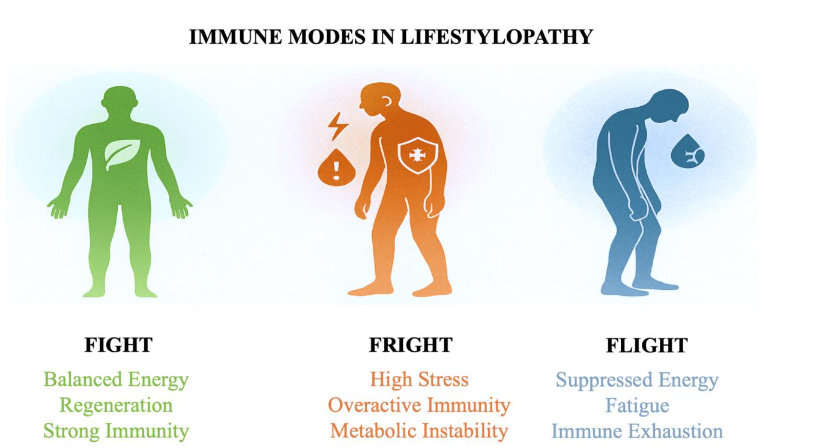
FIGHT MODE
In the Lifestylopathy framework, Fight Mode represents a high-order physiological state in which the dual forces of potential energy and entropy are finely balanced to sustain immune readiness, systemic adaptability, and regenerative capacity. Contrary to traditional interpretations that associate “fight” with aggression or reactive defence, this mode is characterized by inner calm, clarity, and precision. It is a homeodynamic condition—dynamic yet stable—where energy is neither stored nor wasted, but continuously regulated to support both protection and repair. In this optimal state, potential energy provides structure, strength, and the capacity for decisive action, while regulated entropy introduces flexibility, adaptability, and the fluid responsiveness necessary to meet both internal disturbances and external challenges.
This equilibrium is akin to a tightly tuned instrument: resilient yet responsive, powerful yet supple. It embodies the duality of physiological coherence—where strength does not imply rigidity, and flexibility does not suggest fragility. Like the balance between muscular strength and joint mobility, or excitatory and inhibitory neural signaling, Fight Mode integrates oppositional forces into a unified system of action and adaptation. This condition allows the immune system to operate within its effective threshold—not underreacting to true threats nor overreacting to benign stimuli, but executing precise interventions that preserve energy and maintain tissue integrity.
Creating and sustaining this state requires intentional lifestyle inputs that build structured energy and reduce internal chaos. Practices such as rhythmic diaphragmatic breathing, restorative sleep, nutrient-dense eating, aligned movement, and value-driven emotional regulation all contribute to this state of readiness. Fight Mode transcends basic defense—it activates vital repair mechanisms, supports cellular regeneration, and restores homeostasis in response to both endogenous disruptions (e.g., inflammation, oxidative stress) and exogenous threats (e.g., pathogens, toxins). It is in this thermodynamic balance between order and adaptability that the body finds its most powerful healing potential—a state not of tension, but of intelligent, integrated resilience.
FRIGHT MODE
In contrast to the adaptive equilibrium of Fight Mode, Fright Mode represents a state of energetic and informational disarray, where the delicate balance between potential energy and entropy collapses under the weight of unregulated stimulation, fear, and systemic overload. It is typically triggered by chronic stress, unresolved trauma, excessive information input, or emotional instability, and is characterized by an initial spike in potential energy—a short-lived surge mobilized for rapid threat detection and survival. However, without adequate entropy modulation, this heightened energy rapidly devolves into chaos. The immune system, sensing disorder, shifts into a hyperreactive state, prioritizing immediate defense at the expense of precision and sustainability.
Neurochemically, Fright Mode is marked by dominance of excitatory neurotransmitters (e.g., glutamate) and elevated stress hormones (e.g., cortisol, adrenaline), which accelerate responsiveness but destabilize emotional regulation, perception, and immunity. Flexibility without structure becomes the hallmark of this state—an excess of ungrounded options and reactive pathways that erode decision-making clarity and physiological resilience. Paradoxically, while flexibility is normally an asset, in this state it becomes a conduit for uncertainty, over-sensitization, and fragmentation. The organism loses its internal anchor, and physiological signals become erratic, pushing the system beyond its effective threshold—where neither immune precision nor metabolic coherence can be maintained.
Though Fright Mode may serve a short-term survival function, enabling rapid mobilization and escape from acute danger, its chronic activation is thermodynamically unsustainable. It fosters cumulative entropy, depletes energy reserves, weakens regenerative capacity, and often manifests as anxiety, hypersensitivity, autoimmune dysregulation, and eventual exhaustion. To recover from this state, Lifestylopathy prescribes restorative practices that rebuild structured energy and systematically reduce internal noise: rhythmic breathing, controlled exposure to supportive stimuli, mineral balance, and emotionally stabilizing communication. By reintroducing order into the energetic system and lowering reactive thresholds, the body can shift back into a state of homeodynamic control—where potential energy is once again guided, and entropy is meaningfully contained.
FLIGHT MODE
Flight Mode reflects a physiological state of retreat, where potential energy collapses and entropy becomes dominant, resulting in systemic suppression and emotional disengagement. This mode is often triggered by chronic emotional avoidance, unresolved trauma, or long-term nutritional deficits. In this state, the body no longer mounts a robust defense or adaptation strategy—it shifts into energetic conservation, shutting down non-essential functions. The immune system mirrors this retreat through hypoactivity, reduced surveillance, and vulnerability to infections or latent pathologies. The thermodynamic balance tips below the effective threshold, where structured energy is insufficient to offset growing internal disorder.
Neurobiologically, Flight Mode is characterized by inhibitory dominance, especially through neurotransmitters like GABA and diminished serotonergic tone. This creates a neurochemical environment marked by fatigue, withdrawal, slowed cognition, and emotional flatness. While this mode may offer short-term protection by reducing overstimulation and conserving depleted resources, its prolonged activation leads to stagnation, depressive symptoms, and a reduced capacity for renewal. Potential energy is not just low—it is fragmented, lacking coherence to initiate healing, engage socially, or process experiences constructively. The body and mind enter a subdued state, where entropy governs without opposition.
To reverse this degenerative trajectory, Lifestylopathy emphasizes gradual reconstitution of energy and reactivation of meaning-driven engagement. Nutrient-dense food, circadian-aligned movement, sunlight exposure, and emotionally safe environments serve as initial interventions. As coherence is restored, gentle stimulation—through creative expression, purposeful tasks, and social reconnection—helps shift the system back above its energetic threshold. Crucially, the language and information received during this phase must be empowering and constructive, as words shape perception and neurochemical balance. With time, Flight Mode can evolve into a new adaptive cycle, where potential energy is rebuilt, entropy is regulated, and the individual reclaims the physiological and psychological resources for healing and growth.
Limitations and Future Directions
Lifestylopathy proposes an interdisciplinary model uniting thermodynamics, systems biology, psychoneuroimmunology, and lifestyle medicine. While its conceptual structure is strong and grounded in emerging science, the framework remains in its early stages and requires further empirical validation. Current insights draw on integrative interpretations of known physiological mechanisms, early epigenetic findings, and established lifestyle practices. Although lifestyle medicine—endorsed by institutions such as the American College of Lifestyle Medicine—has demonstrated significant health benefits through behavioral change, more rigorous studies are needed to substantiate Lifestylopathy’s specific claims and real-world effectiveness.
As with any intervention model, personalization is critical. Misaligned or excessive lifestyle strategies—like overtraining or restrictive diets—can increase entropy and diminish health, underscoring the importance of context-sensitive application. Future research should aim to operationalize Lifestylopathy’s key concepts, such as biological entropy measurement and thresholds between immune response states (e.g., fight, fright, flight). While programs like CHIP (Complete Health Improvement Program) have shown cost-effective benefits in chronic disease management, broader implementation studies are needed to refine cultural adaptability, accessibility, and long-term integration into diverse healthcare systems.
Lifestylopathy holds significant potential as a regenerative health paradigm, but its advancement will depend on interdisciplinary collaboration and empirical grounding. Integrating its principles into medical education will be essential to prepare healthcare providers to address chronic illness from a systems-oriented and preventive perspective. As interest in lifestyle medicine continues to grow, Lifestylopathy offers a timely and human-centered approach to healing—one that positions lifestyle not as an adjunct, but as the primary regulator of physiological coherence and long-term health.

Conclusion
Lifestylopathy redefines health through the lens of thermodynamics, emphasizing that the body’s ability to sustain vitality depends on the dynamic regulation of potential energy and entropy across five interconnected domains: chemical, physical, mental, voluntary, and restorative. Rather than treating disease as a fixed pathology, this model interprets dysfunction as a breakdown in energy balance and systemic coherence. The immune system, as a thermodynamic mirror, reflects these internal states—operating optimally in a “Fight Mode” of homeodynamic balance, or dysregulating into “Fright” or “Flight” modes when overwhelmed by internal chaos or energy collapse. By aligning lifestyle choices with the principles of energy conservation, entropy regulation, and physiological restoration, individuals can actively shape immune resilience and regenerative capacity. Lifestylopathy thus offers a scientifically grounded, integrative, and personalized framework that empowers individuals and practitioners alike to move beyond symptomatic care toward sustainable, systemic health optimization.
Conflicts of interests: None
Funding statement: This research was made possible by the generous support of the Swiss Scientific Society for Developing Countries, to whom we extend our sincere thanks.
References
- Barbero S, Fassio F. Energy and food production with a systemic approach. Environ Qual Manag. 2011;21(2):57–74. https://doi.org/10.1002/tqem.20318
- Brown H, Vera‐Toscano E. Energy poverty and its relationship with health: empirical evidence on the dynamics of energy poverty and poor health in Australia. SN Bus Econ. 2021;1(10). https://doi.org/10.1007/s43546-021-00149-3
- Koivu‐Jolma M, Annila A. Epidemic as a natural process. Math Biosci. 2018;299:97–102. https://doi.org/10.1016/j.mbs.2018.03.012
- Houck P. Entropy and the lymphatic system, a new model with therapeutic potential. Glob J Med Res. 2025;:27–38. https://doi.org/10.34257/GJMRBVOL25IS1PG27
- Ingrosso M. Wellness. In: Maggino F, editor. Encyclopedia of Quality of Life and Well-Being Research. Cham: Springer; 2021. https://doi.org/10.1007/978-3-319-69909-7_3229-2
- Rattan S. Second IRCHAL conference and the communication of biogerontology to health care personnel. Biogerontology. 2005;6(3):223–224. https://doi.org/10.1007/s10522-005-0235-5
- Montévil M. Entropies and the Anthropocene crisis. AI Soc. 2021;38(6):2451–2471. https://doi.org/10.1007/s00146-021-01221-0
- Roach T. Use and abuse of entropy in biology: a case for caliber. Entropy. 2020;22(12):1335. https://doi.org/10.3390/e22121335
- Alzeer J. Halalopathy: role of entropy in the aging process. Am J Biomed Sci Res. 2022;16(2):147–154. https://doi.org/10.31487/j.ajmc.2023.01.02
- Haukedal R, Mylonas N. Entropy and negativity. Technophany. 2025;2(2):1–25. https://doi.org/10.54195/technophany.15370
- Chen B, Li C. On the interplay between entropy and robustness of gene regulatory networks. Entropy. 2010;12(5):1071–1101. https://doi.org/10.3390/e12051071
- Chen B, Wong S, Li C. On the calculation of system entropy in nonlinear stochastic biological networks. Entropy. 2015;17(10):6801–6833. https://doi.org/10.3390/e17106801
- Alzeer J. Lifestylopathy as personalized medicine: a holistic approach to health. Med Res Arch. 2025;13(1). https://doi.org/10.18103/mra.v13i1.6209
- Millen J, Xuereb A. Perspective on quantum thermodynamics. New J Phys. 2016;18(1):011002. https://doi.org/10.1088/1367-2630/18/1/011002
- Lee A, Dixit V. Dietary regulation of immunity. Immunity. 2020;53(3):510–523. https://doi.org/10.1016/j.immuni.2020.08.013
- Gutiérrez S, Svahn S, Johansson M. Effects of omega-3 fatty acids on immune cells. Int J Mol Sci. 2019;20(20):5028. https://doi.org/10.3390/ijms20205028
- Alzeer J. Beyond disorder: a new perspective on entropy in chemistry. Am J Med Chemos. 2024;5:1–5.
- Günal‐Köroğlu D, Karabulut G, Özkan G, Yılmaz H, Subaşı BG, Çapanoğlu E. Allergenicity of alternative proteins: reduction mechanisms and processing strategies. J Agric Food Chem. 2025;73(13):7522–7546. https://doi.org/10.1021/acs.jafc.5c00948
- Barnaba V, Paroli M, Piconese S. The ambiguity in immunology. Front Immunol. 2012;3. https://doi.org/10.3389/fimmu.2012.00018
- Lévesque S, Pol J, Ferrere G, Galluzzi L, Zitvogel L, Kroemer G. Trial watch: dietary interventions for cancer therapy. Oncoimmunology. 2019;8(7):e1591878. https://doi.org/10.1080/2162402x.2019.159187
- Dünkelberg S, Maywald M, Schmitt A, Schwerdtle T, Meyer S, Rink L. The interaction of sodium and zinc in the priming of T cell subpopulations regarding Th17 and Treg cells. Mol Nutr Food Res. 2020;64(2). https://doi.org/10.1002/mnfr.201900245
- Elmadfa I, Meyer A. The role of the status of selected micronutrients in shaping the immune function. Endocr Metab Immune Disord Drug Targets. 2019;19(8):1100–1115. https://doi.org/10.2174/1871530319666190529101816
- Zheng L, Wang Z, Zhang X, Ning K. Myokines may be the answer to the beneficial immunomodulation of tailored exercise—a narrative review. Biomolecules. 2024;14(10):1205. https://doi.org/10.3390/biom14101205
- Woodyard CD. Exploring the therapeutic effects of yoga and its ability to increase quality of life. Int J Yoga. 2011;4(2):49. https://doi.org/10.4103/0973-6131.85485
- Raub JA. Psychophysiologic effects of hatha yoga on musculoskeletal and cardiopulmonary function: a literature review. J Altern Complement Med. 2002;8(6):797–812. https://doi.org/10.1089/10755530260511810
- Kuśmierska M, Kuśmierski J, Janik I, Martyka A, Ujma P. Mindfulness and movement: scientifically exploring the health impacts of yoga. J Educ Health Sport. 2024;64:206–220. https://doi.org/10.12775/jehs.2024.64.014
- Souza ACR, Bentes CM, Salles BF, Reis VM, Vilaça‐Alves J, Miranda H, et al. Influence of inter-set stretching on strength, flexibility and hormonal adaptations. J Hum Kinet. 2013;36(1):127–135. https://doi.org/10.2478/hukin-2013-0013
- Walsh J, Tschakovsky M. Exercise and circulating BDNF: mechanisms of release and implications for the design of exercise interventions. Appl Physiol Nutr Metab. 2018;43(11):1095–1104. https://doi.org/10.1139/apnm-2018-0192
- Hu Q. Impacts of intermittent high-intensity training on aerobics students’ performance. Rev Bras Med Esporte. 2023;29. https://doi.org/10.1590/1517-8692202329012023_0068
- Hu D, Wan L, Chen M, Caudle Y, LeSage G, Li Q, et al. Essential role of IL-10/STAT3 in chronic stress-induced immune suppression. Brain Behav Immun. 2014;36:118–127. https://doi.org/10.1016/j.bbi.2013.10.016
- Dhabhar F. Effects of stress on immune function: the good, the bad, and the beautiful. Immunol Res. 2014;58(2–3):193–210. https://doi.org/10.1007/s12026-014-8517-0
- Economo MN, Hansen K, Wachowiak M. Control of mitral/tufted cell output by selective inhibition among olfactory bulb glomeruli. Neuron. 2016;91(2):397–411. https://doi.org/10.1016/j.neuron.2016.06.001
- Banerjee A, Marbach F, Anselmi F, Koh MS, Davis MB, Silva PG, et al. An interglomerular circuit gates glomerular output and implements gain control in the mouse olfactory bulb. Neuron. 2015;87(1):193–207. https://doi.org/10.1016/j.neuron.2015.06.019
- Heiden Mvd, Shetty SA, Bijvank E, Beckers L, Çevirgel A, Sleen Yv, et al. Multiple vaccine comparison in the same adults from the VITAL study reveals vaccine-specific and age-related humoral response patterns. medRxiv. 2024. https://doi.org/10.1101/2024.01.22.24301601
- Çevirgel A, Heiden Mvd, Shetty SA, Viljanen M, Vos M, Bijvank E, et al. Baseline immunotypes and immune entropy are indicators of multiple vaccine responsiveness. medRxiv. 2024. https://doi.org/10.1101/2024.05.29.24308098
- Klose CSN, Veiga‐Fernandes H. Neuroimmune interactions in peripheral tissues. Eur J Immunol. 2021;51(7):1602–1614. https://doi.org/10.1002/eji.202048812
- Schneider FM, Borchmann D. Topological entropy of formal languages. Semigroup Forum. 2016;94(3):556–581. https://doi.org/10.1007/s00233-016-9782-0
- Wagner D, Bekas K, Bialystok E. Does language entropy shape cognitive performance? A tale of two cities. Biling Lang Cogn. 2023;26(5):998–1008. https://doi.org/10.1017/s1366728923000202
- Sepalanita W, Faturachman A, Subiakto T. The effect of diaphragmatic breathing exercises on peak expiratory flow rate in bronchial asthma patients. J Kesehatan Manarang. 2024;10(1):59. https://doi.org/10.33490/jkm.v10i1.965
- Sheeran P, Webb TL. The intention–behavior gap. Soc Personal Psychol Compass. 2016;10(9):503–518. https://doi.org/10.1111/spc3.12265
- Chopra K, Kumar B, Kuhad A. Pathobiological targets of depression. Expert Opin Ther Targets. 2011;15(4):379–400. https://doi.org/10.1517/14728222.2011.553603
- Lesseur C, Paquette AG, Marsit CJ. Epigenetic regulation of infant neurobehavioral outcomes. Med Epigenet. 2014;2(2):71–79. https://doi.org/10.1159/000361026
- Gómez‐Pinilla F, Zhuang Y, Feng J, Ying Z, Fan G. Exercise impacts brain‐derived neurotrophic factor plasticity by engaging mechanisms of epigenetic regulation. Eur J Neurosci. 2010;33(3):383–390. https://doi.org/10.1111/j.1460-9568.2010.07508.x
- Fung W, Yip P, Stevens S, Wong T, Yoo Y, Ross N, et al. Christian-based spiritually integrated psychotherapy for East Asian Canadians and findings from the CSPEARIT study. Spirituality in Clinical Practice. 2023;10(4):301–324. https://doi.org/10.1037/0000338-016
- Alzeer J. Harnessing the power of choice: how to thrive in a universe of entropy. Am J Med Chem. 2024;5(1):2–6. https://doi.org/10.31487/j.AJMC.2024.01.02
- Alzeer J, Benmerabet H. Exploring the intersection of quantum mechanics and human psychology. Psychol Dis Res. 2024;7(1):1–6. https://doi.org/10.31487/j.pdr.2024.01
- Alzeer J, Benmerabet H. Potentiality to actuality: quantum physics inspires creative innovation. Jurnal Pijar Mipa. 2025;20(1):1–6. https://doi.org/10.29303/jpm.v20i1.8176
- Wakefield JRH, Bowe M, Këllezi B. Who helps and why? A longitudinal exploration of volunteer role identity, between‐group closeness, and community identification as predictors of coordinated helping during the COVID‐19 pandemic. Br J Soc Psychol. 2022;61(3):907–923. https://doi.org/10.1111/bjso.12523
- Huang X, Fu M. Voluntary participation mediates the relationship between multi-membership in online communities and life satisfaction among Chinese populations: a gendered perspective. Behav Sci. 2024;14(11):976. https://doi.org/10.3390/bs14110976
- Hopwood R, Witten T. Spirituality, faith, and religion: the TGNC experience. Spirituality in Clinical Practice. 2017;4(3):213–230. https://doi.org/10.1037/14957-011
- Alzeer J. Lifestylopathy: a holistic approach to healthcare. J Altern Med Ther. 2024;1(1). https://doi.org/10.59462/jamt.1.1.101
- Weinhouse C. Mitochondrial-epigenetic crosstalk in environmental toxicology. Toxicology. 2017;391:5–17. https://doi.org/10.1016/j.tox.2017.08.008
- Alzeer J. Entropy and potential energy as a key role of halalopathy in disease prevention and cure. Longhua Chin Med. 2020;3:20–20. https://doi.org/10.21037/lcm-20-40
- Alzeer J. Halalopathy: stimulation of the immune system through enrichment of potential energy. Int J Regen Med. 2022;1–5. https://doi.org/10.31487/j.rgm.2022.01.02
- Straub R. The brain and immune system prompt energy shortage in chronic inflammation and ageing. Nat Rev Rheumatol. 2017;13(12):743–751. https://doi.org/10.1038/nrrheum.2017.172
- Alzeer J. Lifestylopathy: unlocking potential by embracing duality and homeostasis for improved healthcare. Int J Regen Med. 2023;1–6. https://doi.org/10.31487/j.rgm.2023.02.02