





Effect of Bobath Concept on Children with Cerebral Palsy
Effect of intervention based on the Bobath Concept in children with Cerebral Palsy
Claudia Alcantara de Torre *¹; Raquel de Paula Carvalho ².
¹ Centro de Apoio Terapêutico, AconBobath- Brazil
² Department of Human Movement Science, Universidade Federal de São Paulo, Brazil
OPEN ACCESS
PUBLISHED: 31 August 2025
CITATION Torre, CA., Carvalho, RP., 2025. Effect of intervention based on the Bobath Concept in children with Cerebral Palsy. Medical Research Archives, [online] 13(8). https://doi.org/10.18103/mra.v13i8.6796
COPYRIGHT © 2025 European Society of Medicine. This is an open-access article distributed under the terms of the Creative Commons Attribution License, which permits unrestricted use, distribution, and reproduction in any medium, provided the original author and source are credited.
DOI: https://doi.org/10.18103/mra.v13i8.6796
ISSN 2375-1924
ABSTRACT
Background: The treatment based on the Bobath Concept can improve the functionality in children with Cerebral Palsy (CP). Aim: to demonstrate the effects of treatment based on Bobath Concept on functional tasks in the context of participation and activities of children with CP. Method: This is a pre/post intervention assessment design, whose sample consisted of 10 children with CP, aged 8 years and 6.5 months (SD=3 years and 4 months), GMFCS levels III-V, voluntary participants who received treatment conducted by the therapists of the Bobath Course. Baseline assessments were Goal Attainment Scaling (GAS) and Segmental Trunk Control Assessment (SATCo-BR). The pre-tests of the chosen tasks by children/parents was filmed and coded by GAS. The child received five sessions of intervention, with 1 hour and 15 minutes of duration, for 2 weeks. The assessments were repeated for the post-test. A satisfaction questionnaire was applied after treatment. Results: Eight patients achieved some degree of improvement in GAS (U=5, p<0.01). There was no difference in the total score of SATCo even though 5 patients obtained gain in relation to trunk control. The questionnaire revealed improvements in a few sessions that have repercussions on the child’s daily activities and participation. Conclusion: a short period of treatment make that all patients gained in functional tasks, and parents perceived the functional improvement of their children. The duration of treatment was not enough to show gains in body structure and function related to trunk control.
Keywords: Cerebral Palsy (CP), Bobath, Neurodevelopmental.
Effect of intervention based on the Bobath Concept in children with Cerebral Palsy
Introduction
Cerebral palsy (CP) comprises a group of disorders in the development of posture and movement, causing limitation of activities due to non-progressive disturbances that occurred in the brain during the foetal period or childhood. Motor disorders are often accompanied by sensory, cognitive, perceptual, communicational, and behavioural disorders, as well as seizures and secondary musculoskeletal problems. This definition encompasses a wide variety of aetiologies, manifestations, severities, prognoses, and associated disorders in which they always present disturbance in the control of posture and movement. In a recent publication about Cerebral Palsy definition, it is statement that CP is an early-onset lifelong neurodevelopmental condition characterized by limitations in activity due to impaired development of movement and posture, manifesting as spasticity, dystonia, choreoathetosis, and/or ataxia.
Among treatments approach for CP, we can cite Neurodevelopmental Treatment (NDT) Bobath Concept that is a holistic and interdisciplinary model of clinical practice in constant evolution. This concept has been used since the 1940s for the treatment of neuromotor disorders and since then, professionals from all continents have been prepared for their practice to the present day. The Bobath Concept course has been given from many decades and thousands of students have been certificated.
This concept was developed by Mrs. Bertha and Mr. Karel Bobath based on their studies and clinical practice. However, it has undergone modifications due to the new science knowledge, and its principles have also been recently updated and clarified to highlight the practice and transference of daily life skills, and to include measurable goals. Emphasizing individualized therapeutic management, the Bobath Concept utilizes movement analysis to support the rehabilitation of individuals with neurological pathophysiology including CP. The ICF (International Classification of Functioning, Disability and Health) model has been incorporated at its practice. Thus, the therapist employs a problem-solving approach to assess activity and participation. This process involves identifying and prioritizing aspects of integrity and deficiencies relevant for establishing achievable outcomes for patients and caregivers. Furthermore, the concept privileges an in-depth understanding of typical and atypical development, combined with the analysis of postural control, movement, activity, and participation throughout life, forming the basis for assessment and intervention. During the assessment and intervention, therapeutic management involves a reciprocal and dynamic patient-therapist interaction. This interaction aims to activate optimal sensorimotor processing, improve task performance, and facilitate the acquisition of skills for meaningful activities and enhanced social participation.
The Bobath Concept is based on Dynamical Systems Approach, asserting that movements are organized according to behavioral goals (functional tasks) rather than reflexes or isolated motor patterns. Therapists employing this concept should manipulate the environment to help the nervous system solve motor difficulties in various ways. This foundational principle concurrently fosters interdisciplinary integration among Physiotherapy, Occupational Therapy and Speech Therapy professionals within the training program. Such integration is achieved by encompassing various physiological systems (neuromotor, musculoskeletal, sensory, perceptual, cognitive, behavioral, cardiorespiratory, and gastrointestinal) activity. The comprehensive training course, designed for physiotherapists, occupational therapists and speech therapists, totals 285 hours, distributed between theoretical instruction and hands-on patient practice.
The philosophical principles of the Bobath Concept aim to increase the level of individuals’ participation and activities. These principles encompass evaluation and implementation of impediments, providing individualized intervention by an interdisciplinary team who collaborate to achieve the family and patient goals, and family is an integral part of this team. Practice and transference of skills to daily life is important for achieving the best handling outcome.
Due to the broad characteristics of Bobath Concept aimed at patients with a lot of variability in their neuromotor impairments, evidence studies randomized controlled trial for children and adolescents with CP can be very difficult. This is because of the many differences in locality and time of lesion, motor disorders, associated impairments, previous treatment, and family-related issues. These and other factors can make a significant challenge to perform controlled randomized clinical trials. Furthermore, individualized nature of therapeutic management within the Bobath Concept can be also considered a significant challenge to perform controlled randomized clinical trials. The paucity of evidence, the use of the Bobath Concept has been recommended with caution. However, clinical experience and the history of the development of the Concept demonstrate its effectiveness in the treatment of CP. To demonstrate the effectiveness, and contemporarily model of the Bobath Concept, and confirm its evidence of good results in functional tasks in the context of the participation and activities of children with CP, the present study is justified. Therefore, the aim of this study was to verify the effects of the treatment based on Bobath Concept in participation and activities in children with CP.
Method
This is a pre/post intervention assessment design that was approved by the Research and Ethic Committee (n. 6.264.512) of Universidade Federal de São Paulo. All participants, therapists, parents, and children signed the Free and Informed Consent Form before the evaluation and beginning of the intervention, which clarify the rights in relation to freedom of participation and withdrawal, preserved identity and absence of risks to life, since the measures used in this study are indirect and non-invasive. Thus, the possibility of risks for the participants is lower than those provided for in Resolution 466/12 of the National Health Council, exempting those responsible for the study from planning any form of compensation. In addition, the individuals were made aware that their names would remain restricted to those responsible for the research.
The selection of participants was conducted through convenience sampling, inviting parents and their children to volunteer for the Bobath Course. Participants received treatment conducted by the course therapists (graduated in Physiotherapy, Occupational Therapy and Speech Therapy) and supervised by the officially qualified Bobath Concept instructor. All evaluations and treatment took place at the Centro de Apoio Terapêutico (Therapeutic Support Centre), in the city of Santos and at the Associação Elo 21 (Link 21 Association), in the city of São Paulo. The sample comprised 10 children with CP, aged from 2 to 14 years, classified under the Gross Motor Function Classification System (GMFCS) levels III, IV and V, and presenting with spastic, dyskinetic, ataxic and mixed movement disorders. Exclusion criteria included botulinum toxin injections, orthopaedic or neurological surgery in the last 6 months, severe visual impairment, or a diagnosis of any genetic syndromes.
PROCEDURES
The experimental protocol was implemented during the first module of the Bobath Course. This comprehensive course spans 285 hours, distributed in three modules. Each module lasts two or three weeks, a daily workload of seven hours and an interval of 30 to 60 days between modules. At the beginning of each module, the interdisciplinary team – from the area of Physiotherapy, Occupational Therapy and/or Speech therapy, who were therapist of the course – conducts the physical assessment of the child. This assessment supported the therapeutic planning. The evaluation specifically focused on identifying capacities and age-appropriate limited activities, along with their motor condition. Additionally, evaluation of the neuromuscular, musculoskeletal, sensory, cognitive, and respiratory systems were performed. Information regarding the gastrointestinal system, sleep patterns, equipment in use, and school context was also gathered from the family and the child. Conversations with parents or caregivers, and with the child (when possible), were held to guide the possible goals to be chosen.
For this study the following assessments were applied:
- Goal Attainment Scaling (GAS). It is a technique for measuring results and a facilitator for achieving goals that involves the specification of a targeted individualized functional goal in observable and measurable terms, including the conditions under which the goal is to be performed and the criterion for determining goal attainment. The achievement of the goals is measured according to 5-point scale ranging from -2 (current performance level – baseline) to +2 (goal attainment even further beyond the goal), with a single final score. The GAS is directed towards individualized goals for the patient but is scored in a standardized way to allow for statistical analysis. A characteristic of GAS is the establishment of an outcome criterion of individual success according to patient and families, functional requests before the intervention begins. Goal setting should follow the SMART principle (specific, measurable, attainable, realistic, and time-limited). Specified GAS levels were: -2 (current performance level – baseline), -1 (progress towards the goal), 0 (specified goal attainment), +1 (specified performance beyond the goal) or +2 (goal attainment even further beyond the goal).
- The Brazilian version of Segmental Trunk Control Assessment (SATCo-BR). It is a systematic method of assessing the levels of trunk control in children with motor impairments. Seven functional levels are evaluated: head, upper thoracic, mid-thoracic, lower thoracic, upper lumbar, lower lumbar and full trunk control. For the application of the SATCo-BR, the child should be seated on a bench, in an upright posture, hands and arms free of any external contact, including the evaluator’s own body, bench or arms, with the feet flat on the floor and the hips stabilized by the strapping system described in the scale. The evaluator should position himself behind the child and offer a firm hand support, around the trunk, at each of the levels designated for each condition. The child’s ability to quickly maintain or recover the vertical position of the trunk without support in all planes is evaluated during the static, active and reactive tests and noted on the SATCo form. For each item evaluated (static, active and reactive) at each control level, a score of “0” was adopted when the child was unable to perform and “1” when the child was able to perform. The total score for each level was obtained by summing the scores in each item, obtaining a maximum score of “3” and a minimum score of “0”. The last level at which the child positively scored the three parameters (static, active and reactive) was adopted as their functional level of trunk control. The level of trunk control was considered complete for each equilibrium test, i.e., static, active, and reactive, when the control was present.
EXPERIMENTAL PROTOCOL
Following this initial assessment and dialogue with the family and/or child, specific objectives were established. Subsequently, both primary (those directly resulting from the injury) and the secondary disabilities (consequences of the primary disabilities) relevant to the chosen task were analysed. This analysis is an indispensable prerequisite for intervention planning. Before the intervention was initiated, pre-tests of the selected task were filmed. The pre-test is defined as the performance of the chosen functional task prior to the initiation of the intervention. The pre-test was scored according to the GAS. To evaluate trunk control, SATCo-BR was applied. Scores from both GAS and SATCo-BR were assigned by the instructor and the professionals participating in the course. Each child received a treatment session lasting 1 hour and 15 minutes, totalling five assessment and intervention sessions, with an interval of one to three days between each session. During these interventions, based on the Bobath Concept, various equipment such as rolls, balls, and benches of different dimensions were utilized.
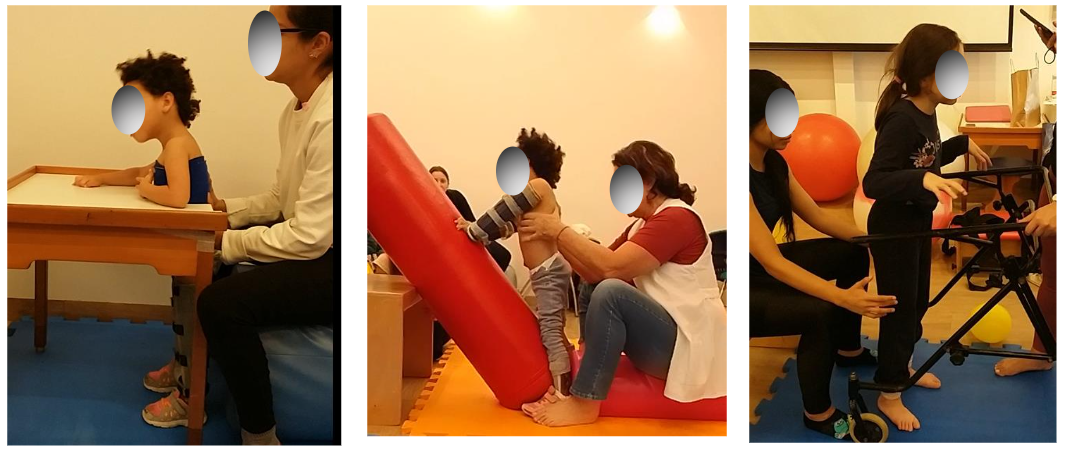
The reassessment took place at the end of the fifth intervention session, adhering to the protocol of the initial evaluation. This phase, called the post-test, took place once the intervention is completed. For the post-tests, the team of therapists replicated the identical verbal commands, facial expressions, equipment, and toys used during the pre-tests. Following the reassessments, a satisfaction questionnaire was applied to parents and children, prompting them to spontaneously describe observed changes after the intervention period. This qualitative evaluation was carried out through a written interview questionnaire, comprising two questions: (1) What was your opinion of your child’s participation in the Bobath Course? (2) Have you noticed any differences in your child? If so, please elaborate.
DATA ANALYSIS
The interdisciplinary team was trained to conduct assessments using GAS and SATCo-BR. Videos from these assessments were scored by an independent, trained examiner experienced in both tests. These scores were then compared to the outcomes scores rated by interdisciplinary team. For statistical analysis, normality tests were applied to verify the data distribution. The Mann-Whitney U test was applied to compare GAS and SATCo-BR results between pre- and post-test scores, with statistical significance set at p<0.05. Effect size was estimated using r values converted from Mann-Whitney U established. Subsequently, both primary (those directly resulting from the injury) and the secondary disabilities (consequences of the primary disabilities) relevant to the chosen task were analysed. This analysis is an indispensable prerequisite for intervention planning.
Results
Participant characteristics, including CP type, GMFCS level, chronological age, and gestational age, are presented in Table 1.
| Participant | Type of CP | GMFCS | Age | Gestational Age | Goal chosen by family and children |
|---|---|---|---|---|---|
| Da | Spastic bilateral | IV | 10 y 9 m | 31 w | Keep seated on a bench for bath |
| En | Spastic bilateral | IV | 7 y 10 m | 31 w | Hit a ball into the box in sitting position |
| Gu | Spastic bilateral | III | 6 y 9 m | 28 w | Move from the floor to the sitting position on the bench |
| He | Spastic bilateral | III | 3 y 1 m | 40 w | Stand without support and stick a ball to the target |
| La | Ataxia | III | 10 y 11 m | 39 w | Stand unsupported |
| Ar | Spastic bilateral | IV | 11 y 11 m | 42 w | Sat unsupported talking to the therapist |
| Es | Dyskinetic bilateral | V | 5 y | 41 w | Stand with table support in front looking at the object (necklace) |
| Sa | Spastic bilateral | IV | 5 y 4 m | 29 w | Sitting, throw a ball without falling |
| Ca | Dyskinetic bilateral | V | 7 y 5 m | 39 w | Sitting blow soap bubble |
| Mi | Mixed bilateral | IV | 8 y | 42 w | Pick up an object on the floor while sitting on the bench |
Legend: Y=years m=months w=weeks
The ten participants had a mean of 8 years and 6.5 months (SD=3 years and 4 months). Regarding gestational age, four children were born preterm, four full-term and two post-term. Spasticity represented the most prevalent tone disorder among participants. Three participants were classified as GMFCS level III, five as level IV and two as level V. Seven families and their children aimed to perform activities in sitting position, whereas three focused on standing and maintaining an upright posture.
| Pre-test | Post-test | |
|---|---|---|
| Patients | GAS Description (baseline) | GAS Description |
| Da | -2 Keep seated on a bench with right lateral support for 1min. | +2 Keep seated on a bench with right lateral support from 1 min 46 sec to 2 sec |
| En | -2 Hit 1 ball into the box at 1m in 5 attempts | -1 Hit 2 to 3 balls into the box at a distance of 1m in 5 attempts |
| Gu | -2 Move from the floor to sitting position on the bench in a time of 56 sec or more | +2 Move from the floor to the sitting position on the bench in a time between 40 and 36 sec or less |
| He | -2 Stand for up to 3 sec without support and stick the ball to the target | -1 Stand for 4 to 6 sec without support and stick a ball to the target |
| La | -2 Stand unsupported for 9 sec | -1 Stand unsupported for 10 to 12 sec |
| Ar | -2 Sat unsupported for 9 seconds, talking to the therapist. | 0 Sit unsupported for 12 to 13 seconds, talking to the therapist |
| Es | -2 Stand with table support in front for 10 sec looking at the object (necklace) | 0 Stand with a table support in front for 13 to 14 sec looking at the object |
| Sa | -2 Sitting, throw a ball without falling 5 times in 10 attempts | -2 Sitting, throw a ball without falling 5 times in 10 attempts |
| Ca | -2 Sitting for 2 seconds to pop soap bubble | NT |
| Mi | -2 It is not able to pick up an object with a width of 14cm from the floor with contralateral support | +2 Pick up an object with a width of 14 cm from the floor with contralateral support for 8 to 12 sec |
Legend: NT=not tested
There was significant difference in GAS scores between pre- and post-test (U=5, p<0.01), accompanied by a larger effect size (r=0.84). Table 3 shows the total score and functional level of SATCo-BR. There was no significant difference in the total SATCo-BR scores between pre- and post-test (U=34, p=0.4), indicating a small effect size (r=0.21). Additionally, table 4 presents the individual advancements in each SATCo-BR evaluated item (static, active and reactive) observed post-intervention.
| Pre-test | Post-test | |||
|---|---|---|---|---|
| Patients | Total Score | Functional Level | Total Score | Functional Level |
| Da | 7 | Active control at mid-thoracic | 7 | Active control at mid-thoracic |
| En | 12 | Static control at upper lumbar | 14 | Reactive control at upper lumbar |
| Gu | 20 | Reactive full trunk control | 20 | Reactive full trunk control |
| He | 13 | Active control at upper lumbar | 19 | Active full trunk control |
| La | 19 | 20 full trunk control | ||
| Ar | 9 | Static control at lower thoracic | 9 | Static control at lower thoracic |
| Es | 4 | Active control at upper thoracic | 8 | Reactive control at mid-thoracic |
| Sa | 5 | Reactive control at upper thoracic | 8 | Reactive control at mid-thoracic |
| Ca | 8 | Reactive control at mid-thoracic | NT | |
| Mi | 15 | Static control at lower lumbar | 15 | Static control at lower lumbar |
| Static SATCo | Active Satco | Reactive Satco | ||||
|---|---|---|---|---|---|---|
| Child | Pre-test | Post-test | Pre-test | Post-test | Pre-test | Post-test |
| Da | mid-thoracic | mid-thoracic | mid-thoracic | mid-thoracic | Upper Thoracic | Upper Thoracic |
| En | Upper Lumbar | Lower Lumbar | Lower Thoracic | Lower Thoracic | Lower Thoracic | Upper Lumbar |
| Gu | Complete control | Complete control | Complete control | Complete control | Complete control | Complete control |
| He | Upper Lumbar | Complete control | Upper Lumbar | Complete control | Lower Thoracic | Lower Lumbar |
| La | Complete control | Complete control | Complete control | Complete control | Lower Lumbar | Complete control |
| Ar | Lower Thoracic | Lower thoracic | Lower Thoracic | Lower Thoracic | Upper Thoracic | Upper Thoracic |
| Es | Upper Thoracic | Mid-thoracic | Upper Thoracic | Mid-thoracic | Didn’t control | Mid-thoracic |
| Sa | Upper Thoracic | Mid-thoracic | Upper Thoracic | Mid-thoracic | Upper Thoracic | Mid-thoracic |
| Ca | Upper Thoracic | NT | Upper Thoracic | NT | Didn’t control | NT |
| Mi | Lower Lumbar | Lower Lumbar | Upper Lumbar | Upper Lumbar | Upper Lumbar | Upper Lumbar |
Legend: NT=not tested
Post-intervention, it was observed that four children improved their level of trunk control in the static assessment, three in the active assessment, and four in the reactive assessment. It is important to note that two children in the static assessment, two in active and one in reactive assessment already demonstrated complete trunk control in their pre-tests.
The results of the satisfaction questionnaire are shown in Table 5. Parents of all children offered positive responses in relation to the treatment. The opinions of the most interested parties, which are the children themselves, and their parents gave relevant information.
| Patient | What did you think of your child’s participation in the Bobath Course? | Have you noticed any differences in your child? If so, please elaborate. |
|---|---|---|
| Da | He wants to do at home what he learns in the course | Being able to turn to prone unaided when lying down |
| En | Good turnout | More attention |
| Gu | Gained more security, balance and self-confidence | More autonomy for what is asked of him |
| He | We really enjoyed the participation, he was happy | He spent more time standing without support (from 5 to 12 seconds) and more stable when walking with a walker |
| La | She was happy to participate. Great opportunity. Responds very well | Improved time spent standing without holding and improved writing activity |
| Ar | Wonderful, just thank you all for the performance and affection | It’s sitting up without falling, standing up for a short time |
| Es | I like it a lot because I see results and quick change | She controlled her trunk and neck better and to walk she did not cross her legs as much and her shoulders are firmer (moving out of place less) |
| Sa | Wonderful, he loved it | Sitting higher and correcting himself in posture. Improved leg opening for diaper changing |
| Ca | Excellent opportunity | Improved head control and attention |
| Mi | Enjoyed participating | Improved tone |
Discussion
This study aimed to investigate the effects of the Bobath Concept treatment on the participation and activities domains of International Classification of Functioning, Disability and Health in children with CP. Results indicated that functional objectives described by GAS were achieved in most of patients. While a portion of participants demonstrated improved levels of static, active and/or reactive trunk control, the total SATCo-BR score did not show statistically significant differences.
Eight children improved their GAS score after treatment. It means that five children achieved their goals and had 0 or plus score in post-test, while three children had gains above the baseline at the GAS although objective was not totally achieved. Therefore, improvements on activity were observed in this short protocol of treatment. One child did not demonstrate improvement after treatment, primarily due to cognitive and behavioural dysfunctions that hindered his understanding of the targeted activity and the necessary attention required for its execution, as confirmed by the mother.
Studies using GAS as an outcome measurement instrument for individuals with CP is supported by positive recommendations in existing literature. GAS was designed to reflect functional tasks that promote participation across diverse settings, including home, school and community environments. Nevertheless, a significant challenge inherent in this application pertains to the formulation of goals that consistently align with the SMART criteria (Specific, Measurable, Attainable, Realistic, and Time-limit). Because Bobath Concept emphasizes individualized therapeutic management, it is difficult to conduct a randomized clinical trial due to the variability of therapeutic management for various clinical conditions of children with CP. Thereby, the GAS opens a possibility to perform a clinical trial because it measures individual results obtained with a validated instrument to improve the level of evidence of Bobath Concept. It is important to reinforce that clinical practice should contribute to assertive goals and the verification of unachieved results, analysing possible reasons for those should give the professional more experience and knowledge to correct any errors in the planning of objectives or setting the strategies.
The SATCo proved to be a valid instrument for assessing body function, specifically for the trunk, which is an essential element for antigravity postures that promote more autonomy for individuals in activities and participation. The most challenging aspect of the application of SATCo is the need for children to keep their arms elevated during this assessment. The need for vertical position of the head is also a factor that can avoid a child to be evaluated at this assessment. But even if the child does not keep the head at the vertical position, this information can be used to help to check the specific impairment, which could influence the focus and the attention for playing. When it was proposed to score SATCo, it was expected to find statistical differences after intervention. Scores in SATCo was applied in other studies. However, qualitative analyse in static, active and reactive trunk control showed that part of the sample had improvement in trunk control. Probably statistical differences were not observed because it is necessary a higher number of sections to improve trunk control. However, for the individuals who collaborate in this requirement, we verified that it was an evaluation that produced measurable results and that also generated subsidies for treatment planning.
About the SATCo results it is interesting to note that from those three patients, level III of GMFCS, one of them had the maximum score that was 20 and another one had score 19 and improve to 20 at the post test. So, it possible that it cooperates to the SATCo assessment does not show statistical evidence. Another point to reflect is that the only one patient, who did not get improvement at the GAS assessment, got improvement at the SATCo level of trunk control. Also, the results showed that four patients did not increase the SATCo scores, remembering that one of them could not get better as he got the maximum score at the pretest, but all of them had a good result at the GAS assessments. These observations make us to realize that all the patients showed improvements after this short period of treatment.
It is very important to consider the qualitative evaluation that was highlighted in the questionnaires, where the parents revealed their opinions regarding their children’s participation in the Bobath course, checking improvements in a few sessions that have repercussions on the child’s daily activities and participation. All the parents gave very good feedback about the positive changes that they saw during the daily life during and end of the five sessions that their children participated.
A systematic review found evidence of improved gross motor function for individuals at GMFCS Level II, improvements across all ICF levels for those at Level IV, and gains in participation and self-care for Level III. Support for Bobath Concept intervention in children has been identified, with various studies demonstrating its effectiveness in areas such as gait improvement, stair climbing, and overall gross motor function. More specifically, one interesting study also reported an increase in Growth Factor levels and total GMFM scores for the Bobath group, while other positive results have been observed regarding gross motor function, self-care, transference, and locomotion in children with cerebral palsy.
The demonstration of positive therapeutic outcomes based on the Bobath Concept has consistently generated debate. Although clinicians proficient in its application have long attested to its efficacy, a segment of evidence-based research posits that existing studies on the Bobath Concept are insufficient to unequivocally establish its effectiveness. New studies have been carried out and these came to join the works aimed to proving its theoretical basis applied to clinical practice, converging to gain in all aspects of ICF, participation, activity and body structure and function.
This study has several limitations. First, the small number of participants may limit the generalizability of the findings. Additionally, the assessment of body structure and function was restricted to trunk control, overlooking other potentially relevant areas. Future research could enhance these results by incorporating kinematic analysis or broader functional scales to provide a more comprehensive understanding. Bobath Concept is not a protocol but a flexible way of approach as we follow the motivation and actions of the children to conduct our therapy. The specific functional tasks for each child opinion as well with the expertise of the professionals to set the treatment strategies allow for a successful outcome.
Conclusion:
Treatment based on Bobath Concept was effective to achieve functional objectives established by families, their children and therapeutic team, indicating gain in activity domain of ICF. However, the same effect was not observed in trunk control according to the SATCo scores, although qualitative analyses indicated gain in trunk control. The parents found positive results for their children in the short period of intervention and they were very grateful, and were willing to participate voluntarily for the next courses. Further studies with a larger population should be continued to solidify these results.
Conflict of Interest Statement:
None.
Funding Statement:
None.
Acknowledgements:
For the children and their parents that much contributed for this study.
References:
- Rosenbaum P, Paneth N, Leviton A, Goldstein M, Bax M, Damiano D, Dan B, Jacobsson B. A report: the definition and classification of cerebral palsy April 2006. Dev Med Child Neurol Suppl. 2007 Feb 1;109(suppl 109):8-14. DOI: 10.1111/j.1469-8749.2007.tb12610.x.
- Dan B, Rosenbaum P, Carr L, Gough M, Coughlan J, Nweke N. Proposed updated description of cerebral palsy. Dev Med Child Neurol. 2025; 00:1-10. DOI: 10.1111/dmcn.16274.
- de Torre CR. Bobath in Brazil: what is the best study design for intervention for children with cerebral palsy?. Dev Med Child Neurol. 2022 May;10. DOI: 10.1111/dmcn.15147.
- Alcantara de Torre CRM, Golineleo MTB. Conceito Bobath Contemporâneo. In: Tudela E, Formiga CK, ed. Fisioterapia Neuropediátrica abordagem biopsicosocial. Manole; 2021:341-353.
- Bierman JC. Neuro-Developmental Treatment: Definitions and Philosophical Foundations. In: Bierman JC, Franjoine MR, Hazzard CM, Howle JM, Stamer M, ed. Neuro-development treatment: A guide to NDT clinical practice. Stuttgart: Georg Thieme Verlag KG; 2016:4-16.
- Cayo C, Diamond M, Bovre T, Mullens P, Ward P, Haynes M, Franjoine MR. The NDT/Bobath (Neuro-Developmental Treatment/Bobath) Approach. NDTA Network. 2015;22(2):1.
- Mayston MJ, Saloojee GM, Foley SE. The Bobath Clinical Reasoning Framework: A systems science approach to the complexity of neurodevelopmental conditions, including cerebral palsy. Dev Med Child Neurol 2024 May;66(5):564-72. DOI: 10.1111/dmcn.15748.
- Richards CL, Malouin F. Cerebral palsy: definition, assessment and rehabilitation. Handb Clin Neurol. 2013 Jan 1;111:183-95. DOI: 10.1016/B978-0-444-52891-9.00018-X.
- Bain K, Bombria SD, Chapparo CJ, Donelly M, Heard R, Treacy S. Goal attainment of children with cerebral palsy participating in multi-modal intervention. Child Care Health Dev. 2023 Nov;49(6):1066-75. DOI: 10.1111/cch.13117.
- Turner-Stokes L. Goal attainment scaling (GAS) in rehabilitation: a practical guide. Clin Rehabil. 2009 Apr;23(4):362-70. DOI: 10.1177/0269215508101742.
- Sá CD, Fávero FM, Voos MC, Choren F, Carvalho RD. Brazilian version of the segmental assessment of trunk control (SATCo). Fisioter Pesqui. 2017 Jan;24:89-99. DOI: 10.1590/1809-2950/16955824012017.
- Argetsinger LC, Trimble SA, Roberts MT, Thompson JE, Ugiliweneza B, Behrman AL. Sensitivity to change and responsiveness of the Segmental Assessment of Trunk Control (SATCo) in children with spinal cord injury. Dev Neurorehabilit. 2019 May 19;22(4):260-71. DOI: 10.1080/17518423.2018.1475429.
- Sullivan GM, Feinn R. Using effect size or why the P value is not enough. JGME. 2012 Sep 1;4(3):279-82. DOI: 10.4300/JGME-D-12-00156.1.
- Vitrikas K, Dalton H, Breish D. Cerebral palsy: an overview. AFP. 2020 Feb 15;101(4):213-20. PMID: 32053326.
- Novak I, Morgan C, Fahey M, Finch-Edmondson M, Galea C, Hines A, Langdon K, Namara MM, Paton MC, Popat H, Shore B. State of the evidence traffic lights 2019: systematic review of interventions for preventing and treating children with cerebral palsy. Curr Neurol Neurosci Rep. 2020 Feb;20(2):3. DOI: 10.1007/s11910-020-1022-z.
- Van Tittelboom V, Heyrman L, De Cat J, Algoet P, Peeters N, Alemdaroğlu-Gürbüz I, Plasschaert F, Van Herpe K, Molenaers G, De Bruyn N, Deschepper E. Intensive therapy of the lower limbs and the trunk in children with bilateral spastic cerebral palsy: comparing a qualitative functional and a functional approach. J Clin Med. 2023 Jun 15;12(12):4078. DOI: 10.3390/jcm12124078.
- de Sá CD, Fagundes IK, Araújo TB, Oliveira AS, Fávero FM. The relevance of trunk evaluation in Duchenne muscular dystrophy: the segmental assessment of trunk control. Arq Neuro-Psiquiatr. 2016 Oct;74(10):791-5. DOI: 10.1590/0004-282X20160124.