





Epidemiology of IBD and Drinking Water Quality Insights
Epidemiology of Inflammatory Bowel Diseases and Quality of Drinking Water assessed by Dissolved Oxygen Levels
Arturo Solís Herrera, MD, PhD.¹ and María del Carmen Arias Esparza, MD., MSc.¹
- Human Photosynthesis™ Research Center, Aguascalientes 20000, México.
[email protected]
OPEN ACCESS
PUBLISHED: 31 July 2025
CITATION: Herrera, AS. and Esparza, MDCA., 2025. Epidemiology of Inflammatory Bowel Diseases and Quality of Drinking Water assessed by Dissolved Oxygen Levels. Medical Research Archives, [online] 13(7).
https://doi.org/10.18103/mra.v13i7.6704
COPYRIGHT: © 2025 European Society of Medicine. This is an open-access article distributed under the terms of the Creative Commons Attribution License, which permits unrestricted use, distribution, and reproduction in any medium, provided the original author and source are credited.
DOI https://doi.org/10.18103/mra.v13i7.6704
ISSN 2375-1924
Abstract
The incidence of inflammatory bowel disease (IBD) has risen over the past decade to become a global issue. Annual incidence rates varied by geographical region with IBD estimates ranging from 10.5 to 46.14 per 100,000 in Europe, 1.37 to 15.2 per 100,000 in Asia and the Middle East, 23.3 to 27.36 per 100,000 in Europe, 0.6 to 5 per 100,000 in Asia and the Middle East, 7.33 to 17.25 per 100,000 in Oceania, and 0.16 to 2.97 per 100,000 in South America. The impacts on daily life associated with globalization have included discernible and tangible health consequences in practically all countries around the world.
Keywords: Inflammatory Bowel Disease, Epidemiology, Drinking Water, Dissolved Oxygen Levels
Introduction
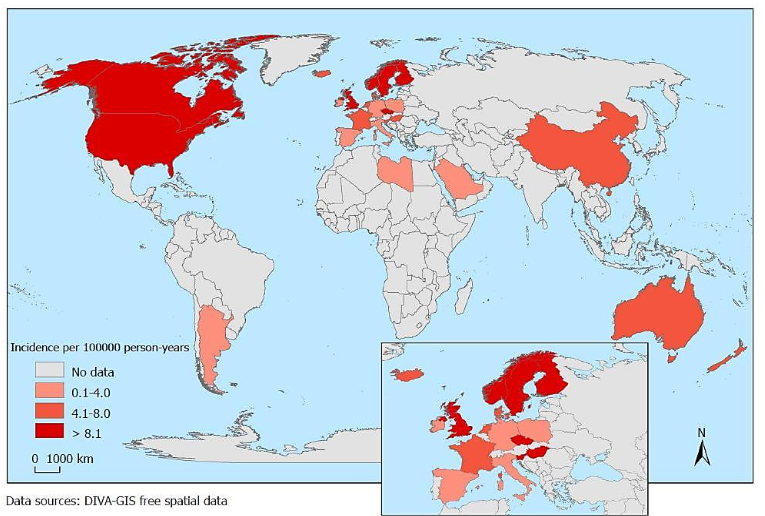
The incidence and prevalence of IBD in Spain, given the geographical location of the country, is increasing and is driven by the influence of globalization. The average annual incidence of IBD has risen rapidly in the East while plateauing in the West. However, the compelling evidence of the increase in IBD in the West is increasing and is driven by the influence of globalization.
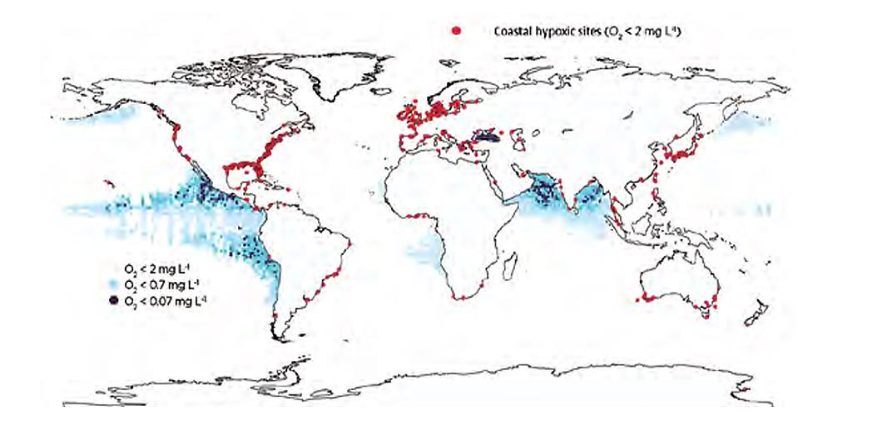
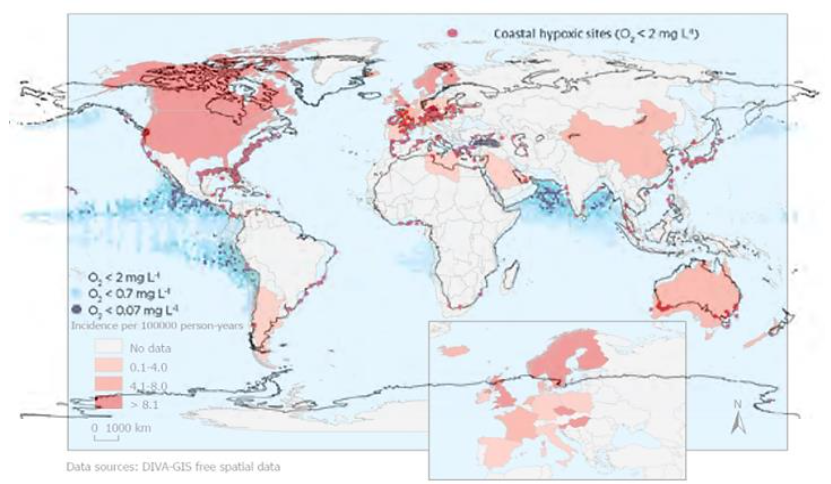
The finding that human cells have molecules inside them, capable of transforming the power of light into chemical energy by dislocating water, is in plants, and represents a watershed in the study of Crohn’s disease as it allows us to advance in the understanding of this pathology by being able to identify new data such as the relationship between the levels of dissolved oxygen in the drinking water supplied to the population, as well as in the bodies of water therein.
Importance of Dissolved Oxygen Levels in Cell Biology
The dissociation of water molecules at the intracellular level occurs mainly in the perinuclear space, through an amazingly accurate chemical reaction, which can be expressed as follows:
2H₂O (liq) → 2H₂ (gas) + O₂ (gas) → 2H₂O (liq) + 4e
The part of the water dissociation process highlighted in green occurs strictly inside the melanin molecules, the part of the reaction highlighted in blue occurs both inside and outside the melanin molecule.
The hitherto unknown ability of human eukaryotic cells to dissociate the molecules of the water they contain inside opens a new panorama in the area in the field of cell functioning, as it explains the attraction of water from the immediate surroundings (and from the cell nucleus) to the interior of the cell without wasting energy, which implies rethinking the distribution of energy that the cell uses daily, since it was thought (mistakenly) that the transport of water, a non-compressible liquid; it required almost two-thirds of that energy to transport across the cell membrane. (Figure 4). But now we know that the energy required to dissociate the molecule from water, the cell obtains from sunlight.
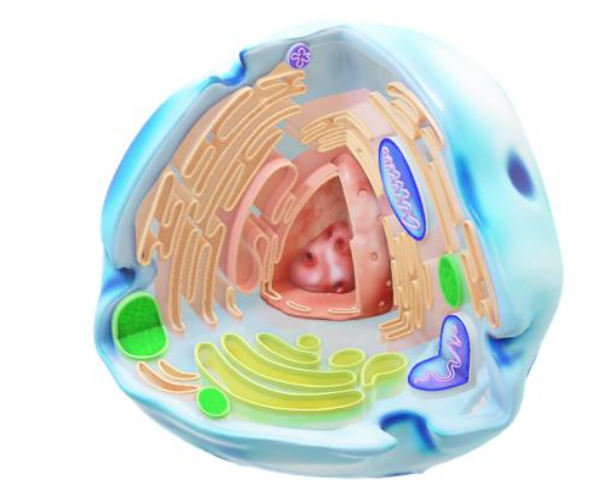
Figure 4) In the usual schemes in which both the cell and its organelles are described, for various reasons, melanosomes whose main location is the perinuclear space are never represented.
To date, the explanation of the dynamics of water (input/output) inside cells is based on relatively basic mechanisms (simple diffusion, facilitated diffusion, osmosis, tonicity-hyper/hypo-, etc.)¹⁶, which in the end fail to explain in a congruent and coherent way the very precise and constant characteristics of cellular hydration.But adding to the diagram one of the main molecules (melanin/melanosomes) of intracellular location that have the intrinsic property of transforming the power of light into a type of chemical energy that can be used by living beings, through the dissociation of intracellular water, as in plants (figure 5), then the movement of water inside the cell (input/output) has a plausible explanation, because the dissociation of water creates a negative pressure suddenly dissipates the positive pressure existing inside the cell, resulting from the push of water, and since it is a non-compressible liquid, and when this positive pressure vanishes somewhat suddenly, we have a zone of negative pressure resulting from the process of formation of hydrogen and oxygen molecules from liquid water and that happens strictly in perinuclear space so that water molecules are attracted from the immediate environment. This is from the cellular interstitium and from the very interior of the cells, including the nucleus.
It is relevant to consider that the process of water dissociation is constant, as well as incessant. And the speed of the process is in the range of nano and picoseconds for each water molecule.
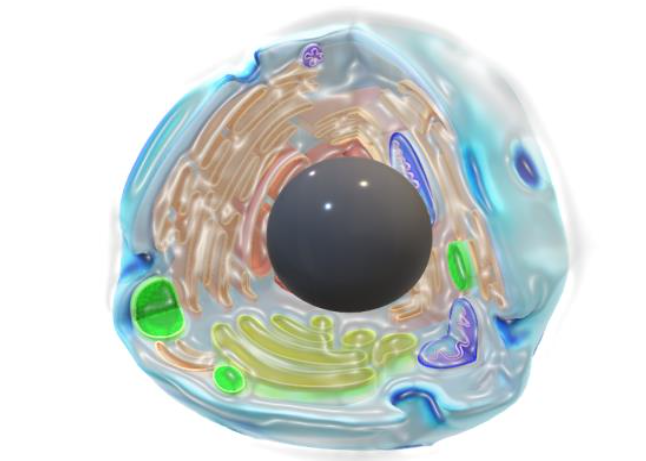
Figure 5) The representation of melanosomes in the perinuclear space, as well as understanding the fundamental function of melanin in transforming light into chemical energy, will mark a before and after in the biological sciences.
Correcting the collective error of not representing the most important intracellular component (melanin/melanosomes) since the dissociation of water meets the requirements to be considered the fundamental reaction of life, since it explains the beginning of all other mechanisms, is basic to break the dogma about the mistaken belief that our body takes oxygen from the atmosphere that surrounds it and lead it to the cell taking oxygen (and hydrogen) of the water it contains by dissociating the molecule from water, as in plants. The dissociation of water molecules into melanin is an amazingly accurate reaction that has not changed since the beginning of time, as it is one of the fundamental pieces of the origin and evolution of life.
And if it happens with a turnover rate adequate to the metabolic needs and requirements of the cells, then tissues, organs, and systems are going to work well because the body is very well made.
But in today’s life, this fundamental reaction is thrown out of balance by the contamination of water, air, and food. And if the main process of life is wrong, then the body is worse. All or almost all diseases begin when the oxygen balance at the intracellular level is affected, especially by the aforementioned factors. And each patient becomes unbalanced in their own way.
The functions of water in biology and medicine are more important than we thought, and even more so now that we know that our cells have the unsuspected ability to oxygenate themselves.
Acknowledgements:
This work was made possible thanks to the unrestricted support of the Human Photosynthesis™ Research Center. Aguascalientes 20000, Mexico.
Conflict of interest:
None
References
1. Holst J. Global Health – emergence, hegemonic trends and biomedical reductionism. Global Health 2020;16:42. doi:10.1186/s12992-020-00573-4
2. Agrawal M, Jess T. Implications of the changing epidemiology of inflammatory bowel disease in a changing world. United European Gastroenterol J 2022;10:1113–20. doi:10.1002/ueg2.12317
3. Molodecky NA, Soon IS, Rabi DM, et al. Increasing incidence and prevalence of the inflammatory bowel diseases with time, based on systematic review. Gastroenterology 2012;142:46–54.e42; quiz e30. doi:10.1053/j.gastro.2011.10.001
4. Kaplan GG, Windsor JW. The four epidemiological stages in the global evolution of inflammatory bowel disease. Nat Rev Gastroenterol Hepatol 2021;18: 56–66. doi:10.1038/s41575-020- 00360-x
5. Kaplan GG, Ng SC. Understanding and preventing the global increase of inflammatory bowel disease. Gastroenterology 2017;152:313–21.e2. doi:10.1053/j.gastro.2016.10.020
6. Mak WY, Zhao M, Ng SC, Burisch J. The epidemiology of inflammatory bowel disease: East meets west. J Gastroenterol Hepatol 2020;35:380–9. doi:10.1111/jgh.14872
7. Ng SC, Bernstein CN, Vatn MH, et al; Epidemiology and Natural History Task Force of the International Organization of Inflammatory Bowel Disease (IOIBD). Geographical variability and environmental risk factors in inflammatory bowel disease. Gut 2013;62:630–49. doi:10.1136/gutjnl-2012-303661
8. Lovasz BD, Golovics PA, Vegh Z, Lakatos PL. New trends in inflammatory bowel disease epidemiology and disease course in Eastern Europe. Dig Liver Dis 2013;45:269–76. doi:10.1016/j. dld.2012.08.020
9. PLAN HIDROLÓGICO Y PLAN DE GESTIÓN DEL RIESGO DE INUNDACIÓN. Ciclo de Planificación 2021-2027 ESTUDIO AMBIENTAL ESTRATÉGICO. Demarcación Hidrográfica ES120 Gran Canaria. Junio 2021
10. Informe divulgativo sobre experiencias y resultados en la aplicación de Sistemas de Depuración Natural (SDN) de aguas residuales. Departamento de Agua División de Investigación, Desarrollo e Innovación Tecnológica (ITC). marzo 2017
11. Spain, Health data overview for the Kingdom of Spain. https://data.who.int/countries/724 retrieved in June 24, 2025.
12. United Nations. Composition of macro-Geographical (Continental) Regions, Geographical Sub-Regions, and Selected Economic and Other Groupings. Available from:
http://unstats.un.org/unsd/methods/m49/m49regin.htm
13. Sýkora J, Pomahačová R, Kreslová M, Cvalínová D, Štych P, Schwarz J. Current global trends in the incidence of pediatric-onset inflammatory bowel disease. World J Gastroenterol 2018; 24(25): 2741-2763 [PMID: 29991879
DOI: 10.3748/wjg.v24.i25.2741
14. Breitburg, D., Levin, L., Oschlies, A., Grégoire, M., Chavez, F., Conley, D., … Zhang, J. (2018). Declining oxygen in the global ocean and coastal waters. Science, 359, 10.1126/science.aam7240.
https://doi.org/10.1126/science.aam7240
15. Herrera, AS., and Arias Esparza, Md., 2025. The unsuspected ability of the human cell to oxygenate itself. Applications in cell biology. Medical Research Archives, [online] 13(3).
https://doi.org/10.18103/mra.v13i3.6344
16. Herrmann T, Leavitt L, Sharma S. Physiology, Membrane. [Updated 2023 Apr 24]. In: StatPearls [Internet]. Treasure Island (FL): StatPearls Publishing; 2025 Jan-. Available from:
https://www.ncbi.nlm.nih.gov/books/NBK538211/
17. Laffoley, D. & Baxter, J.M. (eds.) (2019). Ocean deoxygenation: Everyone’s problem – Causes, impacts, consequences and solutions. Full report. Gland, Switzerland: IUCN. 580pp. Individual chapters/ sections within this report should be referenced as: Author(s). (2019). Title of chapter / section. In ‘Laffoley, D. & Baxter, J.M. (eds.) (2019). Ocean deoxygenation: Everyone’s problem – Causes, impacts, consequences and solutions. Gland, Switzerland: IUCN. xxii+562pp. 978-2-8317-2013-5 (PDF) 978-2-8317-2014-2 (print version) https://doi.org/10.2305/IUCN.CH.2019.13.en
18. https://www.dereknielsen.com/news/killer-whale-photos-orca-fine-art-photography/