

Home > Medical Research Archives > Meet the community > Matteo Posa
Author spotlight
Nadia Gomez
University of Florida, editor for Medical Research Archives
Alex Clark
Editorial Team, Medical Research Archives
Mehdi Rajabi
Albany College of Pharmacy and Health Sciences
Warren, W. Boling Jr.
Austin College
Dwight Culver
University of California
Michael J. Griffin
Midwestern University
Marieke van Engelenburg-van Lonkhuyzenin
Maastricht University
Franco Posa
Scientific Director at NeuroIntelligence
Ji Chen Bihl
Wright State University
Cuilan Li
Wuhan University
Benedetto Sacchetti
Italian National Institute of Health
Nandan Kumar Mondal
University of Louisville
Dr. Claudio Schuftan
The Medical Research Archives features insights from Dr. Claudio Schuftan, MD (People’s Health Movement, Ho Chi Minh City), a pediatrician and public health nutrition specialist with decades of experience in global health and nutrition.
In this video contribution, Dr. Schuftan examines the food and nutrition challenges shaping the global landscape in early 2026, offering a structured analysis that distinguishes between immediate crises and deeply rooted systemic conditions.
His perspective situates current developments within a broader context—emphasizing that today’s acute disruptions are layered upon longstanding structural inequalities in global food systems.
👉 Read the full article and watch the author’s video to explore this research in depth.
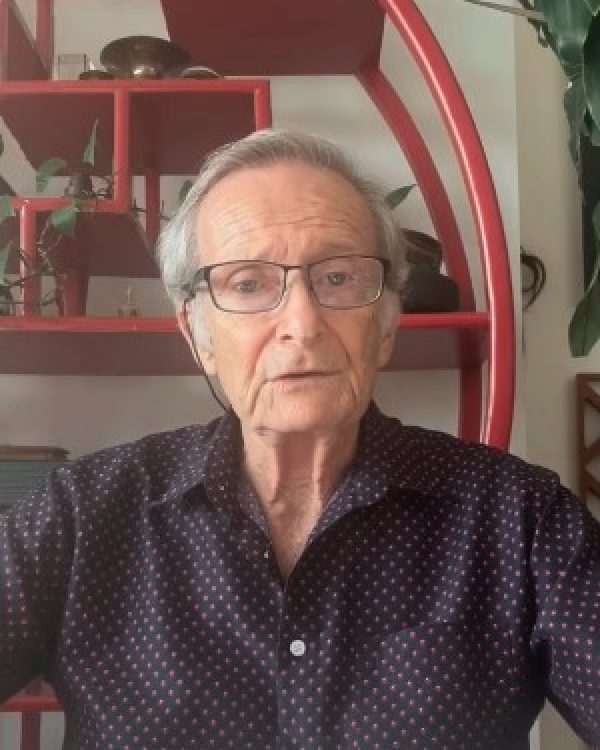
Member video
In this video, Dr. Schuftan discusses:
- Acute vs. chronic drivers of global malnutrition
- The impact of geopolitical conflict on food systems
- The structure of the agroindustrial food model
- Land acquisition and its implications
- The limitations of poverty-focused approaches
- The importance of inequality reduction
- The role of professionals in driving change
Global Food and Nutrition Challenges Explained by Dr. Claudio Schuftan
Research Focus
Understanding the Current Nutrition Crisis
Dr. Schuftan identifies two overlapping dimensions of the global nutrition challenge:
- Acute pressures, particularly those driven by geopolitical conflict, contributing to rising food and energy prices with direct consequences for food access and public health
- Chronic structural conditions, including persistent poverty, widening inequality, and systemic imbalances in food production and distribution
He emphasizes that current crises are superimposed on a system that has remained structurally inadequate for decades in delivering equitable nutrition outcomes.
The Structural Drivers Behind Malnutrition
A central focus of Dr. Schuftan’s analysis is the evolution of the global food system into a highly concentrated agroindustrial model.
Key dynamics include:
- The dominance of transnational corporations across the food chain
- Dependence on oil-linked agricultural inputs, tying food systems to global energy markets
- Expansion of monoculture production, often oriented toward export commodities
- Increasing instances of land acquisition (“land grabbing”), displacing local producers
He also highlights the growing role of data and artificial intelligence in guiding agricultural investment and expansion strategies.
Rethinking Poverty and Inequality
Dr. Schuftan challenges the prevailing emphasis on poverty alleviation as the primary response to malnutrition.
He argues that:
- Poverty is a structurally produced condition, not merely an individual deficit
- Nutrition education alone is insufficient when financial access to food is constrained
- The central issue is inequality, particularly the widening gap between resource control and deprivation
This reframing shifts the focus toward disparity reduction and structural policy change.
Implications for Nutrition Professionals
Dr. Schuftan raises critical questions for the professional community:
- Are current interventions addressing root causes?
- Or are they limited to recurring discussions without structural impact?
He calls for stronger engagement in policy advocacy and systemic reform, emphasizing accountability within the field.
Looking Ahead
In addition to the issues discussed, Dr. Schuftan notes that topics such as ultra-processed foods and breastfeeding remain central to ongoing global nutrition challenges.
This video serves as an entry point into a broader discussion on nutrition, equity, and systemic transformation.
Submit your Paper
Submit your own paper to the European Society of Medicine’s official journal, the Medical Research Archives.
These are just some of the nearly 4,000 members, authors, and speakers who are part of the European Society of Medicine’s community. Our members work in countries across the globe, yet are united by a common goal: to promote health and health equity, around the world.
Join the Society
The European Society of Medicine is more than a professional association. We are a community. Our members work in countries across the globe, yet are united by a common goal: to promote health and health equity, around the world.
If you believe in ESMED and everything we stand for, take the next step and support our mission by becoming a member.

Professional Membership
- Free publication of 3 articles per year (€9,750+ value)
- Access to job board and funding directory
- Mentorship program
- Ability to post presentations
Membership fee
999 EUR/USD
Reduced Membership
* Available for these developing nations
- Free publication of 2 articles per year (€4,000+ value)
- Access to job board and funding directory
- Mentorship program
- Ability to post presentations