




Government Type and Police Role in COVID-19 Control
Governing COVID-19: The Complex Relationship between Government Type and Police Enforcement Intensity: A Scoping Review
Hamid Bohloli¹, Fahimeh Rabbanikhah², Azad Shokri³
- Faculty of Management, the University of Tehran (UT), Tehran, Iran
- Allameh Tabataba’i University, Tehran, Iran
- Kurdistan University of Medical Sciences, Kurdistan, Iran
OPEN ACCESS
PUBLISHED:30 September 2024
CITATION: Bohloli, H., Rabbanikhah, F., et al., 2024. Governing COVID-19: The Complex Relationship between Government Type and Police Enforcement Intensity: A Scoping Review. Medical Research Archives, [online] 12(9).
https://doi.org/10.18103/mra.v12i9.5562
COPYRIGHT: © 2024 European Society of Medicine. This is an open-access article distributed under the terms of the Creative Commons Attribution License, which permits unrestricted use, distribution, and reproduction in any medium, provided the original author and source are credited.
DOI https://doi.org/10.18103/mra.v12i9.5562
ISSN 2375-1924
Abstract
Introduction: The COVID-19 pandemic is one of the most significant challenges to global health and economic and social aspects. The COVID-19 pandemic posed unprecedented and unforeseen challenges to public health systems in the early 21st century and created a set of challenges for police departments worldwide. Countries with varied political approaches utilized the police in diverse ways to control the pandemic.
Methods: We conducted a scoping review to map the existing literature to respound to this question that “how does government type influenced the deployment of police during Covid-19 pandemic”? We searched electronic databases such as PubMed and Scopus. We included studies that were conducted in independent countries with different types of governance indicated by democracy score in Economist Intelligence Unit and published data on their police deployment in controlling COVID-19. We identified papers published 2020-2022, from which we selected 24 publications about 21 countries that met our inclusion criteria. We used a four-zone model of Governance Policing Types to plot the countries based on their government type and the extent of police deployment.
Results: Based on this model we present and synthesise results in accordance with the type of governance and the police deployment in controlling COVID-19. This model demonstrates a discernible relationship between government type and the degree of police involvement in managing epidemiological crises. Research findings suggest that in pandemic emergencies, the type of governance and effective response of the police ensure public safety and individual rights. We found a complex relationship among government type, police enforcement, and COVID-19 control. Our review identifies possible ideological and security-related biases impacting the representation of COVID-19 police responses in the analyzed studies.
Conclusion: Quality of governance and police involvement are essential in managing pandemics. Democratic countries generally have better decision-making, and have higher resilience. Authoritarian countries were able to make decisions more quickly. Countries that combined both quality and speed of decision-making achieved outstanding results. A balanced approach in maintaining public health and individual rights is needed. Community-oriented policing could be a solution. More research is needed to understand the long-term effects of the police performance during the COVID-19 era.
Keywords:
- Government Type
- Libertarianism
- Authoritarianism
- Democracy Score
- COVID-19
- Police
- Freedom
- Public Health
1. Introduction:
The global dissemination of COVID-19 occurred swiftly, and the World Health Organization (WHO) officially labeled it as both an international public health emergency and a pandemic on March 11, 2020. The rapid transmission of the virus and the uncertain outlook it presented constituted a worldwide health crisis and a rigorous evaluation of governments’ effectiveness in addressing and managing the pandemic. In particular, the absence of consistent decision-making patterns among countries and the deployment of law enforcement, including police, to tackle the COVID-19 pandemic, underscored the significant influence of government types on their capacity to respond to events like pandemics.
From the beginning of the COVID-19 pandemic, it was clear that controlling such a global pandemic, which rapidly affected many countries, would not be within the capability of the health systems of infected countries alone. In many countries, top-level political leadership, such as the president and prime minister, took command and control of managing this disease. They were able to use all economic, support, and special attention alongside a focus on the security and law enforcement aspects, including the use of police and military forces, to control the pandemic. Although this action faced resistance in some countries with democratic systems from political factions and sometimes the people, who saw these restrictions as infringing on their freedoms, privacy, and democratic rights, the threat of the coronavirus was so serious that the logic behind imposing these restrictions outweighed democratic concerns.
The rationale for employing a scoping review in examining the impact of different government types on police deployment during the COVID-19 pandemic is multifaceted. It stems from the need to address the existing, varied landscape of pandemic management strategies, which have shown significant differences between libertarian and authoritarian governments in terms of policies, enforcement, and outcomes. Additionally, there exists a notable gap in comprehensive comparative studies on the effectiveness and implications of these diverse governmental approaches, underscoring the necessity for an overarching synthesis and analysis. Furthermore, the continuously evolving nature of COVID-19 management strategies, in response to new information and challenges, necessitates a review approach capable of capturing and assessing a broad spectrum of changing strategies and their outcomes. This context makes a scoping review particularly suited to exploring and understanding these complex and dynamic aspects of pandemic response.
During the COVID-19 pandemic, in different countries with varying forms of governance, the utilization of police forces to control the disease, enhance societal security, and combat individuals taking advantage of the coronavirus pandemic for personal gain took on different cultural, economic, and social dimensions. This occurred alongside the rise of the police as an enforcing entity in the political landscape for pandemic control, raising concerns about privacy infringements and reductions in individual and societal freedoms, as well as the continued presence of the police in civilian life post-COVID.
These interventions displayed signs of a connection between the pandemic’s outcomes and governmental actions related to quality of governance, with the two key elements being the speed and quality of decision-making. It is noteworthy that a country’s ability to implement rapid control interventions, such as closing airports and roads and conducting city-wide quarantines, often lay beyond the scope and authority of health ministries and Centers for Disease Control (CDC) like agencies, but it indicated a high level of coordination within a particular sector. For our research team, understanding how our government type, spanning a spectrum from autocratic to democratic, affects the speed and quality of decision-making regarding the use of police as law enforcement agents during the COVID-19 pandemic, and whether there is a correlation between democracy indicators and COVID-19 incidence and mortality, was crucial. In this setting, we encountered a wide spectrum of varying viewpoints and documented experiences. On one side, there were those who asserted that the spectrum of governance, extending from authoritarianism to libertarianism, played a negligible role in the successful management of the COVID-19 situation. Proponents of this perspective were further segmented into two primary clusters: those who contended that autocratic nations exhibited superior performance and those who argued that democratic countries boasted a more commendable track record in handling COVID-19. It’s only prudent to recognize that the personal ideological backgrounds of the authors might have exerted an impact on these findings. We diligently endeavour, to the fullest extent possible, to manage our predispositions and harmonize a substantial portion of these perspectives with the existing body of evidence.
This study aims to investigate the experiences of various countries to elucidate the relationship between government type and the utilization of police forces in the management and control of the COVID-19 pandemic. The primary research question guiding this inquiry is: How does government type (Libertarian- Authoritarian spectrum) influence the deployment of police as law enforcement agents during crises like pandemics? The sub-questions of this research were as follows: Is there a relationship between the type of governance of countries and the resilience of individual rights in countries? Is there a correlation between the governance type of countries and their decision-making model for using police to control COVID-19?
2. Research Methods:
The study addresses the impact of government type, from libertarian to authoritarian, on police deployment during the COVID-19 pandemic. It focuses on how these governance styles affect the speed and efficacy of police response in crisis management across different countries, providing a comprehensive analysis of governance and law enforcement strategies during a global health emergency.
We conducted a comprehensive literature search in English for publications between 2020 and 2022, utilizing two electronic databases, PubMed and Scopus. Our selection of PubMed and Scopus as primary databases for this research was strategic. PubMed, known for its comprehensive coverage of medical and health-related literature, provided vital insights into the public health aspects of COVID-19. Scopus, with its extensive repository of social and political sciences literature, was chosen to explore the societal and governance dimensions of the pandemic. This combination allowed for a holistic examination of the interplay between government types, law enforcement strategies, and pandemic response, ensuring a well-rounded approach to our research objectives.
Our research aimed at assessing law enforcement policies and actions during the peak of the COVID-19 pandemic from 2020 to 2022. We utilized a detailed search strategy with specific terms related to COVID-19, government types, and policing. This search, last executed on 24.11.2023, aimed to include the most recent and relevant literature, focusing on publications between 2020 and 2022. Our selection criteria included countries with measurable scores on the EIU Democracy Index, ensuring a broad and balanced coverage of different government types and they must have publicly accessible published reports or academic articles that specifically address police performance during the COVID-19 era, from 2020 to 2022.
The research strategy was determined by the research question and the scoping review framework. It followed the guidelines PRISMA ScR (2018), a developed version of the scoping review initiated by Arksey and O’Malley (2005). The scoping review is a flexible approach that can be used to map the literature on a broad topic. It is not as rigorous as a systematic review, but it can be used to identify key concepts, theories, sources, and gaps in the existing body of literature. The search strategy was meticulously crafted to pinpoint pertinent studies. The five steps of our scoping review approach are: 1) identifying the research question, 2) identifying relevant studies, 3) selecting the studies, 4) charting the data, and 5) collating, summarizing, and reporting the results.
In our scoping review, we thoroughly examined key sources, such as articles, books, and select grey literature, with an emphasis on government and police responses to COVID-19 in areas addressed by the Governance Policing Types (GPT) model.
We employed a comprehensive search strategy to gather relevant literature. The search was limited to English language publications from January 2020 to December 2022, aligning with the timeline of the COVID-19 pandemic. Our search string (for example in PubMed) was structured as follows: (‘COVID-19’ [Title/Abstract] OR ‘Pandemic’ [Title/Abstract]) AND (‘Government type’ [Title/Abstract] OR ‘Regime type’ [Title/Abstract] OR ‘Authoritarian’ [Title/Abstract] OR ‘Libertarian’ [Title/Abstract] OR ‘Democracy’ [Title/Abstract] OR ‘Autocracy’ [Title/Abstract]) AND (‘Public health’ [Title/Abstract] OR ‘Law enforcement’ [Title/Abstract] OR ‘Policing’ [Title/Abstract] OR ‘Police’ [Title/Abstract]). Limits applied included article types (research articles, reviews, and official reports) and the exclusion of editorials, commentaries, and conference abstracts to focus on more substantive sources. Complementary searches were conducted by utilizing the reference sections of the final selected studies in order to enhance the sensitivity and expand the scope of the search strategy.
This search strategy was designed to capture a broad range of articles discussing the relationship between government types and law enforcement strategies during the COVID-19 pandemic. As a brief review in line with the PRISMA-ScR (2018) guidelines our study meticulously charted data from selected sources using pre-tested and calibrated forms, ensuring consistency and accuracy in data extraction. This process was conducted independently by multiple researchers and then cross-verified, upholding the integrity of our data collection. Key information such as study design, geographic location, government type, and police enforcement strategies during COVID-19 was methodically extracted from each publication. To enhance the clarity of our findings, we incorporated various figures (Figures 1 to 7) illustrating the GPT Conceptual Model, trends in Democracy Scores, and the categorization and response strategies of countries based on their governance types. These figures provide a visual representation of our complex data, facilitating a deeper understanding of the interplay between government types and police enforcement during the pandemic. Additionally, we sought confirmation and validation of data from original authors when necessary, further ensuring the reliability and thoroughness of our scoping review.
In this study, we systematically listed and defined several key variables. These included ‘Government Type’ (categorized as libertarian to authoritarian based on the Economist Intelligence Unit’s Democracy Index), ‘Police Enforcement Strategies’ (encompassing measures like lockdowns, quarantines, and travel restrictions), and ‘COVID-19 Response Efficacy’ (assessed through incidence, mortality, and fatality rates). We assumed a direct correlation between government type and police enforcement effectiveness, simplifying our analysis by categorizing countries into broader groups of ‘democratic’ and ‘autocratic’ regimes, based on their Democracy Index scores. This simplification, while reducing complexity, was deemed sufficient for our research objectives, allowing us to draw meaningful conclusions about the relationship between governance types and police enforcement during the pandemic.
In our research, critical appraisal of sources was essential to ensure reliability and validity. We assessed each source for methodological rigor, bias, and relevance. This appraisal informed our evidence categorization and weighting in data synthesis, crucial for understanding the relationship between government types, police enforcement strategies, and their pandemic effectiveness. This method ensured our conclusions were based on robust, credible research.
Our study’s method for handling and summarizing data involved organizing extracted information into key thematic categories relevant to our objectives. We employed thematic analysis to discern patterns, ensuring a succinct yet comprehensive synthesis of data. This approach facilitated a clear understanding of the influence of government types on police strategies during the COVID-19 pandemic.
The ethical review board at Kurdistan University of Medical Sciences has approved study design and protocol of this study under the code of IR.MUK.REC.1402.232.
2.1. GPT CONCEPTUAL MODEL (GOVERNANCE POLICING TYPES)
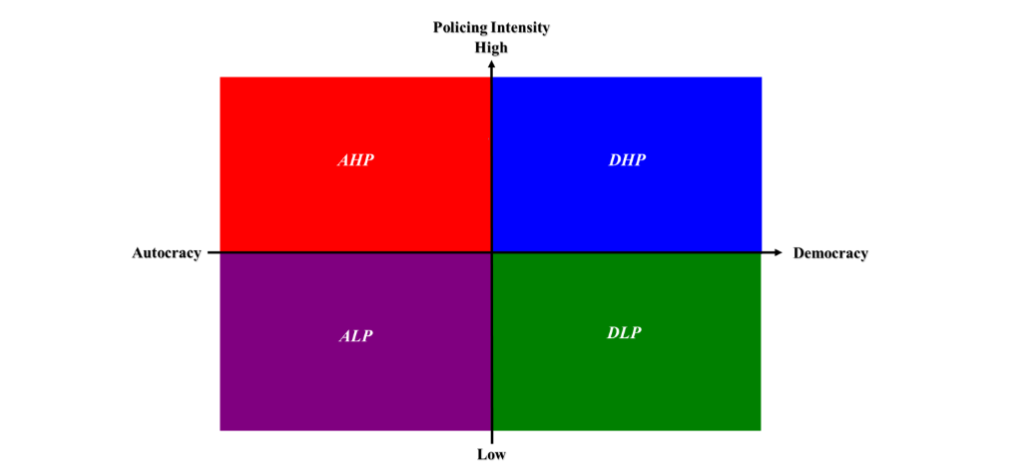
To answer the query regarding the influence of governance types in different countries on the manner and extent of police deployment in COVID-19 control, we employed a four-quadrant compose model with dual-axis strategies. We borrowed fist draft of this model from notion of political compass, contributed by the political compass website and following articles (See https://www.politicalcompass.org). The horizontal axis was defined by governance type, with libertarianism at the top and authoritarianism at the bottom. Selected countries were plotted based on Democracy Index (DI) of Economist Intelligence Unit (EIU) along this horizontal axis. The vertical axis represented the extent of police usage intensity, and countries were arrayed based on available and published data regarding their police deployment in controlling of COVID-19 pandemic. The intersection of these axes created four distinct zones. Subsequently, the discoveries from this scoping review were coherently amalgamated and narrated.
In the conceptual model presented (Figure 1), countries were analyzed based on their governance type, which creates different decision-making systems, on the two spectra of Democracy and Autocracy, and the extent of police use in the control of COVID-19. The horizontal axis represents the democracy feature at the top of the chart and the autocracy feature at the bottom of the chart. The vertical axis represents the extent of police use in the management and control of COVID-19, ranging from high to low. According to the figure below, each area shows the governance type (democratic or autocratic) and the extent of police use in different countries in relation to COVID-19 (high-low). This includes four areas: DHP (Democracy High Policing), DLP (Democracy Low Policing), AHP (Autocracy High Policing), ALP (Autocracy Low Policing).
3. Results
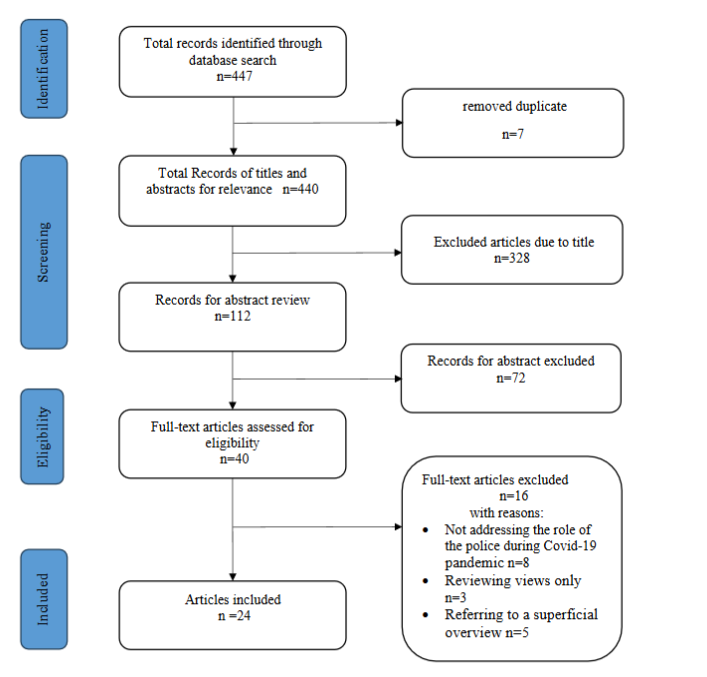
After retrieving various studies, their titles and abstracts underwent screening to identify the ones that appeared relevant. Those that passed this preliminary scrutiny had their full texts fetched for a more thorough assessment of their eligibility. From the ones deemed fit for inclusion, pertinent data was gleaned. This included aspects like the study design, the nation of the study’s conduct, its governmental structure, the policing measures employed, and the study’s results (supplementary 1).
We systematically reviewed relevant articles regarding countries worldwide with different types of governance that, while reliable and published information about them was available on the subject under study, could serve as a generalizable example for similar countries. Finally, we chose 21 countries with reliable information. These countries, situated along the spectrum of authoritarianism and libertarianism, utilized various dimensions of police forces in controlling COVID-19 and each found their place on campus in their respective regions.
For detail, the figure 2 illustrates the inclusion and exclusion criteria of this study based on the PRISMA-ScR (2018) guidelines.
The government types of the countries included in the studies ranged from libertarian to authoritarian. The police enforcement measures used in the studies included lockdowns, quarantines, travel restrictions, and fines. The findings of the review suggest that there is a complex relationship between government type, police enforcement, and the control of COVID-19.
In this study, DI by the EIU (2019) serves as the primary tool for measuring democracy, chosen for its robust and comprehensive methodology in comparison with other sources including Freedom House, V-Dem, Polity IV and World Bank Governance Indicators. EIU-DI Operated since 2006, it utilizes 60 indicators across five categories to assess democracy in 167 countries, offering a nuanced view that includes societal and cultural influences on democratic norms, and ultimately, it presents a consolidated final score for each country for each year, with the scores from 2019 to 2022 being the focus of our study. Its longitudinal data is crucial for analyzing the relationship between democracy levels and police responses during the COVID-19 pandemic. Additionally, the Index’s detailed spectrum, categorizing regimes from libertarian to authoritarian, provides a clear understanding of global democratic trends.
Selecting 2019 as the baseline year for democracy rate analysis proved to be a fundamental decision in this study. This choice was made due to the unique positioning of 2019 as the year immediately preceding the emergence of COVID-19. This selection enabled a comprehensive assessment of the impact of democracy level on police enforcement measures implemented in response to the pandemic. By providing a pre-pandemic reference point, the study could effectively evaluate changes in democratic practices and their subsequent effects on police enforcement strategies. Furthermore, 2019 represented a period of relative stability in global democracy levels, with an average democracy rate of 54.4 (See Table 1), the highest average rate among the five years considered. This stability created a controlled environment for analyzing the impact of democracy on police enforcement, minimizing the potential influence of fluctuating democracy levels on the observed outcomes.
| Source | EU Democracy Index | Freedom House | V-Dem | Polity IV |
|---|---|---|---|---|
| 2019 | 8.01 | 7.5 | 8.0 | 7.0 |
The ongoing decline in global democracy rates since 2019 highlights the importance of selecting this year as the baseline. By establishing a pre-pandemic baseline, the study aims to mitigate factors potentially related to recent decreases in democracy and effectively isolate the impact of the level of democracy on law enforcement responses to COVID-19. This approach enhances the robustness of the research findings and their applicability for understanding the interaction between democracy and law enforcement in the context of future crises.
This review comprehensively analyses twenty-four peer-reviewed available studies from an array of 21 nations comprising Canada, the United Kingdom (UK), Australia, Philippines, New Zealand, Denmark, Indonesia, Sweden, India, South Korea, Netherlands, the United States of America (USA), China, Uganda, Vietnam, the United Arab Emirates (UAE), Egypt, Pakistan, Turkey and Iran (supplementary 1). The investigations dually examined the heterogeneous responses enacted by governments addressing the COVID-19 crisis and law enforcement’s role in upholding public health mandates such as social distancing directives.
Countries with a democracy index score ranging from 8.01 to 10 (out of 10) are considered by EIU-DI as full democracies. Those scoring between 6.01 and 8.00 are classified as flawed democracies. While these nations have fair elections and uphold basic civil freedoms, they might have shortcomings in areas such as low political participation or an underdeveloped (or highly partisan) political culture. The two lower categories of this index pertain to countries that don’t score well for democracy. Countries with scores from 4.01 to 6.0 are labeled as hybrid regimes, while anything below 4 is called an autocratic regime. The 2020 Democracy Index categorized 23 countries as full democracies, 52 as flawed democracies, 35 as hybrid regimes, and 57 as autocratic regimes.
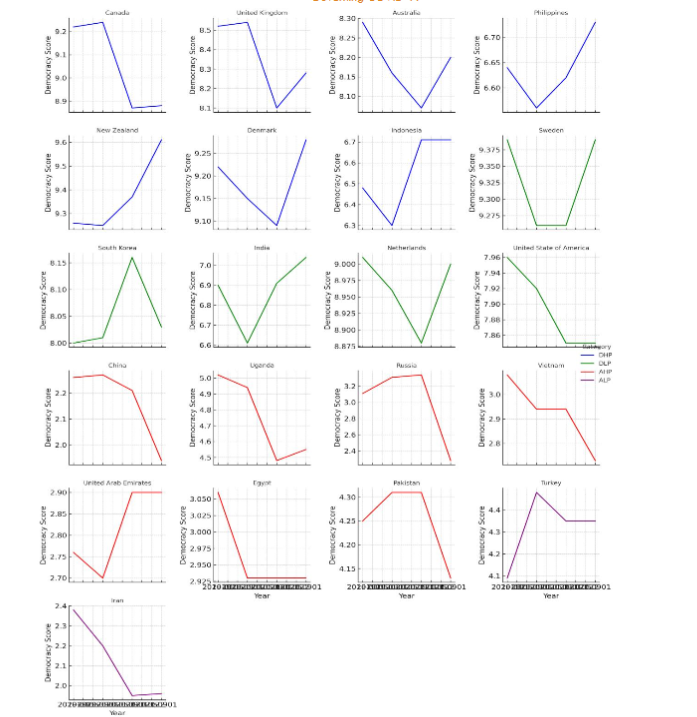
In order to simplify the analysis and interpretation of data and focus on the broader implications of various governances, we categorized countries with Democracy Index scores from 0 to 6 as autocratic tendencies regimes and those with scores above 6 as democratic tendencies regimes. This simplification was deemed appropriate for the purposes of this research, as it provides a sufficient level of granularity to draw meaningful conclusions while also enhancing clarity, focus, and consistency across comparisons. Figure 2 demonstrates the evolution of democracy scores for countries under investigation spanning the years 2019 to 2022.
3.1. ANALYZING DIFFERENT APPROACHES TO COVID-19 MANAGEMENT BASED ON POLICE INTERVENTION LEVELS USING THE GPT MODEL
3.1.1. Governments with Democratic Tendencies with High Police Intervention Levels (DHP)
Democratic nations such as Canada, England, New Zealand, the Philippines, Australia, Indonesia and Denmark have broadly implemented police forces to enforce regulations and laws in their battle against COVID-19. The police have been utilized at various stages, from identifying and tracking infected individuals to encouraging public compliance with regulations and ultimately enforcing related laws and penalties. These penalties include issuing warning messages, imposing fines, and arresting individuals who violate the regulations.
In Canada, the role of the police has adapted to the changing needs of the epidemic, the public, and the government. The police have become the primary point of contact with the public, responsible for addressing inquiries and resolving concerns. They have also developed strategies to mitigate inequalities in enforcing regulations. In the Philippines, on the other hand, an approach characterised by maximum police force utilisation has been adopted. The government has even issued threats to impose martial law if COVID-19 prevention regulations are not complied with, raising concerns about increasing police violence. The Philippines implemented a highly militarized and undemocratic response to COVID-19. Their approach involved tactics developed during the previous president’s violent “war on drugs” campaign. It leaned very heavily on law enforcement and the military to enforce restrictions and containment measures. In England, the government has defined the role of the police in four stages: explaining risks to individuals, encouraging compliance with regulations, imposing local fines, and arresting in severe situations. New Zealand’s approach involves a combination of state police and civil society forces. They establish community-based police, often referred to as “checkpoints,” which adopt a sincere and inclusive approach to crisis management. Police forces in New South Wales and Victoria played a key role in supporting public health measures and maintaining order. Indonesia has been excessively reliant on influential military figures and affiliated national security agencies. The government has tended to exploit the spread of the COVID-19 pandemic to suppress news and anti-government smears. Denmark and Norway have been successful in employing a swift and continuous approach, including border closures, severe restrictions on air travel, and workplace and school closures. However, concerns have been raised regarding the potential for abuse of police power, despite the benefits.
3.1.2. Governments with Democratic Tendencies with Low Police Intervention levels (DLP)
Countries like Sweden, the Netherlands, USA, and South Korea successfully managed COVID-19 with limited police intervention by employing policies centred on personal responsibility and citizen-focused measures. India with a different outcome is in this category. These strategies included self-regulation, individual discipline, strong social norms, and precise tracking and monitoring. For example, Sweden relied on trust in its citizens, while the Netherlands emphasised personal discipline. South Korea extensively utilises technology and data for tracking and closely monitoring infected individuals and their movements. Combined with widespread testing, this approach enabled South Korea to control the situation effectively with minimal involvement from the police. In Sweden, autonomy and personal accountability for following public health guidelines were prioritised based on faith in citizens. The Swedish public believed coercion was unreasonable and that self-restraint would suffice, resulting in a minimal role for police in enforcing quarantines or social distancing. In the Netherlands, strict social norms and incentives helped adhere to health guidelines through “smart quarantine” recommendations premised on personal discipline with limited police intervention. In the USA, Police have been used to enforce COVID-19 restrictions in various ways. Some departments, especially those in smaller jurisdictions, played a minimal role in enforcement and focused on encouraging compliance rather than strict enforcement. Police still had been needed to respond to public safety concerns and COVID-19 medical emergencies. They found that positive organizational support was associated with use of force restraint, procedural justice policing, and better officer health. Although Kumar TV claims that India demonstrated that strategic use of police resources for non-medical interventions could be more effective than just implementing public health laws, Abhishek from the Center for Global Development and Brown University reported excess death in India from 3.2 to 4.9 million.
3.1.3. Governments with Autocratic Tendencies with High Police Intervention levels (AHP)
Authoritarian countries such as Uganda, China, Russia, Vietnam, the UAE, Egypt, and Pakistan imposed strict policies, stringent restrictions, and extensive surveillance, heavily relying on police and security forces to enforce public health policies and control the spread of COVID-19. These measures led to reduced outbreaks and control of the epidemic in some countries, but they also potentially provoked public discontent and protests. In Uganda, the integration of military operations into COVID-19 responses bolstered authoritarian governance. China’s police employed strict approaches to control the outbreak, including city-wide lockdowns, travel bans, stringent enforcement of quarantine directives, and censorship of negative pandemic-related information on social media. Russia’s police also employed harsh approaches to ensure public compliance with COVID-19 guidelines, leading to public dissatisfaction. Vietnam’s police, in collaboration with the military and local volunteers, took decisive actions such as area lockdowns, movement restrictions, and protective equipment distribution, focusing on public cooperation and information dissemination. In the UAE, increased public compliance was achieved through financial penalties and arrests of lockdown violators, combined with extensive public awareness campaigns. In Egypt, rapid implementation of necessary policies and directives by security forces and the military lacked the crisis management capacities required, leading to militarised policymaking devoid of bureaucracy. Pakistan’s police used inappropriate approaches like whipping, shooting, assault, and beatings to enforce compliance, instilling fear but also provoking anger and dissatisfaction, showing the prioritisation of power over public health improvement.
3.1.4. Governments with Autocratic Tendencies with Low Police Intervention Levels (ALP)
In the countries such as Turkey and Iran with low democracy scores, the reliance on the police for controlling and managing COVID-19 was limited. In these nations, despite their authoritarian nature and subpar quality of decision-making, one would anticipate a rapid decision-making process due to up-down centralisation. However, according to the infection and death statistics in the era of COVID-19, it seems that both aspects fell short, particularly in the swift handling of decisions related to the deployment of non-pharmaceutical interventions, law enforcement, and the enforcement of regulations by police aimed at imposing essential restrictions to curtail the pandemic’s spread. This resulted in a swift surge in infection rates and a substantial loss of life. Lack of transparency in providing data and the real mortality rate in both countries reduced public trust and compliance with regulations. The excess deaths in these countries is estimated by the independent to be between 4 to 10 times higher than the figures reported by the governments. In Turkey, sharing local COVID-19 case information on social media faced accusations of criminality from authorities. The Turkish government also engaged in reality censorship by inflating reported case and mortality numbers, causing tension, disputes, and expert criticism over local reporting. Some observers termed the laws an “epidemic of censorship,” potentially targeting political dissent, the media, and minorities for suppression. During 2020–2021, Turkey experienced 72,886 excess deaths in 2020 and 125,540 in 2021. A study by Bohloli et al. in 2019 found that the lack of timely action on using law enforcement and police intervention to control the pandemic in Iran and the increase in the rate of infection and death due to pandemic, led to a proposal to establish an Operational Centre for National Headquarters to Combat Coronavirus (OCNHCC) to lead non-pharmaceutical and law enforcement interventions in managing the pandemic. Some studies suggest that the actual death toll from COVID-19 in Iran is much higher than the officially reported figures. This is likely due to a number of factors, including limited testing capacity, lack of access to healthcare, and stigma associated with COVID-19. This study found that there were an estimated 178.86 excess deaths per 100,000 population in Iran during the study period, with a higher increase among males and older adults. This study found that there were an estimated 58,900 COVID-19-related deaths in Iran by September 21, 2020, which is more than twice the official number of COVID-19 deaths reported by the government. This study found that there were an estimated 282,378 excess deaths in Iran during the study period, which is more than twice the official number of COVID-19 deaths reported by the government. The reported number of COVID-19 deaths was less than half of Iran’s estimated number of excess deaths. However, apart from limited grey literature no article in the global literature was found that refers to the use of police in combating COVID-19 in Iran. Figures 7, 8, and 9 depict the correlation between those countries’ democracy scores, as assessed by the EIU, and the level of policing activity during the COVID-19 era spanning from 2019 to 2022.
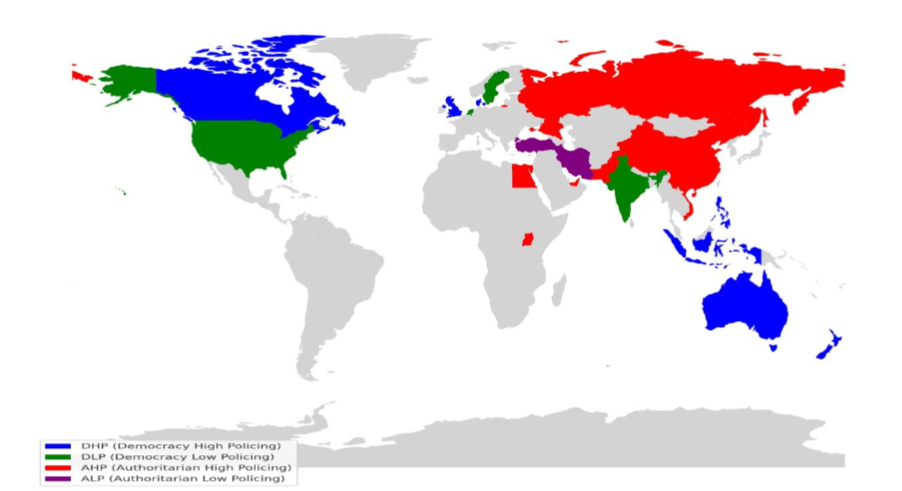
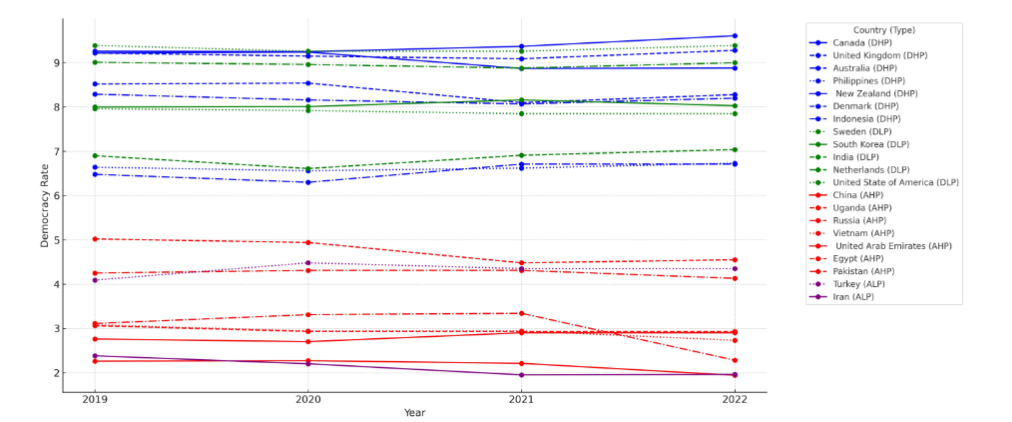
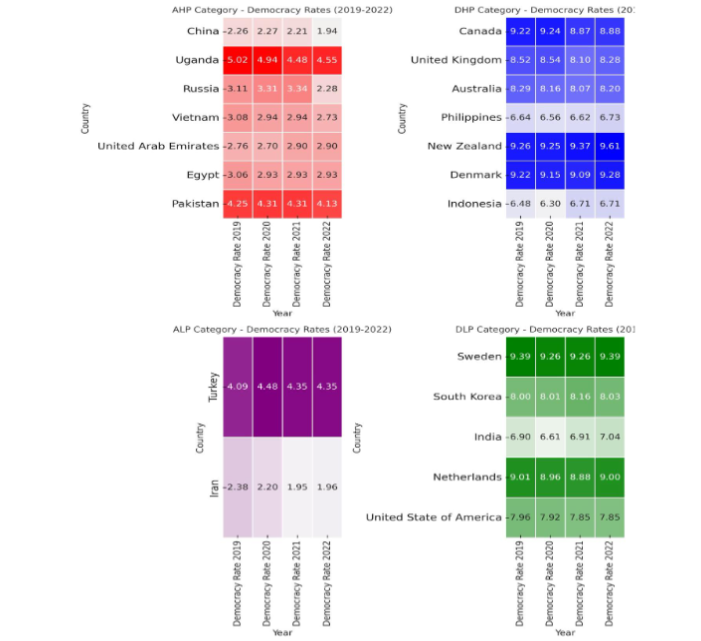
Figure 6: Comparative Analysis of Democracy Rates from 2019 to 2022 across Four GPT Categories
3.2. THE INTERPRETIVE ANALYSIS OF FIGURES 2, 5 AND 6:
The interpretive analysis of democracy score trends, particularly in the context of the COVID-19 era, as depicted in Figures 2, 5 and 6, reveals intriguing outcomes, sets forth a captivating story for a subset of nations. The analysis of the democracy score trends for New Zealand, Denmark, the Philippines, and Indonesia highlights the varied responses of DHP countries to the challenges posed by the COVID-19 pandemic. While New Zealand and Denmark demonstrated robust democratic resilience and recovery, the Philippines experienced a more prolonged period of decline with a minor improvement. On the other hand, Indonesia showed a continuous upward trajectory in democratic health. In these countries with higher democracy scores, despite the extensive use of policing, the democracy scores in 2022 often exceeded the levels observed in 2019, indicative of the pre-pandemic era.
Democratic countries that utilized policing to a lesser extent, which includes Canada, the United Kingdom, Australia, New Zealand, Denmark, South Korea, India, the Netherlands, and Sweden, exhibit a V-shaped trend in democracy scores at the beginning of the pandemic. However, as the crisis continued, these same nations witnessed an increase in scores, and this path suggests strategic use of policing that does not violate fundamental human freedoms.
This emphasizes that in these nations, the role of the police was often redefined within the context of the pandemic to support public health measures while simultaneously safeguarding democratic values. The strategic use of policing in these contexts was in line with the principles of community engagement and fostering societal trust. The findings of this study underscore the pivotal role of trust in the government and its correlation with public compliance and adherence to pandemic-related restrictions.
Furthermore, the increase in democracy scores can be attributed to the perceived effectiveness of each government’s response to the pandemic. Nations that displayed flexibility, adaptability, and effective virus control were likely to maintain or even strengthen the public’s trust in their leadership and institutions. The ability to maintain a balance between necessary public health measures and the preservation of civil liberties appears to have been a key factor in the improved democracy scores of these countries. This trend explains that in countries where policing strategies were implemented wisely, with a clear communication of their necessity and temporary nature, the public’s trust in the government and adherence to democratic norms were maintained or even enhanced. This approach, along with the active involvement of communities in responding to the pandemic, could have contributed to the observed trends in democracy scores.
Democracy score trends for Autocrat High Policing (AHP) countries during the pandemic generally depict a decline. This uniform downturn across countries like China, Uganda, Russia, Vietnam, Pakistan, and Egypt suggests a direct impact of rigorous policing measures on democratic health. Russia’s score, in particular, shows a rapid fall, highlighting the severity of its approach. The UAE stands out as an exception in the AHP category, where, after initial declines, the democracy score rises, possibly reflecting effective strategies that led to increased public compliance.
In the case of Autocrat Low Policing (ALP) countries, the narrative is one of continued decline without recovery. Turkey and Iran both faced decreasing democracy scores, with issues in information dissemination and transparency contributing to this negative trend. Turkey’s challenges in sharing information and Iran’s delayed and opaque communication are posited as significant factors in their declining democracy health.
It must be acknowledged that democracy scores are influenced by a complex interplay of factors, including the management of the COVID-19 pandemic and related measures, social and political dynamics, and public perceptions. Further research and analysis will be necessary to fully understand the subtle factors that have shaped the observed democracy score trends in all four types of countries.
3.1. ANALYSIS OF INCIDENCE, MORTALITY, AND FATALITY RATES BASED ON THE GPT MODEL
Based on data from the Humanitarian Data Exchange Website (https://data.humdata.org/dataset/total-covid-19-tests-performed-by-country/resource/f16895fd-8e3d-4dce-a47a-69beb72b5328), the incidence and mortality rates of COVID-19 are reliable indicators for comparing the effectiveness of policies and decision-making by countries in dealing with the pandemic. These indicators have been utilized in various studies and are used to assess the situation of different countries. Analyses of “excess death” estimates for every country worldwide also indicate that the total number of deaths resulting from the pandemic is likely higher than reported figures. It appears that official statistics in many countries with limited testing capacities likely exclude victims who tested negative before death. Additionally, governments may also avoid reporting cases that could impact economic and tourism markets. Thus, communicable diseases such as COVID-19 are not just domestic but also transnational political issues.
The situation of incidence rate, mortality rate, and fatality rate to compare different regions is shown in the figure 7.
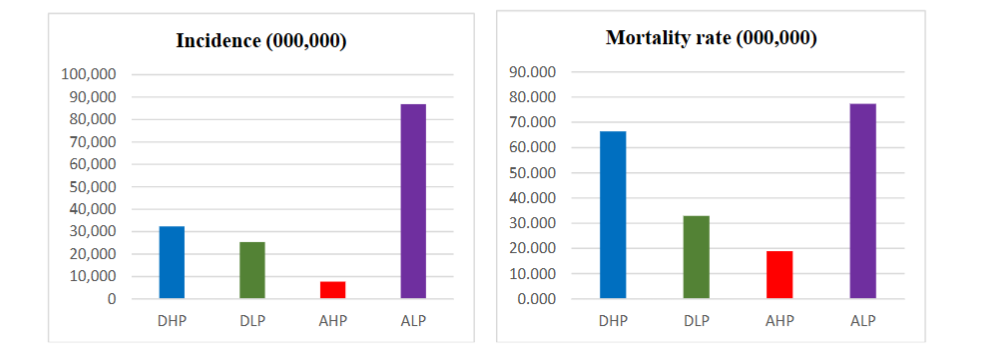
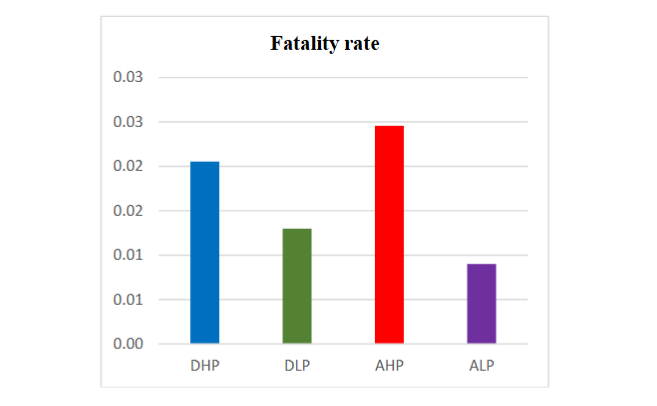
Figure 7: Situation of Incidence, Mortality, and Fatality Rates Based on Governance Policing Types Using the GPT Model (Incidence: Total cases; Mortality rate: Total deaths divided by the mean population; Fatality rate: Total deaths divided by total cases)
4. Discussion
4.1. LIBERTARIAN VS. AUTHORITARIAN APPROACHES TO COVID-19 MEASURES
The global outbreak of COVID-19 has necessitated governmental responses of varying strictness, providing a unique lens through which to examine the implications of libertarian and authoritarian governance. While these terms encompass a broad range of policies, for the purpose of this analysis, “libertarian” refers to minimal state interference, emphasizing individual rights, and “authoritarian” to a high degree of governmental control and restriction. For this reason the use of power tools and police in the most authoritarian countries does not require justification or debate, as this type of utilization of coercive force is considered a routine and repetitive aspect, albeit under different pretexts. Moreover, if the most authoritarian countries have not timely employed these tools, there is a greater need for explanation. The focal point of this discussion pertains to the deployment of the police and the imposition of coercion in democratic countries during the pandemic, which has evolved into a subject of contention spanning between opponents and proponents, or among political groups and governments. For this very reason, this article delves further into the literature of this category and evaluates their relative effectiveness in controlling the pandemic’s spread.
4.1.1. Libertarian Approach
Libertarian governments prioritize individual freedoms and are generally reluctant to impose stringent measures on their citizenry. This approach is exemplified by countries such as Sweden. The Swedish government refrained from instituting a full-scale lockdown, instead recommending social distancing and trusting its citizens to adhere to guidelines voluntarily. The result was mixed: While Sweden initially saw higher infection and mortality rates than many of its neighbors, it argued that a less restrictive approach would produce longer-term herd immunity and less economic disruption.
Economic data does suggest fewer disruptions in countries adopting a libertarian approach. For instance, Sweden’s economy shrank by around 2.8% in 2020, a milder contraction than many European neighbors. However, it is crucial to note that this approach also faced criticism for potentially risking lives in favor of economic gains.
One of the significant reasons for the limitation of the use of extensive lockdowns and the imposition of strict restrictions, especially the use of police for enforcing such stringent restrictions in countries, especially democracies, is the concern of political freedom groups and the public about the consequences of using force and coercion to impose restrictions on personal freedom, choice, and human dignity. There is also growing concern about the policing interventions and the continuation of these restrictions in the post-COVID-19 period. Susumu and Annaka mention that the COVID-19 pandemic has had implications for democracy and the role of the police. However, in general, the importance of democratic institutions and collective action in response to crises has been emphasized. Lundgren highlights this concern and argues that the use of emergency powers in response to the COVID-19 pandemic has significant implications for democracy and civil liberties, as these powers may be used to restrict individual rights and undermine democratic processes.
Maria and her colleagues express concerns about the violation of citizens’ rights to enjoy freedom and democracy during the pandemic and emphasize the need for governments to support human rights and democracy to maintain public trust and cooperation. This article warns that if citizens lose their trust in the effectiveness of democracy, there is a dangerous risk to democracy’s failure. They stress the importance of an educated and informed population to prevent permanent government restrictions on democracy. Dorte also emphasizes that compliance with quarantine measures was higher in countries with responsive democratic governments. Iglesias in his study has not found a clear correlation between the severity of measures taken and the political regime. Maria highlights the potential for authoritarian regimes to use fear and deception to control their people, while Dorte views COVID-19 as a source of concerns about conducting real and transparent elections within the framework of democratic competition. Maria also mentions that governments potentially use the pandemic as an opportunity to enhance their power and disregard democratic norms.
4.1.2. Authoritarian Approach
Contrastingly, authoritarian governments have shown a tendency to enforce strict measures swiftly. China, where the outbreak began, implemented a severe lockdown in Wuhan and other affected regions. By employing vast state resources, surveillance, and forceful quarantine methods, the virus’s spread was significantly reduced within a few months.
This approach, while effective in curtailing the virus’s immediate spread, raised concerns regarding individual freedoms and rights. The imposition of strict lockdowns, restrictions on movement, and surveillance measures were perceived by many as impinging on civil liberties. Yet, from a purely epidemiological perspective, rapid and forceful interventions proved effective in disease containment.
4.1.3. Comparative Analysis of Governance Strategies in COVID-19 Response: Assessing Effectiveness and Societal Impact
In comparing the effectiveness of these strategies, it’s crucial to consider various factors. While authoritarian measures led to quicker short-term results in controlling the spread, countries adopting these policies also experienced significant economic downturns and faced international scrutiny over rights violations.
The libertarian approach, while economically less disruptive, did face criticisms concerning healthcare system strain and higher initial death rates. However, proponents argue that a long-term perspective may eventually reveal benefits, especially if herd immunity is achieved or if long-term societal health impacts from economic disruptions are considered.
Both libertarian and authoritarian responses to COVID-19 have their merits and drawbacks. Authoritarian measures demonstrated effectiveness in rapid virus containment, albeit at significant economic and civil liberty costs. Libertarian strategies prioritized individual rights and economic continuity but faced challenges in immediate health outcomes.
The COVID-19 pandemic, while foremost ushering in a slew of societal and economic challenges worldwide, also shed light on an enduring ideological clash. This clash is not new; the tensions between authoritarianism and libertarianism have been long documented—be it through discussions on new social movements and postmaterialist shifts, the authoritarian-libertarian spectrum, or the GAL-TAN distinction. However, in the context of the pandemic, this ideological contest took on a new significance, often articulated as the governance quality maneuver in managing the COVID-19 pandemic. Subsequent studies rigorously examined how various governments, from autocratic to democratic, grappled with the crisis. In particular, these analyses focused on their executive decision-making capacity in response to the pandemic and the role of citizen involvement and rights protection in their strategies. Some articles highlight the importance of governance quality, the variation in pandemic policies across countries, and the challenges faced by democracies in balancing public health and individual liberties. The quality of governance in managing the COVID-19 pandemic has varied across different countries. Some countries have experienced governance failures during the pandemic, resulting in limited results in terms of controlling the prevalence of the virus. The public governance quality during the COVID-19 pandemic is being questioned, leading to calls for a public inquiry to regain trust. The quality of public governance has been found to have an impact on the management of the severity of the COVID-19 crisis. Klimovsky suggests that countries with limited quality of collaborative governance and no experience in similar pandemics may have short-term success but long-term failures in managing the COVID-19 pandemic. Nikolava argues the COVID-19 pandemic has tested the quality of public governance and raised questions about its ability to sustain societal agendas and accommodate contactless sociality.
The various results of pandemic control raised a fundamental question: What constitutes high-quality governance? Some authors argue that countries with higher-quality governance have fared better in terms of both health outcomes and economic recovery, although defining the quality of governance remains ambiguous. Some others see the quality of governance as being aligned with the quality of the decision-making system of government. Others draw an inverse correlation between the quality of governance and corruption. Still others see quality governance as synonymous with good governance. And some also see the quality of governance as being aligned with the level and quality of democracy. Some believe that the quality of leadership determines the quality of governance. Singh discusses the importance of responsible political leadership and global health governance in addressing the COVID-19 pandemic.
This is a generalization of Amartya Sen’s view that famines are caused by political leaders’ incompetence, not the incompetence of the Earth. Niall Ferguson, author of the book Doom: The Politics of Catastrophe, also believes that the COVID-19 outbreak and widespread deaths are the result of political leaders’ incompetence. He argues that the decision-making power of leaders is more important than the structure of the government, whether authoritarian or libertarian. The high death toll from COVID-19 in the United States and India on the democratic side and in Iran and Turkey on the autocratic side might be the prime examples of this.
The libertarian authors prefer to claim that there is a strong positive correlation between the Democracy Index and the quality of governance as Knight emphasizes “that democracy validates the quality of governance today. When it comes to the role of democracy, Maria elaborate on the paradoxical duties that democratic countries face. These nations must balance the imperative of public health against the preservation of individual liberties. This, they argue, has led to varied success in democratic countries. The sentiment is also echoed by reports from the World Health Organization, which indicate that democratic countries tend to be more transparent and engage with their citizens more actively. Such transparency and engagement often manifest in strong public health systems and robust social safety nets, thus aiding in pandemic mitigation.
However, the story is not one-sided. More unbiased perspectives posit that the attributes often seen as strengths in democratic countries—namely, transparency and adaptability—are not exclusive to democracies and argue that these features, alongside strong public health systems and social safety nets, can also exist in countries with less democratic structures. They point to the success stories of China, which have managed to control the spread of the virus effectively despite being labeled as Autocrat.
Contrasting with the libertarian view, democratic authors contend that while some autocratic or less democratic countries have indeed controlled the pandemic effectively, this has often come at the cost of individual liberties. Here, the debate circles back to the idea of governance quality and what sacrifices of human rights are deemed acceptable in the quest to control a pandemic.
Globally, insights from the Organisation for Economic Co-operation and Development (2023) along with the United Nations Development Programme both contribute significantly to our understanding. The first viewpoint underscores the agility of democratic nations in modifying their strategies as new data becomes available. The second perspective, on the other hand, accentuates how the health crisis has amplified pre-existing disparities between democracies and autocratic systems. It’s worth noting that these reports state the democratic societies have typically been more proficient not just in controlling the medical emergency, but also in safeguarding the development and welfare of their people.
However, what cannot be ignored is the impact that COVID-19 had on the minds of the global community and raised a question mark against the adequacy and capability of democratic political systems in dealing with crises that require a quick decision-making system. One of the regions that had a powerful and recognized democratic political system was India, which was considered the largest democratic system in the world. The experience of what happened in India during the COVID-19 period showed a red flag about the slow and deliberative decision-making system in democratic countries in the face of rapid crises. India suffered significant damage during the COVID-19 period with a loss of 4.7 million lives. During the COVID-19 era, the healthcare infrastructure in India was overwhelmed, resulting in numerous fatalities, often attributed to the scarcity of critical medical resources, including oxygen. Criticism has been directed at the Indian government for its handling of the pandemic, especially regarding its delayed response to the second wave. This delayed reaction further exacerbated the crisis.
Rumki attributes the reason for this damage to the slow decision-making system due to soft democracy. He states in his book: “If we need to be a global power, our public service delivery systems must also be global. The point I want to make is that “soft” democracies like India can be converted to “hard” democracies with political will and purpose, and the expected results will follow.” Rumki is advocating for a “hard democracy” that would have a faster decision-making process in crises, greater use of the rule of law and police power to enforce decisions, even if this leads to restrictions on individual freedoms, if it has social benefits. The fact from India is a warning that democratic countries need to find ways to make decisions more quickly in the face of rapid crises. In this regard Bohloli et al. argue that the most important factor in controlling a pandemic is timely action based on the sinusoidal nature of the virus. They developed a control theory based on timing interventions based on the SARS-CoV-2 sinusoidal curve. They cite China’s use of police at the right time and New Zealand’s speed in implementing protective measures at the beginning of the COVID-19 period as factors in their success.
Our scope review has unveiled a positive association between the nature of governance and the resilience of individual rights within a given nation-state. This observed phenomenon implies that nations characterized by democratic governance structures exhibit a propensity for bolstering the safeguarding of individual rights in comparison to their authoritarian counterparts. This propensity can be attributed to the heightened responsiveness of democratic administrations towards their citizenry, coupled with their enhanced proclivity for upholding the principles of the rule of law. Additionally, democratic nations tend to manifest a proclivity for engaging in more inclusive and deliberative decision-making processes relative to their authoritarian counterparts. This predilection arises from the proclivity of democratic governments to inclusively incorporate a diverse array of stakeholders, including subject matter experts, civil society organizations, and the general populace, within the ambit of their decisional paradigms. Nevertheless, it is worth noting that this participatory proclivity may introduce a measure of deliberative tardiness, necessitating structural reforms geared towards expediting judicious consultative decision-making within these democratic polities.
Our study indicates that a measured approach, and strategic utilization of policing, which respects human freedoms and leverages community trust and cooperation, can lead to the strengthening of democratic stability alongside supporting public health measures. This flexibility, adaptability, and effective pandemic control, causing enhanced perceived effectiveness of government response in turn reflects in the ability of countries not only to navigate through the complexities of a global health crisis but also to emerge with democratic credibility. These findings emphasize the importance of a comprehensive, coordinated, and community-oriented approach to policing in response to the COVID-19 pandemic, associated with clear communication and transparency of their necessity and temporary nature. This means that the police must work alongside other institutions and the community to ensure that security and public health measures are effectively implemented while respecting citizens’ fundamental rights.
In nations with democratic systems, attributes like openness, flexibility, and robust social support frameworks are often cited as strengths. However, these qualities don’t serve as cure-alls. Numerous variables, such as governance caliber—despite varying definitions—public health infrastructure, and citizen cooperation influence how effectively a country tackles a crisis. In summary, the relationship between governance structure and pandemic outcomes is far from straightforward. While libertarian and democratic philosophies provide worthwhile insights, it remains clear that a universal blueprint for handling pandemics does not currently exist. Further research is indeed needed to clarify these intricate relationships and provide clearer guidance for future global crises.
5. Exploring the Potential Biases, Limitations and Future Directions
In the course of this scoping review, we identified two primary potential sources of bias within the included studies that warrant careful consideration. Firstly, there is a possibility of ideological bias stemming from the authors’ personal leanings towards libertarianism or authoritarianism. Such biases could subtly influence the framing of the study’s findings, particularly in how government responses to COVID-19 and police enforcement strategies are portrayed and interpreted. Secondly, security concerns present a notable risk, particularly in the context of reporting disparities or failures in countries with weaker responses to the COVID-19 pandemic. These concerns might lead to underreporting or selective reporting, thus skewing the overall portrayal of national responses and enforcement intensities. This acknowledgment of potential biases is crucial for a comprehensive understanding of the studies’ findings and the subsequent synthesis of data within our review.
This scoping review, while comprehensive, has certain limitations. Primarily, it relies on secondary data sources, which might not always capture the complete picture due to potential issues with accuracy, completeness, and generalizability. Our focus on a limited number of countries could also limit the representation of the global landscape regarding government types and police enforcement in COVID-19 control. Moreover, the predominantly retrospective nature of this review may not fully encapsulate the dynamic, evolving nature of pandemic responses.
Future research should aim to include primary data from a more diverse range of countries and employ varied methodologies to overcome these limitations. Additionally, more research is needed to understand the long-term effects of different pandemic management strategies, especially in the context of accurately gauging police performance during such a global health crisis. Furthermore, we should acknowledge the further limitation and proposing it as an area for future investigation. While our study highlights the differences in decision-making speed and quality between libertarian and authoritarian governments and their impact on police enforcement during COVID-19, we acknowledge the absence of quantifiable metrics to measure these aspects. This limitation points to a gap in the existing literature. Future research could focus on developing and applying such metrics, providing a more empirical basis to understand how decision-making processes in different governance systems affect pandemic response strategies.
6. Conclusion:
The scholarly discourse around COVID-19 management highlights the critical influence of government structures and decision-making power on public health and economic responses. This study, examining the impact of libertarian versus authoritarian governments on police deployment, finds that both approaches offer valuable insights for crisis response. Balancing public health, individual liberties, and economic stability remains a central challenge. Our findings indicate that the quality of governance is crucial, with the speed and quality of decision-making being its two determinate criteria. Some democratic countries, like New Zealand and Denmark, as well as authoritarian ones like China, have effectively used rapid decision-making to control the pandemic. The quality of their decisions comes back to their achieved deliberation and resiliency. Countries with slower decision-making systems faced greater challenges. This emphasizes the need for balanced governance that combines quick, quality decision-making with respect for individual rights. As governments and societies reflect upon and learn from the pandemic, a balanced approach that respects individual rights while also safeguarding public health may emerge as the most sustainable path forward. The noticeable point is, that the extent of police involvement in managing the COVID-19 epidemic is secondary to the overarching importance of the decision-making system’s quality. Central to this is the strategic employment of police resources, which necessitates a careful balance between public health imperatives and the preservation of human rights. This approach underscores the primacy of judicious and timely decision-making, transcending the mere level of police deployment.
Drawing from our in-depth analysis of libertarian and authoritarian responses to COVID-19, we observed a crucial need for governance strategies that effectively manage public safety while respecting individual freedoms. Our study innovatively contributes the concept of community-oriented policing to crisis management across varying governance structures, including in authoritarian contexts, during global events like the COVID-19 pandemic. This approach, characterized by active community engagement, transparency, respect for civil liberties, adaptability, and trust-building, offers a transformative strategy for balancing public safety and individual freedoms. The novelty lies in adapting these established policing principles to diverse political landscapes, especially in times of crisis, providing a unique and forward-looking perspective on global crisis management and governance. Ongoing research is essential to understand these strategies’ long-term effects fully, as they offer vital lessons for future global crisis management.
References:
- Greer SL, King EJ, da Fonseca EM, Peralta-Santos A. The comparative politics of COVID-19: The need to understand government responses. Global public health. 2020;15(9):1413-1416.
- Luscombe A, McClelland A. Policing the pandemic: Tracking the policing of COVID-19 across Canada. 2020;
- Thompson MR. Brute force governance: public approval despite policy failure during the COVID-19 pandemic in the Philippines. Journal of Current Southeast Asian Affairs. 2022;41(3):399-421.
- Yoo KJ, Kwon S, Choi Y, Bishai DM. Systematic assessment of South Korea’s capabilities to control COVID-19. Health Policy. 2021;125(5):568-576.
- Kuiper ME, de Bruijn AL, Reinders Folmer C, et al. The intelligent lockdown: Compliance with COVID-19 mitigation measures in the Netherlands. Amsterdam Law School Research Paper. 2020;(2020-20)
- Frey CB, Chen C, Presidente G. Democracy, culture, and contagion: Political regimes and countries responsiveness to Covid-19. Covid Economics. 2020;(18)
- Unit EI. Democracy Index 2022: Frontline democracy and the battle for Ukraine. Retrieved online from EIU: https://pages.eiu.com/rs/753-RIQ-438/images/DI-final-version-report.pdf. 2022;
- Tricco AC, Lillie E, Zarin W, et al. PRISMA extension for scoping reviews (PRISMA-ScR): checklist and explanation. Annals of internal medicine. 2018;169(7):467-473.
- Arksey H, O’Malley L. Scoping studies: towards a methodological framework. International journal of social research methodology. 2005;8(1):19-32.
- Crooks VA, Kingsbury P, Snyder J, Johnston R. What is known about the patient’s experience of medical tourism? A scoping review. BMC health services research. 2010;10(1):1-12.
- Ng JY, Cobey KD, Ahmed S, et al. Recommendations and guidelines for creating scholarly biomedical journals: A scoping review. Plos one. 2023;18(3):e0282168.
- Kingsbury I. Demystifying goliath: An examination of the political compass of education reform. Journal of School Choice. 2022;16(2):258-274.
- Lester JC. The political compass and why libertarianism is not right-wing. Journal of social philosophy. 1996;27(2):176-186.
- World Population Review. Democracy Countries 2023 Accessed 1 October 2023, https://worldpopulationreview.com/country-rankings/democracy-countries
- World Population Review. Dictatorship Countries 2023. 2023. https://worldpopulationreview.com/country-rankings/dictatorship-countries
- Corpuz JCG. ‘Pandemic within a pandemic’: a call to end police brutality. Journal of Public Health. 2022;44(2):e344-e345.
- Grace S. Policing social distancing: gaining and maintaining compliance in the age of coronavirus. Policing: a journal of policy and practice. 2020;14(4):1034-1053.
- Deckert A, Long NJ, Aikman PJ, et al. ‘Safer communities… together’? Plural policing and COVID-19 public health interventions in Aotearoa New Zealand. Policing and society. 2021;31(5):621-637.
- Boon-Kuo L, Brodie A, Keene-McCann J, Sentas V, Weber L. Policing biosecurity: Police enforcement of special measures in New South Wales and Victoria during the COVID-19 pandemic. Current issues in criminal justice. 2021;33(1):76-88.
- Chairil T. Indonesian government’s COVID-19 measures, January–May 2020: Late response and public health securitization. Jurnal Ilmu Sosial dan Ilmu Politik. 2020;24(2):128-152.
- Olagnier D, Mogensen TH. The Covid-19 pandemic in Denmark: Big lessons from a small country. Cytokine & growth factor reviews. 2020;53:10-12.
- Lindström M. The COVID-19 pandemic and the Swedish strategy: Epidemiology and postmodernism. SSM-population Health. 2020;11:100643.
- Leal WE, Piquero AR, Piquero NL. Policing a pandemic: investigating San Antonio’s response to COVID-19’s new crime of public health violations. Police Practice and Research. 2022;23(6):739-756.
- Lum C, Maupin C, Stoltz M. The supply and demand shifts in policing at the start of the pandemic: A national multi-wave survey of the impacts of COVID-19 on American law enforcement. Police Quarterly. 2023;26(4):495-519.
- Kumar TV. Role of police in preventing the spread of COVID-19 through social distancing, quarantine and lockdown: An evidence-based comparison of outcomes across two districts. International Journal of Police Science & Management. 2021;23(2):196-207.
- Msemburi W, Karlinsky A, Knutson V, Aleshin-Guendel S, Chatterji S, Wakefield J. The WHO estimates of excess mortality associated with the COVID-19 pandemic. Nature. 2023;613(7942):130-137.
- Anand A, Sandefur J, Subramanian A. Three new estimates of India’s all-cause excess mortality during the COVID-19 pandemic. 2021;
- Parker M, Baluku M, Ozunga BE, et al. Epidemics and the Military: Responding to COVID-19 in Uganda. Social Science & Medicine. 2022;314:115482.
- Jiang F, Xie C. Roles of Chinese police amidst the COVID-19 pandemic. Policing: A Journal of Policy and Practice. 2020;14(4):1127-1137.
- Gao J, Zhang P. China’s Public Health Policies in Response to COVID-19: From an ‘Authoritarian Perspective. 2021;9:1-11.
- Benedyczak J. Surveillance and Control: Russia during the COVID-19 Pandemic. 2020;
- Luong HT, Jardine M, Thomson N. Mobilizing the police from the top down as public health partners in combatting COVID-19: A perspective from Vietnam. Journal of community safety and well-being. 2020;5(2):57-59.
- AlQutob R, Moonesar IA, Tarawneh MR, Al Nsour M, Khader Y. Public health strategies for the gradual lifting of the public sector lockdown in Jordan and the United Arab Emirates during the COVID-19 crisis. JMIR Public Health and Surveillance. 2020;6(3):e20478.