


Home > Medical Research Archives > Meet the community > Richard A. Lawhern
Author spotlight
Nadia Gomez
University of Florida, editor for Medical Research Archives
Alex Clark
Editorial Team, Medical Research Archives
Mehdi Rajabi
Albany College of Pharmacy and Health Sciences
Warren, W. Boling Jr.
Austin College
Dwight Culver
University of California
Michael J. Griffin
Midwestern University
Marieke van Engelenburg-van Lonkhuyzenin
Maastricht University
Franco Posa
Scientific Director at NeuroIntelligence
Ji Chen Bihl
Wright State University
Cuilan Li
Wuhan University
Benedetto Sacchetti
Italian National Institute of Health
Nandan Kumar Mondal
University of Louisville
Dr. Richard A. Lawhern
Richard A. Lawhern, PhD, is an independent healthcare writer, patient advocate, and public health policy analyst whose work focuses extensively on chronic pain, opioid policy, addiction, and the regulation of prescription opioid analgesics.
Over several years, Dr. Lawhern has contributed a substantial body of work to the Medical Research Archives, examining the scientific evidence behind opioid prescribing policy, the diagnosis of substance use disorder, and the consequences of regulatory approaches to chronic pain treatment. A recurring theme in his published work is the distinction between patients receiving opioid therapy for pain and people affected by substance use disorder.
In this Author Spotlight presentation, Dr. Lawhern examines these issues through the broader question of drug use, substance abuse disorder, and chronic pain, exploring how clinical practice, addiction medicine, public policy, and regulation intersect.
👉 Watch Dr. Lawhern’s presentation and access the complete PowerPoint slides to explore the discussion in greater depth.
Video: Watch the full presentation
Complete PowerPoint Presentation: View the complete PowerPoint presentation
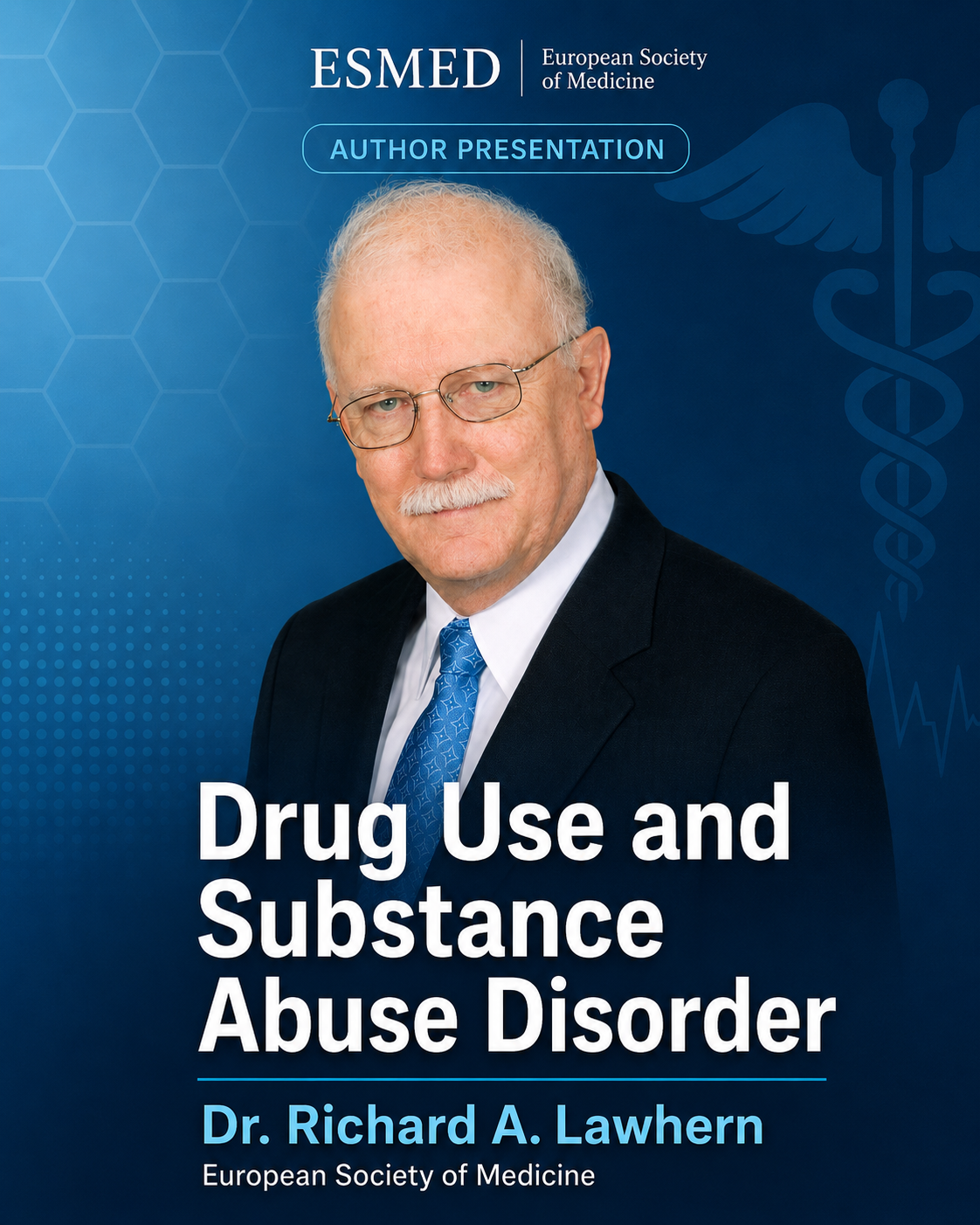
Member Video
In the presentation, Dr. Lawhern discusses:
- The distinction between drug use, dependence, addiction, and substance use disorder
- Why patients receiving opioid medication for chronic pain should not automatically be viewed through an addiction framework
- Challenges clinicians face when diagnosing substance use disorder in patients treated for pain
- Misconceptions surrounding prescription opioids and their role in the wider overdose crisis
- How regulatory and prescribing policies can affect access to pain treatment
- The importance of grounding clinical and public-health policy in evidence rather than generalized assumptions about opioid use
- The need for more individualized approaches to both chronic pain management and addiction treatment
Drug Use and Substance Abuse Disorder Versus Chronic Pain — Explained by Dr. Richard A. Lawhern
Research Focus
Distinguishing Chronic Pain Treatment from Substance Use Disorder
A central theme of Dr. Lawhern’s work is the need to distinguish carefully between the therapeutic use of opioid analgesics and substance use disorder.
In his research published through the Medical Research Archives, he has questioned whether prevailing clinical and regulatory frameworks adequately distinguish addiction from medically supervised opioid treatment. He has also highlighted the difficulty clinicians may face in accurately diagnosing opioid use disorder, particularly when symptoms such as physical dependence or tolerance may occur during legitimate long-term treatment.
This distinction has significant consequences. An inaccurate substance-use diagnosis can influence medical records, prescribing decisions, access to treatment, and the way patients with severe chronic pain are managed.
Opioid Policy and the Treatment of Chronic Pain
Dr. Lawhern has written extensively about the scientific basis of U.S. opioid prescribing policy and its effects on patients and clinicians.
His work has critically examined CDC opioid prescribing guidelines, regulatory restrictions, dose thresholds, and the broader assumption that prescribing opioid analgesics for chronic pain has been a major driver of addiction and overdose mortality.
His research emphasizes several recurring questions:
- How strong is the evidence supporting current prescribing restrictions?
- How should clinicians balance opioid-related risks against the consequences of undertreated pain?
- Do standardized dosage thresholds adequately account for differences between individual patients?
- How can public policy address addiction without unintentionally restricting appropriate medical treatment?
These questions place Dr. Lawhern’s work at the intersection of pain medicine, addiction policy, clinical decision-making, and healthcare regulation.
Rethinking Established Assumptions
Another recurring theme in Dr. Lawhern’s work is the need to re-examine assumptions that have become embedded in opioid policy and clinical practice.
In Resources for Clinicians in Pain Medicine: Correcting Medical Mythologies on Prescription of Opioid Analgesics, he addresses what he regards as persistent misconceptions surrounding opioid prescribing and the treatment of chronic pain.
His work with Stephen E. Nadeau, MD, has also revisited the scientific evidence concerning opioid efficacy, safety, dosage, and the interpretation of the opioid crisis, arguing for a more evidence-based assessment of long-term opioid therapy for chronic noncancer pain.
The broader objective is not to dismiss opioid-related risk, but to encourage policies that distinguish among different patient populations and different forms of drug use with greater clinical precision.
Selected Work in Medical Research Archives
Dr. Lawhern has published multiple contributions addressing chronic pain, opioid prescribing, addiction, and public-health regulation, including:
Use of Opioids for Chronic Noncancer Pain: A Recapitulation of the Science
Stephen E. Nadeau, MD; Richard A. Lawhern, PhD
A review of evidence concerning opioid efficacy, safety, dosage, addiction, and the scientific foundations of current opioid policy.
The US CDC, Veterans Administration, Law Enforcement and The Opioid Crisis — Incompetence or Bad Faith?
Richard A. Lawhern, PhD
An examination of the role of U.S. government institutions and law-enforcement policy in shaping opioid prescribing and access to treatment for people with severe pain.
Treating Chronic Pain and Anxiety – a Modest Proposal
Richard A. Lawhern, PhD; Stephen E. Nadeau, MD
A discussion of evidence surrounding the combined prescribing of opioid analgesics and benzodiazepines and the interpretation of associated mortality risk.
Doctors Diagnosing Addiction – Are the Blind Leading the Blind?
Richard A. Lawhern, PhD
An analysis of clinical preparedness for diagnosing substance use disorder and the implications of applying addiction diagnoses to patients receiving treatment for pain.
US Opioid Guidelines 2022 – More and Less Than Meets The Eye
Richard A. Lawhern, PhD
A critical review of the scientific evidence and methodology underlying the 2022 CDC opioid prescribing guideline.
From Research to Public Advocacy
Dr. Lawhern’s work extends beyond academic publication into public-health advocacy.
He is a healthcare writer and public-health policy advocate focused on the treatment of severe pain, with extensive published work across peer-reviewed and public media.
His current presentation continues that work by asking clinicians, policymakers, and the wider healthcare community to examine carefully how chronic pain, drug use, addiction, and substance use disorder are defined and regulated.
The central message is that effective policy requires precision: patients with chronic pain and people with substance use disorders may have very different clinical needs, and healthcare systems must be capable of responding appropriately to both.
Submit your Paper
Submit your own paper to the European Society of Medicine’s official journal, the Medical Research Archives.
These are just some of the nearly 4,000 members, authors, and speakers who are part of the European Society of Medicine’s community. Our members work in countries across the globe, yet are united by a common goal: to promote health and health equity, around the world.
Join the Society
The European Society of Medicine is more than a professional association. We are a community. Our members work in countries across the globe, yet are united by a common goal: to promote health and health equity, around the world.
If you believe in ESMED and everything we stand for, take the next step and support our mission by becoming a member.

Professional Membership
- Free publication of 3 articles per year (€9,750+ value)
- Access to job board and funding directory
- Mentorship program
- Ability to post presentations
Membership fee
999 EUR/USD
Reduced Membership
* Available for these developing nations
- Free publication of 2 articles per year (€4,000+ value)
- Access to job board and funding directory
- Mentorship program
- Ability to post presentations