





AI-Enhanced Mental Health Support: Mobile Solutions
Enhancing Mental Health Support: Integrating Artificial Intelligence Powered Mobile Apps and Chatbots for Psychosocial and Skills-Building
Foojan Zeine, Psy.D.¹² and Sam Changizi, MBA³
- Awareness Integration Institute,
San Clemente, CA, 92672, USA.
[email protected] - Department of Health Science,
California State University Long Beach, Long Beach, CA, 90804, USA.
[email protected] - Foojan Inc. San Clemente, CA, 92672, USA.
[email protected]
OPEN ACCESS
PUBLISHED: 31 May 2025
CI TATION: Zeine, F. and Changizi, S., 2025.Enhancing Mental Health Support: Integrating Artificial Intelligence Powered Mobile Apps and Chatbots for Psychoeducation and Skill-Building. Medical Research Archives, [online] 13(5).
https://doi.org/10.18103/mra.v13i5.6513
COPYRIGHT:© 2025 European Society of Medicine. This is an open-access article distributed under the terms of the Creative Commons Attribution License, which permits unrestricted use, distribution, and reproduction in any medium, provided the original author and source are credited.
DOI https://doi.org/10.18103/mra.v13i5.6513
ISSN 2375-1924
ABSTRACT
The advancement of digital mental health technologies offers transformative possibilities for increasing access to psychological support while presenting unique challenges in engagement and efficacy. This paper explores the integration of Awareness Integration Theory—a structured, evidence-based psychological model—into artificial intelligence-powered mental health platforms. Awareness Integration Theory facilitates self-awareness, emotional regulation, and cognitive restructuring, contributing to reported improvements of 60 to 70 percent across multiple areas of life functioning.
One prominent application of this integration is the Foojan mental wellness app, which combines the principles of Awareness Integration Theory with advanced artificial intelligence to provide personalized, accessible mental health support. The app includes features such as guided journaling and real-time tools for managing emotions, thoughts, and behaviors. Central to the platform is MIRA, a hybrid virtual coach driven by artificial intelligence that responds to users’ daily concerns and provides practical mental health skills.
Preliminary data suggest that this approach enhances mental well-being and may serve as a valuable adjunct to traditional psychotherapy by maintaining engagement and continuity between sessions. While the results are promising, challenges such as user retention, therapeutic alliance in digital settings, and data security remain critical considerations. This paper presents strategies to address these barriers and optimize the reach and effectiveness of digitally delivered interventions.
By integrating Awareness Integration Theory with artificial intelligence technologies, this platform represents a significant step toward scalable, evidence-based, and continuous mental healthcare. It holds the potential to improve mental health outcomes globally by making support tools more available, responsive, and individualized.
Keywords: Awareness Integration Theory, Artificial Intelligence, Mobile app, AI Chatbot, Foojan app, MIRA
Introduction
Mental health challenges have become increasingly significant, affecting over 970 million people worldwide, with anxiety and depression being the most prevalent disorders¹. Despite efforts to incorporate mental health support into global health initiatives, significant gaps remain in accessibility and effectiveness¹. The rise in depression diagnoses and treatment rates highlights the urgent need for innovative therapeutic solutions that bridge these gaps.
Despite the rising demand for mental health services, a global shortage of mental health professionals persists, creating an unsustainable gap between need and available care². In the United States, nearly one in five adults experiences a mental illness, yet many go without treatment³. In underdeveloped countries, over 75% of individuals with mental disorders receive no care at all⁴. This scarcity of mental health resources limits access to individualized, evidence-based interventions, which are widely recognized as the gold standard in treatment⁵. As public expectations grow for healthcare systems to provide accessible, cost-effective, and evidence-based care—particularly for medically underserved populations—these systems face mounting pressure, underscoring the urgent need for innovative solutions⁶.
Mobile technology presents a unique opportunity to deliver scalable, cost-effective mental health interventions. With widespread smartphone adoption, mobile mental health applications provide self-guided or therapist-supported resources, including AI-driven chatbots, self-monitoring tools, and psychoeducational programs. These digital solutions increase accessibility, enhance engagement, and offer real-time interventions, fostering greater adherence to therapeutic practices⁷. Digital therapeutics (DTx) have demonstrated efficacy in reducing symptoms of depression and anxiety, with studies showing substantial improvements in PHQ-9 scores⁸. Artificial intelligence driven apps, such as Wysa, have also shown promising outcomes in reducing depressive symptoms through interactive engagement⁹.
Research by Han and Zhao reveals that chatbots have a significant impact on promoting mental health, with applications ranging from addressing various mental health concerns at different stages to enhancing accessibility of mental health services and support for individuals. By leveraging chatbots, mental health professionals can provide targeted assistance to users, improving treatment outcomes for conditions such as depression, stress, and anxiety disorders through therapy, training, and counseling¹⁰.
Rule-based AI chatbots offer a structured approach to digital mental health interventions (DMHIs) by simulating human conversation through predefined scripts and decision-tree algorithms. These chatbots, such as Woebot and Wysa, have demonstrated effectiveness in alleviating depression symptoms and fostering therapeutic alliances comparable to those formed with human therapists. Users generally respond positively to these apps, as reflected in high app store ratings and qualitative feedback highlighting appreciation for their human-like interactions and social support. However, despite their benefits, rule-based chatbots have limitations, including small and short-lived therapeutic effects, as well as user frustration with responses that can feel generic, repetitive, or constrained¹¹.
Advancements in generative AI, particularly large language models (LLMs) like OpenAI’s ChatGPT, Google’s Gemini, and Inflection’s Pi, introduce new possibilities. Unlike rule-based systems, these models are trained on vast datasets, enabling them to generate human-like responses with remarkable linguistic proficiency. Research suggests that generative AI chatbots are achieving or surpassing human performance in areas such as medical diagnostics, persuasive communication, theory of mind, and emotional support. Additionally, user engagement has been substantial, with ChatGPT reaching 100 million weekly active users within a year and nearly half of the U.S. population having interacted with generative AI. Generative AI presents
a major opportunity for digital mental health, with growing consumer adoption and emerging evidence supporting its effectiveness. A meta-analysis suggests that generative AI chatbots outperform rule-based models in reducing psychological distress, and a pilot study has shown promising results in psychiatric inpatient care. However, this technology also introduces new challenges, including potential risks of harm, liability concerns, and issues of trustworthiness. Notably, generative AI models can produce inaccurate or fabricated information (“hallucinations”), exhibit unpredictable behavior, and reflect biases present in their training data¹¹.
Awareness Integration Theory (AIT) offers a structured, evidence-based framework to enhance self-awareness, emotional regulation, and cognitive restructuring. By integrating AIT into AI-powered mobile applications, users gain access to structured interventions that promote long-term mental well-being. The Awareness Integration Theory based digital tools provide interactive guidance, self-reflection exercises, and real-time emotional support, making mental health care more accessible and effective. This paper explores how incorporating AI-driven chatbots within AIT-based mobile platforms can further enhance user engagement, bridging gaps in traditional therapy and empowering individuals to take an active role in their mental health journey¹².
PURPOSE OF THE STUDY:
The purpose of this study is to evaluate the integration of Awareness Integration Theory into digital mental health platforms powered by artificial intelligence, with the goal of improving emotional well-being and reducing symptoms of anxiety, depression, and stress. The study seeks to assess the effectiveness, accessibility, and scalability of this digital adaptation, as well as identify potential challenges such as user engagement, therapeutic alliance, and data security.
SCOPE OF THE STUDY:
This investigation integrates multidisciplinary perspectives—spanning psychological theories, artificial intelligence innovation, and clinical practice—to examine the intersection of technology and mental health through the lens of Awareness Integration Theory. The study explores several key areas, including emotional regulation, cognitive restructuring, self-awareness, and digital therapeutic engagement. Awareness Integration Theory functions as both a theoretical and practical scaffold, anchoring the digital adaptation of evidence-based interventions into mobile platforms and virtual environments. This scope includes an exploration of how structured self-reflection, emotional processing, and real-time cognitive tools, when delivered through artificial intelligence interfaces, contribute to improved psychological functioning. Specifically, the study considers how digital self-awareness mechanisms—such as journaling, guided questioning, and emotional check-ins—mirror internal metacognitive processes. These tools are designed not only to address symptoms of distress but also to reconstruct patterns of thought and behavior in everyday life. By translating a human-centered psychological model into scalable digital tools, the study also aims to deconstruct and reassemble therapeutic elements, mapping their utility across different contexts and populations. However, it does not discount the need for traditional clinical methods; rather, it seeks to complement them through technological augmentation. A significant limitation of the study lies in the emerging nature of this field, where empirical evidence linking artificial intelligence-driven interventions directly to lasting psychological change remains sparse. Nonetheless, this pioneering work aspires to inspire future cross-disciplinary research and inform clinical innovation. It carries the potential to reimagine mental health care with broader accessibility, personalization, and sustained engagement.
METHODOLOGY:
This study utilizes a mixed-methods research design, integrating both quantitative and qualitative approaches to provide a comprehensive evaluation of user experience and the clinical effectiveness of a digital mental health platform powered by Awareness Integration Theory. This theory offers a structured psychological framework aimed at increasing self-awareness, emotional regulation, and cognitive
restructuring. Quantitative data is gathered through questionnaires administered before and after users engage with each targeted life area within the platform. These measures assess changes in overall life satisfaction, offering objective indicators of progress resulting from the intervention. Qualitative data is derived from user feedback, app-based journal entries, and reflective prompts embedded within the program. This approach captures the depth of participants’ subjective experiences, emotional responses, and patterns of engagement across different stages of the intervention. Participants are recruited through online outreach campaigns and professional referrals from collaborating clinicians. Following the download of the Foojan app, individuals engage with the Foojan mental health app and its integrated artificial intelligence assistant, MIRA, over a period ranging from four to eight weeks. The app guides users through sequential phases focused on structured self-assessment, emotional processing, and development of behavioral strategies. Data is collected directly through the app and analyzed to assess the platform’s psychological impact. Insights gained from this data also inform ongoing refinement of the intervention, ensuring continued alignment with user needs and clinical objectives.
Awareness Integration Theory (AIT)
Awareness Integration Theory (AIT) is a comprehensive psychotherapeutic and educational model designed to enhance self-awareness, address unresolved traumas, and eliminate psychological barriers. It fosters a structured, goal-oriented approach to personal growth by incorporating principles from various therapeutic modalities, including Cognitive Behavioral Therapy (CBT), Existential Therapy, Emotion-Focused Therapy (EFT), Person-Centered Therapy, Mind-Body Therapy (MBT), Transactional Analysis, Solution-Focused Therapy, Eye Movement Desensitization and Reprocessing (EMDR), Mindfulness, and Hypnosis. By integrating these diverse frameworks, AIT offers a holistic method for understanding and processing emotional states, past experiences, subconscious patterns, and bodily sensations. Additionally, it emphasizes skill development and goal achievement, empowering individuals to actively engage in meaningful change over time¹³.
Empirical research has demonstrated AIT’s effectiveness in reducing symptoms of depression, anxiety, and PTSD while improving self-esteem, self-efficacy, and overall well-being. Studies conducted by the Personal Growth Institute reported a 76% decrease in depression, a 60% reduction in anxiety, and significant improvements in self-esteem (43%) and self-efficacy (20%)¹⁴. AIT-based workshops for individuals coping with separation or divorce also showed notable reductions in depressive symptoms (27.5%) and anxiety (37%), along with increased self-esteem and self-efficacy¹⁵. As telehealth expands, AIT has proven effective in virtual settings, with studies reporting a 50% decline in anxiety and a 60% boost in self-esteem¹⁶. Another telehealth study observed reductions of 66% in depression and PTSD symptoms and a 75% decrease in anxiety¹⁷.
The Six-Phase Framework of Awareness Integration Theory (AIT)
Awareness Integration Theory (AIT) is a structured, six-phase approach designed to help individuals navigate key aspects of life, including career, relationships, family dynamics, childhood experiences, self-perception, and existential matters such as mortality, spirituality, and beliefs about the divine. Each phase incorporates targeted questions and specific goals to facilitate self-awareness, emotional healing, and personal growth. By examining different life areas, individuals can recognize how progress in one domain can positively influence others, while unresolved trauma or limiting beliefs may create obstacles. AIT promotes self-reflection, critical self-analysis, and problem-solving, fostering emotional regulation and cognitive mindfulness for intentional and fulfilling decision-making¹⁸.
PHASE 1: SELF-AWARENESS AND CORE BELIEFS
This phase focuses on deepening awareness of one’s beliefs, emotions, and behaviors in relation to external circumstances. It encourages individuals
to evaluate the impact of their core beliefs on their personal and professional lives¹³. Often, subconscious resistance or conflicting intentions hinder progress, making it essential to identify and shift limiting beliefs while reinforcing empowering ones to support growth.
PHASE 2: PERCEPTION OF OTHERS AND REALITY TESTING
This stage helps individuals understand how they interpret others’ thoughts and emotions about them, refine their ability to observe and assess social interactions, and recognize how these perceptions influence their behavior¹³. Misconceptions about others can lead to fear and resistance, particularly regarding judgment. Developing the ability to differentiate between assumptions and reality through structured reality-checking exercises enhances clarity and decision-making.
PHASE 3: SELF-CONCEPT AND IDENTITY EXPLORATION
In this phase, individuals deepen their awareness of how their self-perception interacts with various life areas. Many core beliefs, particularly negative ones, stem from past experiences, including childhood traumas¹³. Recognizing these ingrained beliefs allows individuals to reevaluate and reconstruct them in a way that supports self-empowerment and forward movement.
PHASE 4: EMOTIONAL INTEGRATION AND HEALING
This phase bridges past experiences with the present by exploring the ways emotional schemas and trauma are stored within the body. By identifying connections between memories, emotional triggers, and beliefs, individuals can reframe negative narratives into constructive perspectives that emphasize resilience and personal strengths¹³. Guided visualization exercises assist in eliminating subconscious barriers that limit growth and transformation.
PHASE 5: CORE VALUES, GOAL SETTING, AND ACTION PLANS
Here, individuals establish clear values to guide their beliefs, decisions, and actions. They assess existing skills, identify areas for development, and create actionable plans to achieve their goals across multiple life domains. This phase fosters a renewed self-concept and commitment to intentional growth, with mentors and coaches providing support to sustain self-awareness and goal attainment¹³.
PHASE 6: SUSTAINING GROWTH AND ACCOUNTABILITY
The final phase focuses on maintaining long-term progress by building a strong support system and choosing an accountability partner to reinforce personal commitments¹³. This structured approach ensures that positive changes extend beyond the initial coaching or mentoring process, leading to lasting transformation.
The six-phase framework is integrated into a guided journaling system covering up to thirty-one life areas in the Foojan© app¹³.
FOOJAN© APP: AN AWARENESS INTEGRATION THEORY BASED MENTAL HEALTH PLATFORM
The global landscape of mental health care is undergoing a significant transformation, with growing recognition of innovative approaches that go beyond traditional therapy. Mobile mental health applications have emerged as a vital resource, offering timely, cost-effective support while reducing stigma and improving treatment outcomes. A study conducted on American college students using Awareness Integration Theory (AIT) as a self-help model demonstrated a 68% reduction in depression and a 21.72% decrease in anxiety¹⁵.
Amid this shift, the Foojan© app stands out as a pioneering telehealth platform rooted in AIT, providing personalized, affordable, and accessible mental health support worldwide. This app integrates evidence-based psychological interventions into a holistic framework, facilitating transformative personal growth. Through features such as guided self-awareness journaling, skill-building videos, and access to licensed therapists and coaches, the Foojan© app empowers users to engage in daily mental wellness practices. Designed to enhance mental well-being
on a broad scale, the Foojan© app merges multiple therapeutic modalities into a user-friendly digital platform, expanding mental health access and fostering lasting emotional resilience. Whether as a stand-alone self-help tool or a supplement to traditional therapy, the app promotes self-awareness, emotional regulation, and interpersonal growth. Users can explore and process emotions, challenge limiting beliefs, and develop healthier coping mechanisms through guided journaling, skill-building exercises, and educational content¹⁹.
One of the app’s key strengths is its unparalleled accessibility—offering 24/7 mental health support without geographical or scheduling constraints. It provides a convenient alternative for individuals who may face barriers to traditional therapy, whether due to stigma, financial limitations, or limited access to mental health professionals. By incorporating structured exercises, interactive tools, and practical interventions, the Foojan© app empowers users to take an active role in their mental health journey, fostering resilience and overall life satisfaction from the convenience of their own devices¹⁹.
Data collected from 1792 users of the Foojan® app from February 2023 to March 2025 highlights substantial improvements across various life areas¹⁹ (Figure 1):
• 75% improvement in relation with self
• 71% improvement in body image and health
• 71% improvement in intimate relationships
• 70% improvement in career satisfaction
• 70% improvement in financial well-being
• 72% improvement in addiction recovery
• 73% improvement in relation with children
• 72% improvement in sexuality-related concerns
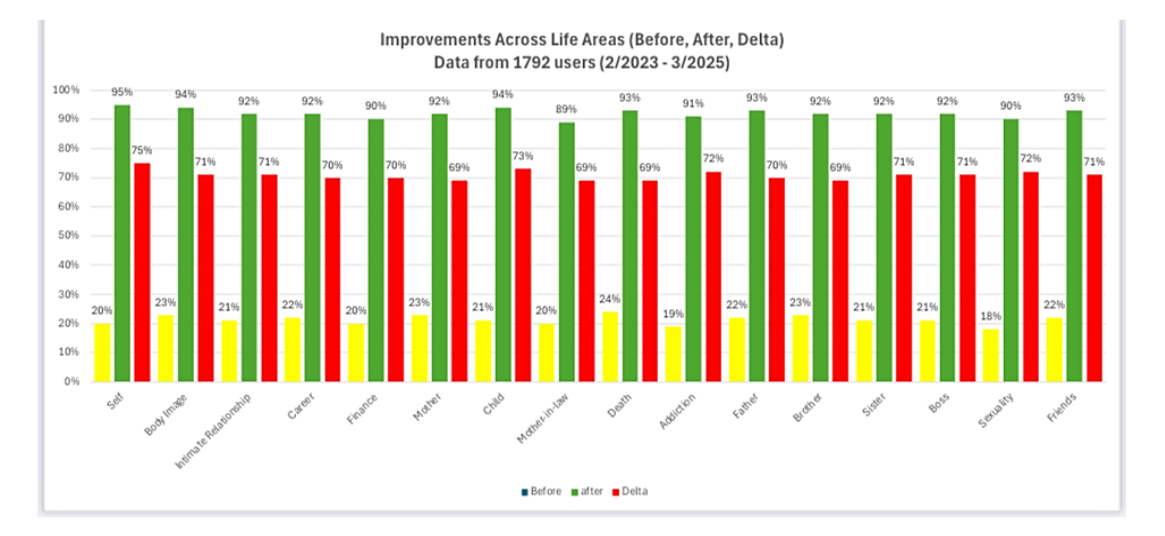
Figure 1 – Data collected from 1792 users of the Foojan© app. (foojan.com, 2025)
These findings underscore the effectiveness of AIT-based interventions in fostering emotional well-being, strengthening relationships, and enhancing personal and professional fulfillment. The Foojan© app represents a significant advancement in digital mental health, offering a transformative tool for individuals seeking to improve their psychological well-being and overall life satisfaction.
Enhancing Mental Health Support with AI-Powered Chatbot Integration
The global mental health crisis underscores the urgent need for accessible, scalable, and effective interventions. Generative artificial intelligence (AI) chatbots, such as ChatGPT, are gaining recognition as innovative tools for mental health support. However, research on their practical application remains limited. Preliminary findings indicate that AI chatbots can significantly enhance mental health care, with users reporting high engagement, meaningful benefits, and unique interactive experiences⁷.
In the field of AI-driven conversational agents, generative chatbots trained on public domain data offer broad knowledge coverage and adaptability across diverse topics. These models, built using extensive datasets sourced from open-access repositories, forums, and digital libraries, provide users with a wide array of information. Their key advantage lies in their ability to generate responses dynamically, adapting to various inquiries and engaging in human-like interactions. However, because these chatbots rely on publicly available data, they may introduce inconsistencies, outdated information, or responses that lack specificity, particularly in specialized fields like psychology, coaching, and personal development. Additionally, generative models can sometimes produce misleading or contextually inappropriate responses due to the lack of a structured guiding framework. This can be a significant limitation when users seek scientifically grounded advice or therapeutic guidance, where accuracy, coherence, and adherence to established methodologies are critical².
MIRA℠ represents a hybrid approach that combines generative AI with rule-based processing while leveraging a controlled dataset rooted in Awareness Integration Theory (AIT). Unlike standard generative models, which derive insights from open-ended training data, Mira’s responses are guided by a structured framework specifically designed for psychological self-exploration and personal development. The AIT methodology, developed as an evidence-based approach to enhancing self-awareness and cognitive restructuring, ensures that MIRA℠ delivers consistent, reliable, and therapeutically sound interactions¹². By limiting its dataset to vetted AIT principles, MIRA℠ maintains a high level of accuracy, reducing the risks of misinformation or deviation from the intended psychological model.
Additionally, the integration of rule-based components allows MIRA℠ to maintain alignment with predefined therapeutic objectives. This structured approach ensures that users receive responses that are not only generative in nature but also contextually relevant and behaviorally effective. In contrast to purely generative chatbots, which may respond in a fragmented or non-targeted manner, MIRA℠ systematically guides users through structured self-reflection exercises, goal-setting strategies, and cognitive behavioral techniques. This makes MIRA℠ a more effective tool for individuals seeking consistent, personalized, and evidence-backed support in their journey toward self-improvement.
Ultimately, while generative chatbots trained on public domain data provide broad and flexible conversational capabilities, they lack the domain-specific rigor required for structured self-development programs². MIRA℠ overcomes these challenges by combining generative AI’s adaptability with rule-based precision, ensuring that its responses remain accurate, meaningful, and aligned with the principles of Awareness Integration Theory. This makes MIRA℠ not only a powerful coaching and therapeutic tool but also a pioneering example of AI-driven psychological support that balances innovation with scientific reliability.
In Figure 2 a comparative summary of the advantages between Generative AI Chatbots, Rule-based Chatbots, MIRA (Hybrid Chatbots), and traditional psychotherapy sessions.
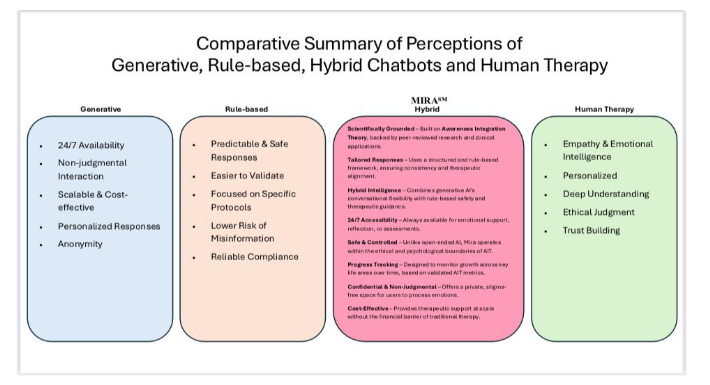
Figure 2 – Comparative Summary of Perceptions of Advantages between Generative AI Chatbots, Rule-based Chatbots, MIRA (Hybrid Chatbots), and Psychotherapy sessions with Human beings.
The integration of MIRA℠, an AI-driven chatbot, into the Foojan© app significantly enhances its functionality by offering on-demand, interactive support. Acting as a personalized digital assistant, MIRA℠ guides users through AIT-based exercises while responding to their mental health needs in real time. Below are the key benefits of this AI-enhanced approach:
• MIRA℠ tailors interactions based on user behavior, preferences, and emotional responses, offering a customized mental health experience. By analyzing input patterns, it recommends specific AIT exercises, journaling prompts, or skill-building activities that align with the user’s unique challenges and progress.
• Unlike traditional therapy, MIRA℠ provides round-the-clock mental health support, eliminating barriers related to scheduling, location, or cost. This feature is particularly valuable for individuals who may hesitate to seek professional help due to stigma or financial constraints.
• MIRA℠ fosters active participation by encouraging users to reflect on their thoughts, emotions, and behaviors. Through guided journaling, visualization techniques, and cognitive reframing exercises, it reinforces learning and supports long-term engagement in self-awareness and personal growth.
• By integrating AI-driven support, the Foojan© app can expand its reach without significantly increasing costs. MIRA℠ ensures consistent, high-quality guidance for a larger population, making professional-level mental health support more widely accessible, particularly in regions with limited access to therapists or counselors.
AIT combines principles from Cognitive Behavioral Therapy (CBT), Emotion-Focused Therapy (EFT), and mindfulness-based practices¹⁴. MIRA℠ enhances this integrative approach by merging evidence-based psychological frameworks with AI-driven insights, creating a hybrid model that balances self-help strategies with professional mental health support.
The integration of MIRA℠ into the Foojan© app represents a groundbreaking step in digital mental health care, addressing the growing demand for accessible, innovative, and stigma-free interventions. This AI-powered hybrid model empowers users to take control of their mental well-being through structured guidance, real-time personalized support, and evidence-based psychological techniques. By leveraging AI technology, the Foojan© app broadens mental health accessibility, improving outcomes and fostering long-term emotional resilience¹⁹.
Concerns
AI-based chatbots have demonstrated considerable potential in extending the reach of psychological support services by offering scalable and accessible interventions. However, user retention remains a significant barrier to the sustained effectiveness of these systems. Observations indicate that many users engage with mental health chatbots only briefly before discontinuing use, a phenomenon frequently attributed to insufficient personalization and the limited perceived depth of interaction. Addressing this issue necessitates the implementation of adaptive learning algorithms capable of dynamically tailoring responses based on user-specific behaviors and feedback, thereby enhancing the perceived relevance and therapeutic value of the chatbot interaction²⁰.
Another critical concern is the development of a therapeutic alliance—a foundational element in traditional therapy associated with better outcomes. AI-driven systems often lack the emotional intelligence and empathy needed to establish trust and rapport. While some chatbots use sentiment analysis and natural language processing to simulate empathy, these still fall short of human warmth and nuanced understanding²¹. Therefore, hybrid models that incorporate human oversight or guided interventions may enhance user experience and perceived support.
Data privacy and security are also paramount when dealing with sensitive psychological information. AI chatbots collect and process personal mental health data, raising ethical concerns around storage, access, and potential breaches. Adherence to regulatory frameworks such as GDPR and HIPAA is essential, along with implementing robust encryption, transparent data practices, and clear consent mechanisms²². Addressing these concerns is critical to building trust and ensuring the responsible deployment of AI in mental health care.
Conclusion
The Foojan© app represents a groundbreaking advancement in mental health care by integrating Awareness Integration Theory (AIT) with cutting-edge AI technology. Through guided self-awareness journaling, users can systematically explore their emotions, thoughts, and behaviors within the structured framework of AIT’s six phases, fostering personal growth, emotional regulation, and cognitive mindfulness. The integration of interactive learning modules and real-time AI-driven support from MIRA℠ enhances the user experience, providing personalized assistance and immediate guidance during moments of emotional distress.
By bridging traditional therapeutic approaches with AI-powered innovation, the Foojan© app significantly improves accessibility, engagement, and efficacy in mental health interventions. This hybrid model empowers individuals to take proactive control of their well-being, offering a scalable and cost-effective solution for those seeking structured, evidence-based mental health support. As the demand for accessible and affordable mental health resources grows, the Foojan© app stands as a transformative tool in reshaping the future of digital mental wellness.
Recommendation
Further research is essential to evaluate the long-term efficacy of AI-driven mental health tools. Specifically, comparative studies should assess the impact of generative AI chatbots on key outcome measures, including symptom severity, functional impairment, clinical improvement, and relapse rates. These findings should be analyzed against active control groups, such as traditional digital interventions and human-led psychotherapy, to determine the relative effectiveness of AI-driven solutions.
Additionally, future studies should focus on identifying which populations and mental health conditions benefit most from AI-based interventions. Understanding these distinctions will help optimize the design and application of digital mental health solutions, ensuring they meet the diverse needs of individuals seeking personalized, accessible, and effective mental health support.
Conflict of Interest:
Foojan Zeine is the originator of Awareness Integration Theory. Sam Changizi is the developer of Foojan© app and MIRA℠.
Author Information:
Foojan Zeine
https://orcid.org/0009-0006-7709-5580
Dept. of Health Science, California State University at Long Beach, CA., 90804, USA.
International Awareness Integration Institute, San Clemente, CA. 92672, USA.
[email protected]
Sam Changizi
Foojan Inc.
300 S. El Camino Real, Suite 216, San Clemente, CA. 92672, USA.
[email protected]
References
1. World Health Organization. COVID-19 pandemic triggers 25% increase in prevalence of anxiety and depression worldwide: Wake-up call to all countries to step up mental health services and support. World Health Organization. 2022 March 2. Available from:
https://www.who.int/news/item/02-03-2022-covid-19-pandemic-triggers-25-increase-in-prevalence-of-anxiety-and-depression-worldwide.
2. Zhang S, Gong T-T, Wang H-Y, Zhao Y-H, Wu Q-J. Global, regional, and national endometriosis trends from 1990 to 2017. Ann New York Acad Sci. (2021) 1484:90–101. doi: 10.1111/nyas.14468
3. National Institute of Mental Health. Mental illness. (2024). Available online at:
https://www.nimh.nih.gov/health/statistics/mental-illness (Accessed September 1,2024).
4. World Mental Health Day: an opportunity to kick-start a massive scale-up in investment in mental health (2020). Available online at:
https://www.who.int/news/itern/27-08-2020worldmental-health-day-an-opportunity-to-kick-start-a-massivescale-up-in-investment-in-mental-health (Accessed September 1, 2024).
5. Abd-alrazaq AA, Alajlani M, Alalwan AA, Bewick BM, Gardner P, Househ M. An overview of the features of chatbots in mental health: A scoping review. Int J Med Inform. (2019) 132:103978. doi: 10.1016/j.ijmedinf.2019.103978
6. Campion J, Javed A, Lund C, Sartorius N, Saxena S, Marmot M, et al. Public mental health: required actions to address implementation failure in the context of COVID-19. Lancet Psychiatry. (2022) 9:169–82. doi: 10.1016/S2215-0366(21)00199-1
7. Siddals, S. (2024). “It happened to be the perfect thing”: Experiences of generative AI chatbots for mental health. npj Mental Health Research. https://doi.org/10.1038/s44184-024-00097-4
8. Karyotaki, E., et al. (2021). Internet-based cognitive behavioral therapy for depression: A systematic review and individual patient data network meta-analysis. JAMA Psychiatry, 78(4), 361–371. https://doi.org/10.1001/jamapsychiatry.2020.4364
9. Inkster, B., Madhura, K., & Vinod, S. (2023). Understanding the impact of an AI-enabled conversational agent mobile app on users’ mental health and well-being with a self-reported maternal event: A mixed-method real-world data mHealth study. Frontiers in Global Women’s Health, 4, Article 1084302.
https://doi.org/10.3389/fgwh.2023.1084302
10. Han, Q., Zhao, C. (2025) Unleashing the potential of chatbots I mental health: bibliometric analysis. Front. Psychiatry 16:1494355. doi: 10.3389/fpsyt.2025.1494355)
11. Siddals, S., Torous, J. & Coxon, A. “It happened to be the perfect thing”: experiences of generative AI chatbots for mental health. npj Mental Health Res 3, 48 (2024). https://doi.org/10.1038/s44184-024-00097-4
12. Zeine F (2024) Bridging the gap between tradition and innovation in psychotherapy: The promise of awareness integration theory. PLOS Ment Health 1(3): e0000095. https://doi.org/10.1371/journal.pmen.0000095
13. Zeine, F. (2021). Awareness integration therapy: Clear the past, create a new future, and live a fulfilled life now. Cambridge Scholars.
14. Zeine, F. (2016). Awareness integration: A new therapeutic model. International Journal of Emergency Mental Health and Human Resilience, 16, 60–65.
15. Zeine, F., Jafari, N., & Forouzesh, M. (2017). Awareness Integration: A non-invasive recovery methodology in reducing college student anxiety, depression, and stress. Turkish Online Journal of Educational Technology, Special Issue for IETC, 105–114.
16. Madani, H., & Zeine, F. (2022). Awareness Integration Therapy for generalized anxiety disorder. International Journal of Psychiatry Research, 5(4), 1–7.
17. Zarbakhsh, L., & Zeine, F. (2023). Awareness Integration Theory case report: Therapeutic intervention for anxiety and depression in transsexual male college students. International Journal of Scientific Research, 12(3), 73–77.
18. Zeine, F., Jafari, N., & Haghighatjoo, F. (2017). Awareness Integration: An alternative therapeutic methodology to reducing depression and anxiety while improving low self-esteem and self-efficacy in separated or divorced individuals. Mental Health in Family Medicine, 13(2), 451–458. doi:10.25149/1756-8358.1302013
19. Foojan© Foojan.com, 2025 www.foojan.com
20. Fitzpatrick KK, Darcy A, Vierhile M. Delivering cognitive behavior therapy to young adults with symptoms of depression and anxiety using a fully automated conversational agent (Woebot): a randomized controlled trial. JMIR Ment Health. 2017;4(2):e19. doi:10.2196/mental.7785. doi: 10.2196/mental.7785
21. Rathbone AL, Prescott J. The use of mobile apps and SMS messaging as physical and mental health interventions: systematic review. J Med Internet Res. 2017;19(8):e295. doi:10.2196/jmir.7740. PMID: 28838887; PMCID: PMC5590007. doi: 10.2196/jmir.7740.
22. Luxton DD. Artificial Intelligence in Behavioral and Mental Health Care. San Diego, CA: Elsevier; 2016. ISBN: 978-0-12-420248-1. doi:10.1016/C2013-0-12824-3.