

Efficacy of Taurine and Ginseng in Male Energy Levels
A multicentric, double-blind, randomized, placebo-controlled clinical study to evaluate the novel combination of Taurine and Ginseng in improving energy parameters in healthy male subjects
Gaurav Chhaya1, Gursaran Kaur Sidhu2, Sunil S Iyer3, Rajat Singal4, Milan C Satia5, Muneeb Ahsan6, Ashutosh Gautam7*, Jaspreet Kaur8, Chetan Mehndiratta
- Shivam Medicare Hospital, Ahmedabad, Gujarat, India
- Sidhu Hospital Pvt. Ltd, Ludhiana, Punjab, India
- Vice President & Head, Clinical Research and Biopharmaceutics, Mankind Pharma Ltd, India
- DGM, Medical Affairs, Mankind Pharma Ltd, India
- CEO, Ethicare Clinical Trial Services (OPC) Pvt. Ltd., Ahmedabad, Gujarat, Australia
- Assistant General Manager, Clinical Research and Biopharmaceutics, Mankind Pharma, India
- Senior Manager, Mankind Pharma Ltd, India
- Deputy General Manager, Clinical Research and Biopharmaceutics, Mankind Pharma Ltd, India
#Both authors contributed equally to drafting the manuscript
OPEN ACCESS
PUBLISHED: 30 September 2024
CITATION: Chhaya, G., Sidhu, GK., et al., 2024. A multicentric, double-blind, randomized, placebo-controlled clinical study to evaluate the novel combination of Taurine and Ginseng in improving energy parameters in healthy male subjects. Medical Research Archives, [online] 12(9). https://doi.org/10.18103/mra.v12i9.5559
COPYRIGHT: © 2024 European Society of Medicine. This is an open-access article distributed under the terms of the Creative Commons Attribution License, which permits unrestricted use, distribution, and reproduction in any medium, provided the original author and source are credited.
DOI https://doi.org/10.18103/mra.v12i9.5559
ISSN 2375-1924
ABSTRACT
Objective: To evaluate the efficacy and safety of the multivitamin tablet “Health OK” (phytochemical formulation of nutrients and super-nutrients like Taurine and Ginseng Extract) in healthy male subjects.
Material and methods: This was a multicentric, double-blind, randomized, placebo-controlled clinical study of Health OK Tablet (Multivitamin, Multimineral, Amino Acids with Taurine & Ginseng Extract) (test product:control= 2:1). Efficacy parameter evaluation was carried out at randomization, and follow-ups (2, 4, 8 and 12th weeks). Primary endpoint was to assess general well-being. Secondary endpoints were mean changes in laboratory parameters, immune/inflammatory response, oxidative stress markers, energy and fatigue, mental alertness, and memory.
Results: 56.67% of the 60 test subjects showed clinical improvement in general well-being compared to 30% in control. The test group showed notable improvement in the Energy and Fatigue scores by day 14, than control group. Similar differences between the two groups were also observed in mental alertness and memory scores. In terms of the immune/inflammatory response, the test group (2.58 pg/ml) showed a major reduction in IFN-γ from baseline to the end of the study (EOS) than the control group (1.5 pg/ml). Significant reductions were seen in levels of malondialdehyde (p=0.0001), superoxide dismutase (p=0.0261), and glutathione (p=0.0058) in the test group than control. None of the subjects were withdrawn from the study owing to adverse events.
Conclusion: Our results showed that the test product was effective in improving the general well-being, energy, memory and mental alertness parameters, immune and inflammatory responses and oxidative stress markers compared to placebo in healthy male subjects, with improvement in energy scores evident within 14 days.
Keywords: Health, energy, multivitamin, memory, supplements
INTRODUCTION
Dietary patterns aligned with evidence-based recommendations for optimal nutrient intake are significant determinants of overall health and well-being. A balanced diet is achieved by complementing different nutrients providing synergistic benefits. Vitamins and minerals are vital nutrients supporting the optimal growth and development of the human body. Various dietary guidelines recommend meeting nutritional requirements through a healthy eating pattern incorporating nutrient-dense foods.
Multivitamins and minerals are the most widely used and frequently prescribed dietary supplements. Most foods provide more vitamins than minerals. Some micronutrients are not synthesized by the human body such as vitamin A, thiamine, folic acid, etc; thus, must be received through foods. Moreover, there are other nutrients which have an inadequate rate of synthesis in the body. This is particularly evident for specific vitamins and minerals categorized as “shortfall” nutrients, such as calcium and vitamin D, where inadequate consumption leads to detrimental clinical consequences.
Amino acids are major building blocks of protein synthesis. They can also generate ATP, act as signaling molecules, and metabolize glucose, fatty acids, and numerous biomolecules. Humans lack the enzymes to generate essential amino acids like phenylalanine and tryptophan, therefore, they must be obtained from the diet. Taurine is a conditionally essential amino acid or functional nutrient with established cytoprotective effects. Dietary taurine consumption is associated with reduced inflammation levels, better regulation of energy metabolism, osmoregulation and homeostasis, and decreased oxidative stress.
Multi-nutrient supplementation and nationwide recommended dietary allowances (RDAs) have significantly improved population-wide health in many countries. Supplements play a significant role in augmenting overall intake of vitamins and minerals, effectively addressing the disparity between dietary intake and physiological requirements, thereby promoting improved health outcomes.
In addition to indispensable nutrients, certain phytochemicals also have proven health benefits. Ginseng, a medicinal plant, exhibits established pharmacological properties including immunomodulation, enhancement of central nervous system (CNS) function, stress relief, and potent antioxidant activity. Frequently utilized as a general tonic and adaptogen, it aids in bolstering the body’s resilience against unfavorable conditions while promoting homeostasis.
The growing popularity of these supplements sparked interest to identify and evaluate the impact of multivitamins on diverse health and cognitive parameters. Claims supporting the influence of vitamins and minerals on behavioral and psychological outcomes have been authorized in numerous countries. Multi-nutrient supplementation can improve several health indices in humans that may bestow significant health benefits among its users.
A synergistic combination of vitamins, minerals and phytochemicals stimulate the antioxidant and anti-inflammatory pathways of the body thereby maintaining overall health. Therefore, this multicentric clinical study was planned to evaluate the efficacy and safety of the multivitamin tablet “Health OK” in healthy male subjects. The Health OK tablet comprises essential nutrients and super-nutrients aimed at addressing general debility, weakness, lethargy, fatigue, tiredness, irritability, diminished immunity, convalescence, and serves as a supplement in chronic illnesses.
MATERIALS AND METHODS
The study was a multicentric, double blind, randomized, placebo controlled clinical study of Health OK Tablet (A carefully crafted combination of Multivitamin, Multimineral, Amino Acids with Taurine & Ginseng Extract as per the Recommended Daily Dose for men) of Mankind Pharma Limited. Male subjects aged 30-55 years (both inclusive) in good health, in a sedentary occupation or doing little exercise, non-smokers and not presently on supplementation with multivitamins or similar products were included for analysis.
The study was conducted in compliance with the protocol approved by the Institutional Ethics Committee (IEC). Two IEC approvals were obtained from two sites as follows: Institutional Review Board Sidhu Educational Research Institute and Hospital, ECR/147/Inst/GJ/2013/RR-19, approval obtained on 22.05.2022; and Riddhi Medical Nursing Home IEC, ECR/1272/Sindhu/Inst/PB/2015/RR-18, approval obtained on 11.11.2022. The study design was in accordance with the regulatory requirements laid down by the New Drugs and Clinical Trials Rules 2019 of the Central Drugs Standard Control Organization (CDSCO), Declaration of Helsinki (64th WMA General Assembly, Fortaleza, Brazil, October 2013), ICH (Step 5) ‘Guidance on Good Clinical Practice’, and all other applicable regulatory requirements of India. A written informed consent was obtained from each participant.
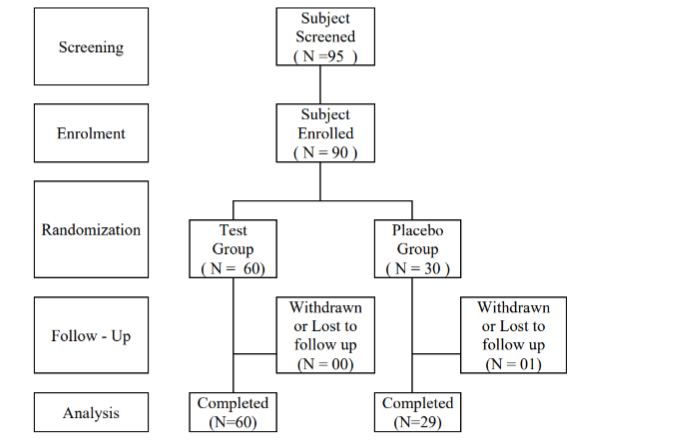
On receiving informed consent, ninety-five subjects were screened for baseline determinations of inclusion criteria, medical condition, vital signs, physical examination, concomitant medication, adverse event/ serious adverse event reporting. Assessment of Investigational product compliance was carried out at each visit. Efficacy parameter evaluation were carried out at randomization and each follow up and end of study visit. At randomization visit, ninety subjects were randomized in the study either in test group or in placebo group in a 2:1 ratio. More patients were placed in the test group for a comprehensive representation of results. Screening and randomization were considered as visit 1, which was either on same day or on different day. 60 subjects were given Test product Health OK tablet, and 30 subjects were given placebo. They were informed to take 1 tablet, either test or placebo once a day with a glass of water after meal. A second visit was scheduled after 2 weeks, third visit at 4 weeks, fourth visit at 8 weeks and fifth visit at 12 week which was the end of the study (EOS). Subjects were assessed for medical condition, vital signs, physical examination, concomitant medication, adverse event/ serious adverse event reporting, assessment of the investigational product compliance at each visit. Efficacy parameter evaluation was carried out at randomization visit, each follow up and end of study visit. Parameters like questionnaire of general well-being, energy and fatigue, mental alertness and memory were evaluated. At screening and at end of study visit the laboratory investigations i.e., CBC (Complete Blood Count), IFN- γ, Fasting Glucose, Fasting Insulin, Plasma Lactate, Oxidative stress markers such as superoxide dismutase, reduced glutathione and malondialdehyde, were carried out.
ENDPOINTS
The primary objective was to assess general well-being changes over a 12-week treatment period, as measured by the Cohen-Hoberman Inventory of Physical Symptoms (CHIPS) questionnaire. CHIPS was designed to gauge the perceived burden of various physical symptoms, encompassing 33 common everyday ailments such as acne, diarrhea, and heart palpitations. Respondents rated the extent to which each symptom bothered or distressed them during the past visit, using a scale from 0 to 4, with 0 indicating no bother and 4 indicating extreme bother. Higher scores indicated poorer health. The questionnaire was administered at baseline and all subsequent visits to track changes over time.
The secondary endpoints were mean change in laboratory parameters (CBC, fasting glucose, fasting insulin, plasma lactate), immune/inflammatory response correlating with IFN- γ levels, markers of oxidative stress (malondialdehyde, superoxide dismutase and reduced glutathione), energy and fatigue, mental alertness, memory, cardiovascular reactivity, blood pressure, heart rate, and the rate of infection from baseline and at 12 weeks (end of visit). Mental Alertness was evaluated by Bond and Lader Visual Analogue Scales (BL-VAS) which consists of 16 (8 right-handed and 8 left-handed) questions. Subjects had to rate the way they feel in terms of the dimensions given. The Memory Questionnaire was adapted from Multifactorial Memory Questionnaire (MMQ). Subjects rate items on a 5-point Likert scale reflecting their experiences since the last visit. MMQ-Satisfaction (previously named MMQ Contentment) evaluates satisfaction, concern, and overall evaluation of one’s memory. Each of the 18 statements is assessed based on the degree of agreement, with scores ranging from 0 to 72. Higher scores signify increased satisfaction levels.
STATISTICAL ANALYSIS
Mean change in efficacy parameters from baseline to end of study were analyzed using unpaired “t” test depending upon the distribution of data. All tests were conducted with two-sided analysis. A p-value less than 0.05 was indicative of a statistically significant difference between the treatment groups. The data was presented as mean ± Standard deviation of treatment difference. Within group comparison was performed using paired t test.
RESULTS
The study was conducted in 90 (89 completed) male subjects (Figure 1). Total number of product usages was 7479 (4969 test and 2510 placebo) tablets after visit. 98.59 % and 99.60 % usages were observed by the subjects of the test and placebo group respectively.
EFFICACY In the test group 56.67% subjects reported improvement clinically in general well-being while in placebo group, improvement was seen in 30% subjects only (Figure 2). Out of a total of 60 subjects in test group, 34 subjects reported an improvement in general well-being, as compared to 9 subjects in the placebo group. While there was no statistically significant change noted in the general well-being in between test and placebo, subjects in test group showed improvement clinically. Non-significant data is the result of variety amongst subjects. Change in score provide information about the improvement in symptoms specified in general well-being questionnaire at end of study visit compared to baseline in test group. So, it can be concluded that although there was no statistical significance seen between test and placebo group, there was clinical improvement in symptoms (CHIPS score) that bothers or distress subject on day-to-day life which were on test treatment.
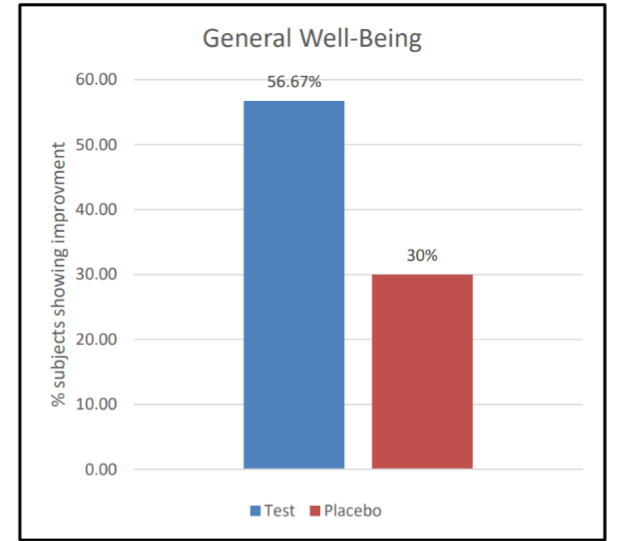
A higher proportion of test subjects showed improvement in general well-being than the control. Change in Energy and Fatigue Questionnaire (EFQ) score was compared from baseline to each visit. The test and placebo groups were comparable in terms of the EFQ score. 45% of the test subjects and 33.33% of the control subjects showed improvement in the EFQ score. The test group (15%) showed a greater increase in the Energetic score than the control (8.6%) group. Similarly, the reduction in the Fatigue score was more in the test (27.38%) group than the control (12.82%) group. The improvements in the EFQ scores were visible by Day 14. Notably, subjects in the test group showed decrease in EFQ scores by 0.20 while subjects in the control group exhibited increase in EFQ scores by 0.21 at visit 2 from baseline.
Change in Mental Alertness (BL-VAS score) was compared from randomization visit to each visit. Results revealed that in the test group, parameters such as clearheaded, relaxed, proficient, amicable, and gregarious were improved however, there was no statistically significant (p>0.05) change noted between test and placebo group. It implies that from baseline to EOS, subjects’ alertness increased in above mentioned parameters. 61.67% of test subjects reported an increase in alertness compared to placebo, it is. 43.33% of subjects only. 37 ff the 60 subjects in the test group reported an increase in mental alertness, compared to 13 subjects in the placebo group. Thus, clinically the subjects taking test product reported with increase in alertness compared to placebo.
Change in memory was compared at all visits. Results showed that there was an improvement in the memory of the test group from baseline to End of study. Though, there was no statistically significant (p>0.05) change noted in memory between test and placebo group. After evaluating the total score of the memory questionnaire, the change can be seen in test group subjects which were higher i.e., 50% of subjects reported an increase in memory score. While in placebo group, only 30% of subjects reported improvement in memory questionnaire. No changes were observed during the initial visits like week 2 and week 4, but after week 8 and 12, subjects in test group reported improvement in memory questionnaire as compared to placebo. From baseline to end of study visit, change was seen as 4.85 and 3.21 in test and placebo respectively. 50% of test subjects showed improvement in memory after receiving treatment for 12 weeks compared to only 30% of people in the placebo group. Of the 60 subjects in the test group, 30 reported an increase in memory, compared to 09 in the placebo group.
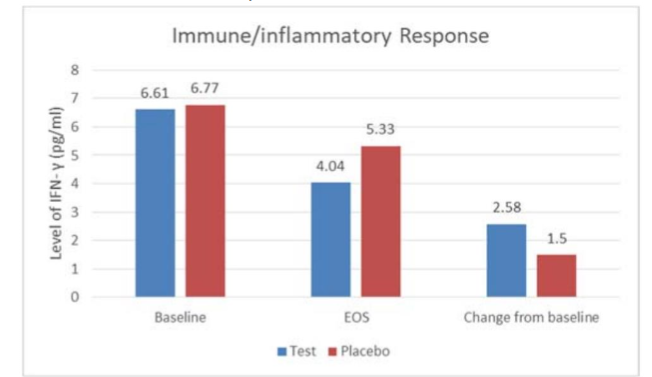
Change in immune/inflammatory response was compared between baseline and at 12 weeks (end of visit). There were no significant differences in immune/inflammatory response between test (6.61 pg/ml) and placebo group (6.77 pg/ml) at baseline. After 12 weeks of treatment, there was a statistically significant (p= 0.0191) change reported with IFN-γ response between test (4.04 pg/ml) and placebo (5.33 pg/ml) groups. The test group demonstrated a reduction of 2.58 pg/ml in the level of IFN-γ from baseline to end of study, which indicates improvement. The change from baseline was considerably lesser in the control group (1.5 pg/ml) than the test group. The change in IFN-γ was not statistically significant but there was a major difference considering the p-value of 0.057.
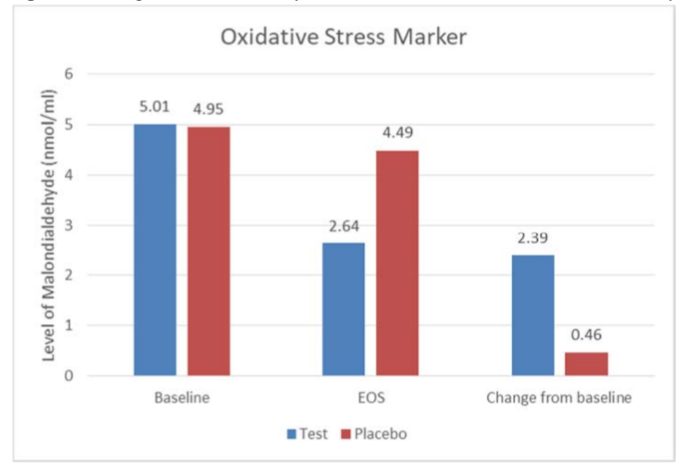
Change in oxidative stress markers was compared at baseline and at 12 weeks (end of visit). Result showed that the level of malondialdehyde was similar in both test group (5.01 nmol/ml) and placebo (4.95 nmol/ml) at baseline. Reported reduction of malondialdehyde at 84 days was statistically significant (p= 0.0001) in test group (2.64 nmol/ml) as compared to placebo (4.49 nmol/ml). The change from baseline to 84 days found in test group was 2.39 nmol/ml while in placebo group it was found to be 0.46 nmol/ml and same was also statistically significant (p= 0.0001) between test and placebo group.
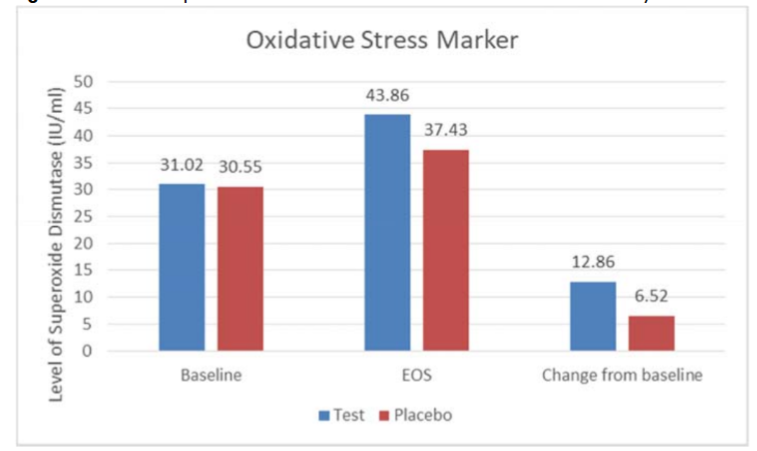
Change in superoxide dismutase was compared at baseline and at 12 weeks (end of visit). There were no observable differences at baseline between test (31.02 IU/ml) and placebo (30.55 IU/ml). Reported superoxide dismutase level increased at 84 days was statistically significant (p=0.0261) in test group (43.86 IU/ml) as compared to placebo (37.43 IU/ml). The change from baseline to 84 days found in test group was 12.86 while in placebo group it was found to be 6.52 and same was not statistically significant (p= 0.0830) between test and placebo group.
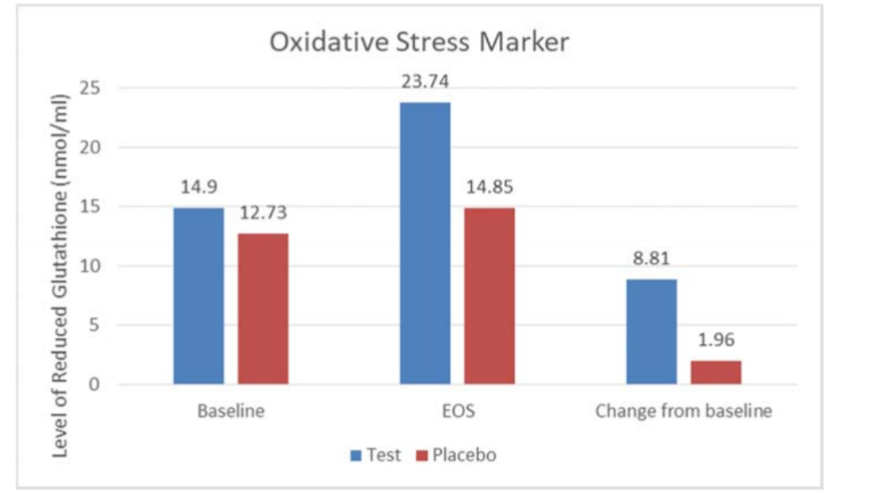
Change in reduced glutathione was compared from baseline and at 12 weeks (end of visit). Results showed that the reduced glutathione was high in the test group (14.9 nmol/ml) as compared to placebo (12.73 nmol/ml) at baseline. Reported reduced glutathione at 84 days was statistically significant (p= 0.0058) in test group (23.74 nmol/ml) as compared to placebo (14.85 nmol/ml). Change from baseline to 84 days found in test group was 8.81 nmol/ml while in placebo group it was found to be 1.96 nmol/ml and same was statistically significant (p= 0.0119) between test and placebo group.
SAFETY
The safety analysis was performed for all participants who received at least a single dose of any of the treatment group. In the current study, there was no Serious Adverse Event (SAE) reported after receiving the treatment. Total 08 adverse events (AEs) were reported (test=6, control=2), 07 AEs were mild in nature and 01 was moderate.
| Adverse event, n (%) | Test (N=60) | Placebo (N=30) | Overall (N=90) |
|---|---|---|---|
| Subjects who reported at least one AE | 06 | 02 | 08 |
| Total AE reported | 06 (10%) | 02 (6.67%) | 08 (8.89%) |
Abbreviations: N= number of subjects in specified treatment; n= number of subjects having non-missing values at specified visit
There was no treatment attributable to severe adverse events suggesting that the treatment is safe in this population.
DISCUSSION
Public health recommendations encourage the selection of a nutritionally adequate diet to foster health and well-being. A balanced diet maximizes physical performance, reduces the chance of inflammatory injury, and promotes immune recovery. Limited intake of vitamins and minerals adversely impacts metabolic capacity. An energy-dense and nutritionally balanced supplement containing vitamins, minerals, amino acids, and herbs in different amounts and combination is the best suited option to overcome dietary inadequacy. Thus, we conducted a prospective, randomized and placebo-controlled clinical study to evaluate the effect of the nutritional supplement “Health OK” (test group) on general well-being, oxidative stress, inflammation, energy and fatigue, mental alertness and memory in healthy male subject in a sedentary occupation or doing little exercise.
In the current study, general wellbeing was assessed using the CHIPS questionnaire. 56.67% of the test subjects showed clinical improvement compared to 30% of the control subjects. Despite the lack of statistical significance between the test and placebo groups, the evidently higher proportion of test subjects exhibiting clinical benefit indicate superior quality of life for those receiving the test treatment. Our results are consistent with Cjaka A et al (2018) who reported efficacy of vitamin and mineral supplementation on the overall well-being of healthy individuals, with over 93% of participants expressing a willingness to continue using the regimen.
Dietary supplementation with vitamins and minerals has been observed to improve subjective mood and performance in healthy males. Cognitive decline is evident throughout life. Higher past intake of vitamins is associated with better visuospatial recall performance. Increasing evidence suggests that dietary supplementation with specific vitamins, minerals, and botanical extracts has the potential to enhance memory parameters, thereby impacting cognitive function. In our study half of the study subjects reported increase in memory and mental alertness post-intervention which was observably better than placebo. These findings suggest that cognitive improvement may have occurred due to either the additive effects of the key nutrients including vitamins, minerals, and herbs or through specific nutrients such as multivitamins. It is plausible that augmenting these nutrients through dietary supplementation could have had a positive impact on the functioning and resiliency of the nervous system. Ginseng was the main herbal ingredient of the test product.
Ginseng is an herb in the Araliaceae family. Its active ingredient is steroidal saponins called ginsenosides which have antioxidative, anti-apoptotic, and immune stimulatory effects. Ginseng is reported to improve cognitive markers related to the decision-making process in healthy individual.
We observed superior effects of the test supplementation on inflammatory and oxidative stress markers. Following an 84-day treatment period, the test group exhibited a notable reduction in Malondialdehyde compared to the placebo group. Malondialdehyde serves as a widely employed biomarker of oxidative stress across a spectrum of diseases. The test product comprised of taurine which is a fundamental mediator of homeostasis conferring protection against oxidant stress. Taurine is cytoprotective to muscle-induced oxidative damage. Optimal taurine dosages have the potential to effectively regulate reactive oxygen species (ROS) generation within cells, thereby enhancing muscle performance. Taurine has been demonstrated to improve, malondialdehyde, superoxide dismutase, reduced glutathione and catalase activities. Maleki V (2020) et al demonstrated significant reduction in the serum levels of malondialdehyde along with a significant increase in the antioxidant activities of superoxide dismutase (SOD) with taurine supplementation in type 2 diabetic people.
Ginseng is also reported to modify biomarkers of oxidative stress in humans. Eight weeks of ginseng supplementation increased SOD, glutathione peroxidase and catalase activity in healthy subjects and displayed decreased malondialdehyde levels in post-menopausal women.
SOD serves as the primary defense mechanism against injury caused by reactive oxygen species (ROS). Novel SOD mimetics have demonstrated the unique ability to not only attenuate aging-induced cognitive impairments but also subdue other aspects of physiological decline. In the present study, SOD activity was significantly elevated with test supplementation. Other than taurine and ginseng, other ingredients of the test product such as vitamin D and E might also have contributed to the superior antioxidant properties of the test product. Vitamins E and D, are potent antioxidants that increase the activities of erythrocyte SOD and catalase in patients with skin inflammation. Adjunctive vitamin E supplementation promotes gum healing post-inflammation, and also strengthens the antioxidant defense mechanism.
Our findings revealed that after the treatment period, the concentration of reduced glutathione significantly increased in test group than placebo. Glutathione (GSH) serves as a crucial endogenous antioxidant present in all eukaryotic cells. Elevated GSH levels exhibit robust cytoprotective properties, offering a potential therapeutic avenue to preserve cellular integrity and decelerate degeneration tissues in diverse pathologies. However, intact GSH absorption by most cells is limited. Dietary GSH undergoes metabolism in the jejunum via γ-glutamyltransferase (GGT) into constituent amino acids like glycine, glutamate, and cysteine. Modifying the individual amino acid levels, either directly or indirectly, represents a viable approach to regulate cellular GSH balance. Additionally, supplementation with key micronutrients such as vitamin C and E, and certain non-precursor amino acids, can modulate the redox state of antioxidants such as GSH, consequently mitigating systemic oxidative stress and decelerating tissue deterioration.
On safety, no drug related SAE were reported in subjects receiving either test product or placebo. In total there were 08 AEs observed out of which 07 AEs were mild in nature and 01 was moderate. All AEs were related to subnormal laboratory parameters, and they were treated without affecting the study. No subject discontinued from the study due to adverse events. There was no change observed in laboratory parameters such as CBC, fasting glucose, fasting insulin, plasma lactate and cardiovascular reactivity amongst the two groups. The mean value of each vital sign (blood pressure, pulse, respiratory rate, and oral body temperature) was within a clinically acceptable range.
LIMITATIONS OF THE STUDY
As a diverse blend of multiple nutrients was used in the study, the specific effects of individual ingredients could not be ascertained.
CONCLUSION
Vitamins and minerals are indispensable to human physiology, as they fulfill pivotal roles in numerous fundamental metabolic pathways crucial for supporting basic cellular functions. Our results showed that the test product Health OK supplement, was effective in improving the general- wellbeing compared to placebo in healthy male subjects after 84 days of treatment. Improvement in energy scores were visible within 14 days in the test group compared to the placebo. The potential effectiveness of the test product was demonstrated by the significant improvement in the immune and inflammatory responses and biochemical markers of oxidative stress such as superoxide dismutase, reduced glutathione, and malondialdehyde. Additionally, it also improved the memory and mental alertness parameters which extends its efficacy. The product was safe and well tolerated by the subjects during as well as after study duration. Our study data supports the effectiveness of HEALTH OK in improving markers of general wellbeing and metabolic health markers conferring robust health benefits to the consumers.
CONFLICT OF INTEREST
The authors report no conflicts of interest in this work
ACKNOWLEDGEMENT:
The authors thank Dr. Punit Srivastava and Dr. Esha Singh of Mediception Science Pvt. Ltd (www.mediception.com) for providing medical writing support in the preparation of this publication.
References
1. EFSA Panel on Nutrition, Novel Foods and Food Allergens (NDA), Turck D, Bohn T, et al. Scientific advice related to nutrient profiling for the development of harmonised mandatory front‐of‐pack nutrition labelling and the setting of nutrient profiles for restricting nutrition and health claims on foods. EFSA J. 2022;20(4). doi:10.2903/j.efsa.2022.7259
2. Vitamins and Minerals. NCCIH. Accessed May 11, 2023. https://www.nccih.nih.gov/health/vitamins-and-minerals
3. Chugh PK, Lhamo Y. An Assessment of Vitamin Supplements in the Indian Market. Indian J Pharm Sci. 2012;74(5):469-473. doi:10.4103/0250-474X.108431
4. Zhang FF, Barr SI, McNulty H, Li D, Blumberg JB. Health effects of vitamin and mineral supplements. The BMJ. 2020;369:m2511. doi:10.1136/bmj.m2511
5. Chandel NS. Amino Acid Metabolism. Cold Spring Harb Perspect Biol. 2021;13(4):a040584. doi:10.1101/cshperspect.a040584
6. Schaffer S, Kim HW. Effects and Mechanisms of Taurine as a Therapeutic Agent. Biomol Ther. 2018;26(3):225-241. doi:10.4062/biomolther.2017.251
7. LeVatte M, Keshteli AH, Zarei P, Wishart DS. Applications of Metabolomics to Precision Nutrition. Lifestyle Genomics. 2022;15(1):1-9. doi:10.1159/000518489
8. Wee JJ, Mee Park K, Chung AS. Biological Activities of Ginseng and Its Application to Human Health. In: Benzie IFF, Wachtel-Galor S, eds. Herbal Medicine: Biomolecular and Clinical Aspects. 2nd ed. CRC Press/Taylor & Francis; 2011. Accessed May 11, 2023. http://www.ncbi.nlm.nih.gov/books/NBK92776/
9. Tardy AL, Pouteau E, Marquez D, Yilmaz C, Scholey A. Vitamins and Minerals for Energy, Fatigue and Cognition: A Narrative Review of the Biochemical and Clinical Evidence. Nutrients. 2020;12(1):228. doi:10.3390/nu12010228
10. Levy MA, McKinnon T, Goldfine H, Enomoto A, Schneider E, Cuomo J. Consumption of a multivitamin/multimineral supplement for 4 weeks improves nutritional status and markers of cardiovascular health. J Funct Foods. 2019;62:103511. doi:10.1016/j.jff.2019.103511
11. Lerman RH, Desai A, Lamb JJ, Chang JL, Darland G, Konda VR. A Phytochemical-rich Multivitamin-multimineral Supplement Is Bioavailable and Reduces Serum Oxidized Low-density Lipoprotein, Myeloperoxidase, and Plasminogen Activator Inhibitor-1 in a Four-week Pilot trial of Healthy Individuals. Glob Adv Health Med. 2014;3(2):34-39. doi:10.7453/gahmj.2013.098
12. Bond A, Lader M. The use of analogue scales in rating subjective feelings. Br J Med Psychol. 1974;47(3):211-218. doi:10.1111/j.2044-8341.1974.tb02285.x
13. Baycrest Centre – Multifactorial Memory Questionnaire. Accessed May 12, 2023. http://www.baycrest.org/Baycrest/Healthcare-Programs-Services/Clinical-Services/Neuropsychology-Cognitive-Health/Clinical-Tools/Multifactorial-Memory-Questionnaire
14. Office of Dietary Supplements – Dietary Supplements for Exercise and Athletic Performance. Accessed May 12, 2023. https://ods.od.nih.gov/factsheets/ExerciseAndAthleticPerformance-Consumer/
15. Czajka A, Kania EM, Genovese L, et al. Daily oral supplementation with collagen peptides combined with vitamins and other bioactive compounds improves skin elasticity and has a beneficial effect on joint and general wellbeing. Nutr Res N Y N. 2018;57:97-108. doi:10.1016/j.nutres.2018.06.001
16. Kennedy DO, Veasey R, Watson A, et al. Effects of high-dose B vitamin complex with vitamin C and minerals on subjective mood and performance in healthy males. Psychopharmacology (Berl). 2010;211(1):55-68. doi:10.1007/s00213-010-1870-3
17. La Rue A, Koehler KM, Wayne SJ, Chiulli SJ, Haaland KY, Garry PJ. Nutritional status and cognitive functioning in a normally aging sample: a 6-y reassessment. Am J Clin Nutr. 1997;65(1):20-29. doi:10.1093/ajcn/65.1.20
18. Macpherson H, Ellis KA, Sali A, Pipingas A. Memory improvements in elderly women following 16 weeks treatment with a combined multivitamin, mineral and herbal supplement: A randomized controlled trial. Psychopharmacology (Berl). 2012;220(2):351-365. doi:10.1007/s00213-011-2481-3
19. Cambria C, Sabir S, Shorter IC. Ginseng. In: StatPearls. StatPearls Publishing; 2023. Accessed May 12, 2023. http://www.ncbi.nlm.nih.gov/books/NBK538198/
20. Yeo HB, Yoon HK, Lee HJ, Kang SG, Jung KY, Kim L. Effects of Korean Red Ginseng on Cognitive and Motor Function: A Double-blind, Randomized, Placebo-controlled Trial. J Ginseng Res. 2012;36(2):190-197. doi:10.5142/jgr.2012.36.2.190
21. Khoubnasabjafari M, Ansarin K, Jouyban A. Reliability of malondialdehyde as a biomarker of oxidative stress in psychological disorders. BioImpacts BI. 2015;5(3):123-127. doi:10.15171/bi.2015.20
22. Baliou S, Adamaki M, Ioannou P, et al. Protective role of taurine against oxidative stress. Mol Med Rep. 2021;24(2):605. doi:10.3892/mmr.2021.12242
23. Thirupathi A, Pinho RA, Baker JS, István B, Gu Y. Taurine Reverses Oxidative Damages and Restores the Muscle Function in Overuse of Exercised Muscle. Front Physiol. 2020;11. Accessed May 12, 2023. https://www.frontiersin.org/articles/10.3389/fphys.2020.582449
24. Castelli V, Paladini A, d’Angelo M, et al. Taurine and oxidative stress in retinal health and disease. CNS Neurosci Ther. 2021;27(4):403-412. doi:10.1111/cns.13610
25. Maleki V, Mahdavi R, Hajizadeh-Sharafabad F, Alizadeh M. The effects of taurine supplementation on oxidative stress indices and inflammation biomarkers in patients with type 2 diabetes: a randomized, double-blind, placebo-controlled trial. Diabetol Metab Syndr. 2020;12(1):9. doi:10.1186/s13098-020-0518-7
26. Lee YM, Yoon H, Park HM, Song BC, Yeum KJ. Implications of red Panax ginseng in oxidative stress associated chronic diseases. J Ginseng Res. 2017;41(2):113-119. doi:10.1016/j.jgr.2016.03.003
27. Younus H. Therapeutic potentials of superoxide dismutase. Int J Health Sci. 2018;12(3):88-93.
28. Javanbakht M, Keshavarz S, Mirshafiey A, et al. The Effects of Vitamins E and D Supplementation on Erythrocyte Superoxide Dismutase and Catalase in Atopic Dermatitis. Iran J Public Health. 2010;39(1):57-63.
29. Singh N, Chander Narula S, Kumar Sharma R, Tewari S, Kumar Sehgal P. Vitamin E supplementation, superoxide dismutase status, and outcome of scaling and root planing in patients with chronic periodontitis: a randomized clinical trial. J Periodontol. 2014;85(2):242-249. doi:10.1902/jop.2013.120727
30. Gould RL, Pazdro R. Impact of Supplementary Amino Acids, Micronutrients, and Overall Diet on Glutathione Homeostasis. Nutrients. 2019;11(5):1056. doi:10.3390/nu11051056