


Impact of Screen Use on Executive Functions in Youth
Effects of screen´s use on executive functions from the perception of parents and children: A case study in the age group 9 to 16 years old in Asunción, Paraguay, 2024-2025
Peggy Martínez Stark 1, Bernardita Stark 2, María del Rocío Robledo 3
- Social and Educational Development Programs Consultant, Paraguay
- Universidad San Carlos de Asunción, Paraguay
- Center for the Development of Competitiveness, Paraguay
OPEN ACCESS
PUBLISHED: 30 June 2025
CITATION: Author1, X., Author2, Z., et al., 2025. Effects of screen’s use on executive functions from the perception of parents and children: A case study in the age group 9 to 16 years old in Asunción, Paraguay, 2024–2025. Medical Research Archives, [online] 13(7).
https://doi.org/10.18103/mra.v13i7.6696
COPYRIGHT: © 2025 European Society of Medicine. This is an open-access article distributed under the terms of the Creative Commons Attribution License, which permits unrestricted use, distribution, and reproduction in any medium, provided the original author and source are credited.
DOI https://doi.org/10.18103/mra.v13i7.6696
ISSN 2375-1924
Abstract
The study titled “Families’ Perception of the Psychological Effects of Screen Use During the COVID-19 Pandemic and Post-Pandemic in Children Aged 4 to 12 Years” led to this follow-up research. This investigation involves educators observing behavioral changes in children aged 9 to 16, specifically focusing on limitations in executive functions. The paper compares responses from children, adolescents, and their parents regarding these executive functions during psychological and psychopedagogical evaluations conducted in Asunción, Paraguay, during the 2024-2025 period. A sample of 30 children, consisting of 14 boys and 16 girls, was examined. The research focused on essential problem-solving skills such as motor skills, inhibition, cognitive flexibility, emotional control, planning, material organization, initiative, and working memory. Many children and adolescents displayed behavioral dysregulation and symptoms of attention deficit disorder, with difficulties in inhibiting hyperactivity and impulsivity. Others demonstrated apathy, lack of motivation, and reduced initiative. Previous research indicates that executive functions are often impaired in various neurological and psychopathological conditions, leading to behavioral challenges that affect social interactions, language development, and learning processes.
Keywords
- Executive functions
- Monitoring
- Inhibition
- Cognitive Flexibility
- Emotional Control
- Planning
- Organization of Materials
- Initiative
- Working Memory
1 Introduction
For several decades, the effects caused by using screens in various areas have been debated. Around the nineties, for example, the concern was focused on the hours spent watching television and video games. On the other hand, the use of computers in the workplace was a concern, especially in terms of visual fatigue and postural consequences such as muscle pain. From the massification and evolution of technologies, concern and therefore research increases. Thus, different edges are revealed, especially in children, due to their greater lability, as their process of growth and development is underway. The development of executive functions could be affected by exposure to screens without control or accompaniment. In this scenario, the perception of the parents is essential both for the recognition of possible alterations in development and for accompaniment to prevent or correct them. From here, interest arises in carrying out this research, to have a vision in our environment, which includes the possible effect on executive functions in children and adolescents exposed to screens, and the perception of their parents and their ability of accompaniment in this situation. Thus, this study focuses on a group of students referred by educational institutions to a psychopedagogical consultant. The aim is to investigate the origins of learning difficulties experienced by these children and adolescents in the classroom.
2 Background and basic concepts
2.1 EXECUTIVE FUNCTIONS
Executive functions (EF) are the higher cognitive processes involved in the control of thought, action and emotion, linked to the systems of the prefrontal cortex according to studies by Zuñiga et al that includes components such as working memory, flexibility and inhibition. EFs are present from birth and have continuous development, increasing in adolescence. Much of the research shows that limitations in executive functions are involved in some developmental disorders and correlated with the social understanding of their progress or the limitation of it. Both biological and environmental factors influence the development of EFs. For example, regular physical activity has a positive impact on the development of EF in children. Additionally, high-quality early education can benefit cognitive development, including executive functions (EFs), particularly in children from disadvantaged backgrounds. Given the importance of EF in the integral development of children and adolescents, much literature has devoted its attention to it, especially in the last decade, in which difficulties in their development and their impact on learning have been observed. The studies aim to describe executive functions from different perspectives and are defined “as a surveillance device that modulates the operation of several cognitive subprocesses, controlling the dynamics of human cognition, the control of thought, behavior and affectivity as well as the fundamental skills that are a function of EF”. These processes show prolonged progress, culminating in their maturation at the end of adolescence. It is essential to recognize that executive functions are a complex construct, encompassing cognitive and metacognitive processes that are also intricate, as they involve neuroanatomical characteristics typically associated with the functioning of the frontal lobes of the cerebral cortex. The first approach to the definition of EF dates to 1982, carried out by Lezak. In the process of identifying and defining these, different theoretical perspectives have been tried, from which could point out the existence of two approaches that allow us to understand executive functions as the product of a set of factors or as a single central factor. In favor of this first hypothesis, Gioia et al. affirm that there are three primary components of executive functions: behavioral regulation, made up of personal inhibition and monitoring; metacognition, made up of working memory, initiative, planning, organization of materials and monitoring of tasks, and emotional regulation: made up of emotional control, and flexibility. However, Brown grouped EF into the following dimensions: 1. activation, which comprises organization, priority setting, and initiative to work; 2. concentration, which encompasses the voluntary regulation of attention, effort, alertness, and speed of information processing; 3. emotion, whose function is the regulation of frustration and emotions; memory includes working memory and organization of the information acquired; and finally, 4. action, made up of self-monitoring and self-regulation. Likewise, the findings of Mulder and Cragg, Jacob and Parkinson and Reyes, Barreyro and Injoque-Ricle assert that EF have a direct relationship with academic performance, since these high-level cognitive functions would be factors that can determine the success or failure of a student in the educational context. In this sense, Meltzer notes that a student’s academic success depends on their ability to plan and prioritize time, organize available materials and information, and distinguish between fundamental and peripheral ideas.
2.2 NEUROBIOLOGICAL MODEL
Other studies on executive function are based on the neurobiological model, which defines executive functioning as being primarily composed of the neuroanatomical aspect. This aspect is responsible for generating and sustaining complex manifestations of human behavior. Three fundamental factors characterize the neurobiological model: Behavioral factor: organized in the orbitofrontal regions of the prefrontal areas, and this factor is responsible for the composition and structure of the personality, the integrity of the behavior, and the actions of the subject, aimed at supervising and regulating behavior aimed at solving problems and executing tasks. Cognitive factor: this element encompasses the dorsolateral region of the prefrontal cortex, which plays a pivotal role in providing cognitive support for the temporal organization of behavior, language, and reasoning. Damage to this area can result in significant impairments, making individuals unable to formulate plans or sequence actions effectively. Ability to move spontaneously and independently: it is related to the emotional factor since injuries in this area lead to the loss of spontaneity, apathy, and disinterest in the subject’s environment, as well as continuous failures in ethical and moral dilemmas.
2.3 NEUROPSYCHOLOGICAL MODEL
From this approach, standardized neuropsychological tests are used to assess executive functioning, thereby establishing the organizational structure of this mental function. In the same way, this model accepts the assumptions of the neurobiological model and focuses most of its studies on determining the factorial structure of executive function from the cognitive sphere; that is, it describes the cognitive factor while trying to identify the components and their relationships when the subject is exposed to a task that requires related skills and operations. In comparison, the first approach involves the concept of executive function, an extensive functional system based on the frontal lobes, specifically in the regions of the prefrontal cortex, which operates through its three factors in concert. Thanks to the components that each factor contributes to its continuous correlation, the expansion of skills and capacities related to planning, programming, cognitive and behavioral flexibility, inhibitory control, and behavioral review in human beings becomes viable. In the neuropsychological model, there is no set number of executive function (EF) factors because factor analyses focus on heterogeneous data from diverse populations and utilize different neuropsychological tests to measure them.
2.4 COGNITIVE, EMOTIONAL, AND BEHAVIORAL SKILLS THAT MAKE UP EXECUTIVE FUNCTIONS
The research conducted by Hughes offers a comprehensive review of the development of executive function over the past two decades (1990-2010). This study employs a broad and multidimensional approach, incorporating both methodological and conceptual parameters. a. The trajectories of the development of the Executive Functions b. The interaction between Executive Functions and other cognitive systems, c. The integration of cognitive and neurocognitive perspectives in Executive Functions, d. Environmental factors, whether positive or negative, affect the development of Executive Functions. Advances in assessment tools such as questionnaire construction and statistical analysis, as well as the structure of EFs, have generated progress in their measurement. Extensive research has resulted in the development of questionnaires aimed at measuring and evaluating executive functions. The EFECO questionnaire (Scale of Executive Functioning in Contexts for its acronym in Spanish) serves as an instrument for assessing executive functions from an ecological perspective, utilizing reports on individuals’ behavior in their daily lives. This adaptation significantly contributes to psychometric studies by facilitating the assessment of executive functions within Spanish-speaking contexts. Moreover, it has been developed in report formats for parents, teachers, and students, presenting a novel tool that enhances clinical evaluations of executive functions. The elements of the questionnaire are categorized into three distinct domains: emotional, cognitive, and behavioral.
In the emotional aspect:
- Flexibility or change of attentional focus: the person’s ability to adapt to novel, changing or unexpected situations. This ability allows behavior to be modified, when necessary, based on external demands, without disconnecting, adapting to changes easily.
- Emotional control: reflects the influence of EF on the expression and regulation of emotions; self-regulation refers to the ability to control attention and behavior, behavior and emotion, and goal-directed action. Emotional control is a concept closely related to classroom performance and academic achievement. Numerous studies highlight the benefits of presenting adequate self-regulation, which correlates with greater concentration, cooperation in the classroom, and better academic results. In addition, it has been shown that the ability to self-regulate is susceptible to improvement and the results found so far in the field of intervention in clinical and academic settings seem promising, especially in early childhood, as it is a critical period of development during which achieving small changes can be very beneficial in the long term. It is important to find educational practices that build self-regulation skills in all children, especially those with specific needs.
In the cognitive aspect:
- Initiative: the capacity to begin a task or activity without external prompting. It involves generating ideas, solutions, or strategies independently. Additionally, initiative leads to decision-making, which is the ability to choose the most beneficial option from various available alternatives.
- Working memory: The capacity to retain information in the mind for the purpose of completing tasks, recording and storing data, or generating objectives. Working memory is crucial for performing multiple or concurrent activities such as arithmetic calculations or following complex instructions. It plays a significant role in learning processes, including following directions, reading, writing, and mental arithmetic. It is often impaired in students with learning difficulties, who require assistance through compensatory strategies and methodologies.
- Planning: involves preparing a plan and carrying out the actions established in it. This skill is important for effective time management in academic tasks and daily activities, such as meals or hygiene routines. A child with difficulties in organization and planning may perform tasks impulsively, disorganized, or slowly, making more mistakes than a child with developed planning skills, and often requires external supervision to complete tasks effectively.
- Organizational capacity: This executive function contributes to the ability to develop a work plan by appropriately organizing information and prioritizing it according to a structured plan. It involves the ability to identify general ideas or concepts during the learning process or the communication of oral or written information. Another aspect of organization is the ability to order items in the environment. This includes maintaining order in work items, toys, closets, desks, or other storage places, as well as ensuring the materials needed to perform tasks are readily available.
Behavior:
- Inhibition: The capacity to regulate behavior and suppress impulsive reactions, while disregarding irrelevant stimuli to achieve task completion. It encompasses attentional control, including both selective and sustained attention, as well as the inhibition of automatic behaviors. Essentially, it is the ability to concentrate on a singular task by eliminating distractions.
- Motorization: The capacity to adjust and respond effectively to new, changing, or unforeseen circumstances. This encompasses the capacity to monitor the correct execution of plans and actions and self-correct when necessary. Specifically, it requires an awareness of instances where responses do not align with expected outcomes and the ability to make appropriate corrections. A deficit in this executive function can be associated with challenges in recognizing and rectifying one’s mistakes and effectively generalizing learning experiences.
3 Parents’ perception of executive functions
3.1 THE ROLE OF PARENTS IN THE DEVELOPMENT OF EXECUTIVE FUNCTIONS
Studies have examined the influence of parenting on executive functions, specifically focusing on bonding, formative, protective, and reflective parental competencies’ impact on inhibition and planning. The results indicated that all parental competencies significantly affect children’s planning skills, while only protective parental competencies influence the inhibition of executive functions, which contribute to cognitive and socio-affective development in children. Parents’ perceptions of executive functions (EFs) are influenced by various factors. Research indicates that parents’ socioeconomic status and educational level have a positive correlation with children’s performance on objective executive function measures. This suggests that parents from higher socioeconomic backgrounds may perceive their children as exhibiting superior executive functioning skills. Executive functions are not merely inherent cognitive abilities, but rather skills that are cultivated and enhanced throughout one’s life, significantly influenced by the environment in which a child is raised, particularly the familial setting. Parents play a crucial role in this developmental process through their interactions with their children, the emotional support they provide, and the way they organize the daily environment. The promotion of problem-solving, autonomous decision-making, and engagement in activities requiring concentration and effort by parents is vital for the robust development of children’s executive functions.
3.2 PARENTS’ PERCEPTIONS OF CHILDREN’S BEHAVIOR:
The study illustrates how parents’ perceptions of their children’s behavior can affect their ability to effectively support the development of executive functions. For instance, parents who perceive that their child struggles with concentration or self-control may be more inclined to implement strategies aimed at enhancing attention and self-regulation. In certain situations, parents may underestimate their children’s capabilities, resulting in overprotection or setting unduly low expectations. This type of perception can also impact decisions regarding early intervention and the necessary support to improve children’s executive functions.
4 Methodology
4.1 METHOD: THE CASE STUDY
The case study methodology is used in several disciplines such as medicine, psychology and law to study atypical phenomena or about which little or no information is known. The bases for its development are to be found in Marx and Weber, in their studies on capitalism, Durkheim, in his sociological studies, and Freud, in the field of capitalism. The case study is a rigorous methodology suitable for investigating phenomena in which it is sought to respond to how and why they occur, allow the study of a given topic, from different perspectives, deepen knowledge and broaden understanding, which allows the emergence of other topics or aspects not considered. In the case study, the design and strategies for data collection and analysis are crucial in establishing the credibility of the conclusions.
4.2 TYPOLOGY OF CASE STUDIES
- Descriptive: more focused than explanatory cases, its purpose is to account for a problematic situation in terms of a logic centered on a primary analysis of the subject/object of study.
- Illustrative: descriptive in nature, it is intended to add realism and background examples to the rest of the information about a program, project, or policy.
4.3 METHODOLOGY EMPLOYED
The methodology for assessing executive functions from the perception of parents and children in children aged 9 to 16 is mixed. It combines quantitative and qualitative instruments to obtain a comprehensive and comparative view of both perspectives. The study employs a parallel approach by administering questionnaires and conducting interviews with parents and children separately. This method ensures confidentiality and prevents any mutual influence on their responses. Triangulation is used to compare the results from both methods and informants, which helps to highlight similarities and differences in perceptions of executive function. For the analysis, descriptive statistical methods will be used for the questionnaire data, while thematic analysis will be applied to the interview responses. The findings from both approaches will be integrated to provide a deeper understanding of the phenomenon. In terms of ethical and practical considerations, informed consent will be obtained from parents, as well as consent from the children. Additionally, the language and format of the instruments will be tailored to be age-appropriate for the participants. This methodology allows the quantification of difficulties or strengths in executive functions and the understanding of how parents and children interpret and value these skills in daily life, which enriches the diagnosis and educational or clinical intervention.
4.4 AIM AND SCOPE
The aim of this research is to describe and compare the perceptions of parents and children/adolescents aged 9 to 16 regarding executive functions. The focus is on identifying strengths and weaknesses in key areas such as working memory, inhibition, flexibility, and planning. The study takes place within family and school contexts, and its results are intended to support the development of psychopedagogical and educational interventions tailored to the identified needs. This approach enables us to understand not only the level of development of executive functions but also how these functions are perceived and valued by those who guide and support the growth and learning processes. The research evaluates executive functions based on the perceptions of both parents and children aged 9 to 16 years. This study is descriptive comparative in nature, aiming to identify, characterize, and compare how these two groups view the executive skills of children and adolescents within this age range.
4.5 POPULATION AND SAMPLE SELECTION
This study utilized a non-random clinical sample of 30 children and adolescents. Regarding adolescents, eleven (11) girls and three (3) boys, aged 12 to 17 years, were evaluated. For the children, the ages ranged from 9 to 11 years old, comprising nine (9) boys and seven (7) girls, all with a normal IQ and, in two cases, a higher IQ according to the EDINT3 (Intellectual Development Scales, for its acronym in Spanish) results. The sample comprises referrals made by private educational institutions for the attention and guidance of a psycho-pedagogical consultant over a one-year period, from January 2024 to January 2025. This data is based in Asunción, the capital city of Paraguay. The parents included in the study have university academic training in various areas of knowledge and an average age of 45 years.
4.6 OBJECTIVES
General objective:
The research objectives regarding executive functions (EF) focus on understanding the perspectives of both parents and children within the 9 to 16 age group, in Asunción, Paraguay (from January 2024 to January 2025).
Specific objectives:
- Understand how parents’ perceptions of their children’s executive functions influence academic performance.
- Identify areas of agreement and disagreement regarding executive function between parents and children.
- Recognize challenges families face when executive function limitations affect academic and social behaviors.
- Investigate interventions aimed at enhancing executive function skills, focusing on parents’ perceptions.
The research is guided by the following questions:
- What executive functions showed less development according to the students’ responses during the consultation?
- What do parents report about the executive functions that are underdeveloped in their children?
- What common perceptions do parents and children share regarding the three aspects of executive functions (emotional, Cognitive, Behavior)?
- In what areas do parents’ perceptions of their children differ?
- What are parents’ expectations for children with limited executive functions, and what factors do they consider important for improvement?
4.7 INSTRUMENTS APPLIED
4.7.1 Questionnaire answered by children, adolescents, and parents for the evaluation of the behavior of Executive Functions.
It is an adaptation of a self-report version of the EFECO questionnaire by García-Gómez, which was tested in Latin America and adjusted for the Spanish-speaking population. One of the benefits of the EFECO questionnaire is its free-use condition, which joins interesting open-use proposals to assess executive functions, such as the PEBL platform. The Questionnaire has 43 items, and the scale ranges from strongly disagree (from 1 to 4) to strongly agree (from 9 to 6), where the neutral point for both scales is 5. The application is available online, lasts between 15 and 20 minutes, and includes a histogram of responses and a histogram of response times. Answers scored from 1 to 3.4 are shown in red, answers between 3.5 and 6.4 are in yellow, and 6.5 to 9 are in green. In other words, the answers are traffic lights. The questionnaire analyses and identifies indicators based on parents’ and children’s responses.
- Monitoring
- Inhibition
- Cognitive Flexibility
- Emotional Control
- Planning
- Material Organization
- Initiative
- Working Memory
4.7.2 Unstructured or open interview with parents:
Applied at the beginning of work with children, it allows for a more fluid conversation without a predefined script, enabling them to express their thoughts and feelings freely. The initial interview with parents allows us to obtain demographic data and gather information on the reason for consultation, including the child’s and adolescent’s situation in the school, family, and social environment.
4.7.3 EDINT, Intellectual Development Scales:
Applied to students, it is a tool based on an analysis of a set of mental skills that reflect the structure of intelligence. This tool, developed by Carlos Yuste and David Yuste, is designed to anticipate potential learning difficulties, identify high abilities, and provide educational guidance, as well as intervene in the diversification of care for the evaluated population. The factors evaluated are: FV: Verbal Factor, FE: Non-Verbal Factor, FN: Numerical Factor, FR: Raz Factor. Fluid.
- What is the discernment of parents regarding the possibility of their children responding to academic demands, when they are unable to attend class?
- What are the expectations of parents regarding their children limited in some executive function?
- How do parents respond to the needs of their children and adolescents?
- What factors do parents consider important for improvement in EF?
5 Results
5.1 SOCIODEMOGRAPHIC DATA
| Father | Mother | Average age of participants |
|---|---|---|
| Education Level | 24 university level | 45 years old |
| 92% | 90% | |
| Working at present | 100% | 93% |
| Family Type | Number of families |
|---|---|
| Married | 26 |
| Divorced | 2 |
| Single parent | 2 |
| Sex | Female | Male |
|---|---|---|
| Quantity | 16 | 14 |
| Age | 9 to 16 | 9 to 15 |
|---|---|---|
| Number of students assessed by grade/course | Level | Number of students |
| Third | Fourth | Fifth | Sixth | Seventh | Eighth | Ninth | 1st of the average | Second of the average |
|---|---|---|---|---|---|---|---|---|
| ————– | 10 | 3 | 6 | 2 | 2 | 4 | 2 | 2 |
5.2 INSTRUMENTS APPLIED AND THEIR RESULTS
To check in the children admitted, the fundamental skills recorded in the EDINT (Intellectual Development Scales) were applied to all participants: This test measures a set of skills that represent the most basic, important, universal, and earliest acquired and used in human mental activity, allowing for the recognition of a general intelligence quotient. The conditions for developing skills generate information about learning difficulties and the diversification of attention.
5.3 EFECO QUESTIONNAIRES APPLIED TO PARENTS AND CHILDREN
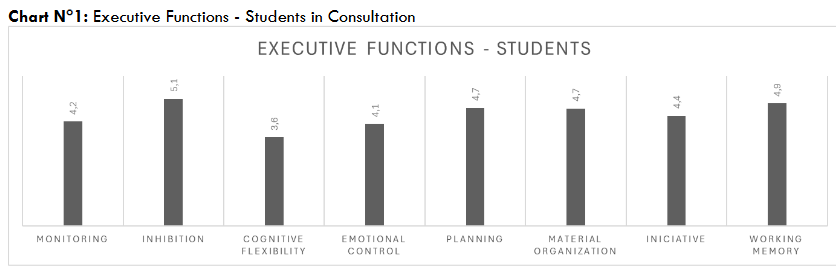
The graph identifies that the executive functions with the lowest score (between 1 and 4.4) and, therefore, with the least development from the perspective of children and adolescents are cognitive flexibility or ability to adapt to novel, changing, or unexpected situations, followed by emotional control or ability to identify and regulate emotions, motorization or ability to register, encoding, maintaining and manipulating information, the initiative or ability to initiate a task by oneself are the least developed functions in children and adolescents.
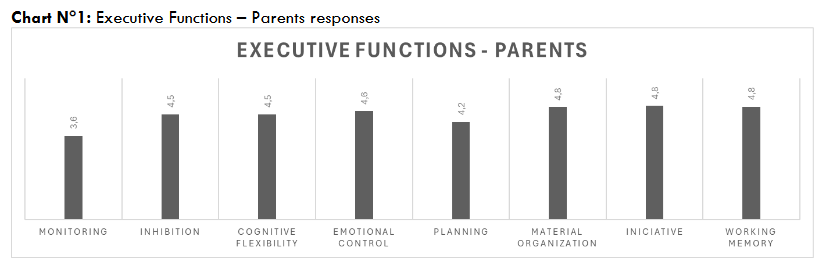
In the case of parents, the executive functions named with less development are monitoring, planning, or the ability to anticipate the necessary steps to carry out a task or goal; inhibition or ability to regulate behavior is mentioned at the same level of development, ignoring both the impulsivity in responses such as stimuli that are not very relevant to the achievement of the task and cognitive flexibility or ability to adapt to novel, changing or unexpected situations. Organization, initiative, and memory exhibited the same level of development.
In the case of parents, the executive functions named with less development are monitoring, planning, or the ability to anticipate the necessary steps to carry out a task or goal; inhibition or ability to regulate behavior is mentioned at the same level of development, ignoring both the impulsivity in responses such as stimuli that are not very relevant to the achievement of the task and cognitive flexibility or ability to adapt to novel, changing or unexpected situations. Organization, initiative, and memory exhibited the same level of development.
3. What are the functions with the least development found according to the 30 cases of children and adolescents and in the 30 cases of parents who answered the Questionnaire?
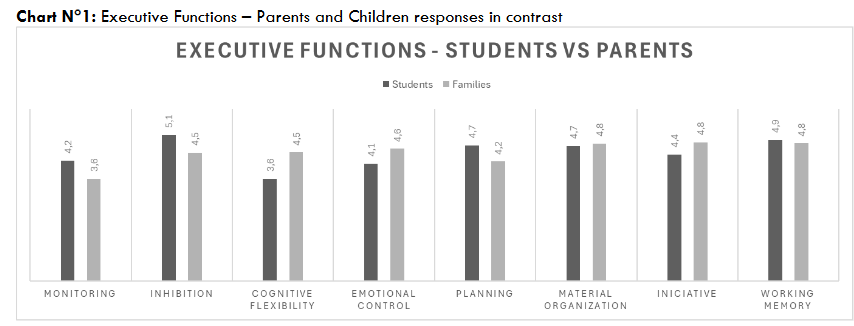
Parents perceived lower scores in motorization, inhibition, planning and working memory. For children, cognitive flexibility and emotional control were observed to be less effective.
4. What are the coincidences in terms of the perception of parents and children in the three aspects that make up the executive functions with less development?
Emotional: Flexibility and Emotional Control; in the cognitive aspect: Initiative, working memory, planning, organization; in behavior: motorization and inhibition.
Table N°1: Executive Functions – Parents and Children responses in coincidence
| Children vs Families | Match | Older (son) | Minor (child) |
|---|---|---|---|
| Motorization | 1 | 19 | 10 |
| Inhibition | 0 | 18 | 12 |
| Cognitive Flexibility | 3 | 9 | 18 |
| Emotional Control | 0 | 8 | 22 |
| Planning | 2 | 13 | 15 |
| Material Organization | 1 | 10 | 19 |
| Initiative | 1 | 13 | 16 |
| Working Memory | 0 | 14 | 16 |
Behavior
Emotional
Cognitive
References
* Matches: The child’s evaluation matches the parent’s or relative’s score
** Higher: The child’s evaluation score is higher than the parent’s or relative’s evaluation
Minor: The child’s evaluation score is lower than the parent’s or relative’s evaluation
5. In what aspects do the parents of their children differ?
Responses scored from 1 to 3.4 represent those with the lowest score; those that fall between 3.5 and 6.4 show somewhat better degree of development of executive functions but without sufficient achievement and require support. A score of 6.5 to 9 indicates good development of executive functions.
The results show that functions related to the emotional aspect, such as cognitive flexibility, only coincide in 3 of the cases studied with the responses of parents and children. Concerning emotional control, the responses between parents and children do not align. Regarding cognitive flexibility, in 9 cases, the child’s evaluation score is higher than that of the parent or relative. In 18 cases, the child’s evaluation score is lower (between 1 and 3.4) than that of the parent or relative.
Regarding emotional control: in 8 cases, the child’s evaluation score is higher than the parent’s or relative’s evaluation, and in 22 cases, the child’s evaluation score is lower (between 1 and 3.4) than the parent’s or relative’s evaluation.
In the cognitive aspect, executive functions such as initiative, working memory, planning, and organization show responses with the following behavior. In planning, only in 2 cases is there a coincidence between the responses of parents and children, 13 of the participants assign a higher score to the function compared to the evaluation of the parent or relative, and in 15 cases, the child’s evaluation score is lower (between 1 and 3.4) than the parent’s evaluation.
Regarding the organization aspect, only in one case was there a coincidence between parents and children, and 10 children and adolescents received higher scores (3.5 and 6.4) in the parent’s evaluation. In 19 cases, the child’s score on the evaluation is lower (between 1 and 3.4) compared to the parent’s evaluation.
Initiative: also, in a single case, there is a coincidence, while in 13 cases, the score of the child’s evaluation is higher (3.5 and 6.4) concerning the evaluation of the parent or relative and in 16 cases, the child’s evaluation score is lower (between 1 and 3.4) than the parent’s or relative’s evaluation.
Working memory, there is no coincidence between parents and children in the assignment of scores to this function; 14 participants assigned a higher score (3.5 and 6.4) concerning the evaluation of the parent, and in 16 cases, the score of the child is lower (between 1 and 3.4) concerning the evaluation of the parent.
Regarding behavior:
Motorization: there is only one coincidence; in 19 cases, the child’s evaluation score is higher (3.5 and 6.4) than the parent’s evaluation, and in 10 cases, the child’s evaluation score is lower (between 1 and 3.4) than the parent’s evaluation.
Inhibition: there is no coincidence; in 18 cases, the child’s evaluation score is higher (3.5 and 6.4) with respect to the parent’s evaluation and in 12 cases the child’s evaluation score is lower (between 1 and 3.4) than the parent’s evaluation.
Of the 30 cases studied, there is a coincidence of perceptions in only 7 cases, and in 23 cases, no coincidence at all. In the executive functions of the emotional aspect, the participants received lower scores compared to those assigned by their parents. Likewise, in the cognitive, the organization of materials is followed by initiative and working memory.
In any of the cases with a higher or lower score, there is a divergence between what is perceived by the parent and the child. Summary table:
The synthesis table presents the scores of children and adolescents who have been categorized with lower scores (ranging from 1 to 3.4) in executive functions.
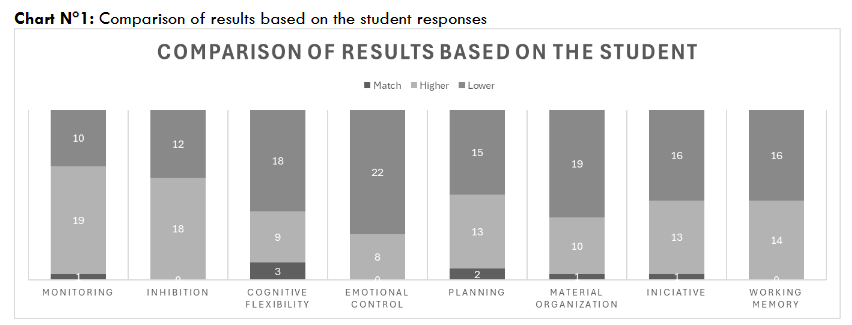
Emotional control and the organization of materials fall among the executive functions with the lowest scores and are therefore perceived as less developed in children and adolescents. The scores assigned by children between 3.5 and 6.4 indicate a better development of executive functions, inspiring further work in this area.
5.4 PARENT INTERVIEWS
An initial assessment of children and adolescents involved conducting an open interview to determine the reason for consultation and the requirements from parents and educational institutions.
Among the 30 cases, 24 report symptoms of inattention, with 4 also exhibiting hyperactivity and impulsiveness. Additionally, 6 cases involve children and adolescents admitted with signs of depression. None of the children have received prior treatment, so they do not have an existing diagnosis. Additionally, all the children experience learning difficulties, with 12 cases also presenting behavioral problems.
1. What is the discernment of parents regarding the possibility of their children responding to academic demands, when they are unable to attend class?
One of the key factors in a child’s education is the positive involvement of their family. In most cases, 93% of mothers are working, and the time spent attending school is for control purposes, not to accompany the student. In 98% of cases, the family considers the child and adolescent a “problem at home and school” due to the weaknesses found in the EFs, which do not match the family’s expectations. These expectations aim to prevent the student from failing exams and to avoid the complications that can lead to postponement. In this context, relationships with the children at home are not very assertive, and the parental approach is rather punitive than supportive.
In 90% of cases, there is no organizational structure at home that allows the forecasting of activities and studies. Additionally, the student spends 8 hours in the classroom, combined with extracurricular activities, leaving little time for rest and study. The use of time is not a minor detail because if the student needs more time to work academically, study, and learn, it is often not perceived by adults.
2. What are the expectations of parents regarding their children limited in some executive function?
3. How do parents respond to the needs of the child and adolescents?
One of the determining factors in responding to a child’s needs is the parent’s knowledge of their child’s condition. Parents perceive limitations in their children; however, only in 10 of the 30 cases do they attempt to reverse the situation within their capabilities, employing some strategies that, in some cases, are successful and, in others, limited. Although the parents in the studied cases have academic training, in a few instances, the father or mother understands the student’s situation, noted when one of them has experience with the situation their child is facing. In most frequent situations, they do not acknowledge the child’s difficulties.
4. What factors do parents consider important for the improvement in EF?
In most cases, parents believe that with the rigor of discipline, change is possible. In others, rewards and punishments are used, a few opt for “the time for maturation will come,” and finally, those who demand help and want to collaborate.
6 Discussion
The divergence in the perception of EFs directly impacts the intervention and support children and adolescents receive. When parents underestimate or overestimate difficulties, they may not provide adequate support, or they may implement ineffective strategies. In addition, the lack of organizational structure in the home and the prevailing punitive approach makes it difficult to create an environment conducive to the development of EFs.
6.1 DIVERGENCE IN THE PERCEPTION OF EXECUTIVE FUNCTIONS
The results of the study underscore a significant divergence between the perceptions of parents and children regarding the development of executive functions (EF). This divergence, especially in the emotional and cognitive aspects, emphasizes the crucial role of multiple perspectives in assessing EFs. It is a reminder that a unilateral view can limit the accurate identification of the needs and strengths of children and adolescents, making parents’ involvement in this process indispensable. The results of the application in 100% of the cases have ruled out intellectual deficiency. The Intelligence Quotient varies between scores 98 and 120, which, according to the scale, children and adolescents have a normal IQ – medium and medium slightly higher. However, the development of numerical reasoning skills (15 children and adolescents), verbal skills, and comprehension (12 children and adolescents) in both areas (3 children) are aspects that show limitations. In the sample analysis, none of the children and adolescents are mentally deficient. Therefore, deficient Executive Functions do not have a cause based on intellectual deficiency. Likewise, it is observed during the application that the ability to focus attention is deficient in 100% of the cases.
6.2 EXECUTIVE FUNCTIONS WITH THE MOST SIGNIFICANT DEFICIT
Both students and parents identified certain executive functions as the least developed:
- From children’s perceptions, cognitive flexibility, emotional control, motorization, and initiative have the lowest scores, suggesting difficulties adapting to new situations, regulating emotions, initiating tasks, and supervising one’s behavior.
- From the parents’ perspective, monitoring, planning, inhibition, and cognitive flexibility are highlighted as deficient functions, indicating that parents perceive greater difficulties in their children’s ability to anticipate, organize, and regulate their behavior.
6.3 COINCIDENCES AND DISCREPANCIES
The analysis of coincidences reveals that in only 7 of the 30 cases, there is agreement between the perceptions of parents and children, while in 23 cases, there is no coincidence. The most significant discrepancies observed are in:
- Emotional aspect: Children tend to evaluate themselves with lower scores in flexibility and emotional control than their parents’ perception.
- Cognitive aspect: Children also assign themselves lower scores than those given by parents in the organization of materials, initiative, and working memory.
- Behavior: In motorization and inhibition, most children perceive themselves as having greater difficulties than those recognized by their parents.
These differences may be related to a lack of effective communication in the family environment, parents’ underestimation or overestimation of difficulties, and children’s tendency to be more self-critical or less aware of their limitations. The results allowed researchers to perceive the difficulties in focusing attention during the solution of the test, which coincides with the reason for the consultation.
6.4 ASPECTS OF EXECUTIVE FUNCTIONS WITH THE GREATEST DISCREPANCY BETWEEN PARENTS AND CHILDREN
The study reveals that there are significant discrepancies between the perceptions of parents and children regarding the development of executive functions. The aspects that show the greatest divergence are the following:
- Emotional Aspect
- Cognitive flexibility: In 18 of the 30 cases, children assign themselves a lower score than that given by their parents, which indicates that children and adolescents perceive greater difficulties in adapting to new or changing situations.
- Emotional control: In 22 cases, children are also evaluated with lower scores than parents, suggesting that they recognize more difficulties in regulating their emotions than those perceived by their parents.
- Cognitive Aspect
- Organization of materials: Only in one case is there a coincidence between parents and children. In 19 cases, the children assign themselves a lower score, showing that they perceive more difficulties in organizing their school and personal materials.
- Initiative: In 16 cases, children are evaluated with lower scores than parents, reflecting a perception of a lower ability to initiate tasks or activities on their own.
- Working memory: There are no coincidences between parents and children. In 16 cases, the children assign themselves a lower score, indicating that they perceive more difficulties in maintaining and manipulating information in the mind.
- Behavior
- Motorization: In 10 cases, the children are assigned a lower score than the parents, although in most cases (19) the children perceive themselves as having greater difficulties than those recognized by their parents.
- Inhibition: In 12 cases, the children are assigned a lower score, however, in 18 cases they perceive themselves as performing better than that attributed to them by their parents.
Of the 30 cases studied, there is a coincidence of perceptions in only 7 cases, and in 23 cases, no coincidence at all. In the executive functions of the emotional aspect, the participants received lower scores compared to those assigned by their parents. Likewise, in the cognitive, the organization of materials is followed by initiative and working memory.
6.5 IMPLICATIONS FOR THE INTERVENTION
The study underscores the importance of involving families in the assessment and intervention process. This involvement promotes greater awareness and understanding of executive functions and their impact on learning and daily life. It empowers parents to be responsible for improving the perception and management of children’s difficulties through the recommended training programs.
6.6 CONTEXTUAL AND SOCIOECONOMIC FACTORS
The parents’ socioeconomic context and educational level also influence the perception and development of EFs. Although the study sample corresponds to families with high academic training at a medium-high level, it has been observed that the time dedicated to the children is limited, and the school accompaniment is more of control than support. This aspect suggests that, even in advantaged contexts, there may be barriers to the optimal development of executive functions if positive family involvement is not promoted.
7 Limitations and recommendations
The study recognizes that the sample is small and circumscribed to a specific context, which limits the generalizability of the results. However, the findings provide valuable information for future research and for designing interventions that consider both parents’ and children’s perceptions. It is advisable to:
- Implement multimodal assessments that include self-reports, parental reports, and objective testing.
- Promote communication and joint work between the family and the school.
- Develop parent training programs on executive functions and support strategies.
8 Conclusion
EDINT v3 (Intellectual Development Scales) yielded results that allow us to rule out intellectual deficiencies in the children and adolescents evaluated. The observation during the one-to-one application of the test to the students allowed researchers to perceive the difficulties in focusing attention during the solution of the test, which coincides with the reason for the consultation: inattention; inattention and hyperactivity; inattention and impulsiveness as well as the request for attention to the child and adolescent by educational institutions. The aspects indicated have an impact on the results of the questionnaire. The results’ discussion underscores the complexity of executive functions and the importance of considering the perceptions of all the actors involved. The divergence between parents and children highlights the need for comprehensive, personalized interventions. This approach promotes the development of critical skills for academic and social success.
References
1. Martínez Stark P, Stark B, Robledo R. Families’ perception of the psychological effects of screen use in the COVID-19 pandemic and post-pandemic in the age group of 4 to 12 years age group in Asunción, Paraguay. Med Res Arch. 2024;12(8). doi:10.18103/mra.v12i8.5555
2. Bernete García F. Menores frente a los medios de comunicación. Cienc Polic. 1996;(34 (Enero-Febrero)):101-114.
3. Etxeberria Balerdi F. Videojuegos y educación. Comun Rev Científica Comun Educ. 1998;(10):171-180.
4. Tamez-González S, Alcántara SM. Uso de computadoras personales y daño a la salud en trabajadores de un diario informativo. Salud Pública México. 1993;35(2):177-185.
5. Sas OR, Estrada LC. Incidencia del uso de pantallas en niñas y niños menores de 2 años. Rev Psicol. 2023;22(1):86-101. doi:10.24215/2422572Xe086
6. Zúñiga S. M. C, Dapueto J, Müller H, Kirsten L, Alid R, Ortiz L. Evaluación de la calidad de vida en pacientes en hemodiálisis crónica mediante el cuestionario” Kidney Disease Quality of Life (KDQOL-36)”. Rev Médica Chile. 2009;137(2):200-207.
7. Manrique MS. Tipología de procesos cognitivos. Una herramienta para el análisis de situaciones de enseñanza. Educ PUCP. 2020;29(57):163-185. doi: https://doi.org/10.18800/educacion.202002.008
8. Villegas Vilegas EA. Beneficios de la Actividad Física en el Rendimiento Académico de los estudiantes del subnivel medio. Dominio Las Cienc. 2024;10(1):504-524.
9. Miyake A, Friedman N, Witzki A, Howerter A, Wager T. The unity and diversity of executive functions and their contributions to complex x ‘frontal Lobe’ tasks: A latent variable analysis. Cognit Psychol. 2000;41(1):49-100. doi:doi:10.1006/cogp.1999.0734
10. Stelzer F, Mazzoni C, Cervigni M. Modelos cognitivos del desarrollo de funciones ejecutivas. Limitaciones y desafíos metodológicos. An Psiología. 2014;10(1):329-336. doi:doi:10.6018/analesps.30.1.139251
11. Tirapu-Ustárroz J, Luna-Lario P. Neuropsicología de las funciones ejecutivas. In: Manual de Neuropsicología Segunda Edición. Segunda. Viguera Editores; 2011:221-259.
12. Lezak M. El problema de la evaluación de las funciones ejecutivas. El Probl Eval Las Funciones Ejecutivas. 2011;(17):281-297. doi:10.1080/00207598208247445
13. Gioia G, Isquith P, Retzlaff P, Espy K. Confirmatory factor analysis of the Behavior Rating Inventory of Executive Function (BRIEF) in a Clinical Sample. Child Neuropsychol. 2002;8(4):249-257. doi:10.1177/0031512516650441
14. Bakar E, Taner Y, Sysal A, Karakas S, Turgay A. Behavioral rating inventory and laboratory tests measures different aspects of executive functioning in boys: A validity study. Bull Clin Psychopharmacol. 2011;21(4):302-316. doi:10.1002/icd.1836
15. Mulder H, Cragg L. Funciones ejecutivas y rendimiento académico: Investigación actual y perspectivas futuras. Desarro Infant. 2014;23(1):1-3. doi:10.1002/icd.1836
16. García T, González-Pienda J, Rodríguez C, Alvarez D, Alvarez L. Características psicométricas de la escala BRIEF para la evaluación de las funciones ejecutivas en la población clínica española. Psicothema. 2014;26(1):47-52. doi:7334/psicothema2013.149
17. García Gómez A. Desarrollo y validación de un cuestionario de observación para la evaluación de las funciones ejecutivas en la infancia. Rev Intercont Psicol Educ. 2015;17(1):141-162.
18. Meltzer L, Basho S. Promoción de la función ejecutiva en el aula. Guilford Press. Published online 2010:28-54.
19. Brown VJ, Bowman EM. Modelos de la función cortical prefrontal en roedores. Tend En Neurocienc. 2002;25(7):340-343.
20. Martínez M, Vasco CE. Sentimientos: encuentro entre la neurobiología y la ética según Antonio Damasio. Rev Colomb Bioét. 2011;6(2):181-194.
21. Arango Tobón OE, Puerta IC, Pineda DAA. Estructura factorial de la función ejecutiva desde el dominio conductual. Divers Perspect En Psicol. 2008;4(1):63-77.
22. Martin JMB, Carrión JL. Funciones ejecutivas: control, planificación y organización del conocimiento. Rev Psicol Gen Apl Rev Fed Esp Asoc Psicol. 2018;55(1):27-42.
23. Ramos-Galarza C, Bolaños-Pasquel M, García-Gómez A, Martínez-Suárez P, Jadán-Guerrero J. La escala EFECO para valorar funciones ejecutivas en formato de auto-reporte. Rev Iberoam Diagnóstico Eval-E Aval Psicológica. 1(50):83-93.
24. Tekin S, Cummings JL. Circuitos neuronales frontosubcorticales y neuropsiquiatría clínica: una actualización. Rev Investig Psicosomática. 52(2):647-654.
25. Lázaro JCF, Ostrozky-solís F. Desarrollo Neuropsicológico de Lóbulos Frontales y Funciones Ejecutivas. Editorial El Manual Moderno; 2012.
26. Stuss DT, Alexander MP. Executive functions and the frontal lobes: a conceptual view. Psychol Res. 2008;63(3):289-298.
27. Laureys F, De Waelle S, Barendse M, Lenoir M, Deconinck F. La estructura factorial de la función ejecutiva en la infancia y la adolescencia. Inteligencia. 2022;90. doi:https://doi.org/10.1016/j.intell.2021.101600
28. Anderson VA, Anderson P, Northam E, Jacobs R, Mikiewicz O. Relaciones entre las medidas cognitivas y conductuales de la función ejecutiva en niños con enfermedades cerebrales. Neuropsicol Infant. 2002;8(4):231-240.
29. Anderson VA, Anderson P, Northam E, Jacobs R, Catroppa C. Desarrollo de las funciones ejecutivas durante la infancia tardía y la adolescencia en una muestra australiana. Neuropsicol Desarro. 2001;20(1):385-406.
30. Lehto JE, Juujärvi P, Kooistra L, Pulkkinen L. Dimensions of executive functioning: Evidence from children. Br J Dev Psychol. 2003;21(1):59-80.
31. Bausela Herreras E. Funciones ejecutivas: unidad-diversidad y trayectorias del desarrollo. Acción Psicológica. 2014;11(1):35-44.
32. Hughes C. Executive function in preschoolers: Links with theory of mind and verbal ability. Br J Dev Psychol. 1998;(16):233-253.
33. Bausela Herreras E. La atención selectiva modula el procesamiento de la información y la memoria implícita. Acción Psicológica. 2014;11(1). doi:. http://dx.doi.org/10.5944/ap.1.1.13789
34. García Gómez A, Barrios-Fernández S, Amado-Fuentes M, Gonzalo M, Carlos -Vivas J. Versión corta del cuestionario online de EFECO para la evaluación de funciones ejecutivas en niños en edad escolar. Children. 8(9):2021. doi:https://doi.org/10.3390/children8090799
35. Véglia AP, Ruíz MG. Intervención sobre las Funciones Ejecutivas (FE) desde el contexto educativo. Rev Iberoam Educ. 2018;78(1):27-42.
36. Baron A, Evangelou M, Malmberg LE, Meléndez-torres GJ. The tools of the mind curriculum for improving self-regulation in early childhood: A sys-tematic review. Campell Syst Rev. 2017;13(1):1-77. doi:http://dx.doi.org/10.4073/csr.2017.10
37. Barnett LM, Morgan PJ, Van Beurden EV, Beard JR. Perceived sports competence mediates the relationship between childhood motor skill proficiency and adolescent physical activity and fitness: a longitudinal assessment. Int J Behav Nutr Phys Act. 2007;40(5):1-12. doi:10.1186/1479-5868-5-40
38. Diamond A, Barnett WS, Thomas J, Munro S. Preschool program improves cognitive control. Science. 2007;318(5855):1387-1388. doi:https://psycnet.apa.org/doi/10.1126/science.1151148
39. Alexander KL, Entwisle DR, Kabbani DS. The dropout process in life course perspective: Early risk factors at home and school. Teach Coll Rec. 2001;103(5):760-822. doi:https://psycnet.apa.org/doi/10.1111/0161-4681.00134
40. Broche-Pérez Y, Cortés-González L, Omar-Martínez E. Toma de decisiones en jóvenes con conductas antisociales: Evidencias desde el Iowa Gambling Task. Neurol Argent. 2015;7(3):140-147.
41. Bouchacourt F, Buschman T. Un modelo flexible de memoria de trabajo. Neuron. 2019;103(1):147-160. doi:https://doi.org/10.1016/j.neuron.2019.04.020
42. Bécker JT, Morris RG. Working Memory(s). Brain Cogn. 1999;41(1):1-8. doi:https://doi.org/10.1006/brcg.1998.1092
43. Güven Y, Enerem D. The predictive power of planning and attention skills on mathematical ability in the preschool period. Rev Fac Educ Univ Anadolu. 2025;9(2):181-194. doi:https://doi.org/10.34056/aujef.1468339
44. Strachan T. Engaging Children and Young People in Planning. A Handbook for Transformative Practice. 1st ed. ROUTLEDGE; 2024.
45. Stubbe E, Elbistan B. Relación entre la resolución de problemas y la capacidad de planificación mediante el Test de la Torre de Londres. Open Educ Stud. 2021;(3):226-232. doi:https://doi.org/10.1515/edu-2020-0157
46. Arroyo MJ, Orzeniowski CG, Espósito A. Habilidades de planificación y organización, relación con la resolución de problemas matemáticos en escolares argentinos. Eureka. 2014;11(1):52-64.
47. Cock MR, Matute E, Jurado MB. Las funciones ejecutivas a través de la vida. Rev Neuropsicol Neuropsiquiatría Neurocienc. 2008;8(1):23-46.
48. Pardós A, González MM. Neurodidáctica en el aula: transformando la educación. Rev Iberoam Educ. 2018;78(1):27-42.
49. Bernal Ruíz F, Cucumides P, Mauna F, et al. Competencias parentales y su influencia en la inhibición y planificación de escolares. Rev ProPulsión Interdiscip En Cienc Soc Humanidades. 2023;6(2):8-24.
50. Fátima S, Ardila A, Sheikh H. Asociación entre las relaciones paternofiliales y el funcionamiento ejecutivo en adolescentes del sur de Asia. Neuropsicología. 2016;30(1):65-74. doi:https://doi.org/10.1037/neu0000216
51. Bünger A, Urfer-Maurer N, Grob A. Evaluación multimétodo de la atención, las funciones ejecutivas y las habilidades motoras en niños con y sin TDAH: Rendimiento infantil y percepción parental. J Atten Disord. (25):596-606. doi:https://doi.org/10.1177/1087054718824985
52. Valcan D, Davis H, Pino-Pasternak D. Comportamientos parentales que predicen las funciones ejecutivas en la primera infancia: un metaanálisis. Educ Psychol Rev. 2018;(30):607-649. doi:https://doi.org/10.1007/S10648-017-9411-9
53. Martínez Carazo PC. El método de estudio de caso: estrategia metodológica de la investigación. Pensam Gest. 2006;(20):165-193.
54. Díaz de Salas SA, Mendoza Martínez VM, Porras Morales CM. UNA GUÍA PARA LA ELABORACIÓN DE ESTUDIOS DE CASO. RAZÓN PALABRA. 2011;(75):25.
55. Yin RK. Case Study Research and Applications: Design and Methods. SAGE Publications; 2017.
56. Azar EE. Competencias Parentales, Funciones Ejecutivas, Estrategias de Aprendizaje y Competencias Académicas En La Niñez Intermedia. Tesis Doctoral. PONTIFICIA UNIVERSIDAD CATÓLICA ARGENTINA Santa María de los Buenos Aires; 2019. 1. https://repositorio.uca.edu.ar/bitstream/123456789/12564/1/competencias-parentales-funciones-ejecutivas.pdf
57. Andrés ML, Juric LC, Stelzer F, Introzzi I, Minzi MCR de. El rol de las funciones ejecutivas en las estrategias cognitivas de regulación emocional no adaptativas en niños. Psicol Clínica. 2020;32(3):557-575. doi:10.33208/pc1980-5438v0032n03a07
58. Hendrie Kupczyszyn KN. FUNCIONES EJECUTIVAS Y SU INCIDENCIA EN OTROS RECURSOS RESILIENTES DE NIÑOS DEL NORESTE ARGENTINO CON NECESIDADES BÁSICAS INSATISFECHAS. Tesis Doctoral. Unviersidad Católica Argentina; 2021.
59. Ribner AD, Devine RT, Blair C, Hughes C. La función ejecutiva de madres y padres predice la función ejecutiva emergente en la infancia temprana. Dev Sci. 2022;25(6). doi:https://doi.org/10.1111/desc.13263
60. Caqueo-Urízar A, Irarrázaval M, Flores J, Ramírez C, Villalonga-Olives E. Salud mental de los niños: discrepancia entre los informes propios del niño y los informes de los padres. Cienc Comport. 12(10). doi:https://doi.org/10.3390/bs1210040
61. Elosúa MR, Contreras MJ, Del Olmo S. Diferencias en el funcionamiento ejecutivo en niños con trastorno por déficit de atención e hiperactividad (TDAH). Front Psychol. 2017;8(545). doi:https://doi.org/10.3389/fpsyg.2017.00976
62. Nigg JT, Stavro G, Ettenhofer M, Hambrick DZ, Miller T, Henderson JM. Executive functions and ADHD in adults: evidence for selective effects on ADHD symptom domains. J Abnorm Psychol. 2005;114(4):706-717. doi:10.1037/0021-843X.114.3.706
Most read articles by the same author(s)
- Peggy Martínez Stark, Bernardita Stark, Robledo Rocío, Families’ perception of the psychological effects of screen use in the COVID-19 pandemic and post-pandemic in the age group of 4 to 12 years age group in Asunción, Paraguay , Medical Research Archives: Vol 12 No 8 (2024): Vol 12 No 8 (2024): August ISSUE, Issue 8, VOl.12