


Ozone Therapy: A Breakthrough in Medical Treatments
Ozone Therapy – An Unmatched Approach for Near Universal Prevention and Treatment
Robert Jay Rowen, MD
OPEN ACCESS
PUBLISHED: 30 June 2025
CITATION: Rowen, R., 2025. Ozone Therapy – An Unmatched Approach for Near Universal Prevention and Treatment. Medical Research Archives, [online] 13(6).
https://doi.org/10.18103/mra.v13i6.6523
COPYRIGHT: © 2025 European Society of Medicine. This is an open-access article distributed under the terms of the Creative Commons Attribution License, which permits unrestricted use, distribution, and reproduction in any medium, provided the original author and source are credited.
DOI https://doi.org/10.18103/mra.v13i6.6523
ISSN 2375-1926
ABSTRACT
Ozone therapy (OT) has been published for decades as a versatile therapy for a wide variety of conditions. The purpose of this report is to bring forward known biochemistry which supports clinical observations of its utility.
Extraordinarily safe, ozone can be administered locally or systemically, or both, to any part of the body except lungs. OT improves oxygen delivery and uptake by a variety of mechanisms. It safely modulates inflammation by reducing inflammatory enzymes and raising anti-inflammatory cytokines and mediators. OT activates the critical Nrf2 transcription pathway, whose functions include crucial antioxidant enzyme production, DNA repair, mitochondrial protection and biogenesis, protein folding, anti-aging, and more. OT preconditioning protects the organism against chemical and infection stressors, and reperfusion injury. It has adjunct uses in the management of cancer, and may slow aging processes and degenerative disease, particularly skeletal by local injection. OT has significant utility in dentistry for prevention, treatment, repair and regeneration, including articular cartilage.
Because ozone is not patentable for profit, and would clearly challenge the current medical paradigm of disease maintenance drug therapy, it remains a “pariah” to drug-promoting regulatory authorities, while it could address the urgent universal need for safe, effective, and non-resistance promoting approaches to infectious diseases and “superbugs,” including generally untreatable viral disease. OT suffers from the “tomato effect” in that mainstream medicine shuns it, even where conventional medicine has dangerous approaches or no answers at all.
Introduction
Ozone therapy is the use of triatomic oxygen O₃, generated from medical grade O₂ by a generator creating a corona arc discharge, for both medical prevention and treatment. The history of medical ozone has been covered in many published articles.¹² Its underlying mechanism is considered to be a hormetic effect: an adaptive response of cells and organisms to a moderate (usually intermittent) stress.³ This aim of this article is to review the latest literature effects, and observations of the novel modality for various common medical challenges. While not going into high detail for just a few subjects, the purpose here is to raise awareness of the very broad scope of ozone utility in medical conditions and prevention.
Distinguished from toxic ozone (lung exposure to pollutant ozone), medical OT involves administering ozone to the body by any means other than exposure to lungs, which are intolerant of the oxidizing gas. For purposes of this article, “ozone” means a mixture of oxygen gas and ozone at ozone concentrations of between 10 and 70 mcg/cc gas, 1–5% ozone, generated from medical grade oxygen by a corona arc discharge machine.
Forms of Administration
Ozone can be administered to the body as follows:
-
Rectal insufflation
-
Ozonated water
-
Ear insufflation
-
Blood therapy
a) Direct intravenous gas (DIV) 10–120 cc ozone gas administered slowly, 20–40 mcg/cc
b) Major autohemotherapy (ozone treatment of blood and return under atmospheric pressure)
c) Hyperbaric OT (blood evacuated into bottle and treated with ozone gas under pressure. This mode provides for treatment of multiple passes of 200 ml blood with 14,000 mcg ozone.) -
Intra-articular
-
Subcutaneous
-
Intramuscular (gas or as minor autohemotherapy with small amount of ozonated blood)
-
Stomach insufflation
-
Bladder insufflation
-
Ozone gas sauna
-
Vaginal insufflation
-
Sinus insufflation
-
Ozone sauna
-
Less common modes, including intra-arterial, intraperitoneal, intra pleural, intra thecal, epidural.
The most common forms of administration are blood, rectal insufflation, and local injections, ozone water for drinking, ear insufflation.
Inflammation
OT is well known to modulate the immune system, generally reducing inflammatory cytokines/factors such as IL-6, IL-1β, and TNF-α,⁴ and raising anti-inflammatory cytokines/factors, inclusive of VEGF, IL-4, IL-6, IL-1b, IL-10, ICAM-1, TGF-β, endorphins, adrenocorticotropic hormone (ACTH), and cortisol levels.⁵⁶⁷ This is a major beneficial effect since untreated inflammation is universally accepted as the main cause of vascular and organ injury, damage in infection, and aging. Bocci repeatedly published on OT effect on modulating inflammatory cytokines and interferons, summarizing effects in his book.⁸ One remarkable Cuban report in rodents demonstrated that ozone preconditioning given by intraperitoneal injection was about as effective in reducing TNF-α induction by injection of LPS as the powerful steroid dexamethasone.⁹
“NF-κB has long been considered the holy grail as a target for new anti-inflammatory drugs; however, data from elegant genetic studies in mice suggest that NF-κB could equally be a difficult therapeutic target in inflammatory diseases.”¹⁰ This pathway regulates proinflammatory pathways (including the
generation of TNF-α), inflammatory cell recruitment, but also has leukocyte apoptotic functions, which can help resolve inflammation. It is a complex pathway of regulation (both pro-apoptosis and anti-apoptosis), which affects the extent and duration of inflammatory activity.¹¹ NF-κB function is not all negative. It is also required for maintaining normal immune responses and cell survival.¹² Modulation of the pathway would be favored over one-sided chemical (drug) inhibition.
OT induces cross talk between the all-important NF-κB and Nrf2 pathways¹³ with a net result of powerful inflammation modulation seen clinically.¹⁴¹⁵ The latter reference demonstrated that OT effectively reduces inflammation through lowering IL-12 and TNF-α, and increasing IL-10. OT, both rectally and intravenously, has been shown effective in fibromyalgia, which is linked to neuroinflammation.¹⁶¹⁷
De Sire et al. summarized¹⁸ ozone literature showing benefit of OT in reducing biochemical mediators of inflammation in osteoarthritis, where such mediators act in degrading cartilage. Most interesting is that even local ozone joint administration reduces serum (systemic) levels of inflammatory IL-6, which is induced by IL-1β and TNF-α activity. Moreover, ozone may also improve serum IGF-1 levels — a growth, differentiation, and tissue repair protein. Furthermore, these authors¹⁹ found that OT’s reduction in inflammation in joints was more profound and lasting than steroid therapy. With steroids known to degrade tissues with potential catastrophic effects²⁰, it may not make sense to consider them as a first-line therapy to reduce systemic or local inflammation, the present standard in conventional medical thought.
Ozone helps increase high-density lipoprotein (it has an anti-inflammatory action), and reduces some inflammatory compounds, such as C-reactive protein, total cholesterol, low-density lipoprotein, triglycerides, and homocysteine.²¹
An additional effect of the therapy may be a regulation of the autonomic nervous system in complex regional pain disorders.²² Presenters at multiple ozone conferences have reported improvement in both local and diffuse pain disorders with simple intravenous ozone applications.
Erythroid Nuclear Factor 2 (Nrf2) Pathway and Induction by Ozone Therapy
One of the recent most emphasized actions in the literature on the anti-inflammatory action of ozone is based on its effect on the Erythroid Nuclear Factor 2 (Nrf2), which is a powerful transcription factor located inside each cell of the body.²³
The nuclear factor erythroid 2-related factor 2 (Nrf2) is an emerging regulator of cellular resistance to oxidants. Nrf2 controls the basal and induced expression of an array of antioxidant response element-dependent genes to regulate the physiological and pathophysiological outcomes of oxidant exposure.²⁴
Nrf2 is responsible for regulating an extensive panel of antioxidant enzymes involved in detoxification and elimination of oxidative stress and has been extensively studied in disease contexts.²⁵ Clearly it is a main regulator of antioxidant stress response. Nrf2 is also a key factor in the progression of diabetes.²⁶
Ozone increases the Nrf2 pathway in multiple sclerosis patients, even by very inexpensive rectal insufflation (which can be done at home).²⁷
Nrf2 induction has a plethora of biochemical benefits. It activates synthesis of antioxidant enzymes, such as Superoxide Dismutase (SOD), Catalase (CAT), and Heme Oxygenase-1 (HO-1), glutathione peroxidase, and others. Activation helps clear misfolded proteins and induce beneficial autophagy. It increases mitochondrial biogenesis and length of cristae, modulates inflammation, and beneficially interacts with NF-κB pathways. Nrf2 impairment may be behind many mitochondrial disorders.²⁸ Nrf2 is a key mitochondrial protector and stimulant of mitochondrial biogenesis.²⁹ Nrf2 improves adipose cell differentiation.³⁰ In animals, ozone preconditioning protects against heart ischemia-reperfusion injury via Nrf2 gene activation.³¹
OT modulates Nrf2 producing three key effects. First, it normalizes the redox balance by increasing antioxidants in the cytoplasm, mitochondria and finally, in the plasma: glutathione peroxidase, glutathione reductase, NADPH and SOD. Second, it induces the production of heme oxygenase-1, a protective enzyme, along with heat shock proteins such as HSP-60, HSP-70 and HSP-90. Third, ozone modulates the kappa B nuclear factor (NF-κB) system, which regulates the production of pro-inflammatory interleukins in injured tissues. These effects contribute to restoring the normal functioning of inflamed tissues. Therefore, OT can be a non-surgical alternative for treating osteoarthritis, and can be combined with other therapies. Research has proven out over 200 Nrf2 pathway genes, which also participate in other biological functions, including “protein homeostasis, detoxication, DNA repair, autophagy… inflammation and metabolism of lipids, carbohydrates and amino acids.”³²³³
OT “remarkably” induces heme oxygenase (HO-1)³², a major protective enzyme. (Aspirin’s anti-inflammatory mechanism may be through HO-1.)³⁴ One key effect of this little-considered enzyme is inflammation modulation together with anti-oxidative, anti-apoptotic functions and homeostatic functions. The enzyme degrades heme, creating the important signaling molecule carbon monoxide and antioxidants bilirubin/biliverdin. Further, HO-1 helps sequester the highly inflammatory/destructive ferrous iron.³⁵
There is increasing evidence for a central role of the Nrf2-transcription factor in controlling redox and metabolic pathways in stem cells. Multi-system evidence and across different tissue lines suggest that “Nrf2 is fundamentally involved in the delicate endeavor of maintaining lifelong stem cell homeostasis.”³⁶
Anti-ageing
Ozone therapy may be a premier approach to slow ageing in the body. Inflammation is clearly implicated in ageing processes, and controlling inflammation may be a mainstay in retarding ageing.³⁷
Shorter telomeres are associated with accelerated cell senescence, inflammation, and overall ageing.³⁸ Superoxide dismutase induction is a well-known effect of ozone treatment. Increased SOD in human fibroblasts with low antioxidant capacity decreased the intracellular peroxide content, and slowed the telomere shortening rate, and elongated the life span of these cells under normoxia and hyperoxia.³⁹ Increased SOD activity increases the telomere length in Minangkabau ethnic men.⁴⁰ It follows that OT may be of assistance in stabilizing the age deterioration of these endcaps of DNA.
Oxidative stress incites protein misfolding. Nrf2 activation in participation with ozone induced HSP-70s promote clearance of oxidized or otherwise damaged protein. In rat cerebral cortex, this ameliorates age-associated deterioration, downregulates damaging malondialdehyde and increases reduced glutathione, anti-oxidant enzymes, and complex I (NADH-ubiquinone oxidoreductase). It also modulates destructive nitric oxide synthesis, which could otherwise lead to CNS-damaging nitrogen-based free radicals. The effects of ozone on modulating anti-oxidant enzymes also modulates the p53 mitochondrial genes which regulate apoptosis.⁴¹⁴²
Overall, NRF2 prevents cellular senescence; therefore, when NRF2 is reduced, senescence and the aging phenotype are increased. NRF2 appears to play a dual role in stem cell regeneration during aging.⁴³
Ozone may also slow the ageing process by a unique additional mechanism of activation of the AMP-activated protein kinase (AMPK)/mammalian target of rapamycin (mTOR) signaling pathway.⁴⁴ “Rapamycin and its derivatives (rapalogs) are inhibitors of mTOR, a major regulator of the ageing process.”⁴⁵
Infection
The world faces a crisis with untreatable infections, both viral and antibiotic-resistant “superbugs.” Ozone is a promising approach on its own, and in combination with conventional therapies. Based on
known biochemistry of viral structure, this author hypothesized that ozone would be an ideal treatment for very serious viral infections. For example, many viruses, including Ebola virus and COVID-19, have significant structures (such as reduced thiol residues) on their lipid/glycoprotein coat, which, if oxidized, prevent the virus attaching to or entering the host cell. In a small sampling of Ebola patients, DIV ozone costing literally pennies, quickly resolved 100% of 5 cases of acute Ebola in the 2014 Ebola epidemic, which otherwise carried a 60% mortality rate.⁴⁶⁴⁷ Ozone has been used successfully in COVID-19.⁴⁸⁴⁹
Lyme disease is particularly difficult to treat with conventional antibiotics. It has up to a 50% rate of post-Lyme treatment symptoms.⁵⁰ Both Robins and Rowen have reported informally 85% long-term symptom relief using OT in absence of antibiotics in at least 100 patients at international ozone meetings.⁵¹ There is strong biochemical reasoning for use of OT in bacterial diseases. Ozone is widely accepted as a topical treatment for wound and skin infection. Using systemic or parenteral OT may well increase the oxidation state of the body, which for bacteria might be intolerable as they have little if any mechanisms, as do mammalian cells, to repair oxidative damage.⁴⁸
Immune cells undergo a well-known “respiratory burst” when activated, consuming up to 50 times the amount of oxygen they consume at rest. Ozone can assist by shifting the oxy-hemoglobin curve to the right with elevated 2,3 DPG, improved blood rheology, and improved mitochondrial combustion of oxygen. Ozone also may mitigate against the hot inflammatory processes of infection, including the deadly cytokine storm. Even rectal ozone carries as much suppression of TNF-α ability as does dexamethasone (above).
Indeed, even our own immune cells generate ozone when activated, along with other oxidants, including hydrogen peroxide, hypochlorous acid. In this author’s view, it is this universal germicidal mechanism for infection defense that should be exploited to rise to the challenge of “untreatable infection,” which term merely means infection resistant to chemical antibiotics.
OT alone has cured tick bite cellulitis.⁵³ Ozone is known to cut through treatment-resistant biofilm and has been successful together with only oral antibiotics in healing a septic prosthetic hip (known to be promoted by biofilm), without surgical debridement, apparently a world first.⁵⁴
Pediatrician Robert Mayer brought ozone to the USA from the trenches of World War II. He performed thousands of treatments with zero complications, including intravenous, rectal, intrathecal (for encephalitis), intra-articular and into abscesses. One rectal insufflation cured 90% of non-bacterial childhood diarrhea.⁵⁵
Preconditioning
Many articles, especially from the Menendez group in Cuba (summarized⁵⁶), have been published demonstrating the efficacy of ozone to protect animals from future stress, including toxin exposure (CCl₄), surgery, surgically induced vascular injury, infection exposure (enhances efficacy of antibiotics), endotoxic shock, chemotherapy toxicity, free radical induction, and ischemia reperfusion injury. In reperfusion injury, the proposed mechanism is the activation of A1 adenosine receptors. Protective effects may also be mediated through ozone induction of Nrf2.⁵⁷ This author and colleagues have noted few, if any, complications from surgery in patients receiving ozone preconditioning, and a significant modulation (reduction) of toxicity in chemotherapy and radiation for cancer with ozone pre and concurrent conditioning. These observations are supported by experimental models.⁵⁸
Cancer
Clavo’s group found that OT significantly relieved patients of toxic effects of conventional cancer therapy and greatly improved their quality of life.⁵⁹
Menendez’s group speculated on ozone’s usefulness in cancer due to its biochemical properties,⁶⁰ with
results in animals and humans suggesting antimetastatic properties. Cancer operates best in a hypoxic environment. They speculated OT’s ability to influence several targets in the cancer process: increasing tumor oxygenation and metabolism, controlling lactic acidosis, slight oxidative stress upregulating host defenses against chronic oxidative stress, which is a factor favoring tumor spread, and ozone’s modulation of innate immune defenses. Intraperitoneal ozone delayed progression of implanted tumors in mice. In humans, OT decreased radiation therapy toxicity in prostate cancer patients and slowed PSA progression.
This author is the moderator of a large professional discussion group of ozone using physicians. Several cases of full remission of advanced stage 4 breast and prostate cancers have been shared using the multipass technique of hyperbaric OT (advanced form of MAH) developed by Johann Lahodny, MD of Austria. Treatments provided were twice weekly hyperbaric ozone sessions of 4 passes of 200 ml blood with 200 cc ozone gas at 70 mcg/cc at nearly 2 ATA pressure in a glass bottle.
Degenerative Diseases
Multiple articles have been published on the high efficacy of OT on joint and disc diseases. Clavo, et al. reported that ozone injection for lumbar disc disease was significantly more effective than oxygen injection in preventing subsequent surgery, and had a lower rate of subsequent need for surgery. Compared to surgery, OT was successful at about 1/10 the cost of surgery, and required significantly fewer hospital days.⁶¹ Simon’s group reported success in all discs treated with OT, with significant reduction in disc herniation on scanning and a 50% reduction in VAS (visual analogue scale) scores.⁶²
Biazzo, et al. reported that very safe and inexpensive simple paravertebral intramuscular injections of ozone, minimally invasive, were quite effective in almost 80% of patients.⁶³
It has been proposed that medical ozone may modulate inflammatory processes by switching macrophages activity from M1 (inflammatory stage) to M2 (repair phase).⁶⁴
Regarding common osteoarthritis in the knee, a randomized controlled trial reported ozone to be equally effective as hyaluronic acid injections.⁶⁵ Valdenassi, et al. reported that ozonated whole blood injected into knees afflicted with osteoarthritis (OA) improved health status by 50% after 5 weekly injections.⁶⁶
Intra-articular ozone into OA knees lowered serum inflammatory IL-6, raised anabolic IGF-1 in non-diabetic patients, reduced IGF-1 in diabetic patients, reduced CRP, ESR, and uric acid, with WOMAC and VAS pain scores improving significantly (P<.01), along with quality of life.⁶⁷
Menéndez’ group found a significant oxidative stress in the synovial joints of patients with knee OA. A combination of rectal and intra-articular ozone induced beneficial effects on the markers. Significant rises in malondialdehyde (to healthy control levels), catalase, and reduced glutathione, whilst a significant fall in SOD, AOPP (advanced oxidation protein products), and peroxides.⁶⁸
A most surprising report showed efficacy of a non-injection ozone treatment on pain relief in osteoarthritis of the knee. Use of topical ozonated oils significantly reduced pain on WOMAC and VAS scores.⁶⁹
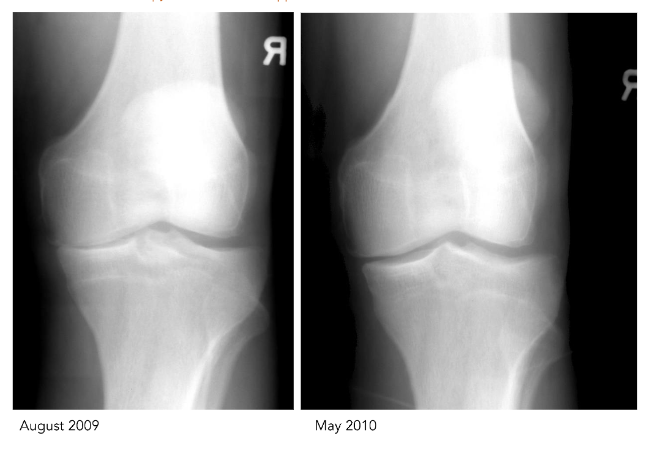
Harper has presented x-ray evidence of cartilage regrowth of knee articular cartilage with a single injection of 20 cc ozone at 20 mcg/ml.⁷⁰
Bocci’s group has shown ozone effects on human platelets – induction of TGF-β1, PDGF, IL-8 in platelets in a dose-dependent manner, with 80 mcg/cc more effective than 40 mcg/cc.⁷¹
Another little discussed effect of ozone is the improvement in the prostacyclin/thromboxane ratio. Prostacyclin (PGF1), along with PGE1, are the most important vascular dilators and stabilizers of circulation in the body. Prostacyclin is antimitogenic, antithrombogenic, reduces platelet aggregation, and is anti-inflammatory. In elderly humans with rheumatoid arthritis, diabetes, hypertension, and asthma, medical ozone arrested oxidative injury progression, decreased thromboxane levels and the TXA2/6-keto PGF1α ratio in the treated. The authors concluded, “These results suggest that medical ozone may become a standard approach in the prevention and management of age-related oxidative diseases in elderly people.”⁷²
Ozone administered to rodents induces synthesis of systemic prostacyclin by cyclooxygenase-2 dependent mechanism and greatly increases the prostacyclin/thromboxane ratio.⁷³ A dynamic balance exists between prostacyclin and thromboxane in the homeostasis of cardiovascular health, with an improved ratio providing a protective effect.⁷⁴
“By using neural stem cells, we show that ozone, especially in concentrations of around 11 μg/mL, significantly increases the speed of neural cell migration. With much lower effects, it also increases cell proliferation and cytokine production.”⁷⁵
Oxygen Delivery
It is axiomatic that the most important aspect in defense, recovery, repair and healing is oxygen availability. Many of the positive effects of OT may be explained by its beneficial effects on oxygen delivery and metabolism.⁷⁶ Ozone has been shown to increase 2,3-DPG, which shifts the oxy-hemoglobin curve to the right, releasing more oxygen at higher partial pressure, enabling better diffusion. Ozone also improves blood rheology and increases the a-v O₂ difference indicating greater mitochondrial oxygen consumption, which would translate to more ATP energy available for healing. It is undisputed that oxygen is the most important factor in all maintenance, repair, immunity, and healing.
Inflammation, infection, injury, autonomic nervous system disorders, circulatory issues can all combine to impair healing and create a hypoxic–non healing vicious cycle. This benefit alone merits consideration of OT in most any condition.
Vascular conditions
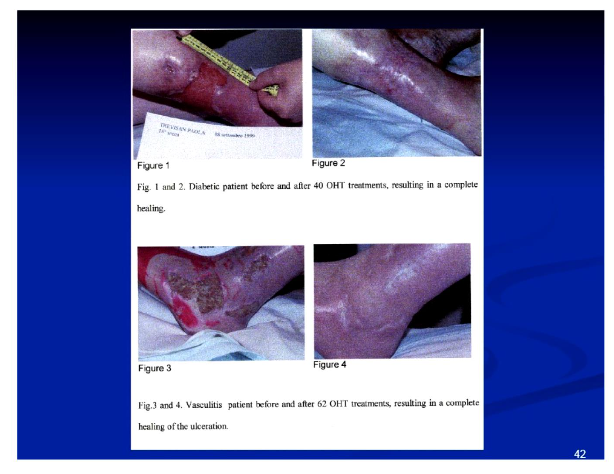
Ozone has been used intraarterially with success.⁷⁷⁷⁸ Baylor University published a number of now forgotten articles in the use of intra-arterial hydrogen peroxide. H₂O₂ immediately breaks down to oxygen gas and water in blood. However, this process appears to have significant positive intravascular effects. In one report, hydrogen peroxide was infused intraarterially as an adjunct to radiation therapy for malignant disease. Post mortem examination of the aorta downstream from the catheter demonstrated surprising and significant regression of atherosclerotic disease, including “absence of raised lesions,” from the catheter to the aortic bifurcation in all patients so received.⁷⁹ Bocci’s group reports healing of vascular ulcers with simple major autohemotherapy (OHT).⁸⁰
Dental
Ozone has very significant applications in dentistry. Among these are prevention and management of periodontal disease and caries, infected root canals, bleaching of discolored teeth, wound healing, decontamination of avulsed teeth before reimplantation, decontamination of toothbrush, and cleansing of dentinal tubules. Ozone also works remarkably well in desensitization of exposed root surfaces by sterilizing and permitting them to remineralize and seal exposed dentinal tubules.⁸³ It is used also successfully for the following conditions:⁸²⁸³
Biofilm purging (Elimination of bacterial pathogens), Periodontal pocket disinfection and osseous disinfection, Prevention of dental caries, Endodontic treatment, Tooth extraction, Tooth sensitivity, Temporomandibular joint treatment, Gum recession. (exposed root surfaces), Pain control, Infection control, Accelerated healing, Tissue regeneration, Controlling halitosis.
Safety
Ozone has an unmatched safety profile. Its gaseous residue is O₂, a beneficial and metabolically active gas. Only a few reports of problems/complications have ever been published, which were of highly questionable validity. There have been no reports of injury, even with the direct intravenous gas method of delivery. However, this method can sclerose veins over time.
Commentary
Medicine has adopted a rather biased method of study as its gold standard — “double blind controlled studies.” This favors research on patentable/profitable synthetic chemicals, or procedures, where study costs can be recovered, over outcome-based reporting. OT is left out as an orphan. It is not patentable, and studies based on controlled cases are expensive and not conducive for private medical offices, where most of medical ozone therapies are provided. Additionally, publishing clinical results on OT is further complicated by the need for IRB involvement for journal acceptance.
For these reasons, this author has taken to publish unique case reports to stimulate interest and attention in the therapy. Considering the scope of known broad biochemical benefits of OT, and its great versatility and safety profile, it could be considered the closest thing we have to a “universal panacea.” What medical condition would not be supported by a therapy that improves oxygenation, modulates inflammation, has direct regenerative stimulation of nuclear repair processes, and has anti-infective properties? Who would not be interested in a versatile safe anti-aging therapy, and which provides systemic benefits almost no matter how administered? Few would choose surgery or drug injection over local ozone injections were they properly informed of its existence and efficacy. Despite the foregoing, the American FDA considers ozone a toxic gas with no known medical benefits.⁸⁴ Clearly not based on science, this cannot be anything other than political suppression, despite FDA and health authorities repeatedly calling for fast drug development for the superbug crisis,⁸⁵⁸⁶ to which drugs savvy bacteria quickly learn to resist. Bacteria have had billions of years to learn resistance to oxidants and have not, otherwise, animal life would not be on the planet. Fortunately, clearly false political position of the FDA does not have legal impact on ozone use in medical settings, which are regulated by state medical boards, not FDA.
There are currently no safe or highly effective medical antivirals. Ozone was 100% effective in very quickly remitting deadly Ebola in 5 patients in an epidemic carrying a 60% mortality. Even in just 5 patients, this was statistically significant (random chance – 1%). None of the patients had post Ebola complications, while almost all non-ozone treated survivors had post Ebola complications.⁸⁸
Medical research strongly suggests ozone can/will exert even more profound anti-inflammatory effects than drugs, including steroids. And, OT lacks all their downsides, while actually inducing growth and repair factors, and adding critical oxygen to the system.
Comment on dosing. The above mentioned beneficial biochemical effects have been found in a variety of administration methods of ozone, from local injection, to rectal insufflation, to lower dose blood therapy (example: 200 cc ozone gas at 30–45 mcg/cc added to 200 ml blood and returned to the body). However, in the case of chronic Lyme or other indolent infection, this author, Robins, and others practicing the high dose method of Lahodny have openly shared rapid, dramatic, and lasting improvements in patients’ condition in professional discussion groups and meetings. There has not been formal study in this area, and which would be quite expensive. Not being patentable for profit, funding will be a most difficult undertaking to “scientifically” prove out clinical differences of different dosing.
Our office mantra is, “When in doubt, use ozone one way or the other.” No therapy is 100% successful, including ozone. But, as clinicians, my wife and I have seen few patients fail to improve in some fashion when treated with OT. We have taken to allow patients themselves speak their stories on YouTube at https://www.youtube.com/@RobertRowenMD. We have posted hundreds of cases, including those with chronic indolent infection, many of whom have case stories that would be very difficult to believe other than by hearing from patients themselves.
Few in the profession would disagree that if Pharma came up with a nearly totally safe patentable chemical with all the properties, uses, and beneficial effects of ozone that it would be pushed, sold, and advertised everywhere. Sadly, the world is missing out on what is likely the most versatile and useful therapy ever seen, and for political and financial reasons. OT suffers from the “tomato effect.” (A term used to describe when effective treatments for a condition are rejected because they don’t align with the current understanding of the disease.)⁸⁹⁹⁰
Indeed, despite reporting on a 100% survival of the above-mentioned Ebola patients, co-author Howard Robins and I were informed by seasoned mainstream press reporters that they were told by their superiors that their coverage of the story would not be published for medical-political reasons.
And despite an iron-clad waiver of liability, and this author providing much of this literature to a hospital unsuccessfully treating a man (husband, father and airline pilot) dying of a superbug infection, the hospital refused my pro bono offer to assist due to “non-FDA approval” of the modality. According to a New Jersey Supreme Court case, this dogmatic approach to treatment (or treatment omissions) creates a serious legal conflict in ‘informed consent’, which requires informing the patient of medically reasonable alternatives the treating physician might not believe in.⁹¹ The patient tragically died in front of his grieving family. This is not an isolated case. In my local area, a prominent hospital refused to permit an infusion of high dose intravenous (IV) ascorbate to an integrative physician despite pleas from peers and family. High dose IV ascorbate has been shown to be a prodrug for generation in the body of another potent oxidant – hydrogen peroxide.⁹² He likewise expired.
Ozone research pioneer Velio Bocci commented that ozone is a non-specific therapy, which can treat a wide variety of specific diseases. In this author’s experience, OT is the closest thing medicine has ever had to a universal panacea for the foregoing reasons.
Conclusion
Ozone therapy carries minimal risk. It has multimode mechanisms which actually precondition against coming challenges, and which stimulate the body to defense, repair, and restoration no matter the insult. Considering the most important aspect to all healing is oxygen, ozone therapy will likely spare both significant suffering and economic costs in medical care, and should be considered in most medical challenges.
Grateful acknowledgments for support of OT and this work:
-
Teresa Su, MD, author’s wife and practice partner
-
Howard Robins, DPM, ozone therapist and leading ozone therapist
-
William Domb, DDS, retired dentist and leading ozone therapist
-
Dennis Harper, ND, DC for graciously providing pre and post OT x-rays of treated knee.
Author’s contributions:
Robert Rowen provided 100% of the research and writing of this review.
Conflicts of interest:
Author and wife offer ozone training workshops for professionals. No other conflicts.
Financial Support:
No external support provided.
References
1. Elvis A.M., Ekta J.S. OT: A clinical review. J. Nat. Sci. Biol. Med. 2011;2:66–70. doi: 10.4103/09 76-9668.82319. [PMC free article] [PubMed] [CrossRef] [Google Scholar][Ref list]
2. Bocci V. How a calculated oxidative stress can yield multiple therapeutic effects. Free Radic. Res. 2012;46:1068–1075. doi: 10.3109/10715762.2 012.693609. [PubMed] [CrossRef] [Google Scholar] [Ref list]
3. Mattson MP. Hormesis defined. Ageing Res Rev. 2008 Jan;7(1):1-7. doi: 10.1016/j.arr.2007.0 8.007. Epub 2007 Dec 5. PMID: 18162444; PMCID: PMC2248601.
4. de Sire A, Marotta N, Ferrillo M, Agostini F, Sconza C, Lippi L, Respizzi S, Giudice A, Invernizzi M, Ammendolia A. Oxygen-OT for Reducing Pro-Inflammatory Cytokines Serum Levels in Musculoskeletal and Temporomandibular Disorders: A Comprehensive Review. Int J Mol Sci. 2022 Feb 25;23(5):2528. doi: 10.3390/ijms23052528. PMID: 35269681; PMCID: PMC8910188.
5. Vaillant JD, Fraga A, Díaz MT, Mallok A, Viebahn-Hänsler R, Fahmy Z, Barberá A, Delgado L, Menéndez S, Fernández OS. Ozone oxidative postconditioning ameliorates joint damage and decreases pro-inflammatory cytokine levels and oxidative stress in PG/PS-induced arthritis in rats. Eur J Pharmacol. 2013 Aug 15;714(1-3):318-24. doi: 10.1016/j.ejphar.2013.07.034. Epub 2013 Jul 31. PMID: 23911887.
6. Xie TY, Yan W, Lou J, Chen XY. Effect of ozone on vascular endothelial growth factor (VEGF) and related inflammatory cytokines in rats with diabetic retinopathy. Genet Mol Res. 2016 May 13; 15(2). doi: 10.4238/gmr.15027558. PMID: 27323014.
7. Bilge, A., Tüysüz, M., Öztürk, Ö., Adali, Y., EROĞLU, H., Makav, M., Atila Uslu, G.Ö.Z.D.E. and Tiskaoğlu, R., 2019. The investigation of the effect of OT on gout iexperimental rat models Deneysel olarak gut oluşturulmuş ratlarda ozon terapinin etkisi. Kafkas Universitesi Veteriner Fakultesi Dergisi, 25(2). [Google Scholar]
8. Bocci V. Ozone: a new medical drug. Dordrecht: Springer; 2005. [Google Scholar]
9. Zamora ZB, Borrego A, López OY, Delgado R, González R, Menéndez S, Hernández F, Schulz S. Effects of ozone oxidative preconditioning on TNF-alpha release and antioxidant-prooxidant intracellular balance in mice during endotoxic shock. Mediators Inflamm. 2005 Feb 24;2005(1): 16-22. doi: 10.1155/MI.2005.16. PMID: 15770062; PMCID: PMC1482874.
11. Lawrence T. The nuclear factor NF-kappaB pathway in inflammation. Cold Spring Harb Perspect Biol. 2009 Dec;1(6):a001651. doi: 10.1101/cshpers pect.a001651. Epub 2009 Oct 7. PMID: 20457564; PMCID: PMC2882124.
12. Liu T, Zhang L, Joo D, Sun SC. NF-κB signaling in inflammation. Signal Transduct Target Ther. 2017; 2:17023–. doi: 10.1038/sigtrans.2017.23. Epub 2017 Jul 14. PMID: 29158945; PMCID: PMC5661633.
13. Sumihito Togi, Misa Togi, Satoshi Nagashima, Yuichi Kitai, Ryuta Muromoto, Jun-ichi Kashiwakura, Toshiaki Miura, Tadashi Matsuda, Implication of NF-κB Activation on Ozone-Induced HO-1 Activation, BPB Reports, 2021, Volume 4, Issue 2,
14. Rowen RJ. Remission of aggressive autoimmune disease (dermatomyositis) with removal of infective jaw pathology and OT: review and case report. Auto Immun Highlights. 2018 Jun 30;9(1):7. doi: 10.1007/s13317-018-0107-z. PMID: 29959639; PMCID: PMC6026108.
15. Tartari APS, Moreira FF, Pereira MCDS, Carraro E, Cidral-Filho FJ, Salgado AI, Kerppers II. Anti-inflammatory Effect of OT in an Experimental Model of Rheumatoid Arthritis. Inflammation. 2020 Jun;43(3):985-993. doi: 10.1007/s10753-020-01184-2. PMID: 32382842.
16. Bains A, Kohrman S, Punko D, Fricchione G. A Link Between Inflammatory Mechanisms and Fibromyalgia. Adv Exp Med Biol. 2023;1411:357-378. doi: 10.1007/978-981-19-7376-5_16. PMID: 36949318.
17. Tirelli U, Cirrito C, Pavanello M, Piasentin C, Lleshi A, Taibi R. OT in 65 patients with fibromyalgia: an effective therapy. Eur Rev Med Pharmacol Sci. 2019 Feb;23(4):1786-1788. doi: 10.26355/eurrev_2 01902_17141. PMID: 30840304.
18. de Sire A, Marotta N, Ferrillo M, Agostini F, Sconza C, Lippi L, Respizzi S, Giudice A, Invernizzi M, Ammendolia A. Oxygen-OT for Reducing Pro-Inflammatory Cytokines Serum Levels in Musculoskeletal and Temporomandibular Disorders: A Comprehensive Review. Int J Mol Sci. 2022 Feb 25;23(5):2528. doi: 10.3390/ijms23052528. PMID: 35269681; PMCID: PMC8910188.
19. Hashemi M., Khameneh S.M.H., Dadkhah P., Mohajerani S.A. Effect of Intraarticular injection of ozone on inflammatory cytokines in knee osteoarthritis. J. Cell. Mol. Anesth. 2017;2:37–42.
20. Yasir M, Goyal A, Sonthalia S. Corticosteroid Adverse Effects. [Updated 2023 Jul 3]. In: StatPearls [Internet]. Treasure Island (FL): StatPearls Publishing; 2024 Jan-. Available from:
https://www.ncbi.nlm.nih.gov/books/NBK531462/
21. Cuccio, G., & Franzini, M. (2016). Oxygen-OT in the treatment of adipose tissue diseases. OT, 1(2), 25–33. https://doi.org/10.4081/ozone.2016.6270
22. Rowen RJ, Robins H. OT for Complex Regional Pain Syndrome: Review and Case Report. Curr Pain Headache Rep. 2019 May 6;23(6):41. doi: 10.1007/s11916-019-0776-y. PMID: 31062104; PMCID: PMC6502773.
23. Galiè M, Covi V, Tabaracci G, Malatesta M. The Role of Nrf2 in the Antioxidant Cellular Response to Medical Ozone Exposure. Int J Mol Sci. 2019 Aug 17;20(16):4009. doi: 10.3390/ijms20164009. PMID: 31426459; PMCID: PMC6720777.
24. Ma Q. Role of Nrf2 in oxidative stress and toxicity. Annu Rev Pharmacol Toxicol. 2013;53: 401-26. doi: 10.1146/annurev-pharmtox-011112-140320. PMID: 23294312; PMCID: PMC4680839.
25. Ngo V, Duennwald ML. Nrf2 and Oxidative Stress: A General Overview of Mechanisms and Implications in Human Disease. Antioxidants (Basel). 2022 Nov 27;11(12):2345. doi: 10.3390/antiox11 122345. PMID: 36552553; PMCID: PMC9774434.
26. Dodson M, Shakya A, Anandhan A, Chen J, Garcia JGN, Zhang DD. NRF2 and Diabetes: The Good, the Bad, and the Complex. Diabetes. 2022 Dec 1;71(12):2463-2476. doi: 10.2337/db22-0623. PMID: 36409792; PMCID: PMC9750950.
27. Delgado-Roche L, Riera-Romo M, Mesta F, Hernández-Matos Y, Barrios JM, Martínez-Sánchez G, Al-Dalaien SM. Medical ozone promotes Nrf2 phosphorylation reducing oxidative stress and pro-inflammatory cytokines in multiple sclerosis patients. Eur J Pharmacol. 2017 Sep 15;811:148-154. doi: 10.1016/j.ejphar.2017.06.017. Epub 2017 Jun 13. PMID: 28623000.Nrf
28. Shan Y., Schoenfeld R.A., Hayashi G., Napoli E., Akiyama T., Iodi Carstens M., Carstens E.E., Pook M.A., Cortopassi G.A. Frataxin deficiency leads to defects in expression of antioxidants and Nrf2 expression in dorsal root ganglia of the Friedreich’s ataxia YG8R mouse model. Antioxid.Redox Signal. 2013;19:1481–1493.[PMC free article] [PubMed] [Google Scholar][Ref list]
29. Holmstrom K.M., Kostov R.V., Dinkova-Kostova A.T. The multifaceted role of Nrf2 in mitochondrial function. Curr. Opin. Toxicol. 2016; 1:80–91. [PMC free article] [PubMed] [Google Scholar] [Ref list]
30. Galiè M, Covi V, Tabaracci G, Malatesta M. The Role of Nrf2 in the Antioxidant Cellular Response to Medical Ozone Exposure. Int J Mol Sci. 2019 Aug 17;20(16):4009. doi: 10.3390/ijms2 0164009. PMID: 31426459; PMCID: PMC6720777.
31. Ding S, Duanmu X, Xu L, Zhu L, Wu Z. Ozone pretreatment alleviates ischemiareperfusion injury-induced myocardial ferroptosis by activating the Nrf2/Slc7a11/Gpx4 axis. Biomed Pharmacother. 2023 Sep;165:115185. doi: 10.1016/j.biopha.202 3.115185. Epub 2023 Jul 22. PMID: 37487441.
32. Bocci V, Aldinucci C, Mosci F, Carraro F, Valacchi G. Ozonation of human blood induces a remarkable upregulation of heme oxygenase-1 and heat stress protein-70. Mediators Inflamm. 2007; 2007:26785. doi: 10.1155/2007/26785. PMID: 182 74635; PMCID: PMC2233812.
33. Galiè M, Covi V, Tabaracci G, Malatesta M. The Role of Nrf2 in the Antioxidant Cellular Response to Medical Ozone Exposure. Int J Mol Sci. 2019 Aug 17;20(16):4009. doi: 10.3390/ijms20 164009. PMID: 31426459; PMCID: PMC6720777.
34. Grosser N, Abate A, Oberle S, Vreman HJ, Dennery PA, Becker JC, Pohle T, Seidman DS, Schröder H. Heme oxygenase-1 induction may explain the antioxidant profile of aspirin. Biochem Biophys Res Commun. 2003 Sep 5;308(4):956-60. doi: 10.1016/s0006-291x(03)01504-3. PMID: 12927812.
35. Pae HO, Chung HT. Heme oxygenase-1: its therapeutic roles in inflammatory diseases. Immune Netw. 2009 Feb;9(1):12-9. doi: 10.4110/in.200 9.9.1.12. Epub 2009 Feb 28. PMID: 20107533; PMCID: PMC2803295.
36. Dodson M, Anandhan A, Zhang DD, Madhavan L. An NRF2 Perspective on Stem Cells and Ageing. Front Aging. 2021 Jun 15;2:690686. doi: 10.3389/fragi.2021.690686. PMID: 36213179; PMCID: PMC9536878.
37. Li X, Li C, Zhang W, Wang Y, Qian P, Huang H. Inflammation and aging: signaling pathways and intervention therapies. Signal Transduct Target Ther. 2023 Jun 8;8(1):239. doi: 10.1038/s41392-023-01502-8. PMID: 37291105; PMCID: PMC1024 8351.
38. Shammas MA. Telomeres, lifestyle, cancer, and aging. Curr Opin Clin Nutr Metab Care. 2011 Jan;14(1):28-34. doi: 10.1097/MCO.0b013e32834 121b1. PMID: 21102320; PMCID: PMC3370421.
39. Serra V, von Zglinicki T, Lorenz M, Saretzki G. Extracellular superoxide dismutase is a major antioxidant in human fibroblasts and slows telomere shortening. J Biol Chem. 2003 Feb 28;278(9):6824-30. doi: 10.1074/jbc.M207939200. Epub 2002 Dec 9. PMID: 12475988.
40. https://pesquisa.bvsalud.org/gim/resource/en,au:%22Martins%20Neto,%20Viviana%22/sea-211132
41. Scassellati C, Galoforo AC, Bonvicini C, Esposito C, Ricevuti G. Ozone: a natural bioactive molecule with antioxidant property as potential new strategy in aging and in neurodegenerative disorders. Ageing Res Rev. 2020 Nov;63:101138. doi: 10.1016/j.arr.2020.101138. Epub 2020 Aug 15. PMID: 32810649; PMCID: PMC7428719.
42. Shehata NI, Abd-Elgawad HM, Mawsouf MN, Shaheen AA. The potential role of ozone in ameliorating the age-related biochemical changes in male rat cerebral cortex. Biogerontology. 2012 Dec;13(6):565-81. doi: 10.1007/s10522-012-9400-9. Epub 2012 Sep 22. PMID: 23001537.
43. Schmidlin CJ, Dodson MB, Madhavan L, Zhang DD. Redox regulation by NRF2 in aging and disease. Free Radic Biol Med. 2019 Apr;134:702-707. doi: 10.1016/j.freeradbiomed.2019.01.016. Epub 2019 Jan 14. PMID: 30654017; PMCID: PMC6588470.
44. Zhao X., Li Y., Lin X., Wang J., Zhao X., Xie J., Sun T., Fu Z. Ozone induces autophagy in rat chondrocytes stimulated with IL-1beta through the AMPK/mTOR signaling pathway. J.Pain Res. 2018; 11:3003–3017. [PMC free article] [PubMed] [Google Scholar] [Ref list]
45. Targeting ageing with rapamycin and its derivatives in humans: a systematic review Lee, Deborah J W et al. The Lancet Healthy Longevity, Volume 5, Issue 2, e152 – e162
46. Rowen R, Robins H, Carew K, et al. (2016) Rapid resolution of hemorrhagic fever (Ebola) in Sierra Leone with OT. African Journal of Infectious Diseases 10: 49–54.
47. Rowen RJ. Ozone and oxidation therapies as a solution to the emerging crisis in infectious disease management: a review of current knowledge and experience. Med Gas Res. 2019 Oct-Dec;9(4): 232-237. doi: 10.4103/2045-9912.273962. PMID: 31898609; PMCID: PMC7802416.
48. Jafari-Oori M, Vahedian-Azimi A, Ghorbanzadeh K, Sepahvand E, Dehi M, Ebadi A, Izadi M. Efficacy of ozone adjuvant therapy in COVID-19 patients: A meta-analysis study. Front Med (Lausanne). 2022 Nov 10;9:1037749. doi: 10.3389/fmed.2022.1037749. PMID: 36438064; PMCID: PMC9685165.
49. Brownstein, et al. A Novel Approach to Treating COVID-19 Using Nutritional and Oxidative Therapies. Science, Public Health Policy, and The Law Volume 2:4-22. July, 2020 Clinical and Translational Research
50. https://www.hopkinsmedicine.org/news/newsroom/news-releases/2018/02/study-shows-evidence-of-severe-and-lingering-symptoms-in-some-after-treatment-for-lyme-disease. Accessed 10/24
51. Ozone without Borders yearly meeting, Costa Rica 2019
52. Babior BM, Takeuchi C, Ruedi J, Gutierrez A, Wentworth P Jr. Investigating antibody-catalyzed ozone generation by human neutrophils. Proc Natl Acad Sci U S A. 2003 Mar 18;100(6):3031-4. doi: 10.1073/pnas.0530251100. Epub 2003 Feb 24. PMID: 12601145; PMCID: PMC152239.
53. Rowen RJ. OT as a primary and sole treatment for acute bacterial infection: case report. Med Gas Res. 2018 Sep 25;8(3):121-124. doi: 10.4 103/2045-9912.241078. PMID: 30319768; PMCID: PMC6178636.
54. Rowen RJ. OT in conjunction with oral antibiotics as a successful primary and sole treatment for chronic septic prosthetic joint: review and case report. Med Gas Res. 2018 Jul 3;8(2):67-71. doi: 10.4103/2045-9912.235139. PMID: 30112169; PMCID: PMC6070838.
55. “Ozone: A Chemotherapeutic Agent for the Treatment of Disease — Experiences of a Pediatrician During the Years 1946-1964” Abstract of Paper presented at the IOA 6th Ozone World Congress (May 1983, Wash. DC)
56. Menendez S, Weiser M (2016) Advances of OT in medicine and dentistry. Palcogra, Palacio de
las Convenciones- Havana, Cuba
57. Re L, Martínez-Sánchez G, Bordicchia M, Malcangi G, Pocognoli A, Morales-Segura MA, Rothchild J, Rojas A. Is ozone pre-conditioning effect linked to Nrf2/EpRE activation pathway in vivo? A preliminary result. Eur J Pharmacol. 2014 Nov 5;742:158-62. doi: 10.1016/j.ejphar.2014.08.0 29. Epub 2014 Sep 16. PMID: 25218903.
58. Clavo B, Rodríguez-Esparragón F, Rodríguez-Abreu D, Martínez-Sánchez G, Llontop P, Aguiar-Bujanda D, Fernández-Pérez L, Santana-Rodríguez N. Modulation of Oxidative Stress by OT in the Prevention and Treatment of Chemotherapy-Induced Toxicity: Review and Prospects. Antioxidants (Basel). 2019 Nov 26;8(12):588. doi: 10.3390/antiox8120 588. PMID: 31779159; PMCID: PMC6943601.
59. Clavo B, Cánovas-Molina A, Ramallo-Fariña Y, Federico M, Rodríguez-Abreu D, Galván S, Ribeiro I, et al. Effects of Ozone Treatment on Health-Related Quality of Life and Toxicity Induced by Radiotherapy and Chemotherapy in Symptomatic Cancer Survivors. Int J Environ Res Public Health. 2023 Jan 13;20(2):1479. doi: 10.3390/ijerph20021 479. PMID: 36674232; PMCID: PMC9859304.
60. Menéndez, S., Cepero, J., & Borrego, L. (2008). OT in Cancer Treatment: State of the Art. Ozone: Science & Engineering, 30(6), 398–404. https://doi.org/10.1080/01919510802473724
61. Clavo B, Robaina F, Urrutia G, Bisshopp S, Ramallo Y, Szolna A, Caramés MA, Fiuza MD, Linertová R. OT versus surgery for lumbar disc herniation: A randomized double-blind controlled trial. Complement Ther Med. 2021 Jun;59:102724. doi: 10.1016/j.ctim.2021.102724. Epub 2021 May 5. PMID: 33964405.
62. Simon C, Le Corroller T, Pauly V, Creze M, Champsaur P, Guenoun D. Intradiscal oxygen-OT for the treatment of symptomatic lumbar disc herniation: A preliminary study. J Neuroradiol. 2022 Mar;49(2):180-186. doi: 10.1016/j.neurad.2 021.09.004. Epub 2021 Oct 8. PMID: 34634298.
63. Biazzo A, Corriero AS, Confalonieri N. Intramuscular oxygen-OT in the treatment of low back pain. Acta Biomed. 2018 Mar 27;89(1):41-46. doi: 10.23750/abm.v89i1.5315. PMID: 29633741; PMCID: PMC6357609.
64. Grangeat AM, Erario MLA. The Use of Medical Ozone in Chronic Intervertebral Disc Degeneration Can Be an Etiological and Conservative Treatment. Int J Mol Sci. 2023 Mar 31;24(7):6538. doi: 10.339 0/ijms24076538. PMID: 37047511; PMCID: PMC10 095297.
65. Raeissadat SA, Rayegani SM, Forogh B, Hassan Abadi P, Moridnia M, Rahimi Dehgolan S. Intra-articular ozone or hyaluronic acid injection: Which one is superior in patients with knee osteoarthritis? A 6-month randomized clinical trial. J Pain Res. 2018 Jan 4;11:111-117. doi: 10.2147/JPR.S 142755. PMID: 29379312; PMCID: PMC5757972.
66. Valdenassi L, Chierchia M, Pandolfi S, Bellardi D, Chirumbolo S, Franzini M. Adjunct treatment with ozone to enhance therapy of knee osteoarthritis: preliminary results. Clin Rheumatol. 2024 Jun;43 (6):2093-2101. doi: 10.1007/s10067-024-06972-x. Epub 2024 Apr 26. PMID: 38671261.
67. Fernández-Cuadros ME, Pérez-Moro OS, Albaladejo-Florín MJ, Tobar-Izquierdo MM, Magaña-Sánchez A, Jiménez-Cuevas P, Rodríguez-de-Cía J. Intra Articular Ozone Modulates Inflammation and Has Anabolic Effect on Knee Osteoarthritis: IL-6 and IGF-1 as Pro-Inflammatory and Anabolic Biomarkers. Processes. 2022; 10(1): 138. https://doi.org/10.3390/pr10010138
68. Calunga, J. L., Menéndez, S., León, R., Chang, S., Guanche, D., Balbín, A., … García, P. (2012). Application of OT in Patients with Knee Osteoarthritis. Ozone: Science & Engineering, 34(6), 469–475.
https://doi.org/10.1080/01919512.2012.719120
69. Anzolin AP, Collares DDS, Tadeu Dos Santos R, Pasqualotti A, Rossato-Grando LG, Bertol CD. Effectiveness of topical ozonated oil in severe osteoarthritis: A randomised, triple-blinded, placebo-controlled study. Complement Ther Clin Pract. 2021 May;43:101351. doi: 10.1016/j.ctcp.2021.10 1351. Epub 2021 Mar 5. PMID: 33706065.
70. Harper, D. American Academy of Stem Cell Physicians Annual Meeting, Miami Florida, October 2024. Permission by Harper for inclusion in this report.
71. Valacchi G, Bocci V. Studies on the biological effects of ozone: 10. Release of factors from ozonated human platelets. Mediators Inflamm. 1999;8(4-5):205-9. doi: 10.1080/09629359990360. PMID: 10704074; PMCID: PMC1781810.
72. León Fernández OS, Oru GT, Viebahn-Hänsler R, López Cabreja G, Serrano Espinosa I, García Fernández E. Medical ozone arrests oxidative damage progression and regulates vasoactive mediator levels in elderly patients (60-70 years) with oxidative etiology diseases. Front Physiol. 2022 Nov 3;13:1029805. doi: 10.3389/fphys.2022.1029 805. PMID: 36406985; PMCID: PMC9670171.
73. Schulz S, Ninke S, Watzer B, Nüsing RM. Ozone induces synthesis of systemic prostacyclin by cyclooxygenase-2 dependent mechanism in vivo. Biochem Pharmacol. 2012 Feb 15;83(4):506-13. doi: 10.1016/j.bcp.2011.11.025. Epub 2011 Dec 2. PMID: 22155309.
74. Stitham J, Midgett C, Martin KA, Hwa J. Prostacyclin: an inflammatory paradox. Front Pharmacol. 2011 May 13;2:24. doi: 10.3389/fphar.2 011.00024. PMID: 21687516; PMCID: PMC3108 482.
75. Tricarico G, Isakovic J, Song MS, Rustichelli F, Travagli V, Mitrecic D. Ozone influences migration and proliferation of neural stem cells in vitro. Neurosci Lett. 2020 Nov 20;739:135390. doi: 10.1016/j.neu let.2020.135390. Epub 2020 Sep 15. PMID: 3294 7004.
76. Menendez S, Weiser M. Advances of OT in Medicine and Dentistry. 2016; Havana, Cuba.
77. Sroczyński J, Antoszewski Z, Matyszczyk B, Krupa G, Rudzki H, Zbrońska H, Skowron J. Ocena kliniczna skuteczności leczenia miazdzycy zarostowej kończyn dotetniczym wstrzykiwaniem ozonu [Clinical assessment of treatment results for atherosclerotic ischemia of the lower extremities with intraarterial ozone injections]. Pol Tyg Lek. 1992 Oct 19-26;47 (42-43):964-6. Polish. PMID: 1300589.
78. Sroczyński J, Antoszewski Z, Krupa G, Zbrońska H, Matyszczak B, Rudzki H, Urbańczyk L. Niektóre parametry hemostazy po leczeniu ozonem w grupie chorych na miazdzyce zarostowa tetnic kończyn dolnych oraz w grupie chorych na cukrzyce [Some hemostatic parameters after treatment with ozone in a group of patients with obliterative atherosclerosis of the lower extremities and in a group of patients with diabetes]. Pol Tyg Lek. 1991 Sep 9-30;46(37-39):694-6. Polish. PMID: 1669134.
79. Urschel, et. al, Treatment of Arteriosclerotic Obstructive Cerebrovascular Disease with Hydrogen Peroxide.. Vascular Surgery, Vol 1, June 1967, No2, pp 77-81.
80. de Monte A, van der Zee H, Bocci V. Major ozonated autohemotherapy in chronic limb ischemia with ulcerations. J Altern Complement Med. 2005 Apr;11(2):363-7. doi: 10.1089/acm.2005.11.363. PMID: 15865505.
81. Dental Newsweek, April 27, 2016
82. Saini R. OT in dentistry: A strategic review. J Nat Sci Biol Med. 2011 Jul;2(2):151-3. doi: 10.410 3/0976-9668.92318. PMID: 22346227; PMCID: PMC3276005.
83. Domb WC. OT in dentistry. A brief review for physicians. Interv Neuroradiol. 2014 Oct 31;20 (5):632-6. doi: 10.15274/INR-2014-10083. Epub 2014 Oct 17. PMID: 25363268; PMCID: PMC4243235.
84. https://www.accessdata.fda.gov/scripts/cdrh/cfdocs/cfcfr/cfrsearch.cfm?fr=801.415
85. https://www.fda.gov/emergency-preparedness-and-response/mcm-issues/antimicrobial-resistance
86. https://www.who.int/news/item/14-06-2024-who-releases-report-on-state-of-development-of-antibacterials
87. Harvard Medical School Demonstration video: https://www.youtube.com/watch?v=plVk4NVIUh8
88. Scott JT, Sesay FR, Massaquoi TA, Idriss BR, Sahr F, Semple MG. Post-Ebola Syndrome, Sierra Leone. Emerg Infect Dis. 2016 Apr;22(4):641-6. doi: 10.3201/eid2204.151302. PMID: 26983037; PMCID: PMC4806950.
89. Rowen R and Robins H. A Plausible “Penny” Costing Effective Treatment for Corona Virus – OT. J Infect Dis Epidemiol 2020, 6:113 DOI: 10.2393 7/2474-3658/1510113 Volume 6 | Issue 2
90. Goodwin JS, Goodwin JM. The tomato effect. Rejection of highly efficacious therapies. JAMA. 1984 May 11;251(18):2387-90. doi: 10.100 1/jama.251.18.2387. PMID: 6368890.
91. “For consent to be informed, the patient must know not only of alternatives that the physician recommends, but of medically reasonable alternatives that the physician does not recommend.” Matthies v. Mastromonaco, 160 N.J. 26, 733 A.2d 456 (N.J. 1999) [available at: https://casetext.com/case/matthies-v-mastromonaco-1]
92. Chen Q, Espey MG, Krishna MC, Mitchell JB, Corpe CP, Buettner GR, Shacter E, Levine M. Pharmacologic ascorbic acid concentrations selectively kill cancer cells: action as a pro-drug to deliver hydrogen peroxide to tissues. Proc Natl Acad Sci U S A. 2005 Sep 20;102(38):13604-9. doi: 10.1073/pnas.0506390102. Epub 2005 Sep 12. PMID: 16157892; PMCID: PMC1224653.