


The Climate-Health Reckoning
How to Build Hospitals for a Hotter World
An editorial by the Global Health Center
On a low-lying Pacific island, a clinic’s greatest clinical vulnerability may not be a shortage of doctors or medicines, but the sea outside its door. Kelera Oli, Berlin Kafoa and Si Thu Win Tin, writing on health-system resilience in the Pacific, note that 90% of the region’s population, excluding Papua New Guinea, lives within five kilometres of a coast. More than 62% of health facilities sit within 500 metres of it. A storm surge can therefore interrupt insulin supplies, contaminate water, disable communications and turn a routine outbreak into a health-system crisis.
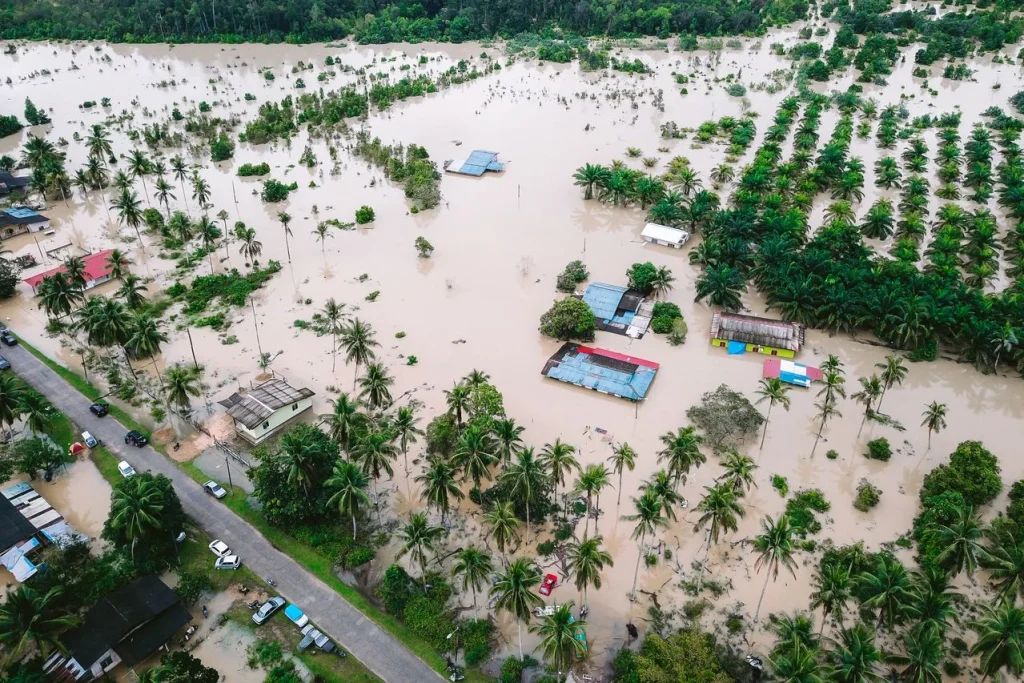
This is the new geography of climate change. It is drawn not only in degrees of warming or tonnes of carbon, but in flooded maternity wards, disrupted food chains, and the expanding range of mosquitoes and ticks. Fatih Dökmedemir’s examination of vector-borne disease shows how changing ecologies redraw the risk map for infections including Crimean-Congo haemorrhagic fever. In Mozambique, Patrick T. Panos and Angelea Panos describe how cyclones, floods and cholera create cascading crises, and how local councils, civil-society groups and NGOs can turn recovery into preparedness.
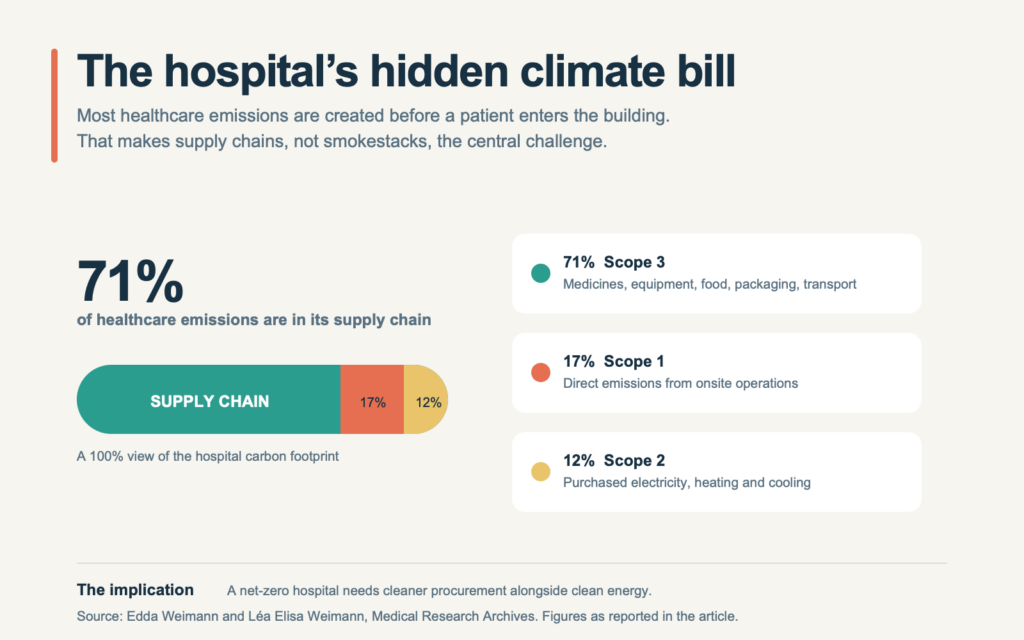
Yet the institutions built to protect health are implicated in the problem. Edda Weimann and Léa Elisa Weimann make the uncomfortable case that healthcare, if it were a country, would rank as the world’s fifth-largest emitter. Their crucial finding is that 71% of the sector’s footprint lies in Scope 3 emissions: the supply chains of medicines, equipment, food and transport. The healer, in other words, has become an industrial consumer whose cure carries a carbon cost.
The Pacific provides the sharpest illustration of the stakes. Climate change there is not a projected burden but a lived condition, one that places exceptional pressure on systems already fragmented by distance, limited specialist capacity and costly logistics. Rising temperatures and altered rainfall support outbreaks of dengue, leptospirosis and diarrhoeal disease. Extreme weather disrupts continuing treatment for diabetes, cardiovascular disease and respiratory conditions. Displacement, environmental loss and uncertainty also exact a psychological toll, especially on children, older people and those whose livelihoods depend on the sea and land.
Oli and her co-authors do not offer a single technological fix. Their argument is institutional. Health facilities must be designed and managed to continue operating through shocks, rather than merely rebuilt after them. Fiji has begun applying climate-resilient and environmentally sustainable healthcare-facility guidelines to upgrades and planning. Fiji, Solomon Islands and Tonga have conducted vulnerability assessments to identify priority weaknesses. Niue is piloting cool roofs that reduce heat stress for patients and health workers. Solar power is being treated not as a green flourish, but as a means of keeping essential services available when disasters sever conventional energy supplies.
That premise is also at the heart of the Panoses’ study of Mozambique. The country’s vulnerability is geographical and economic. Its 2,700-kilometre Indian Ocean coastline, low-lying plains, major flood-prone rivers and heavy reliance on subsistence agriculture create a dangerous overlap of exposure and poverty. In 2019, Cyclones Idai and Kenneth struck in the same season, an unprecedented double blow. Idai caused 603 deaths, injured 1,641 people, destroyed 223,947 houses and displaced 160,927 people. Kenneth destroyed more than 30,000 homes and displaced roughly 20,000 more.
Then came Freddy, the storm that lasted more than five weeks and became the longest-lasting tropical cyclone on record. In Mozambique it destroyed more than 132,000 houses and 123 health facilities, while cholera affected more than a million people. Such figures can produce a familiar and misleading picture of helplessness: a poor country repeatedly struck by impersonal natural forces, awaiting relief from abroad. Patrick and Angelea Panos offer a different account. Their review of 84 academic and grey-literature sources argues that resilience grows where international support reinforces, rather than replaces, local agency.
Community councils, civil-society organisations and NGOs are not simply delivery vehicles for emergency aid. They can translate warnings into action, identify people who will otherwise be missed, sustain trust during outbreaks and make recovery plans fit local realities. Inclusive planning matters particularly for women, older people and people with disabilities, who are often least able to evacuate, obtain care or influence reconstruction. The authors highlight locally led finance, climate-resilient infrastructure, early-warning systems and participation as mutually reinforcing pieces of public-health preparedness. Recovery, in this view, is not the return to yesterday. It is the distribution of power and protection before the next storm.
The Weimanns’ paper shifts the lens from those on climate change’s front line to the institutions that often treat its consequences. Their starting point is deliberately unsettling: healthcare produces emissions at a scale that damages health. Hospitals use vast amounts of energy, consume resource-intensive materials, generate waste and depend on globalised procurement. In Germany, the authors estimate that the health system produces 57.5 million tonnes of carbon dioxide. But the most consequential emissions do not necessarily issue from an exhaust stack. They are embedded in the products and services a hospital buys.
That is why the 71% Scope 3 figure matters. A hospital could install solar panels and still leave the bulk of its climate footprint untouched if it continues to purchase carbon-intensive pharmaceuticals, equipment, food, packaging and transport. The Weimanns call for monthly monitoring of Scope 1, 2 and 3 emissions through key performance indicators, treating environmental performance as seriously as financial or clinical performance. Their sustainable balanced scorecard adds climate and environment to conventional measures of organisational success. The DHOW model, named for the wind-powered Indian Ocean vessels, offers a memorable metaphor for leadership, patient-centredness and team skills carrying the transformation.
The practical opportunities are unexpectedly granular. Anaesthetic gases are a case in point. The authors calculate that one hour of desflurane can have a warming impact comparable to driving 375 to 750 kilometres by car, and that the gas is 1,600 times more harmful than carbon dioxide. Inhalers are another overlooked source. Switching from metered-dose inhalers to dry-powder alternatives can reduce their footprint sharply in suitable cases. Hospitals can also cut waste, improve insulation, use renewable energy, reduce unnecessary travel, alter procurement standards, tackle food waste and offer healthier, lower-carbon meals.
Dökmedemir’s review provides a warning against treating resilience as merely an engineering exercise. A warmer world does not just damage physical infrastructure. It changes biological relationships. Heat waves increase cardiovascular, cerebrovascular and respiratory deaths, while floods and droughts undermine water, food and shelter. Shifting temperatures and rainfall patterns affect the habitats, seasons and geographical ranges of vectors including mosquitoes, ticks, sand flies and black flies. Diseases once treated as distant threats can become domestic public-health problems.
Crimean-Congo haemorrhagic fever is an instructive example. Transmitted principally by ticks, it has limited person-to-person spread but can be lethal and poses serious risks in healthcare settings because of high viral loads. Dökmedemir notes that its transmission risk is shaped by ecological change. The larger lesson is not that every warming region will experience the same outbreak. It is that public-health systems must prepare for moving frontiers of risk, supported by surveillance, laboratory capacity, infection control and coordination between human and animal-health services.
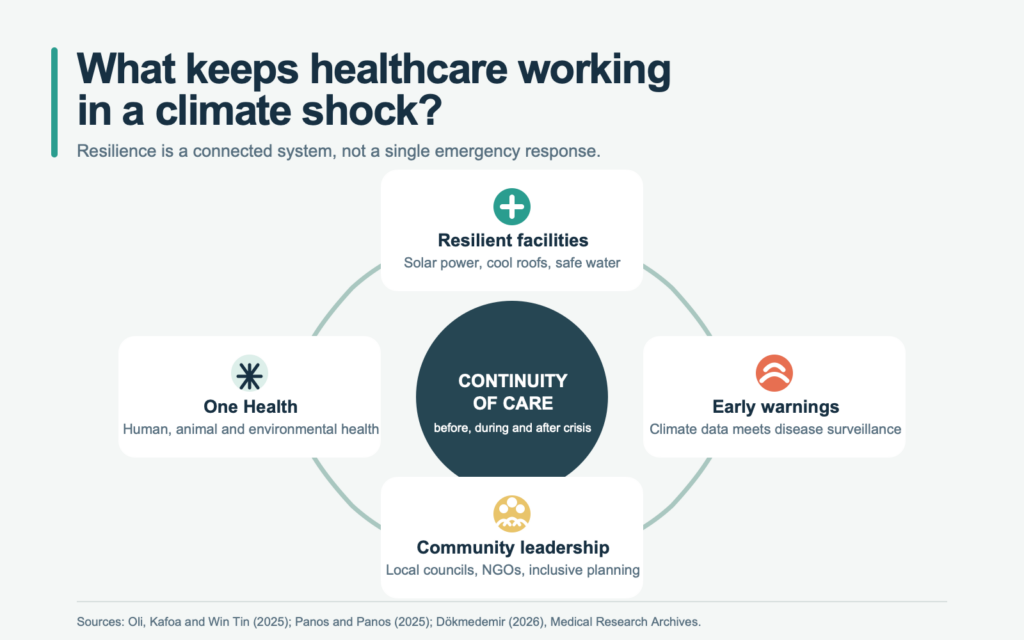
The phrase “climate resilience” can sometimes sound passive, as if the task were simply to endure a harsher future. These papers offer a more demanding interpretation. Resilience requires political choices about where money flows, whose knowledge counts and which risks are deemed acceptable. It requires ministries that coordinate rather than compete, facilities designed for continuity of care, procurement officers who can see beyond the lowest immediate price, and communities trusted with authority rather than consulted after decisions have been made.
The most durable climate-health system may therefore look less like a fortress than a network. It has a clinic with rooftop solar, a warning system that reaches remote villages, a community council that knows who needs help, a hospital that measures the carbon in its supply chain, and an epidemiologist watching for a tick-borne disease in a new place. It learns before disaster, adapts during it and reduces the pressures that make the next emergency worse.
The climate crisis is often framed as a choice between sacrifice and prosperity. These papers suggest another possibility. Building health systems that emit less, withstand more and serve people fairly is not a diversion from healthcare’s mission. It is increasingly the mission. The sea may rise outside the clinic. But whether lights stay on, medicines arrive and warnings reach the most vulnerable will depend on decisions made before the water comes.
Researching climate change and health?
We would like to hear from you. Write to us at [email protected]