

Soil Degradation: A Public Health Emergency
Soil Degradation and Pollution as the Global Public Health Emergency
Rattan Lal1
- CFAES Rattan Lal Center for Carbon Management and Sequestration, The Ohio State University, Columbus, Ohio 43210 USA
OPEN ACCESS
PUBLISHED: 31 May 2025
CITATION: Lal, R., 2025. Soil Degradation and Pollution as the Global Public Health Emergency. Medical Research Archives, [online] 13(5). https://doi.org/10.18103/mra.v13i5.6474
COPYRIGHT © 2025 European Society of Medicine. This is an open-access article distributed under the terms of the Creative Commons Attribution License, which permits unrestricted use, distribution, and reproduction in any medium, provided the original author and source are credited.
DOI https://doi.org/10.18103/mra.v13i5.6474
ISSN 2375-1924
ABSTRACT
About 40% of world soils are degraded which also aggravates the problems of climate change and food/nutritional insecurity along with water scarcity and eutrophication. The rate of global soil degradation has been estimated as much as 20 ha minute-1 or 10 M ha per year. Through its adverse effects on the quantity and quality of food and feed, soil degradation has direct and indirect impacts on human health and wellbeing. This is an issue of global public health emergency. Based on the magnitude of the problem of under nutrition and malnutrition, soil degradation is a global emergency which necessitates an urgent and coordinated effort to address the problem. It requires implementation of Soil Health Act at state, national and global level to ensure protection, restoration and sustainable management of soil and agriculture. Being a precious and finite resource, which is prone to degradation by anthropogenic and natural causes with severe and long-term impacts on human health and wellbeing, there is an urgency to enhance awareness about the magnitude of the global problem of soil degradation and for implementation of policies which are pro-nature, pro-soil, and pro-land managers. The One Health approach must be a part of the curricula for medical colleges and implemented in cooperation with soil scientists and pedologists. Classes on medical pedology and veterinary pedology should be offered in medical and veterinary colleges by professionals in human health, soil health and environment quality. The serious public health emergency needs an immediate and urgent action to safeguard human and planetary health through a well-designed and coordinated action plan at different levels.
Keywords
Soil degradation, public health, climate change, food security, One Health
Introduction
Soils are the foundation of good human health and wellbeing. There exists a strong link between soil health and human health, and soil health is also a source of some essential ecosystem services (ESs) such as: food and biomass production, storage and sequestration of carbon (C), habitat for biodiversity, water purification and renewability, cycling of nutrients, and others. Indeed, healthy well-managed soils are fundamental to human existence. However, in their quest to produce these ESs, humans are the principal cause of soil degradation, contamination, and pollution of this finite resource. The narrow human-centric focus on producing ESs has degraded 40% of all soils. As much as 60 to 70% of soils in the European Union are in an unhealthy state due to various natural and anthropogenic factors. Extent and severity of global soil degradation and its effects on agronomic production and other ESs have been reported since the 1990’s. With business as usual, without an earnest effort to address the problem at the grassroot level by participation of each inhabitant of the planet, its adverse impacts on quantity and quality of food production can jeopardize both human and planetary health. Indeed, the planetary limits to soil degradation must be respected. Thus, a well thought out and a coordinated action plan is critical to protect, restore, and sustain soil health to feed 9.7 B people by 2050 under changing climate, degrading soils, depleting and contaminating water, dwindling biodiversity and declining per capita resource base. It is critical that every citizen is involved in protecting, restoring and managing soil. Therefore, the objective of this article is to deliberate anthropogenic pathways of soil and environmental degradation and their effects on human health and wellbeing. The specific goal of this article is to enhance awareness about the severity of this problem as a potential global public health emergency that can no longer be ignored. This article calls for an immediate and urgent action at local, state, national, continental, and global action to address this issue that can severely jeopardize human and planetary health.
Anthropogenic Pathways of Soil Degradation
Human population, 8.2 B in 2025 and projected to be 9.7 B by 2050 with increasingly affluent lifestyle, is the driver of soil and environmental degradation. Soil degradation and climate change are mutually reinforcing and highly complex processes (
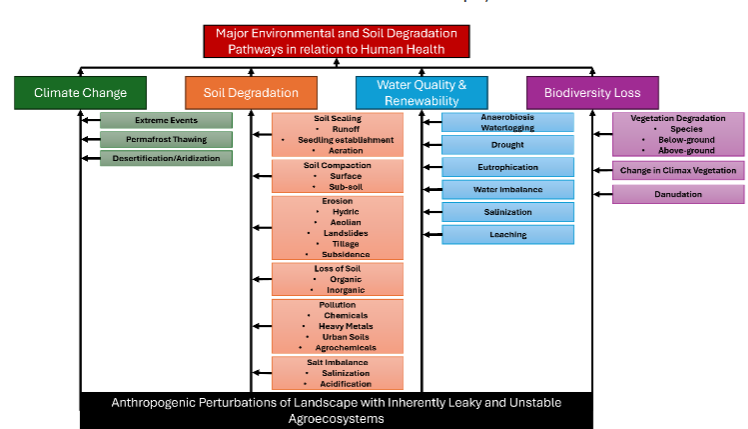
Climate change, characterized by extreme events leading to thawing of permafrost and desertification of arid and semi-arid regions, accelerates soil degradation, reduces water quality and renewability, aggravates loss of biodiversity, and provides feedback to climate change. Soil physical degradation is set in motion by decline in soil structure and the attendant formation of crust and surface seal which accelerates soil erosion by hydric, aeolian and other processes. Physical removal and transport of soil over the landscape is among the primary causes of soil degradation, and it is driven by diverse processes depending on the source of energy to break soil aggregates, transport sediments to depressional sites and aquatic bodies, redistribute C over the landscape and increase its emission into atmosphere as CH4 or CO2 depending upon the soil moisture regime. Important among the sources of energy are water, wind, gravity, tillage, and chemical reactions. Soil erosion is set in motion by surface sealing or crusting because of the breakdown of soil structural units. Surface sealing aggravates water runoff, transport of sediments, loss of the fertile topsoil, depletion of SOC pool, and emission of greenhouse gases (GHGs) into the atmosphere. The extent and severity of hydric erosion on agroecosystems is also aggravated by soil compaction caused by traffic of heavy farm equipment, intensive grazing, and removal or in-field burning of crop residues. Vehicular traffic of farm operations can cause compaction of the plow layer (top 20cm depth), or of the deeper subsoil (up to 50cm depth).
Soil Pollution and Contamination
Soil pollution, a severe global issue of the 21st century, involves contamination of soil by deposition or soil application of anthropogenic waste containing chemicals such as heavy metals, toxic organic chemicals, pesticides, plastic, and biological pathogens. Ad hoc application of municipal solid waste can also jeopardize soil functions. Indiscriminate use of pesticides is a major global concern. Soil contamination is a serious problem in rapidly expanding urban areas. Tong et al. observed that 71 cities in China had heavy metal contamination of arsenic (As), cadmium (Cd), chromium (Cr), mercury (Hg), lead (Pb), Copper (Cu), zinc (Zn), and nickel (Ni). Traffic-related Pb pollution is also a factor in vicinity of highways. Indeed, soil pollution is a growing issue that must be systematically addressed. Exposure to heavy metals can adversely affect kidneys, brains, intestines, lungs, liver, and other organs. Heavy metal contamination of agricultural soils is a major health risk to plants, animals, people, and the ecosystem. In addition to deposition of industrial waste, soil pollution is also caused by indiscriminate use of agrichemicals such as fertilizers, pesticides, herbicides, and manure. Fossil fuel combustion, mining, and solid waste disposition are major sources of heavy metals. Agricultural soils are also polluted when located in close proximity to mines for iron (Fe), Ni, etc. Military activities can lead to severe contamination with heavy metals and have long-lasting impacts. In Pakistan, Ali et al. reported that 97.4% of rice grains exceeded the Cr threshold level of 1.0 mg kg-1. Overall, loading capacity of paddy soils in west Punjab had low risk (34.6%), moderate risk (15.8%), high risk (11.2%), and very high risk (38.4%). Soil contamination by Pb is another issue that adversely affects health of children. Plastic Pollution of soils of agroecosystems has become a major global issue of the 21st century. Global plastic production reached 4.9 Gt in 2015 and 11 Gt in 2025 and making plastic pollution as one of the biggest problems facing humanity because it may take more than 100 years to decompose. Microplastic (<5mm in size) can affect the microorganisms by ingesting it from soil, affecting below-ground biotic and abiotic components. Consumption of these crops and consumption of food and water by humans in daily intake can lead to severe adverse consequences to human health. Yu et al. observed that additives in plastic can be released from microplastics into the aquatic environment during their aging, some of these can cause toxicity effects on organisms and aggravate ecological risks.
Soil Physical Degradation
Soil physical degradation, not as widely known as pollution/contamination by heavy metals and other pollutants, is also a serious problem in soils of agroecosystems. It is set-in-motion by depletion of soil organic matter (SOM) content with adverse impacts on soil structure and other physical processes. Burning of crop residues, widely practiced in developing countries, leads to air pollution by emission of soot and smoke, loss of microbial biodiversity in soil, depletion of SOM content, decline of soil physical properties and ill effects on human health and wellbeing. Yet, there is a serious lack of awareness about the importance of degradation of soil physical properties and processes with adverse effects on human and planetary health. Awareness about soil degradation gained momentum when 2015 was declared “Year of the Soil” by the 68th U.N. General Assembly and IUSS declared 2014-2024 as the “Decade of Soils”. An important aspect of soil physical processes with strong impact on soil health is the water-carbon interplay in dryland ecosystems. Traditional Green Revolution, with heavy dependence on agrochemicals, created agroecosystems with inherently leaky and unsustainable production systems leading to adverse effects on soil physical attributes. Human health is also adversely affected by anthropogenic climate change as aggravated by soil degradation, desertification, loss of biodiversity, decrease in freshwater resources, acidification of oceans, depletion of the ozone layer, and decline in productivity and its nutritional quality. Accelerated soil erosion by water, leading to transport of sediments and the pollutants into aquatic ecosystems, can aggravate eutrophication and contamination of water. As much as 15-30 Gt of sediments are transported into the oceans by hydric-erosion processes. Sediments enriched in P and N are the major cause of eutrophication and leading to algal bloom and anoxic events.
A. SOIL COMPACTION AND SURFACE SEALING
Adverse soil physical conditions (i.e. compaction) can also decrease uptake of selenium (Se) but increase that of As (a human carcinogen). Loss of SOM content, peatland degradation, and soil compaction are among the most critical issues in Europe but there exists serious knowledge gaps. Soil compaction is also a serious issue in urban and peri-urban areas with adverse effects on forest development. Compaction by human trampling can also adversely affect soil functions and decrease productivity. Improper management of soils has aggravated vulnerability to degradation through hydric and aeolian erosion, SOM depletion, salinization, acidification, crusting, and sealing and compaction in soils of Central and Southeastern Europe. Such degradation has reduced soils capacity to support human communities and resist desertification. Glab studied the effects of vehicular traffic on soil compaction in grasslands and observed higher values of bulk density and penetration resistance and lower values of total porosity. Soil compaction decreased water retention pores and aggravated droughts, decreased biotic activity due to restricted aeration, and reduced root and above ground biomass. Compaction is a problem in soils with high silt and low SOM content because of low aggregate stability and large proportion of micropores.
B. SOIL DESERTIFICATION AND HUMAN HEALTH
Arid and semi-arid regions are facing the serious challenge of soil desertification and its adverse effects on human health. Africa has a major issue of desertification due to soil erosion, salinization, nutrient imbalances, acidification, and soil compaction. Soil microbes can play a critical role in combatting desertification through nutrient cycling, soil fertility enhancement, carbon sequestration, soil stabilization, erosion control, and biodiversity conservation.
C. SOIL WATER CAPACITY
An important ramification of soil physical degradation is reduction in plant available water capacity in the root zone and its adverse impacts on quality and quantity of food produced. Vulnerability to drought is being aggravated by change in climate and increase in frequency of extreme events as manifested in frequency of drought-flood syndrome. Intensification of agriculture has aggravated these problems, and depletion of SOM content has severe adverse effects on soil water retention in the root zone. Costantini et al. observed that grapes grown on degraded erosion-prone soils in vineyards of Europe suffered from drought and poor water nutrition due to shallower rooting depth, compaction, reduced available water capacity and lower chemical fertility.
Soil Degradation, Pollution and Contamination by War
Throughout the human history, wars have been used as violence against people and the land probably due to scarcity of key resources. However, modern wars have drastic impacts on world economy, geopolitics, food and nutritional insecurity, and above all on degradation of soil and pollution of environments with severe and long-lasting impacts on health of human and wildlife. Because of the extreme humanitarian situations in war-torn regions, the adverse impacts on soil and environment or the nature have often been overlooked. Satellite imagery and ground-based surveys of some countries in Southeast Asia showed that even after four decades, bomb craters remained discernible at densities that commonly exceeded 200/km2 and in some cases exceeded 800/km2. Contamination of soil by Dioxin, Mustard Gas has been widely studied. The effects of Agent Orange in Vietnam and Laos persisted beyond 6 decades after the war ended. Persistence of heavy metals (As, Pb, Hg) in war affected soil is a major health concern. Pereira et al. reported severe adverse effects of Russian-Ukrainian war on air pollution, greenhouse gas (GHG) emission, deforestation, habitat destruction, loss of biodiversity, and severe implication to wildlife. The effects of Russian-Ukrainian war on human health are tremendous and aggravated by exposure to high levels of environmental contamination. Adverse effects of war on soil, vegetation and environment are reported from Kuwait and Syria. Storage of chemical warfare agents underground at discarded military munition sites can pollute water resources with heavy metals such as Fe, Cu, and Pb. Any war has three parties: two communities or the nation fighting with one another and the third party is the nature or the land on which the fight occurs. While human impact is serious and can never be underestimated, the impact on soil, nature and wildlife is completely overlooked. Yet, the adverse impact on nature and its consequences on humanity and wildlife can persist for decades. War (an acronym for “we are right”) is a crime against nature. No one has the right to destroy nature.
Policy Interventions
There are numerous soil science challenges in this new era which must be addressed. When soil is degraded, human health is under stress. Recent estimates indicate losses of 20 ha min-1 (~10 M ha yr-1) of soil by degradation processes. Thus, there is an urgency in revisiting crop production systems and identifying those which can protect, restore, and sustain soil health for producing healthy and good quality food while also improving the environment through development of green technologies for soil rehabilitation. Micro or nanoplastic is a new pollutant of soil. In Brazil, Suzuki et al. identified public policies for soil and water conservation and food production. Soil Health Act must be enacted at local, state, national, and international levels. European Commission has implemented a strategy to support human activities and ecosystems. The strategy on soil protection will comprise a communication and a legislative proposal which requires member states to mitigate threats of landslides, contamination, erosion, SOM depletion, compaction, salinization, and sealing in EU countries. Safeguarding the resilience of soil health requires policies to promote interdisciplinary research, technological innovation and cooperative initiatives. Planet Earth is undergoing adverse changes due to anthropogenic abuses and global warming leading to soil degradation, desertification, and erosive loss; there is a need for a coherent approach. Timmis and Ramor proposed creating a soil healthcare strategy at a national and international level: i.) a public health system for development of effective policies for land use, conservation, restoration, etc., and ii.) a healthcare system charged with soil care through promotion of good land use and management practices. All humans must be involved in soil healthcare.
| Technology | Effects | References |
|---|---|---|
| Biochar | Soil/environmental restoration | 53 |
| Biochar-amended manure | 97 | |
| Biochar for phytoremediation of mine soils and contaminated tailings in China | Adverse effects of potentially toxic elements can be reduced by use of biochar | 99 |
| Combined with fertilization | Enhanced water-fertilizer productivity of cucumber | 35 |
| Cover Crops | Reducing deleterious effects of tillage | 100 |
| Improved physical properties of Mollisol in the Pampas of Argentina | 101 |
Global Action Plan to Address Soil Degradation as Public Health Emergency
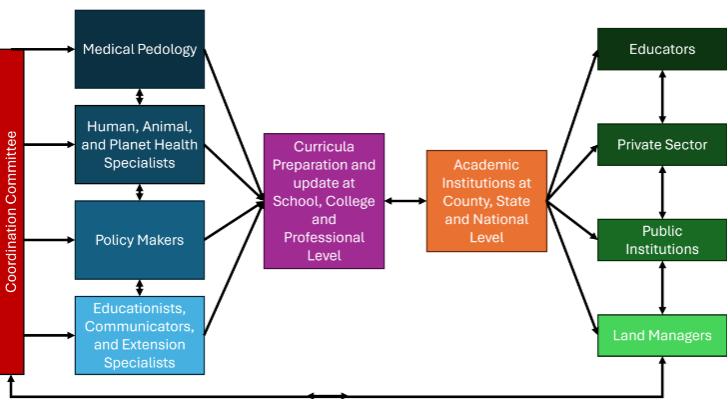
A well-conceptualized action plan is needed to address this issue of soil degradation as global human and public health emergency. Action plan may involve a coordination committee which works with representatives of different organizations including academicians in medical pedology who address human health as influenced by animal and plant health, policy makers and outreach organizations including communicators and extension specialists. The aim is to revise and update curricula at school, college and professional levels and communicate this to academic institutions who work with private and public sectors on the one hand and land managers and educators on the other. There should be a well-defined mechanism for providing the feedback to the overall coordination committee. An operational mechanism, at all geographical levels is needed, to involve food producers (farmers, ranchers, horticulturists, and poultry and fishery industry) and food processing and distribution organizations which work together to provide healthy food grown on healthy soils. Furthermore, producers must be appropriately rewarded for producing high quality food by adopting sustainable systems of managing soil health. Sources of these funds may come from consumer but also from private and public sectors.
Conclusion
The ever-increasing problem of soil degradation and land desertification, with adverse effects on human health and well-being, is a global emergency that needs an urgent and immediate action to protect, restore and sustainably manage soil health. Despite its importance to health of human and planetary processes, there is a lack of awareness about the magnitude of the problem among general public, policy makers, and educational institutions. Educational curricula need to be updated at all levels (primary and secondary school, graduate and undergraduate degrees, and medical and public health colleges) to include study of soil and its impacts on human health. Multi-disciplinary education is needed to offer classes in medical-pedology as a part of the medical curricula and veterinary education. Policies are also needed to reward land managers for producing safe, nutritious and healthy food. Well conceptualized labels must contain information on nutritional quality and safety of food. Farmers and other food producers (i.e., dairy, poultry, horticulture) must be rewarded for providing safe and healthy food. The global public health emergency requires a coordinated action plan at local, national and global level.
References
- Jeffrey M, Achurch H. Save our Soil to Save the Planet. In: Field D, Morgan C, McBratney A, eds.; 2017:389-395. doi:10.1007/978-3-319-43394-3_35
- UNCCD. Our Land. Our Future. In: UNCCD; 2024:1-9. https://www.unccd.int/sites/default/files/2024-04/UNCCD_COP16_narrative_EN.pdf
- Vicente-Serrano S, Pricope N, Toreti A, et al. The United Nations Convention to Combat Desertification Report on Rising Aridity Trends Globally and Associated Biological and Agricultural Implications. Global Change Biology. 2024;30:70009. doi:10.1111/gcb.70009
- Efthimiou N. Governance and degradation of soil in the EU. An overview of policies with a focus on soil erosion. SOIL & TILLAGE RESEARCH. 2025;245. doi:10.1016/j.still.2024.106308
- Oldeman LR. Global Extent of Soil Degradation. In: ISRIC Bi-Annual Report 1991-1992. ISRIC; 1992:19-36.
- Lal R. Soil degradation by erosion. Land Degradation & Development. 2001;12(6):519-539. doi:10.1002/ldr.472
- Jie C, Jing-zhang C, Man-zhi T, Zi-tong G. Soil degradation: a global problem endangering sustainable development. J Geogr Sci. 2002;12(2):243-252. doi:10.1007/BF02837480
- Borrelli P, Robinson DA, Fleischer LR, et al. An assessment of the global impact of 21st century land use change on soil erosion. Nat Commun. 2017;8(1):2013. doi:10.1038/s41467-017-02142-7
- Kraamwinkel CT, Beaulieu A, Dias T, Howison RA. Planetary limits to soil degradation. Commun Earth Environ. 2021;2(1):249. doi:10.1038/s43247-021-00323-3
- United Nations (U.N.). World Population Prospects. Accessed March 4, 2025. https://population.un.org/wpp/
- Lal R. Soil erosion and carbon dynamics. Soil and Tillage Research. 2005;81(2):137-142. doi:10.1016/j.still.2004.09.002
- Lal R. Soil erosion and global warming in India. Journal of Soil and Water Conservation. 2017;16(4):297-305. doi:10.5958/2455-7145.2017.00044.3
- Lal R. Soil organic matter and water retention. Agronomy Journal. 2020;112(5):3265-3277. doi:10.1002/agj2.20282
- Lal R. Fate of Soil Carbon Transported by Erosional Processes. Applied Sciences. 2022;12(1):48. doi:10.3390/app12010048
- Carré F, Caudeville J, Bonnard R, Bert V, Boucard P, Ramel M. Soil Contamination and Human Health: A Major Challenge for Global Soil Security. In: Field D, Morgan C, McBratney A, eds. Institut National de l’Environnement Industriel et Des Risques (INERIS).; 2017:275-295. doi: https://doi.org/10.1007/978-3-319-43394-3_25
- Twagirayezu G, Cheng H, Wu Y, et al. Insights into the influences of biochar on the fate and transport of pesticides in the soil environment: a critical review. BIOCHAR. 2024;6(1). Doi: https://doi.org/10.1007/s42773-024-00301-w
- Qi J, Yang L, Wang W. Environmental degradation and health risks in Beijing, China. ARCHIVES OF ENVIRONMENTAL & OCCUPATIONAL HEALTH. 2007;62(1):33-37. doi:10.3200/AEOH.62.1.33-37
- Li Z, Ma Z, van der Kuijp T, Yuan Z, Huang L. A review of soil heavy metal pollution from mines in China: Pollution and health risk assessment. SCIENCE OF THE TOTAL ENVIRONMENT. 2014;468:843-853. doi:10.1016/j.scitotenv.2013.08.090
- Pan L, Wang Y, Ma J, et al. A review of heavy metal pollution levels and health risk assessment of urban soils in Chinese cities. ENVIRONMENTAL SCIENCE AND POLLUTION RESEARCH. 2018;25(2):1055-1069. doi:10.1007/s11356-017-0513-1
- Adimalla N. Heavy metals pollution assessment and its associated human health risk evaluation of urban soils from Indian cities: a review. ENVIRONMENTAL GEOCHEMISTRY AND HEALTH. 2020;42(1):173-190. doi:10.1007/s10653-019-00324-4
- Soltani-Gerdefaramarzi S, Ghasemi M, Gheysouri M. Pollution, human health risk assessment and spatial distribution of toxic metals in urban soil of Yazd City, Iran. ENVIRONMENTAL GEOCHEMISTRY AND HEALTH. 2021;43(9):3469-3484. doi:10.1007/s10653-021-00844-y
- Panico S, Santorufo L, Memoli V, et al. Evaluation of Soil Heavy Metal Contamination and Potential Human Health Risk inside Forests, Wildfire Forests and Urban Areas. ENVIRONMENTS. 2023;10(8). doi:10.3390/environments10080146
- Liu YR, Van Der Heijden MGA, Riedo J, et al. Soil contamination in nearby natural areas mirrors that in urban greenspaces worldwide. Nat Commun. 2023;14(1):1706. doi:10.1038/s41467-023-37428-6
- Tóth Z, Dombos M, Hornung E. Urban soil quality deteriorates even with low heavy metal levels: An arthropod-based multi-indices approach. ECOLOGICAL APPLICATIONS. 2023;33(4). doi:10.1002/eap.2848
- Tong S, Li H, Wang L, Tudi M, Yang L. Concentration, Spatial Distribution, Contamination Degree and Human Health Risk Assessment of Heavy Metals in Urban Soils across China between 2003 and 2019-A Systematic Review. INTERNATIONAL JOURNAL OF ENVIRONMENTAL RESEARCH AND PUBLIC HEALTH. 2020;17(9). doi:10.3390/ijerph17093099
- Ahmad I, Khan B, Asad N, Mian I, Jamil M. Traffic-related lead pollution in roadside soils and plants in Khyber Pakhtunkhwa, Pakistan: implications for human health. INTERNATIONAL JOURNAL OF ENVIRONMENTAL SCIENCE AND TECHNOLOGY. 2019;16(12):8015-8022. doi:10.1007/s13762-019-02216-7
- Rodríguez-Espinosa T, Navarro-Pedreño J, Gomez-Lucas I, Jordán-Vidal M, Bech-Borras J, Zorpas A. Urban areas, human health and technosols for the green deal. ENVIRONMENTAL GEOCHEMISTRY AND HEALTH. 2021;43(12):5065-5086. doi:10.1007/s10653-021-00953-8
- Saha J, Selladurai R, Coumar M, et al. Status of Soil Pollution in India. In: SOIL POLLUTION – AN EMERGING THREAT TO AGRICULTURE. Vol 10; 2017:271-315. doi:10.1007/978-981-10-4274-4_11
- Baltas H, Sirin M, Gökbayrak E, Ozcelik A. A case study on pollution and a human health risk assessment of heavy metals in agricultural soils around Sinop province, Turkey. CHEMOSPHERE. 2020;241. doi:10.1016/j.chemosphere.2019.125015
- Meena V, Dotaniya M, Saha J, Das H, Patra A. Impact of Lead Contamination on Agroecosystem and Human Health. In: Gupta D, Chatterjee S, Walther C, eds. LEAD IN PLANTS AND THE ENVIRONMENT.; 2020:67-82. doi:10.1007/978-3-030-21638-2_4
- Ilechukwu I, Osuji L, Okoli C, Onyema M, Ndukwe G. Assessment of heavy metal pollution in soils and health risk consequences of human exposure within the vicinity of hot mix asphalt plants in Rivers State, Nigeria. ENVIRONMENTAL MONITORING AND ASSESSMENT. 2021;193(8). doi:10.1007/s10661-021-09208-6
- Yu G, Chen F, Zhang H, Wang Z. Pollution and health risk assessment of heavy metals in soils of Guizhou, China. ECOSYSTEM HEALTH AND SUSTAINABILITY. 2021;7(1). doi:10.1080/20964129.2020.1859948
- Cui W, Mei Y, Liu S, Zhang X. Health risk assessment of heavy metal pollution and its sources in agricultural soils near Hongfeng Lake in the mining area of Guizhou Province, China. FRONTIERS IN PUBLIC HEALTH. 2023;11. doi:10.3389/fpubh.2023.1276925
- Angon P, Islam M, Shreejana K, et al. Sources, effects and present perspectives of heavy metals contamination: Soil, plants and human food chain. HELIYON. 2024;10(7). doi:10.1016/j.heliyon.2024.e28357
- Zhang K, Zheng X, Li H, Zhao Z. Human Health Risk Assessment and Early Warning of Heavy Metal Pollution in Soil of a Coal Chemical Plant in Northwest China. SOIL & SEDIMENT CONTAMINATION. 2020;29(5):481-502. doi:10.1080/15320383.2020.1746737
- Bisht A, Kamboj V, Kamboj N, Bharti M, Bahukahndi K, Saini H. Impact of solid waste dumping on soil quality and its potential risk on human health and environment. ENVIRONMENTAL MONITORING AND ASSESSMENT. 2024;196(8). doi:10.1007/s10661-024-12914-6
- Massas I, Kairis O, Gasparatos D, Ioannou D, Vatougios D, Zafeiriou I. Impaired Soil Health in Agricultural Areas Close to Fe-Ni Mines on Euboea Island, Greece, Caused by Increased Concentrations of Potentially Toxic Elements, and the Associated Impacts on Human Health. ENVIRONMENTS. 2023;10(9). doi:10.3390/environments10090150
- Tindwa H, Singh B. Soil pollution and agriculture in sub-Saharan Africa: State of the knowledge and remediation technologies. FRONTIERS IN SOIL SCIENCE. 2023;2. doi:10.3389/fsoil.2022.1101941
- Broomandi P, Guney M, Kim J, Karaca F. Soil Contamination in Areas Impacted by Military Activities: A Critical Review. SUSTAINABILITY. 2020;12(21). doi:10.3390/su12219002
- Ali W, Zhang H, Mao K, et al. Chromium contamination in paddy soil-rice systems and associated human health risks in Pakistan. SCIENCE OF THE TOTAL ENVIRONMENT. 2022;826. doi:10.1016/j.scitotenv.2022.153910
- McBride D. Environmental lead, soil contamination, and child health effects in less-developed nations: Comparative international research, 1980-2006. SOIL & SEDIMENT CONTAMINATION. 2008;17(4):346-362. doi:10.1080/15320380802146461
- Moldoveanu A, Moldoveanu A. ASSESSMENT OF THE IMPACT OF SOIL POLLUTION ON HUMAN HEALTH. JOURNAL OF ENVIRONMENTAL PROTECTION AND ECOLOGY. 2010;11(4):1239-1245.
- Chang N, Chen L, Wang N, et al. Unveiling the impacts of microplastic pollution on soil health: A comprehensive review. SCIENCE OF THE TOTAL ENVIRONMENT. 2024;951. doi:10.1016/j.scitotenv.2024.175643
- Stubenrauch J, Ekardt F. Plastic Pollution in Soils: Governance Approaches to Foster Soil Health and Closed Nutrient Cycles. ENVIRONMENTS. 2020;7(5). doi:10.3390/environments7050038
- Monkul M, Özhan H. Microplastic Contamination in Soils: A Review from Geotechnical Engineering View. POLYMERS. 2021;13(23). doi:10.3390/polym13234129
- Chia R, Lee J, Jang J, Kim H, Kwon K. Soil health and microplastics: a review of the impacts of microplastic contamination on soil properties. JOURNAL OF SOILS AND SEDIMENTS. 2022;22(10):2690-2705. doi:10.1007/s11368-022-03254-4
- Uthra K, Chitra V, Damodharan N, et al. Microplastic emerging pollutants – impact on microbiological diversity, diarrhea, antibiotic resistance, and bioremediation. ENVIRONMENTAL SCIENCE-ADVANCES. 2023;2(11):1469-1487. doi:10.1039/d3va00084b
- Kumar M, Kumar R, Sharma S, et al. Microplastics pollution modulating soil biological health – A review. SOIL USE AND MANAGEMENT. 2025;41(1). doi:10.1111/sum.70009
- Fard N, Jahedi F, Dehdarirad H. The Possibility of Microplastic Removal by Earthworms and Comparing With Conventional Chemical Removal Methods (A Global and Deeply Systematic Review). JOURNAL OF POLYMERS AND THE ENVIRONMENT. 2023;31(12):5050-5064. doi:10.1007/s10924-023-02954-3
- Tariq M, Iqbal B, Khan I, et al. Microplastic contamination in the agricultural soil-mitigation strategies, heavy metals contamination, and impact on human health: a review. PLANT CELL REPORTS. 2024;43(3). doi:10.1007/s00299-024-03162-6
- Yu Y, Kumar M, Bolan S, et al. Various additive release from microplastics and their toxicity in aquatic environments. ENVIRONMENTAL POLLUTION. 2024;343. doi:10.1016/j.envpol.2023.123219
- Lal R. Restoring Soil Quality to Mitigate Soil Degradation. SUSTAINABILITY. 2015;7(5):5875-5895. doi:10.3390/su7055875
- Neogi S, Sharma V, Khan N, et al. Sustainable biochar: A facile strategy for soil and environmental restoration, energy generation, mitigation of global climate change and circular bioeconomy. CHEMOSPHERE. 2022;293. doi:10.1016/j.chemosphere.2021.133474
- Lal R. Soil degradation as a reason for inadequate human nutrition. FOOD SECURITY. 2009;1(1):45-57. doi:10.1007/s12571-009-0009-z
- Lal R. Balancing Human and Planetary Health Through Plant-Based Diet. Medical Research Archives. 2025;13(2). doi:10.18103/mra.v13i2.6235
- Mesele S, Mechri M, Okon M, et al. Current Problems Leading to Soil Degradation in Africa: Raising Awareness and Finding Potential Solutions. EUROPEAN JOURNAL OF SOIL SCIENCE. 2025;76(1). doi:10.1111/ejss.70069
- Mihalache M, Ilie L, Marin D. ROMANIAN SOIL RESOURCES – “HEALTHY SOILS FOR A HEALTHY LIFE.” AGROLIFE SCIENTIFIC JOURNAL. 2015;4(1):101-110.
- IUSS. World Soil Of The Year. iuss.org. 2024. Accessed March 14, 2025. https://www.iuss.org/world-soil-of-the-year/
- Khattak W, Sun J, Zaman F, et al. The role of agricultural land management in modulating water-carbon interplay within dryland ecological systems. AGRICULTURE ECOSYSTEMS & ENVIRONMENT. 2025;378. doi:10.1016/j.agee.2024.109315
- Jones D, Cross P, Withers P, et al. REVIEW: Nutrient stripping: the global disparity between food security and soil nutrient stocks. JOURNAL OF APPLIED ECOLOGY. 2013;50(4):851-862. doi:10.1111/1365-2664.12089
- Rossati A. Global Warming and Its Health Impact. INTERNATIONAL JOURNAL OF OCCUPATIONAL AND ENVIRONMENTAL MEDICINE. 2017;8(1):7-20. doi:10.15171/ijoem.2017.963
- Hseu Z. Ecological and Health Risk of Soils, Sediments, and Water Contamination. WATER. 2020;12(10). doi:10.3390/w12102867
- Carpenter SR. Eutrophication of aquatic ecosystems: Bistability and soil phosphorus. Proc Natl Acad Sci USA. 2005;102(29):10002-10005. doi:10.1073/pnas.0503959102
- Zhao F, Lopez-Bellido F, Gray C, Whalley W, Clark L, McGrath S. Effects of soil compaction and irrigation on the concentrations of selenium and arsenic in wheat grains. SCIENCE OF THE TOTAL ENVIRONMENT. 2007;372(2-3):433-439. doi:10.1016/j.scitotenv.2006.09.028
- Thorsoe M, Keesstra S, De Boever M, et al. Sustainable soil management: Soil knowledge use and gaps in Europe. EUROPEAN JOURNAL OF SOIL SCIENCE. 2023;74(6). doi:10.1111/ejss.13439
- Hiura T, Okada H, Terada C, Nakamura M, Kaneko N. Effects of soil compaction on above- and belowground interactions during the early stage of forest development. URBAN FORESTRY & URBAN GREENING. 2024;102. doi:10.1016/j.ufug.2024.128565
- Sherman C, Unc A, Doniger T, Ehrlich R, Steinberger Y. The effect of human trampling activity on a soil microbial community at the Oulanka Natural Reserve, Finland. APPLIED SOIL ECOLOGY. 2019;135:104-112. doi:10.1016/j.apsoil.2018.11.013
- Günal H, Korucu T, Birkas M, Özgöz E, Halbac-Cotoara-Zamfir R. Threats to Sustainability of Soil Functions in Central and Southeast Europe. SUSTAINABILITY. 2015;7(2):2161-2188. doi:10.3390/su7022161
- Glab T. Effect of soil compaction and N fertilization on soil pore characteristics and physical quality of sandy loam soil under red clover/grass sward. SOIL & TILLAGE RESEARCH. 2014;144:8-19. doi:10.1016/j.still.2014.05.010
- Ghiberto P, Imhoff S, Libardi P, da Silva A, Tormena C, Pilatti M. Soil physical quality of Mollisols quantified by a global index. SCIENTIA AGRICOLA. 2015;72(2):167-174. doi:10.1590/0103-9016-2013-0414
- Islam W, Zeng F, Alotaibi M, Khan K. Unlocking the potential of soil microbes for sustainable desertification management. EARTH-SCIENCE REVIEWS. 2024;252. doi:10.1016/j.earscirev.2024.104738
- Kopittke P, Minasny B, Pendall E, Rumpel C, McKenna B. Healthy soil for healthy humans and a healthy planet. CRITICAL REVIEWS IN ENVIRONMENTAL SCIENCE AND TECHNOLOGY. 2024;54(3):210-221. doi:10.1080/10643389.2023.2228651
- Costantini E, Castaldini M, Diago M, et al. Effects of soil erosion on agro-ecosystem services and soil functions: A multidisciplinary study in nineteen organically farmed European and Turkish vineyards. JOURNAL OF ENVIRONMENTAL MANAGEMENT. 2018;223:614-624. doi:10.1016/j.jenvman.2018.06.065
- Muscolino M. Violence Against People and the Land: The Environment and Refugee Migration from China’s Henan Province, 1938-1945. ENVIRONMENT AND HISTORY. 2011;17(2):291-311. doi:10.3197/096734011X12997574043080
- Theisen O. Blood and Soil? Resource Scarcity and Internal Armed Conflict Revisited. JOURNAL OF PEACE RESEARCH. 2008;45(6):801-818. doi:10.1177/0022343308096157
- Kiernan K. NATURE, SEVERITY AND PERSISTENCE OF GEOMORPHOLOGICAL DAMAGE CAUSED BY ARMED CONFLICT. LAND DEGRADATION & DEVELOPMENT. 2015;26(4):380-396. doi:10.1002/ldr.2216
- Nhung N, Nguyen X, Long V, Wei Y, Fujita T. A Review of Soil Contaminated with Dioxins and Biodegradation Technologies: Current Status and Future Prospects. TOXICS. 2022;10(6). doi:10.3390/toxics10060278
- Medvedeva N, Polyak Y, Kuzikova I, Orlova O, Zharikov G. The effect of mustard gas on the biological activity of soil. ENVIRONMENTAL RESEARCH. 2008;106(3):289-295. doi:10.1016/j.envres.2007.04.003
- Young A, Giesy J, Jones P, Newton M. Environmental fate and bioavailability of agent orange and its associated dioxin during the Vietnam war. ENVIRONMENTAL SCIENCE AND POLLUTION RESEARCH. 2004;11(6):359-370. doi:10.1007/BF02979652
- Olson KR. The Secret Toxic Legacies of Chemical Warfare: Agent Blue Use during the 2nd Indochina and Vietnam Wars in Laos, Cambodia, and Vietnam (1961 to 1971). OJSS. 2024;14(11):689-725. doi:10.4236/ojss.2024.1411034
- Olson KR, Cihacek L, Speidel DR. Review and Analysis: Environmental and Human Health Impacts of Herbicide Use Studies Conducted during the Vietnam War and Historical Lessons. OJSS. 2025;15(02):103-135. doi:10.4236/ojss.2025.152006
- Higgins BR. Geographies of Chemical Warfare in Vietnam: The Merry Band of Retirees. OJSS. 2024;14(09):530-536. doi:10.4236/ojss.2024.149027
- Ji C, Zhu Y, Zhao S, et al. Arsenic and heavy metals at Japanese abandoned chemical weapons site in China: distribution characterization, source identification and contamination risk assessment. ENVIRONMENTAL GEOCHEMISTRY AND HEALTH. 2023;45(6):3069-3087. doi:10.1007/s10653-022-01382-x
- Pereira P, Basic F, Bogunovic I, Barcelo D. Russian-Ukrainian war impacts the total environment. SCIENCE OF THE TOTAL ENVIRONMENT. 2022;837. doi:10.1016/j.scitotenv.2022.155865
- Khordagui H. Potential fate of blistering chemical warfare agents on Kuwait’s arid soil and related research needs. JOURNAL OF ARID ENVIRONMENTS. 1996;32(2):93-102. doi:10.1006/jare.1996.0009
- Omar S, Bhat N, Shahid S, Assem A. Land and vegetation degradation in war-affected areas in the Sabah Al-Ahmad Nature Reserve of Kuwait: A case study of Umm. Ar. Rimam. JOURNAL OF ARID ENVIRONMENTS. 2005;62(3):475-490. doi:10.1016/j.jaridenv.2005.01.009
- Abdo H. Impacts of war in Syria on vegetation dynamics and erosion risks in Safita area, Tartous, Syria. REGIONAL ENVIRONMENTAL CHANGE. 2018;18(6):1707-1719. doi:10.1007/s10113-018-1280-3
- Briggs C, Shjegstad S, Silva J, Edwards M. Distribution of chemical warfare agent, energetics, and metals in sediments at a deep-water discarded military munitions site. DEEP-SEA RESEARCH PART II-TOPICAL STUDIES IN OCEANOGRAPHY. 2016;128:63-69. doi:10.1016/j.dsr2.2015.02.014
- Rodrigo-Comino J, López-Vicente M, Kumar V, et al. Soil Science Challenges in a New Era: A Transdisciplinary Overview of Relevant Topics. AIR SOIL AND WATER RESEARCH. 2020;13. doi:10.1177/1178622120977491
- Bini C. Soil: A precious natural resource. In: Kudrow N, ed. CONSERVATION OF NATURAL RESOURCES. Nova Science; 2009:1-48.
- Zhou Z, Liu X, Ma J, et al. Activation of persulfate by vanadium oxide modified carbon nanotube for 17f3-estradiol degradation in soil: Mechanism, application and ecotoxicity assessment. SCIENCE OF THE TOTAL ENVIRONMENT. 2023;858. doi:10.1016/j.scitotenv.2022.159760
- Chang N, Chen L, Wang N, et al. Unveiling the impacts of microplastic pollution on soil health: A comprehensive review. SCIENCE OF THE TOTAL ENVIRONMENT. 2024;951. doi:10.1016/j.scitotenv.2024.175643
- Suzuki L, Casalinho H, Milani I. Strategies and Public Policies for Soil and Water Conservation and Food Production in Brazil. SOIL SYSTEMS. 2024;8(2). doi:10.3390/soilsystems8020045
- Olazábal C. Overview of the Development of EU Soil Policy: towards a EU Thematic Strategy for Soil I Protection. JOURNAL FOR EUROPEAN ENVIRONMENTAL & PLANNING LAW. 2006;3(3):184-189. doi:10.1163/187601006X00218
- Chu C, Zhu L. Paving the way toward soil safety and health: current status, challenges, and potential solutions. FRONTIERS OF ENVIRONMENTAL SCIENCE & ENGINEERING. 2024;18(6). doi:10.1007/s11783-024-1834-1
- Timmis K, Ramos J. The soil crisis: the need to treat as a global health problem and the pivotal role of microbes in prophylaxis and therapy. MICROBIAL BIOTECHNOLOGY. 2021;14(3):769-797. doi:10.1111/1751-7915.13771
- Jiang Z, Zheng H, Xing B. Environmental life cycle assessment of wheat production using chemical fertilizer, manure compost, and biochar-amended manure compost strategies. SCIENCE OF THE TOTAL ENVIRONMENT. 2021;760. doi:10.1016/j.scitotenv.2020.143342
- Shi Y, Zang Y, Yang H, et al. Biochar enhanced phytostabilization of heavy metal contaminated mine tailings: A review. FRONTIERS IN ENVIRONMENTAL SCIENCE. 2022;10. doi:10.3389/fenvs.2022.1044921
- Muhammad N, Nafees M, Khan M, Ge L, Lisak G. Effect of biochars on bioaccumulation and human health risks of potentially toxic elements in wheat (Triticum aestivum L.) cultivated on industrially contaminated soil. ENVIRONMENTAL POLLUTION. 2020;260. doi:10.1016/j.envpol.2019.113887
- Alahmad A, Decocq G, Spicher F, et al. Cover crops in arable lands increase functional complementarity and redundancy of bacterial communities. JOURNAL OF APPLIED ECOLOGY. 2019;56(3):651-664. doi:10.1111/1365-2664.13307
- Salazar M, Lozano L, Villarreal R, et al. Capacity and Intensity Indicators to evaluate the effect of different crop sequences and cover crops on soil physical quality of two different textured soils from Pampas Region. SOIL & TILLAGE RESEARCH. 2022;217. doi:10.1016/j.still.2021.105268
- Miner G, Delgado J, Ippolito J, et al. Influence of long-term nitrogen fertilization on crop and soil micronutrients in a no-till maize cropping system. FIELD CROPS RESEARCH. 2018;228:170-182. doi:10.1016/j.fcr.2018.08.017
- Sharma S, Rana V, Pawar R, Lakra J, Racchapannavar V. Nanofertilizers for sustainable fruit production: a review. ENVIRONMENTAL CHEMISTRY LETTERS. 2021;19(2):1693-1714. doi:10.1007/s10311-020-01125-3
- Ma R, Tian Z, Wang M, et al. Effects of organic amendments on soil hydraulic characteristics in the Mollisols of Northeast China. LAND DEGRADATION & DEVELOPMENT. 2023;34(17):5401-5415. doi:10.1002/ldr.4853
- Khattak W, Sun J, Zaman F, et al. The role of agricultural land management in modulating water-carbon interplay within dryland ecological systems. AGRICULTURE ECOSYSTEMS & ENVIRONMENT. 2025;378. doi:10.1016/j.agee.2024.109315
- Karamage F, Zhang C, Liu T, Maganda A, Isabwe A. Soil Erosion Risk Assessment in Uganda. FORESTS. 2017;8(2). doi:10.3390/f8020052
- Potter J, Brooks C, Donovan G, Cunningham C, Douwes J. A perspective on green, blue, and grey spaces, biodiversity, microbiota, and human health. SCIENCE OF THE TOTAL ENVIRONMENT. 2023;892. doi:10.1016/j.scitotenv.2023.164772
- Cardoso E, Vasconcellos R, Bini D, et al. Soil health: looking for suitable indicators. What should be considered to assess the effects of use and management on soil health? SCIENTIA AGRICOLA. 2013;70(4):274-289. doi:10.1590/S0103-90162013000400009