




Conservation of Stingless Bees: Biodiversity & Health Benefits

One biodiversity: Conservation of stingless bee bibliometrics and legal progress protecting pollinators; thus, their nest materials, microbiome, and active biomolecules

Patricia Vit, MSc, PhD¹²*, María Arague, MD, PhD³, Qibi Wang, MSc⁴, Flor Mora, MSc, PhD⁵, Cleofas Cervancia, MSc, PhD⁶, Ariel A Céspedes-Llave, MSc⁷, Carmen L Yurrita-Obiols, MSc, PhD⁸, Christopher A Mduda, MSc, PhD⁹, Mario A Gallardo, MSc¹⁰, Ingrid Aguilar, PhD¹⁰, Sadao Takahashi, MSc¹¹, Silvio Loayza, Eng¹²,¹³, Breno M Freitas MSc, PhD¹⁴, Mary-Michelle Moore, MSc¹⁵, Pierre Noiset, MSc, PhD¹⁶, Jason E Stajich, PhD¹⁷, David W Roubik, MSc, PhD¹⁸, Michael S Engel, PhD¹⁹

  1. Apitherapy and Bioactivity (APIBA), Food Science Department, Faculty of Pharmacy and Bioanalysis, Universidad de Los Andes, Mérida, Venezuela.
  2. Temporarily based at: Department of Microbiology and Plant Pathology, Institute for Integrative Genome Biology, University of California Riverside, Riverside, CA, USA.
  3.  Laboratory of Molecular Microbiology, Department of Microbiology and Parasitology, Faculty of Pharmacy and Bioanalysis, Universidad de Los Andes, Mérida 5101,Venezuela.
  4. School of Ecology and Environment, Yunnan University, Kunming 650500, China.
  5.  Department of Pharmacognosy and Organic Medicaments, Faculty of Pharmacy and Bioanalysis, Universidad de Los Andes, Mérida, Venezuela.
  6. Bee Program, University of the Philippines Los Baños, Laguna, Philippines.
  7. Instituto Experimental de Biología “Luis Adam Brignoni”, Universidad San Francisco Xavier de Chuquisaca, Dalence 51, Sucre, Bolivia.
  8. Instituto de Investigaciones Químicas, Biológicas, Biomédicas y Biofísica, Universidad Mariano Gálvez de Guatemala, Guatemala.
  9. Department of Crop Sciences and Beekeeping Technology, University of Dar es Salaam, Dar es Salaam, Tanzania.
  10.  Centro de Investigaciones Apícolas Tropicales, Universidad Nacional (CINAT-UNA), Heredia, Costa Rica.
  11. Creando Valor Agregado para El Salvador (CREVAS), Japan International Cooperation Agency (JICA), Universidad de El Salvador (UES), San Salvador, El Salvador.
  12.  Unidad de Gestión de Desarrollo Rural, Ministerio de Agricultura y Ganadería, Piñas, El Oro, Ecuador.
  13. Ministerio de Agricultura y Ganadería, Piñas, El Oro, Ecuador.
  14.  Bee Unit, Department of Animal Science, Universidade Federal do Ceará, Fortaleza, Brazil.
  15. Teaching and Learning Department, Tomas Rivera Library, University of California Riverside, Riverside, CA, 92521, USA.
  16. Cellular and Organismic Networks, Faculty of Biology, Ludwig-Maximilians-Universität München, Großhaderner Str. 2-4, 82152 Planegg-Martinsried, Germany.
  17. Department of Microbiology and Plant Pathology, Institute for Integrative Genome Biology, University of California Riverside, Riverside, CA 92521, USA.
  18.  Smithsonian Tropical Research Institute, Ancón, Panama.
  19. Museum of Natural History, New York, United States

OPEN ACCESS

PUBLISHED: 31 January 2026

CITATION: Vit, P., Arague, M., et al., 2026. One biodiversity: Conservation of stingless bee bibliometrics and legal progress protecting pollinators; thus, their nest materials, microbiome, and active biomolecules. Medical Research Archives, [online] 14(1).

COPYRIGHT: © 2026 European Society of Medicine. This is an open-access article distributed under the terms of the Creative Commons Attribution License, which permits unrestricted use, distribution, and reproduction in any medium, provided the original author and source are credited.

DOI: https://doi.org/10.18103/mra.v14i2.7146

ISSN 2375-1924

Abstract

Stingless bees (Hymenoptera, Apoidea, Meliponini) are the most biodiverse group of social bees with more than 605 formally described species inhabiting the tropics. Protecting their biodiversity sounds challenging. A team work for humans in close contact with stingless bees: Those who take care of them in meliponaries, and dedicated multidisciplinary scientists, merging the best ancestral to innovative knowledge. The Scopus database was used for the first bibliometric study on conservation of stingless bees for most productive authors, institutions, countries, and sources, since 2000. A total of 359 documents were retrieved from 141 sources, published by 1463 authors in English (348), Spanish (10), Portuguese (6), Chinese, Indonesian and Thai (1), from 58 countries, no single-authored, citing 2350 references. Most productive authors and affiliations are from Brazil, Mexico, and Argentina. With its participation in 11 and 12 documents and impacting the theme with the most globally cited document, the United States and Brazil emerged as the leading producer of scholarly works. A steady growth on scientific publications on conservation of stingless bees reached maximum of 46 documents in 2024 and 44 in 2025. Bibliometrix was used to visualize our dataset in graphics on most cited documents, collaborative map, cloud of authors’ keywords, the most cited countries, multivariate analysis topic dendrogram plot which classified authors’ keywords in four clusters on: 1. Biodiversity loss (deforestation and climate change), 2. Stingless bee and honey, plant diversity for melissopalynology, distribution, pollen, and Heterotrigona itama, 3. Bee diversity, and 4. Pollination and pollinators’ ecological service needed to maintain biodiversity, including the most biodiverse stingless bee genus Melipona. Our review underscores policy advances and prospects for sustainably harnessing stingless bees, their active biomaterials, and microbiomes alongside the legal frameworks that support their conservation in Bolivia, Brazil, Costa Rica, Ecuador, El Salvador, Guatemala, the Philippines, and Tanzania.

Keywords

active metabolites, bibliometrics, biodiversity, conservation, microbiome, stingless bees

1. Introduction

Bees are one of the most diverse groups, as more than 20,700 bee species have been described worldwide. The well-known social honey bees (genus Apis) account for less than ten recognized species globally. Other social bees include about 250 species of bumblebees and over 600 species of stingless bees. These bees have co-evolved with flowering plants, developing a mutualistic relationship since their appearance on earth more than 100 million years ago, becoming one of the main pollinators. Bees play a fundamental role in ecosystems, since they ensure the reproduction of numerous plants and the maintenance of biodiversity. The presence and activity of stingless bees reflect the availability of diverse foraged plant resources and microbiomes, so they are health indicators of the stingless bee colony, the habitat, and potential therapeutic materials of biotic (botanical, entomological, and microbial) origins, and less studied abiotic components limited to elements of the periodic table.

Stingless bees (Hymenoptera; Apidae; Apinae; Meliponini) host such a biodiversity among honey making bees. More than 605 global species evidence admirable adaptations along their natural life. Biological communities comprise microorganisms, plants, and animals. Biodiversity has been partitioned into genetic, species, ecosystem, and functional diversity. One biodiversity could be a concept embracing the variety of life in a given ecosystem –Amazonian forest, a marine coast, the Andes, or an urban habitat– having genetic descriptors, number of species, their interactions within communities and the environment. A pool of diverse genes –genetic diversity– favor adaptations to environmental changes and resistance to diseases. Richness of species inform speciation processes were needed for survival. A wide variety of genes within a species, provides the raw material for natural selection and evolution. This diversity is crucial for long-term survival and adaptability. Therefore, all ecological knowledge used to protect natural products is needed for availability of medical resources, such as the materials produced by stingless bees in their nests.

Tropical ecosystems are known to have the highest biodiversity in our planet, having warm climate, rainfall, and solar energy year-round, supporting a vast biodiversity of plants and animals. Corcovado National Park in Costa Rica, and Yasuní National Park in the Ecuadorian Amazon are known to host the higher biodiversity in the planet. Threatening vegetation reduces availability of food and nesting sites, causing inbreeding and genetic loss of stingless bees. Particularly, a deforestation rate of 12.2 km2/year is not permitted in environmental agreements to overcome climate change, as well as invasions and mining on native people lands, and conversion to pasture increasing deforestation rates. Preliminary studies on the Brazilian Amazon have assessed a decline of 95 % in meliponines species for the Carajás National Forest. Expansion of protected areas is recommended for Meliponines visiting 756 species of plants having economic and ecological importance in Legal Amazon, mainly concentrated along the largest rivers of the Amazon basin. Biodiversity loss has a tremendous impact on humanity, and loosing pollinators reflects a risk in food security, because they feed populations and change landscapes for global crops. Additionally, their ancestral medicinal uses can be affected if they become not available in a region.

A bibliometric review was done using the Scopus database, covering research published in the period 2000 to 2025. Top ten prominent authors, institutions, countries, sources, subject areas and financial sponsors were ranked according to the number of documents retrieved. Diverse visualizations of the dataset were selected using Bibliometrix, to show authors’ keywords word cloud, tree map, topic dendrogram, most cited authors, sources, and countries, collaborative worldwide map, single or multiple country publications of corresponding author’s countries, and a three-field-plot for country, source, and author. This paper presents the legal frameworks relevant to stingless bee conservation in Bolivia, Brazil, Costa Rica, Ecuador, El Salvador, Guatemala, the Philippines, and Tanzania. Policy developments and opportunities for sustainable utilization of stingless are highlighted. Therefore, the purpose of this study is to perform the first bibliometric analysis on the conservation and sustainable use of stingless bees, aiming to identify the most productive authors, institutions, and countries in the field. The scope of the article comprises publications from 2000 to 2025 addressing stingless bee conservation, including their use in human health. Safeguarding biomaterials of phytochemical origin and biotransformations by microbiomes associated with stingless bees, as well as highlighting potential threats and protective legislation for stingless bees found in the tropics worldwide, is our call in this contribution.

2. Methodology of the bibliometric study

2.1 Scopus database

The bibliometric search was carried out in the Scopus database, in the “TITLE-ABS-KEY” field using the operator AND, on November 8, 2025. TITLE-ABS-KEY ( conservation AND stingless AND bee ) A total of 359 documents were retrieved from 2000 to 2025, 299 articles, 25 reviews, 19 book chapters, 6 conference papers, and 1 books. The documents of published research in our dataset were ranked in Scopus for authors, affiliations, countries, sources, subject areas, and funding sponsors. The absolute number of documents was exported in a CSV Excel file for the Bibliometrix statistical analysis and visualization.

2.2 Bibliometrix statistical analysis and visualization

The CSV Excel file containing the Scopus search results was downloaded in the Bibliometrix Bibliometrix R package created by Aria and Cuccurullo (2017) in R Version 4.2.1 and the Biblioshiny App. We investigated correlations and classifications of authors’ keywords using multivariate factorial analysis for topical dendrograms by Hierarchical Cluster Analysis (HCA). Plots and Excel files were saved in files for the selected visualizations presented here.

3. Bibliometric analysis

3.1 Annual publication trends

The annual publication trend on conservation of stingless bee research is visualized in
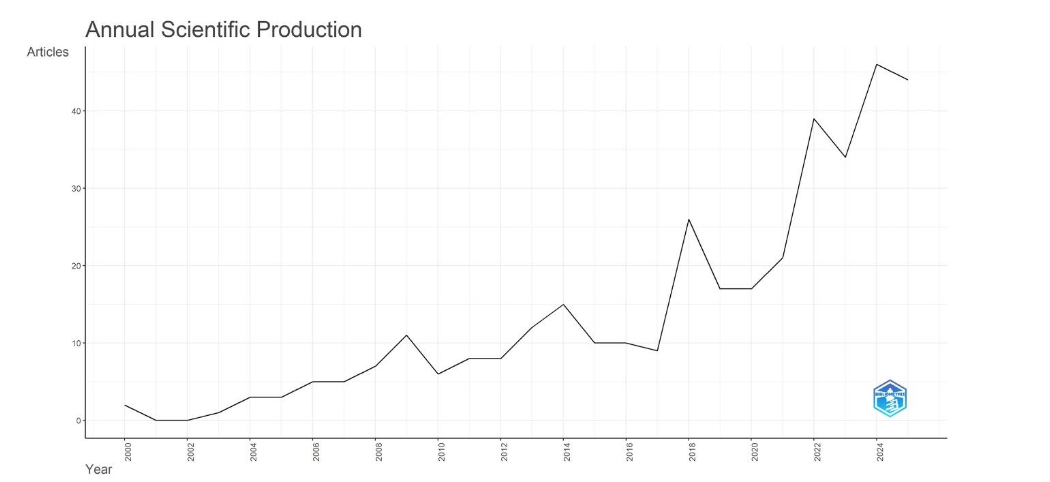
Fig. 1 Evolution of the number of documents produced every year on conservation of stingless bee research in the period 2000 to 2025

. The first document was published in 2000, showing a growing pattern up to 2025 with 44 documents.

3.2 Main information of the retrieved documents

The major information of our dataset is presented in

Main information of the dataset bibliometric descriptors Counts of all documents
Timespan 2000:2025
Sources (Journals, Books, etc) 141
Documents 359
Annual Growth Rate % 13.6
Document Average Age 6.23
Average Citations per Document 30.77
References 2350
Document Contents
Keywords Plus (ID) 1541
Author’s Keywords (DE) 1054
Authors 1463
Authors of Single-Authored Documents 0
Authors Collaboration
Single-Authored Documents 0
Multi-Authored Documents 1463
Co-Authors per Document 9.57
International Co-Authorships % 29.53
Document Types
Article 299
Review 25
Book chapter 19
Conference paper 6
Note 2
Book 2
Editorial 2
Note 2
Conference review 1
Erratum 1
No. of languages
Chinese 1
English 348
Indonesian 1
Portuguese 6
Spanish 10
Thai 1

3.3 Most productive authors

Ranking NP Microbiome of stingless bees and nest materials Author Affiliation, city Country
1 18 Imperatriz-Fonseca VL Universidade de São Paulo, São Paulo Brazil
2 16 Quezada-Euan JJG Autonomous University of Yucatan UADY, Merida Mexico
3 12 Woldschmidt AM Universidade Estadual do Sudoeste da Bahia Brazil
4 11 Francoy TM Universidade de São Paulo, São Paulo Brazil
5 9 Giannini TC Instituto Tecnológico Vale, Belem Brazil
6 8 Blochtein B Pontifícia Universidade Católica do Rio Grande do Sul Brazil
7 8 Nunes LA Faculdade Tecnologia e Ciencias, Jequie Brazil
8 7 Arias MC Faculdade de Tecnologia e Ciências-FTC, Jequie Brazil
9 7 Freitas BM Universidade Federal do Ceara, Fortaleza Brazil
10 6 Alves DA Universidade de São Paulo, São Paulo Brazil

3.4 Most Productive Affiliations

Brazil has 8/10 of the most productive top ten affiliations ranked in

Ranking NP Institution, city Country
1 47 Universidade de São Paulo, São Paulo Brazil
2 23 Universidad Autonoma de Mexico, Mexico DF Mexico
3 17 Universidade Federal de Vicosa Brazil
4 16 Instituto Tecnologico Vale Brazil
5 13 Empresa Brasileira de Pesquisa Agropecuária – Embrapa Brazil
6 13 Universidade Estadual do Sudoeste da Bahia Brazil
7 12 Universidade Federal do Ceará Brazil
8 11 Consejo Nacional de de Investigaciones Científicas y Técnicas Argentina
9 11 Universidade Federal do Reconcavo da Bahia Brazil
10 11 Universidade Federal do São Carlos Brazil

3.5 Most productive countries and collaborative map

The most prolific countries for conservation of stingless bee publications ranked in the Scopus database (

Ranking NP Country
1 154 Brazil
2 52 Mexico
3 31 United States
4 21 Malaysia
5 19 Germany
6 17 Indonesia
7 15 Belgium
8 15 Colombia
9 15 India
10 15 United Kingdom

) were Brazil (154), Mexico (52), USA (31), Malaysia (21), Germany 19), Indonesia (17), and 15 documents from Belgium, Colombia, India, and the United Kingdom. A total of 58 countries participated in our dataset, including Argentina (14), Australia (13), Spain (12), Kenya (11), Thailand and Costa Rica (9), Netherlands and Canada (8), Panama and China (6), Tanzania, Portugal, Guatemala, and France (5), Uganda, South Africa, Philippines, Bolivia and Austria (3), Vietnam, Sweden, Peru, Italy, Ghana, Ethiopia, Ecuador, Congo, Chile, and Bulgaria (2), and one document for Zimbabwe, Venezuela, United Arab Emirates, Turkey, Switzerland, Sri Lanka, South Korea, Singapore, Pakistan, Japan, Iran, Hong Kong, Democratic Republic Congo, Cameroon, Burundi, Burkina Faso, Brunei Darussalam, and Botswana.

The most globally ten cited countries for conservation of stingless bee in the Bibliometrix plot (Fig. 2) are Germany (5412), Brazil (1985), USA (646), Mexico (595), United Kingdom (498), Australia (189), Malaysia (122), France (106), Japan (88), and Panama (76).
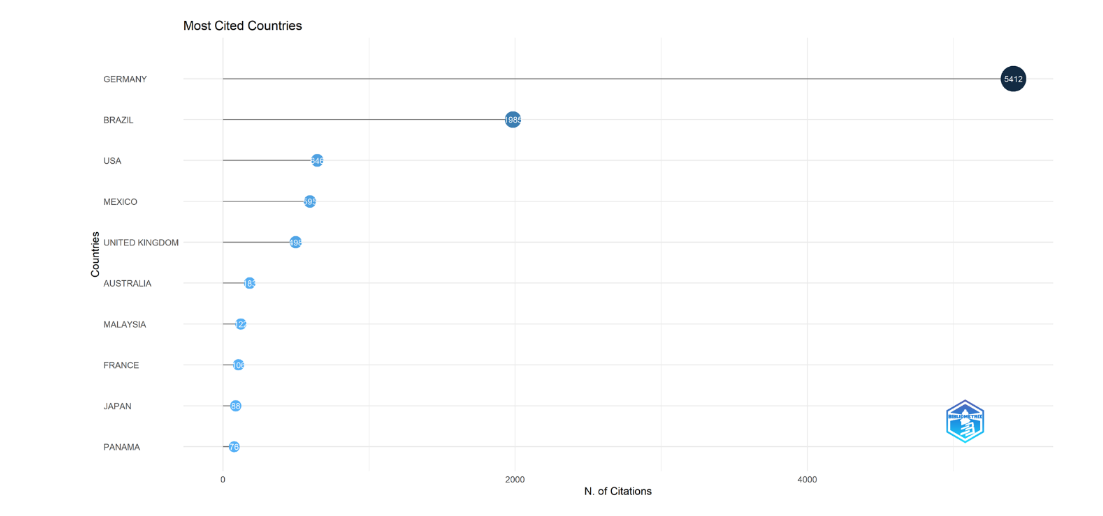
Fig. 2 Most globally cited countries on conservation of stingless bee research (2000–2025)

) are Germany (5412), Brazil (1985), USA (646), Mexico (595), United Kingdom (498), Australia (189), Malaysia (122), France (106), Japan (88), and Panama (76). The bubble size is proportional to the number of documents, and the blue color shade corresponds to the total citations per year, darker blue for more citations than lighter blue.

The collaboration between countries sharing publications on conservation of stingless bee research in the period 2000 to 2025 was visualized in the country collaborative map of
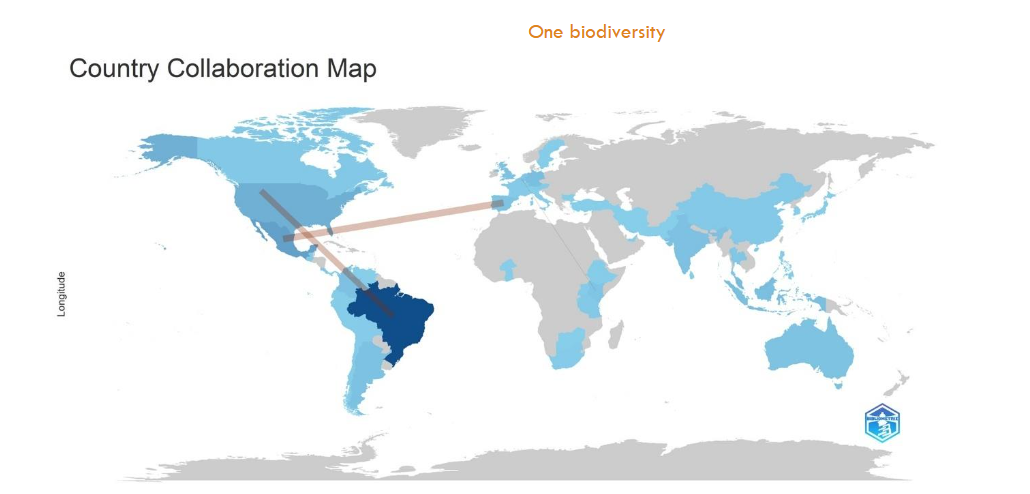
Fig. 3 Worldwide map with country collaboration for conservation of stingless bee research (2000–2025). Dark blue countries are more productive than light blue countries. Thicker collaboration brown lines were visualized between Brazil and USA and Spain and Mexico (3 or more shared documents), and between Belgium and Kenya (2 documents). Thin lines connecting many countries sharing one document were not included in the map. Connecting countries increase line thickness with most frequently shared publications

. The highest collaborative frequency was between Brazil and USA, and for Spain and Mexico.

3.6 Most productive sources

In

Ranking NP Source (h index, Quartile, impact score) Editorial, Country
1 115 Apidologie (h 105, Q1, 2.23) Springer-Verlag Italia s.r.l., Italy
2 92 Journal of Apicultural Research (h 81, Q1, 2.08) Taylor and Francis Ltd., United Kingdom
3 64 Sociobiology (h 44, Q4, 0.65) Universidade Estadual de Feira de Santana, Brazil
4 56 Journal of Insect Conservation (h 76, Q1, 2.46) Springer Nature, Switzerland
5 54 International Journal of Tropical Insect Science (h 35, Q2, 1.45) Springer Nature, Switzerland
6 49 Stingless Bee Nest Cerumen and Propolis Springer Nature, Switzerland
7 46 Serangga (h 11, Q3, 0.64) Penerbit Universiti Kebangsaan Malaysia, Malaysia
8 44 Insectes Sociaux (h 70, Q2, 1.18) Springer Science and Business Media Deutschland GmbH. Switzerland
9 44 Plos One (h 487, Q1, 2.67) Public Library of Science, United States
10 40 Grana (h 47, Q3, 1.02) Taylor and Francis Ltd., United Kingdom

3.7 Most productive Scopus subject areas on conservation and stingless bee research since 2000

The documents on conservation of stingless bees were most frequently published in eight subject areas of the Scopus database, covering the following percentages: 51.8% Agricultural and Biological Sciences, 20.2% Environmental Science, 8.2% Biochemistry, Genetics and Molecular Biology, 3.8% Multidisciplinary, 3.4% Social Sciences, 2.9% Medicine, 2.7% Earth and Planetary Sciences, 2.1% Engineering, and 3.2% Others.

3.6.1 Author’s keywords

A selection of the top 25 authors’ keywords used in the scientific literature on conservation of stingless bees’ research (2000–2025) was done. In
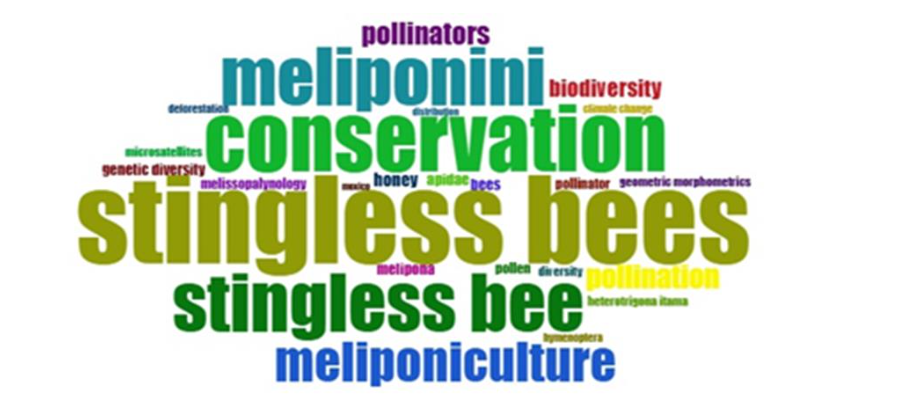
Fig. 4 Word cloud using authors’ keywords in the scientific literature on conservation of stingless bees’ research (2000–2025)

we show a word cloud using authors’ keywords, with words of higher frequencies occupying the center of the cloud with larger letters, and words with lower frequencies in the periphery or between lines with smaller letters: stingless bees (83), conservation (63), stingless bee (55), meliponini (54), meliponiculture (38), pollination (22), pollinators (21), biodiversity (17), honey (13), Apidae (11), bees (11), genetic diversity (11), melipona (11), melissopalynology (10), pollen (10), pollinator (10), diversity (9), geometric morphometrics (9), heterotrigona itama (9), microsatellites (9), climate change (8), deforestation (8), hymenoptera (8), distribution (7), and mexico (7).

The word cloud is free shape but the tree map is a box arranged into contrasting colored boxes sized according to the frequency of author’s keywords in descending order. The tree map in
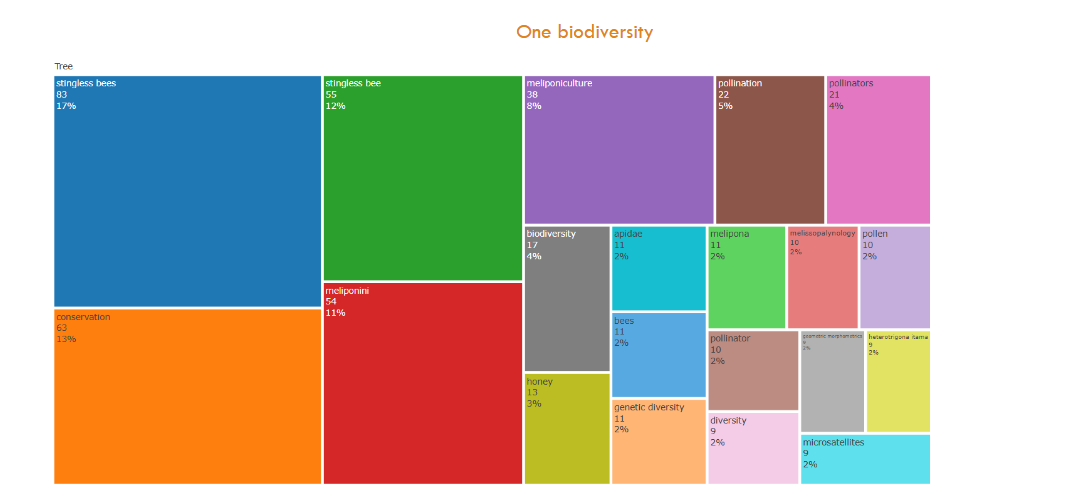
Fig. 5 Tree map on conservation of stingless bees’ published research (2000–2025) using 20 authors’ keywords

shows the top 20 higher frequencies of the authors’ keywords in the dataset, and informs their corresponding percentages. In the left half of the table, four words represent more than 50% frequency, stingless bee (83, 17%), conservation (63, 13%), stingless bee (55, 12%), and meliponini (54,11%). In the right side of the table, 16 words were used less frequently, meliponiculture (38, 8%), pollination (22, 5%), pollinators (21, 4%), biodiversity (17, 4%), honey (13, 3%), apidae (11, 2%), bees (11, 2%), genetic diversity (11, 2%), Melipona (11, 2%), melissopalynology (10, 2%), pollen (10, 2%), pollinator (10, 2%), diversity (9, 2%), geometric morphometrics (9, 2%), heterotrigona itama (9, 2%), microsatellites (9, 2%).

A dendrogram is a tree diagram showing hierarchies (order, ranks, categories, similarities and dissimilarities) in clusters (branches grouping variables to be interpreted intellectually). This plot uses the analogy of a tree with branches and a common shared root, recently represented upside down (like a fork), with the variable descriptors in the X axis, and the height (distance) in the Y axis. In
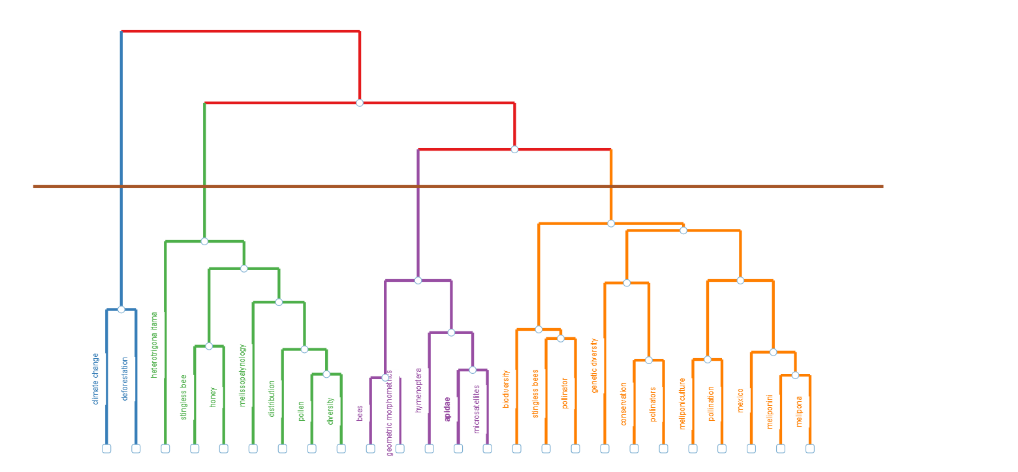
Fig. 6 Topic dendrogram by Hierarchical Cluster Analysis (HCA) of authors’ keywords on conservation of stingless bees’ published research (2000–2025)

a topic dendrogram for authors’ keywords shows four clusters for 25 terms, obtained after factorial analysis using hierarchical cluster analysis (HCA). The blue cluster consisted in two related keywords for biodiversity loss, such as deforestation and climate change. The green cluster has two subclusters, one for stingless bee and honey, the other related with plant diversity for melissopalynology, distribution, pollen, and diversity. The stingless bee Heterotrigona itama is also included in the green cluster. The violet cluster is related to bee diversity, with two subclusters for bees, geometric morphometrics, and hymenoptera, Apidae, microsattelites. Finally, the orange cluster has three subclusters about pollination and pollinators ecological service needed to maintain biodiversity 1. biodiversity, stingless bee, and pollinator, 2. genetic diversity, conservation, pollinators, and 3. meliponiculture, pollination, mexico, meliponini, and Melipona; having one country and the most biodiverse genus included here.

3.6.2 Most globally cited documents

The plot of most globally cited documents in
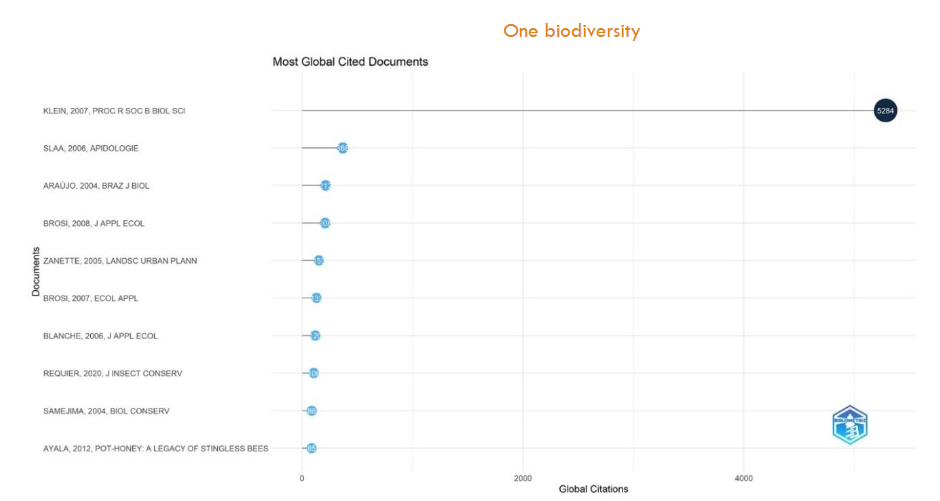
Fig. 7 Most globally cited documents on conservation of stingless bee microbiome research (2000–2025)

shows the top ten documents most cited in our Scopus dataset. Klein (2007) has been cited 5284 times and the second most cited Slaa (2006) has been cited 368 times.

In
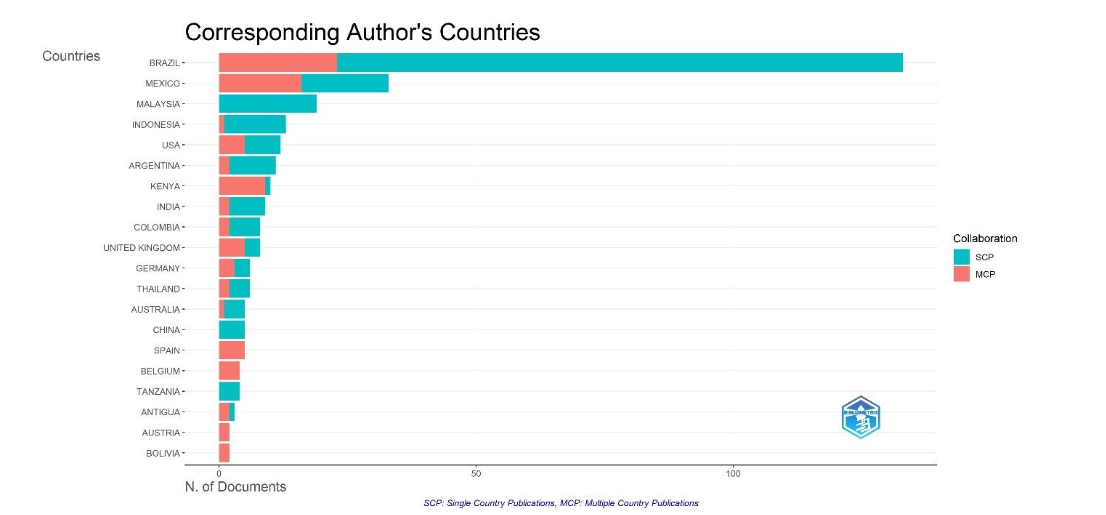
Fig. 8 Composition of documents regarding the single or multiple country publications of corresponding author’s countries (2000–2025) Intra-country (single country publication SCP) and inter-country (multiple country publication MCP) corresponding author’s collaborations.

is visualized the composition of documents regarding the single or multiple country publications of corresponding author’s countries. At a glance, Brazil, the most productive country, has devoted 4.5 times to single country publications over multiple countries. The next country, Mexico, reaches a third of the publications of Brazil, but only half of the publications are single country and the other half for multiple country, like the United States. Malaysia only published single country, as well as China and Tanzania. On the contrary, Spain, Belgium, Tanzania, and Bolivia have selected multiple country publications. Indonesia, USA, Argentina, India, Colombia, Thailand, and Australia have more single than multiple country, whereas Kenya, the United Kingdom, and Antigua have more multi country teams of authors than single country.
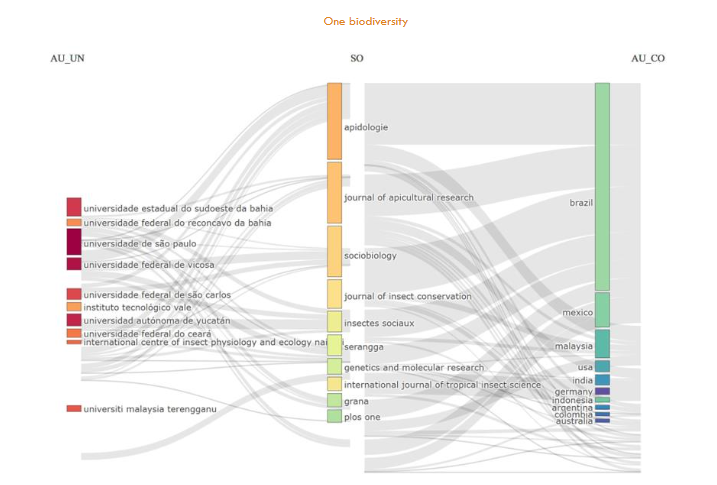
Fig. 9 Three-field plot or Sanky diagram for conservation of stingless bee documents (2000–2025) based on the affiliation of the first author (AU_UN), source (SO), and the country of authors (AU_CO).

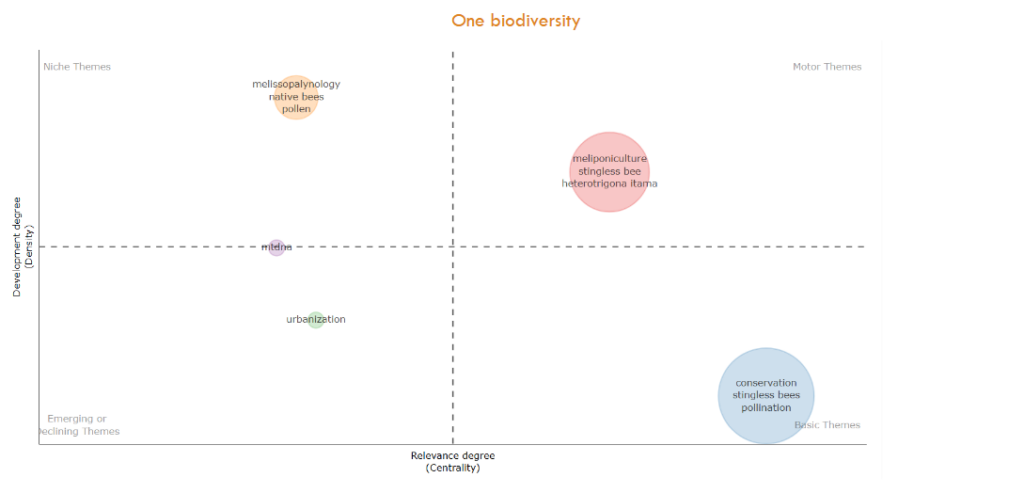
are visualized four compartments of niche themes, motor themes, basic themes, and emerging or declining themes, showing the final stage on thematic evolution maps on publications of stingless bee conservation (2000–2025). Theme maps employ co-occurrence networks to group elements of Key Words Plus based on their relevance and development stage on publications of a theme. A theme’s significance is assessed by the centrality of its clusters and its thematic status, visualized by plots on the X-axis measuring the importance of a theme, and the Y-axis measuring cluster connection density to indicate the strength of the cluster networks, to foster the evolution of a theme. According to their position on the map, the themes are classified in motor, niche, emerging or declining, and basic themes. The basic theme of our dataset was represented by a unique cluster on conservation, stingless bees, and pollination; as well as the motor theme with one cluster about meliponiculture, stingless bees, and Heterotrigona itama –a conspicuous Malaysian stingless bee in the scientific literature, promoted to develop pot-honey for clinical use– Similarly, a unique cluster for the niche theme about well documented melissopalynology, native bees, and pollen, but somehow isolated in this analysis. Two clusters with one component on urbanization and mtdna resulted emerging themes.
This image has an empty alt attribute; its file name is image-13-1024x493.png

Fig. 10 Final slice for trends in thematic evolution maps on publications of stingless bee conservation (2000–2025).

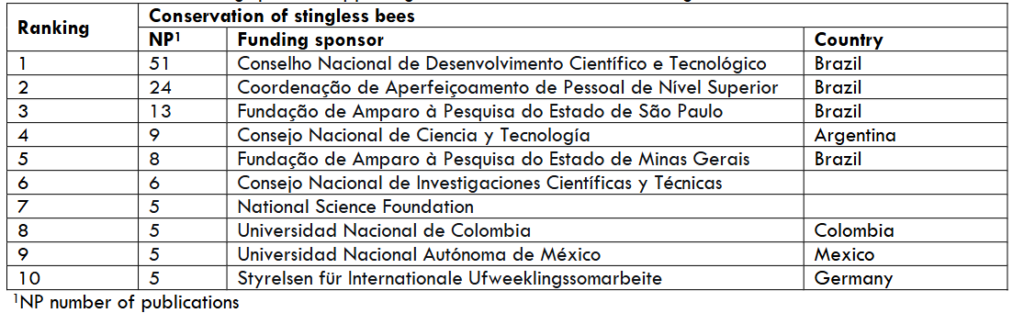
Funding sponsors of research are vital for conservation of stingless bees. In Table 7 it is evident that Brazil has more funding sponsors than any other country supporting conservation of the most biodiverse country with 259 species of stingless bees, distributed in the five regions of this country: 1. North, including the Amazon (197 species), 2. Central-West (99), 3. Northeast (97), 4. Southeast (70), and 5. South (36).¹⁴

Table 7. Most active funding sponsors supporting research on conservation of stingless bee since 2000
This image has an empty alt attribute; its file name is Screenshot-2026-03-03-110425-1024x313.png

4. Repercussions of the environment in stingless bee nest materials

Stingless bees (Meliponini) exhibit profound sensitivity to environmental factors, which makes them excellent bioindicators of ecosystem health. A thriving population reflects ecological balance, whereas their decline serves as an early warning of environmental degradation. Their vulnerability to climatic variability, habitat loss, agrochemicals, pollution, pathogens, and competition underscores the urgent need to understand and mitigate the pressures threatening their survival.

4.1 Impact of Climate and Habitat Alteration

As tropical and subtropical species, stingless bees are highly susceptible to climatic shifts. Elevated temperatures can cause brood comb melting, larval mortality, and reduced foraging activity while extreme cold impairs brood development due to limited thermoregulation capacity. Humidity extremes further destabilize colonies, either through desiccation or fungal proliferation. Drought reduces floral resources, leading to malnutrition and decreased brood rearing, whereas heavy rains hinder foraging and flood ground-nesting species. Beyond climate, habitat loss and fragmentation represent the most critical threats worldwide. Deforestation eliminates nesting sites, monocultures create seasonal food deserts, and urbanization reduces floral diversity while increasing pollutant exposure.

4.2 Anthropogenic Stressors: Agrochemicals and Pollution

Stingless bees are particularly vulnerable to pesticides due to their smaller size and reduced pilosity compared to honeybees. Contaminated nectar and pollen can cause direct mortality, while sublethal effects—such as impaired navigation, reduced memory, and diminished queen fecundity—undermine colony viability. Pollution compounds these risks: air pollutants disrupt floral scent trails, impairing foraging efficiency, while soil and water contamination introduce heavy metals and toxins into nectar and pollen, generating chronic toxicity within nests.

4.3 Biotic Pressures and Invasive Species

Environmental imbalance also increases susceptibility to pathogens and parasites. Fungi such as Aspergillus spp. thrive in poorly ventilated nests, mites like Pyemotes spp. kill pupae in stressed colonies, and phorid flies consume brood and nest structures. Additionally, stingless bees face competition from invasive species. Honey bees often outcompete them for floral resources, while Africanized honeybees may directly usurp nesting cavities. Collectively, these pressures highlight the fragility of stingless bee populations and reinforce their role as sentinel species for monitoring ecosystem integrity. The significant geographical and seasonal variation in metabolite profiles are reported in studies. A comprehensive understanding of both botanical and microbial origins is therefore essential for standardizing these natural products for medicinal use and for developing conservation strategies that protect the diverse ecosystems sustaining these complex chemical factories.

The key classes of bioactive metabolites in stingless bee nest materials and their roles are summarized and integrated in

Source / Origin Key Metabolite Classes Reported Bioactivity / Role
Botanical Sources (External Environment) Dalbergia spp. (Propolis) Prenylated benzophenones, flavonoids Potent antibacterial, antifungal (Campos et al., 2014).
Tualang, rainforest flora (Honey) Flavonoids, phenolic acids, galangin Antioxidant, Antibacterial (Abdullah et al., 2025).
Microbial Sources (Internal Nest Environment) Lactic acid bacteria (LAB) in pot-pollen Aliphatic organic acids (acetic, lactic), bacteriocins pH regulation, pathogen inhibition, preservative (Schwarz et al., 2023).
Yeasts and fungi in fermented pot-pollen Ethanol, bioactive peptides, enzymes Prebiotic, nutrient enhancement (Schwarz et al., 2023).

5. Secondary metabolites in stingless bee materials of the nest, microbial diversity, and medicinal applications

Stingless bees collect nectar, pollen, plant resin and oils from plants and process them into pot-honey, pot-pollen, cerumen, and propolis. Phytochemicals such as flavonoids, phenolic acids, polyphenols, and terpenoids are secondary plant metabolites affected by environmental changes. Stingless bees and the materials derived from their nests have traditionally been studied in various tropical regions for their potential beneficial properties for human health. In recent years, scientific research has delved deeper into the analysis of the microbiome that resides in these bees and the materials they collect and process, such as honey, propolis, pollen, and cerumen. This research reveals that the associated microbial richness and diversity not only contribute to the health and survival of bee communities but are also a natural source of bioactive compounds with potent antimicrobial, antioxidant, anti-inflammatory, and immunomodulatory effects, giving these products beneficial and healing properties.

The microbiome plays a fundamental role in enriching these products with microbial secondary metabolites. When these metabolites combine with the bees’ own compounds, they generate unique biochemical synergies. This complexity has generated interest in the potential use of stingless bee products in integrative medicine, as well as in the development of innovative new therapeutic options capable of contributing to the fight against infectious diseases — especially those caused by multidrug-resistant pathogens — and of alleviate chronic inflammation, preventing oxidative stress and controlling metabolic dysfunctions. However, these medicinal applications must be considered in the context of biodiversity preservation, since the sustainability of stingless bee populations and the integrity of their microbiome are essential for ensuring the production and quality of these natural resources. The interplay between human health, functional microbiology, and ecological conservation is a promising interdisciplinary frontier that could improve biomedicine and environmental protection.

5.1 Antimicrobial activity

The microbiome of stingless bees and the materials in their nests constitute a reservoir of beneficial microorganisms and metabolites that exhibit a wide range of antimicrobial activities against bacteria, fungi, and viruses. In vitro studies and experimental models have supported this hypothesis, reaffirming the therapeutic potential of these products in combating infections, particularly in the context of bacterial resistance. The microbiome of Meliponini bees contains bacteria such as Lactobacillus, Bifidobacterium, and Bacillus, which produce bacteriocins, organic acids, and enzymes that directly inhibit pathogens. These microbial communities benefit the health of the colonies and enrich the nest materials with multifunctional bioactive compounds. The hydrogen peroxide, phenolic metabolites, and microbial enzymes found in honey from stingless bees act synergistically to inhibit both Gram-positive and Gram-negative bacteria, as well as pathogenic fungi. This spectrum includes multidrug-resistant strains, making these products important natural antimicrobial agents. Similarly, propolis and cerumen, which are rich in phenolic compounds and flavonoids, exhibit significant bactericidal and fungicidal properties. Their effectiveness increases when they are combined with metabolites produced by the associated microbiota, forming a biochemical complex with a multipurpose antimicrobial action.

Recent research has highlighted the synergistic effect that occurs when honey and other bee products are associated with antibiotics. Some studies suggest that these natural products can increase the effectiveness of antibiotics, reducing the minimum inhibitory concentrations needed to eliminate resistant bacterial strains such as methicillin-resistant Staphylococcus aureus (MRSA) and carbapenemase-producing Pseudomonas aeruginosa. This is because the compounds in honey and propolis affect different microbial targets, complementing the mechanisms of action of conventional antibiotics. For instance, honey can alter bacterial membranes and biofilms, thereby facilitating antibiotic penetration and efficacy, while its phenolic metabolites can inhibit enzymes involved in antimicrobial resistance. In this context, honey and other bee products, working synergistically with antibiotics, also reduce the required dose of these drugs, which may decrease adverse effects and help contain the spread of antimicrobial resistance. Therefore, the integration of products from stingless bee nests into antimicrobial therapies could optimize treatments, especially for difficult-to-treat infections caused by multidrug-resistant pathogens.

It is important to note that the set of bioactive metabolites, which includes hydrogen peroxide, organic acids, flavonoids, terpenoids, and microbial enzymes, acts through various mechanisms. These include perforation and destabilization of the bacterial cell membrane, inhibition of protein and nucleic acid synthesis, alteration of intracellular metabolism, and generation of oxidative stress. They also include disruption and prevention of biofilm formation. These mechanisms reduce the likelihood of resistance development in pathogens and emphasize the importance of preserving microbial biodiversity in bee products to ensure and maintain these therapeutic effects.

5.2 Antioxidant and anti-inflammatory potential

The bioactive factors present in the microbiome of stingless bees and their nests constitute a multifaceted source of compounds with remarkable antioxidant and anti-inflammatory properties. These mainly result from high levels of phenolic substances and flavonoids, which act as powerful free radical scavengers and protect cells against oxidative damage, a key factor in the development of various chronic diseases. Recent studies have shown that the antioxidant capacity of stingless bee honey is superior to that of honey from other bee species, thanks to the symbiotic microbiome’s production of antioxidant enzymes such as catalase and superoxide dismutase, which enhances the protective effect. Furthermore, the anti-inflammatory potential of these products is proved by their ability to reduce the production of pro-inflammatory mediators, such as certain cytokines and enzymes related to chronic inflammation. In vitro trials and experimental models have shown that extracts of honey and propolis from stingless bees decrease the expression of cyclooxygenase-2 (COX-2) and inducible nitric oxide synthase (iNOS), and modulate the innate immune response, which promotes the resolution of inflammatory processes and prevents chronic tissue damage. This action is attributed to the synergy between microbial metabolites and plant compounds present in bee products, which act together to regulate inflammatory processes.

The microbiome plays a critical role in this biochemical synergy by contributing to the production of metabolites that enhance these antioxidant and anti-inflammatory properties, resulting in multifactorial effects that would not be achieved by individual compounds alone. This microbial cooperation improves therapeutic efficacy and highlights the importance of conserving biodiversity to maintain the quality and functionality of these products. These antioxidant and anti-inflammatory properties suggest the potential for products derived from stingless bees to be used in the development of natural therapies for chronic inflammatory diseases and nutraceuticals to promote overall health. Incorporating these products into integrative medicine enables various pathologies to be prevented or treated within a framework, strengthening sustainability and environmental protection.

5.3 Immune modulation and its application to metabolic diseases

In the broader context of the microbiome of stingless bees and their nest materials, immune modulation plays a vital role in complementing and amplifying the recognized antimicrobial, antioxidant, and anti-inflammatory properties. Bioactive metabolites derived from the symbiotic microbiota and phytochemical compounds found in honey, propolis, cerumen, and pollen have an impressive capacity to interact with the host’s immune system, promoting precise regulation that favours homeostasis and an effective response to pathogens without causing harmful chronic inflammation. This immunomodulatory action is particularly relevant in metabolic diseases, where immune dysfunction plays a central pathogenic role. Recent research shows that these bee products can influence the activation and proliferation of immune cells, cytokine production, and the expression of key receptors, modulating both innate and adaptive responses. This balanced regulation helps to mitigate the systemic inflammation and oxidative stress that are characteristic of diseases such as type 2 diabetes mellitus, obesity, and metabolic syndrome. These pathologies are highly prevalent worldwide and require safe and effective therapeutic alternatives. Experimental models have shown that microbial and phytochemical extracts can improve insulin sensitivity, regulate lipid and carbohydrate metabolism, and reduce the expression of inflammatory markers. This implies a dual mechanism of action that addresses the immunological and metabolic origins of these diseases.

In patients with type 2 diabetes mellitus, systemic inflammation and oxidative stress are important factors in the development of insulin resistance and progressive tissue damage. Clinical and experimental studies have revealed that the topical application or oral administration of stingless bee honey can accelerate the healing of diabetic ulcers thanks to its combined antimicrobial, anti-inflammatory, and local immune-stimulating effects. Conversely, animal models have demonstrated that supplementation with these products enhances the activity of antioxidant enzymes, reduces inflammatory markers, and promotes tissue regeneration in areas affected by hyperglycaemia. The ability of the bee microbiome to modulate immune responses is also reflected in the regulation of T cell activation and the expression of immunomodulatory receptors, which allows the balance between inflammation and tissue repair to be regulated. This phenomenon is essential for delaying the progression of diabetes and its micro- and macrovascular complications. Studies indicate that these mechanisms contribute to improving both insulin sensitivity and glycolipid metabolism in experimental models, underscoring the multifunctionality of these products as adjuvant therapies. Therefore, preserving the microbiome and biodiversity of stingless bees is presented as an integrative conservation strategy that not only protects a valuable biological resource but also ensures the continued production of these natural therapeutic compounds that may have a decisive role in the management of chronic non-communicable diseases such as diabetes. The interaction between microbiota, inflammation, and metabolism is a field of growing interest, and these bee products offer a promising approach that integrates human health with environmental sustainability. This integrative approach contributes to our understanding of the therapeutic value of stingless bee products and opens up prospects for developing nutraceuticals and adjuvants for use in conventional therapies. Furthermore, preserving biodiversity and the health of the bee microbiome is essential for maintaining the quality and availability of these medicinal products. This establishes an indispensable link between biomedical innovation and ecological conservation. Therefore, the immunological modulation exerted by the microbiome of stingless bees and their nest materials is a prime example of how biodiversity can provide innovative, sustainable solutions for contemporary medicine.

6. Experts on stingless bee conservation inform endeavors in their countries

We were interested to know what actions have governments taken in a few countries. What government agencies? A brief outline of historical progress on conservation of stingless bees, and especially the current status on any legislation.

6.1 Legal and conservation framework for Philippine stingless bees

Stingless bees have great potential for the future of Philippine agriculture and the economy due to their sustainability, vital role in pollinating both wild and domesticated plant species, and the value of their hive products. To date, 12 species of stingless bees have been documented in the Philippines, of which three have shown strong potential for domestication and for the production of honey, pollen, and propolis. Their use in managed pollination is also expanding, particularly for high-value crops such as mango, rambutan, avocado, and various vegetables. Wild stingless bee populations, found primarily in forests, provide sources of genetic material for natural breeding and conservation. Their hive products also show therapeutic properties. Although stingless bees are not yet listed as threatened species under existing wildlife protection laws, their collection and utilization must be carefully regulated to avoid the depletion of wild populations.

6.1.1 Laws relevant to stingless bee conservation

The Philippines has several national laws, standards, and ordinances that regulate wildlife collection, protect forest habitats, and promote sustainable agricultural practices. However, these policies also present gaps that limit their effectiveness for species-specific conservation—particularly for stingless bees whose biology, nesting patterns, and ecological roles differ from those of honey bees.

6.1.2 Republic Act 9147 – Wildlife Resources Conservation and Protection Act

The Wildlife Resources Conservation and Protection Republic Act 9147 provides the basic legal foundation for the conservation of wildlife species and their habitats, promoting ecological balance and biological diversity in the Philippines. The law regulates the collection, possession, transport, and trade of wildlife—including insects such as stingless bees—and imposes penalties for unauthorized activities. Its provisions guide national wildlife management and support the development of science-based conservation strategies (Office of the President of the Philippines, 1995). A key component of RA 9147 is its regulation of bioprospecting, defined as the research, collection, and utilization of biological and genetic resources for scientific or commercial purposes. Bioprospecting activities involving wildlife require a permit from DENR (for terrestrial species) or DA-BFAR (for aquatic species), as well as Prior Informed Consent (PIC) from Indigenous Peoples, local communities, or protected area managers when applicable. A bioprospecting undertaking ensures equitable access and benefit-sharing, values traditional knowledge, and prevents the exploitation of native species. These provisions are highly relevant to stingless bees, whose wild colonies represent valuable genetic and biochemical resources that must be accessed responsibly.

6.2 Stingless bee conservation in Bolivia: Current advances in governance, research, knowledge indigenous, collective and individual initiatives

In Bolivia, stingless bees (Meliponini) have acquired significant conservation and socioeconomic relevance through the progressive development of meliponiculture. Some species have demonstrated their capacity for breeding and management in box nests, thereby enabling the sustainable production particularly honey and propolis. These hive products exhibit distinctive nutraceutical properties, and well-documented therapeutic and nutritional benefits offering particularly valuable livelihood opportunities, and food-security options for indigenous and local communities.

6.2.1 Richness species of stingless bees in Bolivia

To understand the advances in stingless bee conservation in Bolivia, it is first necessary to review knowledge of their diversity. Early foundational contributions of meliponine bees were published by Moure (1950) and Kempff-Mercado (1968). Subsequently, the catalogue of bees (Hymenoptera, Apoidea) in the Neotropical region, recorded 21 genera and 88 species for Bolivia (Camargo et al. 2023). The most recent review documented 121 species distributed across 19 valid genera, with the added description of a new species, Melipona rasmusseni, bringing the current total to 122. However, it is important to note the possible addition of 15 species described near the borders with Brazil and Argentina.

6.2.2 Meliponiculture

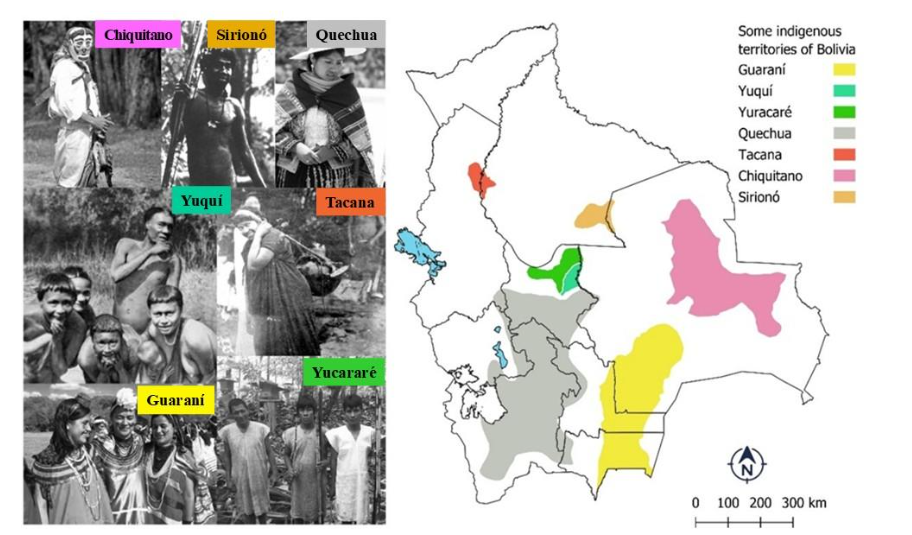
Of all stingless bees known in Bolivia, at least eight species are managed in stingless bee keeping, which has led to various projects developed since the 1990s. Among them are various projects set up by non-governmental organizations (NGOs), such as the initiatives carried out in the department of Beni, specifically within the Sirionó indigenous communities of Ibiato, promoted by the Biodiversity Support Program WWF/USAID, the Nature Conservancy, and The Wood Resources Institute. Currently, efforts are underway in the Ibare-Mamoré municipal protected area of Trinidad, Beni, promoted through CIBIOMA of the Technical University of Beni Mariscal José Ballivián. Likewise, in Santa Cruz, projects were implemented starting in 2000 in Guaraní indigenous communities with the support of the Wildlife Conservation Society (WCS), as documented in the works of Martínez and Cuéllar (2004), and in settler communities within Amboró National Park supported by the eastern ecology association (ASEO, Asociación Ecología del Oriente). Additionally, Chuquisaca NGO Lider and the PASOS Foundation formed associations of meliponiculture producers, becoming a benchmark in stingless bee breeding and production since 2015. NGOs such as the Foundation for the Conservation of the Chiquitano Forest (FCBC, Fundación para la Conservación del Bosque Chiquitano), with support from indigenous farmers in eastern Bolivia (APCOB, Apoyo para el Campesino-Indígena del Oriente Boliviano), have been promoting research and development of meliponiculture in the Chiquitania region since 2020. Other locality such as Vallegrande are in their nascent stages of meliponiculture. Other valuable experiences took place in the Tacana indigenous communities in La Paz, supported by WCS. During 2010 in Tarija, in regions of the Chaco, they worked with the association of beekeepers of the Gran Chaco (ADACHACO, Asociación de Apicultores del Gran Chaco) – PUMA Foundation. In Cochabamba, the Yuracaré indigenous communities have promoted meliponiculture.

6.2.3 Law, Statutes and Programs (Governance)

National policies that attempt to include stingless bees arise through the national program for the strengthening and support of beekeeping production (PNFyAPA, Programa Nacional de Fortalecimiento y Apoyo a la Producción Apicola). Under the criterion of resilience to climate change, a variety of studies have been carried out that include preferentially the introduced honey bees (Apis mellifera) and also native bees (Meliponini) of economic importance. The following are important aspects of PNFyAPA:

  • Bolivia promulgated the Supreme Decree 4632 (1 December 2021) governed by Law 144 (26 June 2011), establishing that better and greater production performance will be promoted within the framework of a plural economy, for traditional, organic, ecological, agricultural, and forestry production intended for domestic consumption, enabling food sovereignty to be achieved and surpluses to be generated, within the framework of local knowledge, practices, and technological innovation based on family, community, associative, and cooperative forms of production.
  • Created the PNFyAPA, aim to consolidate and strengthen the national beekeeping sector. Although originally centred on Apis mellifera, the programme has progressively incorporated stingless bees.
  • Execution of support for assigned to the national institute of agricultural and forestry innovation (INIAF, Instituto Nacional de Innovación Agropecuaria y Forestal), Bolivian food and derivatives company (EBA, Empresa Boliviana de Alimentos y Derivados), and national service of agricultural health and food safety (SENASAG, Servicio Nacional de Sanidad Agropecuaria e Inocuidad Alimentaria). SENASAG participates in the PNFyAPA, aimed at specific regulations for beekeepers and meliponiculturists. For example, they publish general animal health regulations (REGENSA, Reglamento General de Sanidad Animal) in the chapter 3.3 has regulated specific requirements for the registration of beekeeping and meliponiculturists in the production establishments.

Despite these advances, hitherto, Bolivia has passed no national law specifically for stingless bees, but departmental and municipal governments have generated regulations, the most notable being:

  • The Law 366/2018 on the promotion, conservation, and development of beekeeping in the department of Chuquisaca, which in Article 5 (Chapter 1) includes definitions of meliponiculture and stingless bees. In addition, Chapter 5, Articles 18 and 19 deal with the conservation of the bee population in the department of Chuquisaca.
  • The municipality of Machareti has issued two regulations
    • Macharetí Municipal Law No. 15 Municipal Law on the Breeding, Management, Conservation, and Protection of Stinging Bees (Apis mellifera) and Native Stingless Bees (Meliponinos).
    • Municipal Decree No. 3/2021 Regulations to Machareti Municipal Law No. 15. Municipal Law on the Breeding, Management, Conservation, and Protection of Stinging Bees (Apis mellifera) and Native Stingless Bees (Meliponinos).

6.2.4 Advances and lessons learned for stingless bee conservation

In December 2024, the first Bolivian discussion forum on native stingless bees was held, convened by the FAO together with the Ministry of Environment and Water, meliponiculture farmers, academics, and civil society. At that forum, the Bolivian organization for the protection of native bees (OBPAN, Organización Boliviana de Protección a las Abejas Nativas) was founded, the first national entity dedicated specifically to stingless bees. Among the issues that arose were: the need for technical, regulatory, and academic funding; the creation of networks among meliponiculture practitioners; the cataloging of species by ecoregion; and insurance for producers against fires or pesticides.

6.2.5 Scientific support to study biodiverse stingless bee nest materials and meliponiculture in Bolivia

The physicochemical characterization of pot-honey, its botanical origin, and uses of cerumen and other materials of the nest like pot-honey, pot-pollen and propolis, including women have attracted researchers, as well as the relationship between stingless bees and plants. The Bolivian standards for stingless bee honey are needed, and Bolivia has developed a multidisciplinary frame to appreciate their biodiversity and potential medicinal uses. Financial support for science and technology from the government will benefit quality control and discovery of rich stingless bee resources.

6.3 Stingless bee conservation in Guatemala

In Guatemala we currently recognize 33 species of stingless bees, and their presence in the region goes back to the time of the ancient Maya. From colonial records we also know that these bees were already understood and valued by Indigenous communities, not only for their biological traits but for their cultural and spiritual importance. Honey and pollen have been traditionally used as food supplements, medicinal resources, and are even considered as elements of family protection. Their role has become increasingly visible in recent years, especially as global attention to pollinator decline has intensified.

Since the early 2000s, the Universidad de San Carlos de Guatemala has taken the lead in studying stingless bees in a more systematic way. This includes documentation of species diversity, distribution, genetics, ecological roles, and also the characterization of their nest materials. Much of the national conversation about the importance of stingless bees for conservation and food security has grown directly from this body of work. Little by little, other institutions, both government agencies and private organizations, have joined these efforts. The Ministry of Agriculture, especially through the Mediterranean fruit fly control and eradication program, incorporated meliponiculture into its social extension activities, as part of the beekeeping module. Also, the National System of Protected Areas -Consejo Nacional de Áreas Protegidas (CONAP)- has contributed to biodiversity and public education initiatives related to these bees.

Over the last 25 years, the visibility of stingless bees in Guatemala has increased noticeably, and this is in large part due to the sustained work coming from the Universidad de San Carlos. Their research, outreach, and technical training programs have consistently brought Meliponini into public discussion, generating interest among local communities, policymakers, government agencies and private organizations. Their resemblance to the familiar honey bee, Apis mellifera, has helped the general public quickly link them to ecosystem services such as pollination and honey production. The improvement in public acceptance and conservation actions also stems from the biocultural appeal of stingless bees: people perceive them as gentle, harmless and culturally meaningful, and their condition as native species is especially valued because of their association with traditions of medicinal honey and family protection. These qualities make conservation efforts feel intuitive, relatable, and relevant to Guatemalan identity. Taken together, this indicates that meliponiculture cannot simply replicate the apiculture model: stingless bees embody a strong biocultural identity, and their management and conservation require approaches that integrate cultural, ecological, and social dimensions.

The protected-area agency -CONAP- has formally adhered to the use of global open biodiversity databases such as GBIF, recognizing their importance as essential tools for modern conservation planning. However, records of Meliponini, especially those published by Guatemalan institutions, are still scarce in these platforms. Strengthening national participation and increasing the availability of high-quality data will be crucial for identifying priority species and areas that need biodiversity protection.

In 2025, the first version of a “National Strategy for the Conservation and Sustainable Use of Native Stingless Bees in Guatemala” was released. Although it has not yet been officially launched, the document reflects a structured and collaborative effort to secure the future of these species. Its development involved the Universidad de San Carlos, several government institutions, including the protected area agency, meliponiculturists, and private organizations. The strategy represents the country’s first coordinated national framework aimed at promoting meliponiculture, protecting native species, and integrating cultural and social values into conservation planning.

6.4 Legal and conservation framework for stingless bees in Tanzania

Stingless bees are highly regarded in Tanzania as a unique resource, contributing to income generation, pollination services, aesthetics (tourism) and biodiversity. The honey produced by stingless bees has long been appreciated for its distinct flavor and medicinal properties. Eleven species of stingless bees have been documented in Tanzania, representing seven genera of Axestotrigona, Hypotrigona, Plebeina, Meliplebeia, Dactylurina, Plebeiella, and Liotrigona. Among these, only few species in the genera Axestotrigona and Hypotrigona are actively managed for honey production. However, the utilization of stingless bee resources in the country raises sustainability concerns, particularly due to the reliance of wild stingless bee colonies for stocking managed hives and honey hunting practices that persist in some regions. Nonetheless, national policies and legislations recognize the importance of conserving these species, and effective implementation of these frameworks will be critical for ensuring their long-term sustainability.

6.4.1 Policies and legislations relevant to stingless bee conservation in Tanzania

In Tanzania, there are various legal and policy frameworks that govern the management of natural resources, and which directly or indirectly promote conservation of bees, including stingless bees. These include the National Beekeeping Policy, Beekeeping Act, Forest Act, Wildlife Conservation Act, and Guidelines for Management and Use of Honeybee Colonies for Pollination Services.

6.4.2 National Beekeeping Policy

The current National Beekeeping Policy of Tanzania was published in 1998 and it encompasses both stinging honey bees and stingless bees, including wild and domesticated colonies. The policy highlights the uniqueness of stingless bees due to their medicinal honey, and emphasizes the need for conservation of both types of bees amidst emerging threats such as pesticide poisoning, habitat destruction, and land clearing for agricultural expansion and industry development. One of the key policy objectives is to establish bee reserves, including for rare stingless bee species, to enable sustainable management of these species. The policy mandates joint management agreements between government and communities to ensure sustainable management of these bee reserves as breeding grounds for honey bees and stingless bees, and favorable areas for bee product production. Moreover, the policy advocates for environmental considerations to reduce risks which threaten stingless bees by requiring Environmental Impact Assessments (EIA) for projects near bee reserves to prevent habitat degradation, and promoting Integrated Pest Management (IPM) to minimize pesticide exposure.

6.4.3 Bee Keeping Act

The Bee Keeping Act of 2002 corroborates with the National Beekeeping Policy by promoting sustainable management and conservation of wild and domesticated bees, including stingless bees, through bee reserves. It delivers the mechanisms for establishing, managing, and protecting these reserves, and identifies prohibited activities to avoid disturbance or destruction of bee habitats. Additionally, the Act regulates trade related to bees and their products including importation, registration, and restrictions to control bee diseases and pests threatening bee populations. Furthermore, The Act mandates environmental impact assessments prior for developments near bee reserves to protect bee populations or habitats from planned activities. It also establishes the Beekeeping Development Fund, currently known as Tanzania Forest Fund (TaFF), which supports research and training, indirectly benefiting stingless bee conservation through sectoral capacity building and awareness creation.

6.4.4 Forest Act and Wildlife Conservation Act

The Forest Act of 2023 and Wildlife Conservation Act of 2022 both clearly recognizes bee ecosystems as targets for conservation under national laws. The Forest Act fosters biodiversity conservation within forest ecosystems which are the primary stingless bee breeding grounds through establishment and management of forest reserves from national to village levels. The Act promotes community involvement in forest management which supports protection of bee habitats through sustainable utilization and local stewardship.

The Wildlife Conservation Act places the bee ecosystems and related resources under the custody of a specialized paramilitary service which governs their conservation, management and utilization. Consequently, the Tanzania Forest Services Agency (TFS) converted into a paramilitary service under the Ministry of Natural Resources and Tourism which oversees the development and sustainable management of forest and bee resources. Additionally, TFS has legal powers to prevent, detain and investigate any crime related to forest and bee ecosystems and resources, creating a direct enforcement mechanism for the protection of stingless bee habitats.

The Forest and Wildlife Conservation Acts mandate environmental and wildlife impact assessments before approval and establishment of projects that are likely to affect forest and wildlife species, communities or habitats. This applies to projects involving logging, agricultural expansion, infrastructure development and mining which may affect stingless bee nesting sites.

6.5 Conservation of stingless bees in Costa Rica

A National Federation for Conservation (FECON) was created in Costa Rica 40 years ago. Ongoing proposals for conservation of bees wait for approval. We must recognize that bees are diverse, not just the European honey bee Apis mellifera, and that we must protect them and take advantage of their contributions without harming their populations. Conserving bee diversity means protecting native bees (including stingless bees, Meliponini) as well as other wild and solitary bees, protecting their habitats (native flowers, natural cavities, soils) and avoiding pesticides and diseases. Conserving means maintaining genetic and ecological diversity to ensure that they continue to play their fundamental role in pollination and ecosystem balance, and preserving the active biomolecules for medicinal uses. It is important to use them fairly and equitably. This refers to how we take advantage of the benefits that these bees generate. For example, pollination which enables agriculture and food production. Pot-honey, pot-pollen, cerumen, and propolis from the stingless bee nest. The traditional knowledge of communities that manage meliponines. Stingless bee keepers who conserve bees and their habitats receive real benefits (income, recognition, participation). The participation of farmers, indigenous communities, meliponiculture practitioners, and scientists in decision-making is promoted. In summary, conserving and using bee diversity in a fair and equitable manner means protecting both bees and their habitats and ensuring that the benefits of their existence and management are distributed in a responsible, ethical, and sustainable manner.

On the other hand, Costa Rica is very strict about collecting bees, and permits to export them take a while. There is a National Commission for Biodiversity Management, in Spanish Comisión Nacional para la Gestión de la Biodiversidad (CONAGEBIO), which is the permit office for samples that will be used for genetic analyses. The obligations of CONAGEBIO are primarily focused on the development of national policies pertaining to the conservation and sustainable utilization of biodiversity, as well as issues related to education, public awareness, research, and the transfer of technology. It serves as the authoritative entity responsible for establishing and overseeing adherence to regulations governing access to genetic and biochemical resources, regarded as assets within the public domain, thereby ensuring the preservation, conservation, and restoration of traditional knowledge linked to the utilization of biodiversity elements, framed in the Biodiversity Law of the Ministry of Agriculture and Livestock since 1998.

There are many causes that are affecting the biodiversity of different species of flora and fauna, but the fragmentation and loss of habitat is one of the main ones. Therefore, preservation, restoration, and connectivity of the different natural landscapes is one of the main challenges for the conservation of natural areas. Biological corridors arise from the needs to connect the different protected areas that were becoming islands, affecting the mobility of species. The use of stingless bees as indicators of connectivity in biological corridors is a valuable tool for the conservation and sustainable management of ecosystems, as it allows us to understand and mitigate the effects of habitat fragmentation and ensure the preservation of biodiversity.

6.6 Experience of El Salvador in Stingless Bee’s Conservation of Biodiversity

At present, El Salvador does not have a comprehensive unified national Biodiversity Law specifically dedicated to the conservation, sustainable use, and restoration of biological diversity. Although several legal instruments exist — including the Environmental Law (Ley de Medio Ambiente, 1998), the Protected Natural Areas Law (Ley de Áreas Naturales Protegidas, 2005), and provisions related to forest and wildlife management — these frameworks remain sectoral and fragmented, addressing biodiversity concerns in a dispersed manner rather than through an integrated, cohesive legal system. As a result, many native species and ecosystems lack comprehensive institutional safeguards.

In this context of limited formal protection, the CREVAS–JICA–UES Project has been working to safeguard the biodiversity of native stingless bees (Meliponini), which represent both ecologically essential pollinators and culturally significant species in Mesoamerica. Our approach combines scientific research, community-based management, environmental education, and territorial regeneration.

6.6.1 Key contributions of the CREVAS Project

  • Strengthening community-led meliponiculture initiatives for species such as Melipona beecheii and Tetragonisca angustula, supporting biodiversity conservation, women and youth participation, and sustainable rural livelihoods.
  • Developing improved hive systems and establishing a Meliponini (Stingless Bee) Colony Regeneration Center, contributing to species recovery, monitoring, and resilience against environmental threats; and ensuring the establishment of nurseries for native melliferous plants, through which seedlings are produced and distributed free of charge to restore habitats, expand forage availability, and reinforce local ecological networks.
  • Promoting co-creation–based technical innovation, including improved hive technologies (e.g., INPA-style boxes), collaborative quality control and traceability, and the development of new stingless-bee-derived products.
  • Training programs for farmers, students, technicians, and local residents, fostering mutual learning, knowledge transfer, entrepreneurship, and long-term stewardship of native pollinators.
  • Environmental education programs co-created with schools, universities, botanical gardens, and local communities, cultivating a conservation-oriented culture and strengthening territorial pride and identity.
  • Publication of an illustrated children’s book, co-created to introduce young audiences to the world of stingless bees, integrating traditional knowledge with scientific understanding and nurturing future environmental leaders.
  • Installation of bee hotels in botanical gardens, primary schools, and public parks, contributing to ecological corridor formation and providing hands-on learning environments for children and local residents.
  • Building a collaborative territorial platform that brings together producers, universities, public institutions, private companies, and civil society to integrate biodiversity conservation with local development strategies—aligned with CREVAS’s three pillars: 1. Territorial value creation, 2. Co-developed economic models, and 3. Embedding knowledge and technology in the territory.

Through these combined efforts, the project demonstrates that value is not extracted from nature but co-created with it, and that meliponiculture can serve as a flagship territorial strategy in El Salvador—not for profit, but as part of our responsibility to the Earth. This work highlights the experience of the JICA–UES CREVAS Project as a model of biodiversity conservation in a country where national biodiversity legislation remains limited. In addition, to advancing scientific understanding of native stingless bees, the project emphasizes that developing mission-driven, community-based enterprises is essential for addressing social challenges while promoting environmental stewardship.
These efforts reflect the core mission of the project and our shared responsibility to the planet, recognizing that long-term conservation is possible only when it is linked to sustainable livelihoods and locally rooted economic opportunities.

Through co-created initiatives—such as producer training, improved hive technologies, territorial education programs, and the development of a children’s book—the project supports community actors in integrating biodiversity protection with value-added economic activities. This holistic perspective provides an important foundation for community-led conservation models in El Salvador and beyond.

6.6.2 Conclusions JICA–UES CREVAS Project

This project is being implemented within the framework of the JICA technical cooperation project, a joint initiative between the Japan International Cooperation Agency (JICA) and the University of El Salvador (Universidad de El Salvador, UES), the country’s largest and oldest public university. CREVAS is the Spanish acronym for Creando Valor Agregado para El Salvador, translated as Creating Added Value for El Salvador. The technical cooperation project aims to strengthen agro-industrial value chains and promote biodiversity conservation through research, capacity development, and community-based innovation.

Within this collaborative structure, CREVAS places particular emphasis on the conservation and sustainable management of native stingless bees (Meliponini). Activities being implemented include ecological monitoring, development of improved hive technologies, the establishment of a Bee Colony Regeneration Center, and training programs for producers, students, and local community organizations.

The project also integrates environmental education—such as co-created curricula with schools and universities and the publication of an illustrated children’s book on stingless bees—to foster long-term biodiversity stewardship at the territorial level. These combined efforts provide an important foundation for understanding and demonstrating community-based conservation models in a country where comprehensive biodiversity legislation remains limited. The project is being implemented over a five-year period, from August 2021 to August 2026.

6.7 Ecuador has the highest density of stingless bee biodiversity

With 200 stingless bee species (P. Vit and D.W. Roubik, personal observations) in a small country of 283,561 km², Ecuador hosts the highest density of stingless bees. Ecuador has two environmental codes to protect

biodiversity, an Organic Codex of the Environment Código Orgánico del Ambiente (2017)¹³⁶ and a Regulation of the Organic Codex of the Environment Reglamento al Código Orgánico del Ambiente (2019).¹³⁷ There is ancestral knowledge of stingless bee keeping in every province except Galapagos, and the meliponine nest was considered the first pharmacy of Ecuadorian ancestors. S. Lozaya, during the 2025 Scientific Encounter of Stingless Bees in his Meliponario Nativa,¹³⁸ The Ministerio del Ambiente, Aguas y Transicion Ecologica (MAATE) Ministry of Environment, Water and Ecological Transition was invited for a talk on biodiversity conservation, but instead, a commission came calling the stingless bee keeper and the stingless bee scientist trafficking wild fauna, threatening to close the international event with more than 100 participants, including students of three local schools. It was explained that according to UNESCO, an established stingless bee apiary like Meliponario Nativa, protects the biodiversity of stingless bees, promotes traditional and scientific knowledge, empowers women, showing a non-timber productive option in tropical forests¹³⁹ as evidenced by frequent meetings organized to praise stingless bees, and practice sustainable meliponiculture.

Considering that the environment is an Ambient Ministry matter, stingless bee keeping is an Agriculture and Livestock Ministry matter, and medicinal research is a matter of Health Ministry and Science and Technology Ministry, all these government agencies should optimize joint efforts in a One Biodiversity vision and action to benefit the One Health concept.

6.8 Biodiversity and stingless bees’ conservation in Brazil, the country with most species

Brazil is the 5th largest country in the world, with 8,516,000 km², occupying about 48% of the entire territorial area of South America. It is also one of the most diverse countries in vegetation formations, such as the enormous Amazon Rainforest, 60% of which is in Brazilian territory, the Atlantic Forest, which runs along the coast; and important formations such as the Araucaria Forest and the Mata dos Cocais, in addition to parts of other biomes such as the Cerrado and the Caatinga, which have trees and more open formations, totaling six major biomes: Amazon, Cerrado, Atlantic Forest, Caatinga, Pantanal, and Pampa.¹⁴⁰ As a consequence, Brazilian biodiversity is one of the richest on the planet, harboring about 20% of all known species in the world, including 1,965 cataloged bee species, among them more than 250 species of stingless bees,¹⁴¹ among the about 500 Neotropical, and 605 global species estimated in 2023.²

6.8.1 Brazilian laws on environmental protection and biodiversity

Brazilian biodiversity, however, faces challenges such as habitat loss, invasive species, overexploitation of resources, and climate change.¹⁴¹–¹⁴⁴ Thus, the country has federal agencies that are part of the National Environmental System (SISNAMA) and have distinct but complementary roles in Brazilian environmental management: CONAMA (National Environmental Council), which is a collegiate, consultative, and deliberative body that establishes norms, criteria, and guidelines for the country’s environmental policy; IBAMA (Brazilian Institute of the Environment and Renewable Natural Resources), a federal agency responsible for the execution and oversight of environmental policy at the national level, exercising environmental police power; and the Chico Mendes Institute for Biodiversity Conservation (ICMBio), a federal agency created specifically to manage and protect federal Conservation Units (UCs) and promote research and conservation of biodiversity.

These institutions operate based on federal specific laws, decrees, and regulations that govern the protection of the environment and biodiversity (Law No. 6,938/1981 – National Environmental Policy),¹⁴⁵ created the National System of Conservation Units, aiming to protect natural areas of ecological importance (Law No. 9,985/2000 – SNUC),¹⁴⁶ protect the Atlantic Forest, one of the most threatened biomes in the country (Law No. 11,428/2006 – Atlantic Forest Law),¹⁴⁷ established rules for the protection of native vegetation, determining percentages of native forest that cannot be deforested on each rural property, varying according to the biome (Law No. 12,651/2012 – Forest Code),¹⁴⁸ and set the administrative infractions and sanctions related to the environment (Decree No. 6,514/2008), detailing the federal process for investigating these infractions, according to Law No. 9,605/98 – Environmental Crimes Law).¹⁴⁹,¹⁵⁰ These laws, although seeking the protection of biodiversity as a whole, have a great impact on stingless bees, since they are totally dependent on the conservation of the habitats in which they live to nest, find food, protect themselves from predators, and reproduce.

6.8.2 Brazilian legislation on stingless bees

Biodiversity conservation is a crucial issue in Brazil, especially when it comes to stingless bees. These bees are fundamental for the pollination of various native wild and cultivated plants, contributing significantly to biodiversity and the economy at both local and national levels.

An important law for stingless bees in Brazil is No. 8.171/1991, known as the Agricultural Policy Law.¹⁵¹ It mandates that agricultural policy should encourage the recovery and rational management of natural resources, as well as the preservation of the environment. It provides the basis for sustainable agriculture and livestock farming, which indirectly supports the conservation of native bees, but operational and protection standards are detailed in specific environmental and regional legislation.

Specifically, regarding stingless bees, Brazilian legislation is relatively recent and aims to promote the conservation and sustainable use of the many species native to the country, and especially those selected by stingless bee keepers for meliponiculture. Some of the main regulations include:

  • The Decree No. 5,741/2006 – Regulates the Unified System for Attention to Agricultural Health (SUASA),¹⁵² which organizes the actions of surveillance and sanitary defense of animals and plants in Brazil. The relationship of this decree with stingless bees (meliponiculture) lies

    mainly in the inspection and health requirements for the commercialization of their products.

    • The CONAMA Resolution No. 496/2020:¹⁵³ Disciplines the sustainable use and management of native stingless bees in meliponiculture – CONAMA Resolution No. 496/2020 is the main Brazilian legal framework that regulates the sustainable use and management of native stingless bees (meliponiculture), establishing guidelines for modern stingless bee keepers and differentiating the activity from traditional stingless bee keeping, with clear rules for obtaining colonies, commercialization of products and the need for environmental authorization (or simplified registration) for different sizes of meliponaries, aiming at the conservation of species and ecological balance.

    • The ICMBio Ordinance No. 665/2021¹⁵⁴ – Establishes the National Catalog of Native Stingless Bees, which indicates the states of the federation where the species of bees of the Meliponini tribe naturally occur in Brazil. It determines that the breeding of native stingless bees is restricted to the geographic region of natural occurrence of the species, according to this Catalog, as determined in Article 7 of CONAMA Resolution No. 496/2020. In addition to federal laws, decrees, resolutions, and ordinances, several Brazilian states have specific legislation regulating meliponiculture, complementing federal legislation, especially CONAMA Resolution No. 496/2020.¹⁵⁵–¹⁵⁷

    Although legislation on the conservation and sustainable use of stingless bees has advanced in Brazil in recent decades, the country’s vast size, diversity of species and ecosystems, differing interests of meliponiculturists, and bureaucratic procedures have hindered greater and faster progress. Regulation and awareness of the importance of conserving stingless bees are fundamental to ensuring their survival and sustainable use. To this end, it is necessary to strengthen oversight, awareness campaigns, and cooperation among municipal, state, and federal governments, civil society, and the private sector to protect stingless bees in Brazil.

    7. Conservation of biodiversity and biocultural knowledge

    According to Locey and Lennon (2016),¹⁵⁸ overarching biodiversity theories and rank among biology’s most powerful predictive tools is the backbone of scaling laws.

    Yet rules established for plants and animals are seldom tested on microbes—and often don’t hold up. Consequently, it remains uncertain whether biodiversity’s scaling laws extend across evolutionarily distinct life domains, encompassing every metabolic strategy and scale of abundance. Microbial diversity transcends earlier expectations across all microbiome sizes—from the tiniest to the most expansive—unfolding in consistently predictable patterns.¹⁵⁸

    The United Nations Quadripartite—FAO, UNEP, WHO, and WOAH¹⁵⁹—has devised a comprehensive blueprint for confronting global health challenges at the convergence of human, animal, plant, and environmental systems, named the One Health Joint Plan of Action (2022–2026) using the acronym OHJPA. The concept and new challenges of microbiome were revisited.¹⁶⁰ Microbiomes encompass bacteria, archaea, fungi, diverse microeukaryotes, and viruses that reside in multiple hosts and environments, where their varied compositions and metabolic adaptability underpin essential biological processes.¹⁵⁹,¹⁶⁰ The exclusion of microbiomes from global health strategies underscores the field’s relative infancy, despite its essential role in meeting OHJPA objectives. Microbiomes drive vital processes—nutrient cycling, pathogen suppression, antimicrobial-resistance management, human health, and environmental resilience—making their integration indispensable for success. Therefore, microbiome should be wisely included in the OHJPA, human, animal, plant, environment and microbiome systems, as suggested this year¹⁶¹, and highlighted here considering One Biodiversity for stingless bees.

    The biocultural knowledge also needs conservation. In Asia, diverse species of stingless bees share the same name, e.g. Chanangrong in Thailand, Kelulut in Malaysia and some regions of Indonesia. In the Neotropics is different, one species of stingless bees is named differently according to the location, and habitat. For example, the most widespread Neotropical Tetragonisca angustula is mostly named Angelita in Colombia, Ecuador, and Venezuela; Chumelo in El Salvador, Itaí in Brazil, Mariola in Costa Rica and Nicaragua, Ramichi in Peru, Señorita in Bolivia, and Yateí in Paraguay. This richness of ethnic names for stingless bees further expands with the diverse cultures of native people, as presented in Table 9 and illustrated in Fig. 11 for Bolivia.

    Table 9. List of stingless bees from Bolivia having ethnic names in Spanish and/or some of the seven indigenous languages

    Stingless Bees
    Languages of ethnic names

    Scientific taxa Spanish Quechua Tacana Yuracaré Sirionó Yuqui Guaraní (Tupí o Ava) Monkox Chiquitano
    Paratrigona schauzi, 1938 Norta Ilinchupa
    Partamona ailyae Camargo, 1980 Burro, Burrito Ibi ròqui Eruchimbé Arayubá
    Partamona vicina Camargo, 1980 Sarquita Masuporabó
    Oxytrigona Cockerell, 1917 Cagafuego Chakolari Sañaro, Sicáe Noborirox

    One biodiversity

    Stingless Bees
    Languages of ethnic names

    Scientific taxa Spanish Quechua Tacana Yuracaré Sirionó Yuqui Guaraní (Tupí o Ava) Monkox chiquitano
    Scaptotrigona bipunctata (Lepeletier, 1836) Eire debe Jobobosi
    Scaptotrigona postica Moure, 1950 Hallpa negra Bussa Irao Rate Suro, Obobosi, Jovovosi Nomesinanax
    Scaptotrigona depilis (Moure, 1942) Negro, Negrillo Ch’iru Didi macho Bussa Wasso Tisua Obobosi, Bobosi Patakiyukux
    Scaptotrigona nigrohirta Nogueira and Santos-Silva, 2022 Tisoo
    Scaptotrigona pectoralis (Latreille, 1807) Negra Ch’iru Tumija thuani Tisua Jobobosi, Obobosi
    Scaptotrigona xanthotricha Moure, 1950 Maparra
    Geotrigona Moure, 1943 Cuatisada Sico
    Ptilotrigona lurida (Smith, 1854) Svirilo Abura
    Tetragona clavipes (Fabricius, 1804) Señora, Bora negra Srawayu Isabari Bora Raxabiriox
    Tetragona goettei (Friese, 1900) Bora amarilla Abura Eráoquichá Raxabiriox
    Trigona pallens (Fabricius, 1798) Tua dagua
    Trigona fuscipennis Friese, 1900 Guijéguá
    Trigona hypogea Silvestri, 1902 Sombra sacha de palo Ch’iru Yajoramé Nuxikax
    Trigona dallatorreana Friese, 1900 Sicáe
    Trigona branneri Cockerell, 1912 Macho Huaca Irao jaa Sicharó Topé
    Trigona silvestriana (Vachal, 1908) Chichiriyá, Eruguasé
    Trigona recursa Smith, 1863 Jovovosi, Panonqui
    Cephalotrigona capitata (Smith, 1854) Burra Paubada Oro, Erisha Numakayux
    Tetragonisca angustula (Latreille, 1811) Señorita Pichinewe Yití Yateí
    Tetragonisca fiebrigi (Schwarz, 1938) Señorita Yateí Nomesanama
    Tetragonisca weyrauchi (Schwarz, 1943) Abeja perico Yaya
    Frieseomelitta Ihering, 1912 Marmelada
    Plebeia schawrz, 1938 Sapito, Boca de sapo Chiaró sequitubie
    Plebeia alvarengai Moure, 1994 Choñiriri Parabita Nomosinoma
    Plebeia pervivula Moure, 1994 Parabita
    Plebeia droryana (Friese, 1900) Boca de vieja Nyichi

    Stingless Bees
    Languages of ethnic names

    Scientific taxa Spanish Quechua Tacana Yuracaré Sirionó Yuqui Guaraní (Tupí o Ava) Monkox chiquitano
    Lestrimelitta rufipes (Friese, 1903) / Lestrimelitta rufa (Friese, 1903) Abeja limón, Burro Ira Yoso Isá Orasepói, Cayasan Noborisapes
    Nannotrigona melanocera (Schwarz, 1938) Negrita, Señorita negra Chiaro sokí tubie
    Scaura latitarsis (Friese, 1900) Lame ojo grande Waka ñuñu Eriquionubí
    Melipona quinquefasciata Lepeletier, 1836 Sucasuse
    Melipona tumupasae Schwarz, 1932 Erenú orito
    Melipona grandis Guérin, 1844 Biua uanu Erubusú Erenú de los boyos o borcina
    Melipona brachychaeta Moure, 1950 Tancarilla Choromo Moro Moro
    Melipona crinita Moure & Kerr, 1950 Bashti
    Melipona eburnea Friese, 1900 Shepaste
    Melipona flavolineata Friese, 1900 Ekuna uanu uanu Guijéguá
    Melipona nebulosa Camargo, 1988 Erenú marimono
    Melipona rufescens Friese, 1900 Nyocoshí
    Melipona rufiventris Lepeletier, 1836 Moro moro Sucasuse Guijéteé Erenú choca Nopamox
    Melipona fuliginosa Lepeletier, 1836 Sucasuse Erenú negro
    Trigona muzo Moure, 1950 Lame ojo chico, Lagareña Nusitasi

    Sources: Spanish, 83,95; Quechua, 103; Tacana, 82; Yuracaré, 84; Sirionó, 75,103; Yuqui, 10; Guaraní, 103; Monkox Chiquitano, 71,80,103
    Author: AA Céspedes-Llave

The map was modified from Rojk (2006)¹⁶² and Rodriguez (2007).¹⁶³ Images of native people available under Creative Commons Attribution-ShareAlike license 4.0 International (CC BY-SA 4.0) and GNU Free Documentation License on Wikipedia include: Quechua (Yves Picq, 2010)¹⁶⁴ and Tacana (in Córdoba, 2015)¹⁶⁵; Yuquí (Mỹđã Yuki) and Sirionó (Wegner, 1936)¹⁶⁶, and Chiquitano (APCOB, 2025).¹⁶⁷ Images reproduced with permission of the authors include: Guaraní (Villarroel, 2016),¹⁶⁷ and Yuracaré (Pinto, 2022).¹⁶⁸

8. Bees you can see and taste

Microbes are too small to see and we don’t really know where the bees get them, but we suppose it’s in flowers. Such a vital part of this equation still goes largely without study. One of the main reasons that stingless bees “SBs” are popular is that they don’t have a functional sting, but as any stingless bee keeper knows, we need protection when we work with them because they bite and they get after you in ways that can’t be ignored. It’s also a fact that most of these stingless bee species have honey that doesn’t particularly taste that good but it is free and also better than going to the pharmacy and paying for a remedy that may not work the way we would like it to. At least with the bee products they’re largely innocuous, and they may be beneficial, but they are certainly economically preferable to many of the options in our modern world. If we can look and see the basis for some positive action by these same little creatures, it would be the plants that need pollinators. And flowers, as already mentioned, supply the floral hubs whereby pollinating bees obtain some of their valuable mutualists of the microbiome world. Of course, regarding pollination, stingless bees don’t do the best way, for there are bigger bees living in the wild, and they do a lot more pollinating. Perhaps one day we will learn to appreciate them too. Clinical stingless bee honeys may surprise us.

In this article, written 25 years ago, reviving meliponiculture in Latin America was based on the worldview of taking care of tame bees to protect forests.¹⁶⁹ The central idea highlights traditional management and respect for stingless bees as natural and cultural native people heritage. The author emphasizes that meliponiculture is not just honey production, but a sustainable system that links environmental care with production. It is based on the need to conserve these species in the face of threats such as deforestation and the use of pesticides. It seeks to position meliponines and their products (pot-honey, pot-pollen, cerumen, and propolis) as valuable resources, promoting their management in tropical regions. The importance of education and recognition of traditional knowledge is valued to guarantee the survival of these bees.

The remarkable diversity of stingless bees calls for greater consumer vigilance to safeguard genuine pot honey from counterfeit versions—such as Apis mellifera honey or sugar-based substitutes—offered at lower prices. In many tropical countries, where pot-honey production predominates, labeling regulations remain scarce. Educated consumers from tropical and non-tropical countries like Spain¹⁷³, stand to benefit from the honey’s medicinal uses and protect their entomological origin. Moreover, should therapeutic properties be confirmed for honey produced by certain stingless bee species and habitats, consumers need to become familiar with its sensory characteristics to accurately connect the insect origin with the claimed remedy.¹⁷³

Conclusions and a glance of UNESCO support for biodiversity conservation in future

Our first bibliometric study on conservation of stingless bees (2000–2025) provided minute and broad details on the topic. Biodiversity of stingless bees was reviewed for potential roles in bioactive components of materials of the nest (pot-honey, pot-pollen, cerumen, and propolis), and derived therapeutic uses. Additionally, microbiome research supports conservation of stingless bees species by identifying factors that promote health and adaptability, especially under environmental stress and habitat loss. The practical relevance of stingless bee microbiome research spans agriculture, food safety, medicine, and conservation. Harnessing microbial diversity and function can improve colony management and product value, while supporting ecosystem services, enhancing medicinal applications and conservation of one biodiversity. Legislation protecting stingless bees was revised for at least one country in each tropical continent: Africa (Tanzania), America (Bolivia, Brazil, Costa Rica, Ecuador, El Salvador, and Guatemala), and Asia (the Philippines). Australia from Oceania has no biodiversity legislation for conservation of stingless bees—like most of the tropical countries—and Brazil is leading on these legal initiatives.

P. Vit needs to declare UNESCO proactive appraisal of stingless bee keepers as protectors of biodiversity conservation is beneficial in a tropical world of inadequate assessment insufficient to perceive that role, and prone to discredit functions of stingless beekeepers and scientists as trafficking wild fauna. Hope the Ministerio del Ambiente, Agua y Transición Ecológica from Ecuador will learn ancestral knowledge of their country, and perhaps bring a stingless bee colony to schools as one model to take care of nature, learn the art of responsible meliponiculture, and especially nurturing protection of biodiversity of stingless bee conservations for future generations.

Celebrating first insect legal rights of stingless bees in the Peruvian Amazon

A final note during production of this article to inform a key achievement for stingless bee conservation reported in The Guardian.¹⁷⁴ Awareness on challenges posed to stingless bees by climate change, deforestation, pesticides, and microplastics, as well as competition against European and Africanized honey bees, was advocated by Rosa Vásquez Espinoza, founder of Amazon Research Internacional (ARI), the Earth Law Center (ELC), and the International Union for the Conservation of Nature (IUCN). After her campaign, the first global ordinance of two Peruvian Municipalities, Satipo in the Arivieri Vraem reserve, and Nudid in the Loreto region, were approved in October and December 2025 respectively.¹⁷⁴ This is a motivation for other

municipalities and countries, to protect their stingless bee pollinators, their biodiversity, the ecosystems, and the precious materials of their nests for nutritional, medicinal, and artistic purposes. Peru has about 170 species of stingless bees (C. Rasmussen, personal communication). It is a great honor, stingless bees from Peru will inspire legal protection of other stingless bees of the world. A visionary action to protect stingless bee nest materials including functions of microbiome associated with stingless bees.

Acknowledgements

To stingless bee keepers and conservationists of the world for their permanent protection of the species and the environment. To our families for their unconditional support. To the International Students and Scholars – University of California Riverside, for retaining my Visa J-1 active until expiry date. To the Ombuds of the University of California Riverside, for his role facilitating dialogue in the best way possible. To a special Dean met by pure serendipity, Professor Peter Atkinson, for achieving an almost impossible continuation in the College of Natural and Agricultural Sciences (CNAS). To United Nations University – Biotechnology for Latin America and the Caribbean UNU-BIOLAC, sponsored the Research Fellowship at the University of California Riverside, to P. Vit, benefactor Edward RH McDowell Jr., and my personal savings needed to complete financial support for living, health, and academic expenses. Also, to Carol Williams for her extra appreciated support as landlady in Riverside, needed for preparing this manuscript on time. To Arabian Food and Pastelería María de Los Angeles for their gracious support with internet needed for completion and timely corrections in Mérida, Venezuela, after peer-review.

References

1. Smith T. (2025). There are over 20,700 different bee species in the world, plus 6 other things you probably didn’t know about bees. The University of Queensland; Australia. Available at: https://stories.uq.edu.au/contact-magazine/2023/7-things-you-didnt-know-about-bees/index.html
2. Engel M, Rasmussen, Ayala R, de Oliveira FF. (2023). Stingless bee classification and biology (Hymenoptera, Apidae): a review, with an updated key to genera and subgenera. Zookeys 1172, 239–319. https://zookeys.pensoft.net/article/104944/list/1/
3. Grüter C. (2020) Stingless Bees: Their Behaviour, Ecology and Evolution. Series Fascinating Life Sciences. Springer Nature; Cham, Switzerland. 385 pp.
4. Roubik SW. (2018). 100 Species of meliponines (Apidae: Meliponini) on a parcel of western Amazonian forest at Yasuní Biosphere Reserve, Ecuador. 189–206 pp. In: Vit P, Pedro SRM, Roubik DW (Eds.). Pot-Pollen in Stingless Bee Melittology, Springer Nature; Cham, Switzerland. 481 pp.
5. Mataveli G, de Oliveira G, Chaves MED, Dalagnol R, Wagner FH, Ipia AHS, Silva-Junior CHL, Aragão LEOC. (2022). Science-based planning can support law enforcement actions to curb deforestation in the Brazilian Amazon. Conservation Letters 15, e12908. https://doi.org/10.1111/conl.12908
6. Giannini TC, Costa WF, Borges RC. Miranda L, da Costa CPW, Saraiva AM, Imperatriz Fonseca VL. (2020). Climate change in the Eastern Amazon: Crop- pollinator and occurrence-restricted bees are potentially more affected. Regional Environmental Change 20, 9. https://doi.org/10.1007/s10113-020-01611-y
7. Soares IMN, Junior ACO, Anderson IA, Antonio AI, Nogueira DS, Velazco SJE. (2026). Diversity, floral visitation pattern, and conservation of stingless bees (Apidae: Meliponini) in the Brazilian Legal Amazon. Journal for Nature Conservation 89, 127120. https://doi.org/10.1016/j.jnc.2025.127120
8. Cardinale BJ, Duffy E, Gonzalez A, Hooper DU, Perrings C, Venail P, Narwani A, Mace GM, Tilman D, Wardle DA, Kinzig AP, Daily GC, Loreau M, Grace1 JB, Larigauderie A, Srivastava DS, Naeem S. (2012). Biodiversity loss and its impact on humanity. Nature 486, 59–67.
9. Klein AM, Vaissière BE, Cane JH, Steffan-Dewenter I, Cunningham SA, Kremen C, Tscharntke T. (2007). Importance of pollinators in changing landscapes for world crops. Proceedings of the Royal Society of London, Series B, Biological Sciences 274, 303–313.
10. Aria M, Cuccurullo C. (2017). Bibliometrix: An R-tool for comprehensive science mapping analysis. analysis. Journal of Informetrics 11, 959–975. https://doi.org/10.1016/j.joi.2017.08.007
11. Heard TA, Dollin AE. (2000). Stingless bee keeping in Australia: snapshot of an infant industry. Bee World 81, 116–125. https://doi.org/10.1080/0005772X.2000.11099481
12. Campos JLA, Miranda AS, Araújo VA. (2025). Factors affecting the use and preference of stingless bees in the state of Rio de Janeiro, Brazil: implications for Conservation. Ethnobiology and Conservation 14, 26, https://doi.org/10.15451/ec2025-07-14.26-1-15
13. Real-Luna N, Alcántara-Salinas G, Trujillo R, et al. (2025). towards biocultural conservation of stingless bees in Córdoba, Veracruz, Mexico. Agrociencia 59, 1-20. https://doi.org/10.47163/agrociencia.v59i1.3314
14. Nogueira DS. (2023). Overview of stingless bees in Brazil (Hymenoptera: Apidae: Meliponini). Entomo-Brasilis 16, e1041. https://doi.org/10.12741/ebrasilis.v16.e1030
15. Roubik, DW. (1989). Ecology and natural history of tropical bees. Cambridge University Press; Cambrige, UK. 514 https://doi.org/10.1017/CBO9780511574641
16. Imperatriz-Fonseca VL, Dias BFS. (2005). Bees as Pollinators in Brazil: Status, Trends and Conservation. Ministry of Environment, Brazil, pp. 1–92. Available at: http://www.mma.gov.br/estruturas/174/_arquivos/174_05122008033649.pdf
17. Cortopassi-Laurino M, Nogueira-Neto P. (1996). Climate effects on stingless bee colonies. Apidologie 27, 129–138. https://doi.org/10.1051/apido:19960205
18. Heard TA. (1999). The role of stingless bees in crop pollination. Annual Review of Entomology 44, 183–206. https://doi.org/10.1146/annurev.ento.44.1.183
19. Nogueira-Neto, P. (1997). Vida e Criação de Abelhas Indígenas sem Ferrão. Editora Nogueirapis: Sao Paulo, Brazil.
20. Menezes C, Vollet-Neto A, Contrera FAL, Venturieri GC, Imperatriz-Fonseca VL. (2013). Parasites and pathogens in stingless bee colonies. Journal of Invertebrate Pathology 112, 132–139. https://doi.org/10.1016/j.jip.2012.11.012
21. Vit P, Pedro SRM, Roubik DW (Eds.). (2013). Pot-Honey: A Legacy of Stingless Bees. Springer; New York, United States. 654 pp.
22. Kerr WE, Carvalho GA, Silva AC, Assis MG. (1996). Biology and conservation of stingless bees. Apidologie 27, 125–138. https://doi.org/10.1051/apido:19960204
23. Jaffé R, Pope N, Carvalho AT, Maia UM, Blochtein B, de Carvalho CAL, Alves DA, Menezes C, Hrncir M, Shipp L, Imperatriz-Fonseca VL, Kleinert A. (2010). Genetic diversity and fragmentation in stingless bees. Conservation Genetics 11, 207–214. https://doi.org/10.1007/s10592-009-0017-9
24. Tomé H, Barbosa WF, Martins GF, Lima MAP, Guedes RNC. (2012). Pesticide exposure in stingless bees. Environmental Toxicology and Chemistry 31, 1939–1946. https://doi.org/10.1002/etc.1915
25. Barbosa WF, Tomé HVV, Carvalho SM, Martins GF, Smagghe G. (2015). Sublethal effects of pesticides on stingless bees. Ecotoxicology 24, 856–867. https://doi.org/10.1007/s10646-015-1530-0
26. Villanueva-Gutiérrez R, Roubik DW, Colli-Ucan W, Tingek S, Ramirez VM. (2005). Competition between stingless bees and honeybees. Apidologie 36, 243–254. https://doi.org/10.1051/apido:2005021
27. Alvarez MV, de Jong D. (2018). The role of propolis in bee health and hive defense. Bee World 95, 32–35. https://doi.org/10.1080/0005772X.2018.1489465
28. Vit P. (2024). Metabolites from microbial cell factories in stingless bee nests. pp. 53–114 pp. In Vit P, Bankova V, Popova M, Roubik DW (Eds.). Stingless Bee Nest Cerumen and Propolis. Springer Nature; Cham, Switzerland; Volume 2, 501 pp. https://doi.org/10.1007/978-3-031-43887-5_4
29. Campos JF, dos Santos UP, Macorini LFB, de Melo AMMF, Balestieri JBP, Paredes-Gamero EJ. (2014). Antimicrobial, antioxidant and cytotoxic activities of propolis from Melipona quadrifasciata and Tetragonisca angustula. Journal of Apicultural Research 53, 37–44. https://doi.org/10.3896/IBRA.1.53.1.05
30. Abdullah NA, Zullkiflee N, Hashim N. (2025). A narrative review on the physicochemical profiles, bioactive compounds, and therapeutic potentials of stingless bee honey. Journal of Apicultural Research 5, 150. https://doi.org/10.1080/00218839.2025.150
31. Schwarz RS, Hurst G, da Silva CI, Engel MS. Microbial metabolites in stingless bee nests. pp. 210–225. In: da Silva CI, Engel MS. (Eds.). (2023). Advances in Stingless Bee Research. Springer; Cham, Switzerland. https://doi.org/10.1007/978-3-031-12345-6_10
32. Vit P, Bankova V, Popova M, Roubik DW (Eds.). (2024a). Stingless Bee Nest Cerumen and Propolis. Springer Nature; Cham, Switzerland; Volume 2, 501 pp.
33. Vit P, Bankova V, Alves RMO, Nogueira DS, Mduda C, Halcroft MT, Wang Z, Moreno E, Wang Q, Nicolas A, Araque M, Stajich J. (2025a). Diversity of active metabolites for meliponitherapy with stingless bee nest materials. Bibliometrics, medicinal review, impact of biodiversity conservation and microbiome. Medical Research Archives 13 (11). https://doi.org/10.18103/mra.v13i11.XXXX
34. Bava R, Puteo C, Lombardi R, Garcea G, Lupia C, Spano A, Liguori G, Palma E, Britti D, Castagna F. (2025). Antimicrobial properties of hive products and their potential applications in human and veterinary medicine. Antibiotics 14, 172. https://doi.org/10.3390/antibiotics14020172
35. Vit P, Araque M, Chuttong B. (2024b). A multifaceted bioactive resource of stingless bees: Unlocking the therapeutic anti-antimicrobial-resistance (anti-AMR) potential of pot-pollen. Medical Research Archives 12 (10). https://doi.org/10.18103/mra.v12i10.5864
36. Fernandes KE, Levina A, Cokcetin NN, Haley D, Li J, Brooks P, Gloag R, Carter DA. (2025). Strong antimicrobial activity and unique physicochemical characteristics in honey from Australian stingless bees Tetragonula carbonaria, Tetragonula hockingsi, and Austroplebeia australis. Applied Environmental Microbiology 91, e02523-24.
37. Setyawan AB, Mahadeva Rao US, Mohd Sairazi NS. (2023). Therapeutic potential of stingless bee pollen: a review. Research Journal of Pharmacy and Technology 16, 2549-2556. https://doi.org/10.52711/0974-360X.2023.00419
38. Gadge AS, Shirsat DV, Soumia PS, Pote CL, Pushpalatha M, Pandit TR, Dutta R, Kumar S, Ramesh SV, Mahajan V and Karuppaiah V. (2024). Physiochemical, biological, and therapeutic uses of stingless bee honey. Frontiers in Sustainable Food Systems 7, 1324385. https://doi.org/10.3389/fsufs.2023.1324385
39. Goh LPW, Jawan R, Faik AAM, Gansau JA. (2023). A review of stingless bees’ bioactivity in different parts of the world. Journal of Medicine and Life Science 16, 16-21. https://doi.org/10.25122/jml-2022-0160
40. Vit P, Chuttong B, Aguilar I, Barth OM, Cervancia C, Locsin A, Baroga-Barbecho J, Sarmento Rebelo K, Vossler F, Thanh LN, Karmakar P, Layek U, Meccia G, Ramírez-Arriaga E, Maza F, Rasmussen C, Kimoloi S, Halcroft M, Yurrita-Obiols CL, Loayza S, Infante J, Pérez A, Nicolas A, Azmi, WA, Marcucci MC, Silva Nogueira D, Ortiz-Vázquez E, Mduda C, Wang Z, Araque M, Magalhães Freitas B, Bankova VS. (2025b). Phytochemicals and nutraceutical potential of stingless bee nest biomaterials: the emerging role of female stingless bee keeping in global food security and pharmaceutical development. Frontiers in Nutrition 12. https://doi.org/10.3389/fnut.2025.1573821
41. Rosli, FN, Hazemi, MHF, Akbar MA, Basir S, Kassim, H, Bunawan H. (2020). Stingless bee honey: evaluating its antibacterial activity and bacterial diversity. Insects 11, 500. https://doi.org/10.3390/insects11080500
42. Ratajczak M, Kaminska D, Matuszewska E, Hołderna-Kedzia E, Rogacki J, Matysiak J. (2021). Promising antimicrobial properties of bioactive compounds from different honeybee products. Molecules 26, 4007. https://doi.org/10.3390/molecules26134007
43. Vit P, Araque M, Chuttong B, Moreno E, Contreras RR, Wang Q, Wang Z, Betta E, Bankova V. (2024c). Pot-Pollen volatiles, bioactivity, synergism with antibiotics, and bibliometrics overview, including direct injection in food flavor. Foods 13, 3879. https://doi.org/10.3390/foods13233879
44. Araque M, Vit P. (2024). Evaluation of the potential synergistic effect of Tetragonisca angustula pot-pollen with amikacin and meropenem against extensively drug-resistant bacteria of clinical origin. Medical Research Archives 12 (9). https://doi.org/10.18103/mra.v12i9.5924
45. Nolan VC, Harrison J, Wright JEE, Cox JAG. (2020). Clinical significance of manuka and medical-grade honey for antibiotic-resistant infections: a systematic review. Antibiotics 9, 766. https://doi.org/10.3390/antibiotics9110766
46. Ogwu MC, Izah SC. (2025). Honey as a natural antimicrobial. Antibiotics 14, 255. https://doi.org/10.3390/antibiotics14030255
47. Pote CL, Shirsat DV, Mahadule PA, Gade KA, Pandit TR, Soumia PS, Thangasamy A, Kumar S, Mahajan V and Karuppaiah V. (2025). Biochemical, antioxidants, and mineral constituents of stingless bee honey. Frontiers in Sustainable Food Systems 9,1546843. https://doi.org/10.3389/fsufs.2025.1546843
48. Al-Hatamleh MAI, Boer JC, Wilson KL, Plebanski M, Mohamud R, Mustafa MZ. (2020). Antioxidant-based medicinal properties of stingless bee products: recent progress and future directions. Biomolecules 18, 923. https://doi.org/10.3390/biom10060923
49. Saad, B. (2025). Immunomodulatory and anti-inflammatory properties of honey and bee products. Immuno 5, 19. https://doi.org/10.3390/immuno5020019
50. Todorov SD, Alves MV, Bueno GCA, Alves VF, Ivanova IV. (2024). Bee-associated beneficial microbes—importance for bees and for humans. Insects 15, 430. https://doi.org/10.3390/insects15060430
51. Pazin WM, da Mata Mônaco L, Soares E, Espencer A, Galeti MF, Berretta AA, Ito S. (2017). Antioxidant activities of three stingless bee propolis and green propolis types. Journal of Apicultural Research 56, 40-49. https://doi.org/10.1080/00218839.2016.1263496
52. Junaidin J, Abdurachman A, Sudiana IK. (2025). Comparison of antioxidant and antidiabetic properties of meliponine honey from different stingless bee species and origins: a scoping review. Pediatric Endocrinology Diabetes and Metabolism 31, 59–67. https://doi.org/10.5114/pedm.2025.152596
53. Alsarayrah NA, Mohamed R, Omar EA. (2025). Stingless bee propolis: a comprehensive review of chemical constituents and health efficacy. Natural Products and Bioprospecting 15, 61. https://doi.org/10.1007/s13659-025-00545-4
54. Esa NEF, Ansari MNM, Razak, SIA, Ismail NI, Jusoh N, Zawawi NA, Jamaludin MI, Sagadevan S, Nayan NHM. (2022). A review on recent progress of stingless bee honey and its hydrogel-based compound for wound care management. Molecules 27, 3080. https://doi.org/10.3390/molecules27103080
55. Bobiş O, Dezmirean DS, Moise AR. (2018). Honey and diabetes: the importance of natural simple sugars in diet for preventing and treating different type of diabetes. Oxidative Medicine Cellular Longevity 4, 4757893. https://doi.org/10.1155/2018/4757893
56. Zulkifli NA, Hassan Z, Mustafa MZ, Azman WNW, Hadie SNH, Ghani N, Mat Zin AA. (2023). The potential neuroprotective effects of stingless bee honey. Frontiers in Aging Neuroscience 14, 1048028. https://doi.org/10.3389/fnagi.2022.1048028
57. Cervancia CR, Duangphakdee O, Disayathanoowat T, Dinh QT, Baroga-Barbecho JB, Cortez MJV, Locsin AA, Merillo MD, Avante LM, Jamparat W, Cuc K, Baumung R, Leroy G. (2023). Diversity of bees and wild pollinators in the Philippines, Thailand and Viet Nam. Food and Agriculture Organization of the United Nations. Rome, Italy. 139 pp. Available at: https://openknowledge.fao.org/server/api/core/bitstreams/ca0527ac-b281-43b1-9760-abcd282d8e36/content
58. Cervancia CR, Fajardo AC. (2018). Stingless bees and crop pollination in the Philippines. Vol. 2, pp. 65–71, In: DW Roubik (Ed.), The pollination of cultivated plants: A compendium for practitioners. Food and Agriculture Organization of the United Nations. Rome, Italy. 241 pp. Available at: https://openknowledge.fao.org/server/api/core/bitstreams/df322384-1a19-4435-a1a2-d7c4fa705566/content
59. Tang Y, Kakuta S, Desamero MJM, Wang CW, Kok MK, Chambers J, Nakayama H. (2022). The Philippine stingless bee propolis promotes hair growth through activation of the Wnt/β-catenin signaling pathway. Experimental Animals 72, 132–139. https://doi.org/10.1538/expanim.23-0092
60. Desamero MJ, Rabino MBA, Tayao MAR, Ang MJC, Bariuan JV, Gapasin R.P, Collantes TMA, Rondina, MMR, Fernandez-Colorado CP, Cervancia CR, Estacio MAC. (2023). Abrogation of acute inflammation in ICR mice with topical administration of Philippine stingless bee (Tetragonula biroi) honey. Pharmacognosy Research 15, 258–266. https://doi.org/10.5530/pres.15.2.028
61. Rondina MM, Malonjao R, Collantes TM, Gapasin RP, Desamero MJ, Bariuan JV, Fernandez CP, Estacio MA. (2024). Acute dermal irritation study of Philippine stingless bee (Tetragonula biroi) propolis in New Zealand white rabbits. The Philippine Journal of Veterinary Medicine 61, 78–86.
62. Wildlife Resources Conservation and Protection Act, Republic Act No. 9147. (2001). Available at https://lawphil.net/statutes/repacts/ra2001/ra_9147_2001.html
63. Office of the President of the Philippines. (1995). Executive Order No. 247: Prescribing guidelines and establishing a regulatory framework for the prospecting of biological and genetic resources, their by-products and derivatives, for scientific and commercial purposes; and for other purposes. Available at: https://lawphil.net/executive/execord/eo1995/eo_247_1995.html
64. Bureau of Agriculture and Fisheries Standards. (2025). Organic Beekeeping Code of Practice (COP 2025): PNS on Code of Good Beekeeping Practices (PNS/BAFS 404:2025 ICS 65.140). Available at: https://bafs.da.gov.ph/wp-content/uploads/2025/08/PNS-BAFS-404-2025-Organic-Beekeeping-%E2%80%94-Code-of-Practice-COP.pdf
65. Vit P. (2008). Valoración de la miel de abejas sin aguijón (Meliponini). Revista de la Facultad de Farmacia de la Universidad de los Andes 50, 20–28.
66. Batiston TFTP, Frigo A, Stefani LM, Da Silva AS, Araujo, DN. (2020). Physicochemical composition and antimicrobial potential of stingless honey: a food of differentiated quality. Research, Society and Development 9, 1–29. http://dx.doi.org/10.33448/rsd-v9i10.8223
67. Hossain L, Lim LY, Hammer K, Hettiarachchi D, Locher C. (2022). A review of commonly used methodologies for assessing the antibacterial activity of honey and honey products. Antibiotics 975, 2–17. https://doi.org/10.3390/antibiotics11070975
68. Cabezas-Mera F, Cedeño-Pinargote AC, Tejera E, Álvarez-Suarez JM, Machado A. (2024). Antimicrobial activity of stingless bee honey (Tribe: Meliponini) on clinical and foodborne pathogens: A systematic review and meta-analysis. Food Frontiers 5, 964–993. https://doi.org/10.1002/fft2.386
69. Mokaya HO, Nkoba K, Ndunda RM, Vereecken NJ. (2022). Characterization of honeys produced by sympatric species of Afrotropical stingless bees (Hymenoptera, Meliponini). Food Chemistry 366, 130597. https://doi.org/10.1016/j.foodchem.2021.130597
70. Moure JS (1950). Notas sobre algunos Meliponine bolivianos (Hymenoptera, Apoidea). Dusenia 1, 70–80.
71. Kempf-Mercado N. (1968). Contribución al conocimiento de las abejas indígenas (Meloponidae) del departamento de Santa Cruz. Editorial Don Bosco; La Paz, Bolivia. 7 pp.
72. Camargo JMF, Pedro SRM, Melo GAR. (2023). Meliponini Lepeletier, 1836. In: Moure, JS, Urban D, Melo GAR. (Eds.). Catalogue of Bees (Hymenoptera, Apoidea) in the Neotropical Region. Available at: http://moure.cria.org.br/catalogue?id=117368
73. Céspedes-Llave AA. (2024). Las abejas sin aguijón (Apidae: Apinae: Meliponini) de Bolivia: una aproximación al conocimiento sobre su riqueza y distribución geográfica. Revista Mexicana de Biodiversidad 95, e955420. https://doi.org/10.22201/ib.20078706e.2024.95.5420
74. Guevara DA, Smith CS. (2025). The subgenus Melipona (Meliponiella) (Apoidea: Apidae: Meliponini) and a new species from Peru and Bolivia. American Museum Novitates 4036, 1-16. https://doi.org/10.1206/4036.1
75. Montaño ME. (1996). La explotación de miel silvestre y su importancia en la comunidad indígena Sirionó de Ibiato en el Beni, Bolivia (Thesis). Universidad Autónoma Gabriel René Moreno; Santa Cruz de la Sierra. Bolivia. 264 pp.
76. Paredes EL, Callisaya CL, Rodríguez JI, Ten S. (2022). Guía básica de meliponicultura: Área Protegida Municipal Ibare Mamoré. Centro de Investigación en Biodiversidad y Medio Ambiente (IBIOMA)- la Universidad Técnica del Beni Mariscal José Ballivián (UABJB), World Wildlife Fund (WWF); Trinidad, Bolivia. 48 pp.
77. Martínez T, Cuéllar RL. (2004). Manejo de abejas nativas señorita (Trigona tetragonisca angustula) y abeja corta pelo (Escaptutrigona posica) en tres comunidades de Isoso. Memorias VII Congreso Internacional sobre manejo de fauna silvestre en la Amazonía y América Latina; Wildlife Conservation Society (WCS); Ilheus, Brasil.
78. Ferrufino U, Aguilera FJ. (2006). Producción Rural Sostenible con Abejas Melíferas sin Aguijón. Asociación Ecologica del Oriente (ASEO); Santa Cruz de la Sierra, Bolivia. 94 pp.
79. APCOB (Apoyo para el Campesino-Indígena del Oriente Boliviano). (2025). Primer encuentro de meliponicultores de los territorios indígenas de Monte Verde y Lomerío. Apoyo para el Campesino-Indígena del Oriente Boliviano. Available at: https://apcob.org.bo/primer-encuentro-de-meliponicultores-de-los-territorios-indigenas-de-monte-verde-y-lomerio/
80. Morón D, Adler M, Justiniano H. (2023). Abejas Nativas de un Paisaje Productivo Representativo de la Chiquitania: Guía Ilustrada. Museo de Historia Natural Noel Kempff Mercado/ Fundación para la Conservación del Bosque Chiquitano; Santa Cruz de la Sierra, Bolivia. 61 pp. Available at: https://www.fcbc.org.bo/project/abejas-nativas-de-un-paisaje-productivo-representativo-de-la-chiquitania/
81. Adler M, Anaya OJ. (2020). Guía para las Buenas Prácticas en la Crianza de Abejas Nativas en Vallegrande. Instituto de Capacitación del Oriente (ICO); Santa Cruz de la Sierra, Bolivia. 88 pp.
82. Tejada- Salgueiro RB. (2006). Experiencias en la Crianza de Abejas Nativas en dos Comunidades Tacanas. Wildlife Conservatión Society (WCS); La Paz, Bolivia. 23 pp.
83. Clemente KJ, Lahore JL (2010). Manual de Meliponicultura. Asociación de apicultores del Gran Chaco (ADACHACO) – Fundación PUMA; Villa Montes, Tarija, Bolivia. 72 pp.
84. Querejazu R. (2005). La cultura de los Yuracarés: Su hábitat y su proceso de cambio. UMSS-ASDI-SAREC-IIA; Cochabamba, Bolivia. 496 pp.
85. EPB (Estado Plurinacional de Bolivia). (2011). Ley 144 de la Revolución Productiva Comunitaria Agropecuaria del 26 de junio 2011 (BO-DS-N4878) BO-L-N144. Gaceta del Estado Plurinacional de Bolivia, La Paz. Bolivia. Available at: https://www.lexivox.org//norms/BO-L-N144.html
86. EPB (Estado Plurinacional de Bolivia). (2021). Decreto Supremo Nº 4632 del 1 de diciembre 2021 (BO-DS- BO-DS-N4632). Gaceta del Estado Plurinacional de Bolivia, La Paz. Bolivia. Available at: https://www.lexivox.org/norms/BO-DS-N4632.html
87. OPSA (Observatorio de Políticas Públicas para los Sistemas Agroalimentarios). (2022), Programa nacional de fortalecimiento y apoyo a la producción apícola bajo criterios de resiliencia al cambio climático. Instituto Interamericano de Cooperación para la Agricultura (IICA). Available at: https://opsaa.iica.int/initiative-1338-programa-nacional-de-fortalecimiento-y-apoyo-a-la-produccion-apicola-bajo-criterios-de-resiliencia-al-cambio-climatico
88. SENASAG (Servicio Nacional de Sanidad Agropecuaria e Inocuidad Alimentaria). (2022). Reglamento general de sanidad animal – REGENSA. Ministerio de Desarrollo Rural y Tierras – Servicio Nacional de Sanidad Agropecuaria e Inocuidad Alimentaria, La Paz, Bolivia. 430 pp.
89. EPB (Estado Plurinacional de Bolivia). (2008). Decreto Supremo Nº 29611 del 25 de junio 2008 (BO-DS-N29611). Gaceta del Estado Plurinacional de Bolivia, La Paz. Bolivia. Available at: https://www.lexivox.org/norms/BO-DS-29611.html
90. EPB (Estado Plurinacional de Bolivia). (2023). Decreto Supremo Nº 4878 del 15 de febrero 2023 (BO-DS-N4878). Gaceta del Estado Plurinacional de Bolivia, La Paz. Bolivia. Available at: www.lexivox.org/norms/BO-DS-N4878.xhtml
91. ALDC (Asamblea Legislativa Departamental de Chuquisaca). 2019. La Ley Departamental N° 366/2018 de fecha 20 de agosto de 2018: Ley de Fomento, Conservación y Desarrollo Apícola del Departamento de Chuquisaca. Estado Plurinacional de Bolivia – Gobierno Autónomo Departamental de Chuquisaca; La Paz, Bolivia. 28 pp. available at: https://www.bivica.org/file/view/id/5473
92. GAMM (Gobierno Autónomo Municipal de Macharetí) (2020). Ley Municipal de Macharetí Nº15 Ley Municipal de Cría, Manejo, Conservación y Protección de las abejas con aguijón (Apis mellifera) y nativas sin aguijón (Meloponinos). Estado Plurinacional de Bolivia – Gobierno Autónomo Municipal de Macharetí. Macharetí, Bolivia. 16 pp.
93. GAMM (Gobierno Autónomo Municipal de Macharetí) (2021). Decreto Municipal Nº 3/2021. Reglamento a la Ley Municipal de Macharetí Nº15. Ley Municipal de Cría, Manejo, Conservación y Protección de las abejas con aguijón (Apis mellifera) y nativas sin aguijón (Meloponinos). Estado Plurinacional de Bolivia – Gobierno Autónomo Municipal de Macharetí. Macharetí, Bolivia. 18 pp.
94. OBPAN (Organización Boliviana de Protección a las Abejas Nativas). (2025). Laboratorio Boliviano de Biota y Desarrollo. Organización Boliviana de Protección a las Abejas Nativas. Available at: https://obpan.org
95. Ferrufino U, Vit P. (2013). Pot-Honey of Six Meliponines from Amboró National Park, Bolivia. 409–416pp. In: Vit P, Pedro SRM, Roubik D, (Eds.). Pot-Honey. A Legacy of Stingless Bees. Springer; New York, USA. 654 pp. https://doi.org/10.1007/978-1-4614-4960-7_29
96. Adler M, Zambrana-Camacho G, Flores-Prado L, Urquizo ON, Collao-Alvarado K, Pinto CF. (2024). Pollen composition and physicochemical properties of honey produced by three stingless bee species from a mesotropical subhumid region in Bolivia. Arthropod-Plant Interactions 18, 1013-1032. https://doi.org/10.1007/s11829-024-10084-3
97. Adler M, Ajhuacho-Villalobos M, Flores-Prado L, Benitez-Vieyra S, Collao-Alvarado K, Pinto CF. (2025). Dominance of Capsicum minutiflorum (Solanaceae) pollen in stingless bee hives: An insight into protein composition and foraging behavior by four Meliponini species of the Bolivian-Tucumano forest. Journal of Hymenoptera Research 98, 689-708. https://doi.org/10.3897/jhr.98.138703
98. Saravia-Nava A, Niemeyer HM, Pinto CF. (2018). Pollen types used by the native stingless bee, Tetragonisca angustula (Latreille), in an Amazon-Chiquitano transitional forest of Bolivia. Neotropical entomology, 47, 798-807. https://doi.org/10.1007/s13744-018-0612-9.
99. Urquizo ON, Cardozo-Alarcón F, Adler M, Lozano R, Calcina-Mamani S, Collao-Alvarado K, Niemeyer HM & Pinto CF. (2022). Pollen preference patterns by Tetragonisca angustula (Apidae: Meliponini) in a Boliviano–Tucumano Forest. Neotropical Entomology, 51, 649-659. https://doi.org/10.1007/s13744-022-00986-3
100. Stearman AML, Stierlin E, Sigman ME, Roubik DW, Dorrien D. (2008). Stradivarius in the jungle: Traditional knowledge and the use of ‘black beeswax’ Among the Yuquí of the Bolivian Amazon. Human Ecology 36, 149–159. https://doi.org/10.1007/s10745-007-9153-2
101. GADC/ALD. (2014). Transferencia de recursos públicos-privados en especie para el proyecto: Implementación de capacidades productivas de miel en mujeres Yuracares-Trópico. Gobierno Autónomo Departamental de Cochabamba – Asamblea Legislativa Departamental, Cochabamba, Bolivia. Gaceta del Estado Plurinacional de Bolivia, La Paz. Bolivia.
102. Adler M, Escóbar-Márquez L, Solis -Soto MT, Pinto CF. (2023). Stingless bees: uses and management by meliponiculturist women in the Chaco region of Bolivia. Journal of Ethnobiology and Ethnomedicine, BioMed Central Ltd 19, 1-15. https://doi.org/10.1186/s13002-022-00574-0
103. Townsend WR, Adler M, Martínez M, Cuellar W, Rodriguez F, Cuellar P, Toledo M. (2021). Explorando la relación de las abejas sin aguijón y plantas en los TCOs Sirionó y Lomerío: guía ilustrada. Museo de Historia Natural Noel Kempff – UAGRM & Fundación Noel Kempff, Santa Cruz de la Sierra, Bolivia. 122 pp.
104. Yurrita-Obiols CL, Vásquez M. (2013). Stingless bees of Guatemala. 99-111 pp. In: Vit P, Pedro SRM, Roubik D, editors. Pot-Honey. A Legacy of Stingless Bees. Springer; New York, United States. 654 pp.
105. Sotelo-Santos LE. (2021). Abejas mayas, de los códices al siglo XXI. Ecofronteras 25, 2–5.
106. De Fuentes y Guzmán FA [1690]. (1883). Historia de Guatemala o Recordación Florida. Luis Navarro; Madrid, España. 440 pp.
107. Enríquez E, Yurrita-Obiols CL, Aldana C, Ocheíta J, Jáuregui R, Chau P. (2005). Conocimiento tradicional acerca de la biología y manejo de las abejas nativas sin aguijón en Chiquimula. Revista Agricultura 69, 27–30.
108. García M, Menes M. (2011). Variación métrica inter e intraespecífica de Melipona beecheii, M. solani y M. yucatanica de Guatemala. Revista Científica 21, 16–26. https://doi.org/10.54495/Rev.Cientifica.v21i2.128
109. Enríquez E, Yurrita-Obiols CL, Ayala R, Marroquín A, Griswold T. (2012). Diversidad de abejas silvestres (Hymenoptera: Apoidea) de Guatemala. pp. 281-300. In: Cano E, Schuster JC, editors. Biodiversidad de Guatemala Vol II. Universidad del Valle de Guatemala; Guatemala, Guatemala. 328 pp.
110. Landaverde-González P, Enríquez E, Ariza MA, Murray T, Paxton RJ, Husemann M. (2017). Fragmentation in the clouds? The population –genetics of the native bee Partamona bilineata (Hymenoptera: Apidae: Meliponini) in the cloud forests of Guatemala. Conservation Genetic 18, 631–643. https://doi.org/10.1007/s10592-017-0950-x
111. Salazar-López JS. (2017). Estudio cualitativo de las abejas nativas sin aguijón en Jalapa, Guatemala. Revista Ciencia Multidisciplinaria CUNORI 1, 81–82. https://doi.org/10.36314/cunori.v1i1.18
112. Yurrita-Obiols CL, Ortega-Huerta MA, Ayala R. (2017). Distributional analysis of Melipona stingless bees (Apidae: Meliponini) in Central America and Mexico: setting baseline information for their conservation. Apidologie 48, 247–258. https://doi.org/10.1007/s13592-016-0469-z
113. Dardón MJ, Enríquez E. (2008). Caracterización fisicoquímica y antimicrobiana de la miel de nueve especies de abejas sin aguijón (Meliponini) de Guatemala. Interciencia 33, 916–922.
114. Dardón MJ, Maldonado-Aguilera C, Enríquez E. (2013). The pot-honey of Guatemalan bees. 395-408. In: Vit P, Pedro SRM, Roubik D (Eds.). Pot-Honey. A Legacy of Stingless Bees. Springer; New York, USA. 654 pp.
115. GBIF.org. (2025). Guatemala. Available at: https://www.gbif.org/country/GT/summary
116. Centro de Transferencia de Tecnología Apícola. (2025). Programa Moscamed Guatemala. Available at: https://moscamed-guatemala.org.gt/#/centrotransferencia
117. Enríquez E, Escobedo N, Cardona E, Casiá Q, Mejía A. (2025). Estrategia nacional para la conservación y uso sostenible de las abejas nativas sin aguijón en Guatemala. Unidad para el Conocimiento, Uso y Valoración de la Biodiversidad, Centro de Estudios Conservacionistas, Facultad de Ciencias Químicas y Farmacia, Universidad de San Carlos de Guatemala; Guatemala, Guatemala. 32 pp.
118. Mduda CA, Hussein JM, Muruke MH. (2023). Traditional knowledge and uses of stingless bees (Hymenoptera, Apidae, Meliponini) in Tanzania. International Journal of Tropical Insect Science, 43(3), 1071–1088. https://doi.org/10.1007/s42690-023-01018-2
119. Mduda CA, Hussein JM, Vit P, Newa N., Chemurot M, Kimoloi S, Damto T, Krausa K, Kalekezi AB, Kasangaki P, Steyn WL. (2025). Stingless bee honey in East Africa: sustainability, chemical composition and quality compliance. Food and Humanity, 100733. https://doi.org/10.1016/j.foohum.2025.100733
120. URT. (1998). The Beekeeping Policy. United Republic of Tanzania. Government Printer.
121. URT. (2002). The Beekeeping Act. United Republic of Tanzania. Government Printer.
122. URT. (2022). The Wildlife Conservation Act, Cap. 283 (Revised Edition 2022). United Republic of Tanzania. Government Printer.
123. URT. (2023b). The Forest Act, Cap. 323 (Revised Edition 2023). United Republic of Tanzania. Government Printer.
124. URT. (2023a). The Beekeeping Act (Amendment) 2023. United Republic of Tanzania. Government Printer.
125. MNRT. (2022). Guideline for Management and Use of Honeybee Colonies for Pollination Service in Tanzania. Ministry of Natural Resources and Tourism. United Republic of Tanzania.
126. Umaña E, Solano G, Zamora G, Tamayo G. (2023). Costa Rican propolis chemical compositions: Nemorosone found to be present in an exclusive geographical zone. Molecules 28, 7081. https://doi.org/10.3390/molecules28207081
127. Zamora LG, Beukelman CJ, van den Berg AJ, Aerts PC, Quarles van Ufford HC, Nijland R, Arias ML. (2017). An insight into the antibiofilm properties of Costa Rican stingless bee honeys. Journal of Wound Care 26, 168–177. https://doi.org/10.12968/jowc.2017.26.4.168
128. Umaña E, Zamora G, Aguilar I, Arias ML, Pérez R, Sánchez LA, Herrera E. (2021). Physicochemical differentiation of stingless bee honeys from Costa Rica. Journal of Apicultural Research 62, 873–882. https://doi.org/10.1080/00218839.2021.1903737
129. Comisión Nacional para la Gestión de la Biodiversidad (CONAGEBIO). Available at: https://www.conagebio.go.cr/
130. Ley de Biodiversidad. (1998). Ley de Biodiversidad Nº 7788, de 30 de abril de 1998, publicada en La Gaceta Nº 101 del 27 de mayo de 1998. Available at: https://www.mag.go.cr/legislacion/2008/de-34433.pdf
131. Morera-Beita C, Sandoval-Murillo LF, Alfaro-Alvarado LD. (2021). Evaluación de corredores biológicos en Costa Rica: estructura de paisaje y procesos de conectividad-fragmentación. Revista Geográfica de América Central 66, 106–132.
132. Reyes-Novelo E, Ramírez V., González HD, Ayala R. (2009). Abejas silvestres (Hymenoptera: Apoidea) como bioindicadores en el Neotrópico [Wild bees (Hymenoptera: Apoidea) as bioindicators in the neotropics]. Tropical and Subtropical Agroecosystems 10, 1–13.
133. Asamblea Legislativa de la República de El Salvador. (1998). Ley del Medio Ambiente (Decreto Legislativo No. 233). Diario Oficial No. 79, Tomo 339, 4 de mayo de 1998.https://www.asamblea.gob.sv/sites/default/files/documents/decretos/B736B383-52B3-46CE-AB6A-BE9BFF2F4635.pdf
134. Asamblea Legislativa de la República de El Salvador. (2005). Ley de Áreas Naturales Protegidas (Decreto No. 579). Diario Oficial No. 63, Tomo 366, 4 de abril de 2005. San Salvador, El Salvador. https://rcc.marn.gob.sv/handle/123456789/290?show=full
135. García Rodríguez, C.; Kimura, S. (2025). Chumelín y el Bosque de Todos: un Cuento de una Pequeña Abeja sin Aguijón Salvadoreña. Proyecto para Fortalecer la Cadena de Valor de Cultivos Agroindustriales (CREVAS); Universidad de El Salvador (UES); Japan International Cooperation Agency (JICA); San Salvador, El Salvador. 18 pp.
136. Código Orgánico del Ambiente (2017) Miércoles 12 de abril de 2017 Suplemento – Registro Oficial N° 983, Quito, Ecuador.
137. Reglamento al Código Orgánico del Ambiente (2019) Decreto Ejecutivo 752. Registro Oficial Suplemento 507 de 12-juio-2019. Quito, Ecuador. Estado: Vigente
138. Loayza S, Vit P. (2025). 1er. Encuentro Científico del Meliponario Nativa con APIBA-ULA Venezuela y Laboratorio de Melitología-UCR Estados Unidos [1st. Scientific Encounter at Meliponario Nativa with APIBA-ULA Venezuela and McFrederick Melittology Lab – UCR United States] Naranjos, Saracay, Piñas, El Oro province, Ecuador, August 8, 2025.
139. UNESCO (2024) UNESCO’s Scientific Pilot Initiative on Stingless Beekeeping Empowers Women and Enhances Biodiversity Conservation in Phnom Kulen National Park. https://www.unesco.org/en/articles/unescos-scientific-pilot-initiative-stingless-beekeeping-empowers-women-and-enhances-biodiversity
140. IBGE. (2025). Brasil em síntese – Território. Available at: https://brasilemsintese.ibge.gov.br/territorio.html
141. Giannini TC, Costa WF, Borges RC.Miranda L, da Costa CPW, Saraiva AM, Imperatriz Fonseca VL. (2020). Climate change in the Eastern Amazon: Crop- pollinator and occurrence-restricted bees are potentially more affected. Regional Environmental Change 20, 9. https://doi.org/10.1007/s10113-020-01611-y
142. Imperatriz-Fonseca VL, Dias BFS. (2005). Bees as Pollinators in Brazil: Status, Trends and Conservation. Ministry of Environment, Brazil, pp. 1–92. Available at: http://www.mma.gov.br/estruturas/174/_arquivos/174_05122008033649.pdf
143. Cortopassi-Laurino M, Nogueira-Neto P. (1996). Climate effects on stingless bee colonies. Apidologie 27, 129–138. https://doi.org/10.1051/apido:19960205
144. Santos CF, Acosta AL, Halinski R, Souza-Santos PD, Borges RC, Giannini TC, Blochtein B. (2021). The widespread trade in stingless beehives may introduce them into novel places and could threaten species. Journal of Applied Ecology 59, 1–17. https://doi.org/10.1111/1365-2664.14108
145. Brasil. (1981). Lei n 6.938/1981 – Política Nacional do Meio Ambiente. Available at: https://www.planalto.gov.br/ccivil_03/leis/l6938.htm
146. Brasil. (2000). Lei nº 9.985/2000 – Sistema Nacional de Unidades de Conservação. Available at: https://www.planalto.gov.br/ccivil_03/leis/l9985.htm
147. Brasil (2006). Lei nº 11.428/2006 – Lei da Mata Atlântica. Available at: https://www.planalto.gov.br/ccivil_03/_ato2004-2006/2006/lei/l11428.htm
148. Brasil. (2012). Lei nº 12.651/2012 – Código Florestal. Available at: https://www.planalto.gov.br/ccivil_03/_ato2011-2014/2012/lei/l12651.htm
149. Brasil. (2012). Decreto nº 6.514/2008 – infrações e sanções administrativas ao meio ambiente. Available at: https://www.planalto.gov.br/ccivil_03/_ato2007-2010/2008/decreto/d6514.htm
150. Brasil. (2012). Lei n 9.605/98 – Lei de Crimes Ambientais. Available at: https://www.planalto.gov.br/ccivil_03/leis/l9605.htm
151. Brasil. (1991). Lei nº 8.171/1991- Lei da Política Agrícola. Available at: https://www.planalto.gov.br/ccivil_03/leis/l8171.htm
152. Brasil. (2006). Decreto nº 5.741/2006 – Sistema Unificado de Atenção à Sanidade Agropecuária. Available at: https://www.planalto.gov.br/ccivil_03/_ato2004-2006/2006/decreto/d5741.htm
153. Brasil. (2020). Resolução CONAMA nº 496/2020 – uso e manejo sustentáveis das abelhas nativas sem ferrão em meliponicultura. Available at: https://conama.mma.gov.br/?option=com_sisconama&task=arquivo.download&id=795
154. Brasil. (2021). Portaria ICMBio nº 665/2021 – Catálogo Nacional das Abelhas Nativas Sem Ferrão. Available at: https://www.gov.br/icmbio/pt-br/acesso-a-informacao/institucional/legislacao/portarias/portarias-2021/Portaria_665_de_03_de_novembro.pdf
155. SIMA. (2021). Resolução 11/2021- Criação de abelhas nativas sem ferrão no estado de São Paulo. Available at: https://semil.sp.gov.br/2021/02/96971/
156. Ceará. (2022). Lei Ordinária Nº 17896/2022 – A criação, o manejo, o comércio e o transporte de abelhas sem ferrão (meliponíneos) no estado do Ceará. Available at: https://leisestaduais.com.br/ce/lei-ordinaria-n-17896-2022-ceara-dispoe-sobre-a-criacao-o-manejo-o-comercio-e-o-transporte-de-abelhas-sem-ferrao-meliponineos-no-estado-do-ceara
157. Pará. (2024). Resolução COEMA nº 184/2024. Available at: https://www.semas.pa.gov.br/legislacao/normas/view/553958
158. Locey KJ, Lennon JT. (2016). Scaling laws predict global microbial diversity. Proceedings of the National Academy of Sciences of the United States of America 113, 5970–5975. https://doi.org/10.1073/pnas.1521291113
159. FAO, UNEP, WHO, WOAH. (2022). One Health Joint Plan of Action (2022‒2026): working together for the health of humans, animals, plants and the environment. 1st ed. Rome, Italy. 86 pp. https://www.who.int/publications/i/item/9789240059139
160. Berg G, Rybakova D, Fischer D, Cernava T, Vergès MC, Charles T, Chen X, Cocolin L, Eversole K, Corral GH, Kazou M, Kinkel L, Lange L, Lima N, Loy A, Macklin JA, Maguin E, Mauchline T, McClure R, Mitter B, Ryan M, Sarand I, Smidt H, Schelkle B,Roume H, Kiran GS, Selvin J, Souza RSC, van Overbeek L, Singh BK, Wagner M, Walsh A, Sessitsch A, Schloter M. (2020). Microbiome definition re-visited: old concepts and new challenges. Microbiome 8, 103. doi: 10.1186/s40168-020-00875-0. Erratum in: Microbiome 8, 119. https://doi.org/10.1186/s40168-020-00905-x
161. Couradeau E, Martiny JBH, Fontaine F, Brechot C, Bonneville M, Callens K. (2025). Incorporating microbiomes into the One Health Joint Plan of Action. mBio 16, e01456-25. https://doi.org/10.1128/mbio.01456-25
162. Rojk. (2006). Pueblos originarios de Bolivia. Available at: https://es.wikipedia.org/wiki/Archivo:Pueblos_originarios_de_Bolivia.png .
163. Rodriguez R. (2007). El mapa de los pueblos indígenas de Bolivia. Available at: https://dia.upenn.edu/es/maps/BOL0015/
164. Picq Y, (2010). An Indigenous woman in traditional dress, Pongo, near Cochabamba, Bolivia [Photograph]. Wikimedia Commons. Licensed under CC BY-SA 3.0. Available at: https://commons.wikimedia.org/wiki/File:Pongo_0436b.jpg
165. Córdoba LI. (2015). Barbarie en plural: percepciones del indígena en el auge cauchero boliviano. Journal de la Société des Américanistes, 101, 173-202.166. https://doi.org/10.4000/jsa.14384
166. Wegner R. (1936). Zum Sonnentor durch altes Indianerland. LC Wittich Verlag;Darmstadt, Germany. 332 pp.
167. Villarroel M. (2016). Vestimenta tradicional utilizada por las mujeres guaraníes Simba y Ava. pp. 7–8. In: Cespedes-Llave AA, Churqui M (Eds.). Mariposas diurnas y nocturnas del PN-ANMI Serranía del Iñao. Universidad San Francisco Xavier de Chuquisaca; Sucre, Bolivia. 117 pp.
168. Pinto M. (2022). Meliponario Tua Ta Uypi – Bolivia. Available at: https://www.facebook.com/photo/?fbid=152180210779637&set=a.15218017077964
169. Roubik DW. (2023). Stingless bee (Apidae: Apinae: Meliponini) ecology. Annual Review of Entomology 68, 231–256. https://doi.org/10.1146/annurev-ento-120120-103938
170. Mustafa MZ, Vit P. (2024). Honeyomics and industrialization of madu kelulut as a health supplement: Are we ready for scale-up? Editorial. Malaysian Journal of Medical Sciences 31, 1–9. https://doi.org/10.21315/mjms2024.31.5.1
171. Vit P, Araque M, Chuttong B. (2024). A multifaceted bioactive resource of stingless bees: Unlocking the therapeutic anti-antimicrobial-resistance (anti-AMR) potential of pot-pollen. Medical Research Archives 12(10). https://doi.org/10.18103/mra.v12i10.0000
172. Vit P. (2000) Una idea para valorizar la meliponicultura latinoamericana. Tacayá No.10: 3–6.
173. Vit P, Sancho T, Pascual A, Deliza R. (1022). Sensory perception of tropical pot honeys by Spanish consumers, using free choice profile. Journal of ApiProduct and ApiMedical Science 3, 174–180. https://doi.org/10.3896/IBRA.4.03.4.04 Available at: http://www.ibra.org.uk/articles/Sensory-perception-of-tropical-pot-honeys-by-Spanish-consumers-using-free-choice-profile
174. Damien Gayle. (2025). Stingless bees from the Amazon granted legal rights in world first. The Guardian, Mon 29 Dec. 2. Available at: https://www.theguardian.com/environment/2025/dec/29/stingless-bees-from-the-amazon-granted-legal-rights-in-world-first?CMP=share_btn_url
Interested in publishing your own research?
ESMED members can publish their research for free in our peer-reviewed journal.
Learn About Membership

Call for papers

Have a manuscript to publish in the society's journal?