


Home > Medical Research Archives > Meet the community > Rattan Lal
Author spotlight
Nadia Gomez
University of Florida, editor for Medical Research Archives
Alex Clark
Editorial Team, Medical Research Archives
Mehdi Rajabi
Albany College of Pharmacy and Health Sciences
Warren, W. Boling Jr.
Austin College
Dwight Culver
University of California
Michael J. Griffin
Midwestern University
Marieke van Engelenburg-van Lonkhuyzenin
Maastricht University
Franco Posa
Scientific Director at NeuroIntelligence
Ji Chen Bihl
Wright State University
Cuilan Li
Wuhan University
Benedetto Sacchetti
Italian National Institute of Health
Nandan Kumar Mondal
University of Louisville
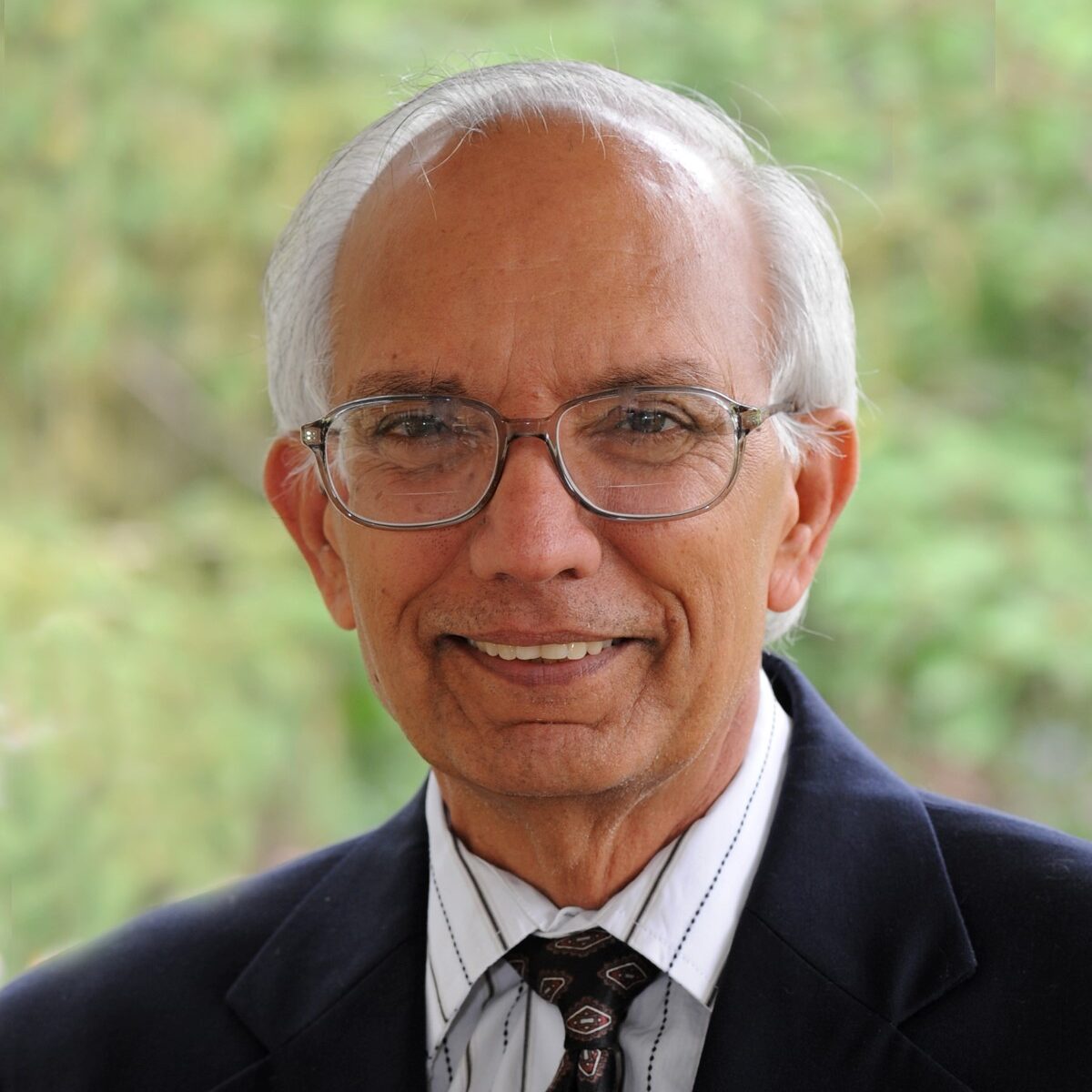
Prof. Rattan Lal
Soil, Sustainability, and the Future of Global Food Systems
The Medical Research Archives features insights from Rattan Lal, Ph.D. (The Ohio State University), a globally recognized soil scientist whose work has fundamentally shaped modern understanding of agriculture, climate resilience, and sustainable land management.
Across his contributions to the journal, Prof. Lal examines the foundational role of soil in addressing some of the most pressing global challenges—including food insecurity, environmental degradation, and climate change.
His research consistently emphasizes that these challenges are not isolated. Rather, they are interconnected outcomes of how agricultural systems are designed, managed, and scaled over time.
By reframing soil as a critical component of global sustainability—not just agricultural productivity—his work provides a structured pathway toward regenerative, climate-resilient food systems.
👉 Explore Prof. Lal’s published articles to engage directly with this body of work.
Research Focus
Prof. Lal’s research centers on the role of soil as a foundational system within global environmental and food networks. His work integrates principles from soil science, climate science, and agricultural systems engineering to address long-term sustainability challenges.
His primary areas of focus include:
- Soil Carbon Sequestration: Advancing soil-based strategies to capture and store atmospheric carbon, linking land management directly to climate mitigation.
- Regenerative and Climate-Resilient Agriculture: Designing agricultural systems that restore soil health while maintaining productivity under changing environmental conditions.
- Soil Degradation and Restoration: Identifying the drivers of soil degradation and developing scalable approaches for reversing loss of soil structure, fertility, and biodiversity.
- Agroecosystem Efficiency: Improving nutrient cycling, water use efficiency, and overall system performance through soil-centered management practices.
- Sustainable Development and Policy Integration: Aligning soil science with global policy frameworks, including food security strategies and climate adaptation initiatives.
Collectively, his research reframes soil as a strategic asset—central to achieving resilient agricultural systems and long-term environmental sustainability.
Key Contributions in Medical Research Archives
1. Soil Carbon and Climate Resilience
Prof. Lal’s work positions soil organic carbon as a central mechanism for climate mitigation and adaptation. Increasing soil carbon stocks enhances water retention, improves nutrient cycling, and stabilizes yields under climate stress.
2. Rethinking Agricultural Systems
His research challenges conventional, input-intensive agriculture by demonstrating its long-term impact on soil degradation.
Sustainable agriculture requires system redesign, not incremental adjustment.
3. Soil Degradation as a Systemic Risk
A recurring theme across Prof. Lal’s work is the recognition of soil degradation as a global risk multiplier. Degraded soils reduce food production capacity, increase vulnerability to climate extremes, and undermine ecosystem stability.
4. Bridging Science and Policy
Prof. Lal’s work extends beyond academic analysis by connecting scientific findings with policy frameworks and global sustainability initiatives.
A Career Defined by Global Impact
Prof. Lal’s academic and global impact is reflected in the scale of his contributions:
- Over 3000 scientific publications
- More than 1100 peer-reviewed journal articles
- An h-index exceeding 200, with over 180,000 citations
- Mentorship of 430+ researchers from more than 60 countries
He is consistently ranked among the world’s leading agricultural scientists and recognized as a Highly Cited Researcher for over a decade.
Global Recognition
His work has been honored with some of the most prestigious international awards:
- World Food Prize (2020)
- Japan Prize (2019)
- Gulbenkian Prize for Humanity (2024)
- Padma Shri Award (2021)
Notably, Prof. Lal has donated over $1.4 million in prize funds to support academic research and future scientists through endowed programs.
Explore His Publications
Prof. Lal’s articles in Medical Research Archives:
- Urban and Peri-Urban Agriculture for Improving Human Nutrition and Protecting Planetary Processes
- Soil Degradation and Pollution as the Global Public Health Emergency
- Balancing Human and Planetary Health Through Plant-Based Diet
- Opportunities and Challenges of the “One Health” Approach
- Enhancing Nutritional Quality of Food by Improved Soil and Crop Management
- Soil Degradation Effects on Human Malnutrition and Under-Nutrition
A prudent strategy is to grow 10–20% of the food consumed in urban centers within city limits through science-based urban agriculture.
— Prof. Dr. Rattan Lal
Closing Perspective
At a time when global systems face increasing strain, Prof. Lal’s work points to a clear direction: long-term sustainability depends on restoring the foundational systems that support food production.
His research consistently demonstrates that improving soil health is not a secondary priority—it is central to addressing climate resilience, food security, and environmental stability at scale.
- Restore soil health
- Increase carbon sequestration
- Build resilient agricultural systems
- Align production with ecological limits
The future of food, climate, and sustainability depends fundamentally on how we manage soil.
Submit your Paper
Interested in contributing to research on soil health, sustainable agriculture, or climate resilience? We welcome submissions that advance this critical field.
Submit your own paper to the European Society of Medicine’s official journal, the Medical Research Archives.
These are just some of the nearly 4,000 members, authors, and speakers who are part of the European Society of Medicine’s community. Our members work in countries across the globe, yet are united by a common goal: to promote health and health equity, around the world.
Join the Society
The European Society of Medicine is more than a professional association. We are a community. Our members work in countries across the globe, yet are united by a common goal: to promote health and health equity, around the world.
If you believe in ESMED and everything we stand for, take the next step and support our mission by becoming a member.

Professional Membership
- Free publication of 3 articles per year (€9,750+ value)
- Access to job board and funding directory
- Mentorship program
- Ability to post presentations
Membership fee
999 EUR/USD
Reduced Membership
* Available for these developing nations
- Free publication of 2 articles per year (€4,000+ value)
- Access to job board and funding directory
- Mentorship program
- Ability to post presentations